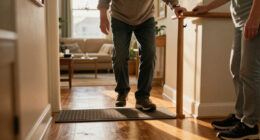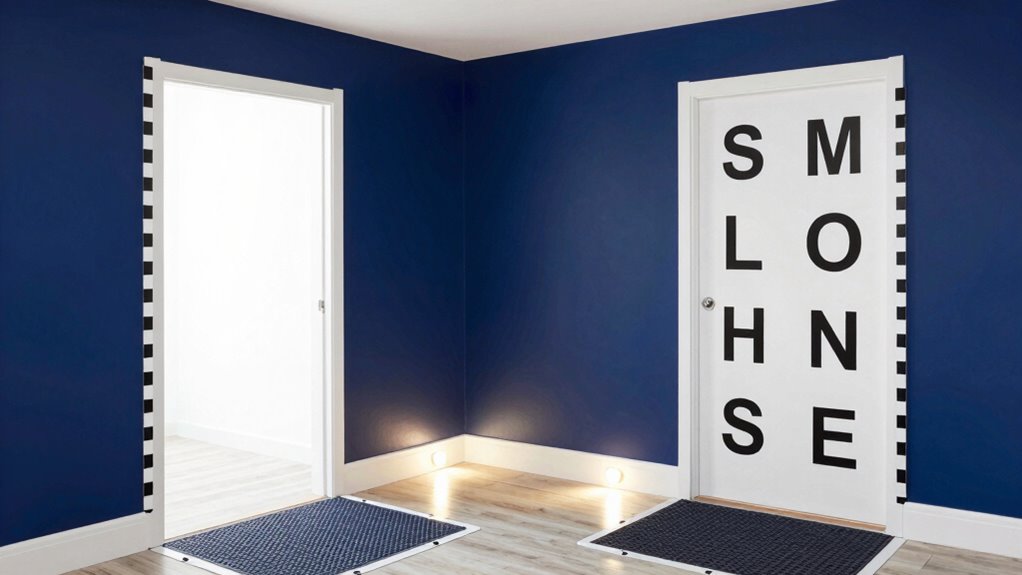

As your vision changes, improving contrast becomes essential for home safety. Use bold, contrasting colors for walls, furniture, and stair edges to make objects stand out. Increase lighting in key areas with adjustable, glare-free fixtures and add reflective strips on stairs. Regularly check surfaces for wear or fading, and incorporate textured mats for grip. These simple contrast hacks can greatly enhance safety and confidence at home; keep exploring to learn more ways to protect yourself as your vision evolves.

Turn quiet afternoons into listening time
- Thousands of audiobooks, podcasts and originals
- Listen on your phone, tablet or Echo — also offline
- Cancel anytime
Key Takeaways
- Use high-contrast colors on walls, furniture, and doorframes to improve object visibility and reduce confusion.
- Enhance lighting with adjustable, bright, and even illumination to support better contrast perception.
- Apply bold, contrasting tape or patterns on stairs and edges to prevent trips and falls.
- Incorporate textured, non-slip surfaces and mats with distinctive contrast to guide safe navigation.
- Regularly assess and update contrast elements and lighting to maintain optimal visibility and safety at home.
high contrast wall paint for safety
As an affiliate, we earn on qualifying purchases.
As an affiliate, we earn on qualifying purchases.
How Vision Changes Can Affect Your Home Safety
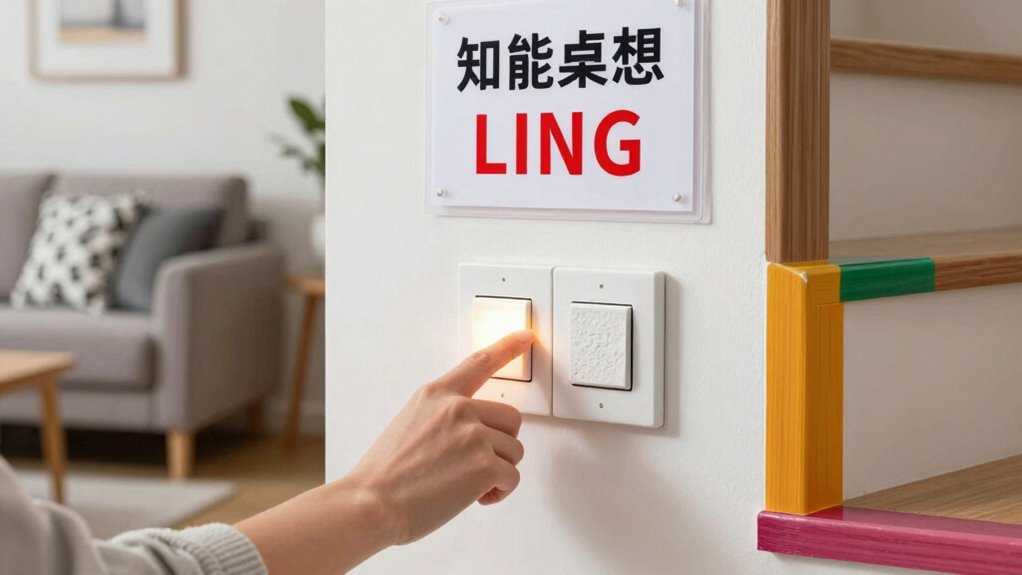
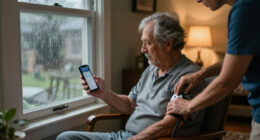
As your vision changes, moving through your home can become more challenging and potentially unsafe. Reduced visual acuity means you might struggle to see clearly, making it harder to recognize obstacles or read labels. This can lead to trips or falls, especially in unfamiliar areas. Changes in depth perception also impact your ability to judge distances accurately, increasing the risk of missteps when navigating stairs or uneven surfaces. You may find it difficult to distinguish between steps, furniture, or small objects, which heightens your chance of accidents. Staying aware of these changes helps you understand why certain hazards become more dangerous. Incorporating visual aids and proper lighting can make a significant difference in maintaining safety. Additionally, environmental modifications such as removing clutter and adding contrast can further enhance safety at home. Recognizing the importance of vision assessment can help you address specific needs and adapt your environment accordingly, especially since aging can influence visual acuity and depth perception. Being proactive about understanding these vision changes allows you to implement targeted solutions to prevent accidents and maintain independence.
glare-free adjustable lighting fixtures
As an affiliate, we earn on qualifying purchases.
As an affiliate, we earn on qualifying purchases.
Check Your Home for Contrast and Visibility Problems
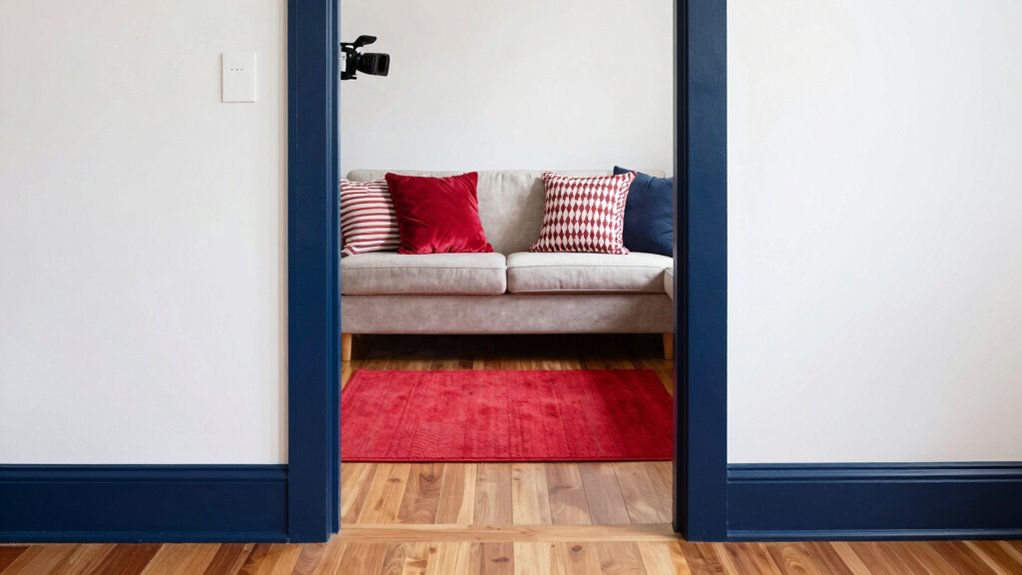
Make sure your home has strong color contrasts between walls, floors, and furniture to enhance visibility. Improving lighting levels in key areas can also reduce the risk of accidents. These simple adjustments help you see better and stay safer at home. Additionally, incorporating lighting techniques can optimize your lighting and contrast, further improving overall visibility and safety in your living space. Choosing luxury lighting fixtures can provide both functional illumination and an elegant aesthetic that enhances contrast and safety throughout your home. Recognizing family photoshoot fails can help you plan better and avoid humorous mishaps during family photos.
Spot Color Contrasts
Checking the color contrasts in your home is essential for ensuring objects and pathways are easily visible, especially if you or someone else has vision challenges. Spotting areas with poor contrast helps improve color perception and contrast sensitivity, making everyday tasks safer. Look for items like door frames, stairs, and furniture that blend into their backgrounds. Use bold, contrasting colors—for example, paint door edges a bright color against neutral walls or add colored tape to stair edges. These simple adjustments help your eyes distinguish objects quickly. Implementing contrast enhancement techniques can further increase visual clarity and safety. For instance, adding visual cues such as decorative patterns or textured surfaces can help in identifying different areas more easily. Regularly assess your environment to identify spots where contrast could be enhanced, and consider color contrast principles to create a more visible and accessible space. Additionally, incorporating lighting adjustments can significantly improve contrast and overall visibility in various areas of your home. Consistent contrast improves safety by reducing confusion and accidents.
Improve Lighting Levels
Improving lighting levels in your home is essential for enhancing visibility and reducing the risk of accidents. Proper lighting helps you see contrasts clearly and navigate safely. Use smart lighting systems to adjust brightness easily, ensuring rooms are well-lit without glare. Incorporate color filters to reduce harsh shadows and improve object visibility. Consider these tips:
- Install adjustable smart lights in key areas
- Use warm-toned bulbs to create contrast
- Apply color filters to enhance object clarity
- Add task lighting where needed
- Keep light switches accessible and functional
Smart lighting allows you to customize brightness, while color filters help differentiate objects more effectively. Ensuring consistent, well-balanced illumination minimizes hazards and supports your visual needs. Regularly check your home’s lighting setup and make adjustments to maintain ideal contrast and visibility for safer living. Additionally, understanding how contrast ratio impacts image clarity can help you optimize lighting conditions for both safety and visual comfort. Fact-checking & media literacy helps you evaluate your home safety information effectively. To further improve safety, consider home contrast assessments to identify areas needing better lighting. Paying attention to ambient lighting quality can also significantly enhance overall visibility and safety within your living space.
reflective stair tape for safety
As an affiliate, we earn on qualifying purchases.
As an affiliate, we earn on qualifying purchases.
Easy Hacks to Brighten Walkways and Stairs

Brightening your walkways and stairs can substantially enhance safety and curb appeal, especially as lighting conditions dim. Start by installing decorative pathway lighting along your walkways to provide clear, inviting illumination. This not only improves visibility but also adds aesthetic appeal. For your stairs, consider adding non-slip stair treads with built-in LED lights or reflective strips to ensure each step is easily seen and secure. These simple upgrades make a big difference, reducing trip hazards and making nighttime navigation safer. Keep the lighting consistent and avoid harsh glares by choosing warm, diffused lights. Regularly check and maintain your lighting fixtures and treads to keep everything functioning at its best. Utilizing electric bike lighting ideas can also inspire creative ways to enhance outdoor safety. Incorporating smart lighting systems can further optimize illumination and energy efficiency, ensuring your outdoor spaces remain safe and inviting at all times. Exploring solar-powered options can provide sustainable lighting solutions that are both environmentally friendly and cost-effective. Additionally, considering motion-activated lighting can help conserve energy while providing illumination precisely when needed. Understanding battery inverter generators and their features can help you select reliable outdoor lighting solutions that ensure consistent power during outages or emergencies. These easy hacks create a safer, more welcoming outdoor environment for you and your loved ones.
As an affiliate, we earn on qualifying purchases.
How to Adjust Lighting and Colors for Better Visibility
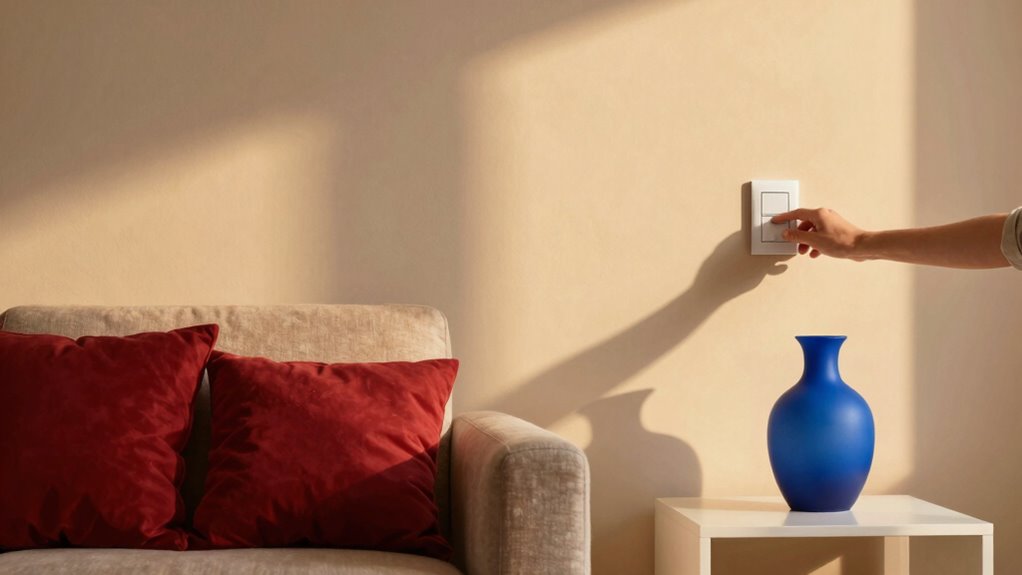
To enhance visibility, it is vital to adjust your outdoor lighting and color schemes thoughtfully. Proper lighting can make a significant difference in how well you see your surroundings. Focus on the right color temperature—opt for warmer tones (around 2700K-3000K) to create a comfortable, glare-free environment. Use bright, focused lights on pathways and stairs to prevent accidents. Incorporate decorative accents with contrasting colors to highlight key features and improve depth perception. Consider these tips:
- Use consistent color temperature across outdoor fixtures
- Highlight steps with contrasting shades for safety
- Avoid overly harsh or cool lighting that causes glare
- Add decorative accents in bold colors near walkways
- guarantee lighting is evenly spaced for uniform coverage
- Innovative composting toilets can also be integrated into outdoor lighting plans for eco-friendly bathroom solutions.
- Additionally, selecting appropriate lighting fixtures can prevent uneven illumination and shadows that hinder visibility.
Additionally, ensuring proper indoor air quality and humidity can help reduce eye strain and dryness that may worsen vision issues over time. Maintaining optimal lighting conditions supports your eyes’ ability to adapt and improves overall visibility at home.
Choosing the Best Products to Boost Contrast and Safety
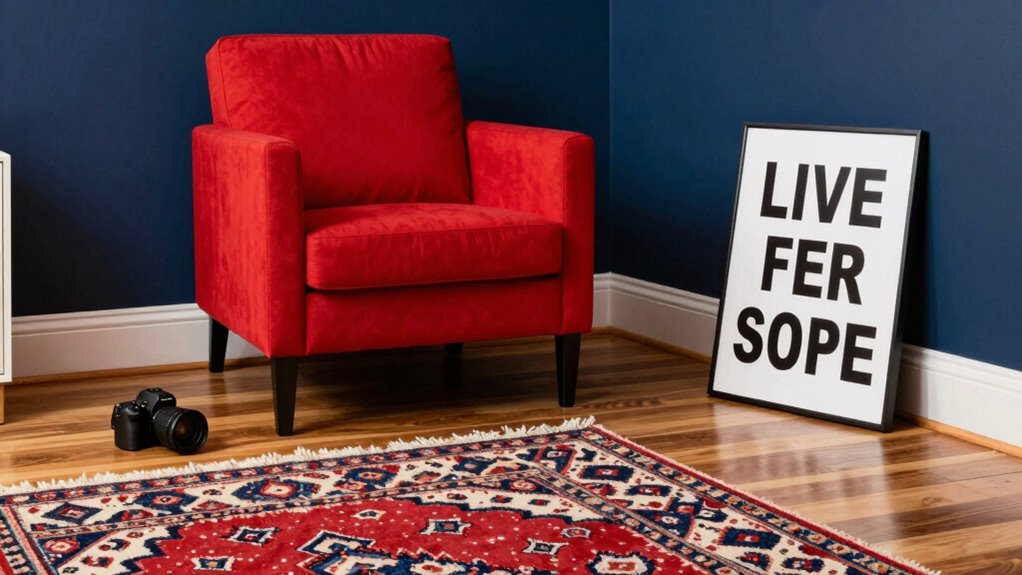
Choosing the right products to boost contrast and safety is essential for creating a secure home environment. Your focus should be on color selection that enhances visibility—opt for high-contrast hues that clearly distinguish objects and surfaces. Bright, bold colors on switches, doorframes, or edges help you identify key features easily. Material choices also matter; opt for non-slip mats, textured surfaces, and durable finishes that improve grip and tactile feedback. Avoid shiny or reflective surfaces that can cause glare, and instead, select matte or matte-finish products to reduce visual discomfort. By carefully considering color selection and material choices, you’ll make your home safer and more accessible, reducing the risk of accidents and making everyday navigation smoother.
How to Maintain Contrast Improvements for Long-Term Safety
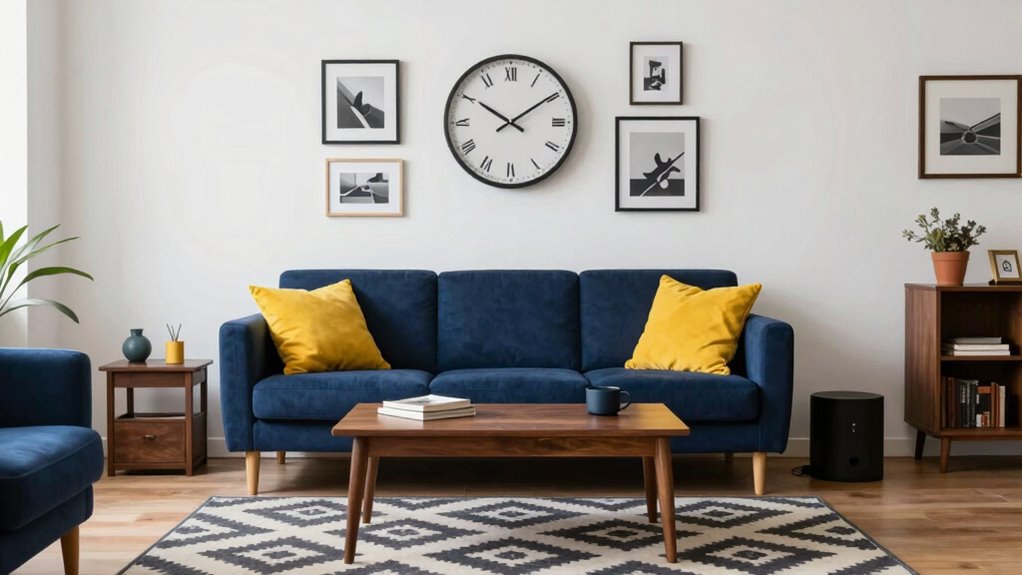
Maintaining the contrast improvements you’ve made is key to ensuring your home remains safe over time. To do this, develop habits that support ongoing assessments of your environment. Regularly check if contrast levels still meet your needs and adjust as necessary. Consistency helps reinforce safe practices and keeps your home optimized. Consider these tips:
- Schedule routine visual assessments to spot wear or fading
- Incorporate contrast checks into your regular home maintenance
- Use a checklist to track improvements and needed updates
- Reinforce habit formation by setting reminders for assessments
- Stay alert to changes in your vision that may require further adjustments
Frequently Asked Questions
Can Contrast Improvements Help With Specific Eye Conditions?
Yes, contrast improvements can help with specific eye conditions like glaucoma and macular degeneration. Better lighting reduces glare and enhances visibility, making it easier for you to see contrasts clearly. For glaucoma, bright, even lighting minimizes shadows that could cause confusion. For macular degeneration, high-contrast colors and well-lit areas help you distinguish objects and navigate safely. These contrast hacks make your environment safer and more manageable.
Are There Budget-Friendly Contrast Solutions for Renters?
Looking for budget-friendly contrast solutions as a renter? Absolutely! You can explore affordable solutions like using removable contact paper or peel-and-stick decals to enhance contrast on key surfaces. Rental adaptations such as swapping out lamps for brighter bulbs or adding colorful rugs can also improve visibility. Why settle for poor contrast when simple, cost-effective options make your home safer? These easy tweaks can make a big difference without risking your security deposit.
How Often Should Contrast and Lighting Be Reassessed?
You should reevaluate your contrast and lighting adjustments regularly, ideally every few months or when you notice any changes in your vision. Conduct visual assessments to identify areas where lighting adjustments might be necessary. Staying proactive helps you maintain safety and clarity at home. Don’t wait for issues to worsen; frequent reviews ensure your environment adapts to your evolving vision needs, keeping you comfortable and secure.
What Are Common Mistakes to Avoid When Enhancing Contrast?
Avoid common mistakes like using misplaced contrast, which can create confusion or shadows, and choosing incorrect color choices that clash or don’t stand out. Always test your contrast setups in natural lighting to verify they’re effective. Don’t rely solely on bright white or black; opt for shades with enough difference. Keep it simple and consistent, and avoid overdoing it, as too much contrast can be just as problematic as too little.
Do Contrast Hacks Benefit Children and Elderly Differently?
Think of contrast sensitivity as a bridge that connects visual learning for both children and the elderly. You’ll find contrast hacks especially beneficial for the elderly, enhancing their ability to distinguish objects and prevent falls. For children, these hacks support visual learning by making important cues stand out more. While both groups gain, the elderly often experience a more dramatic safety improvement, making contrast hacks a crucial part of home adjustments.
Conclusion
Just like Icarus needed steady wings to avoid a fall, you must regularly maintain your home’s contrast hacks to stay safe. By staying vigilant and adjusting your environment, you keep safety within reach—preventing accidents before they happen. Remember, the journey to secure living is ongoing. With consistent effort, you’ll navigate your home’s shadows, turning potential pitfalls into safe passageways—because, like a steady ship, your home’s safety depends on your watchful eye.
Halloween Picks
halloween
As an affiliate, we earn on qualifying purchases.