
TL;DR

Turn quiet afternoons into listening time
- Thousands of audiobooks, podcasts and originals
- Listen on your phone, tablet or Echo — also offline
- Cancel anytime
A federal memorandum tied to CVS’s $315 million opioid settlement requires the pharmacy chain to block controlled-substance prescriptions from certain prescribers. The agreement does not expressly require tracking what happens to their patients, leaving open whether the restrictions lead to safer care or interruptions in needed treatment.
A memorandum accompanying CVS’s $315 million opioid settlement requires the pharmacy chain to block controlled-substance prescriptions from certain prescribers, including some whose prescribing concerns remain unresolved after review. The agreement addresses dispensing restrictions, but it does not expressly require an assessment of whether affected patients subsequently receive appropriate care—a gap that matters for people who may still need pain treatment, support for physical dependence, or treatment for opioid use disorder.
The settlement, announced October 13, resolves federal allegations involving unlawful dispensing and false claims. CVS did not admit liability under the agreement. The accompanying Drug Enforcement Administration memorandum requires the company to block prescriptions from prescribers whose DEA registration or state license has been suspended or revoked. It also requires CVS to block a prescriber across its retail pharmacies when prescribing concerns remain unresolved after review, unless the law prohibits the block.
The memorandum requires reporting on blocked prescribers, but does not expressly require CVS to track the later health outcomes of their patients. The October 21 MedPage Today opinion article by Alex Smolak, PhD, argues that such follow-up would help determine whether the restrictions improve patient safety. It proposes an independent evaluation linking block dates with pharmacy and medical claims, starting with one insurer’s population and tracking care across settings.
That analysis could examine treatment gaps, later prescription dispensing and emergency visits, and compare those outcomes with carefully selected patients and prior trends. CVS’s own dispensing records, Smolak writes, would not show whether a patient obtained safer treatment elsewhere or experienced a disruption in care. Claims data also may miss pain, functioning and care outside insurance coverage.
Patient Safety After a Pharmacy Block
Stopping potentially unsafe dispensing and reducing a patient’s overall risk are related but distinct goals. A block may prevent prescriptions from a clinician whose practices raise serious concerns, yet it does not itself establish that a patient has moved to safer treatment. Patients’ needs vary: some may need a new clinical assessment, help managing physical dependence, or care for opioid use disorder.
Smolak points to FDA warnings about severe withdrawal, uncontrolled pain and suicide following rapid opioid reduction or abrupt discontinuation in physically dependent patients. CDC guidance also cautions against rigid restrictions and patient abandonment. A large observational study in JAMA found an association between tapering among patients on stable, long-term, higher-dose opioids and increased rates of overdose and mental-health crises. Those findings do not show that pharmacy blocks cause the same outcomes: a block is not the same as a dose taper, and a patient may receive appropriate care elsewhere.
Following patients could help distinguish among different results: a successful transfer to safer care, continued access to a dangerous regimen through another pharmacy, or a prolonged interruption. A fall in dispensing at CVS alone cannot show which occurred. The distinction matters to patients and to officials evaluating whether restrictions achieve their intended clinical benefit.
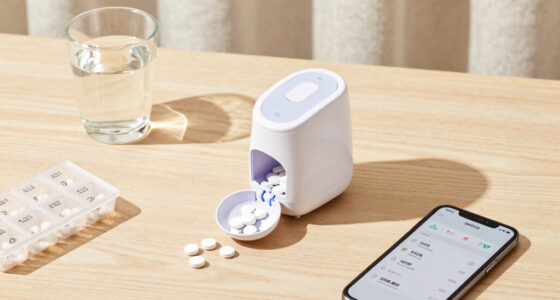
pain management prescription tracking device
As an affiliate, we earn on qualifying purchases.
As an affiliate, we earn on qualifying purchases.
How the CVS Restrictions Work
The agreement reinforces an approach that appeared in CVS’s 2022 multistate settlement, according to Smolak’s article. The latest memorandum sets out two categories for blocking: prescribers with suspended or revoked DEA registrations or state licenses, and prescribers whose concerns remain unresolved after review, subject to legal limits.
The settlement resolves federal allegations about unlawful dispensing and false claims, but does so without an admission of liability. The memorandum’s reporting requirement focuses on blocked prescribers. Smolak’s proposed addition is a separate, independent review of patient outcomes, using linked information from insurers and care settings rather than CVS records alone.
“Stopping harmful prescribing and reducing the patient’s overall risk belong in the same intervention.”
— Alex Smolak, PhD, in MedPage Today
As an affiliate, we earn on qualifying purchases.
Patient Outcomes Remain Unmeasured
The source material does not report a completed study of patients affected by the new CVS blocks, nor does it establish how many patients or prescriptions may be affected. It also does not say whether CVS or another party will conduct the proposed independent evaluation. The memorandum’s reporting rules, as described by Smolak, do not expressly require patient outcome assessment.
Even if researchers track subsequent care, the causes of any changes may be difficult to separate. Patients of blocked prescribers could already have higher risks because of their treatment, health conditions or other factors. Insurance claims may not capture all treatment or patients’ experiences. An adverse event after a block would not, on its own, show that the restriction caused it.
medical alert for opioid use disorder
As an affiliate, we earn on qualifying purchases.
As an affiliate, we earn on qualifying purchases.
Tracking Care Beyond CVS
Smolak proposes an independent, focused evaluation that links CVS block dates with pharmacy and medical claims, initially using one insurer’s population. Researchers could follow patients who filled opioid prescriptions at CVS before a prescriber was blocked and examine subsequent dispensing, treatment gaps and emergency visits. Comparisons with other patients and earlier trends would be needed to interpret the results.
Clinical records and patient accounts could add information claims do not capture, including whether patients obtained appropriate follow-up care. No such evaluation is confirmed in the source material. For now, the settlement sets restrictions on dispensing, while the effects on patients’ later treatment and health remain an open question.
patient medication adherence tracker
As an affiliate, we earn on qualifying purchases.
As an affiliate, we earn on qualifying purchases.
Key Questions
What does the CVS settlement require?
A DEA memorandum accompanying the $315 million settlement requires CVS to block controlled-substance prescriptions from prescribers whose DEA registration or state license has been suspended or revoked. It also covers certain prescribers with unresolved concerns after review, unless a block is prohibited by law.
Does the agreement require CVS to follow affected patients?
As described in Alex Smolak’s article, the memorandum requires reporting on blocked prescribers but does not expressly require assessment of patients’ subsequent health outcomes.
Does a pharmacy block prove that a patient will lose treatment?
No. The source does not establish what happens to individual patients after a block. Some may obtain appropriate care elsewhere; others could face a treatment gap. The outcomes have not been established by the material provided.
Does research on opioid tapering show that CVS blocks cause harm?
No. The cited observational study found an association between tapering and certain adverse outcomes among a particular group of patients receiving long-term, higher-dose opioids. Smolak stresses that a pharmacy block differs from a dose taper, and that the study does not establish that prescriber blocks cause similar outcomes.
What kind of evaluation has been proposed?
Smolak proposes linking block dates with insurer pharmacy and medical claims to track later prescriptions, care gaps and emergency visits. He also says clinical records and patient accounts could help explain whether dispensing changes accompanied improvements in care.
Source: rss
Halloween Picks
halloween
As an affiliate, we earn on qualifying purchases.