Proper grab bar placement is key to preventing slips and falls in your bathroom. Install bars near toilets, showers, and tubs at heights of about 33-36 inches to match natural hand reach. Secure them into wall studs or reinforced anchors for maximum support. Consider user needs and bathroom layout to decide between horizontal, vertical, or angled bars. To guarantee safety and style, it’s crucial to follow these placement rules—keep exploring for tips to get it just right.

Turn quiet afternoons into listening time
- Thousands of audiobooks, podcasts and originals
- Listen on your phone, tablet or Echo — also offline
- Cancel anytime
Key Takeaways
- Install grab bars 33-36 inches above the floor at accessible, easy-to-reach locations near toilets, showers, and tubs.
- Secure grab bars directly into wall studs or appropriate anchors for maximum stability and safety.
- Use horizontal bars for general support and angled or vertical bars for specific transfer needs.
- Ensure grab bars are placed within reach without overstretching or bending, considering user height and mobility.
- Regularly inspect and maintain grab bars to confirm secure attachment, free from corrosion or damage.
As an affiliate, we earn on qualifying purchases.
Why Proper Grab Bar Placement Matters for Bathroom Safety
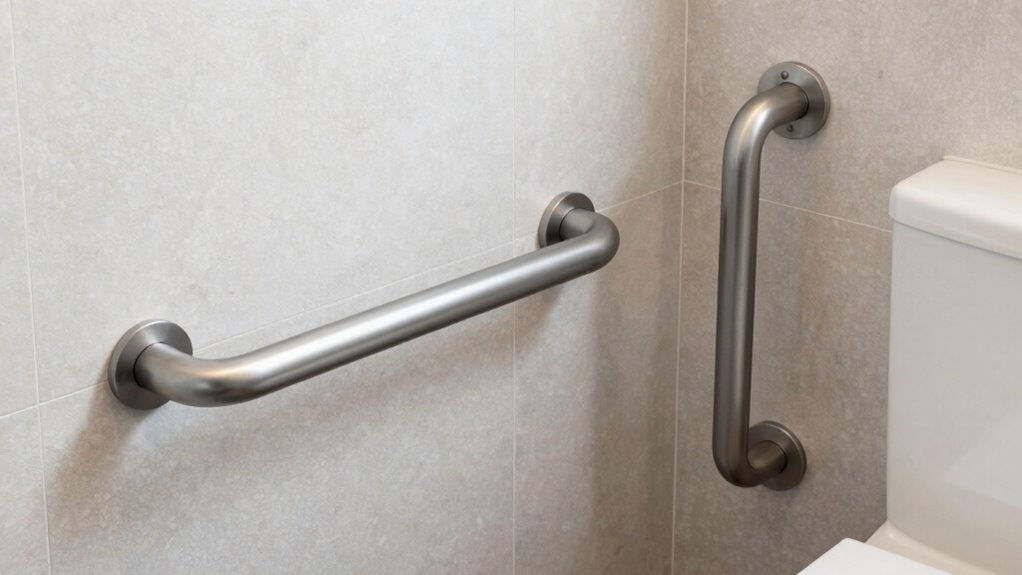
Proper grab bar placement is essential for ensuring bathroom safety because it helps prevent slips and falls when you need support. When installing grab bars, consider bathroom aesthetics so they blend seamlessly with your decor, avoiding a cluttered look. You also need to account for plumbing considerations, ensuring the bars don’t interfere with pipes or fixtures. Proper placement provides stability during transfers and reduces accident risks, especially for seniors or those with limited mobility. If installed too high or low, they may be ineffective or cause strain. Thoughtful positioning enhances safety without compromising style or function. Additionally, understanding gear care tips can help maintain the integrity of your grab bars, ensuring they remain secure over time. Proper installation guidelines further ensure the bars are both safe and durable. To optimize safety, it’s important to consider support zones and how they align with user needs. Moreover, consulting professional installation can ensure your grab bars are correctly positioned for maximum support. Ultimately, strategic placement ensures you get the support you need while maintaining a visually appealing bathroom that feels comfortable and secure.
wall mounted grab bars for shower
As an affiliate, we earn on qualifying purchases.
As an affiliate, we earn on qualifying purchases.
Where Should You Install Grab Bars in Your Bathroom?
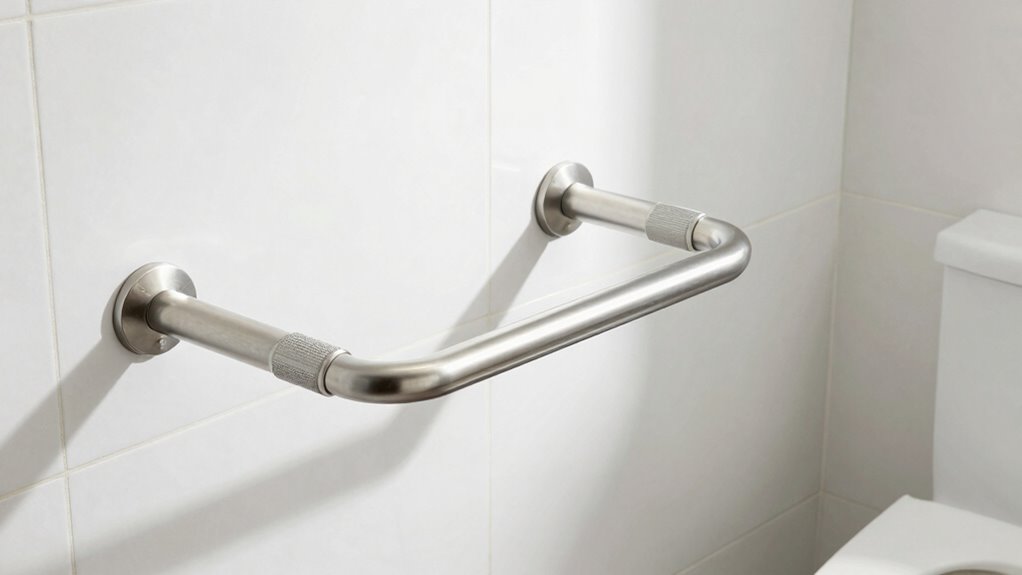
You need to install grab bars in key bathroom areas for safety and convenience. The right height placement guarantees you can grip them comfortably during use. Consider these locations carefully to maximize support where it’s needed most. For optimal effectiveness, selecting durable and weather-resistant grab bars can ensure longevity and safety in a humid environment like the bathroom. Additionally, understanding proper placement guidelines can help prevent accidents and improve overall safety.
Key Bathroom Locations
Where should grab bars be installed in your bathroom to maximize safety and convenience? Focus on key locations that support stability during transfers and movement. Proper placement enhances safety without sacrificing style, considering decorative options that blend with your bathroom decor and budget considerations to keep costs manageable. Additionally, selecting durable body jewelry materials ensures long-lasting support and reduces the risk of corrosion or damage over time. Here are the main locations to prioritize: 1. Behind the toilet for easy sitting and standing 2. Inside the shower or bath area for support while bathing 3. Near the bathtub edge for entry and exit 4. On walls adjacent to the sink for added stability during grooming
Choosing the right spots ensures safety and complements your bathroom’s aesthetic. Remember, strategic placement improves usability without compromising design or budget.
Optimal Height Placement
Correct height placement of grab bars is key to guaranteeing they provide maximum support when needed. Typically, install horizontal bars about 33-36 inches above the floor, aligning with your natural hand position. For the shower or tub, place bars 29-36 inches above the floor or edge. Remember, grab bars should blend with your bathroom aesthetics and decorative accessories without compromising safety. To help visualize, consider this placement guide:
| Location | Ideal Height | Purpose |
|---|---|---|
| Shower grab bar | 33-36 inches | Support when entering/exiting |
| Toilet handle bar | 33-36 inches | Stability during transfers |
| Tub grab bar | 29-36 inches | Safe grip in bathing |
| Side wall bar | 33-36 inches | Balance and support |
Proper height ensures safety and keeps your bathroom stylish. Additionally, understanding indoor air quality can help create a safer, healthier bathroom environment by reducing dust and microplastics that may affect overall well-being. Maintaining optimal grab bar placement and considering home accessibility features can further enhance safety and usability in your bathroom space. Incorporating ergonomic design principles can also optimize the effectiveness of these safety features. For added safety, choosing electric bikes with appropriate features can complement your home modifications.
stainless steel grab bars for bathroom
As an affiliate, we earn on qualifying purchases.
As an affiliate, we earn on qualifying purchases.
How to Choose the Right Height and Reach for Your Grab Bars
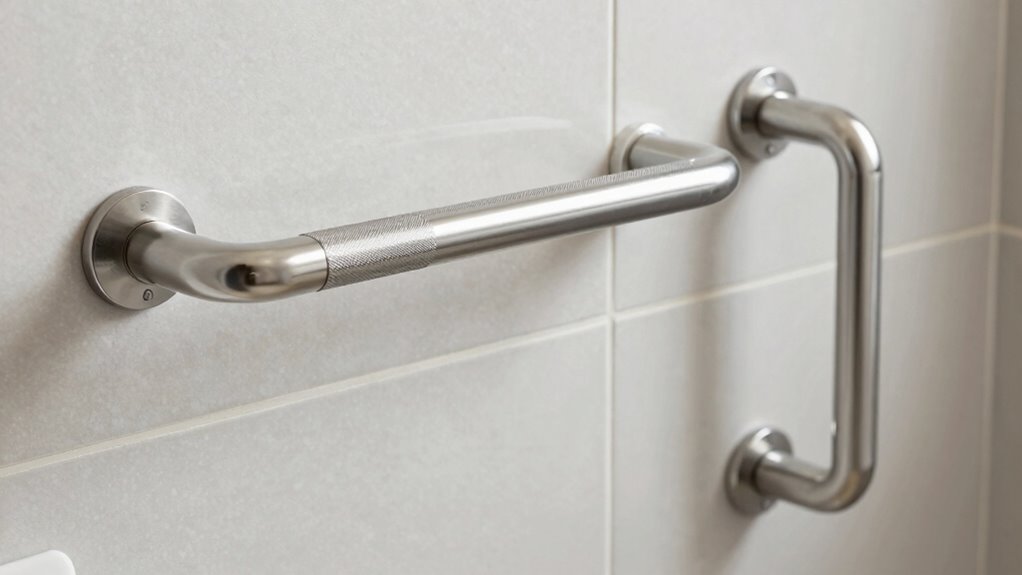
Choosing the right height and reach for your grab bars guarantees safety and comfort. You should consider ideal height standards, optimize your reach zone, and make user-specific adjustments. These steps help create a secure, accessible environment tailored to your needs. Additionally, understanding HFT basics can inform better placement decisions, especially in environments where quick access and optimal positioning are crucial.
Ideal Height Standards
Selecting the right height for your grab bars is essential to guarantee safety and ease of use. Proper placement ensures ergonomic design, reducing strain and improving stability. When choosing height, consider both functionality and aesthetic considerations to blend safety with visual appeal. Typically, grab bars should be installed between 33 to 36 inches above the floor, but personal needs vary. Focus on these key guidelines:
- Install at a height that allows comfortable gripping without stretching or bending.
- Ensure the bar is reachable from a seated position.
- Maintain consistent height throughout different locations.
- Balance ergonomic comfort with the room’s aesthetic to avoid cluttered or awkward appearances.
- Remember that indoor air quality and humidity levels can impact comfort and safety, so proper ventilation and environmental controls should complement your grab bar placement.
- Considering ergonomic design principles can further enhance safety and user comfort, especially for individuals with limited mobility or strength. Additionally, understanding universal design principles can help create a more inclusive and accessible environment for all users.
- It’s also important to consider how environmental factors like temperature and moisture may affect the longevity and grip of your grab bars over time.
Following these standards helps create a safer, more accessible environment tailored to your needs.
Reach Zone Optimization
Ever wondered how to guarantee your grab bars are within easy reach for maximum safety? Reach zone optimization is key. Follow advice guidelines that recommend placing grab bars between 33 and 36 inches above the floor, aligning with your natural reach. Consider user tips like testing different heights before installation to ensure comfort and accessibility. Keep in mind that the ideal height may vary depending on individual needs, but staying within this range generally provides the best leverage and support. Avoid placing bars too high or too low, which can compromise safety. Proper reach zone placement ensures you can grasp the bars quickly and securely, reducing fall risk. Additionally, understanding ceiling fan efficiency can inspire holistic approaches to home safety by incorporating sustainable and community-connected practices. Recognizing accessible design principles can further enhance safety and usability for all users. Incorporating ergonomic considerations into your grab bar placement can optimize comfort and support during use. Moreover, paying attention to home safety standards ensures compliance with regulations and enhances overall safety. Remember, careful planning now saves you from adjustments later—stick to these advice guidelines for maximum safety.
User-Specific Adjustments
To guarantee your grab bars provide maximum safety and support, it’s important to tailor their height and reach to your individual needs. This involves considering ergonomic design principles to ensure comfort and ease of use. Proper adjustments help prevent strain and improve stability, while aesthetic integration keeps the bars visually pleasing in your space. Additionally, selecting materials that are durable and sustainable can reduce environmental impact and contribute to eco-friendly bathroom practices sustainable fabric technology. Incorporating ergonomic design principles ensures that your grab bars are both functional and comfortable during daily use. Here are key ideas to guide your adjustments:
- Position grab bars at a height that aligns with your natural hand reach.
- Adjust reach based on your arm length and mobility.
- Prioritize ergonomic design to reduce strain during use.
- Choose styles that blend seamlessly with your bathroom’s decor for aesthetic integration.
To further optimize safety, consider material durability to ensure the grab bars withstand daily use and environmental factors. Using personalized adjustments can significantly enhance safety, comfort, and visual harmony.
As an affiliate, we earn on qualifying purchases.
How to Secure Grab Bars to Wall Studs the Right Way
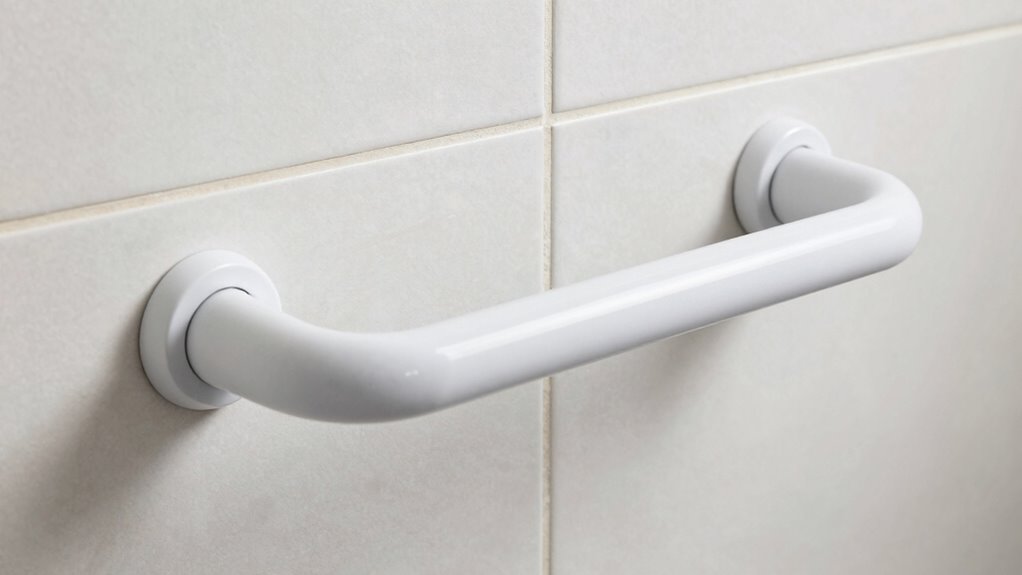
Securing grab bars to wall studs is essential for guaranteeing they can support the necessary weight and provide reliable safety. To do this properly, you must choose appropriate wall anchors and ensure material compatibility. First, locate the studs accurately using a stud finder. Use lag bolts designed for wall anchoring, which fit the material of your wall—whether drywall, tile, or plaster. Always fasten the grab bar directly into the stud for maximum support. Additionally, consider the appropriate fasteners to ensure long-term durability and safety.
Which Types of Grab Bars Are Best for Different Needs
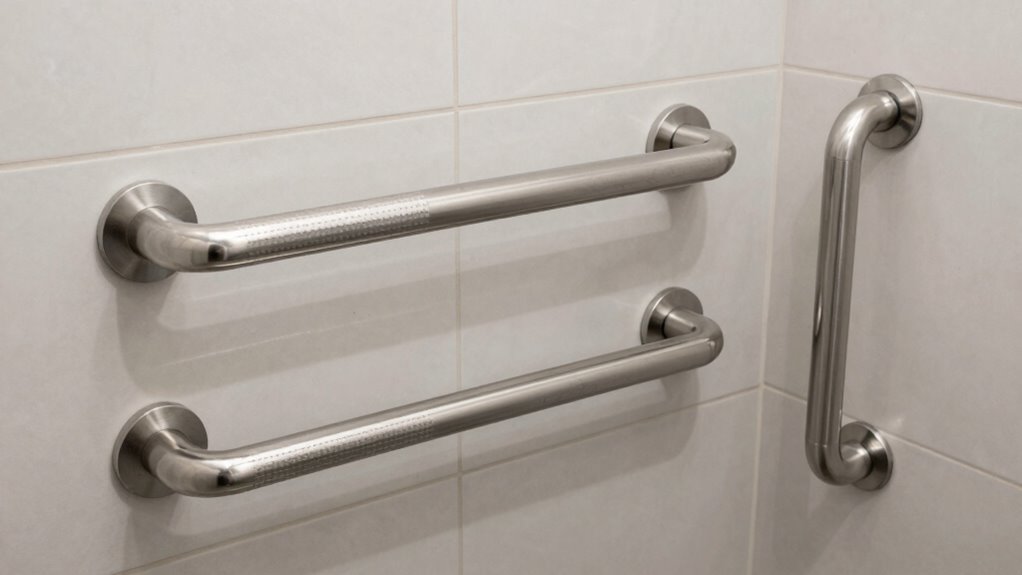
Choosing the right grab bar depends on your specific needs and the environment where it will be installed. Your decision should consider design considerations and material options to guarantee safety and durability. Different needs call for different types of grab bars:
- Round bars: Classic, easy to grip, suitable for general support.
- Tapered or contoured bars: Designed for better grip, ideal for users with limited hand strength.
- Vertical or horizontal bars: Placement influences support during transfers or standing.
- Specialized bars: Angled or foldable options for tight spaces or specific mobility needs.
Material options include stainless steel, which offers strength and longevity, or plastic-coated bars for corrosion resistance. Choose based on your environment, user comfort, and safety requirements, always considering the best design options for your needs.
Positioning Grab Bars for Support During Transfers and Sudden Moves
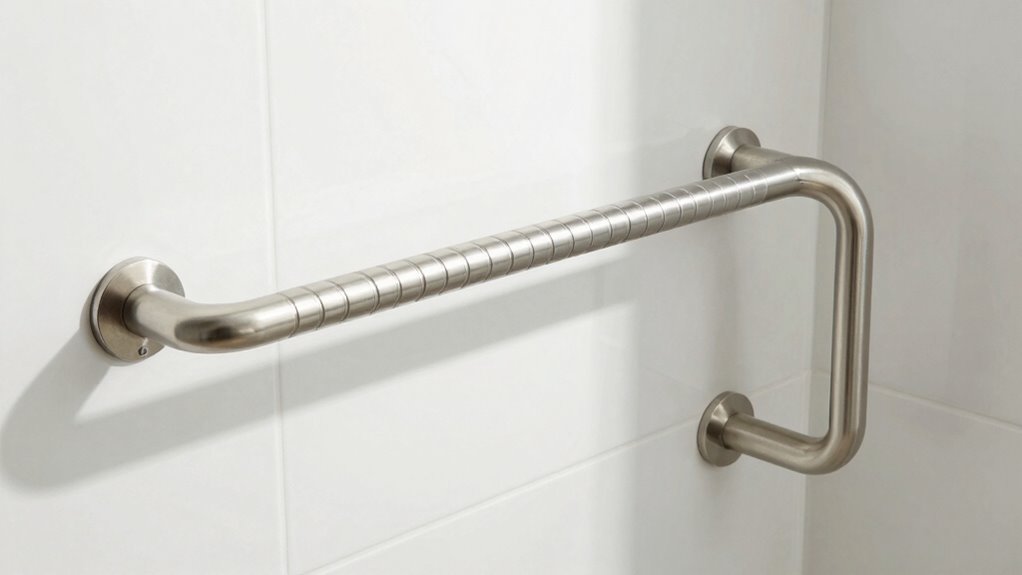
When supporting transfers or sudden moves, proper grab bar placement is essential to guarantee stability and prevent falls. Position grab bars where you can easily grasp them during transfer support, typically beside the toilet, shower, or bathtub. For sudden moves, ensure bars are within quick reach to provide immediate stability. Install them at a height that allows you to grip firmly without overextending or losing balance. Consider angled grab bars in areas where you need support during pivoting or lateral movements. Secure the bars firmly into wall studs or use appropriate anchors to withstand sudden pulls. Proper positioning minimizes the risk of slips during transfers or unexpected movements, giving you reliable support exactly when you need it most.
Common Mistakes to Avoid When Installing Grab Bars
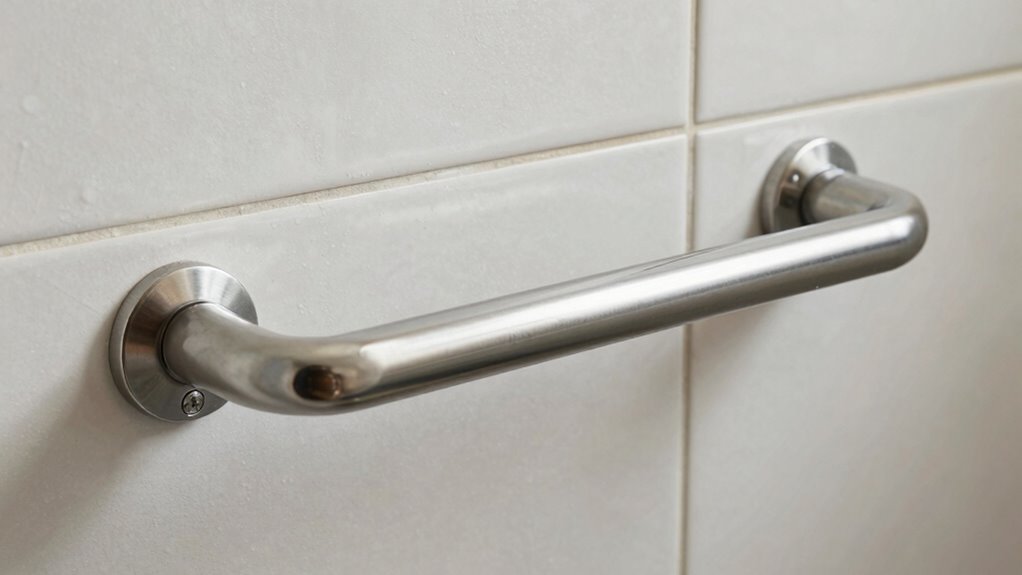
Installing grab bars in the wrong locations can compromise safety and lead to falls. If you place them incorrectly or don’t secure them properly, they might not support your weight when needed. Ensuring proper placement and support strength is essential to prevent accidents and injuries.
Incorrect Placement Risks
Incorrect placement of grab bars can considerably reduce their effectiveness and pose safety hazards. If you install them too high, too low, or in the wrong spot, you risk slipping or failing to support your weight. Poor placement also ignores aesthetic considerations, making them look out of place or unattractive. To avoid mistakes, keep these in mind:
- Mount grab bars at standard heights for ideal support.
- Position them where they’re easy to reach without stretching or bending.
- Avoid locations that clash with decorative design elements or clutter.
- Ensure they’re securely anchored into studs or appropriate anchors for safety.
Correct placement enhances both safety and aesthetic appeal, making grab bars functional and visually pleasing. Improper positioning compromises safety and diminishes their usefulness.
Inadequate Support Strength
Proper support strength is essential to guarantee grab bars do their job during a fall or loss of balance. Without adequate wall reinforcement, the mounting surface may fail under stress, risking injury. Before installation, verify the wall can support the required load by performing load testing or consulting building codes. Reinforcing the wall with proper anchors and backing materials provides the necessary support. Avoid installing grab bars directly into drywall without reinforcement, as they won’t withstand significant force. Confirm the support strength meets safety standards, especially in high-risk areas like bathrooms. Proper wall reinforcement and load testing ensure that when you need the grab bar most, it will hold firm and protect you effectively.
How to Assess Your Bathroom Layout for Optimal Grab Bar Placement
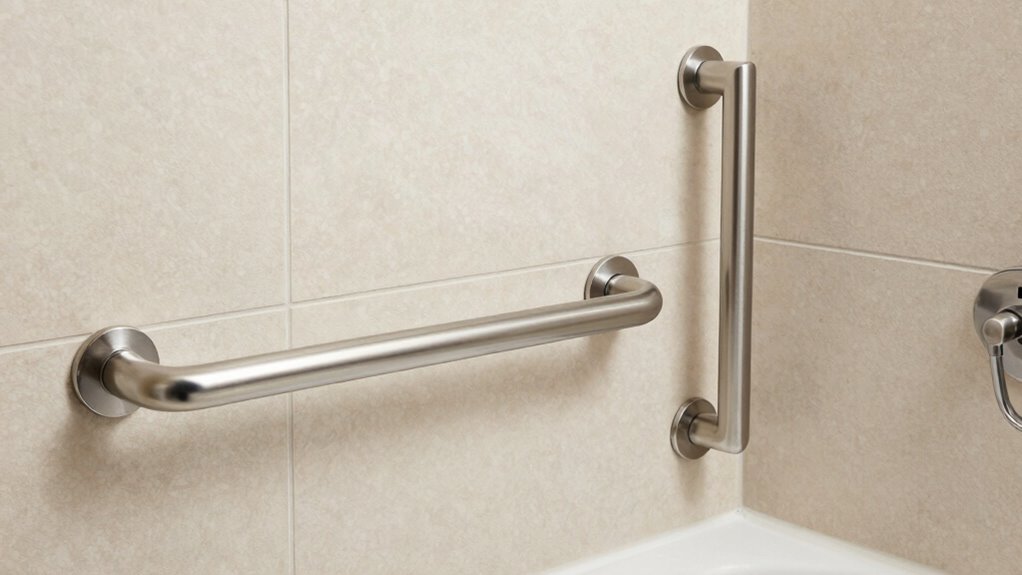
Before placing grab bars, it’s essential to evaluate your bathroom’s layout to guarantee they’ll be both accessible and effective. Conduct a safety audit during your bathroom remodeling to identify key areas needing support. Consider these steps:
- Identify high-risk zones like the shower, bathtub, and toilet.
- Measure the height and distance from fixtures to ensure proper reach.
- Check wall strength to support grab bars securely.
- Assess space to avoid obstructions and ensure comfortable movement.
This assessment helps you plan for ideal placement, improving safety and usability. Properly evaluating your bathroom layout ensures grab bars are installed where they’re needed most, making daily activities safer and more manageable. Always tailor placement to your specific needs for maximum effectiveness.
Tips for Maintaining and Inspecting Grab Bars Over Time
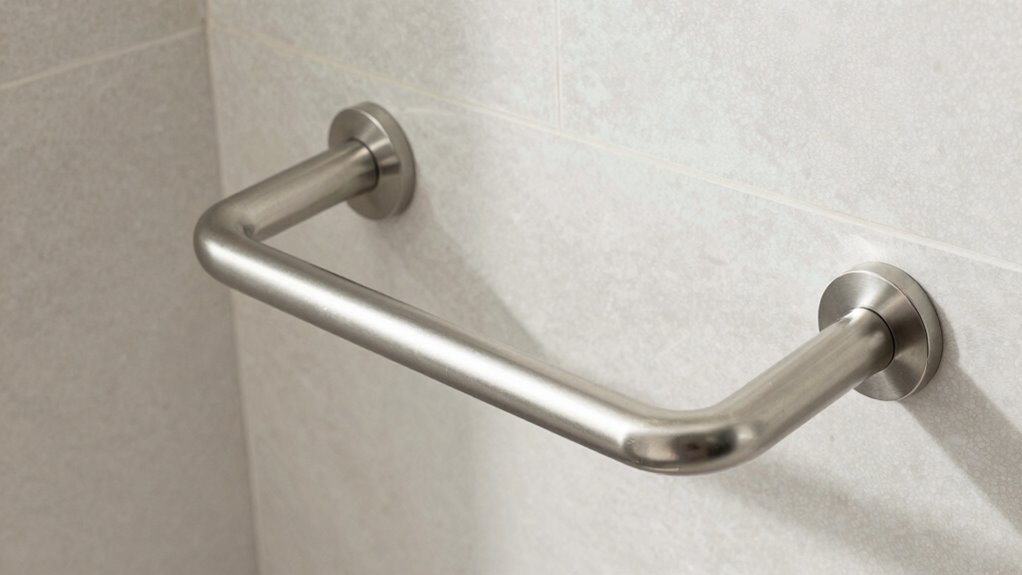
Regularly inspecting and maintaining your grab bars is essential to guarantee they remain safe and secure over time. Check for signs of corrosion, loose fittings, or damage, and tighten any loose screws promptly. To keep your grab bars looking their best, consider matching their decorative styles to your bathroom’s decor. Cleaning tips include using a gentle, non-abrasive cleaner and a soft cloth to remove dirt and grime, preventing buildup that could compromise grip. Avoid harsh chemicals that might damage finishes or decorative details. Regular inspections help catch issues early, ensuring your grab bars continue to provide reliable support. By staying vigilant, you ensure your safety and preserve the aesthetic appeal of your bathroom’s fixtures, keeping them both functional and attractive for years to come.
When to Call a Professional for Grab Bar Installation
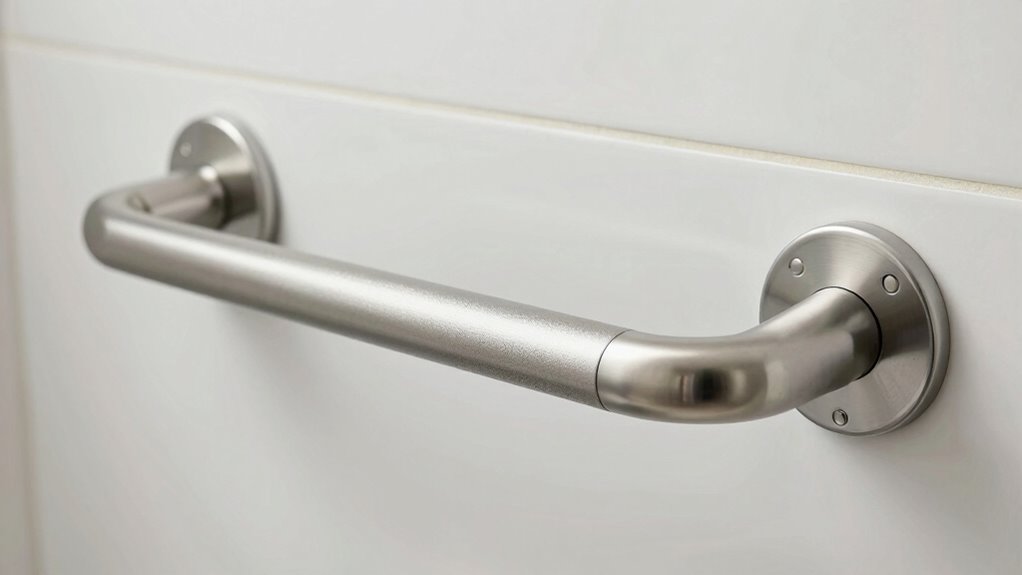
Knowing when to call a professional for grab bar installation is essential to guarantee your safety and the stability of the fixtures. If you’re unsure about proper placement, or if the wall material is complex, it’s wise to seek expert help. Additionally, installation permits may be required by local codes, especially for bathrooms used by seniors or disabled individuals. A professional ensures the grab bars are installed securely and meet aesthetic considerations, blending safety with style.
You should call a pro if:
- The wall requires special anchors or reinforcement
- You need assistance with obtaining installation permits
- You want a seamless, aesthetically pleasing look
- You’re unsure about proper placement and height standards
Frequently Asked Questions
Can I Install Grab Bars Myself or Should I Hire a Professional?
You can do a DIY installation of grab bars if you feel confident, but it’s best to seek professional guidance for safety and proper placement. Hiring a professional ensures the grab bars are securely anchored and correctly positioned, which is vital for safety. If you choose to do it yourself, follow detailed instructions carefully, use the right tools, and double-check the installation. When in doubt, consulting a professional can prevent accidents and ensure compliance with safety standards.
What Materials Are Best for Waterproof Grab Bars?
You might think all grab bars are the same, but the best materials for waterproof grab bars truly resist corrosion and provide a secure grip. Stainless steel is your top choice because it offers excellent corrosion resistance and a textured surface for better grip. Alternatively, high-quality plastic or composite materials can also work well, especially if they’re designed specifically for wet environments, ensuring safety and durability in your bathroom.
How Do I Know if a Grab Bar Is Weight-Rated?
You can determine if a grab bar is weight-rated by checking its packaging or product specifications for a clear weight rating, often listed in pounds or kilograms. Make certain it meets installation standards for safety, which include proper anchoring into wall studs or appropriate anchors. Always choose grab bars that are explicitly labeled with a weight rating suitable for your needs, and follow manufacturer instructions carefully to ensure safe, secure installation.
Are There Any Building Codes or Regulations for Grab Bar Installation?
You’ll want to check your local building codes and safety regulations before installing grab bars. These rules specify the proper height, placement, and weight ratings to ensure safety and compliance. Coincidentally, many standards align with ADA guidelines, promoting accessibility for everyone. By following these regulations, you guarantee your grab bars are secure and effective, helping prevent accidents and providing peace of mind for all users.
How Often Should I Inspect or Replace My Grab Bars?
You should inspect your grab bars at least once a month as part of your maintenance schedule. Look for signs of wear, such as looseness, rust, or cracks. If you notice any issues, replace the grab bars immediately to guarantee safety. Regular inspections help catch problems early, preventing accidents and maintaining their effectiveness. Keeping up with these checks ensures your grab bars continue to provide reliable support when you need it most.
Conclusion
Properly installed grab bars can reduce bathroom fall injuries by up to 60%. By following placement rules and securing them correctly, you’ll create a safer space for yourself or loved ones. Regularly check for stability and wear, and don’t hesitate to call a professional if needed. Taking these steps guarantees your bathroom remains a secure, accessible environment—giving you peace of mind every time you step in. Safety is worth the effort!
Halloween Picks
halloween
As an affiliate, we earn on qualifying purchases.