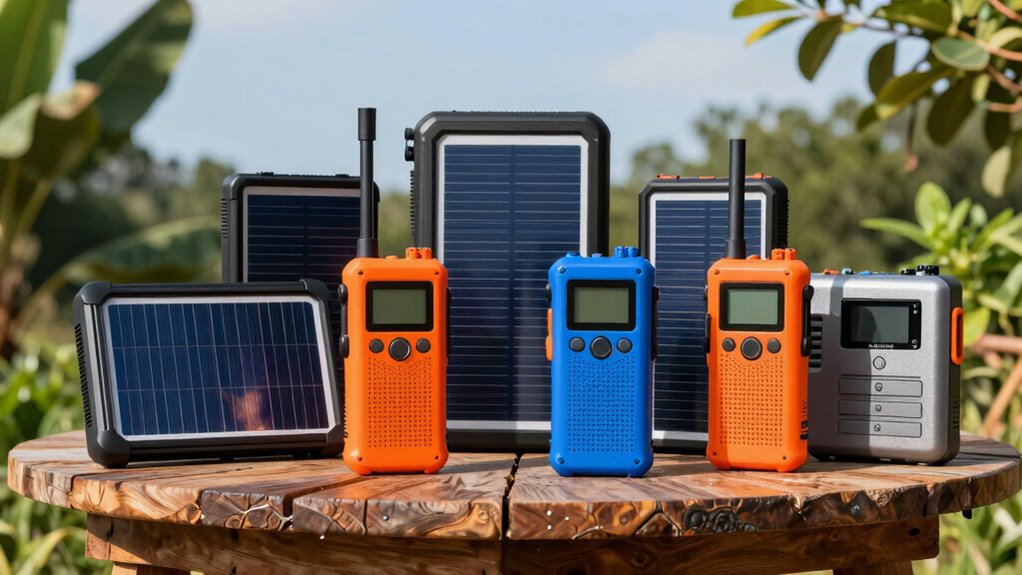

If you want an emergency radio with solar charging and a power bank, the right choice depends on whether you value battery capacity, easy operation, or extra listening features. My best overall pick is the FosPower D9, which pairs several charging options with NOAA, AM/FM, and shortwave reception, Bluetooth, and an IPX3 rating. For a larger stated battery capacity, the Semmorn 2-in-1 lists 22,000 mAh, while the Eoxsmile offers a 12,000 mAh capacity in a more conventional emergency-radio setup. The main tradeoffs are battery capacity versus portability, and feature variety versus simple operation; solar and hand-crank charging are useful backups, not quick substitutes for a wall charger. Read on for the full breakdown, ranking logic, and buying advice.

Turn quiet afternoons into listening time
- Thousands of audiobooks, podcasts and originals
- Listen on your phone, tablet or Echo — also offline
- Cancel anytime
Complete the kit


Key Takeaways
- The FosPower D9 stands apart on feature breadth: it lists NOAA, AM/FM, shortwave, Bluetooth, three charging methods, an SOS alarm, and an IPX3 rating.
- The Semmorn 2-in-1 has the largest stated battery capacity in this lineup at 22,000 mAh, making it the capacity-focused option, though that figure alone does not establish real-world phone charges.
- Several radios cluster around 10,000 to 12,000 mAh, including options from Eoxsmile, NITIGO, and OnLyee, so usability, reception features, and charging details matter when capacity figures are similar.
- Solar and hand-crank charging appear across the lineup, but neither should be treated as a fast or dependable primary charging plan; charge the radio ahead of an outage.
- The FosPower A1 and D9 serve different priorities: the A1 is a simpler solar-and-crank emergency-radio choice, while the D9 is aimed at buyers who want more listening and weather-resistance features.
| Eoxsmile NOAA Emergency Weather Radio Hand Crank Solar 12000mAh Battery |  | Best for Backup-Power Flexibility | Battery capacity: 12,000mAh | Power sources: Solar, hand crank, USB, wall outlet, AAA batteries | Radio bands: FM, AM, shortwave, NOAA Weather Band | VIEW ON AMAZON | See Our Full Breakdown |
| Hand Crank Emergency Radio 7400mWh (2000mAh) Solar Hand Crank Radio |  | Best for Simple Phone-Cable Convenience | Battery capacity: 7400mWh (2000mAh) | Charging cables: Lightning, USB-C, Micro USB | Power sources: USB-C, hand crank, solar panel, AAA batteries | VIEW ON AMAZON | See Our Full Breakdown |
| 12000mAh Emergency NOAA Weather Radio with Hand Crank and Solar Charging |  | Best for Bright Emergency Lighting | Battery capacity: 12,000mAh | Power options: USB-C, solar, hand crank, three AAA batteries | Radio bands: AM, FM, seven NOAA weather channels | VIEW ON AMAZON | See Our Full Breakdown |
| NITIGO Weather Radio with 10000mAh Battery and Emergency Features |  | Best for Everyday Weather Listening | Battery capacity: 10,000mAh | Power sources: Solar panel, hand crank, USB charging port | Radio bands: NOAA Weather, AM, FM | VIEW ON AMAZON | See Our Full Breakdown |
| Semmorn 2-in-1 Emergency NOAA Weather Radio and 22,000 mAh Solar Hand-Crank Power Bank |  | Best Premium Power-Bank Hybrid | Battery capacity: 22,000mAh | Radio bands: FM and NOAA weather; AM not included | USB-C output: Up to 20W | VIEW ON AMAZON | See Our Full Breakdown |
| Solar Emergency Radio with Hand Crank, 12000mAh Battery, and NOAA/AM/FM Reception |  | Best for Multiple Backup Power Options | Battery capacity: 12,000mAh | Power sources: Solar panel, hand crank, USB-C input, or three AAA batteries | Radio bands: NOAA, AM, FM | VIEW ON AMAZON | See Our Full Breakdown |
| FosPower Emergency Weather Radio (Model D9) with Power Bank, NOAA/AM/FM/Shortwave, Bluetooth 5.4, USB/Solar/Hand Crank Charging, Flashlight, SOS Alarm, IPX3 |  | Best for Shortwave and Bluetooth Features | Power bank capacity: 14,800mWh (4,000mAh) | Charging options: USB-C, hand crank, solar | Radio functions: NOAA, AM, FM, shortwave, WB | VIEW ON AMAZON | See Our Full Breakdown |
| OnLyee CR1030 Emergency Weather Radio with 12,000mAh Battery, Solar Charging, and Hand Crank |  | Best for Rough, Wet Conditions | Model: CR1030 | Battery capacity: 12,000mAh | Power sources: Solar, hand crank, USB-C input, built-in lithium battery, three AAA batteries | VIEW ON AMAZON | See Our Full Breakdown |
| Roxicosly Emergency Weather Radio with Solar Panel and Hand Crank |  | Best for NOAA Alerts and Outdoor Signaling | Model: CR1030 | Battery capacity: 12,000mAh | Solar panel: 8,500mm² monocrystalline | VIEW ON AMAZON | See Our Full Breakdown |
| BLAVOR Hand Crank NOAA Weather Radio with Solar Charging |  | Best for a High-Capacity Power Bank | Model: PN-W54 | Battery capacity: 20,000mAh (3.85V, 77Wh) | Charging methods: Hand crank, solar panel, USB | VIEW ON AMAZON | See Our Full Breakdown |
| NOAA Emergency Weather Radio with 10000mAh Solar Hand Crank and AM/FM | 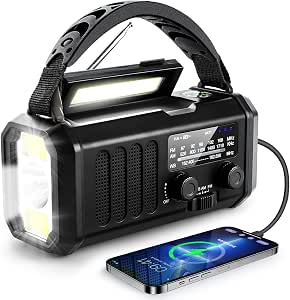 | Best for Simple, Rugged Family Readiness | Battery capacity: 10,000mAh | Charging methods: USB-C input, solar panel, hand-crank generator | NOAA frequency: 162.400–162.550 MHz | VIEW ON AMAZON | See Our Full Breakdown |
| NOAA Emergency Weather Radio with 10,000mAh Battery, Solar Charging, and Hand Crank |  | Best for Backup-Power Flexibility | Battery capacity: 10,000mAh | Power options: Rechargeable battery, hand crank, solar panel, AC adapter, USB-C, or 3 AAA batteries (not included) | Radio bands: AM 520–1710 kHz; FM 87.5–108 MHz; NOAA 162.4–162.55 MHz | VIEW ON AMAZON | See Our Full Breakdown |
| FosPower NOAA Emergency Weather Radio A1 – Solar Hand Crank (Orange) |  | Best Compact, Battery-Backed Pick | Power-bank capacity: 7,400mWh (2,000mAh) | Power sources: Solar, hand crank, AAA batteries | Radio bands: AM, FM, weather band (WB) | VIEW ON AMAZON | See Our Full Breakdown |
| emergency radio with solar and power bank premium | Battery capacity | Radio bands | Water resistance |
|---|---|---|---|
| Eoxsmile NOAA Emergency Weathe | 12,000mAh | FM, AM, shortwave, NOAA Weather Band | — |
| Hand Crank Emergency Radio 740 | 7400mWh (2000mAh) | NOAA, AM, FM | — |
| 12000mAh Emergency NOAA Weathe | 12,000mAh | AM, FM, seven NOAA weather channels | — |
| NITIGO Weather Radio with 1000 | 10,000mAh | NOAA Weather, AM, FM | — |
| Semmorn 2-in-1 Emergency NOAA | 22,000mAh | FM and NOAA weather; AM not included | — |
| Solar Emergency Radio with Han | 12,000mAh | NOAA, AM, FM | Water resistant; no IP rating specified |
| FosPower Emergency Weather Rad | — | — | IPX3 |
| OnLyee CR1030 Emergency Weathe | 12,000mAh | NOAA weather, AM, FM | IPX6 |
| Roxicosly Emergency Weather Ra | 12,000mAh | AM, FM, seven NOAA bands | IPX6 waterproof |
| BLAVOR Hand Crank NOAA Weather | 20,000mAh (3.85V, 77Wh) | AM, FM, NOAA Weather Band | — |
| NOAA Emergency Weather Radio w | 10,000mAh | — | IPX6 |
| NOAA Emergency Weather Radio w | 10,000mAh | AM 520–1710 kHz; FM 87.5–108 MHz; NOAA 162.4–162.55 MHz | IPX6 |
| FosPower NOAA Emergency Weathe | — | AM, FM, weather band (WB) | Water resistant |
More Details on Our Top Picks
Eoxsmile NOAA Emergency Weather Radio Hand Crank Solar 12000mAh Battery
The Eoxsmile stands out for households that want several ways to keep a radio running when normal power is unavailable. Its 12,000mAh battery is paired with solar, hand-crank, USB, wall-outlet, and AAA-battery power, giving it more fallback options than the NITIGO 10000mAh Weather Radio, which lists fewer charging methods. NOAA auto alerts, plus AM, FM, and shortwave reception, make it useful beyond weather updates. The flashlight and reading lamp also add practical light around a home or campsite, while the USB port can provide backup phone charging. The tradeoff is weight: at 1.4 pounds, it is less appealing for a small daypack than a simpler radio. Its many functions may also take more setup and upkeep than a basic emergency model.
Pros:- Five listed power sources provide flexibility when one charging method is unavailable.
- 12,000mAh battery supports radio use, lighting, and emergency phone charging.
- NOAA auto alerts plus AM, FM, and shortwave reception cover more listening options than the AM/FM-only NITIGO.
- Flashlight, reading lamp, and SOS alert combine useful emergency functions in one device.
Cons:- At 1.4 pounds, it is relatively heavy for frequent carry or a compact daypack.
- Multiple power methods and extra functions may require more setup and maintenance.
- The listed waterproof claim does not include a specific water-resistance rating.
Best for: Households preparing a home emergency kit who value several backup power options, weather alerts, and built-in lighting.
Not ideal for: Hikers seeking the lightest packable radio or buyers who want a very simple device with few settings and power systems to manage.
- Battery capacity:12,000mAh
- Power sources:Solar, hand crank, USB, wall outlet, AAA batteries
- Radio bands:FM, AM, shortwave, NOAA Weather Band
- Display:Backlit LCD
- Dimensions:6.8 x 3.7 x 2.9 inches
- Weight:1.4 lbs
- Additional features:LED flashlight, reading lamp, SOS alert, USB charging port, child lock
- Warranty:18 months
Our verdict“Choose the Eoxsmile for a home kit that benefits from broad reception and multiple backup power routes, but skip it if low weight and simplicity matter most.”
Hand Crank Emergency Radio 7400mWh (2000mAh) Solar Hand Crank Radio
This radio’s strongest distinction is not battery size but the built-in Lightning, USB-C, and Micro USB cables, which let users connect several common device types without packing separate leads. That makes it a more convenient grab-and-go option than the Eoxsmile 12000mAh, though its listed capacity—7400mWh (2000mAh)—is much smaller and less suited to repeated phone top-ups. NOAA and AM/FM reception, solar and hand-crank charging, and three lighting modes cover core emergency needs without the broader feature set of some larger radios. Six reading LEDs may help with close-up tasks, while the lanyard favors easy carrying. However, the product data does not specify water resistance or durability, and the battery capacity is modest for extended outages. I would treat it as a compact backup, not a high-capacity power bank.
Pros:- Built-in Lightning, USB-C, and Micro USB cables reduce the need to carry separate charging leads.
- Solar, hand-crank, USB-C, and AAA power options provide several ways to keep it operating.
- NOAA and AM/FM reception cover weather updates and general radio listening.
- Three brightness modes and six reading LEDs support basic emergency lighting.
Cons:- The listed 2000mAh capacity is limited for sustained phone charging or extended backup use.
- No water-resistance or durability details are provided.
- Its feature set is less capable for broad radio reception than the Eoxsmile, which also includes shortwave.
Best for: Buyers who want a straightforward emergency radio with charging leads ready for common phones and only modest backup-power needs.
Not ideal for: People planning long outages or repeated phone charging, since its listed battery capacity is far below the 10,000mAh and 12,000mAh options in this roundup.
- Battery capacity:7400mWh (2000mAh)
- Charging cables:Lightning, USB-C, Micro USB
- Power sources:USB-C, hand crank, solar panel, AAA batteries
- Radio bands:NOAA, AM, FM
- Lighting:Three brightness modes and six LED reading lights
- Included accessory:Lanyard
Our verdict“Pick this model for built-in cable convenience and basic emergency coverage, not for long-lasting phone power or outdoor use where water protection matters.”
12000mAh Emergency NOAA Weather Radio with Hand Crank and Solar Charging
With stated outputs of 300 lumens from its flashlight and 250 lumens from its reading light, this model puts more emphasis on usable illumination than the basic lighting details supplied for the Hand Crank 7400mWh radio. Its 12,000mAh battery, USB-C input, solar panel, hand crank, and three AAA battery option give it a strong mix of stored power and backups. It also adds AM, FM, seven NOAA weather channels, and a 115dB SOS siren, so the feature set reaches beyond the Semmorn’s FM-and-NOAA lineup. One limitation matters for storm preparation: NOAA alerts require the radio to be on and tuned to the weather band, rather than being described as automatic while tuned elsewhere. A wall adapter is not included, so buyers need to supply their own for USB charging.
Pros:- 12,000mAh battery and four listed power methods support use across different outage conditions.
- Specified 300-lumen flashlight and 250-lumen reading light offer clear illumination details.
- AM, FM, and seven NOAA weather channels provide broader reception than the Semmorn’s FM and NOAA bands.
- 115dB SOS siren adds a distinct signaling function.
Cons:- NOAA alerts require the radio to be on and tuned to the weather band.
- A wall adapter is not included for USB charging.
- Solar and hand-crank charging are backups rather than substitutes for planned charging, and the product data gives no charging rates.
Best for: Campers and home emergency-kit planners who prioritize bright built-in lights, a loud SOS siren, and a 12,000mAh battery.
Not ideal for: Buyers who expect weather alerts while listening to another band or who want a wall adapter included in the box.
- Battery capacity:12,000mAh
- Power options:USB-C, solar, hand crank, three AAA batteries
- Radio bands:AM, FM, seven NOAA weather channels
- Flashlight brightness:300 lumens
- Reading light brightness:250 lumens
- SOS siren:115dB
- FM listening time:Up to 60 hours at 50% volume
- Dimensions:4.7 x 2.9 x 6.8 inches
Our verdict“Choose this radio if bright lighting and a loud SOS signal matter alongside high battery capacity, but not if you need alerts while tuned to other stations.”
NITIGO Weather Radio with 10000mAh Battery and Emergency Features
The NITIGO makes sense for buyers who want an emergency radio that can also serve as a regular AM/FM set. It pairs those familiar bands with NOAA reception, a 10,000mAh battery, solar and hand-crank charging, and a USB charging port. The retractable reading lamp, flashlight, SOS alarm, flashing light, and headphone jack make it more versatile for routine listening than the smaller-capacity 7400mWh Hand Crank Radio, while avoiding the Semmorn’s focus on wireless charging and Bluetooth. Its main limitation is how much remains unspecified: there is no detailed water-resistance or durability rating, and the product information does not identify a USB-C input or AAA backup option. I would favor it for a home or car kit where everyday radio use matters, but choose a model with documented weather protection for exposed conditions.
Pros:- 10,000mAh battery offers more stated capacity than the 7400mWh Hand Crank Radio.
- NOAA, AM, and FM reception cover weather information and general listening.
- Solar, hand-crank, and USB charging provide multiple listed power routes.
- Retractable reading lamp, flashlight, SOS alarm, flashing light, and headphone jack add practical functions.
Cons:- No specific water-resistance or durability rating is provided.
- The product data does not list USB-C or AAA battery backup.
- Speaker quality and setup details are not specified, leaving less guidance for buyers comparing everyday listening performance.
Best for: People who want one radio for routine AM/FM listening and a home emergency kit, with a 10,000mAh battery and basic emergency lighting.
Not ideal for: Outdoor users who need a documented water-resistance rating, or buyers who want confirmed USB-C and AAA power options.
- Battery capacity:10,000mAh
- Power sources:Solar panel, hand crank, USB charging port
- Radio bands:NOAA Weather, AM, FM
- Emergency features:LED flashlight, retractable reading lamp, SOS alarm, flashing light
- Audio connection:Headphone jack
Our verdict“Choose the NITIGO for a dual-purpose home radio with emergency lighting, but pick a better-documented model for wet or rugged conditions.”
Semmorn 2-in-1 Emergency NOAA Weather Radio and 22,000 mAh Solar Hand-Crank Power Bank
The Semmorn is the clearest premium pick for buyers who put phone charging capacity ahead of broad radio-band coverage. Its 22,000mAh battery, USB-C output up to 20W, and wireless charging up to 15W give it a more ambitious charging setup than the Eoxsmile or NITIGO, while Bluetooth adds speaker functionality for trips and everyday use. It receives FM and NOAA broadcasts, but unlike those AM/FM options, it does not include AM; that is a real compromise for listeners who rely on that band. Solar and hand-crank charging are described as backup top-ups, with variable performance, so I would not treat either as a dependable way to refill the large battery quickly. Its flashlight, reading lamp, and SOS function round out the emergency kit, but its strongest case is as a power bank with a radio attached.
Pros:- 22,000mAh capacity is the largest stated battery in this five-product group.
- USB-C output up to 20W and wireless charging up to 15W support flexible phone charging.
- Bluetooth speaker functionality adds an entertainment option not listed for the other four radios.
- Solar, hand crank, flashlight, reading lamp, and SOS function add useful emergency backups.
Cons:- AM radio reception is not included.
- Solar and hand-crank charging are intended for backup top-ups, and performance varies.
- The available data does not specify water resistance or detailed radio-alert behavior.
Best for: Travelers and household planners who want high-capacity wired and wireless phone charging alongside FM and NOAA weather broadcasts.
Not ideal for: Listeners who need AM reception or buyers expecting solar and hand-crank power to rapidly recharge a 22,000mAh battery.
- Battery capacity:22,000mAh
- Radio bands:FM and NOAA weather; AM not included
- USB-C output:Up to 20W
- Wireless charging:Up to 15W
- Recharge methods:USB-C, solar panel, hand crank
- Connectivity:Bluetooth
- Enclosure material:ABS and zinc
- Included accessories:Hanging hook, owner’s manual, USB cable
Our verdict“Choose the Semmorn if charging multiple compatible phones is your priority, but select an AM/FM model if radio-band coverage matters more than its power-bank features.”
Solar Emergency Radio with Hand Crank, 12000mAh Battery, and NOAA/AM/FM Reception
For buyers who want several ways to keep a radio running, this model pairs a 12,000mAh battery with solar, hand-crank, USB-C, and three AAA battery power. That flexibility is its main advantage over the FosPower D9, whose listed power bank is much smaller, though the D9 adds shortwave and Bluetooth. Here, NOAA, AM, and FM reception cover practical weather and local broadcast listening, while the flashlight, reading lamp, SOS alarm, and phone-charging feature make the radio useful beyond alerts. Its 1.6-pound size suits a home kit or car bag, but hand-crank charging takes effort and is better treated as an emergency backup than a routine power source. The description recommends a full charge before first use, and the water-resistant claim is less specific than the OnLyee and Roxicosly models’ IPX6 ratings.
Pros:- Four listed power routes: rechargeable battery, solar, hand crank, and three AAA batteries
- NOAA, AM, and FM reception covers weather alerts and general broadcasts
- Phone charging, SOS alarm, flashlight, and reading lamp add practical emergency functions
- Compact 1.6-pound body is suitable for a vehicle or home emergency kit
Cons:- Water resistance is not assigned a specific IP rating
- Hand-crank charging requires physical effort and is not a convenient everyday charging method
- The description recommends fully charging the radio before first use
Best for: Households and car-kit planners who want a 12,000mAh radio with several backup power methods and basic emergency lighting.
Not ideal for: Buyers who need a clearly rated waterproof radio or want shortwave and Bluetooth; the OnLyee and Roxicosly specify IPX6, while this model lists neither feature.
- Battery capacity:12,000mAh
- Power sources:Solar panel, hand crank, USB-C input, or three AAA batteries
- Radio bands:NOAA, AM, FM
- USB-C input:5V/2A
- Lighting:LED flashlight and reading lamp, each with two brightness levels
- Flashlight beam distance:Up to 260 feet
- Speaker output:5W
- Dimensions and weight:6.8 × 4.7 × 2.9 inches; 1.6 pounds
- Water resistance:Water resistant; no IP rating specified
Our verdict“Choose this model for flexible backup power and useful lighting, but pick an IPX6-rated alternative if water exposure is a priority.”
FosPower Emergency Weather Radio (Model D9) with Power Bank, NOAA/AM/FM/Shortwave, Bluetooth 5.4, USB/Solar/Hand Crank Charging, Flashlight, SOS Alarm, IPX3
The FosPower D9 is the feature-rich pick for buyers who want more than standard weather and local radio. Alongside NOAA, AM, and FM, it adds shortwave reception and Bluetooth 5.4, giving it broader listening options than the BLAVOR PN-W54, which lists Bluetooth but not shortwave. Its solar, USB-C, and hand-crank charging keep the setup flexible, and the flashlight, SOS alarm, compass, and microSD/TF support broaden its outdoor utility. The tradeoff is capacity: the stated power bank is 14,800mWh (4,000mAh), well below the 12,000mAh batteries in the OnLyee and Roxicosly radios. IPX3 protection also offers less confidence in wet conditions than their IPX6 ratings. I’d choose it for feature variety, not for long-term phone charging or serious rain exposure.
Pros:- Shortwave joins NOAA, AM, and FM reception
- Bluetooth 5.4 and microSD/TF support provide extra audio options
- Solar, USB-C, and hand-crank charging offer multiple replenishment methods
- Compass, flashlight, and SOS alarm add outdoor and emergency functions
Cons:- Listed 4,000mAh capacity is substantially lower than the 12,000mAh OnLyee and Roxicosly radios
- IPX3 water resistance is limited compared with IPX6 alternatives
- Several functions may take more effort to learn than a simpler radio
Best for: Campers and radio-curious emergency planners who value shortwave, Bluetooth, and extra navigation and media features in a compact unit.
Not ideal for: People prioritizing long phone-charging endurance or stronger rain protection; its listed capacity is 4,000mAh and its IPX3 rating is below the OnLyee and Roxicosly models’ IPX6.
- Power bank capacity:14,800mWh (4,000mAh)
- Charging options:USB-C, hand crank, solar
- Radio functions:NOAA, AM, FM, shortwave, WB
- Bluetooth:Version 5.4
- Additional features:Flashlight, SOS alarm, compass, microSD/TF support
- Water resistance:IPX3
Our verdict“Pick the D9 when shortwave and Bluetooth matter more than large power-bank capacity or stronger water protection.”
OnLyee CR1030 Emergency Weather Radio with 12,000mAh Battery, Solar Charging, and Hand Crank
The OnLyee CR1030 earns its place through a tougher stated protection level than most radios in this group: IPX6 water resistance, plus dustproof and shock-resistant construction. That makes it a more convincing choice for exposed outdoor use than the first 12,000mAh radio in this batch, whose water resistance has no IP rating. The core emergency setup is familiar—NOAA, AM, and FM, a 12,000mAh battery, solar, hand crank, USB-C, and three AAA batteries—along with phone charging, a flashlight, reading lamp, and 120dB SOS alarm with flashing beacon. Compared with Roxicosly’s similar CR1030, OnLyee also lists a 12,000mAh battery and the same IPX6 level, so the supplied details do not establish a clear functional advantage between them. Battery information is inconsistent: the listing mentions three AAA backups but also says one C battery is included.
Pros:- IPX6 water resistance plus stated dustproof and shock-resistant construction
- 12,000mAh battery and solar, hand-crank, USB-C, and AAA power options
- 120dB SOS alarm combines a loud alert with a flashing beacon
- Phone charging, flashlight, and reading lamp cover several emergency needs
Cons:- Battery details are inconsistent: three AAA batteries are listed as backup, while one C battery is also mentioned
- No shortwave or Bluetooth feature is listed, unlike the FosPower D9
- At 1.6 pounds, it is not the lightest option for a minimal carry kit
Best for: Campers, hikers, and emergency-kit buyers who need a 12,000mAh radio with a stated IPX6 rating and loud visual-and-audio signaling.
Not ideal for: Buyers who need unambiguous backup-battery details or a radio with shortwave or Bluetooth; this listing has conflicting battery information and covers NOAA, AM, and FM only.
- Model:CR1030
- Battery capacity:12,000mAh
- Power sources:Solar, hand crank, USB-C input, built-in lithium battery, three AAA batteries
- Radio bands:NOAA weather, AM, FM
- Solar panel area:8,500mm²
- Flashlight and speaker:5W flashlight; 5W maximum speaker output
- SOS alarm:120dB with flashing beacon
- Water resistance:IPX6
- Dimensions and weight:6.81 × 2.91 × 4.76 inches; 1.6 pounds
Our verdict“Choose the OnLyee for its IPX6-rated construction and strong SOS signaling, provided you can resolve the listing’s battery ambiguity.”
Roxicosly Emergency Weather Radio with Solar Panel and Hand Crank
Roxicosly’s CR1030 is a close counterpart to the OnLyee CR1030: both list a 12,000mAh battery and IPX6 water resistance, so neither has a clear capacity or protection advantage on the supplied details. Roxicosly spells out seven NOAA bands and a 12-LED reading lamp, making its alert and lighting setup easy to compare on paper. Solar, USB-C, hand-crank, and AAA options provide multiple ways to power it, while the 5W adjustable flashlight and SOS alarm support outdoor use. Compared with the BLAVOR PN-W54, Roxicosly offers the stronger listed water protection, while BLAVOR has a larger 20,000mAh battery and Bluetooth. One practical catch: three AAA batteries are required, and the listing does not say they are included. That makes advance preparation more important than with a built-in-battery-only setup.
Pros:- 12,000mAh battery with USB-C, solar, hand-crank, and AAA power options
- Seven NOAA bands are specified alongside AM and FM reception
- IPX6 waterproof rating suits wetter outdoor conditions than the FosPower D9’s IPX3
- Adjustable 5W flashlight, 12-LED reading lamp, and SOS alarm cover lighting and signaling
Cons:- Three AAA batteries are required but are not stated to be included
- Lacks the BLAVOR PN-W54’s larger 20,000mAh battery and Bluetooth speaker
- No shortwave reception is listed, unlike the FosPower D9
Best for: Outdoor users who want a 12,000mAh emergency radio with IPX6 protection, multiple power options, and dedicated NOAA alert reception.
Not ideal for: Buyers who want a larger built-in power bank, Bluetooth audio, or an out-of-box AAA backup supply; the BLAVOR lists 20,000mAh and Bluetooth, while these AAA cells are not stated to be included.
- Model:CR1030
- Battery capacity:12,000mAh
- Solar panel:8,500mm² monocrystalline
- Radio bands:AM, FM, seven NOAA bands
- Charging options:USB-C, solar, hand crank, built-in battery, three AAA batteries
- Lighting:5W adjustable flashlight and 12-LED reading lamp
- Water resistance:IPX6 waterproof
- Warranty:18 months
Our verdict“Choose Roxicosly for IPX6 protection and NOAA-focused emergency signaling, but look elsewhere if you need a larger power bank or Bluetooth.”
BLAVOR Hand Crank NOAA Weather Radio with Solar Charging
The BLAVOR PN-W54 separates itself from the other radios here with a 20,000mAh battery, the largest listed capacity in this batch. That gives it a stronger case as a phone-charging hub than the 12,000mAh OnLyee and Roxicosly, while its 20W USB-C PD adds a faster wired charging specification. It also combines NOAA, AM, and FM reception with solar and hand-crank charging, a flashlight, a three-level camping lantern, SOS mode, Bluetooth 5.3, and a headphone jack. The cost of that broader power-bank role is less clarity around weather protection: unlike the OnLyee and Roxicosly, no IP rating is provided. Solar charging also depends on sunlight, and the power adapter is not included. At about 520g, it is relatively portable for its stated capacity, but it is not the best pick for wet-weather assurance.
Pros:- 20,000mAh capacity exceeds the 12,000mAh OnLyee and Roxicosly batteries
- 20W PD via Type-C provides a specified fast-charging option
- Bluetooth 5.3 and a 3.5mm headphone jack support different listening setups
- Flashlight, three-level camping lantern, and SOS mode add emergency lighting and signaling
Cons:- No water-resistance rating is provided, unlike the IPX6 OnLyee and Roxicosly
- Power adapter is not included
- Solar charging performance depends on available sunlight
Best for: People building a vehicle or home emergency kit who want a radio that can also serve as a higher-capacity phone power bank and Bluetooth speaker.
Not ideal for: Hikers who need a stated waterproof rating or buyers seeking shortwave reception; the OnLyee and Roxicosly list IPX6, and the FosPower D9 lists shortwave.
- Model:PN-W54
- Battery capacity:20,000mAh (3.85V, 77Wh)
- Charging methods:Hand crank, solar panel, USB
- Fast charging:20W PD via Type-C
- Radio bands:AM, FM, NOAA Weather Band
- Bluetooth and speaker:Bluetooth 5.3; 3W speaker
- Lighting:LED flashlight, three-brightness camping lantern, SOS mode
- Weight and dimensions:Approximately 520g; 15.2 × 7.5 × 3.0cm
- Included:Radio, Type-C to Type-C cable, user manual, lanyard; power adapter not included
Our verdict“Pick the BLAVOR when battery capacity and USB-C charging matter most, but choose an IPX6-rated model for more clearly specified water protection.”
NOAA Emergency Weather Radio with 10000mAh Solar Hand Crank and AM/FM
This model is a strong fit for households that want a large 10,000mAh backup battery and straightforward emergency lighting in one compact unit. USB-C, solar, and hand-crank charging give it several ways to stay usable when wall power is unavailable, while its IPX6 water resistance suits wet-weather preparedness better than the water-resistant FosPower A1. The built-in reading lamp, SOS light, and compass add practical functions without making the controls sound complicated.
The tradeoff is less flexibility in receiving alerts: tuning is manual, with no SAME location-based alerts, and there is no shortwave band. Compared with the second 10,000mAh radio in this group, it has fewer listed power sources and no LCD or headphone jack. I’d choose it for simple operation and a useful light setup, not for advanced alert filtering.
Pros:- 10,000mAh battery doubles as a phone power bank.
- USB-C, solar, and hand-crank charging provide multiple ways to replenish power.
- IPX6 water resistance, flashlight, reading lamp, and SOS mode suit emergency use.
- Compact 1.1-pound design includes a built-in compass.
Cons:- Manual tuning lacks SAME or location-based automatic alerts.
- No shortwave band for broader radio listening.
- Fewer listed power options than the other 10,000mAh radio, which also supports AC and AAA batteries.
Best for: Families and older users who want a simple emergency radio with a substantial phone-charging reserve, weather-resistant housing, and built-in lighting.
Not ideal for: Preparedness-minded buyers who need location-specific automatic alerts, shortwave reception, or an LCD and headphone jack.
- Battery capacity:10,000mAh
- Charging methods:USB-C input, solar panel, hand-crank generator
- NOAA frequency:162.400–162.550 MHz
- AM frequency:520–1710 kHz
- FM frequency:87–108 MHz
- Water resistance:IPX6
- Dimensions:6.3 × 3.5 × 3.1 inches
- Weight:1.1 lb
- Lighting and extras:High, low, and SOS flashlight modes; reading lamp; built-in compass
Our verdict“Choose this radio if you value simple controls, a 10,000mAh power bank, and IPX6-rated protection more than advanced alert features.”
NOAA Emergency Weather Radio with 10,000mAh Battery, Solar Charging, and Hand Crank
For buyers who want several fallback power routes, this radio has the most adaptable setup among these three picks: its 10,000mAh rechargeable battery is joined by solar, hand crank, USB-C, AC adapter, and three AAA batteries. That variety can make it easier to keep the radio available across home, car, and emergency-kit use. The LCD, headphone jack, 115dB SOS alarm, and four-mode 3W flashlight also give it more listed utility than the simpler B0BLV7V9WK model.
Those extras come with a larger, heavier body: at 7.48 inches long and 1.27 pounds, it is less compact than the first radio here. AAA cells are not included, and the hand crank takes sustained effort, so they are backups rather than effortless power. I’d pick this for source flexibility; choose the FosPower A1 if a lighter-duty, battery-based alternative matters more than a large power bank.
Pros:- Six listed power routes, including AC adapter, USB-C, solar, hand crank, rechargeable battery, and AAA cells.
- 10,000mAh battery supports phone charging.
- Four-mode 3W flashlight and 115dB SOS alarm add emergency signaling options.
- LCD display and 3.5mm headphone jack offer useful listening and control features.
Cons:- AAA batteries are not included.
- Sustained hand-cranking is required to generate backup power.
- Larger and heavier than the B0BLV7V9WK radio.
Best for: Campers and household emergency planners who want several ways to power a 10,000mAh radio and value an LCD, headphone jack, and loud SOS alarm.
Not ideal for: Minimalist kit builders who prioritize a smaller, lighter radio, or buyers who want included AAA backup batteries.
- Battery capacity:10,000mAh
- Power options:Rechargeable battery, hand crank, solar panel, AC adapter, USB-C, or 3 AAA batteries (not included)
- Radio bands:AM 520–1710 kHz; FM 87.5–108 MHz; NOAA 162.4–162.55 MHz
- Flashlight:3W LED with 4 modes
- SOS alarm:115dB
- Water resistance:IPX6
- Display and audio:LCD display; 3.5mm headphone jack
- Dimensions and weight:7.48 × 3.74 × 2.36 inches; 1.27 lb
Our verdict“Pick this model if power-source flexibility and extra controls matter more to you than the smallest, lightest emergency radio.”
FosPower NOAA Emergency Weather Radio A1 – Solar Hand Crank (Orange)
The FosPower A1 takes a different approach from the two 10,000mAh radios: its 7,400mWh (2,000mAh) power bank is aimed at small-device charging, while four AAA batteries provide another power source alongside solar and hand cranking. That makes it a more modest choice for a basic emergency kit, not a substitute for the larger phone-charging reserves in the B0BLV7V9WK or B0GTQ813FH. It still covers NOAA, AM, and FM, and its four reading LEDs plus 1W flashlight help with basic nighttime tasks.
The key compromise is capacity: buyers who expect frequent phone charging should step up to one of the 10,000mAh options. Its water resistance is also less protective than the IPX6-rated alternatives, and backup AAA cells must be supplied. I’d choose the A1 for a simpler, lower-capacity kit where basic broadcasts and lighting matter more than extended power-bank use.
Pros:- Solar, hand-crank, and four AAA batteries provide several power options.
- Receives NOAA weather broadcasts alongside AM and FM.
- USB power bank can charge small devices.
- Four reading LEDs and a 1W flashlight provide separate area and directional lighting.
Cons:- 2,000mAh power-bank capacity is much lower than the 10,000mAh radios in this group.
- Water resistance is listed without an IPX6 rating.
- AAA batteries are required for that backup power option.
Best for: Buyers assembling a basic emergency kit who want NOAA, AM/FM, solar and hand-crank charging, and occasional small-device charging.
Not ideal for: People who need to recharge a smartphone repeatedly, want IPX6-rated protection, or prefer a radio with a built-in high-capacity rechargeable battery.
- Power-bank capacity:7,400mWh (2,000mAh)
- Power sources:Solar, hand crank, AAA batteries
- Radio bands:AM, FM, weather band (WB)
- Batteries required:4 AAA batteries
- Output power:2 watts
- Lighting:Four LED reading lights and 1W flashlight
- Water resistance:Water resistant
- Color:Orange
Our verdict“Choose the FosPower A1 for basic radio and lighting needs with occasional small-device charging, but choose a 10,000mAh model for a stronger phone-charging reserve.”

How We Picked
I compared the 13 listed radios on the traits that matter when a device needs to provide weather information and backup power: stated battery capacity, NOAA and other band support, charging methods, portability cues, and useful emergency functions. I gave extra weight to clear, specific feature information because a power-bank figure or a solar panel does not, by itself, tell a buyer how quickly a phone will charge or how well the radio will receive a signal. I also considered whether a model’s feature set appears straightforward enough for occasional users to operate under stress.
The ranking favors the clearest all-around balance first, followed by products with a distinct advantage such as higher stated capacity or a simpler setup. The FosPower D9 ranks highest for its unusually broad feature list; the Semmorn ranks as the capacity-led alternative. Models with broadly similar 10,000–12,000 mAh claims are separated by the amount of specific information available and their apparent role, rather than by unsupported claims about performance. Product specifications can vary by listing or revision, so buyers should confirm included features and charging details before ordering.
| emergency radio with solar and power bank premium | Water resistance |
|---|---|
| Eoxsmile NOAA Emergency Weathe | — |
| Hand Crank Emergency Radio 740 | — |
| 12000mAh Emergency NOAA Weathe | — |
| NITIGO Weather Radio with 1000 | — |
| Semmorn 2-in-1 Emergency NOAA | — |
| Solar Emergency Radio with Han | Water resistant; no IP rating specified |
| FosPower Emergency Weather Rad | IPX3 |
| OnLyee CR1030 Emergency Weathe | IPX6 |
| Roxicosly Emergency Weather Ra | IPX6 waterproof |
| BLAVOR Hand Crank NOAA Weather | — |
| NOAA Emergency Weather Radio w | IPX6 |
| NOAA Emergency Weather Radio w | IPX6 |
| FosPower NOAA Emergency Weathe | Water resistant |
Factors to Consider When Choosing Emergency Radio With Solar And Power Bank Premium
Choosing a premium emergency radio is less about collecting the longest feature list and more about matching the device to your outage plan. These factors help separate useful backup capability from specifications that may not translate into day-to-day readiness.
Treat Battery Capacity as a Starting Point
A stated capacity is useful for comparing models, but it does not tell you exactly how many phone charges you will get. Conversion losses, the phone’s battery size, cable quality, and whether the radio is operating at the same time all affect usable power. The Semmorn’s listed 22,000 mAh capacity is the largest in this group, while several choices sit in the 10,000–12,000 mAh range. Do not assume a larger number means a faster phone charge; check the output specifications as well. If you mainly need occasional emergency calls, a smaller, easier-to-carry unit may be a better fit than a heavier capacity-first model. Keep a separate charged power bank if staying connected for multiple days is part of your plan.
Plan Around Wall Charging, Not Solar Alone
Solar panels built into emergency radios are generally a backup input, and performance depends on direct sunlight, panel size, angle, and weather. A hand crank can help restore limited power when other sources are unavailable, but it takes effort and is not a convenient way to fully recharge a large battery. A common mistake is buying a radio and leaving it uncharged because it has solar and crank charging. Before an outage, charge it from a dependable power source and check the battery periodically. Compare the input methods and the maker’s stated charging information instead of assuming every USB port serves the same purpose. For long outages, pair the radio with a charged power bank or another planned source of power.
Choose Reception Features for Your Location
NOAA weather reception is the core function for many buyers, while AM and FM add local news and general listening. Shortwave, included on the FosPower D9, may appeal to listeners who want access to more broadcast bands, but extra bands are not a substitute for reliable local weather alerts. Reception depends on location, terrain, interference, and antenna design, so a feature list cannot promise strong signal everywhere. If you live in a remote area or have poor reception indoors, check whether the radio has an extendable antenna and test it at home before an emergency. Bluetooth is convenient for playing audio from a phone, but it uses the phone’s battery and does not improve broadcast reception. Prioritize the stations and alerts you are likely to need, not the largest number of modes.
Balance Feature Richness Against Easy Operation
Extra functions can make a radio more useful, but they can also add buttons and menus that are harder to manage during a power outage. The D9’s Bluetooth and shortwave support suit buyers who want one device for more than emergency alerts; a simpler option such as the FosPower A1 may be a better match for someone who wants fewer extras. Before choosing, look for clear controls, readable labels, and straightforward access to weather channels, the flashlight, and the charging ports. If several people may need to use the radio, choose controls that are easy to explain and remember. A feature has practical value only if you can operate it when you need it. Familiarize yourself with the device and its alert settings before storing it.
Check Durability Claims and Emergency Readiness
Ratings such as IPX3 describe a limited level of water resistance, not waterproof protection against submersion or every kind of storm exposure. The FosPower D9 lists IPX3, a useful distinction for buyers comparing its stated weather protection with models that do not provide a rating in their names. Store any radio in a dry, accessible place and protect its ports when it is not in use. Also check whether the model includes the cable or accessories you need; do not assume a particular charging cable is in the box. Test the radio, flashlight, alert functions, and phone output periodically, since a backup device is only useful if its battery and controls work when called on. Keep a separate light and backup power source if a single device failure would leave you without essential tools.
Decide Whether Bigger Capacity Is Worth the Bulk
Higher-capacity radios can provide more stored energy, but the battery is only one part of a usable emergency kit. A larger unit may take up more space or be less comfortable to carry, while a compact radio is easier to keep in a vehicle, go-bag, or bedside drawer. Consider where the radio will live and whether you expect to carry it during an evacuation. If it will stay at home, capacity and multiple listening features may matter more than size. If you need a grab-and-go device, compare dimensions and weight in the full listing rather than choosing by battery figure alone. The best tradeoff is the one that makes you more likely to keep the radio charged and within reach.
Frequently Asked Questions
Can an emergency radio’s solar panel keep my phone charged during a long outage?
It may provide some backup power, but a small radio-mounted panel is not a dependable replacement for a dedicated solar charger or a charged power bank. Charging speed depends on sunlight, panel size, and the radio’s power-management design. Using the radio while charging a phone can also draw from the stored battery. Treat solar as a way to extend readiness when conditions allow, not as a guaranteed daily phone-charging plan. For communication needs, keep phones on low-power settings and have another charged power source available.
Does a 22,000 mAh rating mean the Semmorn will give me more phone charges than a 12,000 mAh radio?
The Semmorn lists a higher battery capacity than the 12,000 mAh models, which suggests more stored energy on paper. It does not confirm the number of usable phone charges, because output losses and charging specifications affect what reaches a phone. Compare the radio’s USB output details and your phone’s battery capacity, and remember that listening to the radio uses energy too. If phone charging is your priority, a dedicated power bank with clearly stated output specifications may be easier to compare. Use the capacity number as one factor, not a precise charge-count promise.
Should I choose a radio with shortwave and Bluetooth if I mainly need weather alerts?
Not necessarily. NOAA weather reception and easy access to alerts should take priority if emergency updates are your main reason for buying. Shortwave and Bluetooth add listening options on the FosPower D9, but they may add controls you do not need, and Bluetooth audio relies on a paired device. A simpler radio can be easier for occasional users to operate quickly. Choose the extra features only if you expect to use them outside emergency situations or have a clear need for them.
Is an IPX3 rating enough for using a radio outdoors in severe weather?
IPX3 is a limited water-resistance rating, not a guarantee that a radio can withstand heavy exposure, immersion, or every storm condition. The D9 lists this rating, while the product names for several other options do not specify a comparable rating. Keep the radio sheltered from direct rain when possible and avoid leaving it where water can collect around ports or controls. If outdoor use is a priority, check the complete product specifications for the exact rating and follow the maker’s use instructions. A water-resistant label should not replace basic protection from the elements.
What should I check before storing an emergency radio for months?
Charge it according to the manufacturer’s instructions, then store it somewhere dry and accessible rather than in a spot exposed to heat or damp. Check the battery periodically because stored charge can decline over time, and confirm the radio still tunes to local weather and broadcast stations. Test the flashlight, alarm, and phone-charging function so a failed control or cable does not go unnoticed. Keep any needed charging cable with the radio, and note how to switch between its power and reception modes. A brief scheduled check is more dependable than assuming solar or hand-crank charging will restore the device during an emergency.
Conclusion
For the strongest feature mix, I recommend the FosPower D9 as best overall: it combines multiple charging methods with NOAA, AM/FM, shortwave, Bluetooth, SOS, and a stated IPX3 rating. The Semmorn 2-in-1 is my best capacity-focused pick for buyers drawn to the lineup’s largest stated battery figure, while FosPower A1 is the better beginner choice for someone who wants a more straightforward solar-and-crank emergency radio. For a familiar middle ground, compare the Eoxsmile, OnLyee, and other 10,000–12,000 mAh options by their exact controls and charging details rather than assuming their similar capacity labels make them interchangeable. Buyers who want broad listening features should lean toward the D9; those who need simple weather updates should avoid paying attention to extras they will not use. Whichever model you choose, charge it before storage and keep a separate power plan for extended outages.
Halloween Picks
halloween
As an affiliate, we earn on qualifying purchases.