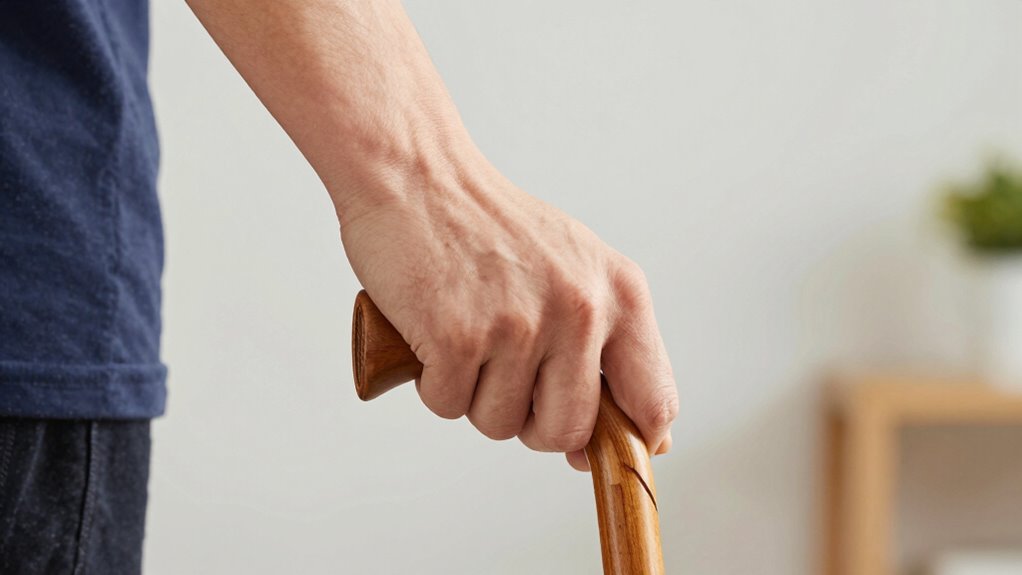

Choosing the correct cane height is essential for your safety and comfort, but many people get it wrong by not measuring properly or ignoring posture cues. If your cane is too tall or short, it can cause strain, instability, and increase fall risk. To avoid these issues, focus on proper fitting techniques and signs of incorrect height. Keep going to discover simple steps to find and maintain the right cane height for better support.
Key Takeaways
- Most people wrongly estimate cane height by visual guesswork instead of measuring from ground to wrist for accuracy.
- Incorrect cane height causes awkward posture, leading to discomfort, instability, and increased fall risk.
- Proper fitting involves measuring from the ground to wrist with arms relaxed, ensuring a slight elbow bend (15-20 degrees).
- Many users neglect adjustments over time as their gait or body condition changes, compromising support and safety.
- Using an improperly fitted cane reduces ergonomic benefits, increasing strain on hands, wrists, shoulders, and spine.
Why Correct Cane Height Matters for Your Comfort and Safety
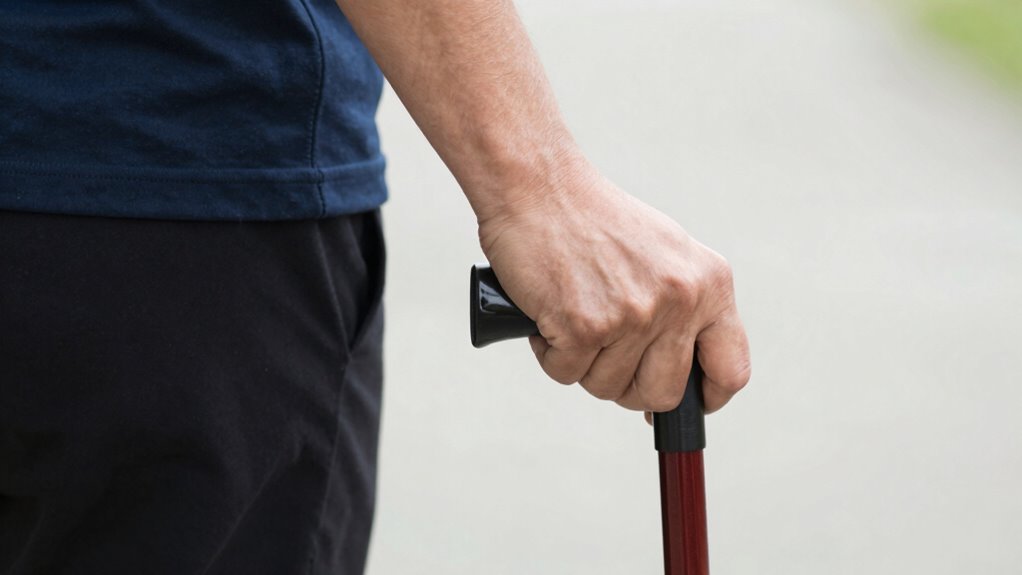
Having the correct cane height is essential because it directly impacts your comfort and safety. When your cane is the right height, you can maintain an ergonomic grip, reducing strain on your hand and wrist. This helps prevent fatigue and discomfort during prolonged use. A proper cane height also encourages a better walking posture, keeping your shoulders relaxed and spine aligned. When your cane is too short or too tall, you may lean or hunch, which can lead to muscle strain or imbalance. Ensuring the right height supports stability and confidence while walking. Ultimately, a correctly fitted cane minimizes the risk of falls and injuries, allowing you to move more securely and comfortably throughout your day.
How to Measure Your Cane Height Easily and Accurately
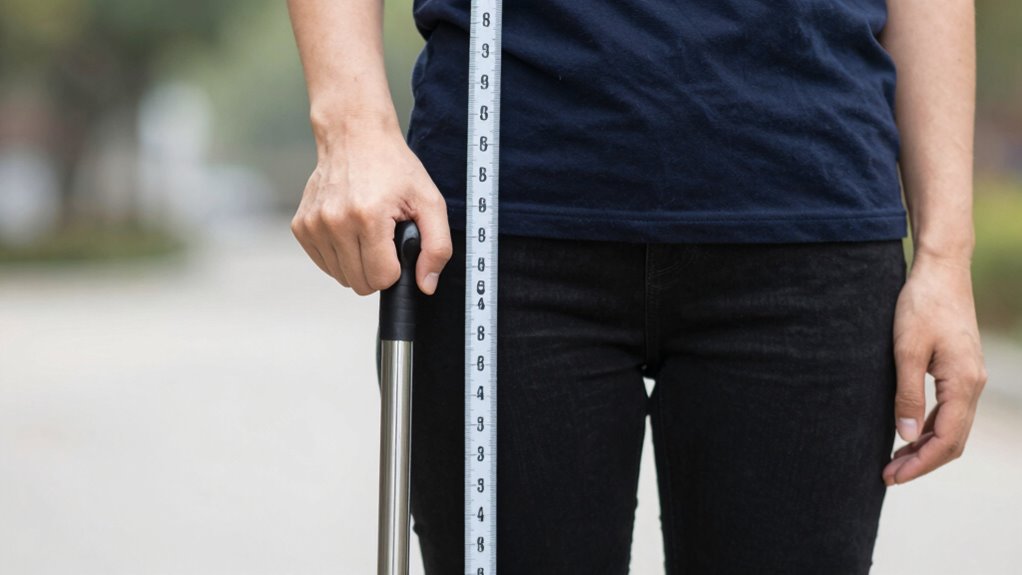
Wondering how to determine your ideal cane height? Here’s a simple method to measure accurately. First, stand upright with your shoes on, and let your arms hang naturally. Then, use a measuring tape or a piece of string to mark the distance from the ground to your wrist bone. Adjust the cane so that the top is at wrist level when your arm hangs straight down. Keep in mind that cane material and color don’t affect the measurement but are choices for style and durability. To ensure the right fit, consider these tips:
To find your ideal cane height, measure from ground to wrist with arms hanging naturally while wearing your usual shoes.
- Wear your typical footwear
- Measure on a flat surface
- Use a flexible measuring tape or string
- Select a cane material that’s lightweight and sturdy
- Choose a cane color that matches your style
- Remember that cane accessories can also enhance functionality and comfort
- Proper cane fitting is essential for safety and ease of use. Additionally, choosing a cane with ergonomic grip design can improve comfort during extended use. Being aware of correct cane height guidelines helps prevent discomfort and improves stability during walking. This method guarantees a comfortable, safe fit.
Common Mistakes When Choosing the Right Cane Height
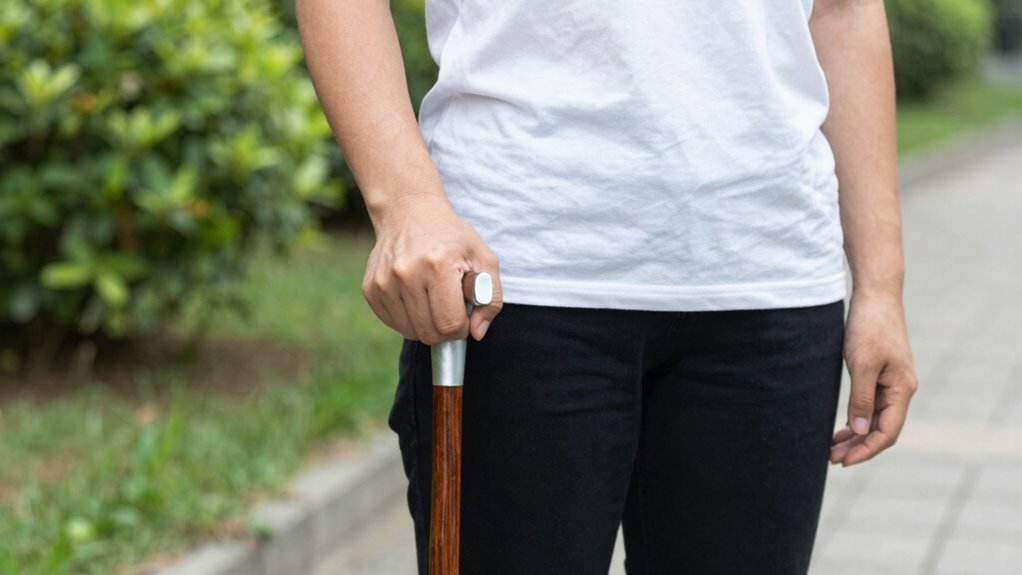
Choosing the wrong cane height is a common mistake that can lead to discomfort, poor posture, and even falls. One mistake is ignoring the cane’s material, which affects durability and weight, making it uncomfortable or difficult to handle. Another error is neglecting aesthetic considerations; selecting a cane that doesn’t match your style or preferences may discourage regular use. Many people simply pick a cane based on price or appearance without ensuring it fits their height properly. This oversight can cause leaning excessively or hunching over, increasing the risk of imbalance. Always consider both the cane’s material for comfort and strength, and how it looks to ensure you’re more likely to use it correctly and consistently. Proper selection helps prevent avoidable issues down the road. Additionally, understanding ergonomic design principles can significantly improve comfort and safety when choosing a cane. Ensuring the correct cane height also involves considering proper posture to maintain spinal alignment and reduce strain. Furthermore, paying attention to individual needs ensures that the cane provides optimal support tailored to your specific mobility requirements. Incorporating proper fitting techniques can further enhance stability and ease of use, especially when combined with adjustable cane features for personalized support.
How to Adjust and Confirm Your Cane Is the Right Height
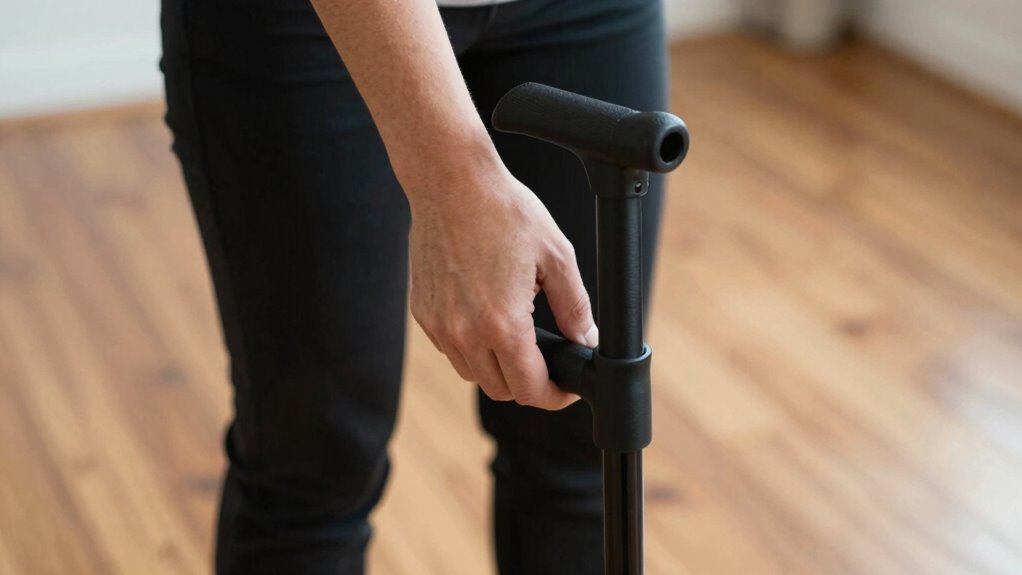
To guarantee your cane is at the right height, you need to know the proper adjustment techniques. Once you’ve made the adjustments, it’s important to verify that the cane supports your posture comfortably. Proper posture alignment ensures that your body weight is evenly distributed and reduces strain on your joints. Additionally, understanding basic car repair tips can help you troubleshoot minor issues like loose parts or squeaks that might affect your mobility aids or other equipment. Being familiar with essential DIY tools can also assist you in making safe adjustments and repairs to your cane or other assistive devices, ensuring they remain functional and safe to use.
Proper Cane Adjustment Techniques
Adjusting your cane to the correct height is essential for safe and comfortable use. To do this, consider your gait analysis and the cane material selection to guarantee proper support. Stand upright with your arms relaxed at your sides, and hold the cane with the handle at wrist level. Adjust the length so that your elbow bends slightly, about 15-20 degrees. Check the fit by walking a few steps and observing your posture. Make sure the cane’s grip feels secure and comfortable. When adjusting, keep these tips in mind:
- Confirm the cane’s length matches your body’s proportions
- Use a tape measure for accuracy
- Test on different surfaces for stability
- Consider cane material for durability and grip
- Reassess periodically as your gait changes
- Remember that the correct cane height is vital for proper support and safety. Proper cane height can also help prevent postural issues and enhance your overall mobility. Additionally, understanding cane adjustment techniques can lead to better long-term comfort and effectiveness. Being aware of regional cane styles can help you select the most suitable cane for your lifestyle and needs. Maintaining awareness of wheelchair and cane accessories can further improve your mobility and independence.
Verifying Correct Cane Height
Ensuring your cane is at the correct height requires more than just initial adjustment; you need to verify it regularly for ideal support and safety. To do this, stand upright with your cane, letting your arm hang naturally at your side. Check that your elbow is slightly bent at about a 15-20 degree angle. Examine your cane grip to ensure it feels comfortable and secure, as a proper grip helps maintain correct posture. The cane material also matters—if it’s worn or damaged, it may affect stability. Adjust the height if your wrist or hand feels strained or if your elbow isn’t at the right angle. Regularly verifying these factors guarantees your cane continues to provide proper support and minimizes the risk of falls. Additionally, cane height adjustment should be part of your routine to ensure ongoing safety and comfort.
Recognizing Signs That Your Cane Is Too High or Too Low

How can you tell if your cane is the right height? You’ll notice signs when it’s too high or too low. An improperly adjusted cane can cause discomfort or imbalance. Look for visual cues like your arm’s angle; it should form a comfortable, natural bend. If your ergonomic grip feels strained or awkward, that’s a warning sign. You might also experience shoulder or wrist pain if the cane is too high or low. Additionally, pay attention to your gait—if you’re leaning or shifting excessively, your cane’s height could be off. Ensuring the correct cane height is essential for proper support and safety. Proper cane fitting can prevent many issues related to incorrect height. Check for these signs:
- Elbow feels overly extended or bent
- Grip causes discomfort or slips
- Shoulder or wrist pain
- Visual cues of poor posture
- Uneasy or unstable walking pattern
To further ensure optimal support, consider consulting a healthcare professional for an ergonomic assessment. Also, keep in mind that proper cane adjustment can help avoid long-term discomfort and improve mobility. Additionally, selecting the right cane type can further enhance stability and safety during use.
Tips for Long-Term Comfort and Proper Support

To sustain long-term comfort and proper support, it’s essential to regularly assess your cane’s fit and make adjustments as needed. Ensure your cane has an ergonomic grip, which reduces strain on your hand and wrist, making prolonged use more comfortable. Also, consider stylish designs that match your personal style, encouraging consistent use and confidence. Check that the cane’s height remains appropriate as your body or needs change over time. Proper grip and fit prevent discomfort and reduce the risk of falls or strain. Regularly evaluating these factors guarantees your cane continues to serve you well, maintaining comfort and stability for long-term use. Additionally, being aware of indoor air quality can help prevent respiratory issues that might affect your mobility and overall health. Monitoring ergonomic design features can further enhance your comfort and support during use. Staying informed about ergonomic principles ensures you select and maintain the best support tools for your needs.
Frequently Asked Questions
Can Different Terrains Affect the Ideal Cane Height?
Different terrains, especially uneven surfaces, can affect your ideal cane height by requiring terrain adaptation. When you walk on uneven surfaces, you might need to adjust your cane slightly shorter or longer to maintain stability and comfort. Always test your cane on various terrains, guaranteeing it provides proper support. Proper height adjustment helps prevent falls and ensures safer navigation across different surfaces.
Does the Cane Height Vary Between Walking Aids?
Cane height does vary between walking aids, and proper cane adjustment is essential for ergonomic benefits. For example, crutches or walkers require different settings to guarantee comfort and stability. You should always tailor each aid to your body, because an incorrectly adjusted cane can cause discomfort or even injury. By customizing each walking aid, you maximize safety and support, making your mobility easier and less painful.
How Often Should I Reassess My Cane Height?
You should reassess your cane height every few months or whenever your mobility changes. Regular cane maintenance and adjustment frequency guarantee your cane remains comfortable and safe. If you notice discomfort, difficulty walking, or if your weight shifts, it’s time to double-check the height. Consistent checks help prevent strain and injury, making sure your cane continues to support you properly as your needs evolve.
Are There Specific Cane Heights for Different Ages?
Yes, there are age-specific adjustments for cane height. When determining the right height, use proper height assessment techniques, like standing straight with your arms relaxed at your sides and the cane’s handle aligned with your wrist crease. For children or seniors, consider their unique needs, mobility, and comfort. Reassess regularly, especially after health changes, to make certain your cane remains properly adjusted for your age and activity level.
Can Improper Cane Height Cause Long-Term Joint Issues?
Improper cane height can indeed lead to long-term joint issues, disrupting your gait mechanics and risking joint health. When your cane’s too short or too tall, it forces uneven weight distribution and awkward movements. Over time, this strain may cause joint pain or degeneration. Ensuring your cane is correctly adjusted helps maintain proper gait mechanics, protecting your joint health and preventing future problems. Don’t compromise your mobility by ignoring proper cane height.
Conclusion
Getting your cane height right is vital for your comfort and safety—don’t settle for guesswork. Measure accurately, adjust properly, and stay alert to signs it’s off. Remember, a well-fitting cane is like a sturdy bridge, supporting you smoothly across life’s challenges. When you prioritize proper height, you’ll walk confidently and comfortably every day. After all, a journey of a thousand miles begins with a single step, and that step should be steady.