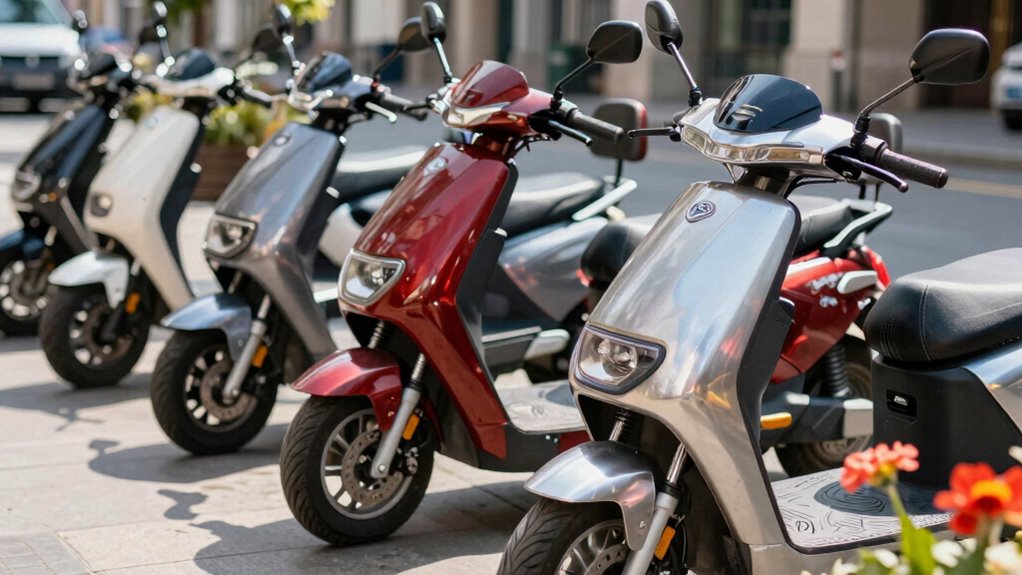

If you’re trying to understand your mobility scooter’s range, you’ve got to take into account a few key factors. Battery capacity, weight, and terrain all play vital roles in determining how far you can go. Heavier loads drain your battery faster, while steep hills and rough surfaces demand more energy. To maximize your distance, keep your speed steady and plan your routes wisely. There’s plenty more to uncover, so you’ll want to explore all the details to optimize your travels.
Key Takeaways
- Assess your travel distance and mobility needs to determine the appropriate scooter range required for your lifestyle.
- Battery capacity, measured in amp-hours, directly affects how far you can travel on a single charge.
- Weight considerations, including user weight and cargo, significantly impact battery drain and overall scooter range.
- Terrain types, such as inclines and rough surfaces, require more energy, reducing your scooter’s effective range.
- Maintaining a steady speed and planning routes can enhance battery efficiency and extend your travel distance.
What You Need to Know About Mobility Scooter Range
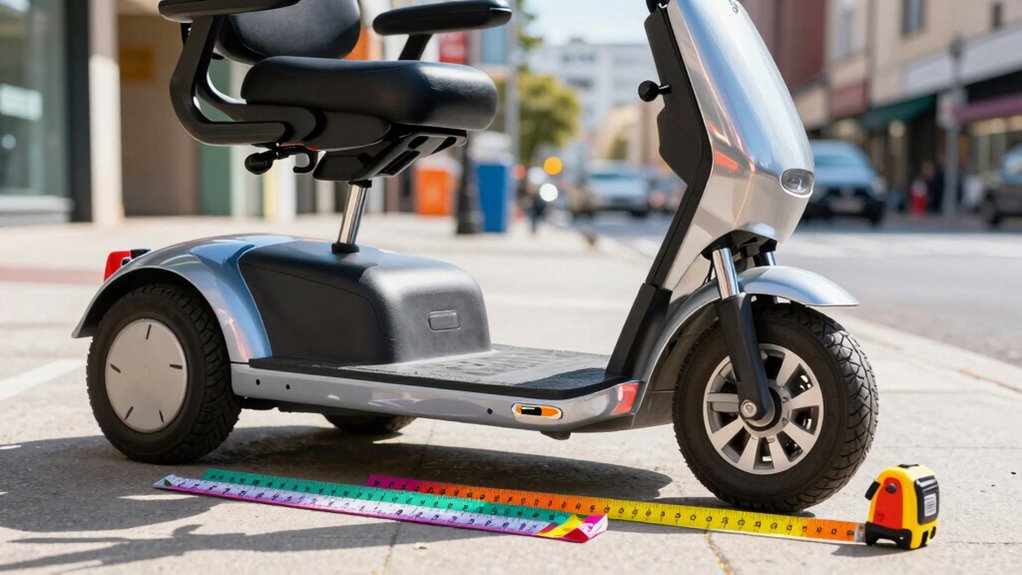
When you’re considering a mobility scooter, understanding its range is essential for your independence. You’ll want to assess your mobility needs and how far you’ll typically travel. User experiences can guide you, but always check brand comparisons to find the best fit. Consider the battery types; some offer longer ranges than others. Regular maintenance tips can help you maximize your scooter’s performance, ensuring you get the most out of each charge. If you’re thinking about scooter upgrades, look for models that enhance safety features or come equipped with travel accessories. Ultimately, knowing these aspects will empower you to choose a scooter that aligns with your lifestyle, keeping you confident on the go.
How Battery Capacity Affects Scooter Distance
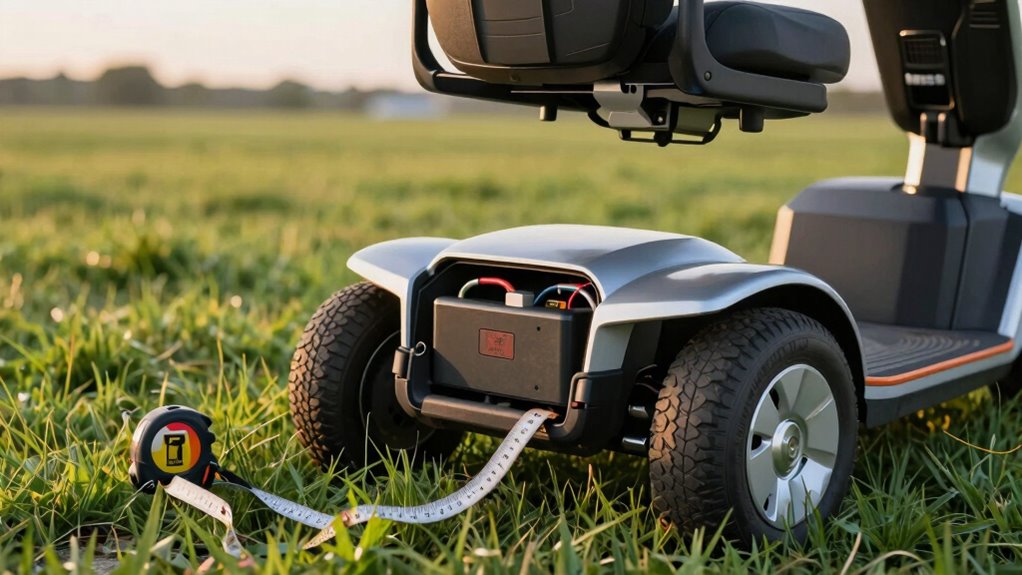
Understanding how battery capacity influences scooter distance is essential for maximizing your mobility. The type of battery you choose and its capacity greatly impact how far you can travel on a single charge. Here are some key factors to take into account:
Understanding how battery capacity affects scooter distance is crucial for optimizing your travel experience and mobility.
- Battery Types: Lithium-ion batteries often provide a longer range compared to lead-acid batteries.
- Capacity Rating: A higher amp-hour rating means more stored energy, translating to longer distances.
- Charging Cycles: Regularly depleting and recharging your battery can affect its overall lifespan and performance.
- Maintenance: Proper care can help maintain battery efficiency, ensuring you get the most out of each charge.
The Impact of Weight on Mobility Scooter Range
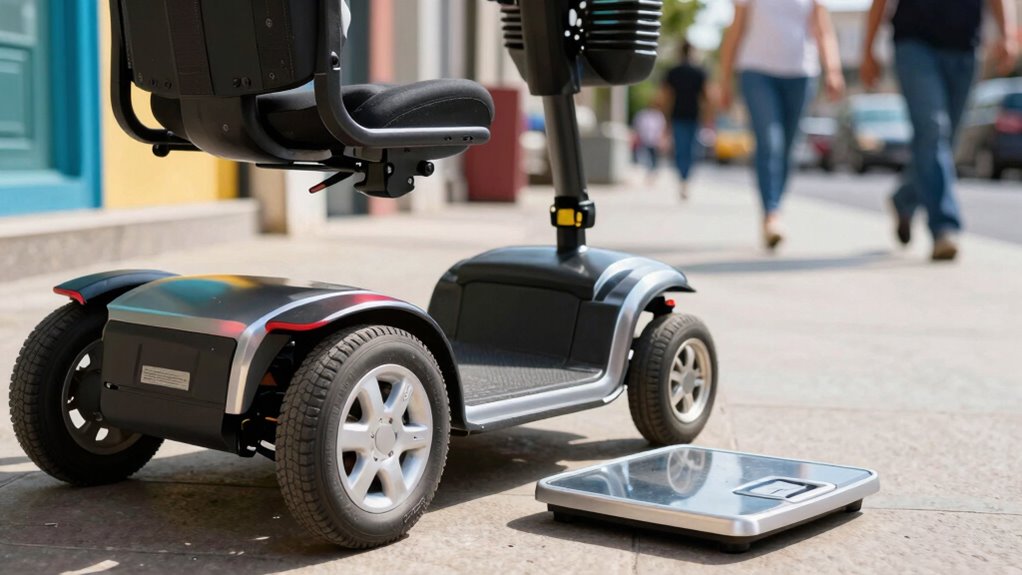
When you use a mobility scooter, your weight plays a significant role in how far you can go. Heavier loads can strain the battery and affect efficiency, especially on varied terrain. Understanding these factors helps you maximize your scooter’s range and performance.
Weight Capacity Considerations
While many factors influence the range of a mobility scooter, weight capacity plays a crucial role. Your weight, along with how you distribute it on the scooter, can greatly affect your travel distance. Consider these key points:
- Heavier users may experience quicker battery drain.
- Uneven weight distribution can strain the motor, limiting range.
- User habits, like frequent stops or uphill travel, impact overall efficiency.
- Riding with additional cargo can further reduce range.
Understanding these aspects helps you make informed choices. By monitoring your weight and habits, you can maximize your scooter’s performance, ensuring it meets your mobility needs effectively. Prioritizing proper weight distribution and awareness of your habits can lead to a more enjoyable riding experience.
Battery Efficiency Impact
Your weight and how you carry it directly influence battery efficiency in a mobility scooter. Proper load distribution is essential; if you’re carrying extra weight or unevenly balancing your items, it can strain the battery. This strain affects battery maintenance, leading to shorter charging cycles and increased range anxiety. To optimize power management, consider your usage habits—frequent stops or rapid acceleration can also drain the battery faster. Environmental factors, like temperature, play a role too; extreme heat or cold can reduce efficiency. Providing personalized in-home care can help seniors understand and manage these factors more effectively. Additionally, implementing ergonomic practices can enhance overall comfort and reduce strain while using your scooter. If you’re looking to enhance your scooter’s performance, scooter upgrades may help, but remember that your weight remains a key factor. Daily charging habits will also influence your scooter’s overall performance, so balancing all these elements will maximize your scooter’s range and efficiency. Understanding battery maintenance practices can further extend the life of your mobility scooter’s battery.
Terrain Challenges Explained
Maneuvering varied terrain can considerably impact the range of your mobility scooter, especially when factoring in your weight. Different environments challenge your scooter’s off-road capabilities and affect how far you can go. Here’s what you should consider:
- Surface types: Smooth pavement vs. rough gravel can create traction issues.
- Incline performance: Climbing hills increases energy consumption and battery wear.
- Obstacle navigation: Maneuvering around obstacles can slow you down, leading to speed variations.
- Durability factors: Heavy weight adds strain, affecting stability concerns and overall performance.
Incorporating smart technology, such as robot mowers, can help streamline yard care, ensuring minimal distractions while navigating varied environments.
Understanding these elements will help you better manage your mobility scooter’s range and guarantee a smoother ride, no matter where you roam.
How Terrain Affects Mobility Scooter Performance
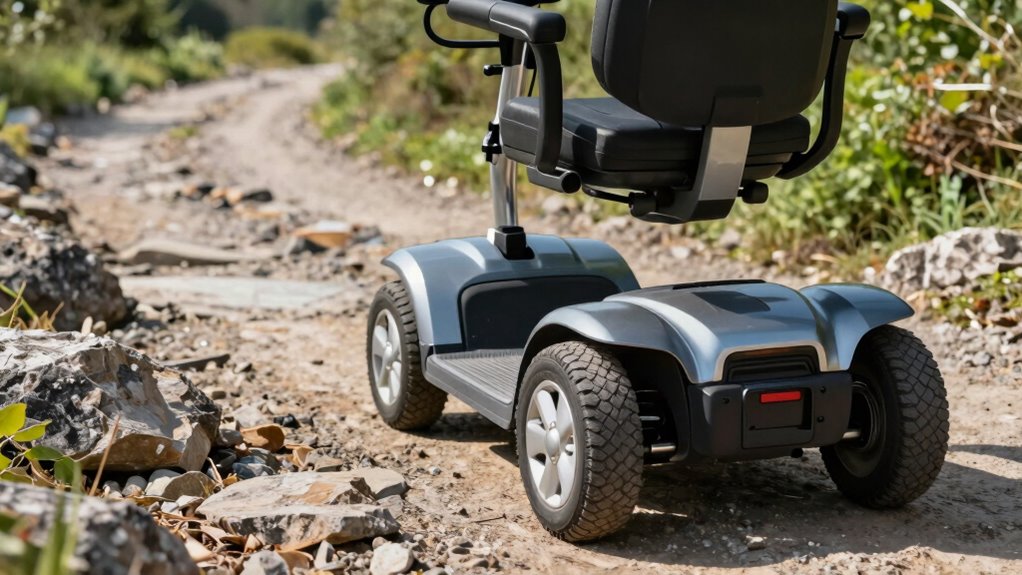
When traversing different terrains, the performance of a mobility scooter can vary considerably. Hill climbing can be challenging, especially on steep inclines where incline effects can drain your battery faster. Different surface types, like gravel or grass, can create traction issues that affect your scooter’s stability. Weather conditions, such as rain or snow, can further complicate obstacle navigation, making it essential to adjust your route. Keeping an eye on tire pressure is vital for peak performance; under-inflated tires can worsen traction and battery life. Regular maintenance tips, like checking your battery and brakes, can greatly enhance your scooter’s adaptability to various terrains, ensuring a smoother ride wherever you go.
How to Balance Speed and Range in Your Scooter
Balancing speed and range in your scooter is essential for maximizing your outings. To achieve this, consider these key strategies for effective speed optimization and range testing:
- Adjust your speed: Lowering your speed can greatly increase your range. This is similar to maintaining work-life harmony, where balance is crucial for overall well-being. Additionally, maintaining a steady pace can help optimize cooling performance and minimize energy consumption. By finding the right balance, you can enhance your overall fitness and endurance during longer rides. Regularly checking your scooter’s air quality can also help maintain optimal performance.
- Monitor battery levels: Keep an eye on your battery to guarantee you have enough power for your desired distance.
- Plan your route: Choose paths that minimize stop-and-go conditions, allowing for a smoother ride.
- Regular maintenance: Confirm your scooter is well-maintained to enhance both speed and efficiency. Additionally, utilizing AI technology can help optimize your scooter’s performance and battery management.
Real-World Factors Affecting Mobility Scooter Range?
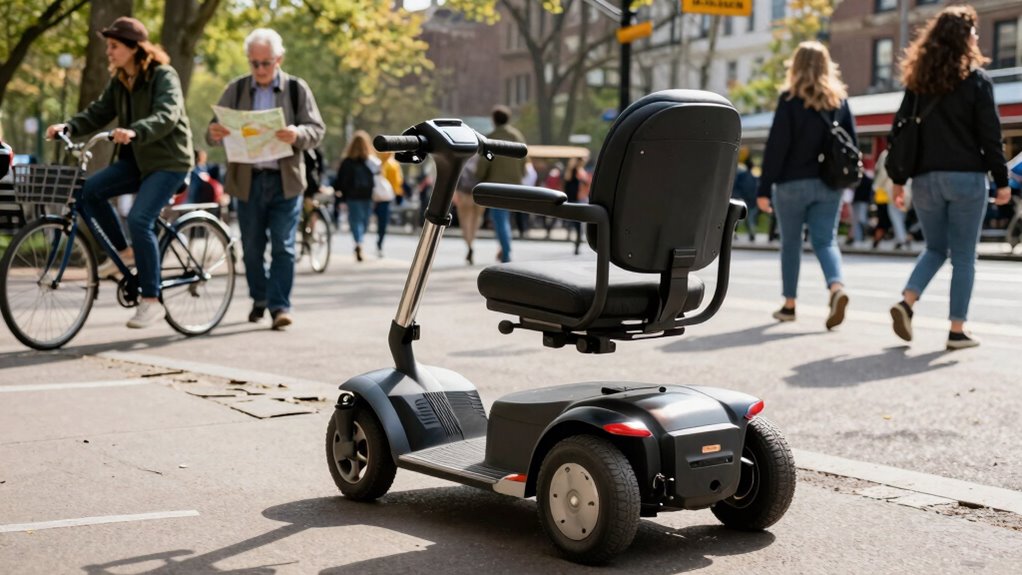
Even with speed adjustments in mind, several real-world factors can greatly impact your mobility scooter’s range. Weather conditions, like rain or extreme temperatures, can drain your battery faster. Verify your tire pressure is ideal; under-inflated tires create more resistance. Your riding habits also matter—frequent stops or aggressive acceleration can shorten your range. Age factors, such as your battery’s condition, play a vital role too; older batteries lose efficiency. Regular maintenance practices help keep your scooter in top shape. Don’t forget accessory weight; carrying extra items can reduce your range. Route planning is essential, as incline effects can markedly drain your battery. Be mindful of the environmental impact; driving on rough terrain can also shorten your scooter’s range.
Tips for Maximizing Your Mobility Scooter’s Battery Life
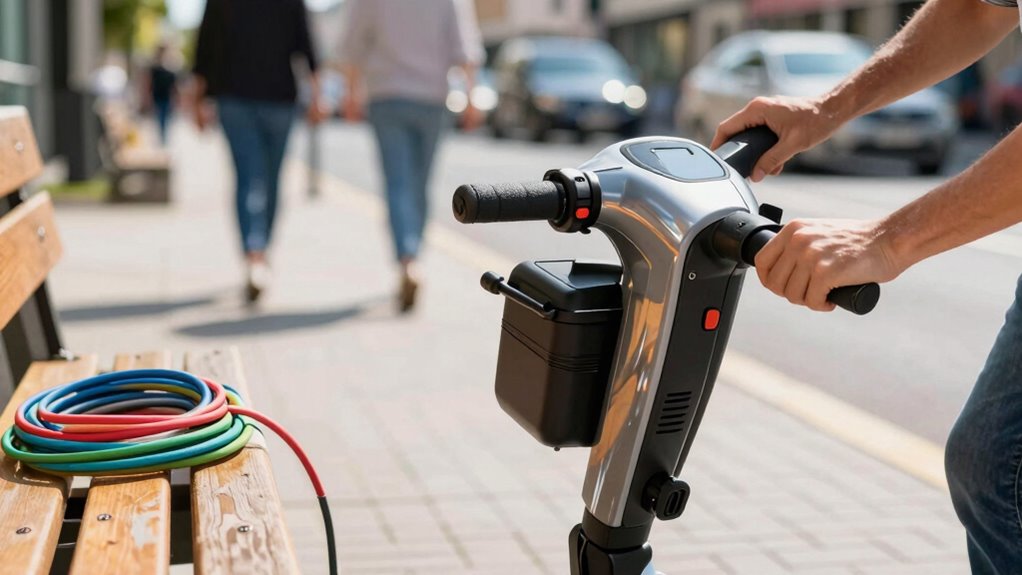
To get the most out of your mobility scooter’s battery, you need to focus on a few key factors. Regular charging habits, ideal speed settings, and terrain considerations can make a big difference in how far you can go. Additionally, maintaining good indoor air quality can enhance your overall riding experience by ensuring you breathe easier while on the road. Proper microplastics exposure in your environment is crucial, as it can affect your respiratory health and overall comfort. Let’s explore these tips to help you maximize your scooter’s battery life.
Regular Charging Habits
While you might be enthusiastic to hit the road on your mobility scooter, establishing regular charging habits is crucial for maximizing battery life. Here are some tips to enhance your battery maintenance and power management:
- Stick to a Charging Schedule: Charge your scooter at consistent times to maintain battery health.
- Choose Ideal Charging Locations: Always plug in your scooter in a cool, dry place to prevent overheating.
- Avoid Deep Discharges: Try not to let the battery run too low before charging; it can shorten its lifespan.
- Keep Connections Clean: Regularly check and clean charging ports to guarantee a solid connection.
Optimal Speed Settings
Choosing the right speed setting on your mobility scooter can greatly impact your battery life. To maximize your scooter’s performance, aim for the ideal speed, typically around 4 mph. This speed not only guarantees a comfortable ride but also enhances speed efficiency, allowing you to travel further on a single charge.
If you push the speed beyond this range, you’ll notice a rapid drain on your battery. Higher speeds create more resistance and require more power, reducing your overall range. Experiment with your scooter’s settings to find that sweet spot where you balance speed and battery conservation. By being mindful of your speed, you can enjoy longer trips without constantly worrying about recharging.
Terrain Considerations
When traversing different terrains, it’s essential to reflect on how they affect your mobility scooter’s battery life. Understanding the terrain types and surface conditions can help you plan better and maximize efficiency. Here are some tips:
- Be mindful of incline effects: Steeper hills drain your battery faster.
- Check ground stability: Uneven surfaces can increase energy use.
- Consider weather factors: Wind and rain may require more power.
- Plan your path carefully: Avoid obstacles that can lead to unnecessary strain.
Top Features of High-Range Mobility Scooters
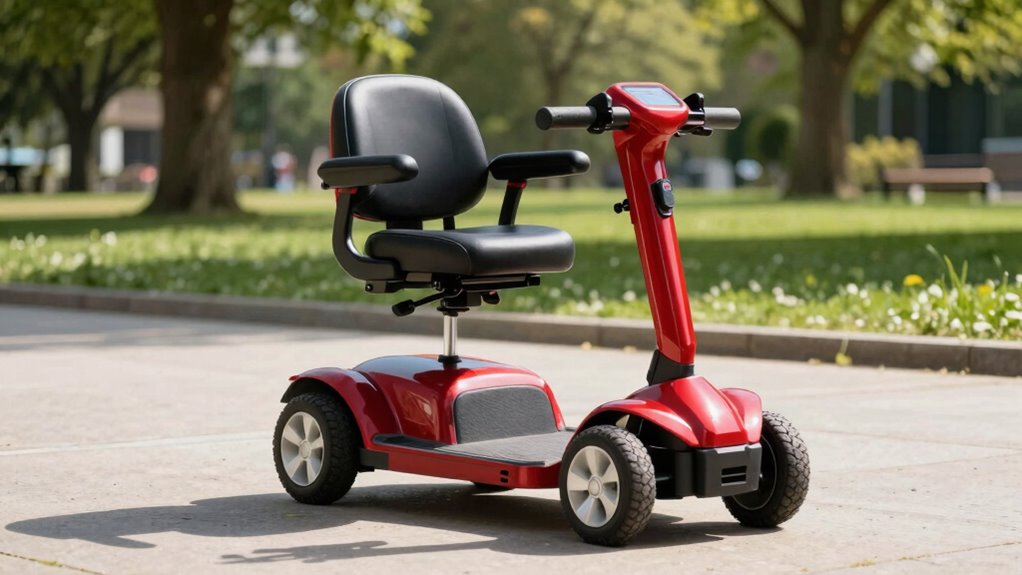
High-range mobility scooters come packed with features that enhance both comfort and functionality. When choosing one, consider safety features like anti-tip mechanisms and bright LED lights for visibility. Design considerations, such as adjustable seating and ergonomic controls, guarantee user comfort during long rides. Additionally, acoustic considerations like sound insulation can contribute to a more enjoyable experience while riding. Portability options, like foldable designs and lightweight materials, make it easy to transport your scooter. Don’t forget maintenance tips, such as regular battery checks and tire inspections, to keep your scooter running smoothly. Additionally, investing in safety products can further enhance your overall experience and peace of mind. Regular cleaning and maintenance of filtration systems ensure optimal performance and longevity of your scooter. Furthermore, understanding the importance of dust removal vacuums can help you maintain a clean environment for your mobility needs. Finally, be mindful of price factors; while high-range scooters can be an investment, their durable construction and advanced features often justify the cost. Prioritizing these elements will help you find the perfect fit for your mobility needs. Moreover, ensuring your environment is pet-friendly can prevent potential hazards that may affect both you and your scooter.
Which Mobility Scooters Offer the Best Range?
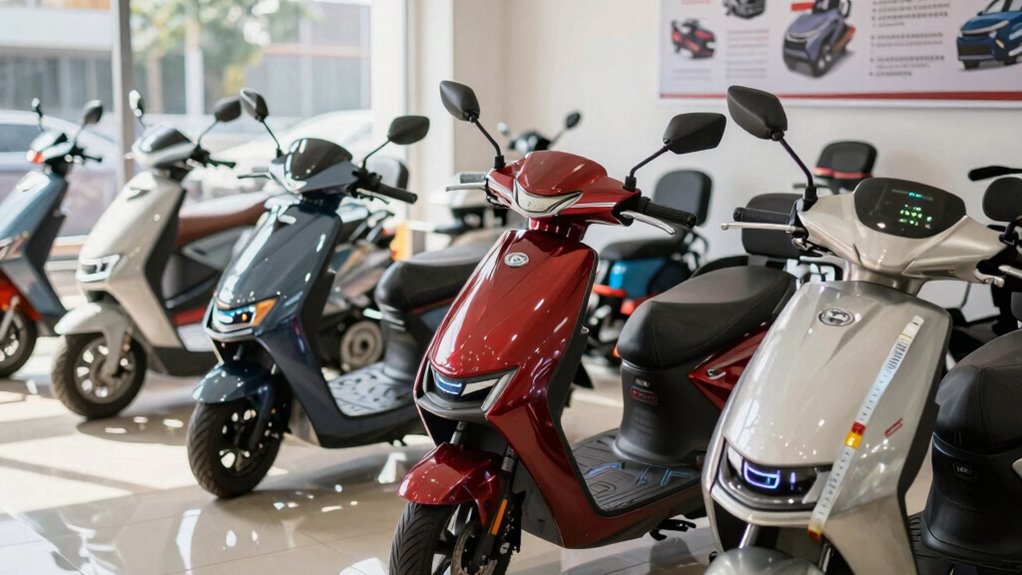
How do you determine which mobility scooters offer the best range? It requires a thoughtful range comparison of various models based on their specifications. Start by evaluating key factors that influence performance:
- Battery capacity: Higher amp-hour ratings generally mean longer travel distances.
- Motor efficiency: Look for models with efficient motors that maximize distance on a single charge.
- Weight capacity: Heavier loads can reduce range, so consider your needs.
- Tire quality: Larger, better tires can improve traction and extend range on different terrains.
How to Choose the Right Mobility Scooter for Your Needs
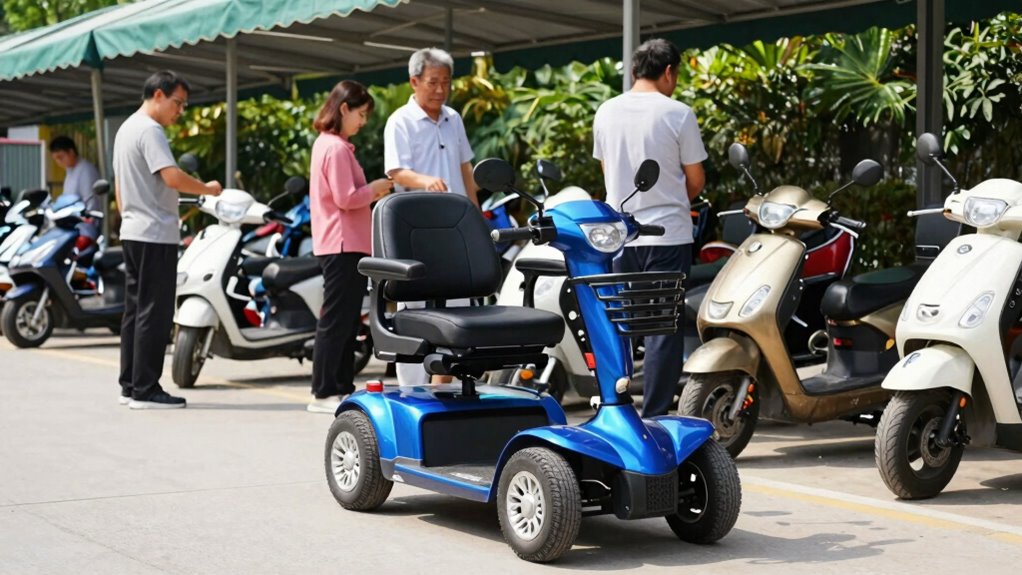
What factors matter most to you when choosing a mobility scooter? Start by evaluating your mobility needs, which can vary based on where you’ll be using the scooter. Think about the terrain—are you maneuvering sidewalks, parks, or indoor spaces? Next, consider the scooter types: three-wheeled models offer tighter turns, while four-wheeled options provide stability for outdoor use. Check the weight capacity and comfort features too; you’ll want a scooter that feels good for long rides. Don’t forget about battery life! A longer range means fewer worries about recharging. Finally, review portability if you plan to transport it. Finding the right balance among these factors will guarantee you make an informed choice tailored to your lifestyle.
Frequently Asked Questions
How Do Weather Conditions Influence Mobility Scooter Range?
Weather conditions greatly influence your mobility scooter range. Temperature affects battery performance, with extreme heat or cold reducing efficiency. Wind resistance can sap your speed and range, making it harder to navigate. Additionally, the terrain you travel over—like hills or rough surfaces—impacts how far you can go. Don’t forget humidity levels, as higher moisture can strain your battery. Keep these factors in mind to maximize your scooter’s performance.
Are There Specific Brands Known for Better Range?
Yes, some brands are known for better range. When you look at brand comparisons, models from companies like Pride Mobility and Drive Medical often receive high marks in user reviews for their extended range and reliability. It’s crucial to check specific models, as features can vary. Reading through user reviews can provide insights into real-world performance, helping you make an informed choice based on your needs and preferences.
Can Tire Pressure Affect My Scooter’s Distance?
Yes, tire pressure can definitely affect your scooter’s distance. Keeping your tires properly inflated is essential for tire maintenance and range enhancement. Under-inflated tires increase rolling resistance, making your scooter work harder and reducing its range. Regularly check the tire pressure and adjust it according to the manufacturer’s recommendations. By maintaining ideal tire pressure, you’ll not only improve performance but also extend the distance you can travel on your mobility scooter.
What Is the Average Lifespan of a Scooter Battery?
The average lifespan of a scooter battery is about 1 to 3 years, depending on your battery maintenance and charging practices. You might think that just charging it when it’s low is enough, but that’s not the case. Regularly checking the battery’s health and avoiding deep discharges can greatly extend its life. Proper care guarantees you get the most out of your investment, keeping your scooter running smoothly for longer.
How Often Should I Replace My Mobility Scooter Battery?
You should replace your mobility scooter battery every 1 to 2 years, depending on usage and battery maintenance. Regularly check for signs of wear, and follow charging tips like avoiding complete discharges and charging after each use to extend battery life. Keeping the battery clean and stored in a cool, dry place can also help. By staying proactive, you’ll guarantee your scooter’s performance remains reliable and efficient.
Conclusion
In conclusion, understanding your mobility scooter’s range can make all the difference in your daily adventures. For instance, imagine you’re planning a day at the park but find your scooter only goes half the distance you need. By considering battery capacity, weight, and terrain, you can avoid such disappointments. So, take the time to choose wisely and maximize your scooter’s capabilities, ensuring every outing is enjoyable and worry-free!