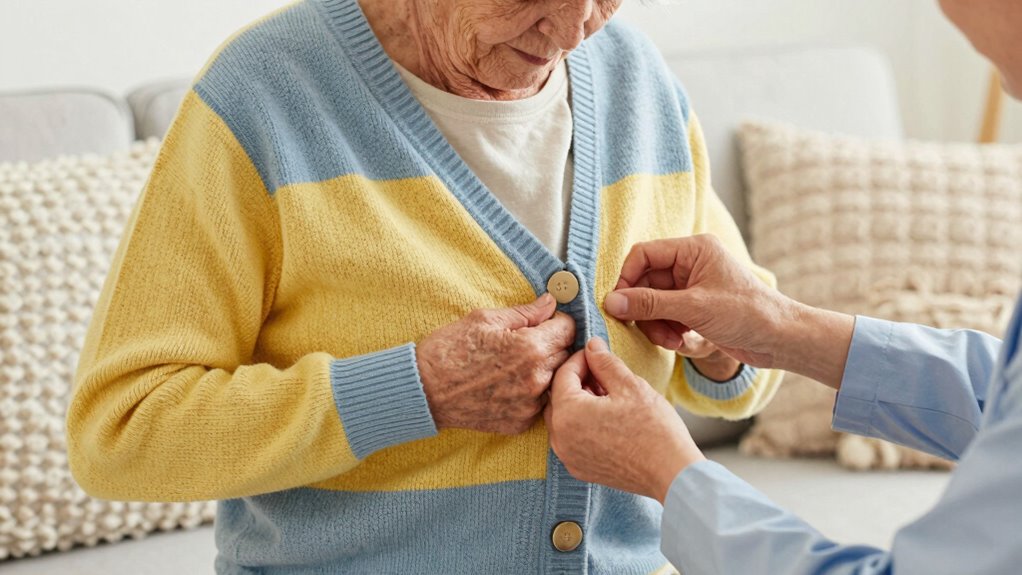

By making small changes like choosing clothing with simple fastenings such as Velcro or magnetic buttons, you can make dressing easier and reduce resistance. Opt for tagless, seamless fabrics that are soft and comfortable, and pick bright colors with clear visual cues to support recognition. Organize wardrobes for quick access, select season-appropriate layers, and avoid complex fastenings or restrictive accessories. These adjustments can foster independence and lessen dressing battles—discover more strategies that help create a calmer dressing routine.

Turn quiet afternoons into listening time
- Thousands of audiobooks, podcasts and originals
- Listen on your phone, tablet or Echo — also offline
- Cancel anytime
Key Takeaways
- Use clothing with easy-to-manage fastenings like Velcro, magnetic buttons, or large snaps to reduce dressing frustration.
- Choose soft, tagless, seamless fabrics that maximize comfort and minimize skin irritation and sensory overload.
- Incorporate bright colors, contrasting patches, and simple visual cues to promote recognition and ease dressing routines.
- Opt for elastic waistbands, slip-on shoes, and simple closures to facilitate independent dressing and reduce resistance.
- Limit complex patterns and avoid restrictive accessories to prevent confusion, discomfort, and dressing battles.
dementia-friendly clothing with magnetic buttons
As an affiliate, we earn on qualifying purchases.
As an affiliate, we earn on qualifying purchases.
Why Choosing Dementia-Friendly Clothing Supports Independence
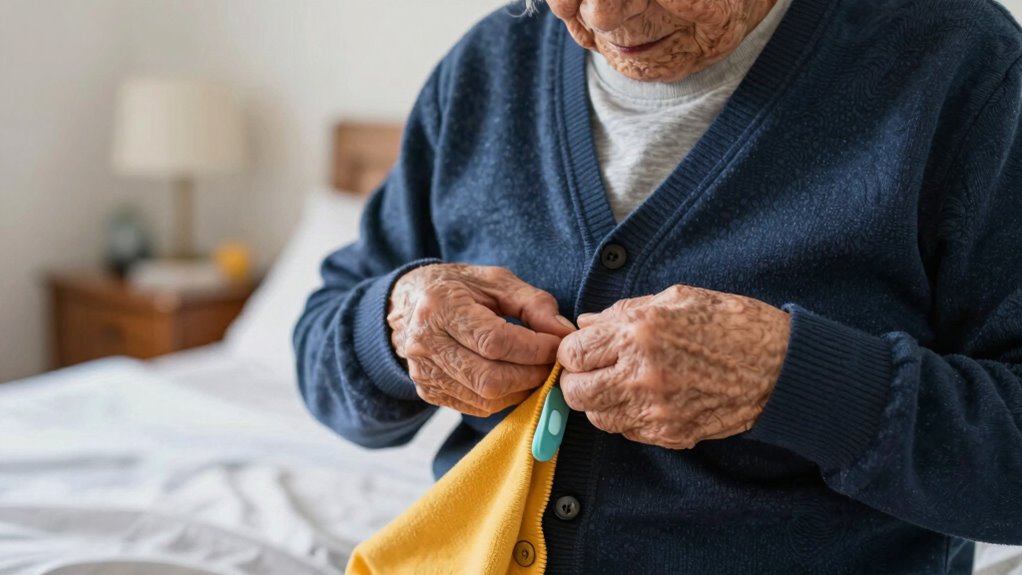
Choosing dementia-friendly clothing can substantially boost your loved one’s independence because it simplifies daily routines and reduces frustration. Adaptive textiles and sensory fabrics play a vital role in this. These specially designed materials are soft, breathable, and gentle on the skin, making dressing a more comfortable experience. Sensory fabrics help minimize tactile discomfort, encouraging your loved one to feel more confident and willing to dress themselves. Adaptive textiles often feature easy-to-manage fastenings or stretchable designs that require less effort and coordination. Additionally, incorporating comfortable fabrics can enhance overall well-being and cooperation during dressing. By selecting clothing made with these innovative fabrics, you help your loved one maintain a sense of autonomy, reduce reliance on caregivers, and foster dignity during daily dressing routines. Research indicates improved sleep duration and reduced awakenings. Incorporating user-friendly fastenings can further streamline dressing, making the process even more accessible for individuals with dementia. Utilizing specialized fabrics that adapt to sensory sensitivities can also significantly improve comfort and cooperation during dressing, especially when paired with adaptive clothing designs.
easy fastenings for dementia clothing
As an affiliate, we earn on qualifying purchases.
As an affiliate, we earn on qualifying purchases.
What Features Make Clothing Easier for People With Dementia
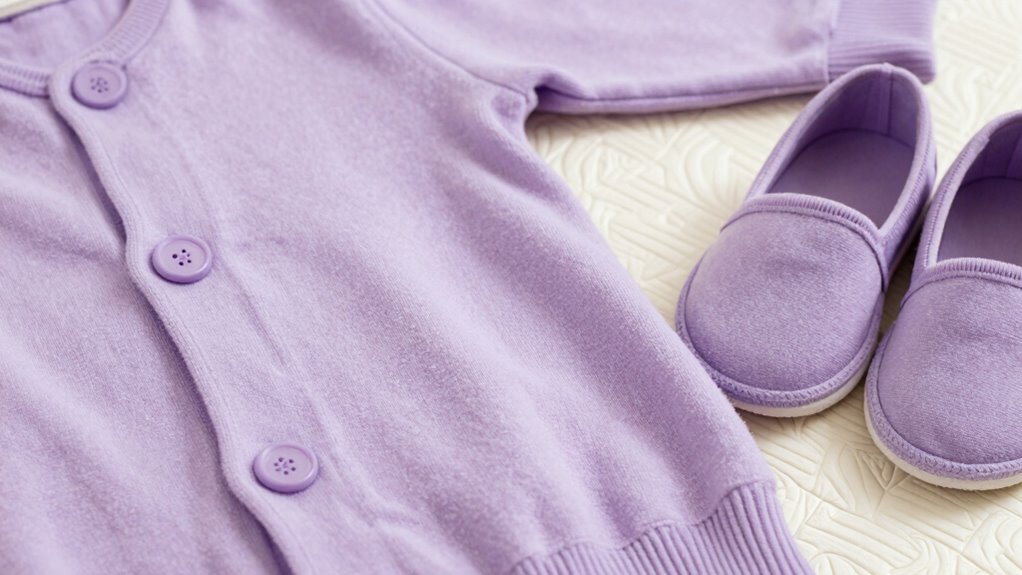
Clothing designed with specific features can make dressing easier and less stressful for people with dementia. Adaptive accessories, like magnetic buttons or Velcro fasteners, simplify the dressing process by eliminating complex fastenings. Sensory fabrics also play a crucial role; soft, breathable materials reduce discomfort and sensory overload. Choose clothing with minimal seams or tags to prevent irritation and confusion. Easy-to-manage closures, such as hook-and-loop fasteners or elastic waistbands, help maintain independence while reducing frustration. Bright colors and clear, simple designs can assist with recognition and orientation. Understanding sensory sensitivities can guide the selection of appropriate fabrics and textures that are more comfortable for individuals with dementia. Incorporating adaptive clothing features can further enhance ease of dressing and promote autonomy. Paying attention to clothing design considerations can make a significant difference in daily routines. Using specialized fasteners can also help caregivers and individuals manage dressing tasks more smoothly. Additionally, selecting clothing with adjustable features allows for better fit and easier dressing, accommodating changing needs over time. By focusing on these features, you create clothing that encourages comfort, confidence, and cooperation during dressing, making daily routines smoother for both you and your loved one.
tagless seamless sensory fabrics for dementia
As an affiliate, we earn on qualifying purchases.
As an affiliate, we earn on qualifying purchases.
How Fastenings Can Reduce Dressing Frustration
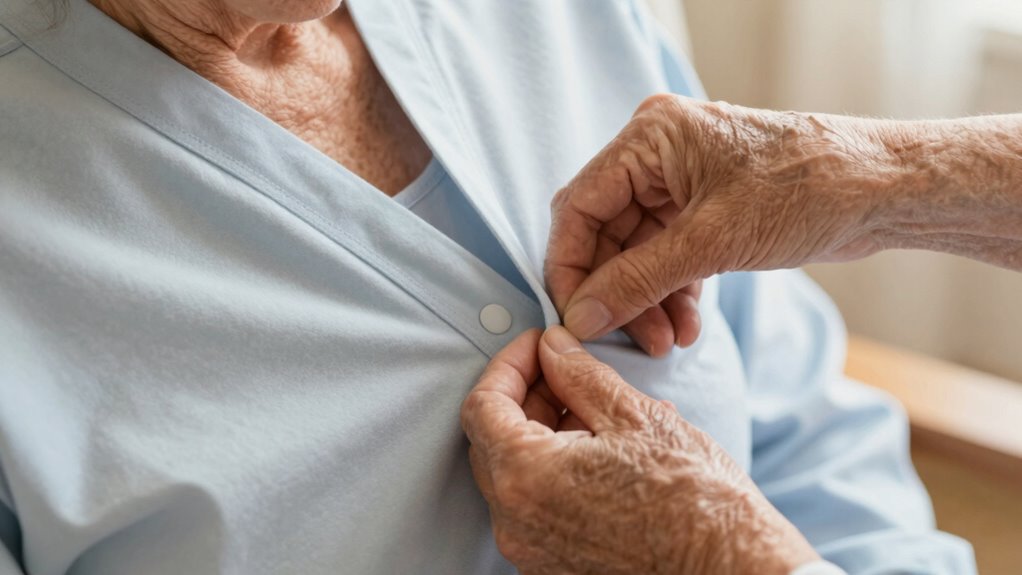
When fastenings are simple and easy to operate, they can considerably reduce the frustration people with dementia experience during dressing. Button fastenings with large, clearly spaced buttons are easier to manage than tiny or closely spaced ones. Zipper alternatives, such as magnetic or velcro fasteners, also make dressing smoother by eliminating the need for fine motor skills and precise movements. These simpler fastenings help prevent the agitation that often accompanies struggling with complicated closures. Choosing clothing with straightforward fastenings allows for quicker dressing and less stress for both the individual and caregiver. By reducing the effort needed to fasten clothing, you create a more comfortable, independent dressing experience, fostering confidence and dignity for those with dementia. Additionally, selecting electric bikes with manageable power features can make transportation options safer and more accessible for caregivers and individuals alike, promoting independent mobility and overall well-being. Incorporating adaptive clothing designs that prioritize ease of fastening can further support independence and reduce dressing-related anxiety. Implementing user-friendly fastenings across clothing options can further enhance comfort and ease of use for individuals with cognitive or motor challenges.
adaptive clothing with bright colors for dementia
As an affiliate, we earn on qualifying purchases.
As an affiliate, we earn on qualifying purchases.
Benefits of Tagless and Seamless Clothing for Comfort
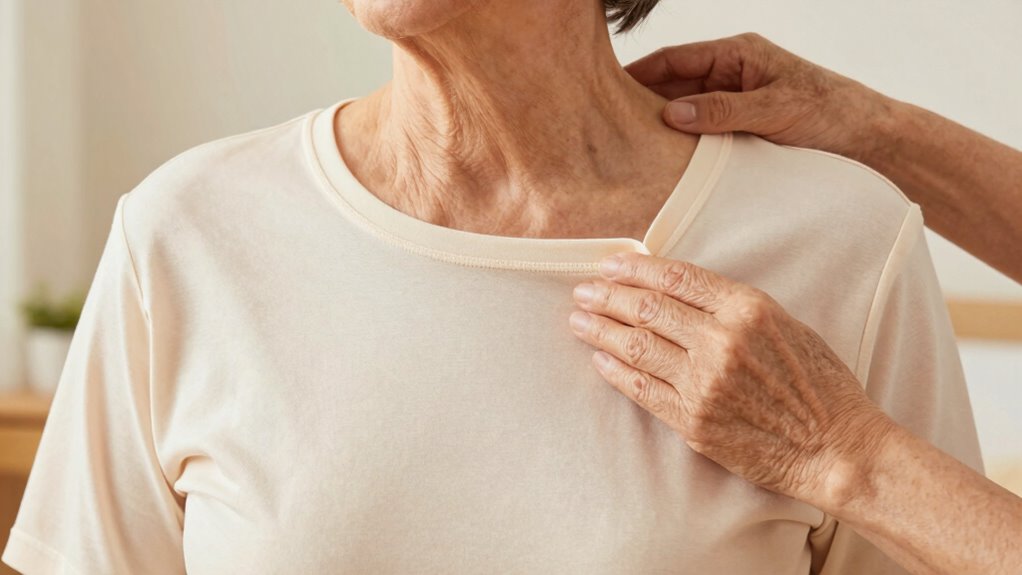
Tagless and seamless clothing offer significant comfort benefits for people with dementia by eliminating common sources of irritation. Without tags or seams, your loved one experiences fewer discomforts related to sensory comfort and skin sensitivity. Tags can scratch or itch, causing agitation or distraction, while seams may press against sensitive skin, leading to discomfort. Seamless designs reduce these issues, creating a smoother, gentler feel against the skin. This design also reduces the likelihood of clothing causing skin irritation or discomfort during movement. This can help your loved one stay calmer and more comfortable throughout the day, making dressing easier for everyone. Plus, the absence of tags and seams minimizes potential triggers for frustration or distress, fostering a more positive dressing experience. Additionally, specialized fabrics used in these garments can further enhance comfort and reduce skin irritation. These fabrics are often chosen for their breathability and softness, which contribute to overall skin health and comfort. Incorporating dye-free and chemical-free materials can also support sensitive skin and reduce allergic reactions. Selecting clothing made from hypoallergenic textiles can provide additional relief for sensitive skin. Overall, choosing tagless and seamless clothing supports comfort and dignity for those with dementia.
Selecting Easy-to-Wear Clothes for Different Seasons
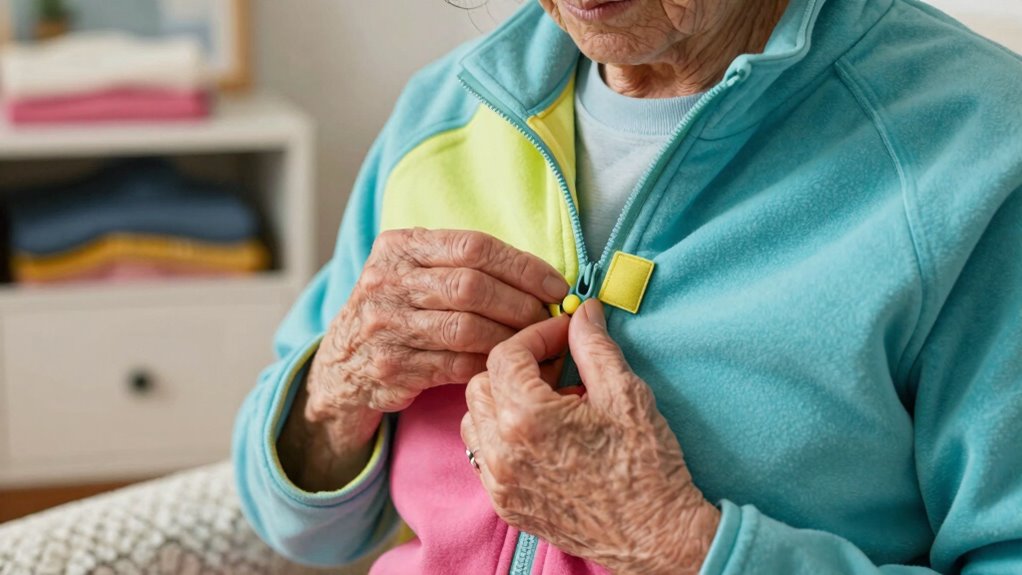
Adapting wardrobe choices to the changing seasons guarantees your loved one stays comfortable and safe year-round. Select clothing that makes seasonal layering easy, so adjusting to temperature shifts is simple. Use weather-appropriate fabrics like lightweight cotton for summer and insulating wool for winter. Layering helps regulate comfort without causing dressing battles. Choose clothes with easy fastenings and simple designs suitable for each season. Here’s a quick guide:
| Season | Recommended Fabrics | Clothing Tips |
|---|---|---|
| Summer | Cotton, linen | Loose shirts, breathable fabrics |
| Fall | Blends, light wool | Layered tops, cardigans |
| Winter | Wool, fleece | Warm coats, thermal wear |
| Spring | Light wool, cotton | Light jackets, layering options |
| Year-round | Weather-appropriate fabrics | Easy-to-wear, comfortable clothes |
Incorporating dressing techniques that simplify seasonal changes can make daily routines smoother for individuals with dementia. Being mindful of clothing fastenings can reduce frustration and promote independence.
Using Color Coding and Visual Cues to Help With Dressing
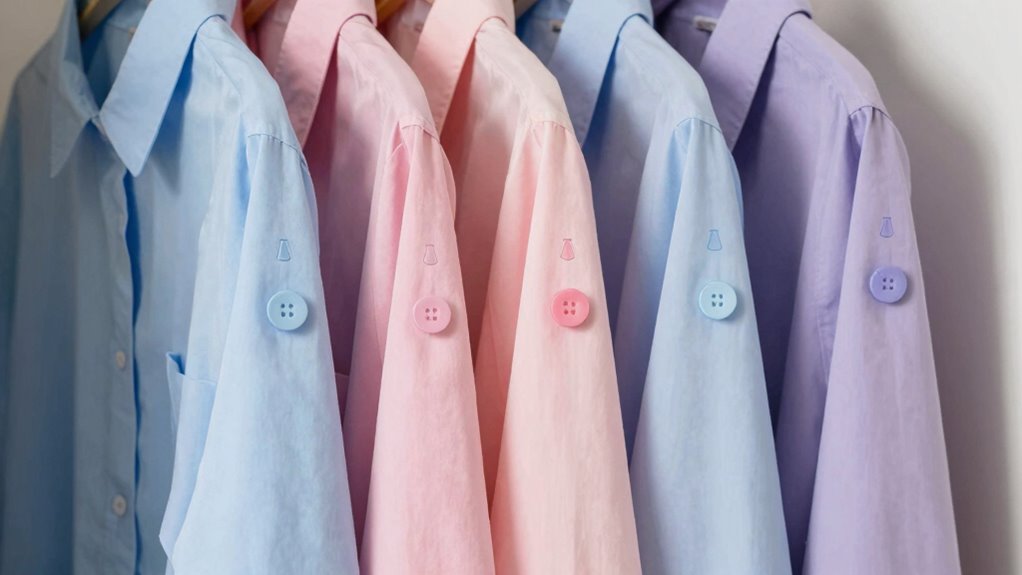
Color coding and visual cues can substantially simplify dressing for individuals with dementia by providing clear, easily recognizable signals. Using color cues, like different shades for tops and bottoms, helps your loved one identify clothing items quickly. Visual markers, such as arrows or labels, can indicate the front and back of garments or which side goes inside out. These simple visual cues reduce confusion and frustration, enabling more independent dressing. For example, placing a bright color patch on the left sleeve or using contrasting colors for buttons and fabric helps distinguish each piece. Consistent use of these visual markers creates a predictable dressing routine, decreasing the chance of dressing battles. Incorporating visual cues that are familiar and simple to interpret can further enhance understanding and ease of dressing for individuals with dementia. Additionally, choosing contrast-rich clothing can help individuals differentiate clothing items more easily. Using high-contrast patterns on clothing can further improve visibility and recognition, making dressing even easier. By incorporating these small but effective adjustments, you make dressing less stressful for both of you.
What Clothing Should You Avoid for Dementia Care
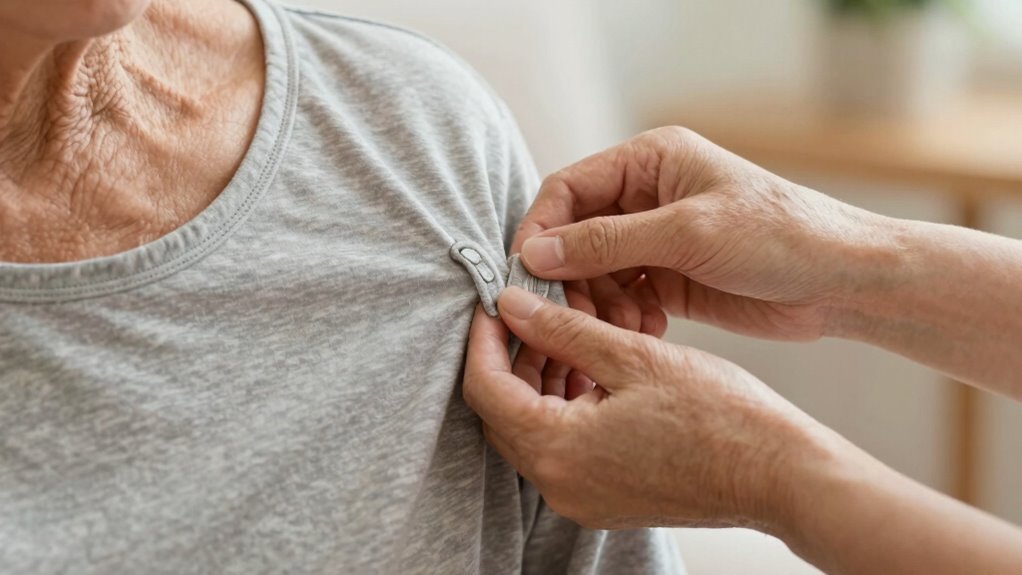
When caring for someone with dementia, it’s important to avoid clothing that can cause confusion or pose safety risks. Steer clear of restrictive accessories like tight necklaces or bracelets, which can be uncomfortable or become choking hazards. Complicated patterns and busy prints can be confusing and make dressing harder. Also, avoid clothing with difficult fastenings, buttons, or zippers that require fine motor skills. Instead, choose simple, easy-to-wear garments. Here’s a quick guide:
| Clothing to Avoid | Why | Alternatives |
|---|---|---|
| Restrictive accessories | Safety risk, discomfort | Soft scarves, elastic headbands |
| Complex patterns | Confuses the wearer | Solid colors or simple designs |
| Difficult fastenings | Frustration, struggle | Velcro or elastic waistbands |
Keeping clothing straightforward helps reduce dressing battles and keeps your loved one comfortable.
Creating a Wardrobe That Builds Confidence and Dignity
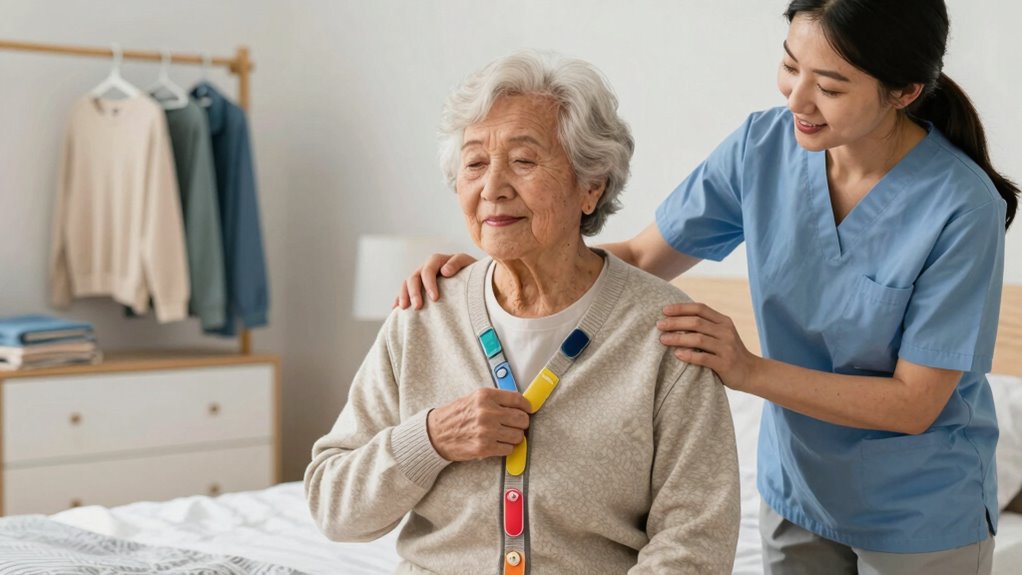
Creating a wardrobe that fosters confidence and dignity means choosing clothes that are easy to manage and feel good to wear. Easy-access fasteners, comfortable fabrics, and simple layouts help your loved ones dress independently and comfortably. By focusing on these elements, you can support their sense of self-respect every day.
Easy-Access Fasteners
Easy-access fasteners like velcro, magnetic buttons, and large zipper pulls make dressing simpler and more confident for those with dementia. These modifications reduce frustration and help maintain independence. For example, replacing traditional button fasteners with magnetic ones allows for quick, secure closures. Large zipper pulls are easier to grasp than tiny tabs, making zipping up less of a struggle. Here’s a quick comparison:
| Fastener Type | Benefit | Ideal Use |
|---|---|---|
| Velcro | Easy to fasten and unfasten | Shoes, jackets |
| Magnetic Buttons | Quick and secure closure | Shirts, cardigans |
| Large Zipper Pulls | Easier grip, less frustration | Pants, coats |
Choosing these fasteners helps foster confidence and dignity, making dressing a smoother experience.
Comfortable Fabric Choices
Choosing the right fabrics can markedly boost comfort and confidence for those with dementia. Soft, breathable fabrics reduce irritation and make dressing easier. Opt for clothing with gentle fabric textures that feel good against the skin, helping prevent discomfort and resistance. When selecting clothing layers, prioritize lightweight, flexible options that don’t cause overheating or restrict movement.
Consider these fabric choices:
- Cotton and linen for breathability and softness
- Jersey or modal for stretch and comfort
- Avoid stiff or rough fabrics that can irritate skin
- Use seamless or tagless garments to prevent itching
Simplified Clothing Layout
How can you design a wardrobe that simplifies dressing and boosts confidence? Start by organizing clothing into a straightforward layout, making it easy to find what’s needed. Use clothing coordination by pairing items that work well together, reducing decision fatigue. Incorporate adaptive accessories, like magnetic closures or elastic waistbands, to make dressing smoother. Keep frequently worn items at eye level or in easily accessible drawers to minimize frustration. Limit the wardrobe to a few versatile pieces that mix and match effortlessly, helping to build independence and dignity. This simplified layout reduces dressing time and confusion, fostering a sense of control. Clear organization and adaptive accessories work together to create a wardrobe that feels manageable and empowering.
Shopping Tips for Finding Dementia-Friendly Clothing
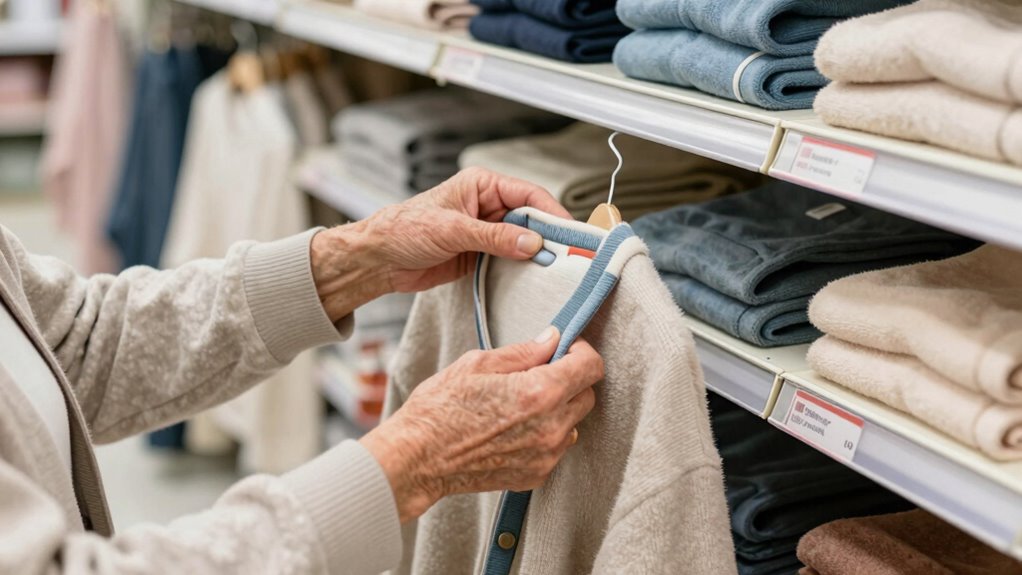
Are you unsure where to start when shopping for dementia-friendly clothing? Focus on items that prioritize comfort and simplicity, while still respecting current fashion trends. Keep these tips in mind:
- Choose clothing with easy-to-manage fasteners, like Velcro or magnetic closures, to simplify dressing.
- Opt for neutral colors and familiar patterns to reduce confusion and promote comfort.
- Look for clothing made from soft, breathable fabrics for added ease and comfort.
- Practice good shopping etiquette by being patient and respectful, especially when discussing clothing needs with sales associates.
Simple Clothing Changes That Prevent Dressing Battles
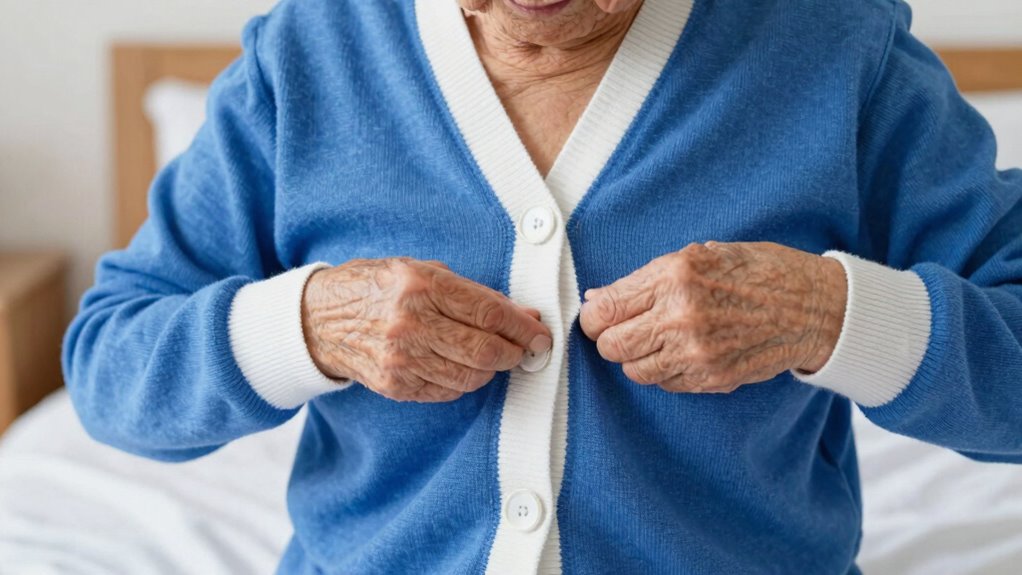
Simplifying clothing choices can considerably reduce dressing battles for individuals with dementia. Focus on plain, easy-to-wear pieces that align with current fashion trends, but avoid complicated fastenings or multiple layers. Opt for clothing with simple closures, like Velcro or magnetic buttons, instead of traditional buttons or zippers. Incorporate clothing accessories that are easy to manage, such as slip-on shoes or elastic waistbands, which eliminate frustration. Keep patterns minimal and colors coordinated to make matching easier and boost confidence. Removing unnecessary accessories prevents distraction and confusion, streamlining the dressing process. These small adjustments help create a calm, predictable routine, making dressing less stressful for both you and your loved one while maintaining a sense of style and independence.
Frequently Asked Questions
How Can I Personalize Clothing to Suit Individual Preferences?
You can personalize clothing by choosing options that match sensory preferences, like soft fabrics or tagless designs. Incorporate personalization options such as preferred colors, easy-closure buttons, or adjustable features to suit individual tastes. Pay attention to textures, seams, and fit, ensuring comfort. By tailoring clothing to their preferences, you make dressing easier and more enjoyable, reducing frustration and promoting independence for your loved one.
Are There Specific Brands Known for Dementia-Friendly Fashion?
Think of senior fashion as a gentle stream, flowing with clothing brands that prioritize comfort and ease. Brands like Zappos Adaptive, Silverts, and Buck & Buck specialize in dementia-friendly clothing, offering easy closures and soft fabrics. These clothing brands remove the hurdles of dressing, making each day smoother. You’ll find them designed to meet the needs of those with dementia, turning dressing into a simple, stress-free part of the day.
How Do I Introduce New Clothing Styles to Someone With Dementia?
To introduce new clothing styles, start with simple dress code modifications that suit their comfort and preferences. Show them the new items gradually, involving them in wardrobe organization to boost familiarity. Keep shifts gentle; mix new pieces with familiar ones. Use positive reinforcement and patience, allowing plenty of time for adaptation. This approach helps reduce confusion and ensures dressing remains a comfortable, stress-free experience for someone with dementia.
Can Adaptive Clothing Be Stylish and Age-Appropriate?
Yes, adaptive clothing can be both stylish and age-appropriate. You can find options that follow current fashion trends while prioritizing comfort and ease of dressing. Look for designs with modern patterns, neutral colors, and tailored fits that suit an older adult’s style. By choosing adaptive clothing that reflects their personality and current trends, you help them feel confident and comfortable without sacrificing age-appropriate fashion.
What Role Does Fabric Choice Play in Comfort and Safety?
Imagine a gentle hug every time you wear your clothing—that’s how fabric texture influences comfort and safety. Soft, smooth fabrics reduce irritation and prevent skin issues, helping your loved ones feel secure. Choosing breathable, non-restrictive materials also supports clothing safety by minimizing the risk of choking or discomfort. By prioritizing fabric choice, you make dressing easier, more comfortable, and safer, fostering independence and peace of mind.
Conclusion
By making small changes to clothing, you can support independence and reduce dressing frustrations. Look for easy-to-wear features, avoid uncomfortable fastenings, and choose gentle fabrics. Remember, “A little kindness goes a long way,” so be patient and attentive. These simple adjustments not only foster dignity but also turn dressing into a positive experience. Embrace these tips to create a wardrobe that empowers your loved one and brings comfort to both of you.
Fall Picks
fall essentials
As an affiliate, we earn on qualifying purchases.