
TL;DR

Turn quiet afternoons into listening time
- Thousands of audiobooks, podcasts and originals
- Listen on your phone, tablet or Echo — also offline
- Cancel anytime
A University of Lancashire care-home placement gives first-year medical students time to talk with residents about their lives rather than conduct medical assessments. Student reflections describe learning to listen and adapt, but the project did not formally measure empathy or establish lasting effects.
The University of Lancashire has made a care-home conversation placement compulsory for first-year medical students, asking them to learn about residents’ lives rather than take medical histories or make diagnoses. Reflections from participating students describe practicing listening, patience and flexible communication, though the project did not formally measure whether empathy improved or whether any effects lasted.
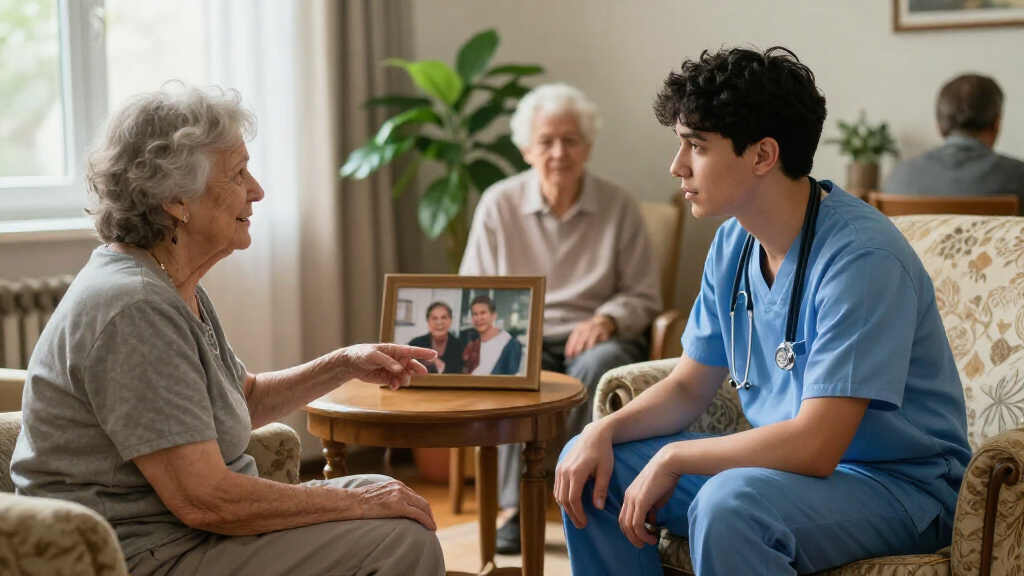
Known as The Person Before the Patient, the program was piloted in 2023/24 and became compulsory in 2024/25. It operates across 11 care homes, where students take part in four-week placements and meet residents who may be living with dementia, frailty or long-term conditions. The conversations are not clinical assessments: students are asked to learn about residents’ interests and experiences.
The report’s author says some students initially arrive with prepared questions and expect predictable answers. One student said the placement required them to listen more and let the resident lead, including becoming comfortable with pauses while someone searched for words. The student also reported paying more attention to facial expressions and gestures.
Of 281 students who took part, 157 voluntarily submitted written reflections for the ethically approved project. Those accounts describe what respondents felt they learned, not a measured change across all students. The author says the evaluation did not formally assess empathy and that volunteers may have viewed the placement more positively than non-respondents.
Practicing Listening Beyond the Clinic
The placement offers students practice in communicating without the usual structure of a medical consultation. Learning to follow a resident’s pace and preferences may be relevant when a patient has hearing loss or memory difficulties, situations in which prepared questions may not be enough. NICE dementia guidance recommends adapting communication to people’s needs and taking account of their histories and preferences.
The report argues that conversation can help students encounter residents as people with individual lives, rather than as diagnoses or tasks. That is a potential educational benefit, not a proven outcome of this project. The distinction matters because positive reflections do not establish lasting empathy or show that students behave differently once they enter clinical work.
There is also a question of benefit and control for residents. They should be able to decide whether to take part and what they wish to share. The report says some residents in participating homes discussed hosting students and, with staff, how placement funding would be used. Care-home managers reported that many residents enjoyed visits and looked forward to students returning.
As an affiliate, we earn on qualifying purchases.
How the Placement Fits Existing Evidence
The project addresses a concern in medical education: empathy can be difficult to develop and sustain, and some research suggests it declines during training, particularly as students enter clinical settings. Findings are not uniform. A 2023 review of 16 studies identified heavy workloads and poor role models among factors that may contribute to emotional detachment, sometimes described as part of the “hidden curriculum” students absorb alongside formal teaching.
Other programs offer relevant but not identical evidence. An Australian study of 61 fifth-year students found that five-day care-home placements improved dementia knowledge and attitudes toward working with older people, while some students questioned their educational value. A UK evaluation of Time for Dementia reported improvements in knowledge and attitudes among students who visited people with dementia and their families, but found no significant difference in measured empathy compared with other students.
The report also cites a New Zealand analysis of reflections from five students involved in nursing-home caregiving. Some described recognizing residents as individuals; other accounts showed that difficult experiences could overwhelm students and affect how they viewed residents. That small study involved hands-on care, unlike Lancashire’s conversation-based placement, but the author says it points to the value of supporting reflection.
“I realized that I had to adapt my communication style. This meant listening more and allowing the resident to lead the conversation, rather than relying on prepared questions.”
— A first-year medical student reflecting on the placement
home emergency alert system for elderly
As an affiliate, we earn on qualifying purchases.
As an affiliate, we earn on qualifying purchases.
What the Reflections Cannot Show
The project’s written accounts cannot establish whether the placement caused students to become more empathetic. Participation in the reflection exercise was voluntary, and the report says students who responded may have had more positive views than those who did not. The study also did not test whether reported learning changed clinical behavior or persisted over time.
Evidence from other programs does not settle the question. The Time for Dementia evaluation found no significant measured empathy difference, while a review of long-term empathy training found little evidence that gains persist. The report says a fuller assessment would need to follow students after they begin clinical training. It does not provide a formal account of how residents’ experiences were assessed across all 11 homes.
medical communication aids for dementia
As an affiliate, we earn on qualifying purchases.
As an affiliate, we earn on qualifying purchases.
Evaluating Learning Over Time
The report identifies longer-term evaluation as the next step: researchers would need to assess students beyond their immediate impressions and follow them into clinical training. That could help establish whether the communication lessons are retained and whether they affect interactions with patients.
Any further evaluation should also account for residents’ choices and experiences, rather than treating student reflections as the sole measure of success. The source does not announce a timetable for such research or specify whether a follow-up study is planned. For now, the confirmed evidence is that the placement is operating across 11 homes and that some participating students described learning from the conversations.
senior care conversation training tools
As an affiliate, we earn on qualifying purchases.
As an affiliate, we earn on qualifying purchases.
Key Questions
What do medical students do during the care-home placement?
They meet residents over a four-week placement and learn about their interests and experiences. The activity is conversation-based, not a medical history-taking or diagnosis exercise.
How many students took part in the project?
The report says 281 students undertook the placement. Of those, 157 voluntarily submitted written reflections for the project.
Did the project prove that students became more empathetic?
No. Students described what they felt they learned, but the project did not formally measure empathy or assess whether any change lasted.
Do residents benefit from the visits?
Care-home managers reported that many residents enjoyed the visits and looked forward to students returning. The report says residents should be able to choose whether to participate and what to share.
Source: rss
Halloween Picks
halloween
As an affiliate, we earn on qualifying purchases.