TL;DR

Turn quiet afternoons into listening time
- Thousands of audiobooks, podcasts and originals
- Listen on your phone, tablet or Echo — also offline
- Cancel anytime
A systematic review found that higher adherence to predefined Japanese-style dietary scores was associated with lower all-cause and cardiovascular mortality in Japanese populations. The pooled findings came from only three studies and varied substantially; evidence on cancer and other health outcomes was mixed.
A systematic review published in Advances in Nutrition found that Japanese people with greater adherence to predefined Japanese-style dietary patterns had lower all-cause and cardiovascular mortality in pooled analyses, but the results were based on just three studies and showed substantial variation between them. The review does not establish that the diet caused the lower risks, and its findings for cancer and other health outcomes were mixed.
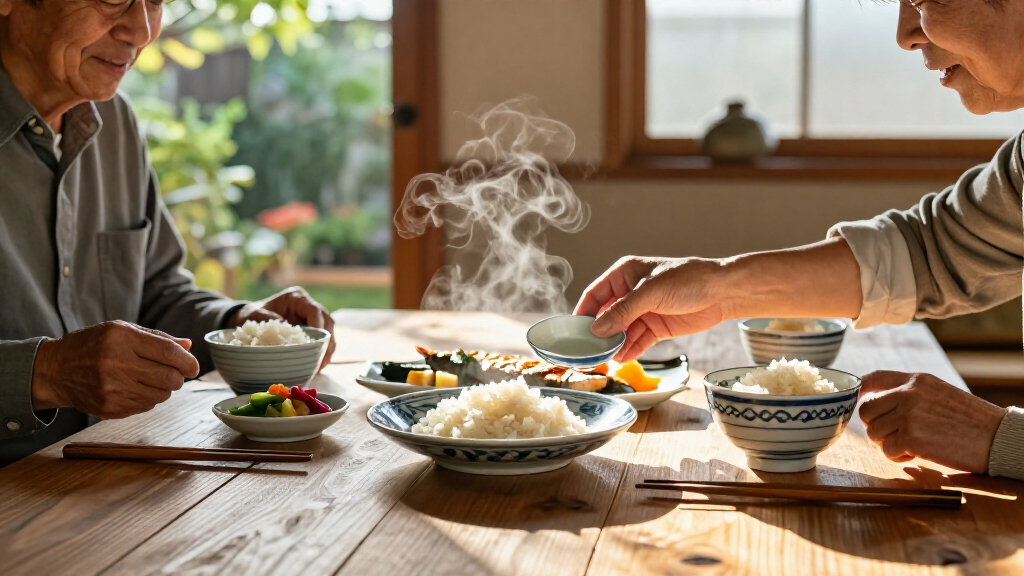
The review examined dietary patterns built around foods commonly associated with Japanese eating, including rice, soy, seafood, miso soup, green tea, vegetables, seaweed and pickles. Researchers searched PubMed/MEDLINE and Web of Science for studies of community-dwelling populations in Japan, covering both predefined diet scores and patterns identified by analyzing participants’ reported food intake.
From 1,362 records initially identified, the team retained 37 reports: 12 for analytical synthesis and 25 for qualitative review. Only three studies using predefined Japanese-style diet scores could be combined in the mortality meta-analyses. Higher scores were associated with lower all-cause and cardiovascular mortality than lower scores, but the researchers reported substantial heterogeneity, meaning the results differed considerably among studies.
The review found no clear association with total cancer mortality. Results varied by cancer type and dietary pattern. Among data-derived patterns, traditional versions tended to feature rice, miso soup, fish and pickles, while patterns described as healthy included a wider mix of plant foods and contemporary items. Findings for gastric cancer incidence and mortality were not consistent across patterns. The researchers also noted that three studies in the analytical synthesis were judged at high risk of bias and nine had some concerns.
What the Mortality Findings Show
The findings add to research on whether dietary patterns common in Japan are associated with health over time, but they do not show that any one food or meal causes longer life. The association with lower mortality may matter to public health because it concerns overall and cardiovascular deaths, yet the small number of studies in the pooled analysis and their substantial heterogeneity limit how confidently the result can be generalized.
The review also cautions against treating “the Japanese diet” as one fixed menu. Scoring systems and definitions differed across studies, and data-derived patterns grouped foods in different ways. That matters for readers interpreting broad claims about traditional eating: the foods, proportions and other features of the diet may vary, and the review cannot isolate the effect of rice, fish, pickles or another individual food.
As an affiliate, we earn on qualifying purchases.
How Researchers Defined Japanese-Style Eating
The researchers separated dietary patterns into two categories. Predefined scores measure how closely people follow a food structure set by researchers in advance; these included the Japanese Diet Index family and related scores. Data-derived patterns are identified from dietary data, often using statistical methods such as factor analysis or principal component analysis.
The review noted that, unlike the Mediterranean diet, Japanese-style eating has no widely accepted scoring system or absolute intake criteria. To compare data-derived patterns, the team assessed how closely their food-group composition resembled the JDI-9 index. Nine additional studies supplied 43 patterns for visual comparison: 21 were classified as JDI-9-like and 22 were not. This approach helps organize diverse research, but it does not make the underlying diet definitions interchangeable.
Beyond mortality and cancer, the review covered falls and fractures, frailty, sarcopenia, cognitive function, functional disability and long-term care needs. The qualitative evidence included eight cross-sectional and 17 longitudinal studies. Some reported links between Japanese-style or plant-food patterns and lower mortality, or between certain patterns and lower dementia or disability risks; findings for frailty, cognition, muscle health and fractures were mixed or imprecise.
“Higher scores were associated with lower all-cause mortality and cardiovascular disease mortality than lower scores.”
— The review authors, as summarized in News-Medical
As an affiliate, we earn on qualifying purchases.
Limits Across Diet Studies
The evidence does not establish whether Japanese-style eating itself lowers mortality, or whether other differences among people who follow these diets explain some of the association. The mortality meta-analyses included only three studies, with substantial between-study heterogeneity. Definitions of the diet varied, and many other outcomes were assessed in studies that could not be pooled into a single estimate.
Risk-of-bias assessments also temper confidence: three analytical studies were rated high risk and nine had some concerns. In the qualitative synthesis, 10 studies were rated high risk and seven had some concerns; cross-sectional studies did not receive an overall judgment. The review’s report does not provide a single effect size here that would allow readers to judge the absolute reduction in mortality risk. It also remains unclear which particular foods or combinations account for the observed associations.
As an affiliate, we earn on qualifying purchases.
What Future Research Must Clarify
The review identifies a need for more consistent ways to define and score Japanese-style diets, so findings from different populations and studies can be compared more reliably. Larger, better-designed studies could test whether the mortality associations persist and clarify how results differ by age, sex, dietary pattern and specific cause of death.
For now, the review supports a cautious reading: higher adherence to some Japanese-style dietary scores was associated with lower overall and cardiovascular mortality, while evidence for cancer and other outcomes remains mixed. The report does not establish a specific meal plan or show that changing diet alone will produce a particular health outcome.
As an affiliate, we earn on qualifying purchases.
Key Questions
Did the review prove that the Japanese diet makes people live longer?
No. It found an association between higher scores on predefined Japanese-style diets and lower all-cause mortality, but observational evidence does not establish that the diet caused the difference.
Which foods were commonly included in the patterns?
The patterns often included rice, soy products, seafood, miso soup, green tea, vegetables, seaweed and pickles. The exact foods and scoring rules varied across studies.
What did the review find about cancer?
It found no clear association with total cancer mortality. Results differed by cancer type and dietary pattern, including mixed findings for gastric cancer.
How strong was the evidence?
The pooled mortality analyses combined only three studies and showed substantial heterogeneity. The review also identified risk-of-bias concerns in several included studies, so the findings should be interpreted cautiously.
Source: rss
Halloween Picks
halloween
As an affiliate, we earn on qualifying purchases.