

To track side effects like a pro without obsessing, set up a simple, consistent system that fits your routine—like a regular time to log symptoms using a straightforward notebook or app. Focus on key reactions, noting details like severity and timing, and use reminders to stay on track. Review your data regularly to spot patterns, but avoid overanalyzing minor fluctuations. Keep it manageable, and you’ll stay informed and in control—more helpful tips await if you continue exploring.

Turn quiet afternoons into listening time
- Thousands of audiobooks, podcasts and originals
- Listen on your phone, tablet or Echo — also offline
- Cancel anytime
Key Takeaways
- Use simple, consistent tools like a dedicated app or notebook to record key symptoms daily.
- Set specific, manageable routines with reminders to ensure steady tracking without stress.
- Focus on major symptoms and patterns, avoiding overanalyzing minor details.
- Review data regularly to identify trends that inform health decisions and discussions with providers.
- Keep documentation straightforward and specific to prevent obsessing and maintain a balanced approach.
medication side effects tracking app
As an affiliate, we earn on qualifying purchases.
As an affiliate, we earn on qualifying purchases.
Why Tracking Side Effects Is Important for Your Health

Tracking your side effects is essential because it helps you identify patterns and understand how medications or treatments affect your body. When you stay aware of your symptoms, you improve medication awareness, which can lead to better health decisions. Recognizing which side effects are temporary or persistent allows you to manage symptoms more effectively. This proactive approach supports symptom management, reducing discomfort and preventing complications. By diligently recording how you feel, you can communicate more accurately with your healthcare provider. They’ll better understand your experience and may adjust your treatment if necessary. Ultimately, tracking side effects empowers you to take control of your health, ensuring you’re informed and engaged in your care journey. Additionally, using tools like smart health devices can streamline this process and provide real-time data to both you and your medical team.
As an affiliate, we earn on qualifying purchases.
How to Set Up a Simple System for Recording Reactions

Start by choosing a recording tool that’s easy for you to use, like a notebook, app, or chart. Then, set a consistent time each day to log your reactions, so your records stay accurate and organized. This simple setup helps you track side effects effectively and notice patterns over time. Incorporating passive voice detection tools can also assist in reviewing your writing for clarity and active phrasing. Additionally, using industry trend knowledge can help you adapt your tracking system as needed and stay informed about new methods. Staying updated on digital content advancements can further optimize your approach and improve your overall tracking process. Paying attention to technological innovations in recording methods can also enhance the accuracy and efficiency of your tracking system.
Choose a Recording Tool
Choosing a simple recording tool is essential for effectively tracking side effects. You have two main options: digital tools or paper journals. Digital tools, like apps or online spreadsheets, make it easy to log side effects quickly and organize data for easy review. They often come with reminders, prompts, and customizable templates, which help you stay consistent. Paper journals offer a straightforward, distraction-free alternative that can be more personal and flexible. You can jot down reactions anytime, using a notebook or printed templates. The key is selecting a tool you feel comfortable using regularly. Whether digital or paper, the goal is to create a reliable, simple system that encourages consistent recording without adding stress or complexity. Incorporating Free Floating techniques can also help you maintain a relaxed approach to tracking.
Establish Consistent Timing
To guarantee you catch side effects consistently, setting a regular recording schedule is essential. Maintaining timing consistency helps you notice patterns and reduces missed reactions. Establish a routine adherence by recording at the same times each day, such as morning, afternoon, and evening. This consistency makes tracking manageable and less overwhelming. To stay on track, consider these tips:
- Pick specific times aligned with your daily habits
- Use reminders or alarms to prompt recordings
- Keep your recording tool easily accessible
As an affiliate, we earn on qualifying purchases.
How to Choose the Best Tools to Track Side Effects

To choose the best tools for tracking side effects, start by evaluating your specific needs and the types of reactions you want to monitor. Then, compare options based on features, ease of use, and security to find what fits your lifestyle. Prioritizing simplicity and data protection ensures your tracking system remains effective and reliable. Being aware of affiliate disclosure policies can help you make informed choices about the products and services you use. Additionally, understanding digital safety principles can protect your personal information while managing your health data. Recognizing the importance of child development can guide you in selecting age-appropriate and developmentally supportive tracking tools. Incorporating routine checkups with healthcare professionals can further optimize your monitoring process and address any concerns promptly. Keep in mind that using body piercing tracking tools can be beneficial for monitoring healing progress and preventing complications.
Assess Your Tracking Needs
Understanding your specific tracking needs is the first step in selecting the right tools for monitoring side effects. Consider how often you’ll log information—daily, weekly, or as symptoms occur—and whether you need detailed notes or quick entries. Think about your focus on symptom severity: do you want to track minor fluctuations or only significant changes? Clarifying these points helps you choose tools that match your routine and goals. Key factors include:
- Tracking frequency: How often you’ll log data
- Symptom severity: Level of detail needed
- Ease of use for quick entries
- Compatibility with your devices
- Incorporate comedo ratings to better understand how skin reactions may relate to product ingredients. Additionally, exploring tracking apps that are designed for health monitoring can enhance your ability to record and analyze data efficiently. Evaluating data visualization options can also help you identify patterns and trends more easily over time, especially when using tools that support customizable dashboards for clearer insights. Incorporating automated reminders can ensure consistency in your tracking routine, making it easier to maintain accurate records.
Compare Available Tools
Once you’ve identified your tracking needs, it’s time to explore the tools available. You can choose between digital apps and paper logs, depending on your preferences. Digital apps often offer easy customization, reminders, and quick data entry, making them convenient for daily tracking. They also allow you to analyze patterns over time with built-in reports. Paper logs, on the other hand, provide a tactile and distraction-free way to record side effects, which some find more personal and straightforward. Consider how comfortable you are with technology, your lifestyle, and the level of detail you want to capture. Comparing these options helps you find a tool that fits your routine, ensures accuracy in data recording, and makes tracking feel manageable rather than burdensome. Additionally, assessing the feedback loop capabilities of different tools can help you choose one that supports ongoing growth and adjustment in your tracking process. Evaluating whether a tool offers privacy protections can also be an important factor in your decision-making. Exploring integration options may further enhance your tracking by streamlining data collection from other sources or devices. Incorporating user interface considerations can also improve your overall experience and consistency in tracking.
Prioritize Ease and Security
Choosing the right tool to track side effects means focusing on ease of use and security. You want a platform that’s simple to navigate and respects your privacy. Look for tools that address privacy concerns and prioritize data security to protect your sensitive information. Consider features like secure encryption, password protection, or anonymized data options. Additionally, selecting tools that are compatible with your existing devices and platforms can streamline your tracking process and reduce frustration. To help you decide, focus on tools that:
- Clearly state their privacy policies and data handling practices
- Use strong security measures to prevent unauthorized access
- Offer user-friendly interfaces for quick, hassle-free logging
- Incorporate trusted encryption standards to safeguard your data effectively
reminder app for health monitoring
As an affiliate, we earn on qualifying purchases.
As an affiliate, we earn on qualifying purchases.
What Symptoms Should You Watch For When Monitoring Side Effects?
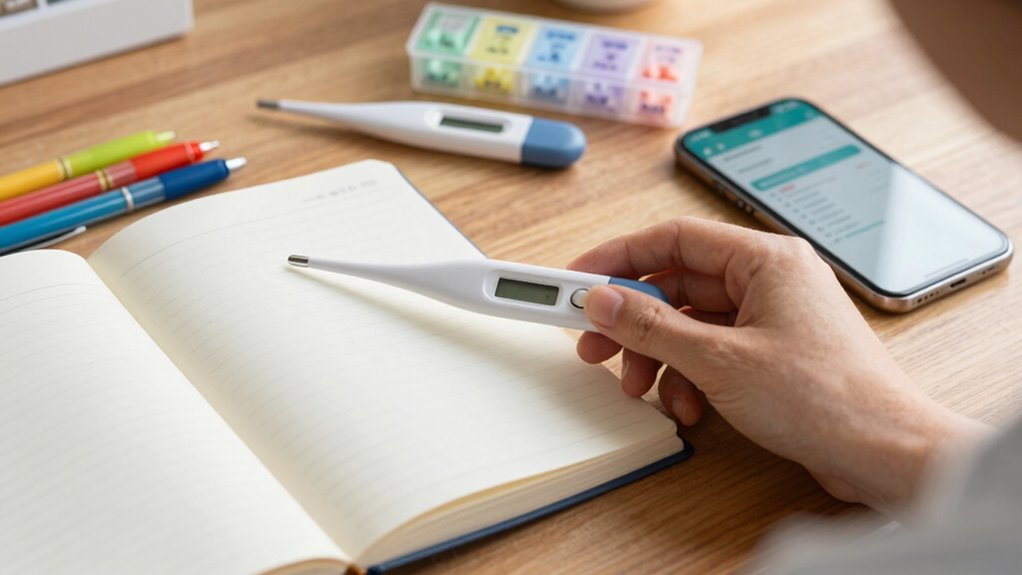
When monitoring for side effects, it’s important to pay close attention to any new or unusual symptoms that arise after starting a medication. Symptom identification is key—recognizing alert signals early can help prevent serious issues. Watch for signs like rash, swelling, difficulty breathing, severe dizziness, or persistent nausea. Changes in mood, sleep disturbances, or unexplained pain are also warning signs. Keep track of any symptoms that are different from your normal experience or that worsen over time. These alert signals can indicate your body’s response to the medication and may require medical attention. Being vigilant helps you catch side effects early, ensuring you can address them promptly and safely. Remember, your awareness is your best tool in managing side effects effectively.
How to Document Side Effects Clearly and Consistently

To document side effects clearly and consistently, start by using standardized templates to guarantee uniformity. Record details immediately to capture accurate information while it’s fresh. Be specific and clear in your descriptions to make tracking and understanding easier.
Use Standardized Templates
Using standardized templates streamlines the process of documenting side effects, ensuring consistency and clarity across records. They help you capture key information like symptom patterns, medication interactions, and severity. With a clear template, you can easily:
- Track recurring or new symptoms over time
- Note how medications may influence side effects
- Maintain uniform records for better analysis and communication
Templates reduce ambiguity, making it easier to spot trends and potential issues. They also save time, so you don’t have to reinvent the wheel with each entry. By sticking to a consistent format, you’ll improve your ability to monitor side effects accurately and share insights with healthcare providers effortlessly. This approach keeps your documentation organized and effective, minimizing confusion and oversight.
Record Details Immediately
Ever wonder why documenting side effects right after they occur makes a difference? When you record details immediately, you capture the true picture of your experience, including symptom severity and potential medication interactions. Prompt documentation helps you notice patterns and understand how your body responds over time. It also minimizes memory gaps that can lead to inaccurate reports later. By noting the exact time, what you were doing, and how you felt, you create a clear record for your healthcare provider. This consistency guarantees that medication interactions are accurately identified and symptoms are correctly assessed. The sooner you record, the more reliable your data, and the better your provider can help manage your medications effectively.
Be Specific and Clear
Being specific and clear when documenting side effects guarantees your reports are accurate and useful. Clear records improve medication awareness and help healthcare providers understand your experience. To achieve this, focus on consistent symptom journaling with precise details.
- Describe symptoms in detail, including severity, duration, and timing
- Use straightforward language, avoiding vague terms like “bad” or “weird”
- Note any factors that trigger or worsen the side effect
How to Recognize Patterns and Changes in Your Symptoms

Noticing patterns and changes in your symptoms is essential for understanding how a medication or treatment affects you. Watch for recurring symptom patterns, such as specific times of day or situations when they worsen or improve. Tracking symptom evolution helps you see if your side effects are staying the same, improving, or getting worse. Note any new symptoms that appear or existing ones that change in intensity or frequency. Recognizing these trends allows you to differentiate between normal fluctuations and significant shifts. Use your records to identify whether treatments are effective or if adjustments might be necessary. Staying aware of these patterns keeps you informed and empowered to discuss your experience accurately with your healthcare provider.
When and How Should You Share Your Side Effect Data With Your Doctor?

Sharing your side effect data with your doctor should happen as soon as you notice significant changes or new symptoms that impact your well-being. Prompt communication guarantees your doctor understands your experience and can adjust your treatment if needed. When sharing, keep these tips in mind:
Share your side effects promptly to ensure your doctor can adjust your treatment effectively.
- Prioritize recent and consistent data to maintain medical privacy and clarity.
- Be specific about when symptoms started, their severity, and how they affect daily life.
- Use clear, objective language to avoid misunderstandings during doctor communication.
Common Mistakes to Avoid When Tracking Side Effects

One common mistake to avoid when tracking side effects is failing to be consistent and detailed in your records. Inconsistent entries can lead to missed patterns and hinder your ability to identify real issues. Avoid overreporting by focusing on significant symptoms rather than every minor discomfort, which helps prevent false alarms that can cause unnecessary concern. Being precise about when symptoms occur, their severity, and duration ensures your data is reliable. Skipping details or recording sporadically reduces the usefulness of your logs. Remember, the goal is to create a clear picture of your side effects without overwhelming yourself with trivial information. Staying consistent and intentional in your tracking helps you and your healthcare provider make informed decisions without unnecessary worry.
How to Balance Monitoring Your Side Effects With Your Daily Routine

Balancing the need to monitor your side effects with your daily routine requires some planning and flexibility. You don’t want to overlook medication interactions or let symptom severity impact your day. To keep things manageable:
Monitoring side effects effectively balances routine and flexibility for manageable, consistent care.
- Track side effects at consistent times to notice patterns without disrupting your schedule
- Prioritize symptoms that interfere with daily activities or worsen medication interactions
- Use a simple method, like a journal or app, to record key details quickly
This approach helps you stay aware without obsessing. Recognize that some fluctuation is normal, but persistent or severe symptoms warrant attention. By integrating monitoring into your routine, you maintain control while staying productive and engaged.
Tips for Staying Consistent Without Obsessing Over Every Detail

To stay consistent with monitoring your side effects without becoming overwhelmed, focus on establishing simple, manageable routines. Consistency builds patient empowerment and improves data accuracy, making tracking less stressful. Use a straightforward schedule, like checking in once daily or every few days, to prevent obsession. Prioritize key symptoms rather than every minor detail, which helps you stay focused. Remember, small, regular updates are more valuable than perfection. To reinforce this, consider this approach:
| Frequency | Focus Area | Notes |
|---|---|---|
| Daily | Symptom severity | Note any significant changes |
| Weekly | Overall well-being | Track mood and energy levels |
| As needed | Specific concerns | Record unusual reactions |
| Monthly | Long-term trends | Review patterns over time |
| When necessary | Medication effects | Adjust if side effects worsen |
This method keeps you consistent while maintaining data accuracy without overanalyzing every detail.
Frequently Asked Questions
How Long Should I Track Side Effects Before Consulting My Doctor?
You should track your side effects for at least one to two weeks, especially during the initial medication adherence phase. If you notice persistent or worsening symptoms, or if symptom severity becomes concerning, consult your doctor sooner. Monitoring helps you recognize patterns and communicate effectively. Don’t wait too long if side effects disrupt your daily life or health; timely consultation guarantees safe and effective treatment.
Can Tracking Side Effects Help Prevent Serious Health Issues?
Tracking side effects acts like a health lighthouse, guiding you through stormy medication waters. By noting changes in symptom severity and medication timing, you catch warning signs early, preventing serious health issues from sneaking up on you. This vigilant record helps you and your doctor spot patterns, adjust dosages, or switch treatments, ensuring your health stays steady and safe. It’s your proactive shield against potential complications.
What Privacy Measures Should I Consider When Recording Health Data?
When recording health data, you should prioritize privacy by choosing apps with data encryption to protect your information from breaches. Look for features offering anonymity options, like anonymized identifiers or limited data sharing. Always review the app’s privacy policy, opt for secure storage solutions, and avoid sharing sensitive info publicly. Staying vigilant about these measures keeps your health data safe and private while you track side effects effectively.
Is It Necessary to Track Minor or Temporary Side Effects?
You should definitely track minor symptoms and temporary issues to spot patterns or identify potential concerns early. Even small or fleeting side effects can signal underlying problems or medication reactions. By keeping a record, you stay informed and can easily share accurate information with your healthcare provider. This proactive approach helps make sure you don’t overlook any important details, making your health management more effective without causing unnecessary stress or obsession.
How Can I Motivate Myself to Stay Consistent With Tracking?
To stay motivated with tracking, remind yourself of how a tracking app helps you see progress and stay accountable. Make it part of your habit formation by setting small, daily goals and rewarding yourself for consistency. Visual cues or alarms can reinforce your routine. Remember, the more you track, the easier it becomes, turning it into a natural part of your health journey.
Conclusion
By keeping track of your side effects without going overboard, you’re taking control of your health like a pro. Remember, it’s about finding the sweet spot—monitor enough to catch important changes but not so obsessively that it becomes a burden. With the right tools and habits, you’ll be able to spot patterns and communicate clearly with your doctor. In the end, it’s all about playing your cards right and staying on top of your well-being.
Cold & flu season Picks
humidifiers
As an affiliate, we earn on qualifying purchases.