

Medication mistakes at home often go unnoticed until serious health problems emerge, such as adverse reactions or worsening symptoms. Common oversights include improper storage, confusing labels, missed doses, or mixing medications without guidance. To protect your family, it’s crucial to develop routines, store medicines safely, and stay vigilant for signs like behavioral changes or allergic reactions. If you want to learn more about preventing these dangers, keep exploring strategies to keep medication management safe.
Key Takeaways
- Families often overlook improper medication storage, increasing accidental access and misuse, especially in households with children or seniors.
- Lack of clear communication and education about medication schedules can lead to missed doses or double dosing.
- Small dosage errors or unrecognized drug interactions may cause health issues that go unnoticed until symptoms worsen.
- Behavioral or health changes, mistaken for other conditions, can mask medication errors until they become serious.
- Inadequate label clarity and absence of routine checks delay the detection of mistakes, risking severe health consequences.
Recognizing Common Medication Mistakes Families Overlook

Many families miss warning signs of medication mistakes because they’re not aware of what to look for. One key factor is a lack of patient education, which can lead to misunderstandings about how and when to give medications. Without proper guidance, medication adherence can suffer, resulting in missed doses or incorrect timings. You might not realize that inconsistent medication routines can diminish treatment effectiveness or cause side effects. Staying informed through clear instructions and regular communication with healthcare providers helps you recognize patterns that indicate mistakes. Pay attention to behavioral changes or new symptoms in your loved ones, as these can signal issues with medication adherence. Additionally, understanding the significance of timing and life cycles can help you better interpret how medication schedules relate to your loved ones’ daily routines. Recognizing medication adherence challenges early on is crucial for preventing complications and ensuring proper treatment. Awareness of patient education and how it influences medication management is essential for avoiding errors before they escalate. Improving patient communication between families and healthcare providers can further reduce the risk of medication mistakes. Being aware of standard screening guidelines can help you understand when and how often to seek medical evaluations, thus supporting proper medication use and early detection of issues. By understanding common pitfalls and ensuring proper patient education, you stand a better chance of preventing medication errors before they escalate.
How Incorrect Dosages Lead to Serious Health Risks

Incorrect dosages are a common mistake families overlook, but they can cause serious health risks. During medication administration, even small errors in dosage accuracy can lead to dangerous outcomes. Taking too much medication can result in toxicity, organ damage, or overdose, while too little may render the treatment ineffective, allowing health issues to worsen. Children and seniors are especially vulnerable, as their bodies process medications differently. Misjudging the correct dosage can also cause side effects or allergic reactions. Ensuring proper medication administration involves carefully following prescribed instructions and double-checking measurements. When dosage accuracy isn’t maintained, you put your loved ones at risk of complications that could have been avoided. Proper medication management includes understanding measurement accuracy to avoid dangerous errors. Prioritizing correct dosages is essential to safeguard their health and ensure effective treatment.
Signs That Medication Errors Are Happening at Home

When medication errors are occurring at home, you might notice sudden changes in your loved one’s health or behavior. They may become unusually drowsy, confused, or irritable, or show new allergic reactions. Sometimes, these signs are mistaken for other health issues, but medication myths can lead you to overlook errors. Lack of clear family communication about medication schedules and dosages often worsens the problem, making it harder to identify mistakes early. If you see inconsistent symptoms or suspect something’s off, check medication labels and verify dosages. Remember, medication errors don’t always produce immediate effects, so staying alert to subtle changes is essential. Open, honest family communication about medication routines can help prevent mistakes and catch issues early, protecting your loved one’s health. Additionally, understanding the role of technology in managing medication schedules can significantly reduce the likelihood of errors at home. Implementing reminders and alerts, such as smartphone alarms or digital pill dispensers, can also enhance safety and adherence. Utilizing digital tools can further streamline medication management and promote consistent use. Being aware of common medication myths can also help dispel misconceptions that contribute to errors. Moreover, increasing awareness about medication safety can empower families to take proactive steps in preventing mistakes before they happen.
The Role of Proper Medication Storage in Preventing Mistakes

Proper medication storage is key to preventing mistakes in your home. Keep medicines out of children’s reach, use clear labels, and store them away from heat sources. Taking these steps helps make sure medications are safe and used correctly. Additionally, organizing your medications in a dedicated, visible spot can help you quickly find what you need and reduce the risk of accidental misuse organization and visibility. Ensuring medications are stored in a safe location that considers both accessibility and security can further prevent potential errors. Regularly reviewing your medication storage practices can also help identify and address any vulnerabilities risk management strategies.
Store Away From Children
Have you ever considered how easily children can access medications if they’re stored within their reach? Proper storage is essential to prevent accidental ingestion. Use child proofing measures like safety caps and lockable cabinets. Always keep medications in a high, secure place away from curious little hands. Remember these medication storage tips: Store medications in a locked cabinet or drawer, out of sight and reach. Avoid leaving pills on countertops or bedside tables. Keep all medications separate from food and beverages to avoid confusion. Proper medication storage practices include understanding the importance of storage safety to further reduce the risk of accidental poisoning. Ensuring proper medication storage not only helps prevent mistakes but also promotes overall safety and peace of mind. Additionally, staying informed about AI cybersecurity can help protect sensitive health information from digital threats. Recognizing the importance of safe medication practices contributes significantly to family safety.
Use Clear Labels
Clear labels transform simple storage into an effective safety measure. When you clearly mark medications, you reduce the risk of mix-ups and guarantee everyone in your family knows what’s what. Proper labeling boosts medication safety by preventing accidental ingestion or incorrect dosing. Use large, easy-to-read fonts and color coding if possible, and include essential details like dosage, expiration date, and special instructions. Family awareness plays a vital role in preventing medication mistakes, especially when multiple medications are involved. Consistently check labels for clarity and accuracy, especially after refills or transfers. Proper labeling helps you stay organized and creates a safety-first environment, reducing confusion and potential hazards. Incorporating necessary cookies ensures the website functions correctly and securely, supporting your safety efforts. Additionally, maintaining an organized medication system makes it easier to identify when doses are missed or taken incorrectly, further enhancing safety. Paying attention to medication storage practices helps prevent accidental access and mix-ups, which is crucial for safeguarding your loved ones. Proper labeling is a simple step that makes a big difference in safeguarding your loved ones.
Keep Away From Heat
Storing medications in a cool, dry place is essential because heat can alter their effectiveness and safety. Exposure to heat can degrade active ingredients, making medications less effective or even harmful. To prevent heat exposure, keep medications away from direct sunlight, appliances, or windows where temperatures fluctuate. Additionally, using a thermometer to monitor storage conditions can help ensure medications remain within the recommended temperature range. Proper medication storage also involves understanding the shelf life of each medication to avoid using expired products, and maintaining consistent storage conditions is crucial for preserving medication potency over time. Recognizing the importance of proper storage practices can significantly reduce the risk of medication errors and ensure safety.
Why Mixing Drugs Without Guidance Can Be Dangerous

Mixing medications without guidance can lead to serious problems like harmful drug interactions or unexpected allergic reactions. You might also risk taking incorrect dosages, which can dangerously affect health. Knowing when and how to combine drugs is essential to keep your loved ones safe.
Risk of Drug Interactions
When you combine medications without proper guidance, you risk causing harmful drug interactions that can seriously affect your health. These medication interactions can lead to unexpected side effects, reduce medication effectiveness, or cause dangerous health complications. Without proper drug combination awareness, you might accidentally mix drugs that don’t work well together. For example:
- Combining blood thinners with certain pain relievers increases bleeding risk.
- Mixing antidepressants with other medications can cause severe mood swings.
- Using multiple medications with similar effects can lead to overdose or toxicity.
Understanding how drugs interact helps you avoid these risks. Always check with your healthcare provider or pharmacist about medication interactions before starting or changing any medication regimen. It’s a simple step that can prevent serious health issues down the line.
Hidden Allergic Reactions
Combining medications without proper guidance can also hide the risk of allergic reactions that might not be immediately obvious. Hidden allergic reactions often appear as unnoticed medication side effects, making them tricky to detect. You may think symptoms like mild rash or slight swelling are harmless, but they could signal a hidden allergic reaction. When drugs interact unexpectedly, these reactions can develop gradually, delaying necessary treatment. Be alert for subtle signs that don’t seem connected.
| Symptom | Possible Cause |
|---|---|
| Rash | Hidden allergy |
| Swelling | Unnoticed reaction |
| Nausea | Mild side effect |
| Fatigue | Reaction developing |
| Breathing issues | Serious hidden allergy |
Incorrect Dosage Risks
Taking medications without proper guidance can lead to dangerous dosage errors that often go unnoticed until serious health issues arise. When medication storage isn’t secure or labels lack clarity, you risk giving the wrong amount. Overdosing can cause toxicity, while underdosing may render treatment ineffective. Mixing medications without understanding interactions adds another layer of danger, especially if labels are confusing or unclear.
- Medications stored together can be mistaken for each other, causing accidental overdose or missed doses
- Poor label clarity can lead to confusion about dosage instructions or timing
- Incorrect doses can exacerbate health issues or trigger adverse reactions
Always verify medications are stored properly, labels are clear, and guidance is followed to prevent these risky mistakes.
The Importance of Clear Communication With Healthcare Providers
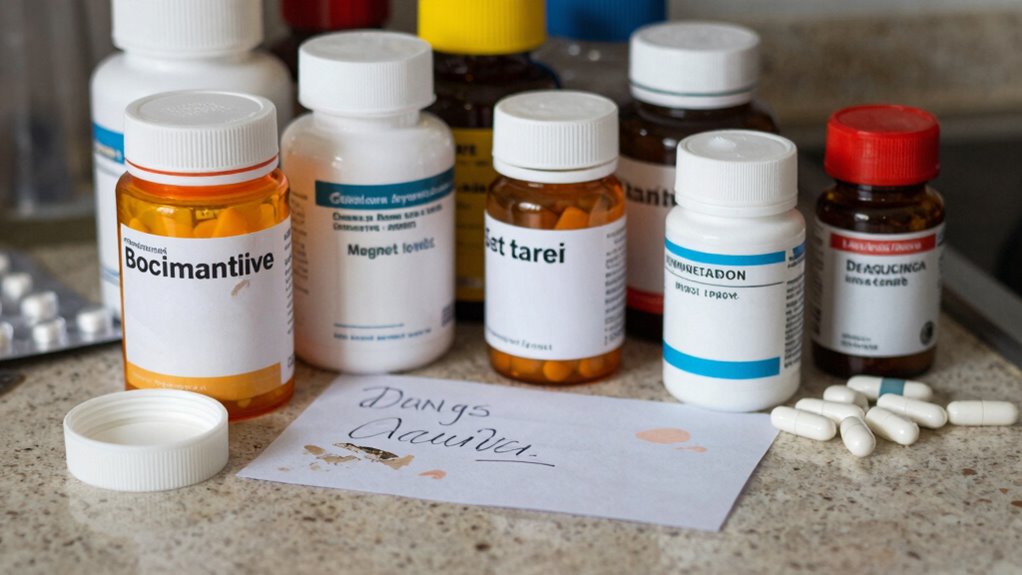
Clear communication with your healthcare providers is essential to guarantee medication safety. When you engage in effective medication communication, you ensure that your providers understand your concerns, symptoms, and medication history accurately. Healthcare clarity helps prevent misunderstandings about dosages, timing, or potential interactions. Ask questions if something isn’t clear, and don’t hesitate to clarify instructions before leaving appointments. Keep an updated list of medications, including over-the-counter drugs and supplements, and share it with every healthcare professional you see. Good communication also involves actively listening to advice and confirming your understanding. By prioritizing open dialogue, you reduce the risk of medication errors and ensure everyone is on the same page about your treatment plan. Clear, consistent communication is your best defense against medication mistakes.
Simple Strategies to Avoid Missed or Double Dosing
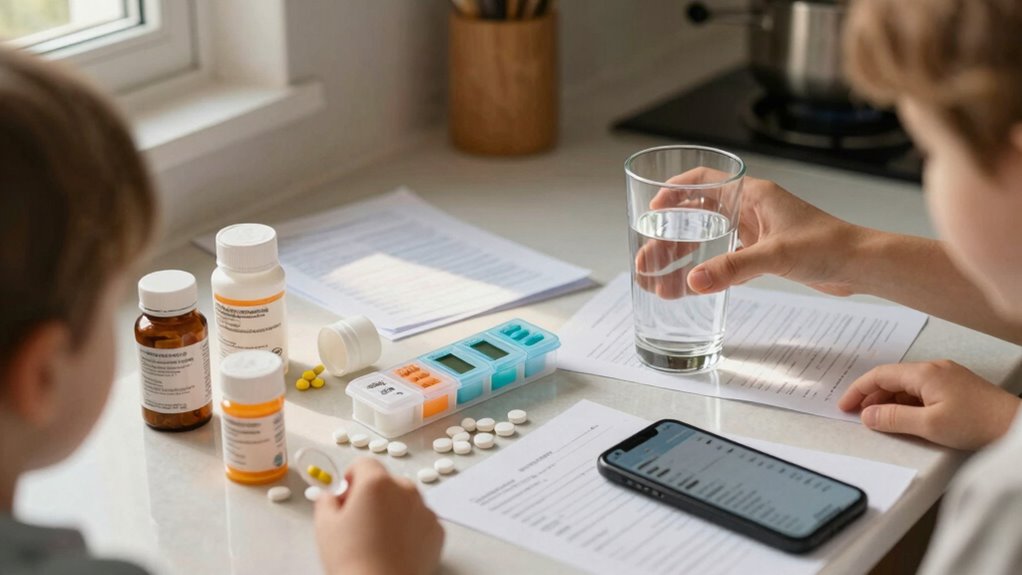
Using a pill organizer every day helps keep track of medications and prevents missed doses. Keep your medication schedule clear and consistent to avoid confusion, and always double-check dosages with your healthcare provider. These simple steps can make a big difference in ensuring safe and effective medication use.
Use Pill Organizers Consistently
To prevent missed or double doses, establishing a routine with your pill organizer is essential. Consistent pill organization helps you keep track of medications and simplifies medication management. Make it a habit to fill your organizer at the same time each week, so it becomes part of your daily routine. Use a clear, labeled organizer to easily see if a dose has been taken. Place the organizer in a visible spot, like next to your toothbrush or on the kitchen counter. This visual cue reinforces your medication schedule and reduces mistakes. Remember, reliable pill organization minimizes confusion and ensures you take the right medication at the right time, supporting your health and safety.
- Keep your pill organizer in a consistent, easy-to-remember place
- Fill it at the same time weekly to reinforce the routine
- Use a clear, labeled container for better visibility
Maintain Clear Medication Schedules
Establishing a straightforward medication schedule is key to preventing missed or double doses. When you keep a clear plan, it’s easier to maintain medication adherence and ensure dosing accuracy. Use a consistent routine—take medications at the same times each day and record each dose. Consider setting alarms or reminders on your phone to stay on track. Regularly review the schedule to confirm that all medications are taken correctly and at the right intervals. Avoid confusion by keeping medications in a dedicated, visible spot. Clear labeling and organized storage help prevent mistakes. By maintaining a simple, well-structured schedule, you reduce the risk of accidental missed or double dosing, keeping your loved ones safe and ensuring their treatments are effective.
Regularly Confirm Dosages
Regularly confirming dosages is essential to catch any mistakes before they cause harm. This means double-checking medication storage areas and verifying dosage instructions each time you administer medication. By staying vigilant, you reduce the risk of missed or double dosing.
- Keep medications in clearly labeled containers, stored safely and consistently.
- Use a pill organizer to compare the prescribed dosage with what’s in your hand.
- Before giving medication, do a quick dosage confirmation by reading labels and instructions aloud.
Making this a routine helps you catch errors early and ensures your loved ones receive the correct amount safely. Regularly verify dosages minimizes risks and keeps everyone healthy.
How to Create an Effective Medication Management Routine

Creating an effective medication management routine starts with organizing your medicine schedule and setting clear reminders. Consistency is key to ensuring medication routines promote family safety. Use tools like pill organizers, phone alarms, or calendar alerts to stay on track. Keep a dedicated medication chart that details dosages, times, and special instructions. Regularly review and update this chart to prevent mistakes. To make it easier, consider this sample routine:
| Time | Medication | Notes |
|---|---|---|
| Morning | Blood pressure pill | Take with breakfast |
| Afternoon | Insulin shot | Check sugar first |
| Evening | Heart medication | No alcohol |
Sticking to a routine reduces errors and keeps everyone safe.
When to Seek Help After Suspected Medication Errors

If you suspect a medication mistake has occurred, it’s crucial to act quickly to prevent serious health consequences. Recognizing the signs early can make a difference in managing the situation and maintaining medication safety.
Act quickly if you suspect a medication mistake to prevent serious health consequences.
You should seek help if you notice:
- Unusual symptoms or side effects after medication administration
- Allergic reactions like swelling, difficulty breathing, or rash
- Changes in your loved one’s mental state, behavior, or vital signs
Immediate action helps protect your family’s health and raises awareness about medication safety. Don’t wait to consult healthcare professionals or visit the emergency room if something seems off. Prompt response can prevent complications and ensure your family stays safe. Staying vigilant and aware allows you to respond effectively to potential medication errors.
Tools and Resources to Safeguard Your Family’s Medication Safety

Using the right tools and resources can considerably enhance your ability to prevent medication errors and protect your family. Medication awareness is key; staying informed helps you identify potential mistakes early. Utilize pill organizers, reminder apps, and clear labeling to boost family safety. These tools simplify medication routines and reduce confusion. Consider creating a medication chart or checklist to track dosages and schedules. Educate your family about the importance of proper medication use. Here’s a quick comparison:
| Tool/Resource | Benefits |
|---|---|
| Pill Organizer | Prevents missed or double doses |
| Reminder Apps | Alerts you to medication times |
| Clear Labels | Reduces confusion and errors |
| Medication Charts | Enhances family awareness and tracking |
| Educational Resources | Improves medication safety knowledge |
Implementing these resources helps safeguard your family’s medication safety daily.
Frequently Asked Questions
How Can I Verify if My Child’s Medication Dosage Is Correct?
To verify your child’s medication dosage, always double-check the prescription label and compare it with the instructions given by your healthcare provider. Use a proper measuring device like a syringe or medicine cup for accuracy. If you’re unsure, don’t hesitate to call your pharmacist or doctor for dosage verification. Regularly review the medication instructions to make certain you’re administering the correct child medication dose safely.
What Are the Legal Steps to Take After a Medication Error?
Think of your child’s medication error as a cracked foundation. First, document everything—the mistake, instructions, and health impacts. Then, seek legal consultation to understand your rights and medication liability. You may need to report the incident to healthcare authorities or pursue legal action if negligence is involved. Acting quickly guarantees you protect your child’s well-being and hold responsible parties accountable, just like reinforcing a fragile foundation before it crumbles.
How Do I Identify Subtle Signs of Medication Overdose in Elderly Family Members?
You should watch for subtle signs of elderly medication overdose, like confusion, dizziness, nausea, or unusual fatigue. Keep an eye on changes in behavior or physical condition, as these can signal overdose symptoms. Regularly review your family member’s medication list with their healthcare provider, and make certain they take the correct doses. If you notice any of these signs, seek medical attention promptly to prevent serious complications.
Are There Specific Storage Practices to Prevent Accidental Ingestion?
Did you know that accidental medication ingestions are responsible for nearly 60,000 emergency visits annually? To prevent this, make sure you use proper medication storage techniques. Always keep medicines in child-proof containers, storing them out of children’s sight and reach. Designate a specific, secure spot for all medications, and never leave them lying around. These simple steps considerably reduce the risk of accidental ingestion by your loved ones.
What Questions Should I Ask My Doctor About New Medications?
When asking your doctor about new medications, inquire about potential medication side effects and drug interactions. Ask how the medication might affect you, especially if you take other drugs or have existing health conditions. Make sure to clarify proper dosage, storage, and what signs indicate a problem. Don’t hesitate to ask about alternatives if you’re concerned about side effects, and always follow your doctor’s instructions carefully.
Conclusion
Did you know that medication errors account for nearly 7,000 emergency room visits each year? By staying vigilant about proper dosages, storage, and routines, you can prevent serious health risks for your family. Pay attention to signs of mistakes and don’t hesitate to seek help if something seems off. Taking these simple steps can make a big difference in keeping your loved ones safe and healthy every day.