
If someone falls, first check if they’re responsive and assess for injuries or signs of distress. Confirm the area is safe by clearing hazards before helping. Support the person gently, and call emergency services immediately if they’re unresponsive or seriously hurt. Stay with them, offering reassurance while monitoring symptoms. Once safe, focus on preventing future falls by making your home safer and encouraging strength exercises. To learn more about each step and stay prepared, keep exploring these essential tips.
Key Takeaways
- Assess the person’s condition for injuries, responsiveness, and signs of distress before moving or assisting.
- Ensure the environment is safe by removing hazards and clearing obstacles before helping the person.
- Support the person gently, check responsiveness, and call emergency services if they are unresponsive or severely injured.
- Monitor the individual continuously for symptoms like pain, dizziness, or confusion, and provide reassurance.
- Implement fall prevention measures at home, such as securing rugs, improving lighting, and encouraging balance exercises.
As an affiliate, we earn on qualifying purchases.
Recognize When Someone Has Fallen

Falling can happen suddenly and quietly, making it important to recognize the signs immediately. You should be alert to fall indicators such as a person lying on the ground, unable to get up, or showing signs of distress. Symptom recognition is vital—look for visible injuries, confusion, or difficulty moving. If someone appears disoriented or complains of pain, don’t assume they’re just resting; these are clear fall indicators. Also, watch for unusual behavior, like sudden silence or unresponsiveness. Quickly evaluating these signs helps you determine if they need urgent medical help. Remember, your quick recognition can prevent further injury and ensure appropriate action is taken promptly. Stay attentive, and trust your instincts to recognize the key fall symptoms immediately. Additionally, understanding basic first aid tools can be crucial in providing immediate assistance before professional help arrives. Being aware of appliance safety measures, especially for gas or electrical devices, can also help prevent accidents that lead to falls. Learning about fall prevention strategies can further reduce the risk of such incidents happening in the first place. Moreover, knowing how to properly assist someone after a fall ensures their safety and comfort during critical moments. Developing fall risk assessments can aid in identifying individuals most vulnerable to falls and implementing preventive measures proactively.
As an affiliate, we earn on qualifying purchases.
Make Sure the Area Is Safe Before Helping
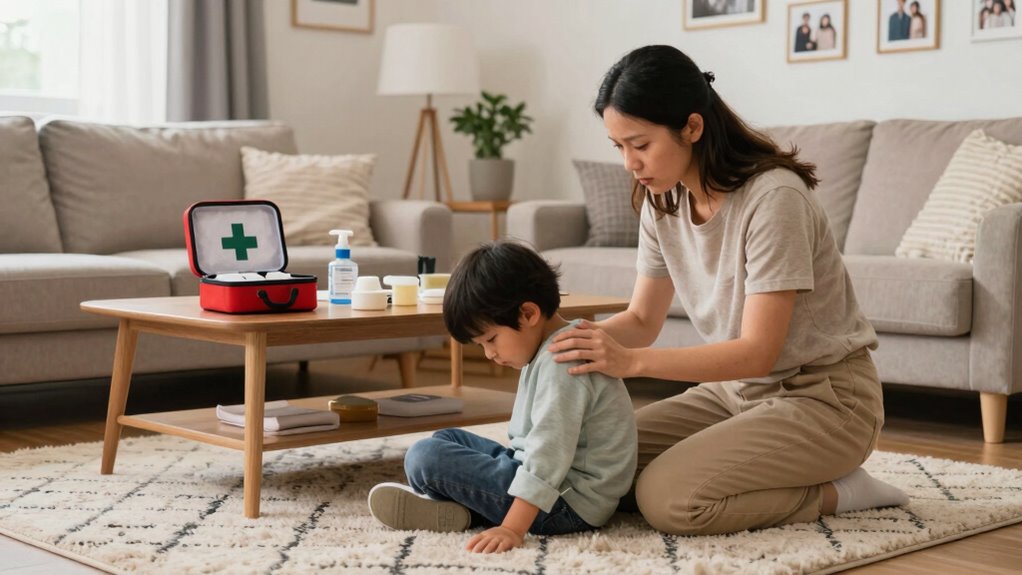
Before helping someone who has fallen, you need to make certain the area is safe. Check for hazards like loose rugs or sharp objects, and assess if there’s immediate danger nearby. Clear a path so you can assist without risking further injury to yourself or the person on the ground. Ensure the environment is free of home safety hazards to prevent additional accidents. Additionally, look out for trip hazards that could cause future falls or injuries. Being aware of environmental risks can help you better evaluate the scene and avoid unintended harm. Recognizing fall prevention strategies can also help in addressing potential dangers effectively. Moreover, understanding hazard identification can aid in creating a safer space to reduce the likelihood of future falls.
Check for Hazards
Is the area around the fallen person safe to approach? Begin with a quick hazard identification by scanning the environment for dangers like broken glass, spilled liquids, or loose rugs. Conduct an environmental assessment to determine if there are any risks that could cause further injuries, such as exposed wires or unstable furniture. Avoid rushing in if the area seems unsafe; your safety comes first. Clear a safe path if possible, or wait for help if hazards are present. Check for hazards both around the person and nearby, ensuring there’s nothing that could trip you or worsen the situation. Being thorough in this initial assessment helps prevent additional accidents and ensures you can assist confidently and safely. Additionally, inspecting the projector setup for potential hazards can help prevent slips or falls during the rescue. Recognizing environmental risks related to structural stability or electrical issues is also crucial before attempting to assist. It’s also wise to be aware of hazardous materials that might be present in the environment, which could pose additional health risks. Awareness of fire hazards is important to prevent further emergencies during the rescue process. Conducting a quick assessment of potential electrical hazards can further prevent accidental shocks or fires during rescue efforts.
Assess Immediate Danger
To guarantee your safety and that of the person who has fallen, you must quickly determine if the area is safe to approach. Hazard identification is essential—look for loose rugs, clutter, spilled liquids, or exposed wires that could cause further injury. Evaluating the environment based on your emergency preparedness, making certain there are no immediate dangers like fire or broken glass. If the area seems unsafe, avoid moving the person and wait for professional help. If the space appears clear, proceed with caution. Remember, rushing in without assessing hazards could worsen the situation. Staying alert and aware helps you prevent additional injuries and ensures you provide aid safely. Taking these steps safeguards everyone involved during this critical moment. Additionally, consulting lifevest advisors can provide valuable guidance on managing emergency situations safely. Always remember to prioritize safety before attempting to assist someone who has fallen. Being familiar with piercing care and hygiene can also help you understand how to prevent infections if injuries involve piercings or body modifications. Recognizing emergency response procedures can further enhance your ability to help effectively and responsibly.
Clear Path for Assistance
Once you’ve confirmed that the area is safe from hazards, you need to clear a path for assistance. Guaranteeing clear pathways helps prevent further injury and allows you to move the fallen person safely. Focus on obstacle removal by removing clutter, cords, or sharp objects that could cause harm. This step creates a safe route for yourself and others to help without risking additional falls. Additionally, checking the cycling gear and clothing ensures that your own safety is maintained during the rescue. Here are some key steps: 1. Remove any loose rugs or mats that could cause slipping. 2. Clear away furniture or objects blocking the way. 3. Use a gentle, stable support to help the person move if needed. 4. Ensure the area remains free of hazards as you assist. Incorporating water safety awareness can further prevent accidents in the future. Recognizing hazardous obstacles in the environment is crucial for maintaining a safe space during rescue efforts. Being aware of electric bike components and other potential hazards can also help prevent injuries during rescue operations. Checking for slippery surfaces and ensuring proper lighting can further enhance safety during assistance. Clear pathways are essential for safe, effective help.
elderly fall prevention balance exercises
As an affiliate, we earn on qualifying purchases.
As an affiliate, we earn on qualifying purchases.
Assess Injuries and Decide Whether to Help or Call Emergency Services
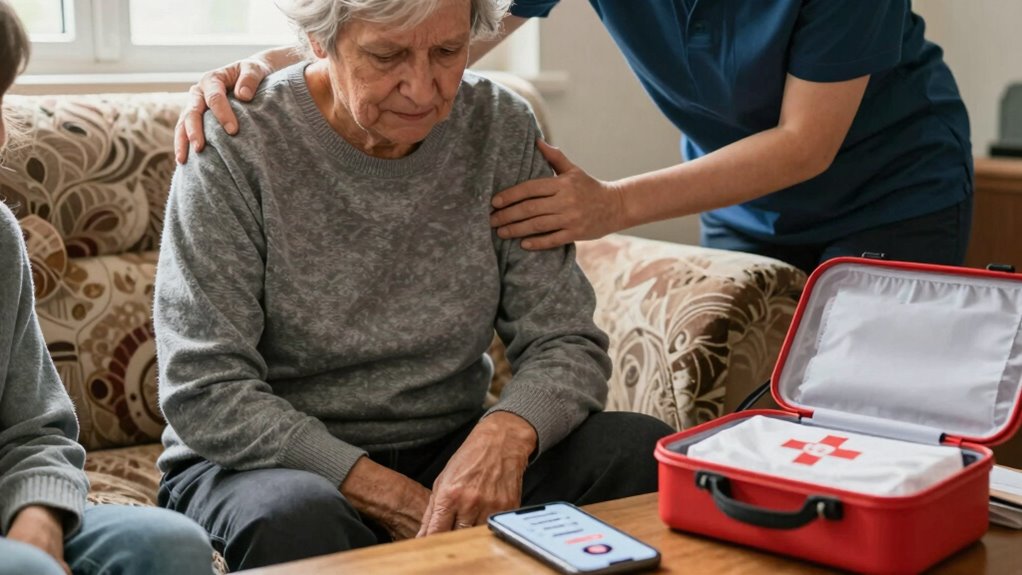
After a fall, carefully observe the person’s condition to determine if they need immediate medical attention. Assess injury severity by checking for obvious signs like bleeding, swelling, or deformity. Look for signs of head injury, such as confusion, dizziness, or loss of consciousness. Keep emergency preparedness in mind—if they’re unresponsive, cannot move, or have severe pain, call emergency services immediately. If the injuries seem minor—like bruises or scrapes—and they’re alert and able to communicate, monitor them closely. Trust your judgment, but when in doubt, it’s safer to call emergency services. Your quick assessment is crucial in deciding whether to help them up or summon professional medical help, ensuring their safety and well-being. Being aware of underlying conditions such as Borderline Personality Disorder can also influence how you respond and support someone after a fall. Additionally, understanding regional health resources can be beneficial if professional help is needed beyond immediate first aid. Recognizing fall prevention strategies can help reduce the risk of future incidents and should be considered as part of ongoing safety planning. Educating yourself about family dynamics can also prepare you to better support loved ones during health emergencies.
As an affiliate, we earn on qualifying purchases.
Help the Person Up Safely or Call for Emergency Help
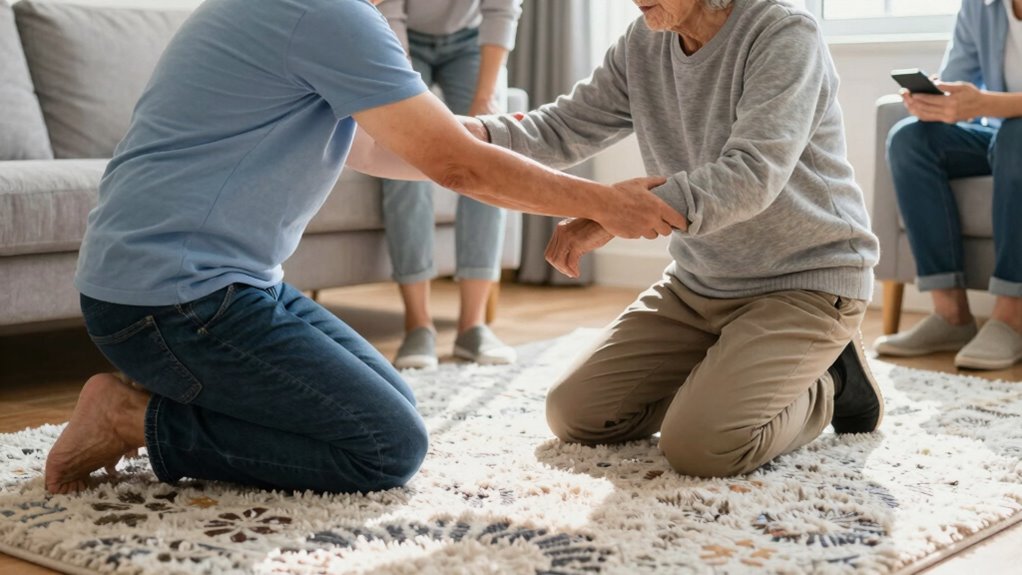
Before helping someone up, check if they respond and stay alert. Support their movement gently to prevent further injury. If they’re unresponsive or hurt badly, call emergency services immediately.
Assess Person’s Responsiveness
How can you tell if someone is responsive after a fall? Perform a responsiveness check by gently talking to them and observing their reactions. This helps you assess their mental alertness and overall condition. If they respond normally—making eye contact, answering questions, and moving limbs—they’re likely okay. If there’s no response or they seem confused, stay calm and prepare to call emergency help.
Here are four steps to guide you:
- Ask simple questions like, “Are you okay?” or “Can you hear me?”
- Check if they open their eyes and look at you.
- Observe if they can speak clearly.
- Gently touch their hand or shoulder to see if they respond.
Always prioritize safety and seek help if responsiveness is compromised.
Support Movement Gently
Once you’ve checked that the person responds normally and seems alert, you can help them move carefully. Use gentle movement and supportive handling to assist them. Avoid sudden or forceful actions, as they could cause further injury. If they’re able to sit up, support their back and arms, guiding them slowly to a seated position. If they’re too dizzy or in pain, do not force movement; instead, keep them comfortable and wait for professional help. Always support their head and neck if you suspect injury, and handle them gently to prevent additional harm. Remember, your goal is to stabilize and support the person without causing discomfort or worsening any injuries. Stay calm and proceed with caution at every step.
Call Emergency Services
Should you suspect the person has a serious injury or if their condition worsens, it’s crucial to call emergency services immediately. Quickly assess their breathing, consciousness, and responsiveness. If they’re unresponsive, not breathing, or showing signs of severe injury, don’t delay—call emergency contacts right away. While waiting for help, provide basic first aid if you’re trained, such as controlling bleeding or supporting their head.
Here are steps to follow:
- Dial emergency services immediately if symptoms are severe.
- Keep the person still and comfortable.
- Monitor their breathing and responsiveness.
- Gather relevant information for responders, like medical history or medication.
Prompt action can be lifesaving, ensuring the right help arrives swiftly.
Support and Monitor Them After the Fall
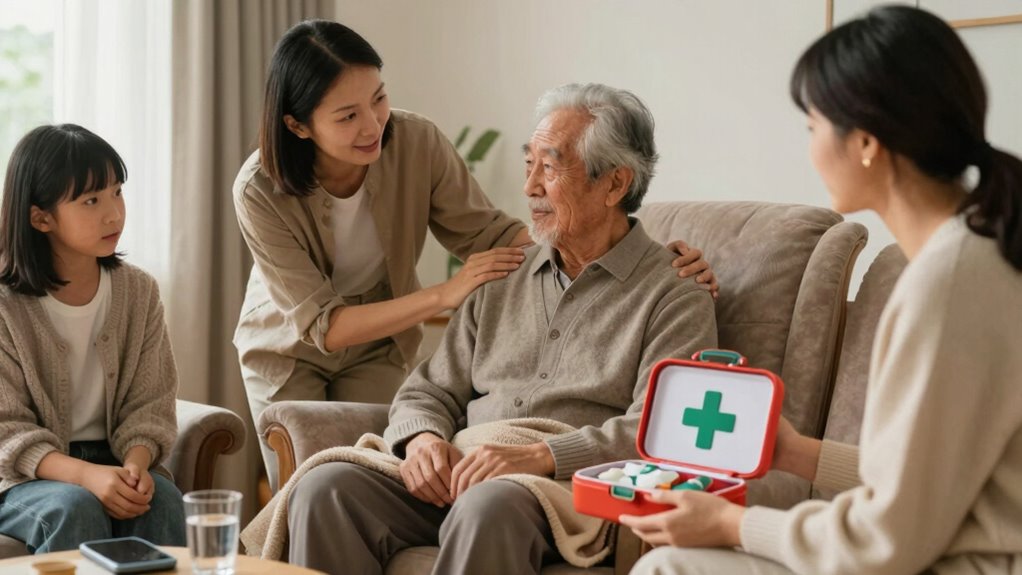
After a fall, it’s crucial to support and closely monitor the person to guarantee their safety and well-being. Offer emotional support by reassuring them and staying calm, which helps reduce their anxiety and fear. Keep a close eye on their physical condition, watching for any signs of pain, dizziness, or confusion. Ongoing monitoring is essential to catch delayed symptoms that may develop hours later. Encourage them to rest and avoid moving excessively until medical professionals assess their injuries. Check for any new or worsening symptoms regularly, and ensure they stay hydrated and comfortable. Your attentive presence provides reassurance and helps identify potential issues early, making sure they receive prompt care if needed.
Fall Prevention Tips to Keep Your Family Safe
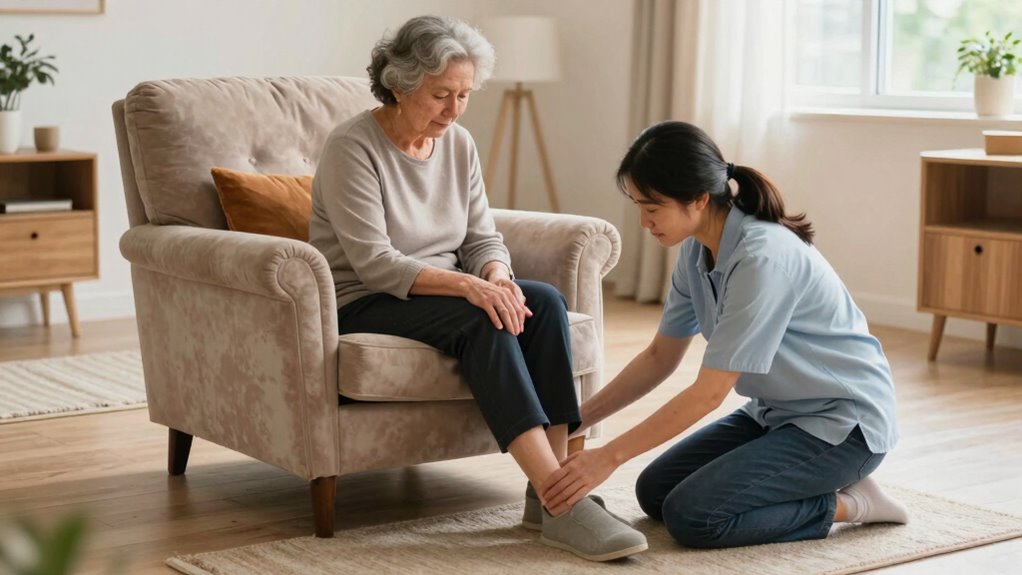
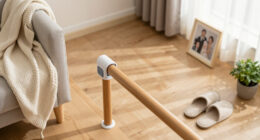
Preventing falls starts with making your home safer and more accessible. Start with simple home modifications, like adding grab bars in bathrooms and securing loose rugs. Conduct a medication review to identify drugs that cause dizziness or balance issues. Keep walkways clear of clutter to prevent tripping hazards. Also, ensure good lighting throughout the house, especially near stairs and entrances. Regularly check your loved ones’ vision and balance, encouraging exercises that improve strength and stability. By taking these steps, you reduce fall risks and create a safer environment. Staying proactive with home modifications and medication reviews helps keep your family safe and minimizes the chance of future falls.
Frequently Asked Questions
How Can I Tell if Someone Has a Concussion After a Fall?
If you suspect a concussion after a fall, look for concussion symptoms like confusion, dizziness, headache, or nausea. Conduct a fall assessment by checking if the person is alert, able to follow commands, and has normal coordination. If they show any signs of disorientation, memory loss, or lose consciousness, seek medical help immediately. Trust your instincts—when in doubt, it’s better to get a professional evaluation.
What Should I Do if the Person Is Unconscious but Breathing?
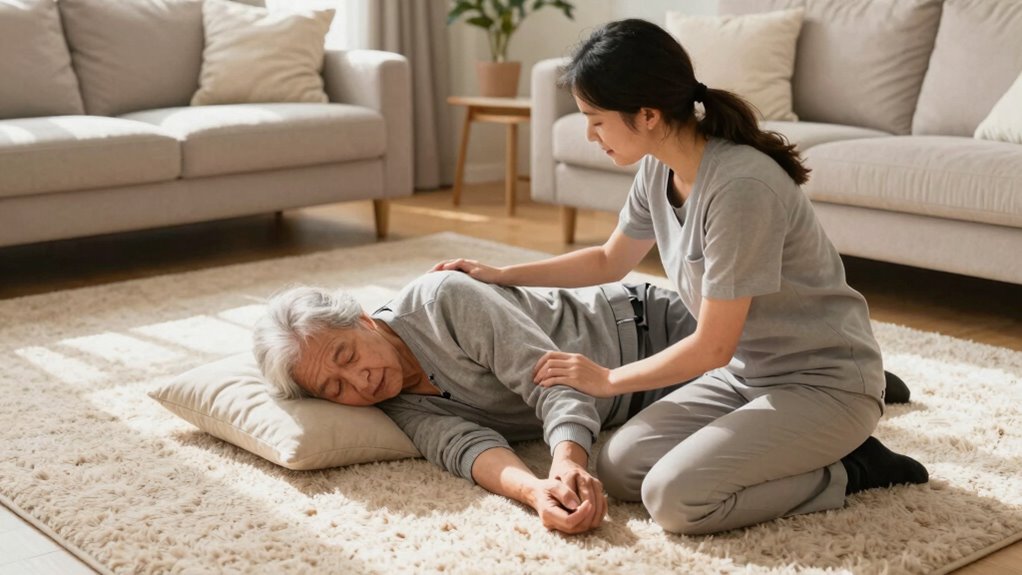
If the person is unconscious but breathing, guarantee their safety by gently positioning them on their side to prevent choking, following unconscious safety guidelines. Monitor their breathing carefully, checking regularly for any changes. Keep their head and neck immobile to avoid further injury. Stay with them, providing reassurance and calling emergency services immediately. Do not attempt to give them food, drink, or medication until professional help arrives.
When Is It Necessary to Seek Immediate Medical Attention?
When you witness a fall, don’t delay—seek immediate medical attention if there are severe symptoms. Spot signs like bleeding, broken bones, persistent pain, confusion, difficulty breathing, or loss of consciousness. These medical emergencies demand prompt professional help. Remember, fall prevention is essential, but swift response when things go wrong can make all the difference. Be vigilant, act quickly, and prioritize safety to protect your loved ones from serious harm.
How Can I Prevent Falls in the Future for Elderly Family Members?
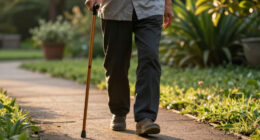
To prevent future falls, you should focus on improving home safety by removing tripping hazards, installing grab bars, and ensuring good lighting. Encourage your elderly family members to use mobility aids like canes or walkers if needed, and make sure these are properly fitted. Regular exercise can also strengthen their muscles and improve balance. Stay proactive by reviewing safety measures periodically and consulting healthcare providers for personalized advice.
What Are Common Signs of Internal Injuries After a Fall?
You might worry about missing signs of internal injuries after a fall, but stay alert. Look for signs like abdominal pain, tenderness, swelling, or bruising, which can indicate internal damage. Also, monitor for dizziness, weakness, or difficulty breathing. If you notice any of these signs, don’t hesitate—seek medical attention immediately. Acting quickly can make all the difference in preventing serious complications.
Conclusion
By staying alert, acting calmly, and supporting carefully, you can protect your loved ones from future falls. Recognize the signs, guarantee safety, and respond promptly. Prevent injuries, prevent accidents, and prevent fear. Together, you create a safer environment, a stronger family, and a confident future. Remember, your calmness, your care, and your vigilance make all the difference. Keep these steps in mind, and keep your family safe, supported, and secure.