Kitchen falls can happen unexpectedly, especially at hotspots like slippery tiles, cluttered counters, and uneven flooring. Wet spills, loose rugs, and poorly placed appliances raise your risk of slipping or tripping. To prevent this, clean spills immediately, organize your space, and fix uneven surfaces. Improving lighting and using non-slip mats also help. Want to know more about protecting yourself and your loved ones? Keep exploring simple solutions that can make your kitchen safer.
Key Takeaways
- Identify common slip hazards like wet floors, cluttered countertops, and uneven surfaces in areas such as under sinks and near appliances.
- Use non-slip flooring, textured tiles, rubber mats, and slip-resistant coatings to improve traction in high-risk spots.
- Maintain cleanliness by promptly cleaning spills, using absorbent materials, and ensuring floors are dry before walking.
- Organize kitchen surfaces to reduce clutter, secure rugs, and install transition strips to prevent tripping over uneven flooring.
- Implement safety measures like grab bars for the elderly, non-slip mats in critical zones, and teach children kitchen safety protocols.
As an affiliate, we earn on qualifying purchases.
What Causes Kitchen Falls and Slip Hazards?
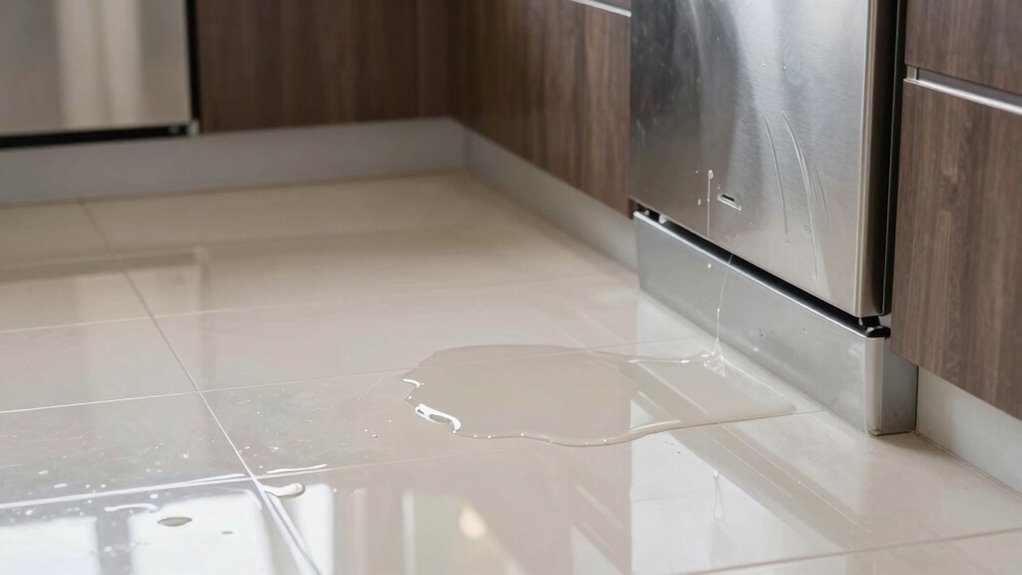
Many kitchen falls happen because of slippery surfaces or unexpected obstacles. Your choice of flooring materials plays a big role in slip hazards. Smooth, glossy tiles or polished wood can become slick when wet, increasing your risk of falling. Conversely, textured or non-slip flooring provides better traction and reduces accidents. Footwear choices also matter; shoes with worn soles or smooth bottoms don’t grip surfaces well, making slips more likely. Wearing proper, slip-resistant shoes can notably improve safety. Be mindful of wet spots, spilled liquids, or greasy patches that can instantly turn your kitchen floor into a hazard. Incorporating water-resistant flooring options can further help prevent slips caused by spills or moisture. Selecting flooring with non-slip properties significantly reduces the chance of accidents in wet conditions. Using anti-slip coatings on existing floors can also enhance safety without the need for complete replacement. Additionally, choosing non-slip flooring materials that are specifically designed for safety can make a substantial difference in preventing falls. Combining the right flooring materials with appropriate footwear choices helps create a safer environment, minimizing the chances of slips and falls while cooking or cleaning.
As an affiliate, we earn on qualifying purchases.
Common Hotspots for Slips and Trips in Your Kitchen
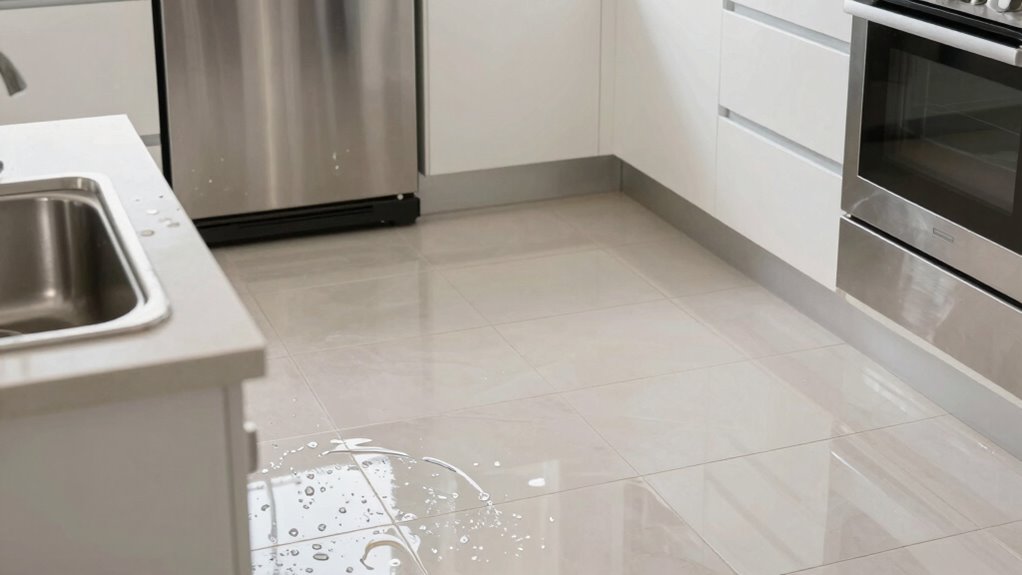
Certain areas in your kitchen are more prone to slips and trips because of frequent foot traffic or exposure to spills. The main hotspots include places with cluttered countertops, where items can fall or cause you to trip. Appliance placement also matters; poorly positioned appliances can create obstacles. Additionally, wet areas near the sink or dishwasher increase fall risks. Other common hotspots include:
- Cluttered countertops with loose items
- Narrow walkways blocked by appliances
- Wet floors around sinks and dishwashers
- Uneven or loose flooring
- Items stored on the floor, like mats or boxes
Understanding regional kitchen designs can help identify additional potential hazards and optimize safety measures. Properly designed kitchens should account for typical traffic patterns and hazard zones to reduce slip and trip risks. Being aware of hazard zones and implementing preventive measures can significantly improve kitchen safety. Recognizing traffic flow patterns can also assist in arranging appliances and furniture to minimize accidents. Conducting a hazard assessment of your kitchen layout is a proactive step toward preventing falls.
As an affiliate, we earn on qualifying purchases.
How Slippery Surfaces Contribute to Kitchen Falls
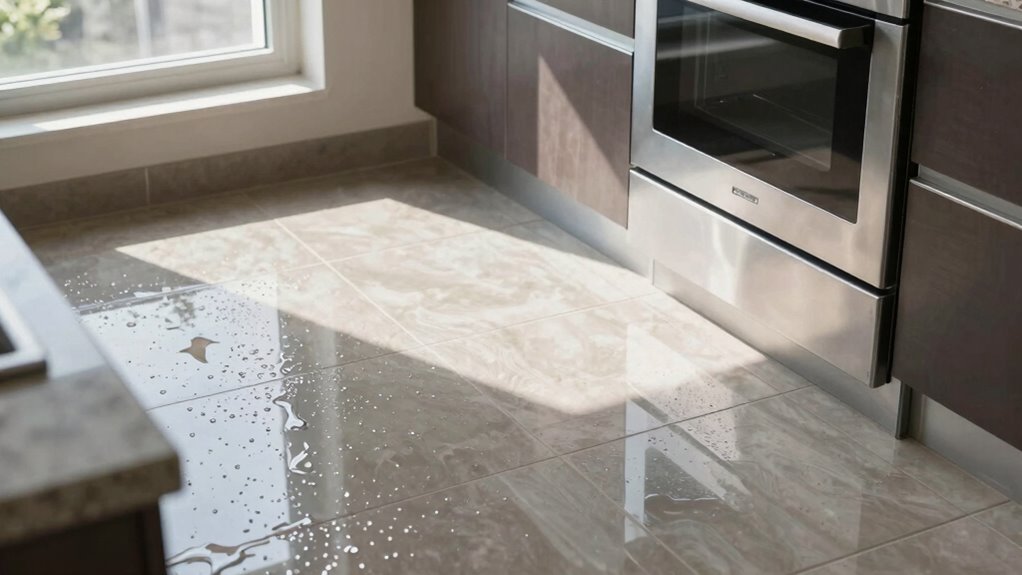
Wet surfaces in your kitchen can make every step risky, increasing the chance of slipping. Without proper traction solutions, even small spills become dangerous hazards. Addressing these slippery areas is key to preventing falls and keeping your kitchen safe. Incorporating non-slip flooring can significantly improve safety by providing better grip and reducing accidents. Additionally, understanding the importance of personality assessments like the 16PF can help in designing safety protocols tailored to individual behaviors, further minimizing risks.
Wet Surfaces Increase Slips Risks
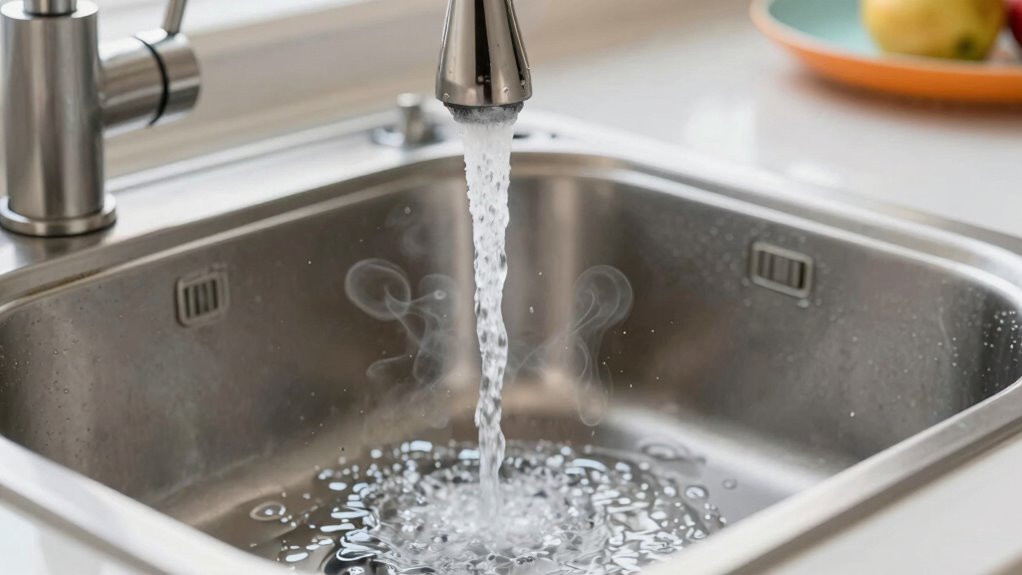
Slippery surfaces in the kitchen dramatically increase the risk of falls, especially when spills or water splashes are left unattended. Water on floors, whether from spills or wet mopping, creates slick spots that are easy to slip on. To reduce this danger, focus on proper mopping techniques to guarantee floors dry quickly and thoroughly. Using a vinyl cutter settings can help ensure that cleaning mats or adhesive strips are correctly applied to improve traction on slippery surfaces. Wearing slip resistant footwear can also provide better grip, reducing the chances of slipping. Keep these tips in mind:
- Always clean spills immediately
- Use absorbent materials to dry wet areas
- Avoid leaving water pooling on the floor
- Regularly check for wet spots after cleaning
- Opt for slip resistant footwear for better traction
Inadequate Traction Solutions
Even when spills are quickly cleaned up, inadequate traction solutions can still cause slips and falls in the kitchen. Slippery surfaces compromise slip prevention, making accidents more likely. Choosing the right traction solutions, like textured mats or slip-resistant coatings, improves safety markedly. Proper footwear also enhances grip, reducing risks. Without these measures, even small spills can turn dangerous. A variety of halal-safe traction products are available to ensure safety without compromising dietary restrictions. Here’s a quick overview of effective traction solutions:
| Solution Type | Benefits |
|---|---|
| Anti-slip mats | Provide grip on slick floors |
| Slip-resistant coatings | Make surfaces less slippery |
| Non-slip footwear | Increase traction for you |
Additionally, proper maintenance of these surfaces is essential to sustain their effectiveness over time. Regular cleaning and inspection help maintain the traction effectiveness, preventing deterioration that could lead to accidents. Incorporating traction-enhancing products and practices can further minimize risks and create a safer kitchen environment. Ensuring consistent traction maintenance is crucial for long-term safety.
As an affiliate, we earn on qualifying purchases.
How to Quickly Clean Spilled Liquids and Prevent Accidents
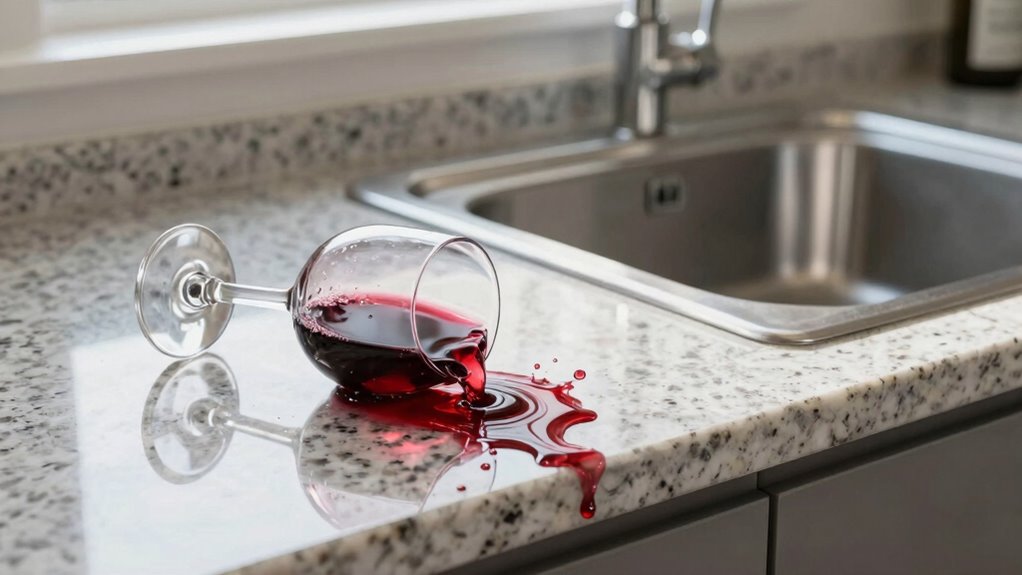
Accidents happen quickly in the kitchen, but responding promptly can prevent slips and falls. When you spill liquids, act fast to minimize hazards. Start by grabbing paper towels or a clean cloth to absorb the spill. For effective spill cleanup, guarantee you:
- Blot the liquid gently to avoid spreading
- Use a mop or absorbent cloth for larger spills
- Apply a cleaning solution if needed to remove sticky residues
- Promote quick drying with fans or open windows
- Test the area to confirm it’s dry before walking over
Fixing Slippery Tiles and Worn Flooring Safely
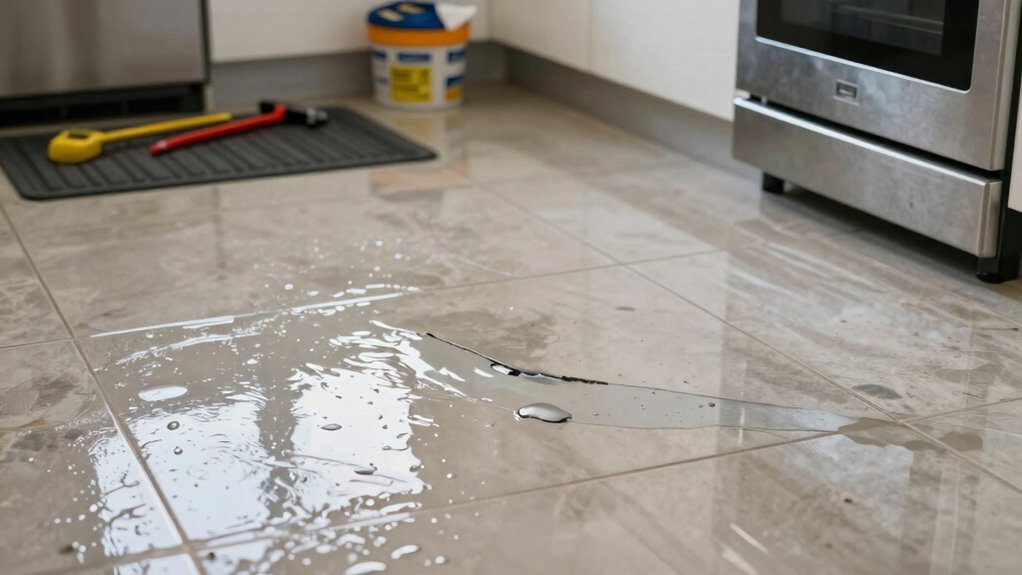
To keep your kitchen safe, start by choosing non-slip materials for your flooring. Proper installation guarantees these surfaces stay secure and effective, while regular maintenance keeps them in good condition. Taking these steps helps prevent slips and makes fixing worn or slippery floors safer and easier. Additionally, incorporating indoor plant care techniques such as proper humidity and lighting can improve overall air quality and create a more comfortable environment. Using knowledge about Rhythm Failure can also inspire you to select vibrant and uplifting decor to brighten your kitchen space, and understanding AI Ethicist Jobs can even guide you in making ethically responsible choices for smart home devices to ensure your safety. Implementing effective email marketing strategies can help you share safety tips with your community or clients effectively. Recognizing the importance of grocery savings strategies can also motivate you to monitor and improve your kitchen’s safety and efficiency.
Choosing Non-slip Materials
Are your kitchen floors becoming dangerously slippery? Choosing the right non-slip materials can make a big difference. Look for options like textured flooring, which provides natural grip and reduces slips. Slip resistant coatings are also effective; they can be applied over existing surfaces to enhance traction. When selecting materials, consider durability and ease of cleaning to maintain safety. Adding protective accessories such as anti-slip mats or coatings can further improve safety in your kitchen. Here are some options to contemplate:
- Textured ceramic or porcelain tiles
- Vinyl flooring with textured surface
- Rubber mats or flooring
- Slip resistant coatings for existing tiles
- Cork or bamboo with anti-slip properties
Selecting materials with non-slip properties helps create a safer kitchen environment, reducing fall risks without sacrificing style. Using proper installation techniques ensures that these non-slip surfaces perform effectively over time. Always opt for surfaces that offer good traction and are easy to maintain for long-term safety. Incorporating non-slip flooring options can significantly reduce accidents and enhance overall safety.
Proper Installation Techniques
Proper installation techniques are key to guaranteeing your kitchen floors remain safe and slip-resistant. Start by securely fixing non-slip mats in high-traffic areas, especially where spills are common. When installing new tiles or flooring, choose slip-resistant materials and follow the manufacturer’s instructions carefully. Proper adhesion is vital to prevent loosening that can cause uneven surfaces. Worn or damaged flooring should be replaced promptly to avoid hazards. Additionally, consider installing safety rails along key areas like near sinks or stairs to provide extra support. Ensure safety rails are firmly anchored and accessible without creating obstructions. Correct installation not only improves safety but also extends the life of your flooring, reducing the risk of slips and falls over time.
Regular Maintenance Practices
Regular maintenance is essential for keeping your kitchen floor safe, especially when it comes to fixing slippery tiles and worn flooring. Regularly check for loose tiles or cracks and address them promptly. Keep your appliances well-maintained to prevent leaks that can cause water buildup and increase slip risks. Maintain good countertop organization to reduce clutter and tripping hazards. To improve traction, consider applying non-slip coatings or rugs in high-traffic areas. Clean spills immediately to prevent slips and falls. Regularly sweep and mop with appropriate products to remove grease and debris. Also, inspect your flooring for signs of wear and replace damaged sections. By staying on top of appliance maintenance and organizing countertops, you create a safer, more efficient kitchen environment that minimizes fall hazards.
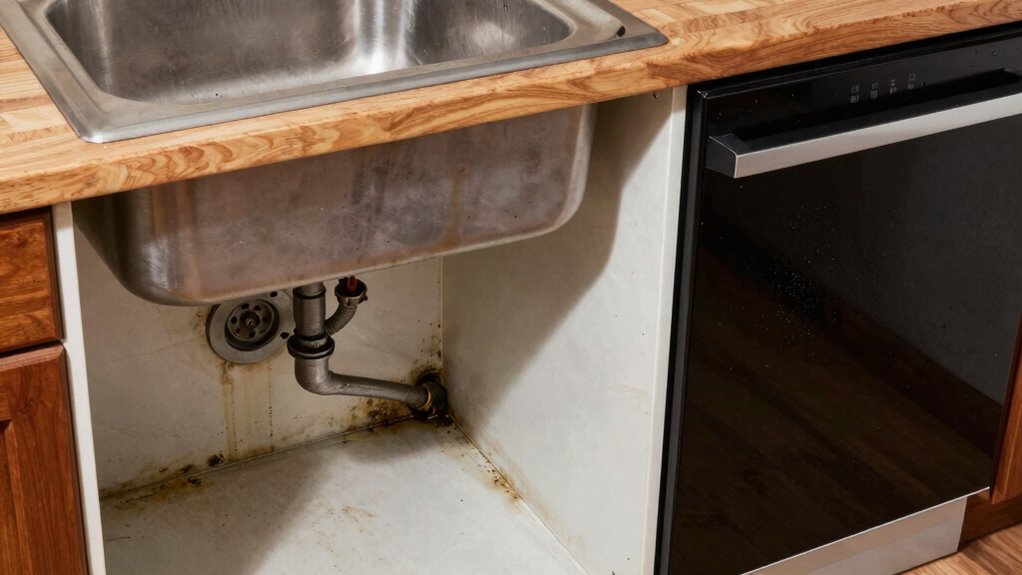
Beneath sinks and appliances, hidden hazards can quietly pose serious risks if overlooked. Leaks from sink pipes or appliance connections often go unnoticed, leading to water damage and mold growth. These hidden hazards can weaken flooring and cause slippery surfaces that increase fall risk. Regularly inspect under your sink for signs of moisture, corrosion, or mold. Be especially vigilant for sink leaks, which can cause water pooling and hidden rot.
| Hazard | Warning Signs | Prevention Tips |
|---|---|---|
| Hidden leaks | Water stains, musty odor | Check pipes regularly, repair leaks promptly |
| Mold growth | Discoloration, mildew smell | Keep area dry, clean with mold remover |
| Corrosion | Rust, metal deterioration | Use corrosion-resistant fittings |
| Structural damage | Sagging cabinets, soft flooring | Reinforce or replace damaged surfaces |
Organizing Countertops to Reduce Fall Risks
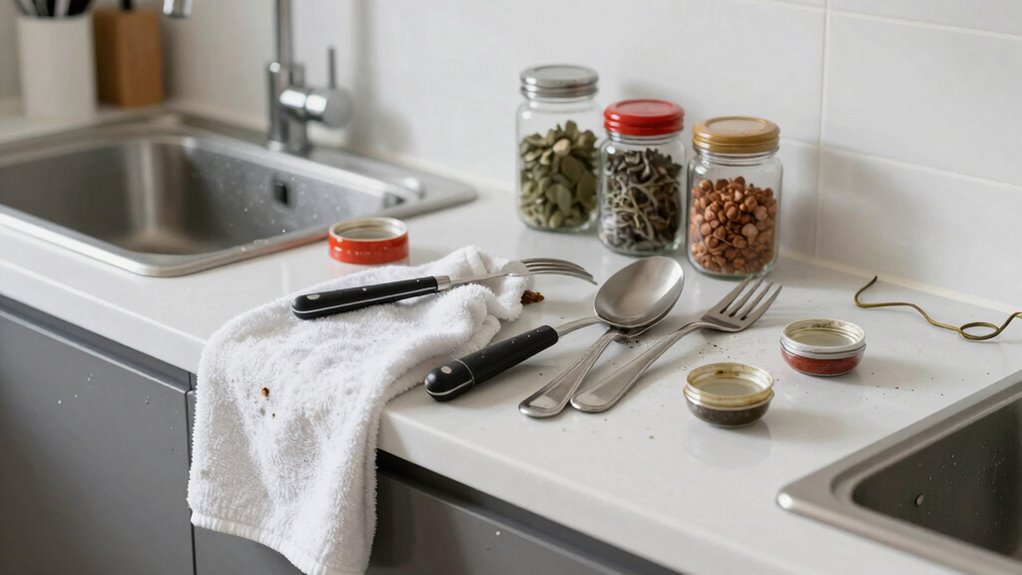
Keeping your countertops organized can substantially reduce fall risks in the kitchen. Regularly clear clutter, use storage solutions to keep items out of the way, and assign specific areas for frequently used items. These simple steps help create a safer, more efficient space.
Clear Clutter Regularly
Have you ever noticed how cluttered countertops can increase the risk of slips and falls in your kitchen? Regularly clearing your workspace helps improve safety and simplifies clutter management. Keep only essential items on your countertops to prevent accidents. Here are some tips to maintain a tidy surface:
- Store small appliances when not in use
- Use hooks or racks for frequently used tools
- Clear away food debris and packaging
- Organize utensils in drawers or containers
- Designate specific spots for each item
Use Storage Solutions
Organizing your countertops with effective storage solutions can make a significant difference in reducing fall hazards. Start by decluttering and prioritizing what you need daily, keeping essentials within easy reach. Use storage containers and drawer organizers to maximize cabinet accessibility, so you’re not rummaging through cluttered spaces. Consider installing pull-out shelves or lazy Susans inside cabinets to make items more accessible and prevent overreaching. Keep heavy or sharp objects stored safely away from the edges, and avoid stacking items that could topple. Clear designated spots for frequently used appliances and tools to prevent them from occupying valuable counter space. Proper countertop organization minimizes clutter, reduces the risk of slips and trips, and creates a safer, more functional kitchen environment.
Designate Specific Areas
To reduce fall risks, it’s essential to designate specific areas for different kitchen tasks and items. A well-planned kitchen layout helps keep your countertops organized and clutter-free, minimizing hazards. Clear zones for prep, cooking, and cleaning prevent you from reaching across unstable items or crowded spaces. Consider these tips for effective countertop organization:
- Allocate separate zones for chopping, mixing, and assembling
- Keep frequently used items within easy reach
- Store heavy or sharp tools away from walkways
- Use trays or containers to contain small items
- Maintain clear pathways by removing unnecessary clutter
How Improving Lighting Prevents Trips and Slips
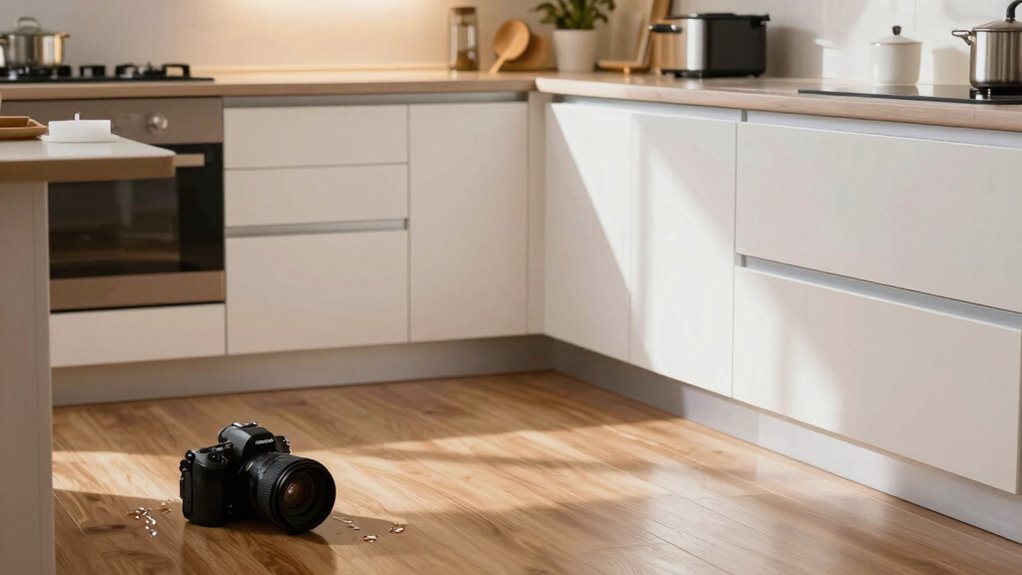
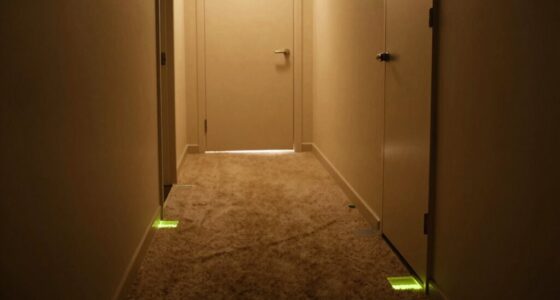
Improving lighting in the kitchen makes a significant difference in preventing trips and slips. Proper ambient lighting guarantees the entire space is well-lit, reducing shadows that can hide obstacles or uneven flooring. Task lighting, such as under-cabinet lights, illuminates work surfaces and high-risk zones like sinks and stoves, helping you see potential hazards clearly. When your kitchen is brightly lit, you’re less likely to stumble over loose rugs, spills, or clutter. Bright, even lighting also improves depth perception, making it easier to judge steps, thresholds, and floor levels accurately. Investing in good ambient and task lighting creates a safer environment, decreasing the chances of accidents caused by poor visibility. Clear, well-lit areas are essential for preventing slips and maintaining a secure kitchen space.
Easy Fixes for Uneven or Worn Floors
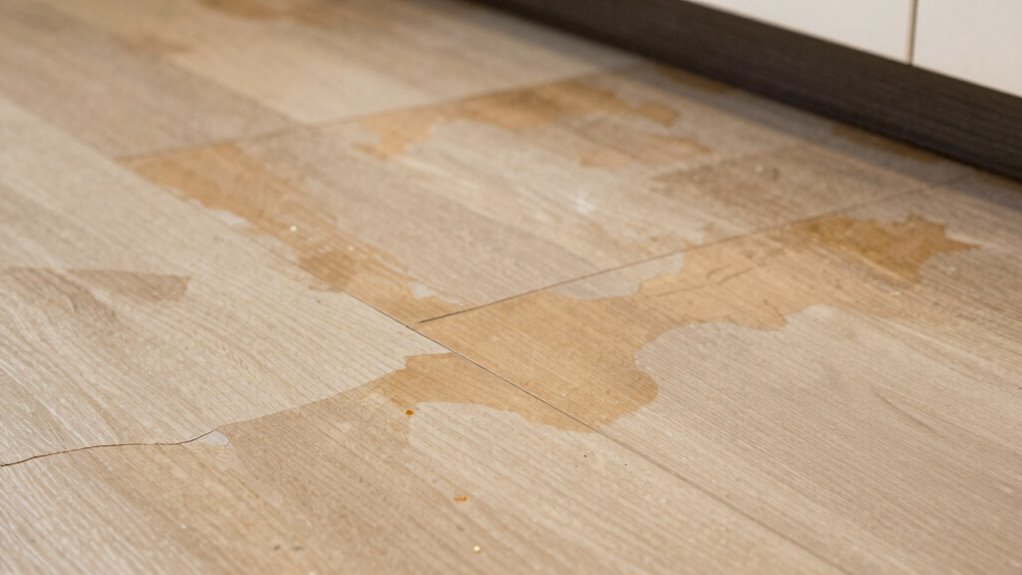
Uneven or worn floors can pose serious tripping hazards in your kitchen, but fixing them doesn’t have to be complicated or expensive. You can quickly improve safety and style by updating your flooring. Consider these easy fixes:
Fix uneven or worn kitchen floors easily with simple, affordable updates for safety and style.
- Use self-leveling compounds to fill in low spots and create a smooth surface.
- Apply decorative patterns or tiles to cover worn areas, adding visual interest.
- Refinish or stain the existing floor to refresh dull or damaged wood, matching your color schemes.
- Install transition strips between different flooring types for a seamless look and added stability.
- Use rugs or mats in high-traffic areas to cover uneven spots and reduce slips.
These simple updates enhance safety while allowing you to customize your kitchen’s look with appealing patterns and colors.
Safety Tips for Kids and Elderly in the Kitchen
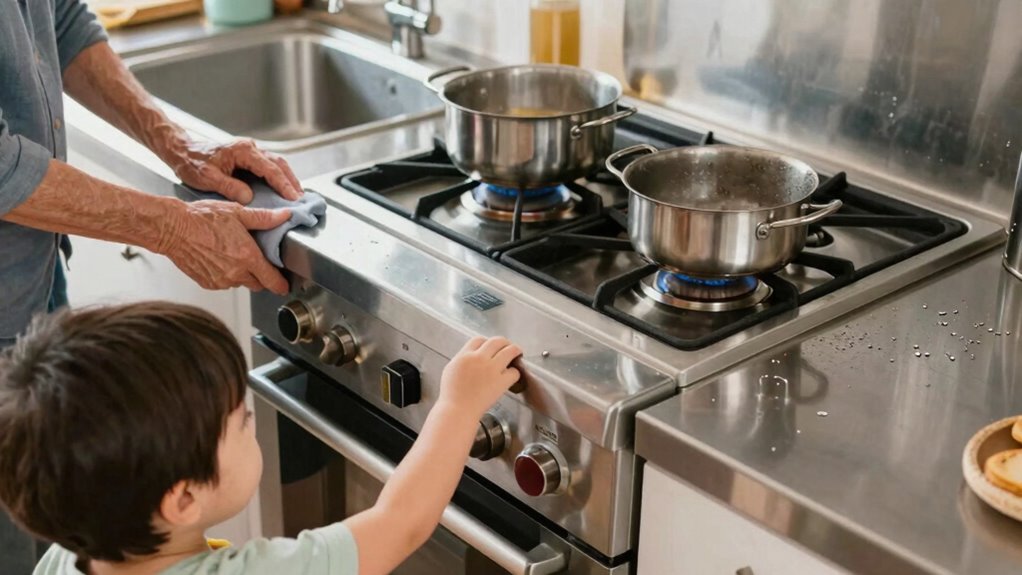
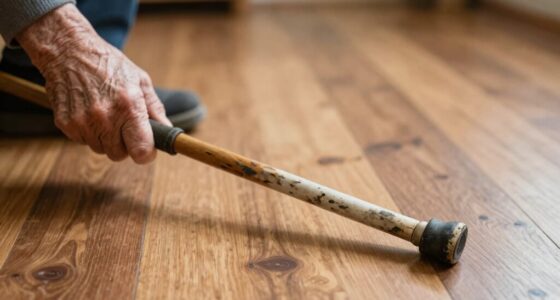
Are your kids and elderly loved ones safe while they’re in the kitchen? Child safety and elderly protection are vital for preventing falls. Keep walkways clear of clutter and secure loose rugs to avoid tripping hazards. Install non-slip mats near sinks and stoves, and ensure grab bars are within easy reach for elderly family members. Use stove knob covers and keep hot liquids out of reach to prevent burns. Teach kids about kitchen safety, like staying away from hot surfaces and sharp objects. Encourage elderly loved ones to wear supportive shoes and use assistive devices if needed. Regularly check the floor for spills or debris, and maintain good lighting to improve visibility. These simple precautions can make your kitchen safer for everyone.
Frequently Asked Questions
What Materials Are Best for Slip-Resistant Kitchen Flooring?
You should choose materials with textured surfaces or consider applying anti-slip coatings for the best slip-resistant kitchen flooring. Options like rubber, textured vinyl, or textured ceramic tiles provide good traction. You can also enhance safety by adding anti-slip coatings to smooth surfaces, making them less slippery when wet. Prioritizing these materials and treatments helps prevent accidents and keeps your kitchen safer, especially in busy or spill-prone areas.
How Often Should Kitchen Floors Be Inspected for Wear and Hazards?
Your kitchen floors are like a busy highway, so you should inspect them for wear and hazards at least once a month. Regular hazard inspection helps catch issues early, preventing slips and falls. Keep an eye on any signs of floor wear, such as cracks or uneven surfaces, especially in high-traffic areas. Staying proactive guarantees your kitchen remains a safe space, reducing the risk of accidents before they happen.
Are There Eco-Friendly Solutions to Improve Kitchen Safety?
Yes, you can improve kitchen safety with eco-friendly solutions. Use recyclable cleaning products to keep surfaces clean without harming the environment. Apply biodegradable anti-slip coatings on your floors to prevent falls while being eco-conscious. These options help you maintain a safe kitchen space that’s gentle on the planet, ensuring safety without sacrificing sustainability. Incorporating these eco-friendly solutions makes your kitchen safer and more environmentally responsible.
What Are the Latest Technological Advances in Slip Prevention?
Imagine your kitchen floor as a busy highway; smart sensors and wearable tech act like traffic cameras and warning signs, preventing accidents. Latest advances include smart sensors that detect spills and warn you instantly, while wearable tech monitors your movements, alerting you to slip risks. These innovations create a safer environment, reducing falls by up to 30%. Embrace these tech tools to stay ahead of hazards and keep your kitchen accident-free.
How Can I Train Family Members to Stay Alert to Fall Risks?
You can train your family members to stay alert to fall risks by emphasizing home safety and emergency preparedness. Encourage regular safety checks, like securing loose rugs and installing grab bars. Conduct simple drills so everyone knows what to do if a fall happens. Talk openly about hazards, and remind them to stay attentive, especially in high-risk areas like the kitchen. This proactive approach helps prevent falls and keeps everyone safer.
Conclusion
By staying alert and addressing common hazards, you can keep your kitchen safe and slip-free. Regularly clean spills, fix worn flooring, and organize your space to prevent accidents. Good lighting and mindful supervision, especially around kids and the elderly, are your best defenses. Remember, a safe kitchen is a happy one—like a trusty knight, your vigilance wards off falls and keeps your home secure. Stay sharp and keep your kitchen hazard-free!