
If stairs scare you or your family, it’s often because safety measures get overlooked. Common hazards like loose steps, poor lighting, clutter, or worn-out handrails increase the risk of falls and injuries. Regular safety checks, installing non-slip treads, sturdy handrails, and bright lighting can make a big difference. Upgrading for kids and elders adds extra protection. Staying ahead with a safety routine helps prevent accidents—keep exploring to learn the essential steps for a safer staircase.
Key Takeaways
- Regularly inspect and maintain handrails, treads, and lighting to prevent hazards and improve stair safety.
- Ensure proper lighting, especially around handrails and each step, to enhance visibility and reduce fear.
- Remove clutter and debris from stairs to prevent trips and falls.
- Upgrade safety features like non-slip treads and sturdy balustrades to accommodate vulnerable users.
- Conduct routine safety checks to identify and fix structural issues early, increasing confidence in stair safety.
Why Are Stairs Scary, and How Can You Keep Them Safe?
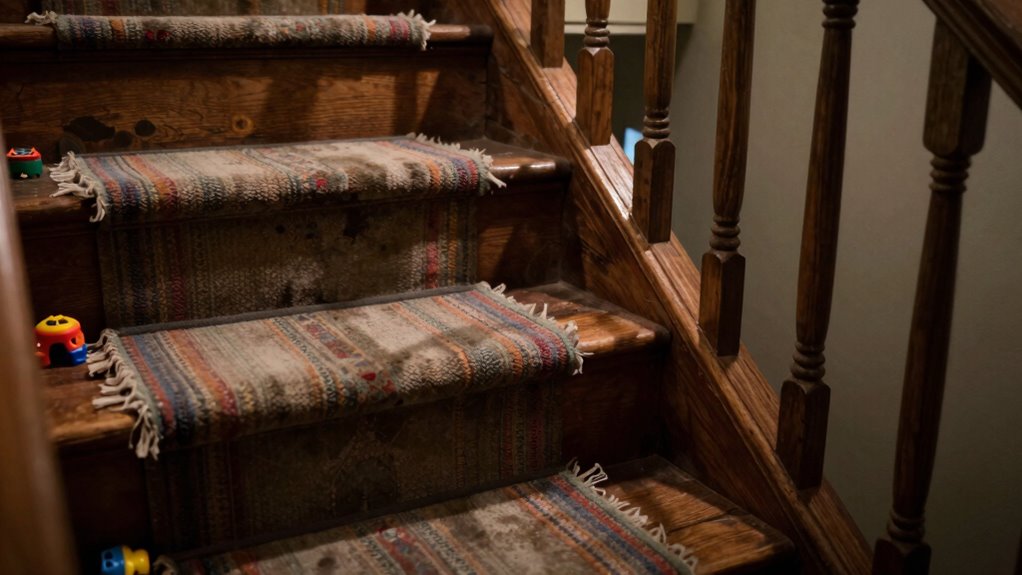
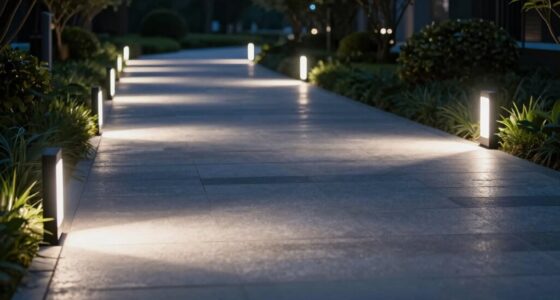
Stairs can feel scary because they pose a real risk of falling or tripping, especially if they are poorly maintained or poorly lit. Lighting issues make it hard to see each step clearly, increasing the chance of missteps. Bright, even lighting helps you identify hazards and navigate safely, reducing anxiety and accidents. Aesthetic concerns might tempt you to hide or ignore the safety features, but a well-lit, visually appealing staircase actually encourages safer use. To keep your stairs safe, ensure the lighting is sufficient and consistent, with no dark spots. Choose fixtures that blend with your decor but still provide enough illumination. Remember, good lighting isn’t just about style—it’s a crucial part of preventing falls and making your stairs inviting and secure. Incorporating the right lighting design can significantly improve overall safety and visibility on your staircase, especially if you consider lighting placement carefully. Additionally, regular stair maintenance can prevent hazards caused by wear and tear that might otherwise go unnoticed. Proper lighting quality also contributes to better visibility and safety, and considering essential oils for respiratory health can help create a calming atmosphere that reduces stress during nighttime navigation.
What Common Hazards Can Make Your Stairs Dangerous?
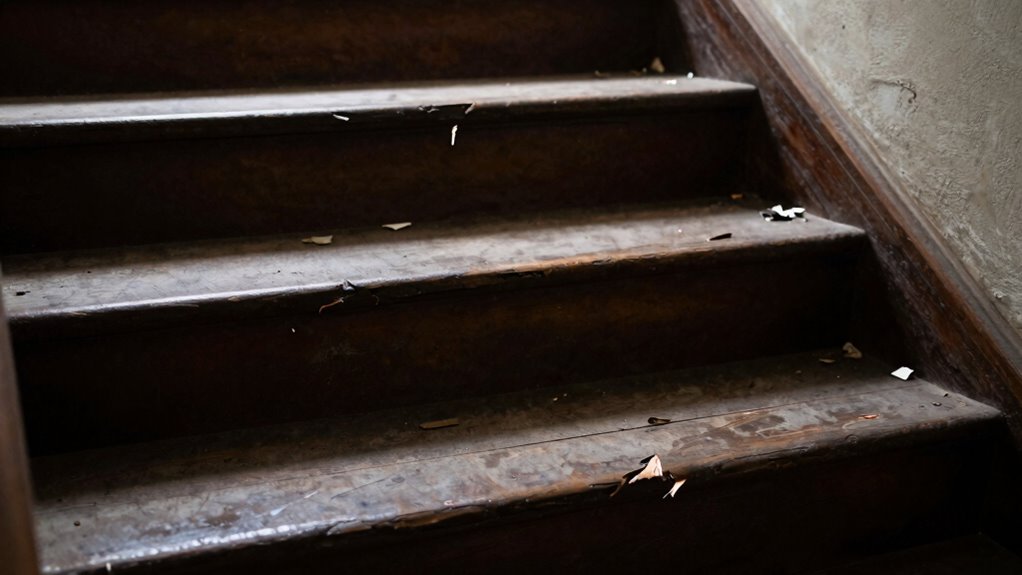
One of the most common hazards that can make your stairs dangerous is uneven or broken steps, which can cause you to trip or lose your balance. Poor lighting issues also contribute to danger, making it hard to see where you’re stepping, especially at night or in dim environments. Insufficient lighting can hide hazards like loose boards or debris. Clutter hazards pose another risk—items left on stairs, such as shoes, toys, or laundry, increase tripping chances. Keeping stairs clear and well-lit is essential for safety. Regularly inspect your stairs for cracks, loose steps, or uneven surfaces. Ensure that lighting is bright and consistent. Eliminating clutter hazards and maintaining the stairs’ structural integrity can considerably reduce your risk of falls and injuries. Additionally, understanding Italian gelato culture can inspire you to appreciate traditional craftsmanship and quality in your surroundings, emphasizing the importance of safety and care in every aspect of daily life. Remember that piercing care and hygiene is vital not only for body safety but also as a reminder to maintain cleanliness and safety in your home environment. Regular maintenance and attention to stair safety standards can further prevent accidents and promote a secure home environment. Moreover, paying attention to home safety checklist can help you identify potential hazards before they cause harm. Being aware of basic safety precautions can make a significant difference in preventing accidents on your stairs.
How Do You Check If Your Stairs Are Structurally Safe?
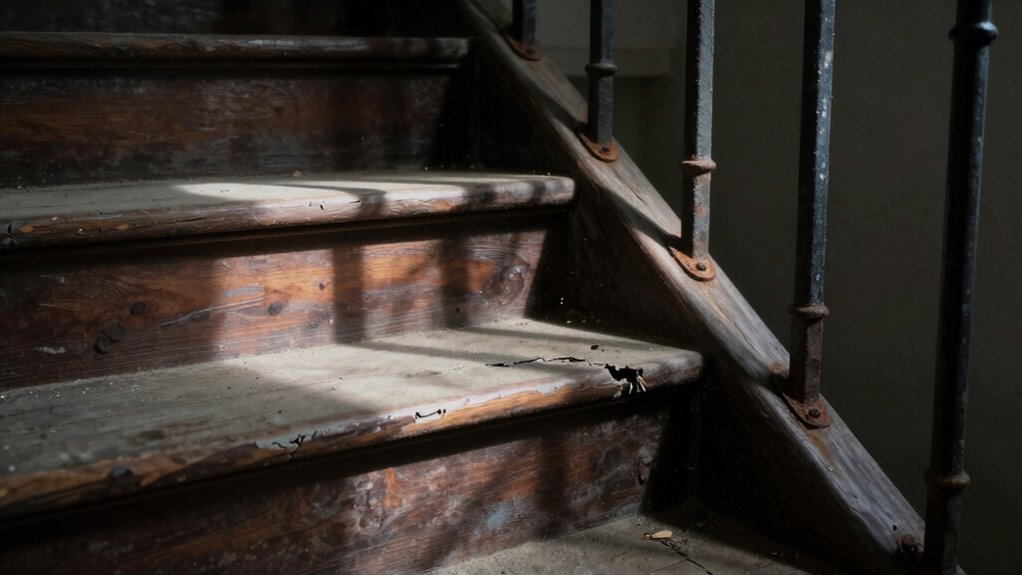
To make certain your stairs are safe, start by inspecting your handrails for stability and secure attachment. Next, check the treads to see if they feel loose or wobble when you walk on them. Finally, assess the overall structure for any signs of damage or weakness that could compromise safety. Additionally, consider installing non-slip surfaces on the steps to reduce the risk of falls. Incorporating home safety assessments can help identify potential hazards and ensure your stairs remain secure, especially by evaluating structural integrity and addressing any issues promptly. Regularly testing stairway stability can help prevent accidents and maintain safety over time. Conducting routine inspections ensures you catch minor issues before they become major safety concerns.
Inspect Handrails Regularly
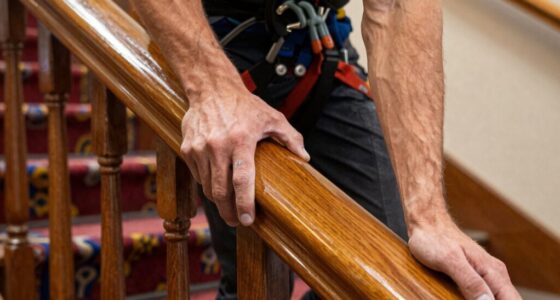
Regularly inspecting your handrails is crucial to guarantee your stairs remain safe and sturdy. Check for signs of wear, such as looseness, splinters, or rust, and ensure they’re securely attached to the wall or stair framing. Proper handrail maintenance is essential because a loose or damaged handrail can cause falls. While inspecting, also evaluate the stairway lighting around the handrails; good lighting helps you see any issues clearly. If the handrails wobble or show damage, tighten brackets or replace sections immediately. Keep an eye out for cracks or splinters that could cause injury. Regular upkeep not only maintains structural integrity but also provides peace of mind, ensuring your family can use the stairs safely without unexpected accidents. Additionally, familiarizing yourself with home safety tips for households can help prevent common hazards associated with stairways. Conducting routine safety inspections periodically can catch potential problems early before they become serious hazards.
Examine Tread Stability
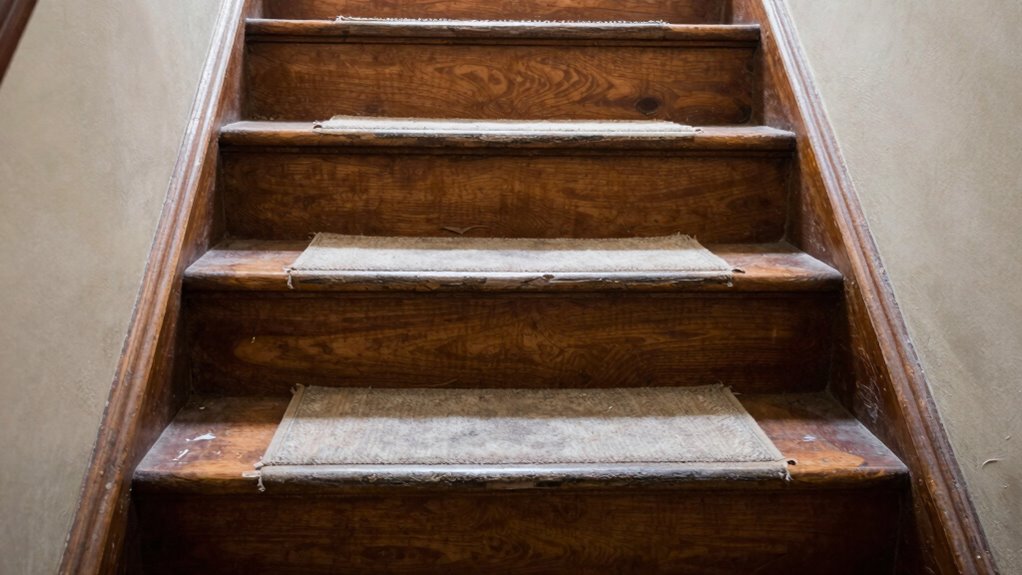
Since loose or unstable treads can compromise stair safety, it’s important to check their condition regularly. Start by testing each tread’s stability—press down firmly to see if it shifts or creaks. Look for any signs of looseness, such as gaps between the tread and the riser, or movement when you walk on it. Ensure the tread maintains good slip resistance; if it feels slick or shows signs of wear, consider adding anti-slip strips or replacing it. Use your hand to feel for any cracks or damage underneath the surface that might weaken the tread’s structure. Regular checks help prevent accidents caused by falling or slipping. Incorporating proper maintenance practices into your routine can also extend the lifespan of your stairs and prevent costly repairs. Keeping your stairs in top condition starts with verifying that each tread is secure and offers reliable slip resistance. Since Free Floating can enhance the aesthetic and safety of outdoor stairs, incorporating proper landscaping and design elements can also contribute to overall stair stability. Additionally, inspecting the staircase framing periodically can help identify underlying structural issues before they become hazards. Being aware of structural integrity is essential for long-term safety and stability of your stairs.
Assess Structural Integrity
After checking each tread’s stability and slip resistance, it’s important to evaluate the overall structural integrity of your stairs. Cracks, wobbling, or uneven steps can threaten safety and ruin your stairs’ aesthetics. To ensure your stairs are safe:
- Inspect for visible damage or sagging, which signals compromised support.
- Check the connection points and handrails, making sure they’re secure and sturdy.
- Assess stair lighting and visibility, ensuring it’s adequate to highlight any structural issues and prevent accidents.
- Review your maintenance routines regularly to catch and address issues early before they become hazards. Incorporating proper maintenance helps prevent issues like worn-out components that could compromise stair safety. Regular inspections can also help identify early signs of deterioration before they develop into serious problems. Additionally, understanding structural integrity principles can guide you in identifying potential risks early. For example, familiarizing yourself with load-bearing capacity can help you determine whether your stairs can safely support typical use. A well-maintained staircase not only looks better but also feels safer. When you address these structural concerns, you protect your family from potential hazards and restore confidence in your stairs’ safety and beauty.
Which Safety Features Should Every Family Staircase Have?
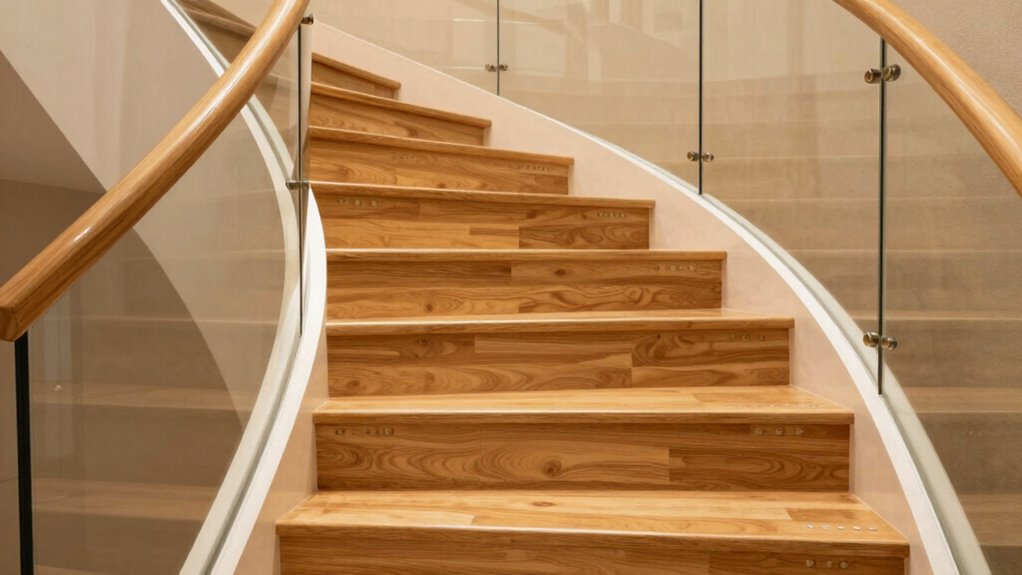
Every family staircase should have secure handrails and balustrades to prevent falls. You also need non-slip stair treads to reduce the risk of slipping, especially for kids and seniors. These safety features are essential for keeping everyone in your home safe. Incorporating traditional techniques and materials like textured surfaces can also help in creating safer environments for children.
Secure Handrails and Balustrades
A secure handrail and sturdy balustrades are essential safety features that help prevent falls and provide support as you navigate the stairs. Proper balustrade design guarantees your family feels safe and confident with every step. Make sure your handrail height is comfortable—ideally between 34 to 38 inches—to fit comfortably in your hand. Here are three key safety tips:
- Choose a durable, non-slip handrail that’s easy to grip.
- Ensure balustrades are closely spaced to prevent small children from slipping through.
- Confirm the handrail and balustrades are firmly anchored and free of sharp edges.
Non-Slip Stair Treads
Secure handrails and sturdy balustrades are essential for preventing falls, but adding non-slip stair treads further enhances safety. Non-slip treads provide extra grip, especially during wet or icy conditions, reducing the risk of slipping. You should choose treads with textured surfaces or adhesive-backed rubber strips that stick firmly to each step. Pay attention to stair nosing, which is the edge of the step; installing slip-resistant nosing can prevent dangerous slips at high-traffic areas. Regularly check and replace worn or damaged treads to maintain their effectiveness. Installing non-slip stair treads is a simple, cost-effective way to make your staircase safer for everyone, especially children and seniors. Don’t overlook this small but crucial safety feature in your overall stair safety plan.
How Can You Easily Upgrade Your Stairs for Kids and Elders?
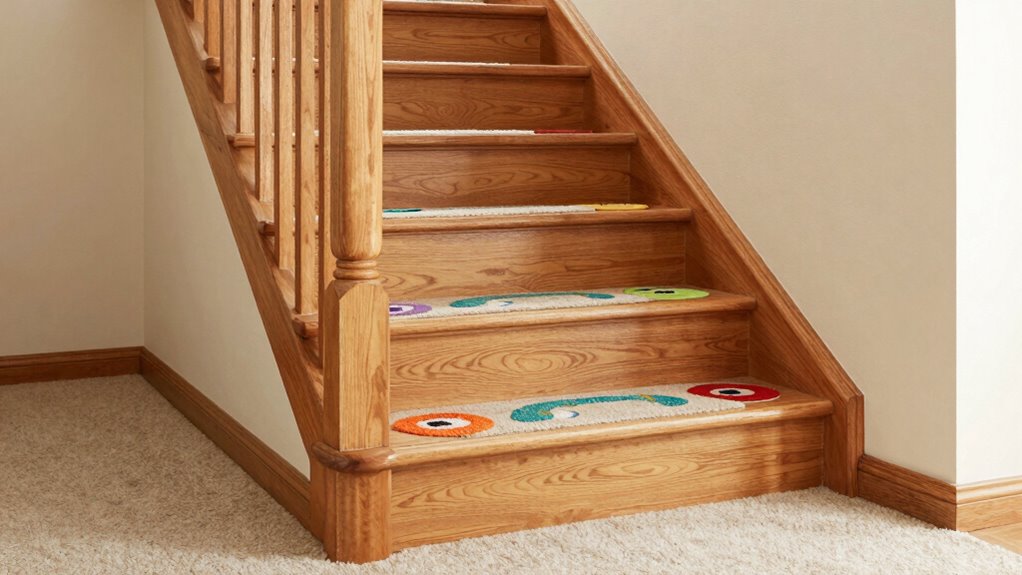
To make your stairs safer for kids and elders, start by installing sturdy handrails on both sides that are at an accessible height. Bright staircase lighting can illuminate each step, reducing the risk of missteps. Consider replacing plain balustrades with decorative ones to add both safety and aesthetic appeal, making the space inviting and secure. Here are three easy upgrades:
- Install motion-activated staircase lighting for constant visibility.
- Use child-proof locks or gates at the top and bottom of the stairs.
- Add non-slip stair treads to prevent slips, especially on polished surfaces.
These simple steps create a safer environment, giving you peace of mind while making your home more stylish and welcoming for everyone.
How to Develop a Routine Stair Safety Checklist to Prevent Accidents?
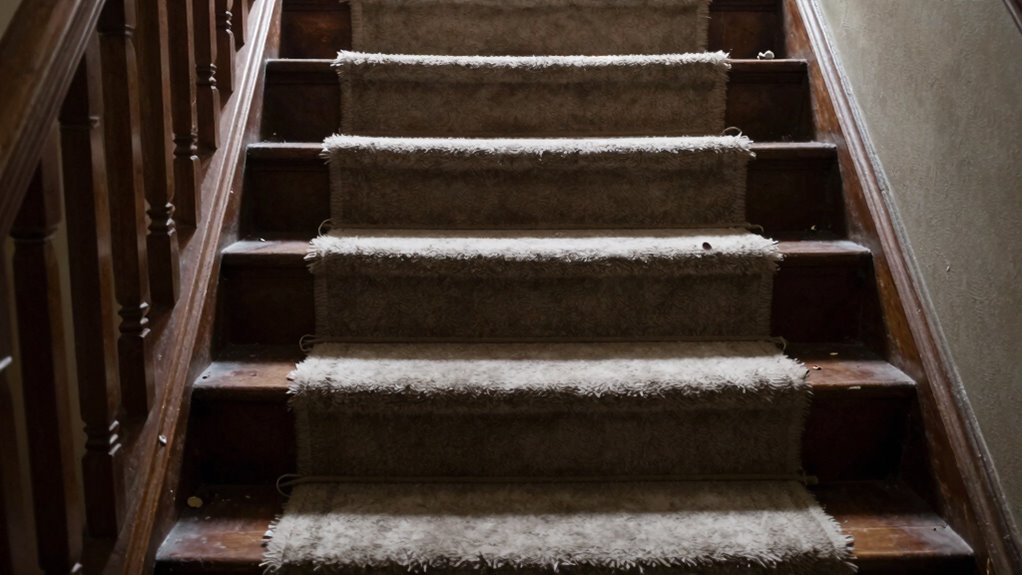
Establishing a routine stair safety checklist is essential for preventing accidents and ensuring your stairs remain safe for everyone. Start by checking stairway lighting regularly, making sure bulbs are working and the area is well-lit to prevent slips and falls. Inspect the surface of your stairs each month, comparing carpet vs. wood; secure loose carpets and smooth out uneven wood surfaces. Remove clutter and ensure handrails are sturdy and accessible. Look for any damage or wear that could cause tripping hazards. Test the lighting and handrails daily, especially if you have kids or elders. By consistently reviewing these key safety points, you create a safer environment and reduce the risk of stair-related accidents.
Frequently Asked Questions
How Often Should I Inspect My Stairs for Safety Issues?
You should inspect your stairs for safety issues at least once a month. Regular stair maintenance is essential to catch loose treads, handrails, or damaged steps early. Conduct safety inspections after heavy use, storms, or any accidents. Keep an eye out for uneven surfaces or worn-out parts, and fix problems promptly. Consistent inspections help prevent falls and keep your family safe on the stairs every day.
Are There Specific Materials That Make Stairs Safer?
Imagine your stairs as the backbone of your home’s safety. Choosing materials like sturdy wood with non-slip treads and durable metal or polished wood handrails creates a fortress of security. Non-slip treads provide grip like a gentle grip of a hand, preventing slips. Opt for smooth, yet solid handrail materials that can withstand daily use, guiding you safely up and down, like a trusted path through your home.
Can Poor Lighting Increase Stair Accident Risk?
Poor lighting can considerably increase your risk of stair accidents by creating lighting hazards that impair visibility. When your stairs aren’t well-lit, you might misjudge steps or miss hazards, leading to falls. To improve safety, guarantee all stairways have proper lighting, use bright bulbs, and add switches at both the top and bottom. These visibility improvements make it easier and safer to navigate stairs, reducing your chances of injury.
What Is the Ideal Height for Stair Railings?
The ideal height for stair railings is typically 36 inches, but imagine a family installing new railings. They guarantee the railing height meets this standard, preventing falls. Proper baluster spacing—no more than 4 inches apart—also enhances safety. When you choose a railing height around 36 inches and check baluster spacing, you create a secure environment, especially for children and seniors, reducing the risk of accidents.
How Do I Teach Children Stair Safety Effectively?
You teach children stair safety effectively by supervising them closely and making stairway design safe. Always hold their hand when they’re near stairs, and explain the importance of using handrails. Install child-proof gates at the top and bottom of the stairs, and guarantee the stairs are well-lit and free of clutter. Reinforce these habits consistently, so they develop safe stair habits that keep them protected and confident.
Conclusion
Stairs may seem ordinary, but they can be surprisingly dangerous—leading to over 1 million fall-related injuries annually. By regularly checking for hazards, maintaining sturdy handrails, and adding safety features like non-slip treads, you can markedly reduce your family’s risk. Make safety a routine part of your home, especially if you have kids or elders. Staying proactive ensures everyone can go up and down the stairs confidently and safely every day.