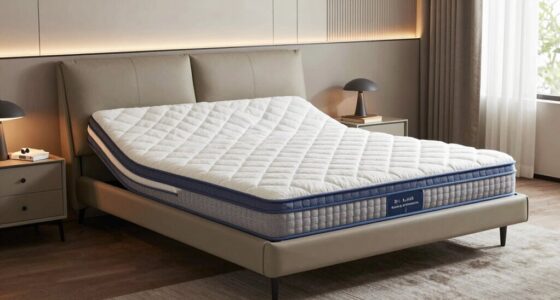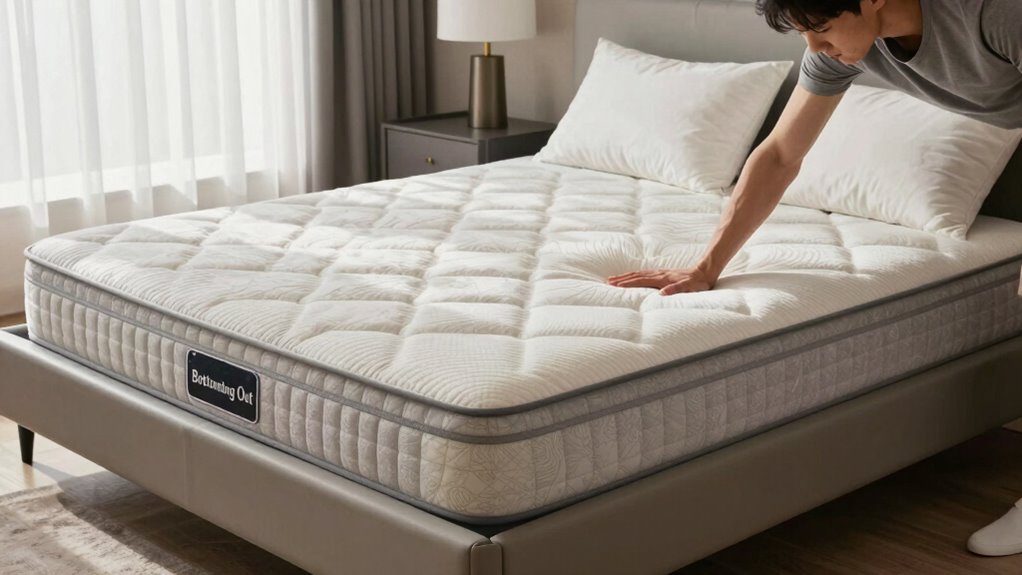

The “Bottoming Out” test helps you quickly assess mattress support for better sleep quality. To perform it, lie down in your usual position for about 10-15 minutes. Pay attention to how much you sink and if you feel any pressure on your hips or shoulders. Look for sagging or discomfort, which indicates inadequate support. Understanding this test can guide you toward the right mattress. Find out more about what to evaluate next.
Listen free for 30 days with Audible
Thousands of audiobooks and originals — cancel anytime.
As an affiliate, we earn on qualifying purchases.
Key Takeaways
- The Bottoming Out Test assesses mattress support by evaluating comfort and spinal alignment while lying in your typical sleep position for 10-15 minutes.
- Look for excessive sinking, which indicates inadequate support and potential discomfort during sleep.
- Signs of bottoming out include pressure on hips or shoulders and visible sagging or indentations in the mattress.
- A mattress that maintains shape and support prevents restlessness, ensuring deeper, more restorative sleep.
- Consider the trial period for evaluating mattress performance, allowing adjustments for optimal comfort and support.
As an affiliate, we earn on qualifying purchases.
What Is the “Bottoming Out” Test for Mattresses?
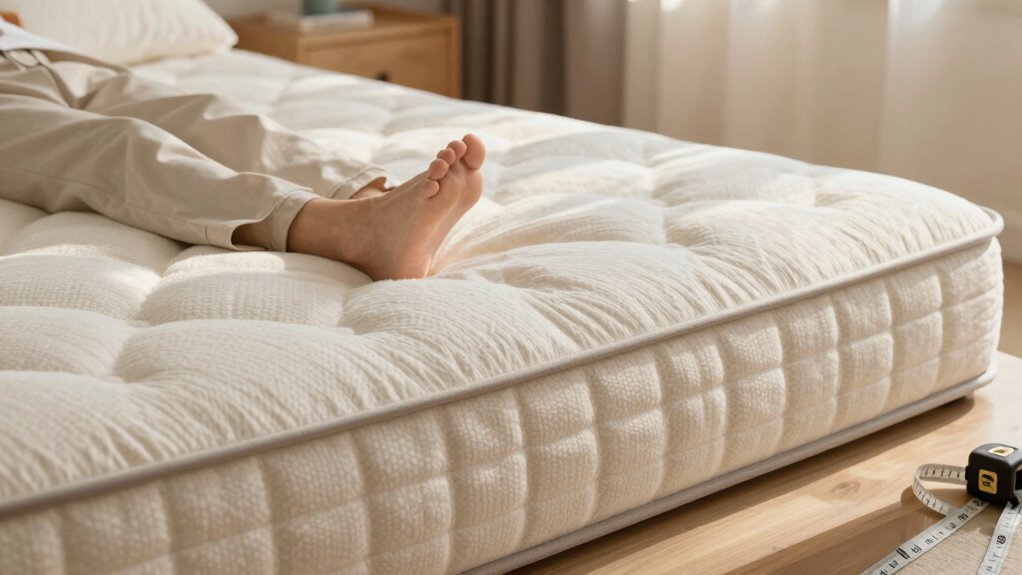
The “Bottoming Out” test is an essential assessment for evaluating mattress support. This test helps you determine whether a mattress provides adequate durability and can withstand daily use without losing its shape or support. To perform the test, you lie down on the mattress and gauge how much it compresses under your weight. If you feel the base or if the mattress sinks excessively, it may not have the necessary support technology to keep you comfortable over time. A well-performing mattress should offer balanced support while maintaining its structure. By conducting this simple test, you can verify that your mattress will support you effectively for years to come, making it a smart investment in your sleep. Additionally, a mattress topper can enhance sleep comfort by providing an extra layer of support and cushioning.
As an affiliate, we earn on qualifying purchases.
Why Mattress Support Matters for Sleep Quality
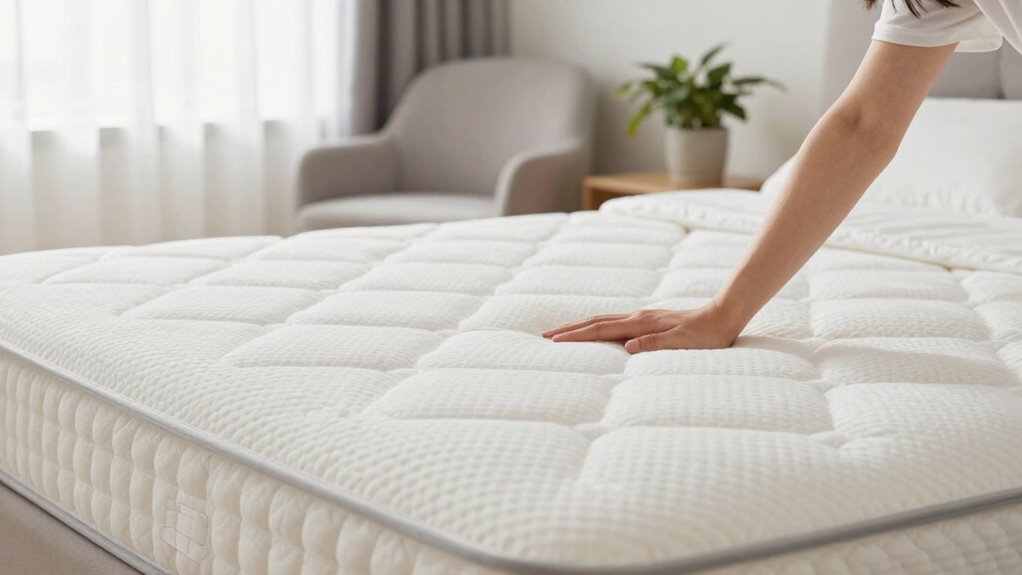
When you consider how much time you spend sleeping, it’s clear that mattress support plays an essential role in your overall sleep quality. Sleep science shows that a well-supported mattress helps maintain proper spinal alignment, reducing the risk of discomfort and pain. When your body’s supported correctly, you can enjoy deeper, more restorative sleep. Additionally, improving indoor air quality can enhance your sleeping environment and further contribute to a good night’s rest.
Comfort factors, like firmness and contouring, also come into play, as they affect how well you can relax and fall asleep. An inadequate mattress can lead to tossing and turning, disrupting your rest. By prioritizing support, you not only enhance comfort but also promote better sleep cycles, making a significant difference in your daily energy and mood. Furthermore, investing in water-cooled mattress pads can help regulate your body temperature, ensuring a more comfortable sleep experience. Additionally, understanding filtration/suction basics can help you maintain a clean sleeping environment, further improving your sleep quality.
Moreover, optimized sleep surfaces can significantly impact your overall well-being, as they promote better posture and reduce stress on your body. Incorporating mobility and recovery practices into your bedtime routine can also enhance your overall sleep quality. Invest in your sleep—your body will thank you!
As an affiliate, we earn on qualifying purchases.
Key Signs of Bottoming Out During the Test
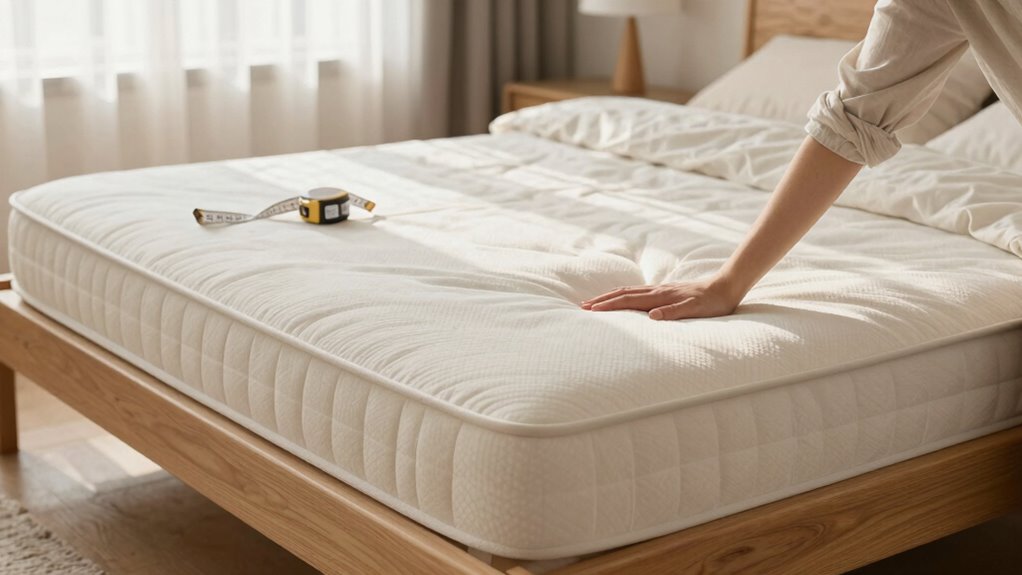
Bottoming out is a common issue that can greatly affect your sleep experience. You might notice it when your mattress doesn’t provide adequate support, leading to discomfort. Here are key signs to look for:
- Pressure Points: If you feel increased pressure on areas like your hips or shoulders, it’s a sign your mattress may be bottoming out. Regularly checking indoor air quality can also enhance your overall sleep environment. Furthermore, ensuring proper kitchen ventilation can contribute to a more refreshing atmosphere in your home, which may aid sleep quality. A comfortable sleep environment is linked to optimal humidity levels, which can prevent discomfort during the night.
- Sagging: Observe if the mattress shows visible sagging or indentations, especially in the middle. This indicates insufficient support layers. A well-ventilated kitchen can help maintain optimal humidity levels, which is also beneficial for your sleep environment.
- Restlessness: If you find yourself tossing and turning to find a comfortable position, your mattress may not be supporting you properly. Additionally, consider checking HEPA filters regularly, as they can contribute to a healthier sleep environment.
Pay attention to these signs to guarantee you’re getting the restful sleep you deserve.
orthopedic mattress for spinal alignment
As an affiliate, we earn on qualifying purchases.
As an affiliate, we earn on qualifying purchases.
How to Perform the “Bottoming Out” Test
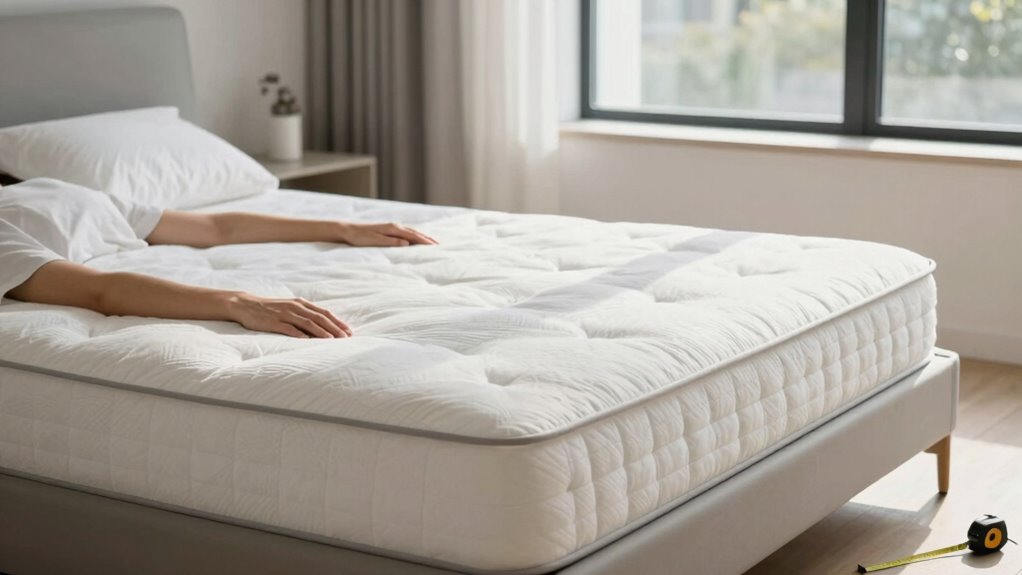
To guarantee your mattress is providing the right support, performing the “Bottoming Out” test is a straightforward process. Follow these simple steps:
- Get into position: Lie down in your typical sleep position for about 10-15 minutes.
- Assess your comfort: Pay attention to any discomfort or sinking feeling.
- Check for support: Confirm the mattress maintains its shape and doesn’t bottom out against the support mechanisms.
Here’s a quick reference table to help you evaluate your mattress:
| Feature | What to Look For | Importance |
|---|---|---|
| Mattress Durability | No sagging or indentations | Long-lasting support |
| Support Mechanisms | Firmness and responsiveness | Proper spinal alignment |
| Comfort Level | Pain-free sleep | Overall sleep quality |
Additionally, ensuring proper support mechanisms can significantly enhance your overall sleep experience. A well-supported mattress contributes to overall sleep quality, leading to more restorative rest.
What to Look for During the Test
Certainly! Here’s the revised article subheading content with the requested addition:
—
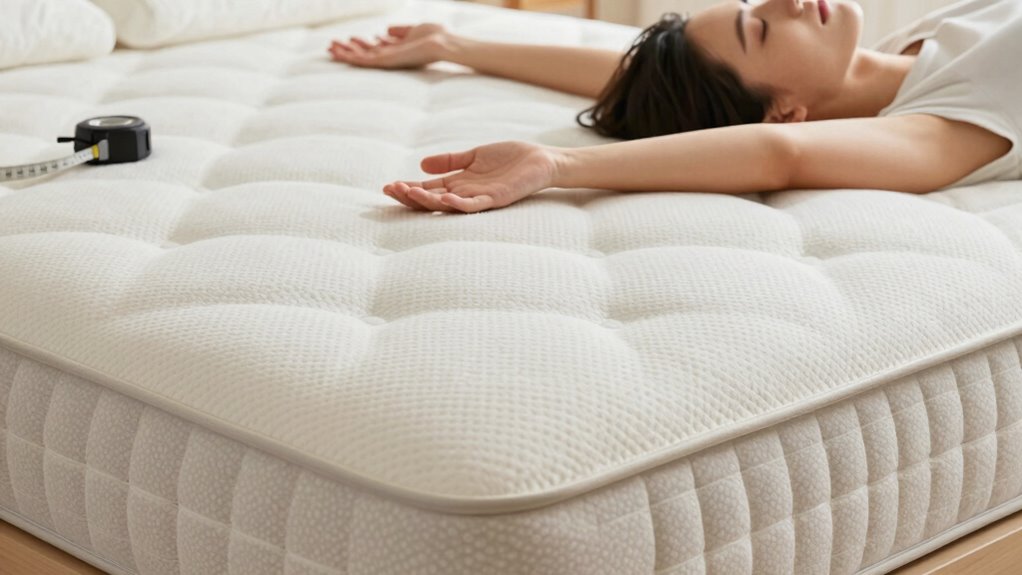
During the test, you should pay close attention to several key factors that indicate your mattress’s support capabilities. These elements can reveal how well the mattress can provide durability and pressure relief.
Pay attention to spinal alignment, pressure points, and edge support to assess your mattress’s durability and comfort.
- Spinal Alignment: Confirm your spine maintains a natural curve. If it sinks too much, the mattress may not offer adequate support, which can lead to long-term discomfort and affect your overall health. Additionally, consider how smart automation can help monitor your sleep environment for optimal comfort. Proper support is crucial for maintaining spinal health, which can significantly impact your sleep quality. Furthermore, the use of adaptive lighting in your bedroom can promote better sleep hygiene.
- Pressure Points: Notice if you feel discomfort in areas like your shoulders or hips. A good mattress should distribute weight evenly, minimizing pressure on these points.
- Edge Support: Check how the mattress feels when you sit or lie near the edges. Strong edge support enhances durability and prevents sagging over time. Moreover, ensuring your mattress has advanced filtration systems can contribute to a healthier sleeping environment by reducing allergens.
—
Feel free to let me know if you need any further adjustments!
Debunking Myths About Mattress Firmness and Support
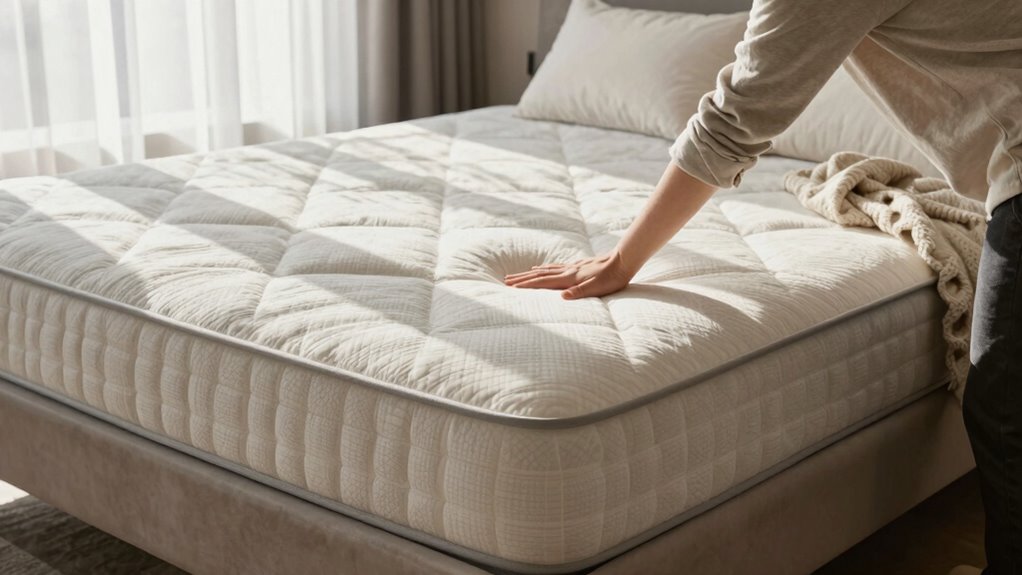
Many people believe that a firmer mattress always provides better support, but this isn’t necessarily true. Myth busting reveals that support depends on your individual needs, not just the mattress’s firmness. Firmness misconceptions often lead you to think that a harder surface is best for spinal alignment. However, a medium-firm mattress can offer the right balance of comfort and support for many sleepers. You might find that too much firmness can create pressure points, leading to discomfort. Your body shape, weight, and sleeping position play essential roles in determining what works best for you. Instead of solely focusing on firmness, consider how well a mattress supports your body’s natural curves and alignment for a better night’s sleep. Understanding evidence-backed guidance can help you make a more informed decision about your mattress choice. Additionally, consulting wellness technology experts can provide insights into how different mattress types affect sleep quality and overall health.
How Do Sleeping Positions Affect Mattress Choice?
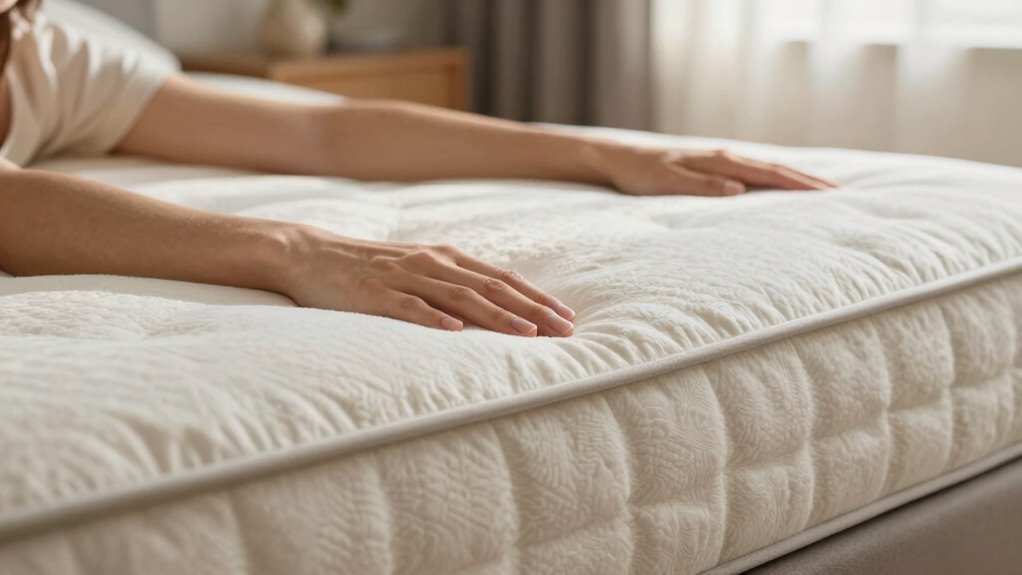
Your sleeping position plays an essential role in choosing the right mattress. Side sleepers need softer support to cushion their hips and shoulders, while back sleepers focus on maintaining proper alignment. If you’re a stomach sleeper, you’ll likely prefer a firmer mattress to prevent sinking and promote a healthy spine.
Side Sleepers’ Support Needs
Since side sleepers often face unique challenges, choosing the right mattress becomes essential for ensuring a restful night. The right mattress supports your body alignment while accommodating the curves of your hips and shoulders. Here are three key considerations:
- Pillow Height: A proper pillow height can fill the gap between your head and mattress, ensuring your neck stays aligned. Additionally, maintaining proper hydration levels can help reduce muscle tension, enhancing comfort while you sleep. Ensuring your sleeping environment is free from hazards can further promote safety and relaxation during the night.
- Material Firmness: Look for a medium-firm mattress that offers cushioning without sacrificing support, allowing your body to sink in comfortably.
- Pressure Relief: Choose a mattress that provides adequate pressure relief on your shoulders and hips to prevent discomfort during the night. Additionally, consider the importance of hydration as staying well-hydrated can enhance your overall sleep quality.
Back Sleepers’ Alignment Focus
When it comes to choosing a mattress, back sleepers need to prioritize spinal alignment to guarantee a good night’s sleep. This means selecting a mattress that supports the natural curve of your spine while providing adequate pressure relief. A medium-firm mattress often strikes the right balance, preventing your hips from sinking too deeply while keeping your spine aligned. Look for materials like memory foam or latex that contour to your body’s shape, offering support where you need it most. Additionally, consider the mattress’s responsiveness; it should adapt to your movements without compromising alignment. Ultimately, focusing on spinal alignment and pressure relief helps assure that you wake up refreshed and pain-free. Incorporating simple exercises into your daily routine can also enhance your overall wellness and support better sleep quality. Understanding how gear works can further guide your choices in creating a sleep environment that promotes restorative rest. Additionally, choosing a mattress with durable materials can ensure long-term support and comfort, which is essential for back sleepers.
Stomach Sleepers’ Firmness Preference
For stomach sleepers, the choice of mattress firmness plays a significant role in achieving proper alignment and comfort. If you sleep on your stomach, you’ll want a mattress that keeps your spine aligned while preventing your hips from sinking too deeply. Here are three key factors to evaluate for firmness preferences:
- Support Level: A firmer mattress provides the necessary support to keep your spine straight.
- Pressure Relief: While firmness is essential, you’ll still need some cushioning to alleviate pressure on your chest and abdomen.
- Material Type: Look for high-density foams or innerspring mattresses that offer both support and slight give.
Choosing the right firmness can enhance your sleeping experience and reduce discomfort.
Next Steps After Failing the Mattress Test
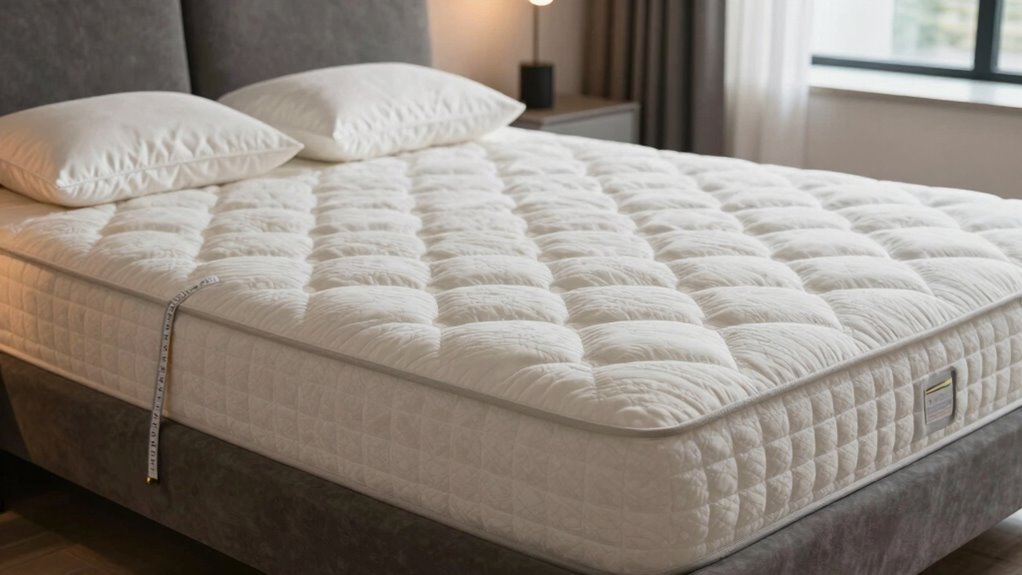
If you’ve failed the mattress test, it’s time to reassess your sleep needs. Start exploring replacement options that better suit your comfort and support requirements. You might also consider seeking professional advice to find the best solution for your situation.
Assess Your Sleep Needs
How do you determine what your body truly needs after realizing your mattress isn’t cutting it? First, assess your sleep quality over the past few months. Are you waking up refreshed or feeling sore? Next, consider your personal preferences. Do you like a firmer surface, or do you prefer something plush? Finally, think about your sleeping position. Side sleepers often need more cushioning for their shoulders and hips, while back sleepers might prefer more support.
Here’s a quick checklist to help you:
- Track your sleep patterns: Keep a sleep journal to note how you feel each morning.
- Evaluate your comfort: Test different mattress types to see what feels right.
- Consult experts: Talk to sleep specialists for personalized advice.
Explore Replacement Options
Since your mattress hasn’t been providing the support you need, it’s time to explore replacement options that can enhance your sleep experience. Consider memory foam for its contouring comfort or hybrid mattresses that combine support and softness. If you’re on a budget, look for affordable options that still offer quality. For those who prioritize sustainability, eco-friendly materials are a great choice. You might also want to explore adjustable bases, allowing personalized comfort levels. Online shopping makes it easy to compare luxury brands and their features, but don’t forget to check warranty policies to guarantee your investment is protected. With these options, you’re well on your way to finding a mattress that suits your needs.
Consider Professional Advice
When you’ve determined that your mattress fails to provide adequate support, seeking professional advice can be an essential next step. Experts can guide you on improving mattress longevity and ensuring you make informed decisions for your sleep needs. Here are a few actions to evaluate:
- Consult a Sleep Specialist: They can assess your specific sleep issues and recommend suitable mattress options that provide better support.
- Visit a Mattress Store: Speak with knowledgeable staff who can offer expert recommendations based on your preferences and budget.
- Read Reviews and Guides: Check out reputable sources for insights on the best mattresses that promote proper support and durability.
Taking these steps will help you find the right solution for a better night’s sleep.
When to Consider a New Mattress?
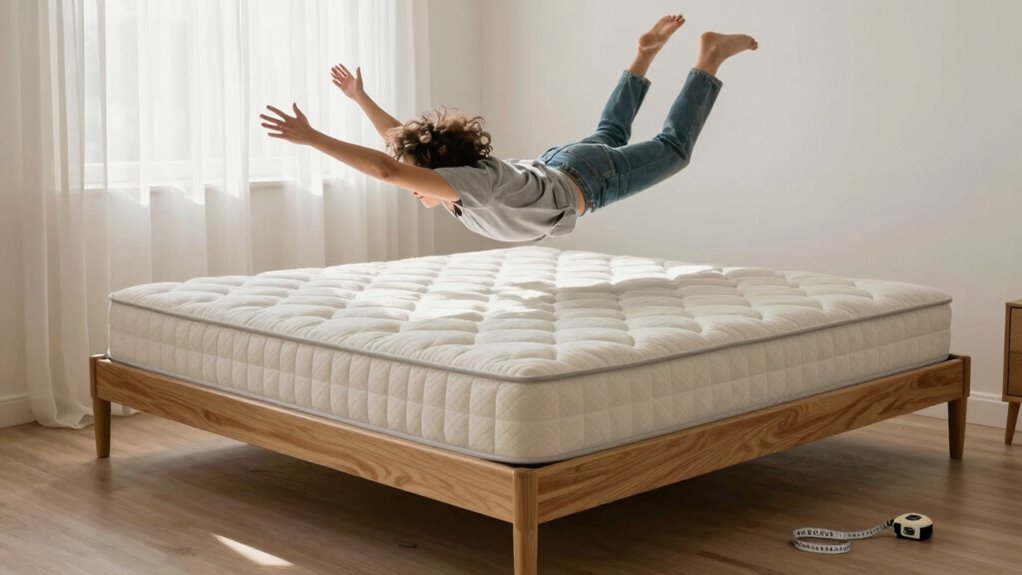
Wondering if it’s time for a new mattress? If you’re experiencing restless nights or waking up with aches and pains, it might be a sign. Most mattresses have a lifespan of about 7 to 10 years, and age can greatly impact sleep quality. If your mattress shows visible sagging, lumps, or you can feel the support deteriorating, it’s likely time for a replacement. Additionally, if you’re tossing and turning more than usual or your allergies are flaring up, old materials might be to blame. Don’t wait for discomfort to become routine—investing in a new mattress can dramatically improve your sleep quality and overall well-being. Pay attention to these signs to guarantee you’re getting the restful sleep you deserve.
Tips for Choosing the Right Supportive Mattress
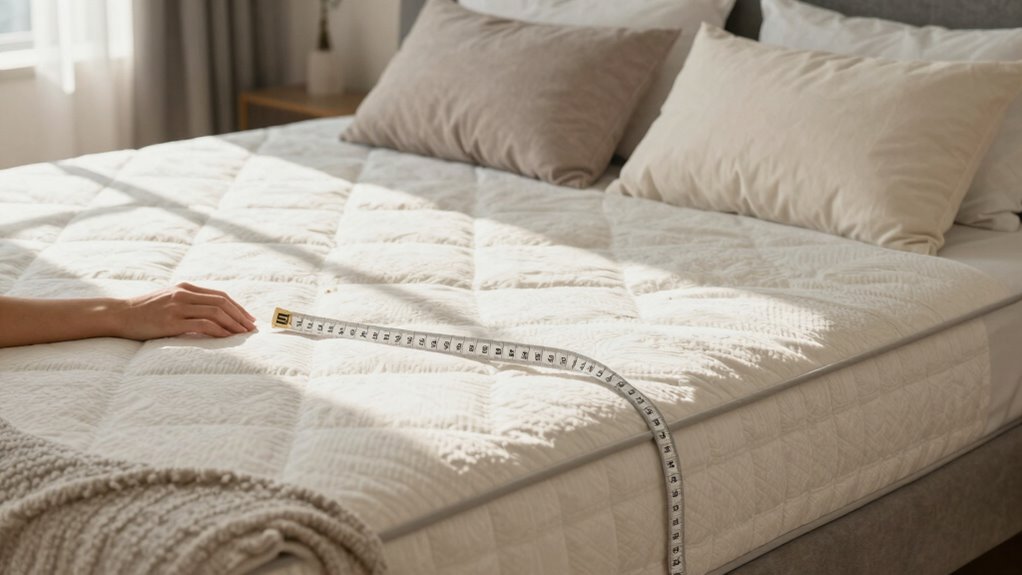
Choosing the right supportive mattress starts with understanding your firmness preferences and the materials that best suit your needs. Consider how your sleep position influences your choice, as different types offer varying levels of support. Let’s explore these key factors to help you find your perfect match.
Firmness Level Considerations
Finding the right firmness level for your mattress can greatly impact your sleep quality. It’s crucial to take into account your personal preference and body weight when making this choice. Here’s how to find the right fit:
- Sleep Position: If you’re a side sleeper, you might prefer a softer mattress to cushion your shoulders and hips. Back and stomach sleepers often benefit from a firmer feel for better spinal alignment.
- Body Weight: Heavier individuals usually need a firmer mattress for adequate support, while lighter folks may find softer options more comfortable.
- Trial Period: Take advantage of sleep trials offered by manufacturers. Testing the mattress for a few weeks helps you determine if it meets your needs.
Choosing wisely guarantees you wake up refreshed!
Material Types Overview
When it comes to selecting a supportive mattress, the materials play an essential role in your overall comfort and sleep quality. Memory foam offers excellent motion isolation and contouring, while latex options provide durability and natural breathability. Innerspring benefits include strong edge support and responsiveness, making them a popular choice for those who prefer a traditional feel. Hybrid mattresses combine the best of both worlds, integrating foam layers for comfort with coils for support. Gel-infused materials help with temperature regulation, keeping you cool throughout the night. If you’re environmentally conscious, consider organic choices that avoid harmful chemicals. Ultimately, assess all these factors to find the mattress that perfectly suits your needs and preferences.
Sleep Position Compatibility
Understanding the materials that make up a mattress is just the beginning; how you sleep also greatly impacts your choice. Your sleep position can influence the support you need, so consider these tips to maximize sleep position benefits:
- Back Sleepers: Look for a medium-firm mattress that supports your spine’s natural curve.
- Side Sleepers: Opt for a softer mattress that cushions your shoulders and hips, reducing pressure points.
- Stomach Sleepers: Choose a firmer mattress to prevent your hips from sinking too deeply, which can lead to back pain.
Frequently Asked Questions
How Often Should I Perform the Bottoming Out Test?
You should perform the bottoming out test every six months to a year. This helps you assess your mattress’s longevity and guarantees it still offers the support you need. If you notice significant sagging or discomfort, it’s time to compare support with other mattresses. Regular checks keep you informed about your mattress’s condition, ensuring you get a good night’s sleep and avoid the potential pitfalls of a worn-out mattress.
Can I Use This Test for Any Mattress Type?
Yes, you can use this test for any mattress type! Whether it’s memory foam, innerspring, or hybrid, evaluating support is essential for your sleep quality. As you press down, pay attention to how the mattress responds. Does it feel supportive, or does it sink too much? A firm mattress can enhance your sleep experience, while a soft one might leave you feeling restless. Don’t underestimate the importance of finding the right balance!
What Materials Indicate Better Support During the Test?
Memory foam and hybrid mattresses with high-density support layers usually indicate better support during the test. Look for hybrid models that combine coils with quality foam; they often provide a balance of comfort and firmness. Coil types like pocketed coils also enhance support by contouring to your body while maintaining stability. If you feel excessive sinking, it might be time to evaluate a mattress with firmer materials for better support.
Is the Bottoming Out Test Suitable for All Body Weights?
The bottoming out test isn’t suitable for everyone, just like a boat can’t carry every weight. While it’s a good indicator of mattress durability for average body weights, heavier individuals might find it less reliable. If you’re on the heavier side, you might notice the mattress compressing more than expected, which could lead to discomfort. Always consider your body weight when evaluating support to guarantee a restful night’s sleep.
How Does Age Affect Mattress Support and Performance?
Age considerably affects mattress support and performance. As you get older, the materials in your mattress can start to show signs of support degradation, leading to discomfort during sleep. A mattress’s lifespan typically shortens with age, meaning it may not provide the same level of support you once experienced. Regularly evaluating your mattress’s condition helps guarantee you’re getting the support you need for a restful night’s sleep.
Conclusion
To summarize, the “bottoming out” test reveals whether your mattress truly supports you or if it’s time for an upgrade. If you find yourself sinking too deeply, it’s a clear sign your sleep quality could suffer. Remember, a supportive mattress isn’t just a luxury; it’s essential for restful sleep and overall well-being. Don’t ignore the signs—investing in the right mattress can transform your nights and boost your daily energy. Your body deserves the best support!
Flea & tick season Picks
flea and tick prevention
As an affiliate, we earn on qualifying purchases.