
If you have arthritis, making small bathroom changes can make handwashing easier and safer. Install grab bars, non-slip mats, and ergonomic fixtures like lever or touchless faucets to reduce joint strain and prevent slips. Adjust sink height or add easy-access supports to improve comfort and independence. Regularly maintain these updates for continued safety. You’ll discover simple tips and tools that can help make your bathroom routines more comfortable and pain-free throughout the space.
Key Takeaways
- Install ergonomic fixtures like lever-operated faucets and easy-use toilet seats to reduce joint strain during handwashing.
- Add sturdy grab bars and non-slip mats for enhanced stability and safety on wet bathroom surfaces.
- Use assistive tools such as touchless faucets and lightweight brushes to minimize gripping effort.
- Ensure bathroom layout allows easy access and maneuverability, reducing the need for excessive reaching or bending.
- Regularly maintain fixtures by cleaning and tightening fittings to ensure smooth operation and safety.
Understanding How Arthritis Makes Handwashing Difficult
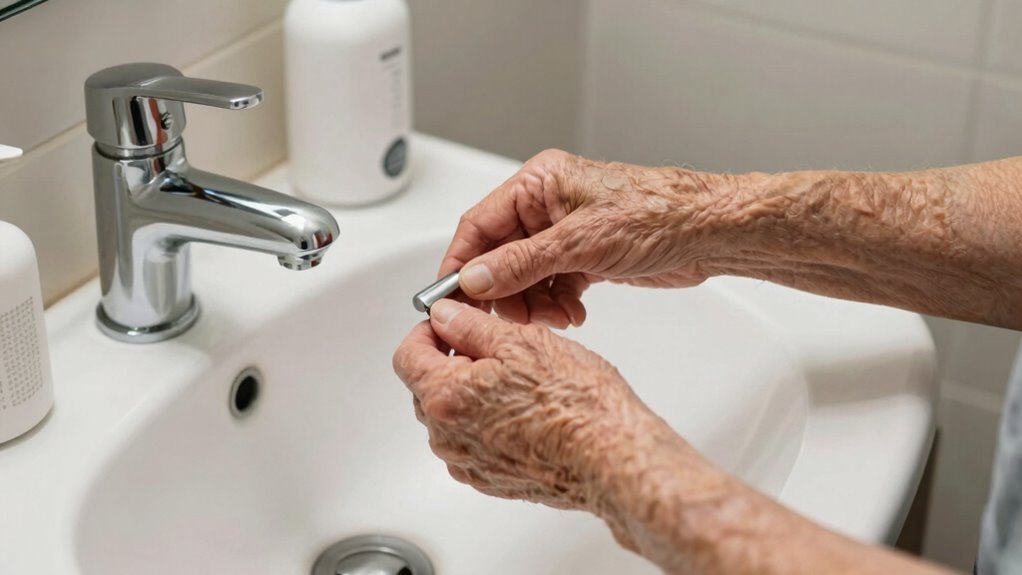
Arthritis can considerably hinder your ability to wash your hands effectively because it often causes pain, stiffness, and reduced dexterity in the fingers and joints. This arthritis pain makes gripping soap, turning faucets, and rubbing your hands more challenging. With limited hand mobility, you might struggle to fully cover all areas or exert enough pressure to clean thoroughly. Simple tasks like opening bottles or squeezing soap become frustrating and uncomfortable. As your joints become stiff, moving your fingers smoothly or maintaining a steady grip might feel impossible. These physical limitations can lead to incomplete handwashing or even avoidant behaviors, increasing the risk of germs spreading. Recognizing how arthritis impacts hand mobility highlights the importance of adaptive tools that can ease these difficulties. Using ergonomic designs specifically made for arthritis sufferers can further improve grip and reduce strain during handwashing. Incorporating ergonomic aids can help support your joints and facilitate more effective hand hygiene. Small modifications, such as easy-to-use dispensers, can make a significant difference in overcoming these challenges. Understanding how arthritis impacts hand mobility helps you recognize the need for adapted techniques and tools to maintain effective hand hygiene. Accessible tools can make a significant difference in overcoming these challenges.
Assessing Your Bathroom for Accessibility Challenges
Start by examining your bathroom layout to identify areas that may be difficult to access or navigate comfortably. Check for sturdy grip and support features, like grab bars or non-slip mats, that can make handwashing safer and easier. Making these assessments helps you find practical solutions to improve accessibility for arthritis. Additionally, consider incorporating luxury bathroom fixtures designed for enhanced comfort and ease of use, such as ergonomic faucets or heated towel bars, to elevate your bathing experience. Incorporating accessible design features can further enhance safety and ease of use in your bathroom space. Being aware of personal debt forgiveness programs can also help you manage your finances better, especially when considering home modifications for accessibility. Evaluating your bathroom for ergonomic adjustments ensures that every element contributes to a more comfortable and manageable handwashing routine. Exploring adaptive tools can also provide additional support and independence during daily routines.
Bathroom Layout Evaluation
Have you ever considered how your bathroom layout might pose challenges when it comes to handwashing? To evaluate, start with these steps:
- Check if bathroom lighting is sufficient—bright, even lighting helps you see clearly.
- Assess ventilation—good airflow reduces humidity that can cause slippery surfaces.
- Measure clearance around the sink—ensure enough space for easy movement.
- Look at the placement of fixtures—are they within easy reach without stretching or bending excessively?
- Consider early detection signs of issues like mold or damage that could impact safety and accessibility.
- Ensure that bathroom fixtures are securely installed and in good condition to prevent accidents and facilitate ease of use.
- Regularly inspect for hazardous conditions, such as loose tiles or exposed wiring, that could compromise safety and accessibility.
- Incorporate accessible design features, such as grab bars or non-slip mats, to further enhance safety and ease of use.
- Pay attention to ergonomic considerations, which can help reduce strain during handwashing and make the process more comfortable.
Grip and Support Features
How well does your bathroom support your grip and stability during handwashing? Check if soap dispensers are easily reachable and operable with one hand, preferably with a lever or touchless design. Verify your sink height is appropriate—neither too high nor too low—so you can comfortably lean in without straining. Look for sturdy grab bars near the sink that provide reliable support when standing or sitting. Avoid slippery surfaces and consider adding non-slip mats for extra safety. Handles and fixtures should be easy to grasp, with textured surfaces if possible. Making these adjustments helps you maintain balance and reduces the effort needed to wash your hands, giving you greater independence and safety during this everyday task. Incorporating door swing considerations and accessible stair proportions can also enhance overall bathroom safety and ease of use. Additionally, assessing grab bar placement can significantly improve stability and reduce fall risk.
Choosing Arthritis-Friendly Bathroom Fixtures
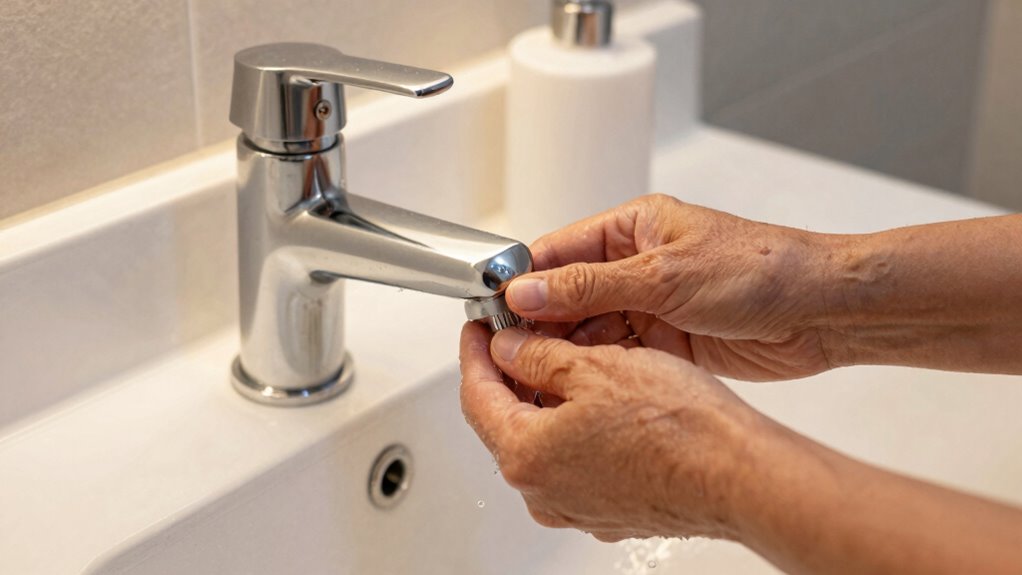
When selecting bathroom fixtures, look for lever-operated faucets that are easier to turn with limited grip strength. Adding non-slip mats can prevent accidents, making your bathroom safer and more comfortable. Also, choose easy-use toilet seats designed for arthritis to reduce strain and improve independence during toileting. Incorporating anti-fatigue mats in the bathroom can further enhance comfort and safety during standing tasks. Additionally, selecting fixtures with ergonomic designs can help reduce joint strain and make daily routines more manageable. Incorporating adaptive fixtures that accommodate limited dexterity can significantly improve usability for arthritis sufferers. The use of electric mobility aids, like electric bikes, demonstrates how powered devices can support mobility and independence in daily life. Incorporating innovative materials can also contribute to durability and ease of use for arthritis sufferers.
Lever-Operated Faucets
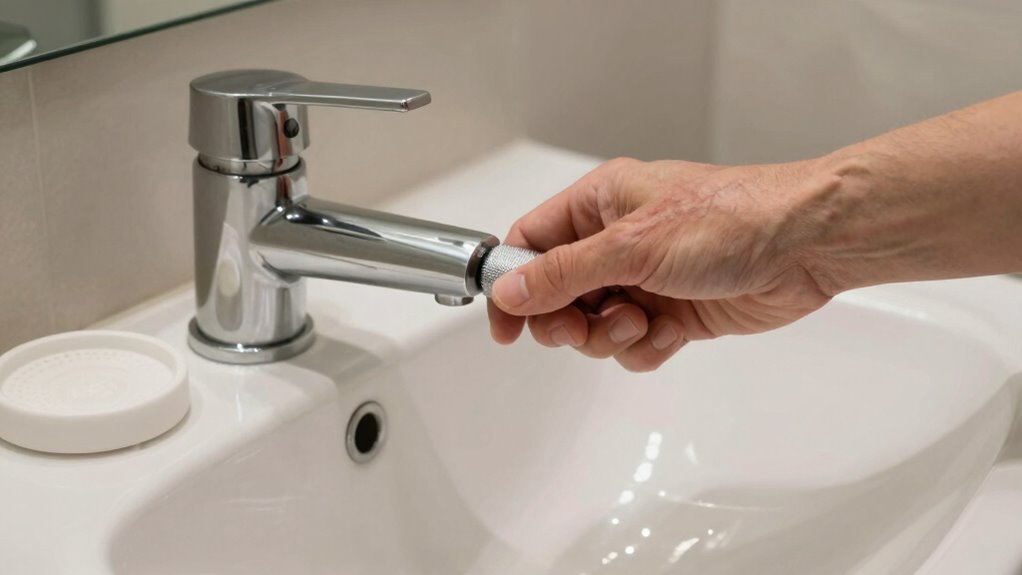
Lever-operated faucets are an excellent choice for those with arthritis because they require less force and dexterity to operate than traditional twist or knob faucets. Their lever faucet benefits include easier control of water flow and temperature, reducing frustration during handwashing. To maximize their advantages, consider these faucet maintenance tips:
- Regularly clean aerators to prevent clogging.
- Check for leaks and tighten fittings as needed.
- Replace worn washers to avoid drips.
- Keep the lever mechanism free of debris.
- Use accessible fixtures to enhance safety and ease of use, especially since proper maintenance ensures the longevity of the faucet components.
These simple steps keep your faucet working smoothly, making handwashing more accessible. Choosing a lever faucet simplifies daily routines, saves effort, and enhances bathroom safety. With proper maintenance, your arthritis-friendly faucet remains reliable and easy to use.
Non-Slip Bathroom Mats
Choosing the right bathroom fixtures can make a significant difference for those with arthritis, especially when it comes to safety and stability. Non-slip bathroom mats are essential, providing secure footing and reducing the risk of slips and falls. Many people find motivation through stories of others who have successfully adapted their bathrooms, emphasizing the value of community support. Seeing how others overcome similar challenges can inspire you to invest in reliable mats that stay in place, even when wet. Look for mats with textured surfaces and strong suction cups to ensure they don’t shift. By prioritizing non-slip mats, you create a safer environment that encourages independence and confidence during daily routines. Community support and motivational stories remind you that small changes can lead to significant improvements.
Easy-Use Toilet Seats
Selecting an easy-use toilet seat can greatly enhance safety and comfort for those with arthritis. When choosing, focus on toilet seat ergonomics to reduce strain and improve stability. Consider these key features:
- Elevated seats to minimize bending and ease sitting down or standing up.
- Contoured designs that support proper posture and reduce discomfort.
- Quick-release hinges for easy cleaning and maintenance.
- Bathroom storage solutions nearby to keep assistive devices within reach, reducing unnecessary movement.
These tweaks help make bathroom routines safer and more manageable. Make sure your bathroom storage is organized so you can access accessories easily. An arthritis-friendly toilet seat isn’t just about comfort; it’s about creating a safer, more independent space.
Installing Support Handles and Grab Bars
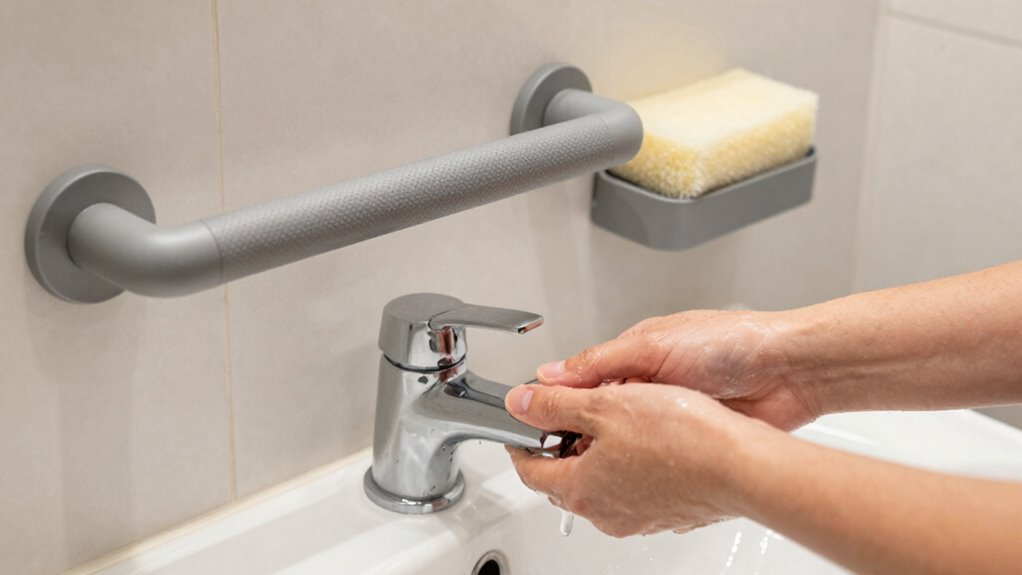
Have you ever struggled to steady yourself while washing your hands due to limited grip strength or balance issues? Installing support handles and grab bars can make a huge difference. These safety features provide stability, helping you maintain your balance and prevent falls. When selecting grab bars, prioritize ergonomic design to ensure they’re comfortable to grip and easy to use. Being aware of disability awareness helps you choose the right placement and type of support handles tailored to your needs. Securely mounted grab bars near the sink and toilet offer dependable support during handwashing, reducing strain and increasing confidence. With these bathroom tweaks, you can maintain independence and safety, making handwashing a simpler, less stressful task.
Selecting Easy-Turn or Touchless Faucets
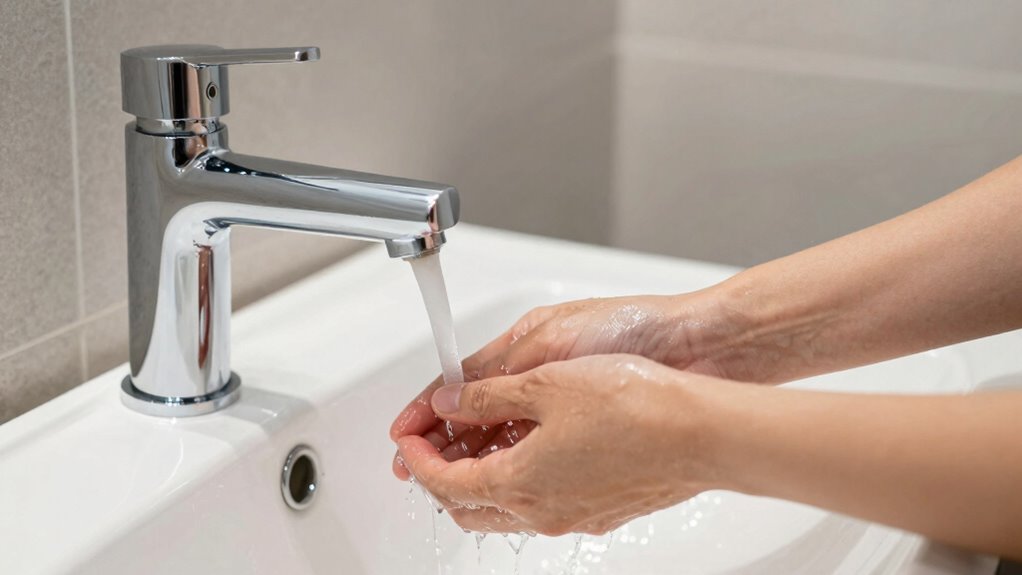
Choosing the right faucet can make handwashing easier and safer for you. Easy-turn and touchless models offer simple installation tips that reduce strain and improve hygiene. Consider these options to enhance safety and convenience in your daily routine.
Easy Installation Tips
If you’re looking to make installing a new faucet easier, consider opting for an easy-turn or touchless model. These options often require fewer parts and simpler connections, saving you time and effort. To guarantee a smooth setup, keep these tips in mind:
- Choose a faucet with straightforward mounting hardware for quick installation.
- Select a model compatible with your existing water lines to avoid extra fittings.
- Opt for a faucet that has adjustable water temperature controls for easier use for arthritis.
- Consider a faucet with a built-in soap dispenser to reduce clutter and streamline handwashing.
Hygiene and Safety
Selecting the right faucet can markedly improve hygiene and safety, especially for those with arthritis. Easy-turn or touchless faucets reduce the need for gripping and twisting, minimizing joint strain and promoting better personal hygiene. Touchless models allow you to wash your hands without touching handles, decreasing the spread of germs and ensuring a more sanitary experience. Easy-turn faucets require less force to operate, making handwashing safer and more accessible. These features also help protect your skin by reducing contact with bacteria on faucet surfaces. By choosing adaptive fixtures, you create a safer bathroom environment, supporting consistent hygiene routines and skin protection. Ultimately, these simple upgrades help you maintain cleanliness while safeguarding your joints and skin health.
Adding Non-Slip Mats and Cushioned Grips for Safety
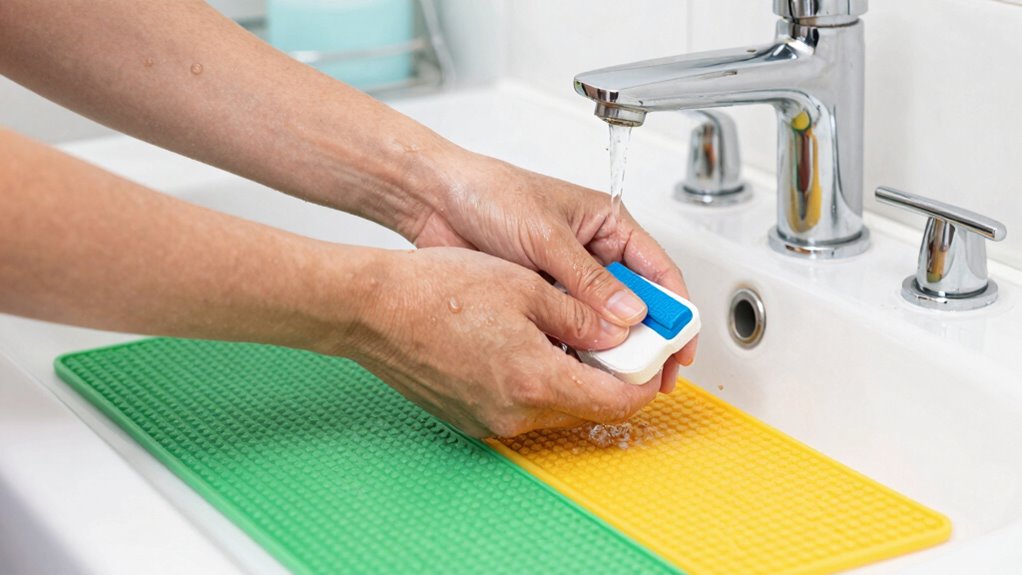
Adding non-slip mats and cushioned grips can substantially improve safety during handwashing, especially for individuals with arthritis. These small modifications provide stability and comfort, reducing the risk of slips and falls. To maximize safety, consider these steps:
- Place non slip mats in the sink area to prevent slipping on wet surfaces.
- Attach cushioned grips to faucet handles for easier turning.
- Use cushioned grips on soap dispensers or bottles to improve grip.
- Ensure mats and grips are securely positioned and regularly checked for wear.
Making Sink and Countertop Access Easier
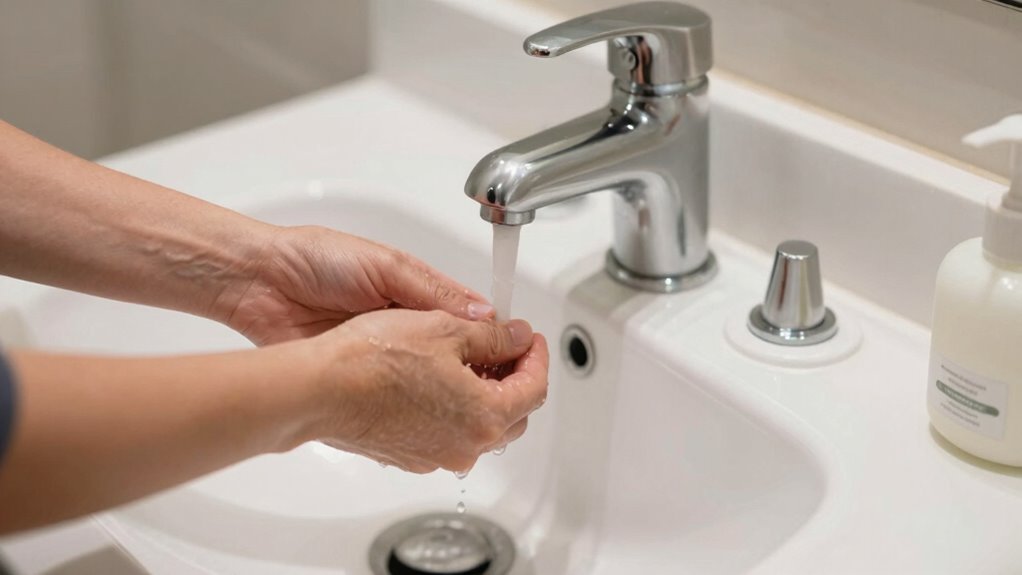
Making sink and countertop access easier can considerably reduce strain and improve independence during handwashing. Start by choosing sink accessories like lever handles or touchless faucets, which require less grip strength. These modifications streamline water control and minimize effort. Keep your countertop organized with simple storage solutions, such as trays or caddies, to keep essentials within easy reach. Clear clutter allows you to access soap, towels, and other items without unnecessary reaching or bending. Adjusting the height of your sink or installing a raised countertop can also help, reducing the need to bend or stretch. These small changes make a big difference, helping you maintain your hygiene routine comfortably and safely while reducing joint stress.
Using Assistive Devices to Ease Hand Movements
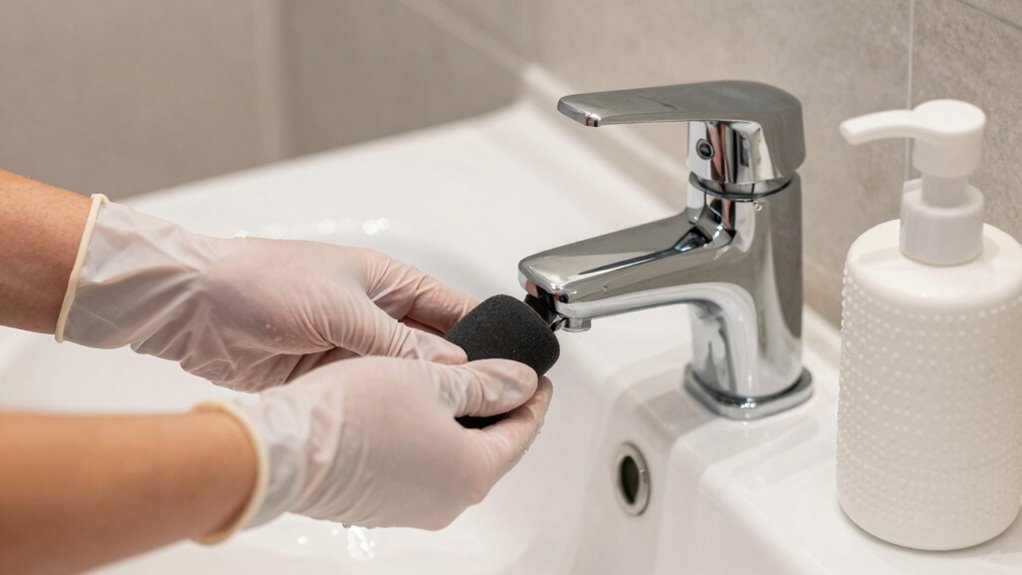
Using assistive devices can substantially reduce the effort required for hand movements during handwashing. These devices, like ergonomic grips and adaptive tools, make handling soap, faucets, and towels easier. Here are some ways to incorporate them:
- Use ergonomic grips on soap dispensers and toothbrushes to minimize grip strength.
- Switch to adaptive devices with easy-to-press buttons or levers for faucets.
- Choose long-handled or textured scrub brushes to reach and clean without straining.
- Attach non-slip mats or grips to soap dishes and towel bars for secure handling.
These modifications help you maintain independence and reduce discomfort, making handwashing more manageable with arthritis.
Maintaining Your Bathroom Modifications for Long-Term Comfort
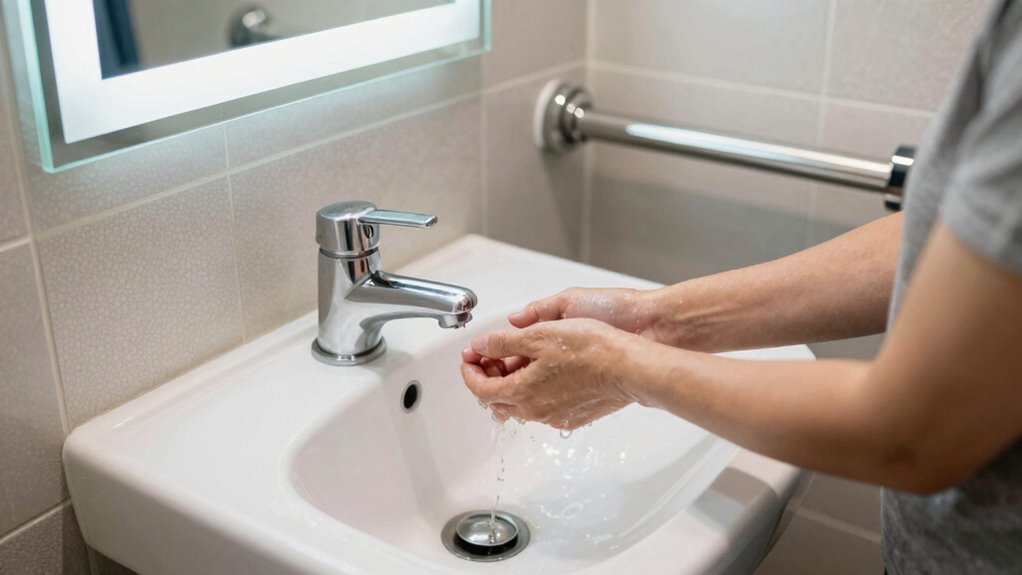
To guarantee your bathroom remains safe and comfortable over time, it’s important to regularly inspect and maintain your modifications. Check that bathroom lighting is bright enough and functioning well, as good lighting reduces the risk of accidents and makes handwashing easier. Keep ventilation improvements in good shape by cleaning exhaust fans and ensuring airflow is unobstructed; this prevents moisture buildup and mold, which can compromise safety. Replace any worn-out fixtures or hardware promptly to maintain stability and ease of use. Regularly review your setup for any signs of wear or damage, making adjustments as needed. Proper maintenance assures your bathroom remains a secure, accessible space, supporting your comfort and independence for years to come.
Tips for Safe and Pain-Free Handwashing
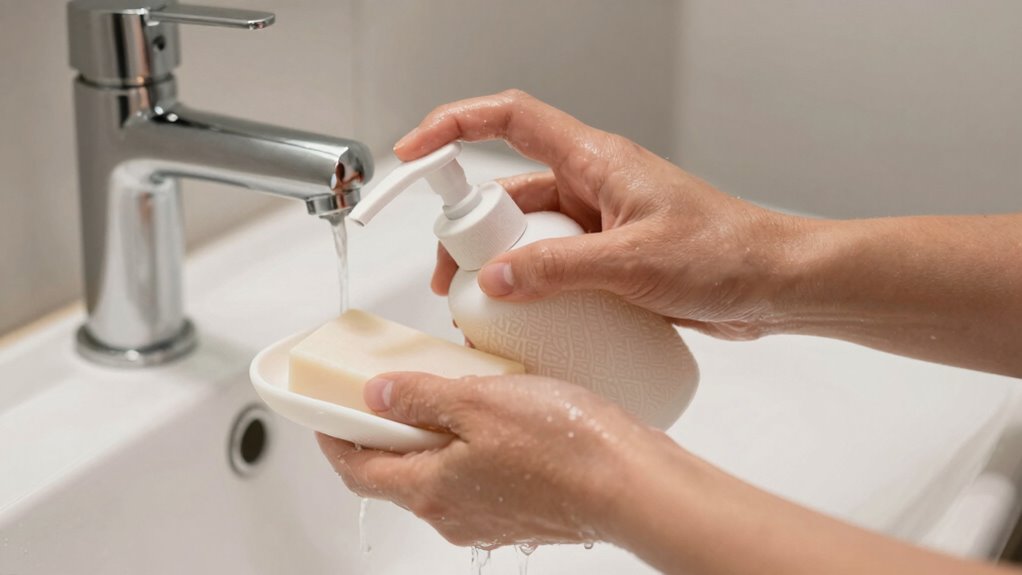
Handwashing is a vital part of daily hygiene, but it can be challenging if you have arthritis. To make it safer and pain-free, focus on easy techniques that support hand hygiene and infection control. Here are some tips:
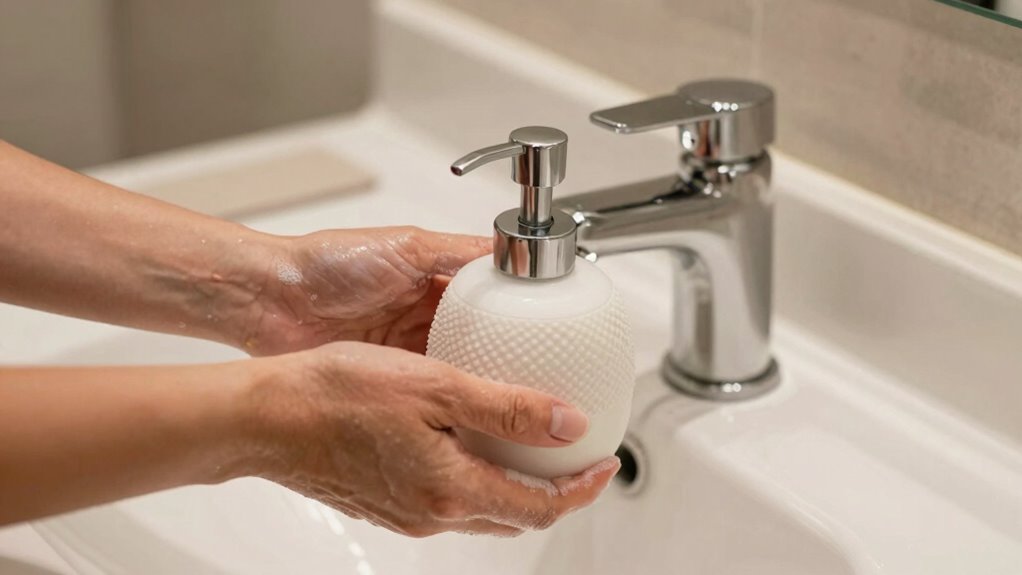
- Use a soap dispenser with a lever or touchless sensor to avoid gripping.
- Opt for a soft-bristled brush or sponge to reduce hand strain.
- Warm water helps loosen dirt and reduces joint pain during washing.
- Pat your hands dry gently with a towel instead of rubbing vigorously.
These adjustments help protect your joints and ensure effective hand hygiene, reducing the risk of infection. Implementing these simple changes makes handwashing safer and more comfortable.
Frequently Asked Questions
Are There Specific Brands of Fixtures Recommended for Arthritis-Friendly Bathrooms?
Yes, there are recommended brands of fixtures for arthritis-friendly bathrooms. Look for brands like Moen, Kohler, and American Standard, which offer arthritis-friendly fixtures designed with easy-to-use handles and lever controls. These fixtures make handwashing easier by reducing grip strength needed. When choosing, focus on models labeled as ADA-compliant or with lever handles, ensuring that your bathroom remains accessible and comfortable for arthritis management.
How Can I Adapt My Existing Bathroom Without Major Renovations?
You can adapt your existing bathroom easily by focusing on bathtub modifications, like adding grab bars or a bath seat, to increase safety. Upgrading your faucet lever to a single-handle or touchless model makes handwashing simpler and requires less grip strength. These simple changes don’t need major renovations and can markedly improve your independence and comfort during daily routines.
What Affordable Options Exist for Installing Support Handles and Grab Bars?
Support handle options and grab bars are affordable to install and easy to add. You can choose from wall-mounted or tension-mounted handles that don’t require drilling, making for quick, budget-friendly upgrades. With a variety of styles and finishes, you can find support handles that blend seamlessly into your bathroom. These options provide stability, safety, and confidence, empowering you to move around comfortably without the need for expensive renovations.
Can I Use Temporary Solutions for Easier Handwashing During Flare-Ups?
Yes, you can use temporary solutions and handwashing aids during flare-ups to make handwashing easier. Try gripping foam handles or silicone gloves to improve your grip, and use a reacher or long-handled sponge to reach soap or turn taps. These temporary solutions are affordable and can provide instant relief, helping you maintain hygiene without strain. When your symptoms ease, consider installing permanent modifications for ongoing support.
How Often Should Bathroom Modifications Be Inspected or Replaced for Safety?
Maintenance schedules matter for safe, sound bathroom tweaks. You should perform safety inspections at least every six months to catch wear and tear early. Look for loose fixtures, slippery surfaces, or unstable grab bars. Replace or repair items promptly to prevent accidents. Staying proactive with these inspections guarantees your bathroom remains safe, supportive, and suited to your needs, especially during flare-ups when safety is paramount.
Conclusion
With these bathroom tweaks, you’ll transform your space into a sanctuary of ease, where handwashing becomes a gentle breeze rather than a challenging storm. By embracing simple modifications, you turn your daily routine into a dance of comfort and independence. Think of your bathroom as a carefully curated symphony, each adjustment a note that harmonizes pain-free living. With patience and care, you’ll find that even the smallest change can open a world of newfound freedom.