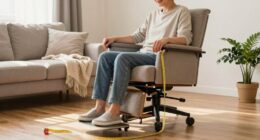
To ease swollen legs and feet daily, elevate your legs above heart level several times a day, wear properly fitted compression stockings, and do gentle leg exercises like ankle pumps. Stay well-hydrated, eat potassium-rich foods, and maintain good skin care. Avoid tight shoes and prolonged standing. Combining these habits can reduce discomfort and fluid retention. If you want to learn more about effective routines and tips for leg comfort, keep exploring these helpful strategies.
Key Takeaways
- Elevate legs multiple times daily at or above heart level to promote fluid drainage and reduce swelling.
- Wear properly fitted compression stockings combined with elevation and supportive footwear to improve circulation.
- Incorporate gentle leg exercises like ankle pumps and calf raises to stimulate blood flow and prevent fluid buildup.
- Maintain hydration, a potassium-rich diet, and anti-inflammatory foods to support fluid balance and reduce edema.
- Practice skin care, gentle massage, and seek medical attention if swelling worsens or accompanies other concerning symptoms.
What Causes Swollen Legs and Feet?
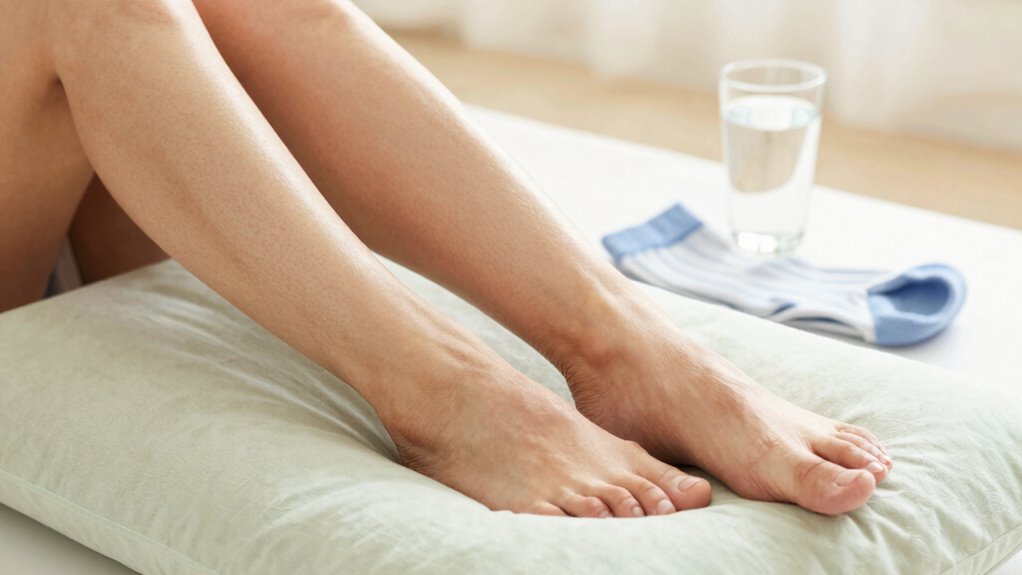
Have you ever wondered why your legs and feet swell? Swelling often results from fluid retention, where excess fluid builds up in your tissues, causing discomfort and bloating. Vascular issues, such as poor circulation or damaged blood vessels, play a significant role too. When blood flow slows or vessels become weak, fluids can leak into surrounding tissues, leading to edema. Additionally, vascular health affects how well blood circulates and influences fluid leakage, which impacts swelling. When blood flow slows or vessels become weak, fluids can leak into surrounding tissues, leading to edema. Moreover, proper circulation helps maintain the balance of fluids in your body, preventing excessive buildup. Standing or sitting for long periods worsens this problem, as gravity affects blood and fluid movement. Improving vascular strength through lifestyle and dietary choices can also help reduce swelling. Health conditions like heart, kidney, or liver problems can also contribute by disrupting fluid balance, making swelling worse. Recognizing the importance of circulation in maintaining fluid balance helps you understand how to prevent or reduce swelling effectively. Understanding these causes helps you identify why swelling occurs and encourages you to seek appropriate care. Addressing vascular issues and managing fluid retention are key steps toward reducing leg and foot swelling. Additionally, knowledge of self-sufficiency in managing common health concerns can empower you to take proactive steps in your daily routine.
How Elevating Your Legs Can Help Reduce Swelling
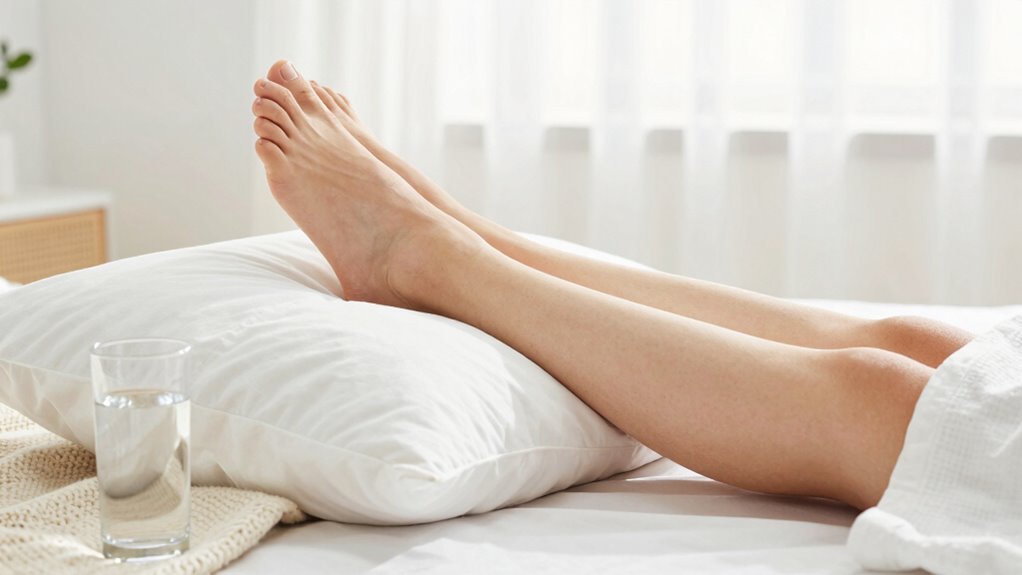
Elevating your legs properly can considerably reduce swelling by encouraging fluid drainage. To get the best results, you should elevate your legs regularly and use techniques like propping them up above heart level. Consistent positioning and the right elevation methods make a real difference in easing discomfort. Additionally, understanding the appropriate battery inverter generator capacity can help ensure reliable power during outdoor activities or emergencies. Proper filter sizing and flow in your water system can also improve overall health and comfort, especially if water quality impacts skin health or swelling issues. Using the correct elevation techniques in your daily routine maximizes these benefits and promotes faster relief. Incorporating the right performance parts can further enhance your overall well-being by supporting better circulation and recovery.
Proper Leg Positioning
When you elevate your legs, you help improve blood flow and reduce fluid buildup in your lower limbs. Proper leg positioning means keeping your legs at or above heart level, which encourages fluid drainage. To maximize benefits, gently move your ankles through their full range of motion—this boosts ankle mobility and prevents stiffness. Incorporating calf stretching exercises to loosen tight muscles can also improve circulation, especially when combined with modern ceiling fan technology that promotes better airflow in your space. Avoid crossing your legs or placing pillows under your knees, as this can impede blood flow. Instead, use a supportive cushion or pillow under your calves for ideal elevation. Consistently maintaining proper positioning helps reduce swelling and discomfort, making daily activities more comfortable. Additionally, practicing Free Floating positioning can help distribute pressure evenly and improve overall comfort. Incorporating Proper leg positioning techniques can also enhance overall circulation and reduce swelling more effectively, especially when combined with other edema management strategies. Using electric bikes or other mobility aids can also support your movement and prevent stiffness, aiding in better circulation throughout the day.
Frequency of Elevation
Regularly elevating your legs throughout the day can substantially reduce swelling by encouraging fluid drainage. Aim to elevate your legs at least three to four times daily for 15-30 minutes each session. Consistent leg elevation helps promote circulation and prevents fluid buildup. Combining elevation with compression therapy enhances results by supporting vein function and reducing pressure. Use supportive stockings or wraps if recommended by your healthcare provider. Make elevation a routine part of your day, especially after long periods of standing or sitting. By maintaining this frequency, you’ll help your legs feel lighter and reduce discomfort. Incorporating proper elevation techniques can further optimize fluid drainage and improve comfort. Staying hydrated and maintaining good hydration habits can also support circulation and overall swelling management. Implementing evidence-based practices ensures that your approach to swelling relief is effective and safe. Additionally, maintaining proper posture during daily activities can help prevent unnecessary swelling and improve circulation. Remember, staying consistent with elevation and compression therapy is key to managing swelling effectively and improving comfort over time. Incorporating hydrating ingredients into your skincare routine can also improve skin texture and overall comfort.
Elevation Techniques
Proper elevation techniques maximize the benefits of raising your legs to reduce swelling. To do this effectively, lie down and elevate your legs above heart level using pillows or a footstool. This promotes better blood flow and encourages fluid drainage. Incorporate compression therapy by wearing compression stockings during the day to enhance circulation and support leg elevation. Focus on consistent leg elevation with leg elevation techniques that are comfortable and sustainable. Keep your legs elevated for 15-30 minutes at a time, multiple times daily, to see ideal results. Avoid crossing your legs or placing pillows directly under your knees, as this can impede circulation. Being aware of paranormal phenomena can help you better understand and interpret your experiences with eerie encounters. Utilizing compression therapy in conjunction with elevation can further improve lymphatic drainage and reduce swelling effectively. Combining proper elevation techniques with compression therapy ensures an effective swelling reduction approach. Proper elevation also supports overall blood circulation, which is essential for reducing swelling and promoting healthier legs. Incorporating elevation techniques into your daily routine can make a significant difference in managing swelling and discomfort. By combining proper elevation techniques with compression therapy, you’ll help reduce swelling and promote healthier legs.
Choosing the Best Compression Garments for Leg Edema
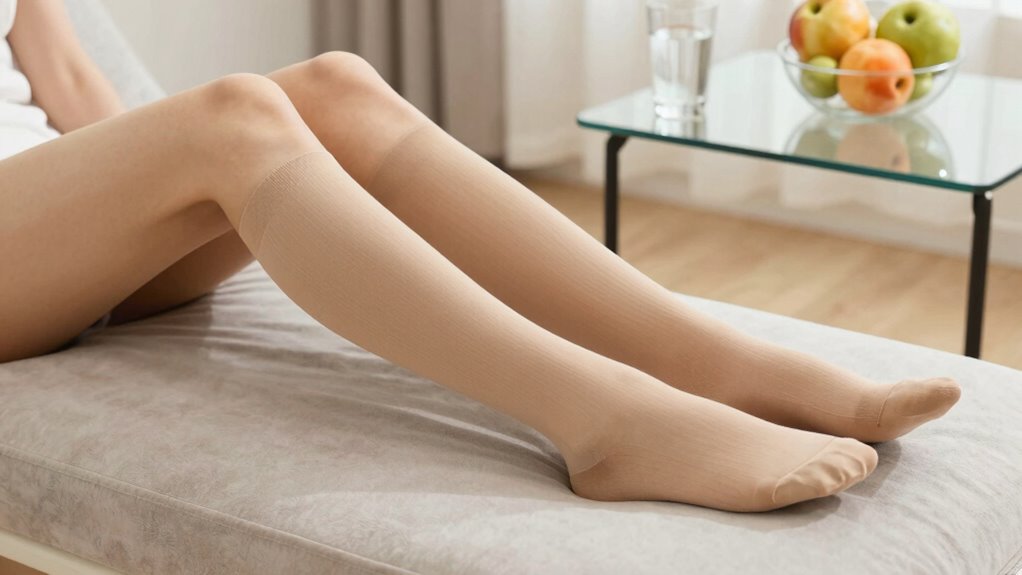
Choosing the right compression garments for leg edema can substantially improve comfort and reduce swelling. When selecting a garment, focus on proper compression therapy, which applies consistent pressure to support circulation. Garment selection depends on your specific needs, severity of swelling, and activity level. Look for options labeled with appropriate compression levels—measured in mmHg—that match your healthcare provider’s recommendations. Guarantee the fit is snug but not too tight, avoiding discomfort or restricted blood flow. Consider the fabric’s breathability and durability for daily wear. Properly chosen compression garments can make a significant difference in managing edema, helping your legs feel lighter and less achy throughout the day. Always consult with a healthcare professional for personalized advice on garment selection.
Simple Leg Exercises to Improve Circulation and Ease Swelling
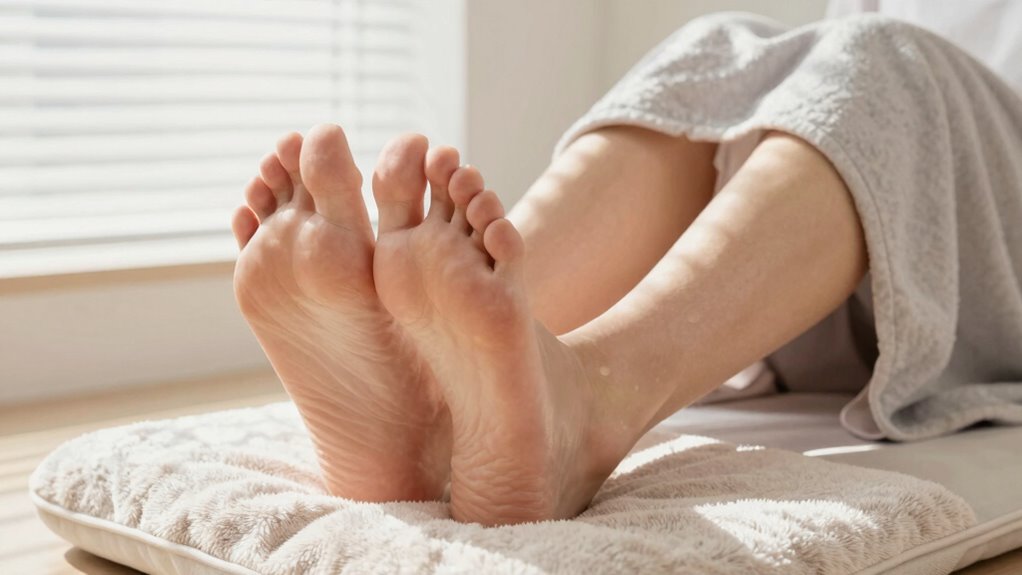
Engaging in simple leg exercises can considerably boost circulation and reduce swelling caused by edema. Gentle activities like ankle pumps, leg lifts, and calf raises stimulate blood flow and help prevent fluid buildup. Combining these exercises with compression therapy enhances their effectiveness, providing support that encourages circulation. Additionally, regularly elevating your legs above heart level for 15-30 minutes promotes fluid drainage and relieves pressure. These routines are easy to incorporate into your daily schedule and can be done sitting or lying down. Consistent movement helps prevent stagnation of blood and lymph, easing discomfort and swelling. Remember, staying active with simple leg exercises, along with proper leg elevation and compression therapy, is a key step toward more comfortable, less swollen legs.
How Staying Hydrated Can Help Your Legs Feel Lighter
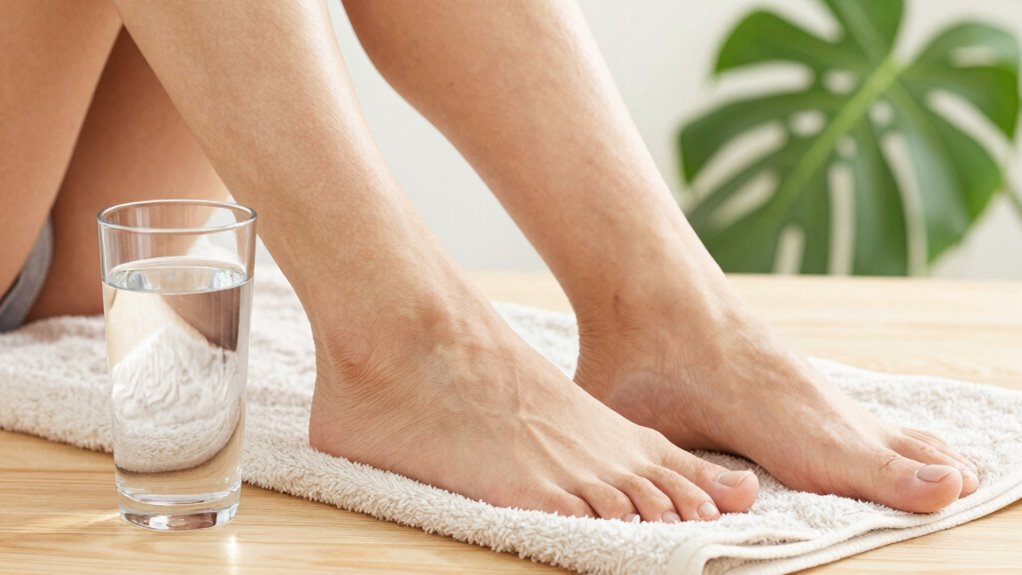
Staying well-hydrated is essential for reducing leg swelling and making your legs feel lighter. Proper hydration benefits your body by supporting fluid balance, preventing excess fluid retention that causes edema. When you drink enough water, it helps flush out toxins and reduces the buildup of fluids in your legs. Dehydration can actually make swelling worse, as your body tries to conserve water, leading to increased fluid retention. By maintaining good hydration, you promote better circulation and prevent fluid from pooling in your lower limbs. Aim for consistent water intake throughout the day, especially if you’re experiencing swelling. Keeping your body well-hydrated ensures your lymphatic system functions efficiently, helping your legs feel lighter and more comfortable.
What Shoes Support Swollen Legs Comfortably?
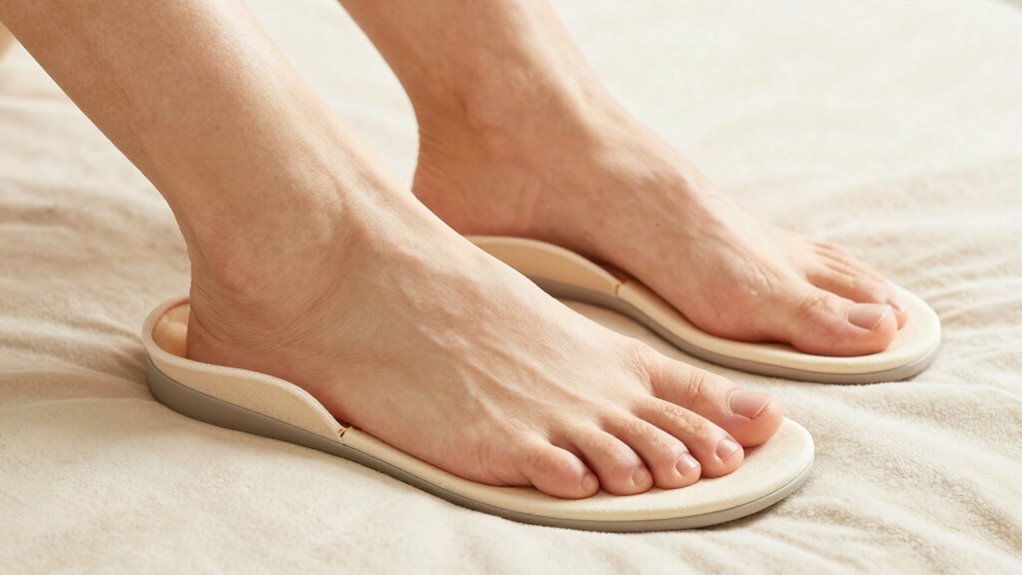
When your legs are swollen, wearing the right shoes can make a significant difference in your comfort. Look for stylish walking shoes that offer excellent foot arch support to reduce pressure on your legs and improve circulation. Choose shoes with a wide toe box to prevent squeezing and allow swelling to expand naturally. Cushioned insoles help absorb shock and lessen fatigue, while adjustable straps or laces ensure a snug yet comfortable fit. Avoid high heels or tight footwear that can restrict blood flow and worsen swelling. Instead, prioritize supportive, well-ventilated shoes designed for comfort. Finding the right pair can ease discomfort, promote better circulation, and help your legs feel lighter throughout the day.
Foods and Nutrients That Help Reduce Leg Swelling
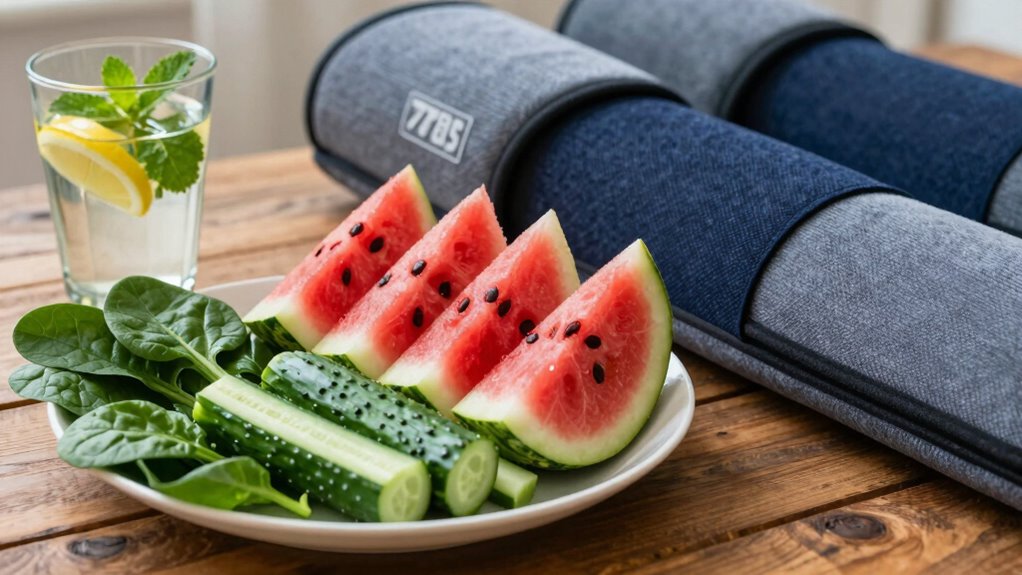
Including potassium-rich foods, anti-inflammatory spices, and hydrating fruits and vegetables in your diet can make a difference in reducing leg swelling. These nutrients help balance fluids and fight inflammation, easing discomfort. Incorporate them into your meals to support your edema relief efforts.
Potassium-Rich Foods
Potassium plays a crucial role in balancing fluids in your body, which can help reduce leg swelling caused by edema. If you’re experiencing potassium deficiency, your body may struggle to regulate fluid levels, worsening swelling. Incorporating potassium-rich foods like bananas, sweet potatoes, spinach, and avocados into your diet can help maintain healthy potassium levels naturally. While potassium supplements are available, it’s best to consult your healthcare provider before using them, especially if you’re on medication or have kidney issues. Consuming adequate potassium supports proper fluid balance, reducing the buildup of excess fluid in your legs. By focusing on these foods, you can help your body manage swelling more effectively and improve comfort in your daily routine.
Anti-Inflammatory Spices
Incorporating anti-inflammatory spices into your diet can effectively help reduce leg swelling caused by edema. These herbal remedies are powerful allies in managing inflammation and supporting your overall comfort. By making simple dietary adjustments, you can include these spices regularly to fight swelling naturally.
- Turmeric, known for its curcumin content, reduces inflammation effectively
- Ginger, with its potent anti-inflammatory properties, aids circulation
- Cinnamon, which helps regulate blood flow and reduce swelling
- Cayenne pepper, stimulating circulation and decreasing fluid buildup
- Clove, packed with antioxidants that combat inflammation
Adding these spices to your meals can be a simple yet impactful step. They complement other healthy habits and support your body’s natural ability to reduce edema-related discomfort.
Hydrating Fruits and Veggies
Many of the anti-inflammatory spices discussed earlier can be complemented by consuming hydrating fruits and vegetables rich in water and essential nutrients. Juicy berries, such as strawberries and blueberries, are packed with antioxidants that help reduce inflammation and support fluid balance. Crisp cucumbers are high in water content, making them excellent for hydration and flushing out excess fluids. Incorporating these foods into your daily routine can help decrease leg swelling and improve comfort. Snack on berries or add cucumber slices to salads and water for an extra boost of hydration. These hydrating fruits and veggies not only help reduce swelling but also provide crucial vitamins and minerals that promote overall leg health. Regularly including them in your diet supports a natural, gentle approach to managing edema.
Habits to Avoid That Make Leg Swelling Worse
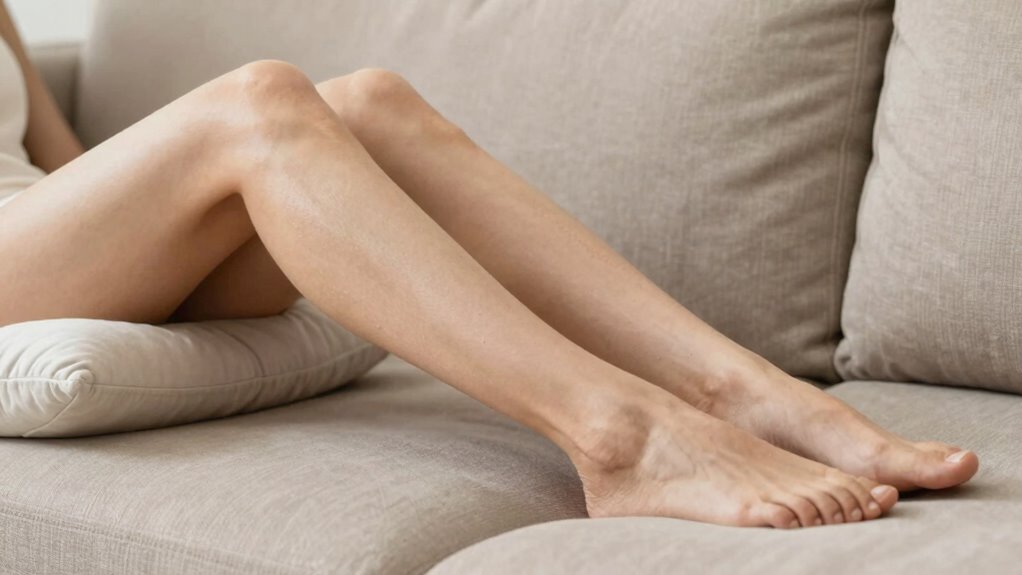
Certain habits can considerably worsen leg swelling, making it harder to manage edema. Avoid these common pitfalls to keep your legs comfortable:
- Sitting or standing for long periods without moving
- Wearing tight clothing or shoes that restrict circulation
- Skipping leg elevation after a long day
- Relying solely on compression socks without proper use
- Ignoring early signs of swelling or discomfort
To prevent worsening edema, take breaks to walk and stretch frequently. Use compression socks as directed, but don’t rely on them alone. Elevate your legs regularly to promote better blood flow. Avoid tight garments that hinder circulation, and stay attentive to changes in swelling. Small adjustments in your routine can make a big difference in managing leg edema effectively.
Self-Massage and Care Tips for Leg Edema Relief
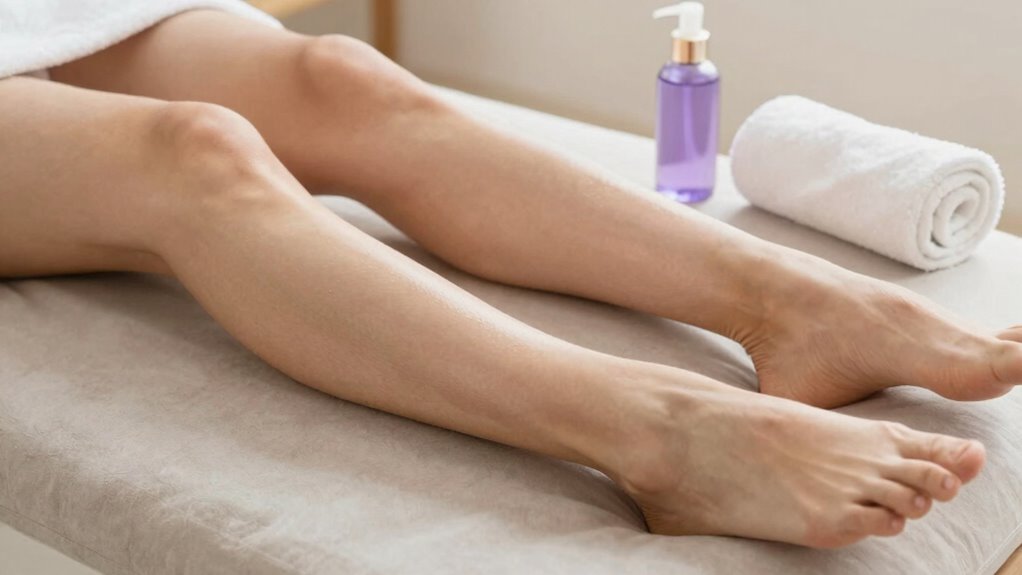
Self-massage can be an effective way to reduce leg swelling and improve circulation. Using gentle massage techniques, you can help move excess fluid out of your legs and promote better blood flow. Start with light strokes from your ankles upward toward your thighs, applying gentle pressure. Be mindful of your skin care—keep your skin moisturized to prevent irritation and make massage easier. Incorporate circular motions around the calves and gentle kneading to stimulate lymphatic drainage. Consistency is key; doing this daily can help manage edema symptoms and enhance comfort. Remember, avoid excessive pressure that may cause discomfort or skin damage. Proper skin care combined with these massage techniques supports healthier skin and more effective swelling relief.
When Should You See a Doctor About Swollen Legs?
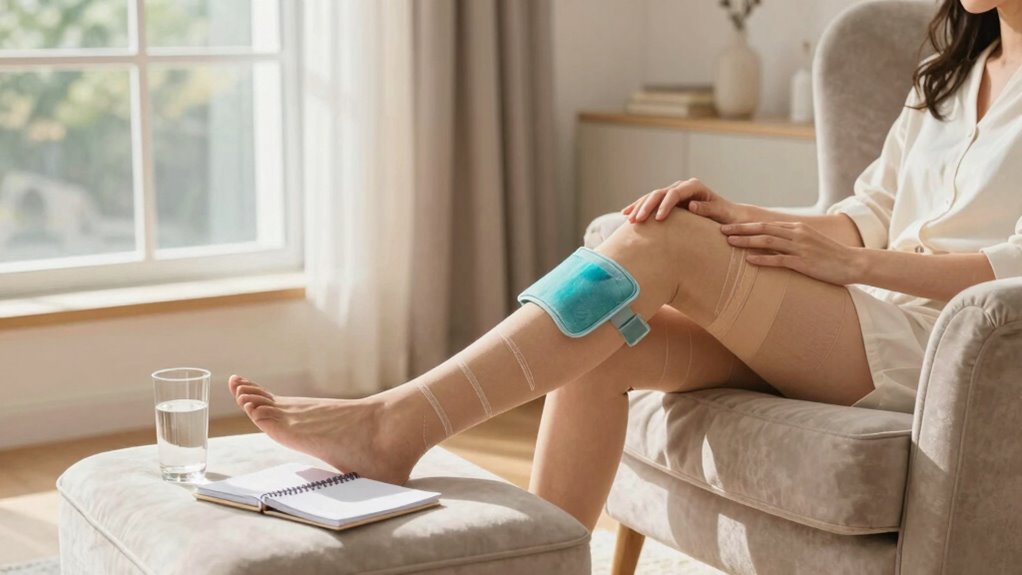
While mild swelling in your legs can be common after long periods of standing or sitting, you should see a doctor if the swelling persists, worsens, or is accompanied by other symptoms. Recognizing when to seek care is vital, especially since leg swelling causes can vary from benign to serious. You should consult a healthcare professional if you notice:
- Sudden, significant swelling or pain
- Swelling that affects only one leg
- Shortness of breath or chest pain
- Skin that’s warm, red, or tender
- Fever or signs of infection
These symptoms may indicate underlying issues like blood clots, infections, or heart problems. Prompt medical attention ensures proper diagnosis and treatment, helping prevent complications related to leg swelling causes.
Frequently Asked Questions
Can Certain Medications Cause Leg Swelling?
Yes, certain medications can cause leg swelling as a side effect. You should be aware of medication side effects and watch for any swelling. Some drugs, like blood pressure medications, can lead to fluid retention, and drug interactions may worsen this. If you notice swelling after starting a new medication, consult your doctor promptly. They might adjust your dosage or suggest alternative treatments to help reduce your leg swelling.
How Does Weight Affect Leg Edema?
Your weight can markedly impact leg edema because excess weight increases pressure on your veins, making it harder for fluid to circulate properly. This leads to fluid retention, which causes swelling. By focusing on weight management, you can reduce this pressure, helping fluid drain more effectively and decreasing swelling. Regular exercise, healthy eating, and maintaining a healthy weight are key steps in managing leg edema caused by weight-related factors.
Are There Natural Remedies for Leg Swelling?
For natural relief, try herbal remedies like ginger or horse chestnut, which may reduce swelling. Dietary adjustments, such as reducing salt intake and increasing hydration, help prevent fluid retention. Incorporate more fruits, vegetables, and lean proteins into your diet. Gentle exercises like walking and elevating your legs also promote circulation. These natural methods work wonderfully to soothe and support your legs, making swelling less bothersome.
What Lifestyle Changes Can Prevent Recurrent Swelling?
You can prevent recurrent swelling by adopting regular exercise routines like walking or swimming, which improve circulation. Make dietary adjustments by reducing salt intake to minimize fluid retention. Elevate your legs whenever possible and stay active throughout the day. Wearing compression stockings also helps. These lifestyle changes promote better blood flow and prevent fluid buildup, keeping your legs comfortable and reducing the chances of swelling returning.
How Long Does It Take to See Improvement After Treatment?
Think of treatment like steering a ship; you’ll notice changes gradually, often within a few weeks. Typically, you see improvement after 2-4 weeks, but it varies depending on medication side effects and treatment timelines. You might feel relief sooner if your regimen is well-tailored, but patience is key. Consistent adherence helps your legs feel better faster, turning a slow journey into smoother sailing.
Conclusion
By incorporating these simple tips into your daily routine, you can turn your legs from a heavy burden into a breath of fresh air. Think of your legs as a garden—regular care, proper hydration, and gentle exercises help them bloom with comfort. Don’t wait for the swelling to become a storm; take small, consistent steps today to keep your legs feeling light and lively, like a breeze on a warm day.