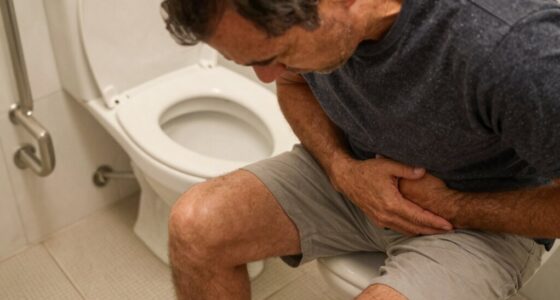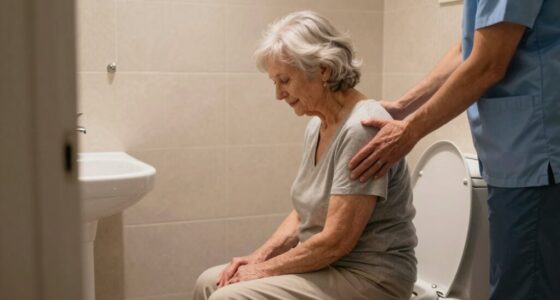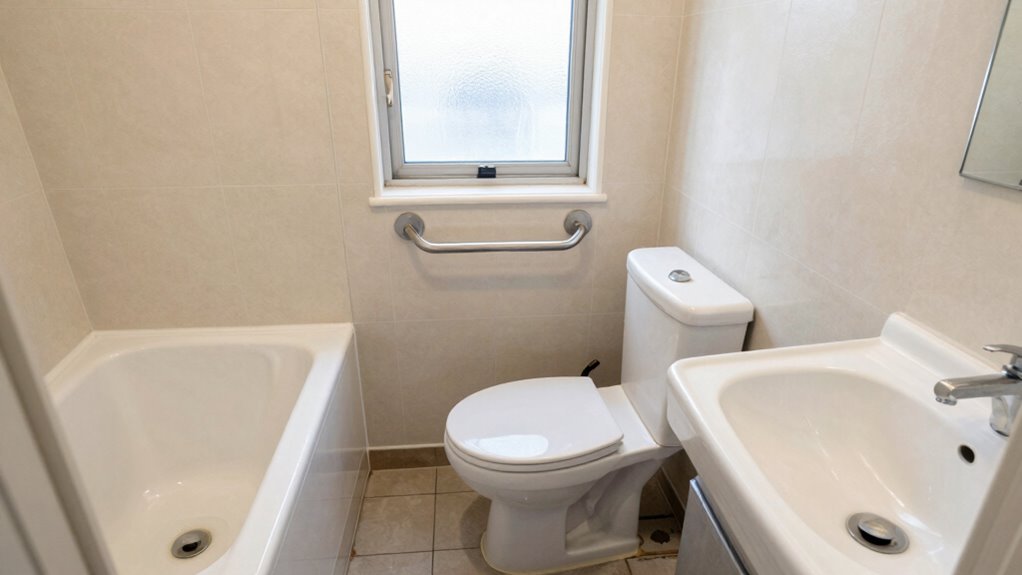

A common mistake that makes caregiving twice as hard is having a cramped bathroom with narrow doorways and tight spaces. When the layout doesn’t allow for easy movement, it becomes harder to assist safely and increases the risk of falls or injuries. Properly designing with wide doorways, clear pathways, and accessible fixtures can markedly ease your tasks. Continue exploring to discover practical tips for creating a safer, more functional bathroom.
Key Takeaways
- Narrow doorways (less than 32 inches) hinder wheelchair or walker access, complicating transfers and increasing caregiver effort.
- Poor lighting creates shadows and dim areas, raising fall risks and making grooming or mobility more difficult.
- Improper grab bar placement, or absence of anchoring into studs, reduces support during transfers, increasing fall risk.
- Cluttered layouts limit clear pathways, obstructing safe movement and making caregiving tasks more strenuous.
- Inadequate space around fixtures prevents safe use of mobility aids, forcing awkward movements and increasing caregiver strain.
Why Bathroom Layout Is Key to Safe, Easy Caregiving
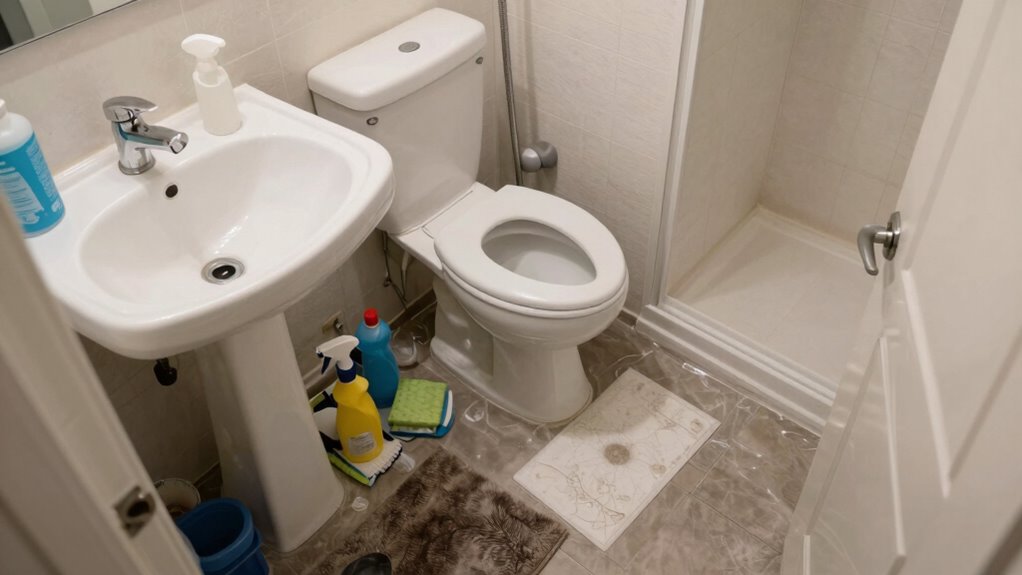
A well-designed bathroom layout is essential for ensuring safe and efficient caregiving. First, consider the toilet height; an ideal height makes it easier for individuals to sit and stand without strain, reducing fall risk. Adjustable or comfort-height toilets are often best. Next, sink placement matters—position it within easy reach, ideally at a height that minimizes bending and stretching. Proper placement also means clear pathways around these fixtures, preventing accidents. Thoughtful layout reduces caregiver effort and enhances safety for the person receiving care. Additionally, incorporating accessible fixtures can significantly improve safety and ease of use for caregivers and care recipients alike. Ensuring sufficient space and clearance around fixtures is crucial for mobility aids and safe movement. Paying attention to fixture placement can further optimize the bathroom for caregiving needs. A carefully planned bathroom layout directly supports smoother caregiving routines and reduces potential injury risks. Moreover, considering unobstructed pathways helps prevent trips and falls, making caregiving safer and more manageable.
A thoughtful design also takes into account ergonomic considerations to reduce strain on caregivers during routine tasks.
Common Bathroom Design Mistakes That Make Caregiving Harder
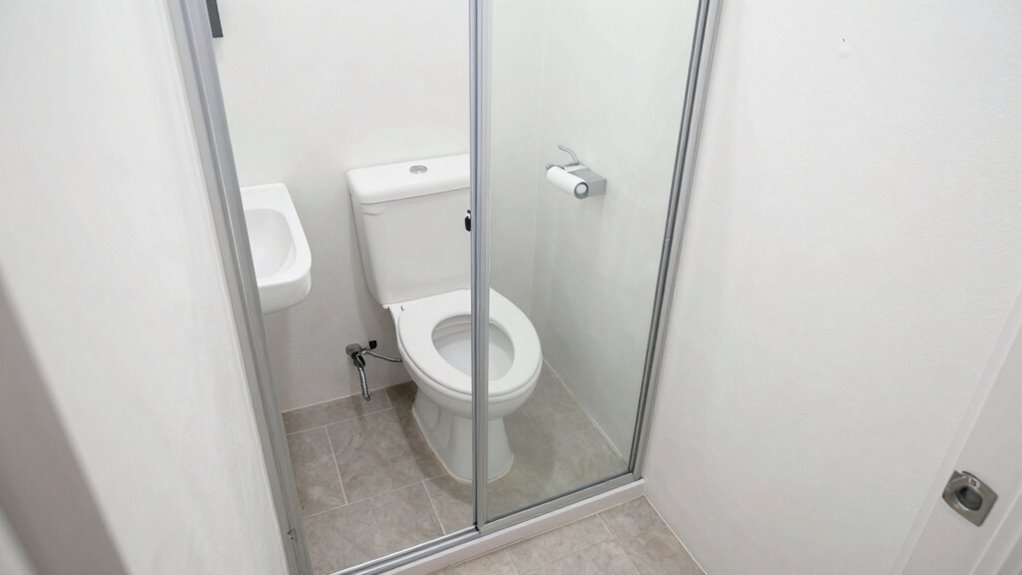
Narrow doorways can block wheelchairs or walkers, making it hard to move safely. Poor lighting leaves you and your loved ones struggling to see, increasing the risk of falls. Additionally, improperly placed grab bars can be useless during emergencies or when extra support is needed. Implementing proper safety measures such as ensuring adequate lighting and accessible layouts can significantly reduce caregiving challenges. Incorporating contrast ratios into your bathroom design can also help improve visibility and prevent accidents. Considering indoor air quality improvements, like using dehumidifiers or reducing dust, can further promote a healthier environment for caregivers and those receiving care. Paying attention to bathroom ventilation can also help prevent mold growth and improve overall air quality. Enhancing urban planning principles in bathroom design can ensure safer and more functional spaces for caregiving needs.
Narrow Doorways Limit Access
When doorways are too narrow, it becomes considerably harder to move mobility aids like wheelchairs or walkers through the bathroom. A doorway width that’s insufficient restricts access, forcing you to struggle with tight spaces or make risky maneuvers. Proper space planning ensures doorways are wide enough—ideally at least 32 inches—to accommodate mobility devices comfortably. Narrow doorways not only hinder movement but also increase the risk of accidents or injuries. When designing or remodeling, pay close attention to doorway dimensions, and opt for wider openings where possible. This simple adjustment can notably improve safety and independence for caregivers and those they assist. Incorporating accessible spaces and universal design principles ensures the bathroom remains accessible to people of all abilities, promoting safety and autonomy. Ensuring accessible spaces can also help reduce overall caregiving challenges and improve quality of life. Additionally, considering built-in safety features can further enhance the functionality of accessible bathrooms. Emphasizing space efficiency in bathroom design can optimize limited areas without sacrificing accessibility.
Poor Lighting Conditions
Poor lighting can substantially hinder caregiving in the bathroom, making it difficult to see clearly and perform tasks safely. Lighting issues create visibility concerns that can lead to accidents or injuries, especially for those with limited mobility or impaired vision. Insufficient or poorly placed lighting makes it harder to assist with grooming, medication, or hygiene routines. Shadows and dim areas increase the risk of slips or falls, and caregivers may struggle to assess the condition of wounds or skin. To improve safety, ensure the bathroom has bright, evenly distributed lighting, ideally with adjustable fixtures. Installing task lighting around mirrors and critical areas helps eliminate shadows. Proper lighting not only enhances visibility but also boosts confidence for caregivers and users alike. Incorporating ergonomic lighting solutions can further optimize comfort and reduce fatigue during caregiving activities, especially when using adjustable lighting to accommodate different needs. Additionally, choosing lighting with appropriate brightness levels ensures the space remains well-lit without causing glare or discomfort. Using energy-efficient bulbs can also help maintain consistent lighting quality over time and reduce electricity costs. Moreover, selecting glare-reducing fixtures can prevent harsh reflections that may cause discomfort during use.
Inadequate Grab Bar Placement
Proper grab bar placement is essential for ensuring safety and ease of movement in the bathroom. When grab bars aren’t positioned correctly, it becomes harder to maintain balance and prevent falls, especially during transfers or when standing up. Poorly placed grab bars can be too high, too low, or located where they’re difficult to reach, undermining bathroom safety. You need to take into account the natural motion and reach range of the user when installing grab bars, ensuring they’re firmly anchored into studs or appropriate wall anchors. Correct placement provides reliable support and reduces caregiver effort. Additionally, understanding bathroom safety principles can help guide optimal grab bar positioning. Recognizing the importance of proper anchoring techniques ensures that grab bars can withstand necessary forces and provide dependable support. Remember, the goal is to make the bathroom safer and more accessible, which starts with strategic grab bar placement that promotes confidence and independence during every bathroom visit.
How Narrow Spaces and Clutter Can Increase Safety Risks

Have you ever underestimated how much space you need in a bathroom? Narrow spaces can make caregiving more dangerous, increasing the risk of falls or injuries. When there’s limited room to move, it’s harder to assist someone safely and comfortably. Clutter adds to this problem by blocking pathways and making it difficult to access essential features quickly. Proper space optimization is vital; clearing unnecessary items and arranging fixtures thoughtfully creates a safer environment. Managing clutter reduces trip hazards and ensures caregivers can maneuver freely without obstruction. A well-organized, spacious bathroom not only minimizes safety risks but also makes caregiving less stressful. Additionally, understanding environmental design principles can help optimize layout and improve safety. Applying universal design concepts can create adaptable spaces suitable for all users, enhancing safety and accessibility. Remember, spaciousness and clutter management are key to creating a safer, more accessible bathroom for everyone involved. Incorporating ergonomic considerations into the layout can further enhance safety and ease of use. Considering space planning early in the design process can prevent many common layout issues and promote better caregiver and user experiences. Being aware of adaptive design strategies ensures the space remains functional as needs change over time.
Essential Features That Make Bathrooms More Accessible for Caregivers
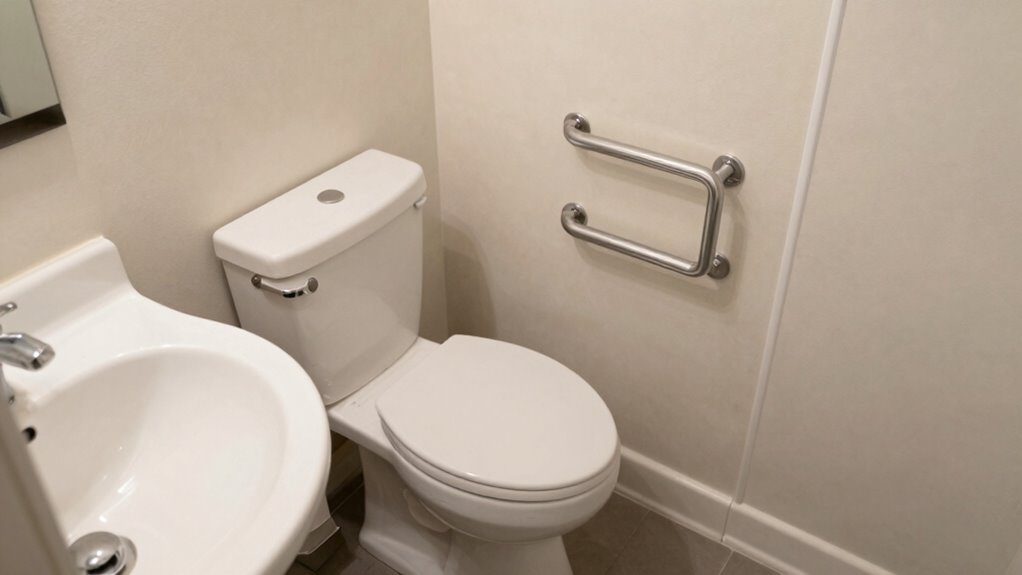
Creating an accessible bathroom for caregivers involves including features that enhance safety and ease of movement. Incorporate universal design principles to make the space functional for everyone, regardless of mobility challenges. This includes installing ergonomic fixtures like lever handles instead of knobs, which are easier to operate, especially for those with limited grip strength. A walk-in shower with no threshold allows for smooth access, reducing tripping hazards. Proper lighting, non-slip flooring, and strategically placed grab bars also contribute to safety. Ensure that fixtures are positioned at comfortable heights to minimize strain. Additionally, consider using portable oil radiators to maintain a comfortable temperature without the need for complex heating systems. These features work together to create a bathroom that’s not only safer but also more efficient for caregivers, making daily routines less stressful and physically demanding.
Easy Modifications to Improve Bathroom Safety and Usability

Simple modifications can substantially enhance bathroom safety and usability, making daily routines easier and reducing the risk of accidents. Upgrading plumbing fixtures, such as installing a walk-in shower or a comfort-height toilet, improves accessibility while maintaining attractive bathroom aesthetics. Small changes like adding non-slip rugs or mats can prevent slips, and simple repairs to leaks or outdated fixtures guarantee safety and efficiency. These upgrades not only boost safety but also create a more inviting space.
| Safety Feature | Aesthetic Enhancement | Practical Benefit |
|---|---|---|
| Non-slip mats | Modern shower fixtures | Easier transfers |
| Grab bar installation | Sleek faucet designs | Reduced fall risk |
| Raised toilets | Coordinated color schemes | Increased independence |
Why Grab Bars, Non-Slip Surfaces, and Clear Space Matter

Ensuring grab bars, non-slip surfaces, and clear space are in place is essential because these features directly prevent accidents and promote independence in the bathroom. Proper bathtub design, including grab bars, makes transfers safer and easier. Non-slip surfaces on the floor and tub reduce the risk of slips, especially when water is involved. Clear space around fixtures, like adjusting vanity height, allows caregivers and users to move freely without obstruction. These modifications help avoid falls and make daily routines more manageable. By prioritizing safety features now, you create a bathroom environment that supports both the caregiver’s efforts and the user’s dignity. Small adjustments in layout and materials can appreciably improve safety, comfort, and confidence during every bathroom visit.
Budget-Friendly Tips for Creating a Caregiver-Friendly Bathroom

You can make your bathroom safer and more accessible for less by choosing cost-effective solutions and smart design ideas. Adjusting vanity placement can create open space, making transfers easier and reducing clutter. Position the vanity close to the toilet and shower for quick access, but ensure it doesn’t block pathways. When it comes to mirror height, lower it or install an adjustable mirror so caregivers and those they assist can see comfortably. Using affordable materials like slip-resistant decals and grab bars mounted on existing fixtures also boosts safety without breaking the bank. Reorganizing storage to keep essentials within easy reach minimizes unnecessary movement. These simple, budget-friendly tweaks can appreciably improve safety and functionality, easing caregiving tasks and creating a more supportive bathroom environment.
When to Consider Professional Renovations for Better Accessibility
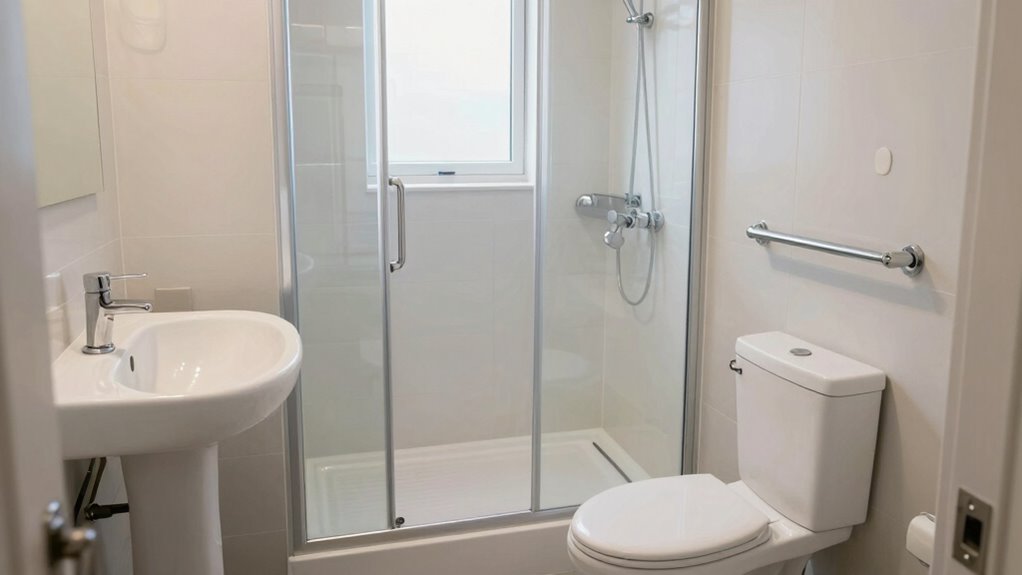
Knowing when to invest in professional renovations is key to ensuring your bathroom remains safe and accessible as needs change. If you notice difficulty using fixtures, frequent falls, or difficulty reaching essentials, it’s time to contemplate upgrades. Professional renovations can incorporate features like grab bars, walk-in showers, or non-slip flooring. You might also explore integrating home automation for lighting, water control, or voice-activated devices, making daily tasks easier. Decorative accents can add aesthetic appeal while supporting functionality, such as stylish grab bars or elegant, accessible sinks. Keep an eye on these signs:
Upgrade your bathroom with grab bars, non-slip flooring, and automation to enhance safety and independence.
- Struggling with current bathroom fixtures
- Increased falls or near-misses
- Difficulty reaching or bending
- Outdated layout hindering independence
Planning Your Bathroom Layout to Reduce Stress and Support Independence
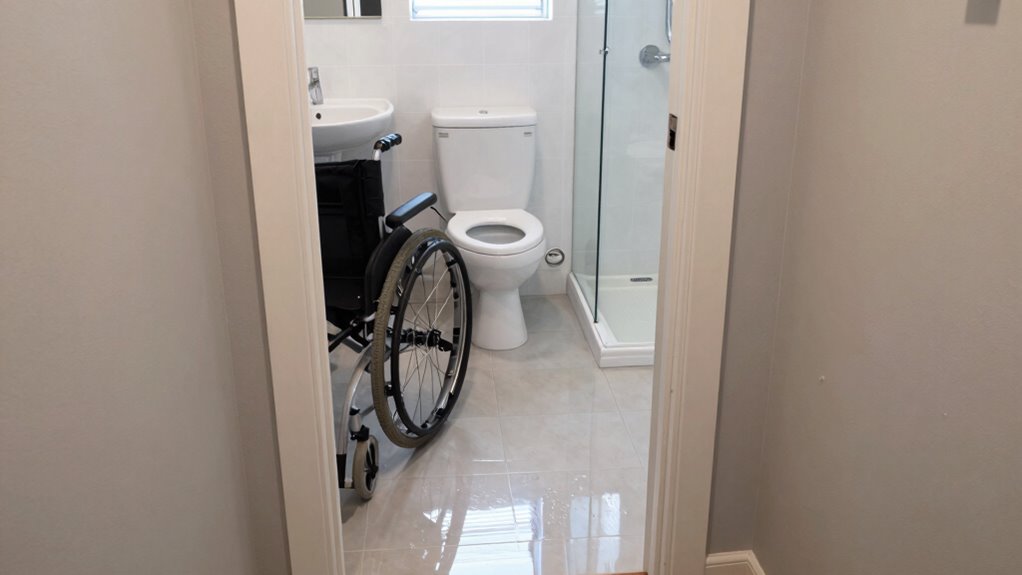
Designing your bathroom layout thoughtfully can make a significant difference in reducing stress and promoting independence. Start by planning for easy access, such as proper bathtub installation that includes grab bars and non-slip surfaces. Choose a vanity design that offers ample space for daily routines and is reachable without unnecessary bending or stretching. Keep essential items within arm’s reach to minimize movement and confusion. Ascertain the layout allows for clear pathways, ideally with a walk-in shower instead of a tub, if possible. Good lighting and contrasting colors can also help with navigation. By considering these elements, you create a safer, more functional space that supports independence and makes caregiving less stressful for both of you.
Frequently Asked Questions
How Can I Assess My Bathroom’s Current Safety and Accessibility?
Start by checking your bathroom lighting—ensure it’s bright enough and free of flickers to prevent accidents. Next, evaluate your storage solutions; they should be within easy reach and organized to avoid clutter. Test door handles, grab bars, and non-slip mats for stability. Look around for trip hazards or tight spaces. Making these adjustments will improve safety and accessibility, making caregiving less stressful and more efficient.
What Are Cost-Effective Ways to Improve Bathroom Safety Quickly?
You can quickly improve bathroom safety by installing grab bars around the toilet and shower area, which provide essential support. Use non-slip mats in the bathtub and on the bathroom floor to prevent falls. These solutions are cost-effective and easy to implement, offering immediate safety benefits. Regularly check that grab bars are secure and mats are in good condition to keep your bathroom safe for everyone.
Are There Specific Design Guidelines for Elderly or Disabled Users?
Did you know that falls are the leading cause of injury among seniors? To enhance safety, follow universal design principles and incorporate ergonomic fixtures like grab bars, non-slip flooring, and walk-in showers. These guidelines guarantee the bathroom is accessible and comfortable for elderly or disabled users, making daily routines safer and more independent. Prioritizing these design elements helps prevent accidents and promotes a more inclusive living space.
How Do I Prioritize Modifications Based on My Caregiving Needs?
You should prioritize home modifications that address your caregiver priorities, such as safety, accessibility, and ease of mobility. Focus on changes like installing grab bars, widening doorways, or adding non-slip flooring first. Assess your loved one’s specific needs and daily routines to determine which modifications will make caregiving more efficient and safer. By tackling the most critical issues first, you create a supportive environment that reduces stress and enhances care quality.
What Are Common Mistakes to Avoid During Bathroom Renovations?
When renovating your bathroom, avoid poor bathtub placement that forces awkward movements and makes caregiving harder. Also, don’t underestimate the importance of lighting choices; inadequate lighting can create safety hazards. confirm the bathtub is positioned for easy access, and select bright, adjustable lighting to prevent accidents. By planning these details carefully, you make caregiving safer and more manageable, reducing stress and improving overall functionality.
Conclusion
Remember, the right bathroom layout can transform caregiving from a constant challenge to a manageable task. Small adjustments might seem simple, but they hold the power to prevent accidents and boost independence. Don’t underestimate the impact of thoughtful design—your loved one’s safety depends on it. But what if one overlooked detail could change everything? The key to truly making a difference is just a decision away. Are you ready to take that step?