
TL;DR

Turn quiet afternoons into listening time
- Thousands of audiobooks, podcasts and originals
- Listen on your phone, tablet or Echo — also offline
- Cancel anytime
A team led by University of Prince Edward Island researcher Jay Penney is studying how a rare RAB32 gene variant affects human microglia and neurons. The three-year, Parkinson Canada-funded project is in its first year; researchers have not established how the variant contributes to Parkinson’s or whether it points to a treatment.
Jay Penney, an associate professor at the University of Prince Edward Island, is leading a Parkinson Canada-funded study of a rare RAB32 gene variant, using human microglia and neurons grown from stem cells to investigate how it may affect brain-cell function. The work is in its first year of a three-year grant, and researchers have not yet determined how the variant may contribute to Parkinson’s disease.
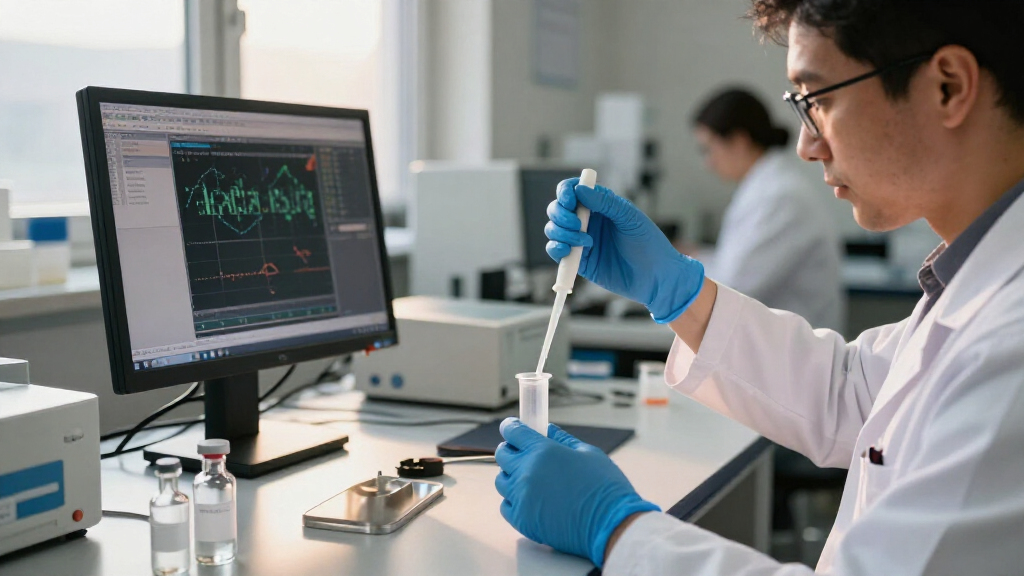
Penney’s team has genetically modified human microglia and neurons in laboratory dishes so the cells carry the variant. Researchers are observing the cells to learn what changes it causes and which biological pathways may be involved. Microglia are immune cells in the brain, and Penney said the gene is frequently active in them, a reason it fits his lab’s research expertise.
RAB32 encodes a protein that regulates other proteins. The Parkinson’s-linked variant may change the protein’s shape and make it overactive, but that remains a hypothesis under investigation. Penney’s group is examining possible interactions with proteins including LRRK2, which is implicated in Parkinson’s, and PKA and ERK, which regulate many cell processes. The researchers are also looking beyond those known interactions for pathways specific to brain cells.
The report describes the variant as rare and links it to a reported 13-to-65-fold increase in Parkinson’s risk. That range is a reported risk association, not a prediction that every carrier will develop the disease. The source does not provide the underlying study details or clarify the comparison used for the range.
How RAB32 Could Point to Disease Pathways
Studying a rare genetic variant can give researchers a way to investigate biological changes associated with disease in people who carry it. If the team identifies how altered RAB32 affects brain cells, that could help clarify which processes might be relevant to Parkinson’s and merit further study. It would not, on its own, establish a treatment or show that the same mechanism explains most cases.
Penney told Being Patient that human cells could make it possible to assess potential interventions in a model more directly related to people than some other experimental systems. The report says that if the variant makes RAB32 overactive, existing drugs might be candidates for testing against downstream effects. No drug has been reported as tested or shown to work in this project so far.
Products Worth Considering

Hyperice Hypervolt Go 3 Portable Percussion Massage Gun with Carry Case

Garmin Forerunner 55 GPS Running Smartwatch, Black

Garmin Forerunner 165 GPS Running Smartwatch, 43 mm, Black
As an affiliate, we earn on qualifying purchases.
From Genetic Finding to Cell Experiments
Penney said he chose RAB32 after reading about its identification as a Parkinson’s risk factor. He saw a fit with his lab’s work on microglia, while noting that little is known about what the gene does in the brain. The project’s current focus is to study the variant in both microglia and neurons rather than assume its effects from research in other cell types.
The report draws a comparison with research on a rare Alzheimer’s-related mutation studied by Lars Lannfelt. Work on that mutation helped researchers investigate a form of beta-amyloid associated with disease and contributed to the development of Leqembi, according to the report. That example illustrates how rare-variant research can inform later work; it does not establish that RAB32 research will produce a similar result.
“There’s very very little known about what it might be doing in the brain.”
— Jay Penney, associate professor at the University of Prince Edward Island, speaking to Being Patient
What the Cell Models Cannot Yet Show
The team has not established what RAB32 does in brain cells, whether the variant actually makes its protein overactive, or which downstream changes are most relevant to Parkinson’s. The report provides no experimental results from the current project and no evidence that a treatment has been identified.
It is also unclear how results from cells grown in a laboratory would translate to people, how broadly the proposed mechanism might apply, and what the reported risk range means for any individual carrier. The source does not detail the population or methods behind that risk estimate. Findings from a rare variant may illuminate a disease pathway without applying to all people with Parkinson’s.
The Next Two Years of RAB32 Research
Penney’s team is continuing the funded study, which is scheduled to run for three years. Its immediate work is to observe how the gene variant affects the modified human microglia and neurons, and to investigate the protein interactions and other cellular pathways that could explain those effects.
Penney said promising findings could support additional research and future funding applications. Any candidate intervention would still need further testing; the report gives no confirmed timetable for such work or for results from the project.
Key Questions
What is the RAB32 variant?
It is a rare genetic variant linked in the report to increased Parkinson’s risk. The precise biological effect in brain cells is not yet known.
What cells are Penney’s researchers studying?
The team is studying human microglia and neurons grown from stem cells and genetically modified to carry the variant.
Does the research show that RAB32 causes Parkinson’s?
No. The project is investigating how the variant may affect cells. The reported link to risk does not establish the mechanism or show that every carrier will develop Parkinson’s.
Has the team found a treatment?
No treatment result is reported. Researchers hope to identify cell changes that could guide future studies, but the project is still in its first year.
When might there be results?
The grant runs for three years and was in its first year at the time of the report. No specific date for results was provided.
Source: beingpatient.com