
TL;DR

Turn quiet afternoons into listening time
- Thousands of audiobooks, podcasts and originals
- Listen on your phone, tablet or Echo — also offline
- Cancel anytime
An analysis of more than 55,000 U.S. adults linked yoga and Pilates practice with lower risk of death over roughly a decade. The study found associations, not proof that either activity extends lifespan, and other factors may help explain the results.
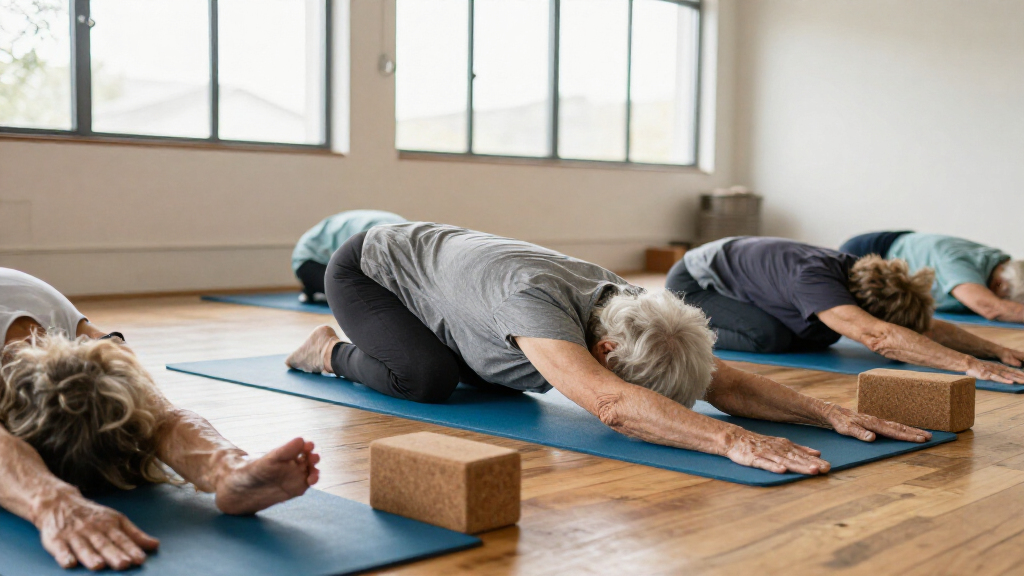
Researchers at Arizona State University found that practicing yoga or Pilates was associated with a lower risk of death in an analysis of more than 55,000 U.S. adults. The results, based on mortality records tracked for about a decade, do not show that either practice causes people to live longer.
The researchers examined 21 alternative health practices using nationally representative data and linked participants’ records to mortality information. Yoga practice was associated with a 27% lower risk of death, while Pilates was associated with a 36% lower risk, compared with the relevant groups that did not report those practices, as described in the report. The source does not provide further detail here about the precise comparison groups or statistical estimates.
Yoga and Pilates were the only practices among the 21 examined that showed a significant association with lower mortality risk. The study’s finding is an association: it cannot establish that taking up either activity would reduce an individual’s chance of dying. Researchers accounted for factors including income, education, exercise, smoking, body mass index and self-rated health, but statistical adjustments cannot rule out all differences between participants.
Study co-author Connor Sheehan, an associate professor at Arizona State University, told Athletech News that researchers know relatively little about whether many complementary and alternative health practices are associated with longer life. His comments and the study findings point to a research gap, rather than a recommendation to replace medical care or other established health measures with yoga or Pilates.
Movement Practices Stand Out
The findings offer evidence about two widely practiced forms of movement at a time when consumers have many wellness options. Among the 21 practices studied, yoga and Pilates alone had statistically significant links with lower mortality risk. That distinction may help guide questions for future research, but it does not establish that the practices themselves account for the difference.
Sheehan suggested that yoga and Pilates may combine physical activity, strength and balance work, breath practice and stress management. Taking classes may also provide social contact. Those are possible explanations, not mechanisms proven by this analysis. The results could add interest to yoga and Pilates, but readers should not interpret the percentages as a personal forecast of lifespan or as evidence that either activity prevents death.
As an affiliate, we earn on qualifying purchases.
A Wider Wellness Research Gap
The study was prompted by growing use of complementary and alternative health practices and limited evidence about their relationship with long-term outcomes. Sheehan told Athletech News that more than 40% of U.S. adults use at least one such practice, citing activities that range from acupuncture and chiropractic care to specialized diets. The report describes the researchers’ work as an examination of how these practices relate to mortality.
Sheehan said that Americans are spending billions on complementary and alternative medicine while evidence about whether many options are associated with living longer remains limited. He also pointed to newer wellness trends, including cold plunges, red-light therapy and supplements, as areas that warrant study. The current analysis addresses mortality associations for the practices it examined; it does not establish the effectiveness of those other approaches.
“Maybe the sickest people are too unhealthy to do yoga or Pilates to begin with, so the practice looks protective when really it’s just excluding the least healthy.”
— Connor Sheehan, speaking to Athletech News
As an affiliate, we earn on qualifying purchases.
Association Does Not Prove Cause
The analysis cannot determine whether yoga or Pilates reduced mortality risk, or whether people who practiced them differed in other ways that affected their health. Researchers adjusted for several measured factors, but access to health care, genetics and economic circumstances could still have influenced the results. People who choose these practices may also follow other health behaviors that were not fully captured.
Sheehan specifically raised the possibility that people in poorer health may be less able to take part, creating a selection effect. The source material does not give the study’s publication date, journal, full methods, participant follow-up details or exact statistical confidence ranges. It also does not clarify the frequency or duration of yoga and Pilates practice associated with the reported figures. Those gaps limit how precisely readers can interpret the percentages.
As an affiliate, we earn on qualifying purchases.
More Evidence Needed on Wellness
The study identifies yoga and Pilates as priorities for further research, but the report does not describe a planned follow-up study or a next research milestone. Future work would need to clarify how practice frequency and duration relate to outcomes and whether the associations persist when researchers account for additional differences among participants.
Sheehan called for more research into wellness behaviors as they evolve, including newer practices not covered by this analysis. Until stronger evidence clarifies cause and effect, the findings should be read as observational evidence about a population, not a guarantee that either practice will extend an individual’s life.
stretching and balance exercise equipment
As an affiliate, we earn on qualifying purchases.
As an affiliate, we earn on qualifying purchases.
Key Questions
Did the study prove yoga makes people live longer?
No. It found an association between yoga practice and lower mortality risk, but the observational analysis cannot show that yoga caused the difference.
What mortality differences did researchers report?
The report says yoga was associated with a 27% lower risk of death and Pilates with a 36% lower risk. These are study associations, not estimates of how much either practice would change an individual’s lifespan.
Which other practices were examined?
Researchers examined 21 alternative health practices. According to the report, yoga and Pilates were the only two linked to a significantly lower risk of death. The source material does not list all 21 practices.
What factors could affect the results?
Researchers accounted for income, education, exercise, smoking, body mass index and self-rated health. Other factors, including health-care access, genetics and economic circumstances, may also have influenced the findings, according to study co-author Connor Sheehan.
Source: rss
Halloween Picks
halloween
As an affiliate, we earn on qualifying purchases.