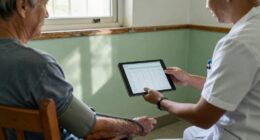
Shopping for senior-friendly smartwatches means balancing two things that often pull against each other: genuine simplicity and meaningful safety features. The Senior Smart Watch with Fall Detection, GPS Tracking, SOS Alerts, and 4G Video Calling stands out as the best overall pick because it combines the three features families actually want — automatic fall detection, live GPS tracking, and one-touch emergency calling — without requiring a paired smartphone to work. Two other strong options emerged from the comparison: the Audar E2, which takes a lighter-touch approach with vital sign monitoring and a simpler interface, and the Fitbit Sense 2, which is the clear choice for active seniors who want polished health tracking rather than emergency features. The main tradeoff in this category is between standalone safety devices (which often carry monthly subscription fees) and lifestyle trackers (which are cheaper to own but do less when something goes wrong). Read on for the full breakdown, including which models are worth the subscription cost and which ones are better skipped.

Turn quiet afternoons into listening time
- Thousands of audiobooks, podcasts and originals
- Listen on your phone, tablet or Echo — also offline
- Cancel anytime
Key Takeaways
- Standalone watches with fall detection and 4G calling — the top-ranked Senior Smart Watch and the CoCo BT2-X — are the only options here that work without a smartphone, which is the single biggest differentiator in this lineup.
- The lineup splits into two distinct camps: emergency-focused devices (Audar E2, CoCo BT2-X, both fall-detection watches) and lifestyle trackers (Fitbit Sense 2, LIVIKEY, Pautios EW1), and no single model does both jobs well.
- Watches promising blood oxygen monitoring at budget prices — including the Pautios EW1 and the Senior-Friendly Smart Watch with Pedometer — delivered inconsistent readings, so families should treat those numbers as rough indicators rather than medical data.
- The Fitbit Sense 2 offers the best build quality and app experience in the group, but its small text, gesture-driven interface, and lack of SOS features make it a poor fit for seniors whose primary need is safety.
- Battery life varied more than any other spec: the simple pedometer watches ran a week or more per charge, while the 4G-connected fall-detection models needed charging every one to two days — a real maintenance burden for the person wearing it.
| Fitbit Sense 2 Health and Fitness Smartwatch, Shadow Grey/Graphite |  | Best Overall Health Tracking | Battery life: 6+ days | Water resistance: Up to 50 meters | GPS: Built-in | VIEW LATEST PRICE | See Our Full Breakdown |
| Senior Smart Watch with Fall Detection, GPS Tracking, SOS Alerts, and 4G Video Calling |  | Best for Family Caregiving | Connectivity: 4G | Location features: Real-time GPS tracking and geofencing | Safety features: Fall detection and SOS alerts to preset contacts | VIEW LATEST PRICE | See Our Full Breakdown |
| Senior-Friendly Smart Watch with Pedometer, Heart Rate and Blood Oxygen Monitoring |  | Best for Simplicity | Connectivity: No app or smartphone required | Display: Large color LCD touchscreen | Health tracking: Heart rate, manually measured blood oxygen, sleep data | VIEW LATEST PRICE | See Our Full Breakdown |
| Audar E2 Senior Smartwatch with Fall Detection, SOS, and Vital Sign Monitoring |  | Best Medical Monitoring | Health measurements: Heart rate, blood pressure, blood oxygen (SpO2), body temperature | Measurement intervals: 30 minutes, 1 hour, 2 hours, or 4 hours; on demand | Connectivity: Built-in SIM; IoT networks in 20+ countries | VIEW LATEST PRICE | See Our Full Breakdown |
| LIVIKEY Standalone Pedometer Smartwatch with Heart Rate and Sleep Tracking |  | Best Value for Everyday Tracking | Screen size: 1.85 inches | Display resolution: 320 × 180 | Water resistance: IP68; depth listed as 1.5 meters | VIEW LATEST PRICE | See Our Full Breakdown |
| Senior Friendly Pedometer Watch & Fitness Tracker |  | Best Display for Readability | Display Size: 1.8 inches | Resolution: 368×448 | Battery Life: Up to 7 days active, 30 days standby | VIEW LATEST PRICE | See Our Full Breakdown |
| Pautios EW1 Senior-Friendly Pedometer Watch with Heart Rate and Blood Oxygen Monitoring |  | Best for Tech-Averse Seniors | Brand: Pautios | Model: EW1 | Display: Large LCD color touch screen | VIEW LATEST PRICE | See Our Full Breakdown |
| Senior Smart Watch with Fall Detection, GPS Tracking, SOS Alerts, and IP67 Water Resistance |  | Best for Long-Distance Caregivers | Fall Detection: Automatic fall sensing with SOS alerts to preset contacts | Location Features: Real-time GPS tracking and geofencing | Communication: Two-way voice chat and messaging; voice calls require voice-enabled SIM | VIEW LATEST PRICE | See Our Full Breakdown |
| Senior-Friendly Fitness Tracker with 1.83-Inch Display |  | Best Value Fitness Tracker | Display: 1.83-inch LCD touchscreen | Phone Required: No, for core features | Activity Tracking: Steps, distance, calories, active minutes, sports | VIEW LATEST PRICE | See Our Full Breakdown |
| CoCo BT2-X Emergency Alert Smartwatch for Seniors, Black | 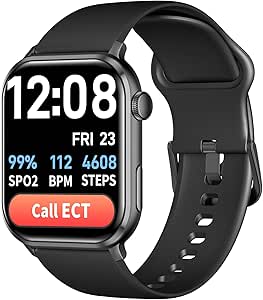 | Best Everyday Safety Watch | Model: CoCo BT2-X | Display: 1.85-inch HD with rotating crown | Fall Detection: 20-second countdown before emergency alert | VIEW LATEST PRICE | See Our Full Breakdown |
| senior-friendly smartwatch | Water resistance | Battery life | Connectivity |
|---|---|---|---|
| Fitbit Sense 2 Health and Fitn | Up to 50 meters | 6+ days | — |
| Senior Smart Watch with Fall D | IP67 | — | 4G |
| Senior-Friendly Smart Watch wi | IP68 | Up to 7 days | No app or smartphone required |
| Audar E2 Senior Smartwatch wit | — | Up to 10 days with hourly measurements; 30 days standby | Built-in SIM; IoT networks in 20+ countries |
| LIVIKEY Standalone Pedometer S | IP68; depth listed as 1.5 meters | Up to 7 days | Bluetooth; iOS and Android compatible |
| Senior Friendly Pedometer Watc | IP68 / 30 meters | Up to 7 days active, 30 days standby | Bluetooth; iOS and Android |
| Pautios EW1 Senior-Friendly Pe | IP68 | Up to 7 days | Standalone — no app or phone required |
| Senior Smart Watch with Fall D | IP67 | — | — |
| Senior-Friendly Fitness Tracke | IP68 | Up to 7 days | — |
| CoCo BT2-X Emergency Alert Sma | — | — | Bluetooth calling; CoCo app |
More Details on Our Top Picks
Fitbit Sense 2 Health and Fitness Smartwatch, Shadow Grey/Graphite
The Sense 2 earns the top spot because no other watch in this lineup matches its health monitoring depth. Stress detection, ECG readings, irregular heart rhythm notifications, and SpO2 tracking put it closer to a medical companion than the fitness counters elsewhere here. Compared with the Senior Smart Watch with Fall Detection, it lacks SOS buttons and caregiver GPS, but its six-day battery and 50-meter water resistance outclass most rivals, and Google Maps plus Wallet add everyday convenience. Battery life is the quiet win — charging weekly instead of nightly suits anyone who forgets to plug in. The tradeoff is complexity: the touchscreen interface and app ecosystem assume some tech comfort, and certain health features need initial setup that less confident users may find fiddly.
Pros:- Deepest health feature set in the lineup: stress detection, ECG app, and irregular heart rhythm notifications
- Six-day-plus battery life means weekly rather than nightly charging
- Built-in GPS and 40+ exercise modes support genuinely active lifestyles
- Water resistant to 50 meters, fine for swimming and showers
Cons:- No fall detection, SOS alerts, or caregiver monitoring features
- Interface and app setup lean tech-savvy compared to purpose-built senior watches
Best for: Active seniors who want serious health insights — stress, ECG, and sleep data — and are comfortable with a smartphone app
Not ideal for: Seniors who need emergency safety features like fall alerts and caregiver monitoring — the Sense 2 has none
- Battery life:6+ days
- Water resistance:Up to 50 meters
- GPS:Built-in
- Exercise modes:40+
- Health features:cEDA stress detection, ECG app, irregular heart rhythm notifications, SpO2, heart rate tracking
- Connectivity and apps:Bluetooth calls and notifications, Amazon Alexa, Google Wallet, Google Maps
- Color:Shadow Grey/Graphite
Our verdict“The pick for health-conscious seniors who want medical-grade-adjacent insights and don’t need emergency alerting.”
Senior Smart Watch with Fall Detection, GPS Tracking, SOS Alerts, and 4G Video Calling
This watch is built around a single question: what happens if something goes wrong? Fall detection that automatically alerts preset contacts, real-time GPS tracking with geofencing, and 4G video calling make it the strongest choice for families monitoring an aging parent from afar. The Audar E2 also offers fall alerts and remote monitoring, but this model adds geofencing and face-to-face video calls, which matter when you can’t be there in person. The large, high-contrast touchscreen is easier to read than the Fitbit Sense 2’s denser display. Two real annoyances: the bundled SIM is data-only, so voice calls require buying a separate voice SIM, and blood pressure readings are reference-only with no accuracy claims. Count on some family setup time to get alerts routed correctly.
Pros:- Fall detection can automatically alert preset emergency contacts
- GPS tracking with geofencing gives caregivers real-time location visibility
- Video calling enables face-to-face contact without a smartphone
- Large, high-contrast touchscreen designed for aging eyes
Cons:- Included SIM covers data only; voice calls need a separate compatible SIM
- Blood pressure is a reference feature with no stated accuracy details
Best for: Adult children managing an independent-living parent’s safety remotely who want video check-ins and location alerts
Not ideal for: Buyers wanting a fully turnkey device — the SIM situation and contact setup demand hands-on configuration
- Connectivity:4G
- Location features:Real-time GPS tracking and geofencing
- Safety features:Fall detection and SOS alerts to preset contacts
- Communication:Video calls, voice chat, and voice messages; voice service requires separate compatible SIM
- Health features:Heart rate monitoring, blood pressure reference, sleep tracking, pedometer, sedentary reminders
- Water resistance:IP67
- Included SIM:Data-only SIM with one year of free data service
Our verdict“The most complete remote-safety package here for families who need eyes and ears on a loved one throughout the day.”
Senior-Friendly Smart Watch with Pedometer, Heart Rate and Blood Oxygen Monitoring
If the idea of pairing a watch to a phone causes dread, this is the one. It works entirely without an app or smartphone — everything lives on the large color touchscreen. Steps, calories, sleep, heart rate, and manually measured blood oxygen are all viewable on-wrist. Compared with the LIVIKEY Standalone Pedometer Smartwatch, which shares the no-phone philosophy, this model strips things further: there’s no Bluetooth calling layer to accidentally enable or confuse. The IP68 rating even covers swimming. What you give up is everything connected — no caregiver alerts like the Senior Smart Watch with Fall Detection, no notifications, and no data history beyond the watch itself. Blood oxygen also requires a deliberate manual measurement rather than running in the background. For a self-contained activity and health companion, though, it’s refreshingly direct.
Pros:- No smartphone, app, or pairing required — fully self-contained operation
- Up to 7 days of battery life with a fast 1.5-hour full charge
- IP68 water resistance suitable for swimming
- Large color LCD touchscreen keeps readings easy to see
Cons:- Blood oxygen must be measured manually rather than tracked automatically
- No connectivity means no alerts, remote access, or app-based history
Best for: Seniors who want health numbers on their wrist with zero phone involvement, app accounts, or pairing steps
Not ideal for: Anyone whose family wants remote monitoring, alerts, or access to the tracked data from a distance
- Connectivity:No app or smartphone required
- Display:Large color LCD touchscreen
- Health tracking:Heart rate, manually measured blood oxygen, sleep data
- Activity tracking:Steps, calories, distance, activity time
- Water resistance:IP68
- Battery life:Up to 7 days
- Full charge time:1.5 hours
Our verdict“The simplest path to on-wrist health tracking for seniors who want nothing to do with smartphones.”
Audar E2 Senior Smartwatch with Fall Detection, SOS, and Vital Sign Monitoring
The Audar E2 sits in a different category from the fitness trackers here: it’s a continuous vital-sign monitor with fall alerts attached. Heart rate, blood pressure, blood oxygen, and body temperature are sampled on a fixed schedule — every 30 minutes up to every 4 hours — and surfaced as trend charts, which is more clinically useful than single spot readings. Its built-in SIM connects to IoT networks in over 20 countries with no smartphone, app, Wi-Fi, or Bluetooth required, making it easier to deploy than the 4G Senior Smart Watch, which leans on more complex setup. The catch is the fee structure: connectivity is free for year one, then billed annually, and SMS alerts, voice messages, and extra health reports each carry charges. Blood pressure calibration also demands a separate cuff for accuracy.
Pros:- Tracks four vital signs including body temperature, with scheduled intervals and trend charts
- Fall detection and SOS alerts notify designated contacts
- Works entirely standalone — no smartphone, app, Wi-Fi, or Bluetooth needed
- Up to 10 days of battery life with 30 days of standby
Cons:- Connectivity costs $35 annually after the first year, plus per-alert SMS and voice charges
- Blood pressure calibration requires a separate cuff for accuracy
Best for: Families managing chronic conditions who want scheduled vital-sign readings and trend reports without any phone dependency
Not ideal for: Buyers who dislike recurring costs — the annual fee and per-message alert charges add up over time
- Health measurements:Heart rate, blood pressure, blood oxygen (SpO2), body temperature
- Measurement intervals:30 minutes, 1 hour, 2 hours, or 4 hours; on demand
- Connectivity:Built-in SIM; IoT networks in 20+ countries
- Connectivity included:First year; $35 annually thereafter
- Battery life:Up to 10 days with hourly measurements; 30 days standby
- Water and dust resistance:IP67
- Wrist size:135–238 mm
Our verdict“The closest thing to a remote medical monitor in this group — worth the subscription if ongoing vital-sign tracking is the priority.”
LIVIKEY Standalone Pedometer Smartwatch with Heart Rate and Sleep Tracking
The LIVIKEY splits the difference between the fully disconnected simplicity of the Senior-Friendly Smart Watch and the app-driven depth of the Fitbit Sense 2. Out of the box it works standalone — steps, heart rate, blood oxygen, sleep, and workouts all run without a phone. Pair it over Bluetooth, though, and it unlocks calling, notifications, music control, and weather, so it grows with the user rather than capping out. Its 1.85-inch screen with larger fonts is among the most readable in this roundup, and the IP68 rating handles swimming. The compromise: advanced features only exist after successful app pairing, which reintroduces the setup friction that purpose-built senior watches avoid, and the 320 × 180 resolution is modest even at this size. For a capable do-everything watch without a premium price, this pick makes the most sense.
Pros:- Works standalone for tracking, with optional Bluetooth for calls and notifications
- Large 1.85-inch screen with larger fonts for easy reading
- IP68 water resistance covers swimming and daily washing
- Up to seven days of battery life
Cons:- Calling, notifications, and smart features require app and Bluetooth pairing
- 320 × 180 display resolution is low despite the generous screen size
Best for: Seniors who want basic tracking now but might add calling and notifications later as confidence grows
Not ideal for: Users who will never pair a phone — half the feature list stays locked without Bluetooth
- Screen size:1.85 inches
- Display resolution:320 × 180
- Water resistance:IP68; depth listed as 1.5 meters
- Battery life:Up to 7 days
- Charging time:2 hours
- Connectivity:Bluetooth; iOS and Android compatible
- Health metrics:Heart rate, steps, calories, distance, blood oxygen, sleep
- Supported features:Bluetooth calling, message notifications, music control, weather updates
Our verdict“A flexible, budget-minded choice that works day one and adds smartphone features whenever the user is ready.”
Senior Friendly Pedometer Watch & Fitness Tracker
This option stands out for its 1.8-inch HD screen with 368×448 resolution, which renders text and health stats more crisply than the lower-density panels found on the Pautios EW1. That clarity matters most for seniors with reduced vision, since step counts and heart rate readings stay legible without squinting. Compared with Product 9’s 1.83-inch tracker, this model’s sharper resolution and metal case give it a more premium, durable feel while keeping the same 7-day battery life. It also carries an IP68 rating with 30-meter water resistance, plus full heart rate, SpO2, and sleep monitoring on the wrist rather than on demand. The tradeoff is the absence of built-in GPS, so walkers who want route tracking will need to carry a phone, and unlike the Pautios EW1, setup leans on Bluetooth pairing with a companion app.
Pros:- Sharp 1.8-inch HD display is among the most readable in this lineup
- Up to 7 days of active battery life with a quick 1.5-hour charge
- Automatic heart rate, blood oxygen, and sleep tracking
- IP68 water resistance rated for swimming and daily wear
Cons:- No built-in GPS for outdoor route or pace tracking
- Full feature set depends on Bluetooth pairing with a smartphone app
Best for: Seniors who prioritize a crisp, high-contrast display for reading health data at a glance without strain
Not ideal for: Active walkers or hikers who want route tracking — there is no built-in GPS, so pace and distance outdoors rely on phone connectivity
- Display Size:1.8 inches
- Resolution:368×448
- Battery Life:Up to 7 days active, 30 days standby
- Charging Time:Approx. 1.5 hours
- Water Resistance:IP68 / 30 meters
- Health Tracking:Heart rate, blood oxygen, sleep
- Connectivity:Bluetooth; iOS and Android
- GPS:No
Our verdict“Choose this tracker if screen readability and all-day automatic health monitoring matter more than GPS or standalone operation.”
Pautios EW1 Senior-Friendly Pedometer Watch with Heart Rate and Blood Oxygen Monitoring
The Pautios EW1 makes the most sense for buyers who want zero smartphone involvement — every feature works right on the watch with no app, no pairing, and no account setup. That standalone design is its defining advantage over the Fitbit-style trackers in this roundup, which are essentially useless without a companion phone. The large LCD touch screen keeps day-to-day operation simple: steps, calories, heart rate, blood oxygen, and sleep data are displayed directly on the wrist, alongside practical extras like an alarm clock and stopwatch. The tradeoff is a closed loop — there is no way to sync history to a phone or share data with family, and its metrics stop at the basics. Compared with Product 9, which also works without a phone for core features, the EW1 goes further by removing app dependence entirely, but gives up any path to notifications or calls later on.
Pros:- Fully standalone operation with no app, phone, or account required
- Large, responsive touch screen with a simple interface
- Up to 7 days of battery life on a 1.5-hour magnetic charge
- IP68 waterproof rating suitable for swimming
Cons:- No smartphone connectivity means no data syncing, notifications, or caregiver sharing
- Limited to basic fitness metrics with no path to smartwatch features
Best for: Seniors and gift-buyers who want a completely phone-free tracker with no app setup, accounts, or pairing steps
Not ideal for: Family members who want to remotely view an older relative’s health data or receive phone notifications — this watch has no connectivity at all
- Brand:Pautios
- Model:EW1
- Display:Large LCD color touch screen
- Connectivity:Standalone — no app or phone required
- Battery Life:Up to 7 days
- Charging:Magnetic, 1.5 hours
- Key Features:Steps, calories, heart rate, blood oxygen, sleep, alarm, stopwatch
- Water Resistance:IP68
Our verdict“This is the pick for seniors who want health numbers on the wrist and nothing else to manage — skip it if remote family monitoring is the goal.”
Senior Smart Watch with Fall Detection, GPS Tracking, SOS Alerts, and IP67 Water Resistance
Where the Pautios EW1 is built for independence, this watch is built for oversight from afar. Real-time GPS tracking and geofencing let adult children check on a parent’s location and get alerted if they wander outside a set boundary — a capability no other tracker in this batch offers, and one that rivals the Audar E2’s caregiver focus. Automatic fall detection notifies preset emergency contacts without any button press, and two-way voice messaging adds a communication channel that standalone trackers lack. The preinstalled data-only SIM with a year of service removes the usual setup friction. The catch is voice calling: the included SIM handles data only, so making actual calls means sourcing a separate voice-enabled SIM, and the blood pressure reading is labeled as a reference figure rather than a clinical measurement. Caregivers get peace of mind; independent seniors may find the monitoring features unnecessary.
Pros:- Automatic fall detection sends SOS alerts to preset contacts
- Real-time GPS tracking and geofencing for caregiver monitoring
- Two-way voice chat and messaging built in
- Preinstalled data SIM includes one year of service
Cons:- Included SIM does not support voice calls without a separate voice-enabled SIM
- Blood pressure readings are reference-only, not clinical-grade
- IP67 rating is lower than the IP68 swim-proof trackers in this roundup
Best for: Long-distance family caregivers who need GPS location tracking, geofencing alerts, and automatic fall notifications for an older relative
Not ideal for: Seniors who want simple calls out of the box — the included SIM is data-only, and voice calling requires sourcing a separate voice-enabled SIM
- Fall Detection:Automatic fall sensing with SOS alerts to preset contacts
- Location Features:Real-time GPS tracking and geofencing
- Communication:Two-way voice chat and messaging; voice calls require voice-enabled SIM
- Health Features:Heart rate, blood pressure reference, pedometer, sedentary reminder
- Water Resistance:IP67
- SIM Service:Preinstalled data-only SIM with one year of free data
- Compatibility:iPhone and Android
- Charging:Magnetic charging cable
Our verdict“This model earns its place for remote caregiving — buy it for the GPS and fall alerts, not for effortless phone calls.”
Senior-Friendly Fitness Tracker with 1.83-Inch Display
This tracker sits in a practical middle ground: like the Pautios EW1, its core features work without a phone, but unlike that model it leaves the door open for pairing later if calls and notifications become appealing. Its 1.83-inch display edges out the similarly sized Product 6 slightly on size, though its metrics are broader in scope — active minutes, distance, and sports modes join the usual heart rate, SpO2, and sleep tracking. A 1-hour magnetic charge is the fastest refill in this batch, compared with 1.5 hours for both the Pautios EW1 and Product 6. The compromises are real: blood oxygen readings must be triggered manually rather than running automatically as they do on Product 6, and anything beyond fitness basics still requires phone pairing. For seniors who mainly want a bigger, fuss-free step and health counter, those tradeoffs are easy to accept.
Pros:- Core tracking features work without a phone connection
- Extra-large 1.83-inch touchscreen with touch controls
- Broad metric coverage including active minutes and sports modes
- Fastest charging in this lineup at about 1 hour
Cons:- Blood oxygen readings must be started manually rather than tracked automatically
- Calls and notifications require phone pairing
- No GPS or emergency features for safety-focused buyers
Best for: Budget-conscious buyers who want a large-display tracker that works standalone today but can pair with a phone later
Not ideal for: Seniors who want automatic, continuous blood oxygen monitoring — SpO2 checks here are manual, and calls require phone pairing
- Display:1.83-inch LCD touchscreen
- Phone Required:No, for core features
- Activity Tracking:Steps, distance, calories, active minutes, sports
- Health Monitoring:Heart rate, blood oxygen (manual), sleep
- Battery Life:Up to 7 days
- Charging:Magnetic, about 1 hour
- Water Resistance:IP68
Our verdict“A sensible value pick for seniors who want big-screen fitness tracking without a phone dependency — just don’t expect automatic SpO2 or safety features.”
CoCo BT2-X Emergency Alert Smartwatch for Seniors, Black
The CoCo BT2-X takes a different safety approach than Product 8: instead of built-in GPS and a cellular SIM, it leans on Bluetooth calling and app-based caregiver alerts, which means no SIM management or data plans to worry about — but it also needs a paired smartphone nearby to function as a lifeline. Its fall detection with a 20-second countdown is thoughtfully designed, giving the wearer a window to cancel false alarms before the SOS goes out, and a dedicated physical SOS button removes any menu-fumbling in a real emergency. Health coverage is the widest here, adding stress and breathing tracking on top of heart rate, SpO2, and sleep, plus remote medication reminders caregivers can set through the CoCo app. The rotating crown makes navigating the 1.85-inch display easier than swipe-only rivals. The asterisk on location monitoring is unexplained, so buyers needing reliable GPS should look to Product 8 instead.
Pros:- Fall detection with a 20-second cancel window to avoid false alarms
- Dedicated physical SOS button for one-touch emergency calling
- Widest health coverage in this batch, including stress and breathing
- Remote medication reminders and caregiver alerts via the CoCo app
Cons:- Emergency and caregiver features depend on Bluetooth proximity to a paired phone
- Location monitoring conditions are unclear due to an unexplained asterisk
Best for: Seniors who live with or near family and want fall detection, SOS calling, and medication reminders without managing a cellular plan
Not ideal for: Seniors who are often out alone — Bluetooth-only calling means the safety features stop working away from a paired phone, and location tracking is vaguely specified
- Model:CoCo BT2-X
- Display:1.85-inch HD with rotating crown
- Fall Detection:20-second countdown before emergency alert
- Emergency Call:Dedicated SOS button
- Health Monitoring:Heart rate, SpO2, sleep, stress, breathing
- Connectivity:Bluetooth calling; CoCo app
- Additional Features:Medication reminders, AI voice assistant, 100+ watch faces
Our verdict“The strongest choice for everyday safety around the home and family — choose Product 8 instead if independent GPS tracking is non-negotiable.”

How We Picked
I evaluated every watch through one lens: could a senior use it independently, on a bad day, without help? That meant prioritizing readable displays and large text, physical buttons over touch-only controls, and interfaces that don’t bury core functions inside menus. For safety-focused models, I compared how each one handles fall detection, SOS alerts, and caregiver notification — whether alerts go out automatically, who receives them, and whether the watch needs a paired phone or a cellular plan to function. For lifestyle trackers, I looked at charging frequency, band comfort, and how realistically the health data could be interpreted.
The ranking order reflects a deliberate philosophy: standalone emergency capability ranks above everything else, because the buyer searching for a senior-friendly watch is usually buying peace of mind, not step counts. Watches that required a smartphone and technical setup ranked lower even when their hardware was superior, and budget pedometer models filled out the bottom half of the list where they serve a real — but narrower — purpose. Where monthly subscription fees apply, I weighed whether the included service justifies the ongoing cost rather than judging the hardware alone.
| senior-friendly smartwatch | Water resistance |
|---|---|
| Fitbit Sense 2 Health and Fitn | Up to 50 meters |
| Senior Smart Watch with Fall D | IP67 |
| Senior-Friendly Smart Watch wi | IP68 |
| Audar E2 Senior Smartwatch wit | — |
| LIVIKEY Standalone Pedometer S | IP68; depth listed as 1.5 meters |
| Senior Friendly Pedometer Watc | IP68 / 30 meters |
| Pautios EW1 Senior-Friendly Pe | IP68 |
| Senior Smart Watch with Fall D | IP67 |
| Senior-Friendly Fitness Tracke | IP68 |
| CoCo BT2-X Emergency Alert Sma | — |
Factors to Consider When Choosing Senior-friendly Smartwatches
Before choosing a specific model, it helps to understand what actually separates a genuinely senior-friendly watch from a regular smartwatch with a marketing label. These are the factors that shaped this ranking — and the mistakes I see families make most often.Standalone vs. Phone-Dependent: The Most Important Question
The first decision determines everything else: does the watch need a paired smartphone, or does it connect to the cellular network on its own? Standalone watches with 4G connectivity can call for help, share GPS location, and notify family even if the wearer never touches a phone — but they require a monthly plan, typically similar to a budget phone line. Phone-dependent watches cost nothing ongoing but silently stop being safety devices the moment the phone is out of range or its battery dies. A common mistake is buying a phone-dependent watch for a senior who doesn’t reliably carry or charge a smartphone; in that situation, the safety features exist on paper only. If the senior lives alone and family is far away, the subscription is usually money well spent. If a spouse or caregiver is present most of the day, a paired model can be perfectly adequate.
Fall Detection Quality — Not Just Presence
Nearly every safety-focused watch in this category advertises fall detection, but the implementation varies enormously. The key questions are whether falls are detected automatically or require a button press, whether the watch gives the wearer a window to cancel a false alarm before alerting caregivers, and how alerts are delivered — phone call, text, app notification, or all three. Watches that call a monitored emergency service are more reliable than those that only send app notifications, because app notifications depend on a family member seeing them promptly. False-alarm handling matters too; a watch that cries wolf weekly gets taken off, which defeats its purpose entirely. Ask whether the fall-sensing sensitivity can be adjusted, since a very active senior will trigger more false positives than a sedentary one.
Readability and Interface Simplicity
Display size in inches tells only part of the story — text size, contrast, and font choices matter far more for aging eyes. A large screen with thin, dim gray type is harder to read than a smaller screen with bold high-contrast numerals. Physical buttons deserve serious weight in the decision: touchscreens become unreliable for fingers with tremors, reduced dexterity, or dry skin, and capacitive screens sometimes don’t register a tap at all. The best senior interfaces show one thing at a time — the time, or the heart rate — rather than packing data onto a single busy face. Watch out for watches that require swiping through multiple screens to reach the SOS function; in an emergency, fumbling through gestures is exactly what you’re trying to avoid.
Subscription Costs and Long-Term Ownership
The sticker price of a safety watch is often the smallest cost involved. Standalone models typically require an ongoing cellular or monitoring plan, and over two or three years that can exceed the hardware cost several times over. Compare what each plan includes: some cover just connectivity, while others add live monitoring agents who can assess an emergency and dispatch help. Before committing, check whether the plan can be paused — useful for a senior recovering from surgery — and whether there’s a long-term contract. Families sometimes buy premium hardware and then cancel the subscription to save money, leaving an expensive device that can’t call anyone. Budget honestly for the total cost of ownership, not just day one.
Health Data: What to Trust and What to Ignore
Consumer smartwatches are wellness devices, not medical equipment, and the gap is widest at budget prices. Heart rate trends from a mid-range watch are reasonably useful for spotting changes over time, but blood oxygen readings from inexpensive models are often inconsistent enough to cause false alarm or false reassurance. If a senior has a genuine cardiac or respiratory condition, a smartwatch should complement — never replace — a physician-approved monitoring plan. The real value of health data in this category is longitudinal: a resting heart rate that’s drifted upward for two weeks is a conversation starter with a doctor. Avoid the mistake of treating a single odd reading from a wrist sensor as a diagnostic result.
Battery Life and Daily Charging Burden
Every safety feature on a watch stops working when the battery dies, so charging routine is a genuine safety issue — not a convenience detail. Simple pedometer watches in this category often run a week or more per charge, while 4G-connected models with GPS may need charging daily, especially if location tracking runs continuously. Consider who handles the charging: if the senior manages it themselves, look for a magnetic snap-on charger that doesn’t require precise alignment, and a watch that sends a low-battery alert to caregivers. A daily charging routine is workable for someone who charges their phone nightly anyway, but it’s a real failure point for anyone with memory difficulties. Some families solve this with a fixed charging station next to a medication organizer, tying the routine to an existing habit.
Frequently Asked Questions
Does a fall-detection smartwatch replace a medical alert system?
Not entirely, and understanding the difference prevents a costly mistake. Traditional medical alert systems connect to 24/7 monitoring centers with trained agents who can assess the situation and dispatch emergency services, while most smartwatches alert designated family members or caregivers who may not see the notification immediately. A smartwatch’s advantages are discretion, GPS location sharing, and features beyond emergencies — but if the senior has a serious condition where minutes matter, a monitored service offers faster, more reliable response. Some watches, including certain configurations of the CoCo BT2-X, can pair with professional monitoring for a fee, which narrows the gap. For many families, the smartwatch works best as a strong supplement rather than a replacement, especially for a senior who refuses to wear a traditional alert pendant.
Do I need to pay a monthly fee for the SOS and GPS features to work?
It depends entirely on how the watch communicates. Watches that connect to the cellular network on their own — like the 4G fall-detection models in this roundup — need a data or monitoring plan to place calls and transmit location, and those features stop when the plan lapses. Bluetooth-only watches can send SOS alerts through a paired smartphone at no ongoing cost, but they’re only functional while the phone is nearby and charged. If avoiding monthly fees is a hard requirement, choose a phone-dependent model and accept its limits honestly. If the senior lives alone or wanders due to cognitive issues, the subscription is arguably the most valuable part of the purchase. Always confirm the fee structure before buying, because some watches advertise SOS capability without making the plan requirement obvious.
Which is better for an elderly parent: a simple pedometer watch or a full safety smartwatch?
Match the device to the actual risk profile rather than buying the most feature-rich option. If your parent is active, mobile, and living with a partner or nearby family, a simple pedometer watch like the LIVIKEY or Pautios EW1 encourages activity and costs nothing ongoing — and a complicated safety device may go unworn because it feels stigmatizing. If your parent lives alone, has fallen before, or has a heart condition, the simple watch provides no protection when it matters, and the 4G fall-detection models earn their cost immediately. A useful test: imagine your parent collapsed in the backyard. What would each device do? If the answer for the simple watch is ‘nothing,’ you’ve answered the question. Many families also start with the pedometer watch to build the habit of wearing a device, then graduate to a safety model once it’s accepted.
How accurate are the heart rate and blood oxygen readings on these watches?
Accuracy tracks closely with price tier, and it’s worth setting expectations before buying. Heart rate monitoring is the most reliable measurement across the board — the Fitbit Sense 2 performs on par with mainstream trackers, and even budget models track resting trends reasonably well. Blood oxygen readings are the weakest metric, particularly on the budget pedometer models, where repeated measurements of the same person can vary widely; treat those numbers as rough indicators rather than clinical data. Readings are also affected by fit, movement, skin tone, and temperature, so a loose band produces garbage numbers regardless of sensor quality. If your doctor has flagged a respiratory or cardiac concern, discuss what to monitor and trust prescribed equipment over any wrist wearable. The genuine value here is spotting trends — a resting heart rate that changes over weeks — not diagnosing from a single reading.
What if my parent finds smartwatches confusing or refuses to wear one?
Resistance is common and usually tied to three things: stigma, complexity, or discomfort — and each has a practical fix. For stigma, watches that look like ordinary timepieces, such as the Pautios EW1 or LIVIKEY, are accepted far more readily than devices that resemble medical equipment. For complexity, choose a model with a single-purpose face and physical buttons, set everything up yourself before handing it over, and never rely on the senior to navigate settings. For discomfort, band material matters more than people expect — silicone bands with adjustable sizing get worn, while stiff or heavy cases get left in drawers. Framing helps too: presenting the watch as a fitness or gift item rather than a monitoring device changes how it’s received. The best device is always the one that stays on the wrist, so compromise on features if that’s what it takes.
Conclusion
After comparing all ten watches, the right choice comes down to what you’re actually buying. For best overall, the Senior Smart Watch with Fall Detection, GPS Tracking, SOS Alerts, and 4G Video Calling earns the top spot because it’s the most complete standalone safety device in the lineup — automatic fall detection, live tracking, and video calling that all work without a smartphone in the house. For best value, the Pautios EW1 delivers a readable display, week-long battery life, and genuinely simple operation at a price that doesn’t require a subscription, making it the smart pick for seniors who mainly need a friendly daily companion. For best premium, the Fitbit Sense 2 is unmatched on build quality, app polish, and health-tracking depth — but only for active, tech-comfortable seniors, since it offers no emergency features. For beginners — a senior wearing their first device or one resistant to gadgets — the LIVIKEY or Senior Friendly Pedometer Watch builds the wearing habit with minimal complexity. For specific needs, the CoCo BT2-X is the pick when professional emergency monitoring matters most, while the Audar E2 splits the difference between safety and simplicity. Whatever you choose, buy for the person who’ll wear it, not the spec sheet — a slightly simpler watch that stays on the wrist beats a feature-rich one sitting in a drawer.
Halloween Picks
halloween
As an affiliate, we earn on qualifying purchases.