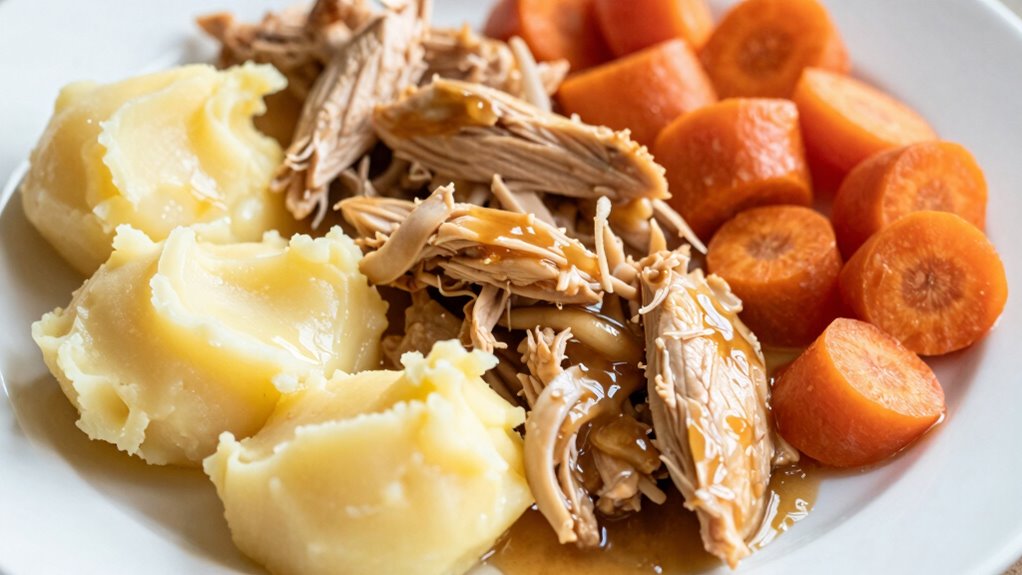

To make foods easier and safer to chew, focus on adjusting textures by softening or pureeing hard or sticky foods, using techniques like steaming, mashing, or blending. Recognize signs of chewing or swallowing difficulties, such as coughing or food sticking, and modify meals accordingly. Incorporate variety to prevent boredom, add liquids or sauces to loosen textures, and consider professional advice if needed. Keep exploring methods to improve your mealtime safety and comfort.

Turn quiet afternoons into listening time
- Thousands of audiobooks, podcasts and originals
- Listen on your phone, tablet or Echo — also offline
- Cancel anytime
Key Takeaways
- Use cooking methods like steaming, boiling, or slow cooking to soften foods and make them easier to chew.
- Mash, blend, or puree foods to achieve smooth textures suitable for easier swallowing.
- Cut foods into small, manageable pieces to reduce chewing effort and prevent choking risks.
- Add liquids such as broth, sauces, or gravies to moisten foods and improve their chewability.
- Incorporate texture-modifying techniques like shredding or using thickeners to achieve safer, more comfortable bites.
As an affiliate, we earn on qualifying purchases.
Why Meal Texture Matters for Safe Eating
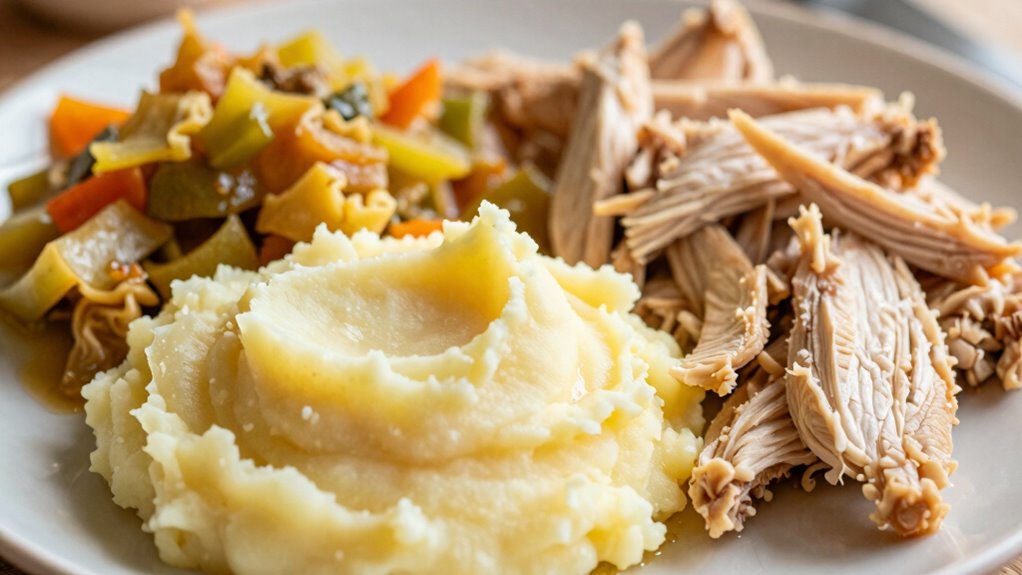
The texture of a meal plays a crucial role in ensuring safe eating, especially for individuals with swallowing difficulties or dental issues. Texture modification helps make foods easier to handle and reduces the risk of choking or aspiration. When you adjust the consistency of meals, you improve swallowing safety by preventing large, hard, or sticky pieces that can cause problems. Soft, pureed, or minced textures allow you to eat comfortably and confidently, minimizing the chance of food getting stuck or going down the wrong way. Properly modified textures also support better digestion and help maintain adequate nutrition. Additionally, understanding food safety standards related to texture modifications can further reduce risks during meals. By understanding the importance of meal texture, you can better manage safe eating practices and enjoy meals without unnecessary worry. Ensuring that texture modifications meet quality control standards helps prevent contamination and ensures consistent safety.
As an affiliate, we earn on qualifying purchases.
Recognizing Chewing and Swallowing Difficulties

Noticing signs of chewing or swallowing trouble is key to ensuring safe eating. Common causes like muscle weakness or nerve issues often lead to these difficulties. Recognizing these signs helps prevent nutritional problems and keeps mealtimes safer for you. Maintaining good indoor air quality can also support overall health, including oral and throat comfort during meals.
Signs of Difficulty
Recognizing signs of difficulty with chewing and swallowing is essential for ensuring safety and comfort during meals. If you notice texture sensitivity, where certain foods cause discomfort or refusal, it could indicate a problem. Bite aversion, where someone avoids taking bites altogether or grimaces when chewing, is another clear sign. Watch for coughing or choking during meals, which may suggest swallowing issues. Repeatedly spitting out food or difficulty forming a bolus are also red flags. Be alert to changes in pace, such as prolonged chewing or avoiding eating altogether. These signs signal that the person might struggle with specific textures or have underlying oral or swallowing challenges. Addressing these signs early helps prevent choking and promotes a positive eating experience. Additionally, projector technology features like color accuracy and contrast ratio can influence how well visual cues are conveyed during therapy or assessments.
Common Causes Identified
Difficulty with chewing and swallowing often stems from underlying medical or oral health issues. Food allergies can cause oral discomfort or swelling, making it hard to chew or swallow safely. Dietary restrictions, such as gluten intolerance or specific texture needs, may also contribute to difficulties if foods aren’t prepared appropriately. Medical conditions like jaw problems, neurological disorders, or dry mouth can impair muscle coordination and strength, complicating the chewing process. Additionally, dental issues like missing teeth or pain from cavities can hinder effective chewing. Recognizing these common causes helps you identify potential barriers to safe eating. Addressing underlying health issues or adjusting dietary choices can considerably improve your ability to enjoy meals comfortably and safely.
Impact on Nutrition
How do chewing and swallowing challenges affect your overall nutrition? When these difficulties arise, you might avoid certain foods, which can lead to a reduced intake of essential nutrients and dietary fiber. This can cause constipation or other digestive issues and limit your variety of healthy options. Additionally, difficulty swallowing raises concerns about food safety, as improperly prepared foods increase the risk of choking or aspiration. To maintain proper nutrition, you may need to modify textures, ensuring foods are easier to chew and swallow. These adjustments help preserve your intake of crucial nutrients and dietary fiber, supporting overall health. Being mindful of texture modifications also minimizes food safety risks, allowing you to enjoy a balanced diet without compromising safety or nutrition.
food thickeners for swallowing difficulties
As an affiliate, we earn on qualifying purchases.
As an affiliate, we earn on qualifying purchases.
Food Textures and How They Impact Your Eating Experience
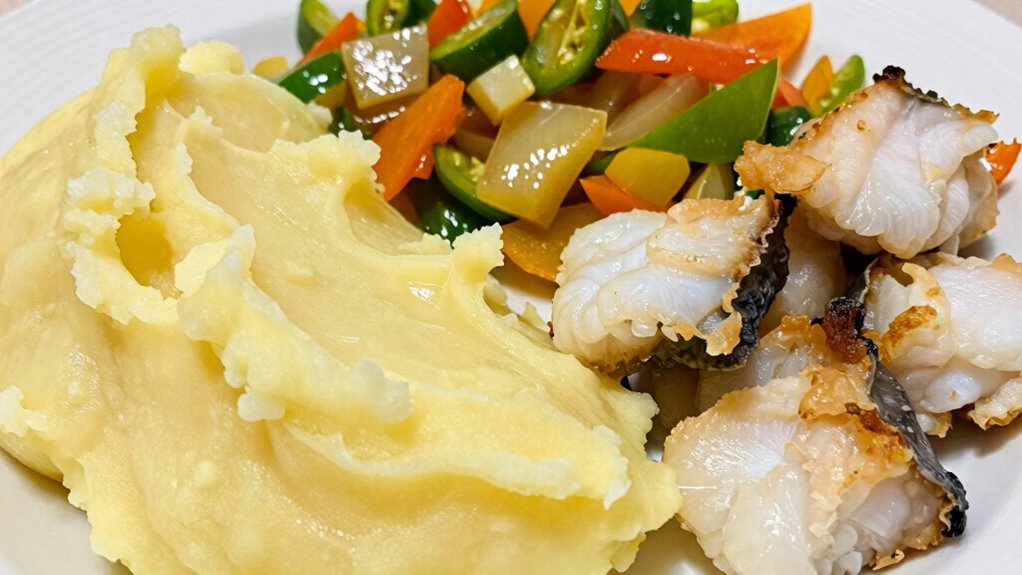
Food textures play a essential role in shaping your overall eating experience, influencing how enjoyable or satisfying a meal feels. When you explore texture variety, you engage different sensory receptors, making each bite more interesting. The right mouthfeel enhancement can turn a bland dish into a delightful experience. Consider how crispy, creamy, or chewy textures impact your perception of flavor and freshness.
| Texture Type | Sensory Effect | Example Foods |
|---|---|---|
| Crispy | Adds crunch and excitement | Fresh vegetables, chips |
| Smooth | Creates a soothing mouthfeel | Yogurt, pudding |
| Chewy | Provides satisfying resistance | Bagels, dried fruit |
meat tenderizer and softening tools
As an affiliate, we earn on qualifying purchases.
As an affiliate, we earn on qualifying purchases.
How to Identify Foods That Need Texture Modification
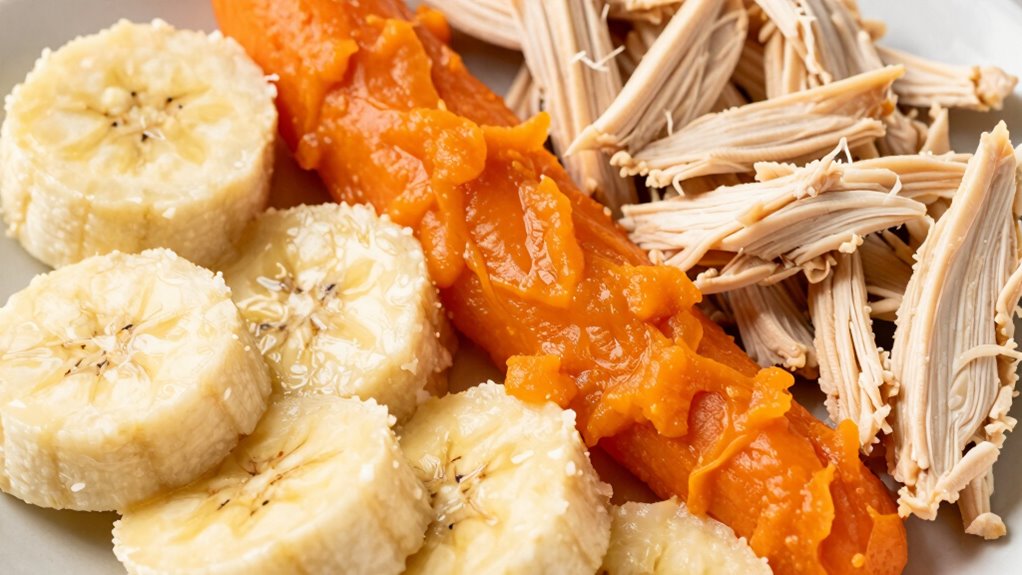
You need to watch for foods with textures that are hard to chew or swallow comfortably. Signs like coughing, choking, or food sticking can indicate a need for modification. Recognizing these cues helps you choose textures that make eating safer and more enjoyable. Being aware of *texture modification* can also involve understanding the various types of food texture and how they affect different individuals’ ability to eat comfortably. Additionally, understanding the role of quality assurance in food safety can help ensure that texture adjustments meet safety standards. Implementing food safety standards can further enhance confidence that texture modifications are both effective and safe for consumption. Incorporating creative storytelling into educational materials can also improve understanding and adherence to texture modification practices. Paying attention to individual needs ensures that modifications are tailored appropriately for each person’s safety and comfort.
Selective Food Textures
Identifying foods that require texture modification involves paying close attention to how they feel in the mouth. If a food feels too hard, sticky, or slippery, it may pose a challenge for someone with specific needs. Recognizing these issues helps you adapt meals to suit their textural preferences while maintaining food variety. For example, fruits and vegetables that are too firm can be steamed or mashed, and meats that are tough can be shredded or minced. By understanding which textures are difficult, you can select or prepare foods that are easier to chew and swallow, ensuring safety and enjoyment. Being aware of textural challenges can further assist in customizing meal preparations to improve comfort and safety. Keeping a variety of textures in mind helps prevent monotony and encourages balanced, enjoyable meals tailored to individual needs. Paying attention to food consistency can also help you identify when modifications are necessary to ensure safe swallowing. Additionally, being familiar with chewing abilities can guide you in selecting appropriate preparation methods for different individuals.
Signs of Swallowing Difficulty
Recognizing signs of swallowing difficulty is essential for ensuring safety during meals. If you notice coughing or choking during eating, it could indicate a problem with swallowing safety. Difficulty controlling food or liquids in your mouth, frequent drooling, or a sensation of food sticking can also signal trouble. Watch for changes in voice quality, such as a gurgly or wet sound after swallowing, as these may suggest aspiration risks. Fatigue while eating or a prolonged chewing process might indicate the need for texture modification. Speech therapy professionals often assess these signs to determine if foods need to be altered for safer swallowing. Being aware of these cues helps prevent choking and ensures that the food texture matches your or your loved one’s swallowing abilities. Proper piercing care and hygiene can also help prevent infections that may complicate swallowing issues. Additionally, understanding how AI-powered data analytics can track and analyze swallowing patterns could support early detection of swallowing problems.
Easy Ways to Soften Foods at Home
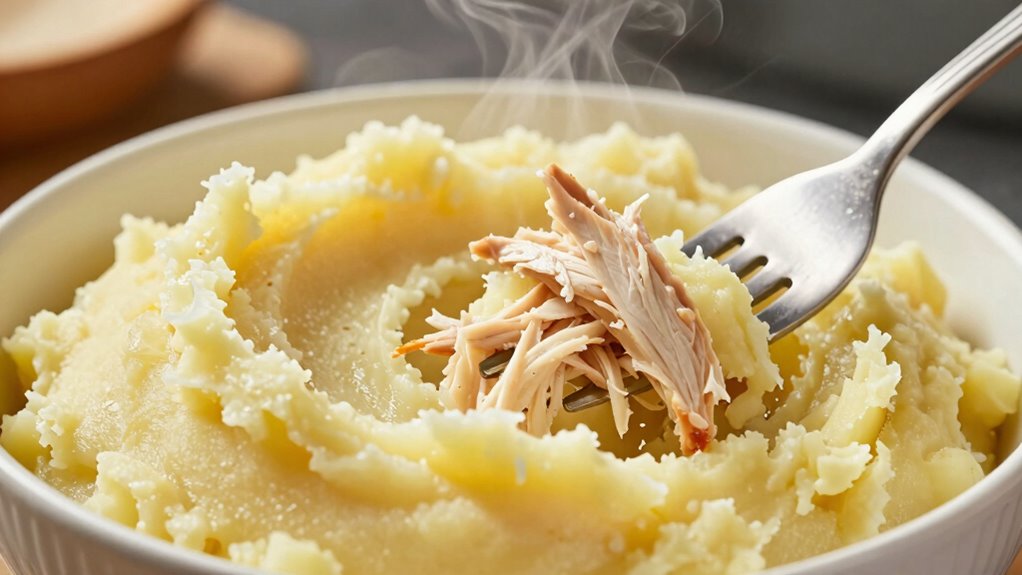
Wondering how to make tough foods easier to eat? You can soften foods at home with simple techniques that enhance texture and flavor. Soaking vegetables or meats in broth or a marinade helps break down fibers, making them easier to chew. Slow cooking or simmering in liquid softens ingredients naturally, while also boosting flavor through seasoning and moisture. Using a food processor or blender can create smooth purees, perfect for texture enhancement. Adding acidic ingredients like lemon juice or vinegar can also help tenderize tougher foods. Additionally, utilizing commercial cleaning equipment such as floor scrubbers or sensor flush valves can help maintain a hygienic kitchen environment, ensuring food preparation areas are safe and clean. Proper food safety practices are essential when handling ingredients to prevent contamination and promote optimal texture. Implementing modern kitchen tools can also streamline the process of preparing softer, more palatable dishes. Incorporating these methods can further enhance texture modification and help achieve desirable results more efficiently. These methods not only improve texture but also balance flavors, making meals more enjoyable and safer for swallowing. With these easy tips, you can transform difficult foods into tender, tasty bites that are easier to eat without sacrificing taste.
Cooking Tips to Safely Alter Food Consistency
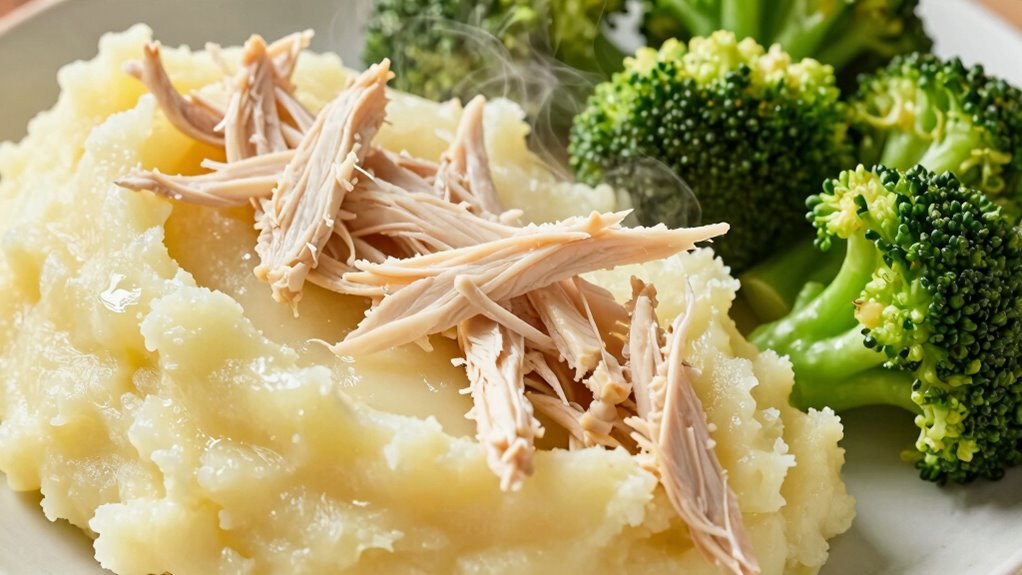
When you alter food consistency, using adaptive cooking techniques can help you achieve the desired texture without compromising safety. It’s important to apply flavor preservation methods to maintain the dish’s taste while changing its form. By carefully balancing these approaches, you can safely modify textures while enhancing flavor. Understanding seasonal variations in ingredients can also assist in selecting the best options for texture modification throughout the year.
Adaptive Cooking Techniques
Adapting food texture safely requires knowing the right techniques to modify consistency without compromising safety or nutrition. To achieve this, focus on methods like pureeing, mashing, or adding thickeners that enhance texture while maintaining flavor. You can also use moisture adjustments, such as adding broth or sauces, to improve texture and make foods easier to chew. For texture enhancement, consider incorporating small soft ingredients or well-cooked vegetables. To address flavor masking, blend strong spices or herbs into dishes, which can help cover any off-putting tastes from texture modifications. Remember to always test the consistency and flavor as you go. These techniques enable you to make meals safer and more enjoyable, especially for those with swallowing difficulties.
Flavor Preservation Methods
Preserving flavor while safely altering food consistency requires careful technique. You can use seasoning techniques to enhance taste without adding moisture that could make foods too soft. For example, add herbs or spices after cooking to maintain their potency. Flavor masking is also effective—using bold seasonings or sauces to cover blandness caused by texture adjustments. Here’s a quick guide:
| Technique | Tips |
|---|---|
| Seasoning Techniques | Add fresh herbs or spices after cooking for vibrant flavor. |
| Flavor Masking | Use sauces or condiments to cover less desirable textures. |
| Cooking Adjustments | Reduce liquids during cooking to concentrate flavors, preserving taste. |
| Proper Technique | Employ correct cooking methods to achieve the desired texture without sacrificing flavor. |
| Enhanced Flavor Retention | Incorporate technique adjustments to better preserve taste during texture changes. |
Additionally, controlling temperature during cooking can help preserve the delicate balance of flavors when modifying textures. Incorporating techniques such as proper ingredient preparation can also contribute to maintaining flavor integrity throughout the process.
Using Purees and Mashed Foods to Make Eating Easier
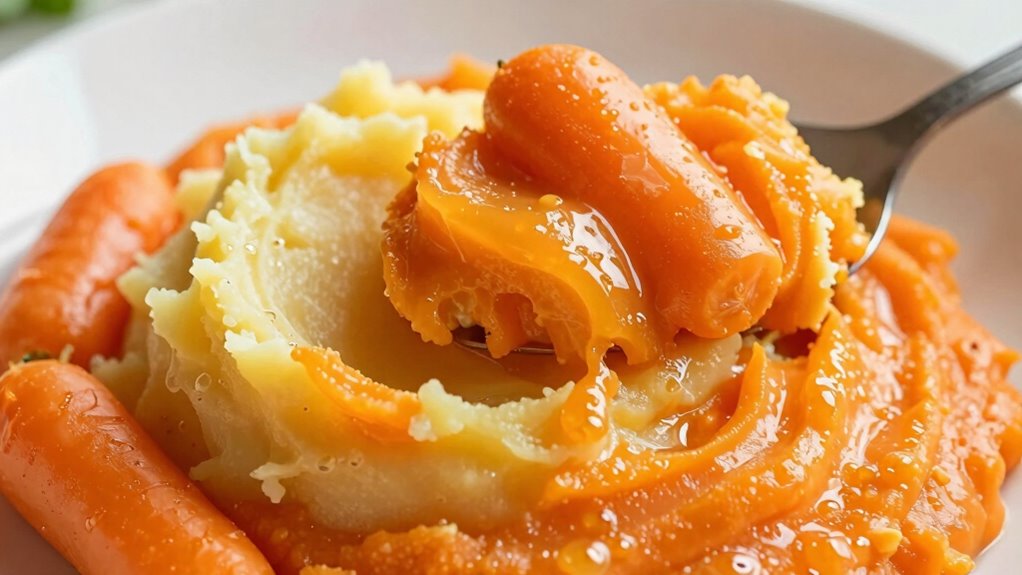
Using purees and mashed foods can substantially simplify eating for those with chewing difficulties or swallowing challenges. They provide a safer, easier way to enjoy nutritious meals while maintaining proper nutrition. To enhance texture improvement, focus on effective puree techniques that create smooth, consistent textures. You can experiment with ingredients like cooked vegetables, fruits, and proteins to achieve the desired consistency. When preparing purees, add liquids gradually to reach the right thickness, avoiding lumps. Consider using tools like food processors or blenders for a uniform texture. Additionally, seasoning lightly can boost flavor without complicating texture. Keep in mind, the goal is to make food easier to swallow while preserving taste and nutrition. Here are some tips for successful pureeing:
Puree foods for easier swallowing, flavor, and nutrition.
- Use appropriate liquids for smoothness
- Cook foods thoroughly before pureeing
- Blend in small batches for control
- Adjust consistency as needed
- Incorporate flavor enhancers subtly
Incorporating Texture-Modified Meals Into Daily Life
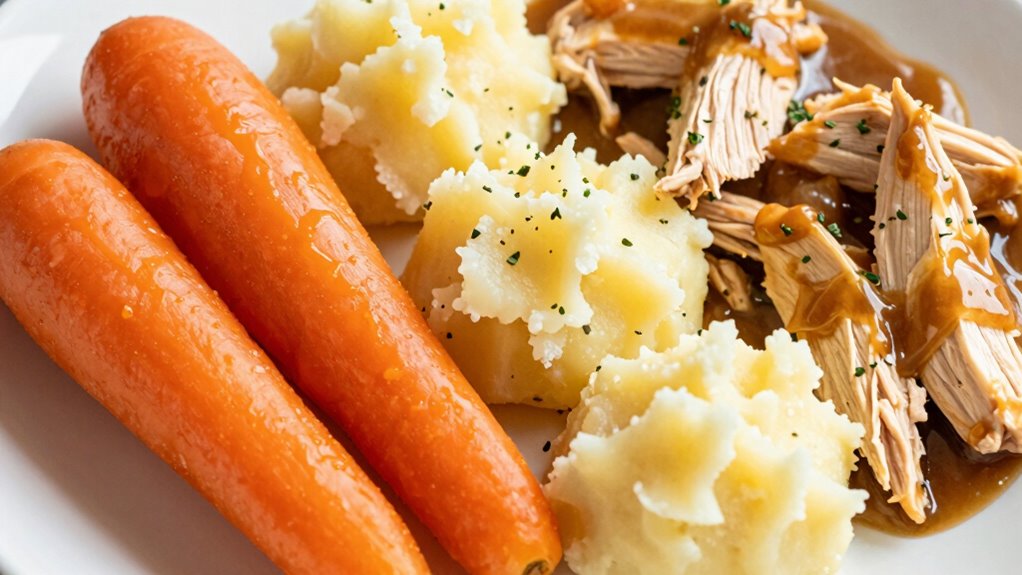
Integrating texture-modified meals into your daily routine can make dining safer and more enjoyable for those with swallowing or chewing difficulties. To do this effectively, focus on texture enhancement by ensuring foods are appropriately prepared—soft, moist, and easy to swallow—without sacrificing flavor. Present meals in an appealing way, using vibrant colors and neat plating, to encourage better meal intake and improve meal presentation. Incorporate a variety of textures that suit individual needs, making each meal both nourishing and satisfying. Planning ahead helps you maintain consistency and reduces mealtime stress. With these simple adjustments, you can create a comfortable eating environment that promotes safety, encourages appetite, and makes daily dining a positive experience.
When to Seek Professional Help for Meal Texture Issues
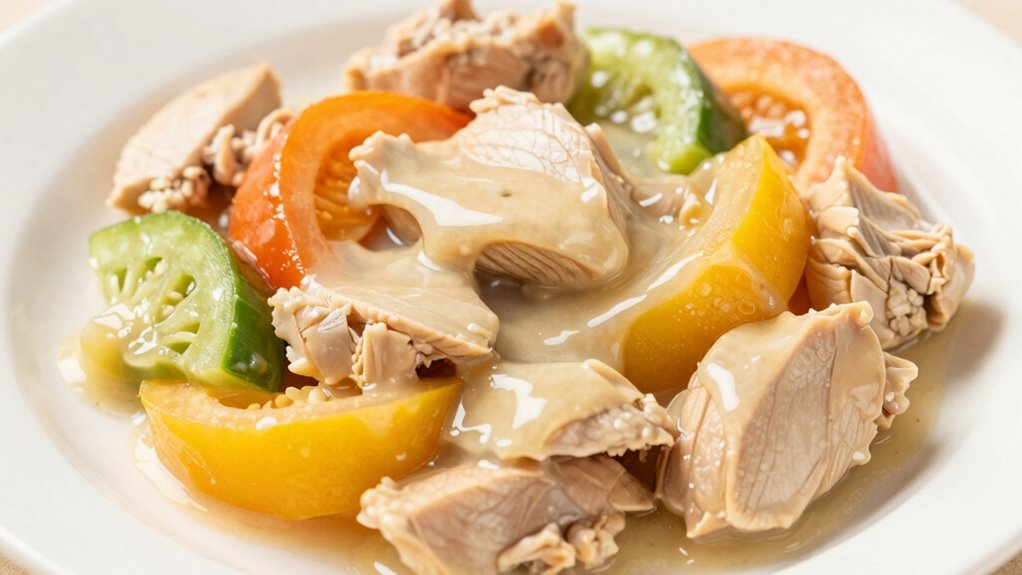
Recognizing when to seek professional help for meal texture issues is essential for ensuring safety and proper nutrition. If you notice persistent difficulty chewing or swallowing, it’s time to consult experts. Consider a dental assessment to check for underlying dental problems affecting your ability to eat comfortably. Speech therapy can help if swallowing difficulties are involved or if coordination issues exist. Seek professional advice if you experience:
- Ongoing pain or discomfort when eating
- Food getting stuck in your throat
- Recurrent choking or coughing during meals
- Significant weight loss or nutritional deficiencies
- Changes in speech or swallowing ability over time
Addressing these concerns early can prevent complications and improve your eating experience. A healthcare professional can develop personalized strategies to manage meal texture challenges safely and effectively.
Tips for Maintaining Nutrition When Modifying Food Textures
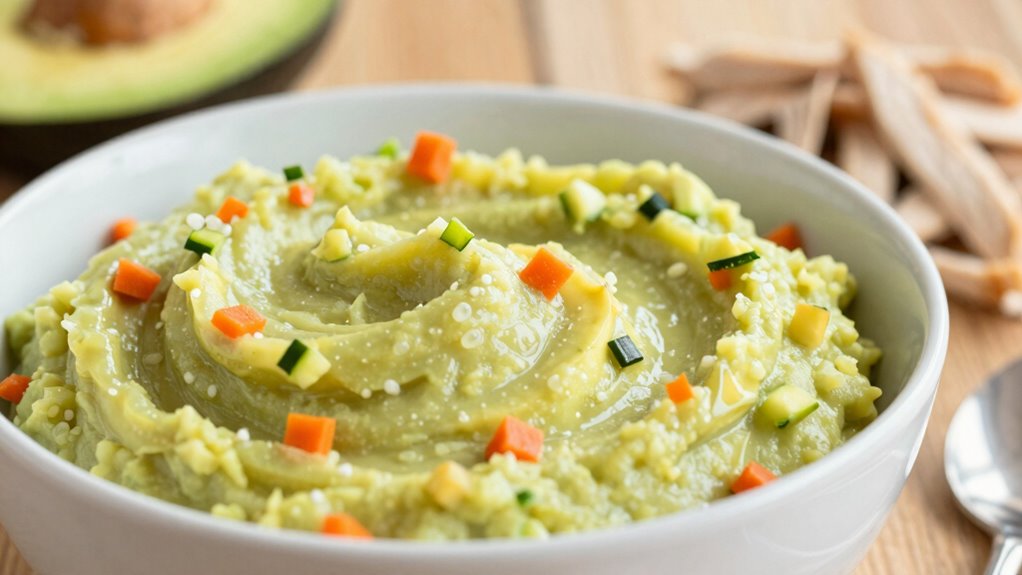
When modifying food textures to make swallowing easier, it’s important to focus on maintaining balanced nutrition. Incorporate a variety of textures to guarantee you get diverse nutrients and keep meals interesting. If you’re concerned about missing key vitamins or minerals, consider nutritional supplements to fill in gaps. Using texture variety helps prevent meal fatigue and encourages better intake of essential nutrients. Be mindful of adding protein-rich options like pureed meats or smoothies, and include fruits and vegetables in different preparations to boost fiber and antioxidants. Regularly consult with a healthcare professional or dietitian to tailor modifications and ascertain your nutritional needs are met. This approach helps you enjoy safe, enjoyable meals without compromising your overall health.
Frequently Asked Questions
What Are the Best Tools for Softening Foods at Home?
You can soften foods at home using a blender to create smooth purees or smoothies, perfect for easier chewing. Steaming methods are also effective; simply steam vegetables, fish, or fruits until tender, then mash or chop them into manageable textures. These tools help break down food fibers, making meals safer and more comfortable to eat. Combining blender techniques with steaming guarantees a variety of soft, nutritious options tailored to your needs.
How Can I Prevent Food From Becoming Too Mushy?
They say “a stitch in time saves nine,” so to prevent food from becoming too mushy, pay close attention to food consistency and your chewing techniques. Keep foods slightly firmer if possible, and avoid overcooking. Chew slowly and evenly, which helps maintain texture. Adjust cooking times or cut foods into smaller pieces to prevent mushiness, ensuring your meals stay appealing and easier to manage without losing their desired texture.
Are There Specific Diets for Texture-Sensitive Eaters?
Yes, there are texture-specific diets designed for texture-sensitive eaters, focusing on sensory-based eating. These diets help you choose foods that match your comfort level, whether you’re sensitive to certain textures or need softer options. By working with a healthcare professional, you can develop a personalized plan that promotes enjoyable, safe eating experiences while respecting your sensory preferences. This approach helps you maintain proper nutrition without discomfort.
How Do I Introduce Texture-Modified Foods to Children?
Imagine introducing a new song to a child’s playlist; you start softly, then gradually add layers. For pediatric feeding and sensory development, begin with smooth, familiar textures, slowly blending in more varied consistencies. Offer small portions, watch their reactions, and praise their efforts. Keep meals positive and stress-free. This gentle, step-by-step approach helps children adapt comfortably to texture-modified foods, making mealtime enjoyable and supporting their sensory growth.
Can Texture Modification Improve Appetite and Food Enjoyment?
Yes, texture modification can boost appetite and food enjoyment by making meals more appealing. When you focus on texture enhancement, you create varied and interesting mouthfeel that encourages eating. Plus, by ensuring flavor preservation, the food remains tasty, motivating you to eat more. Combining these strategies helps make meals more enjoyable, especially for those with difficulty chewing, ultimately increasing appetite and overall mealtime satisfaction.
Conclusion
By understanding meal textures and how to modify them, you can make eating a smoother journey, like turning rough waters into calm seas. Whether softening foods or choosing the right textures, you’re steering your dining experience toward safety and enjoyment. Remember, if you ever feel lost in these waters, seeking professional help is like having a lighthouse guiding you home. With the right tools, you’ll keep your meals safe, satisfying, and full of flavor.
Halloween Picks
halloween
As an affiliate, we earn on qualifying purchases.