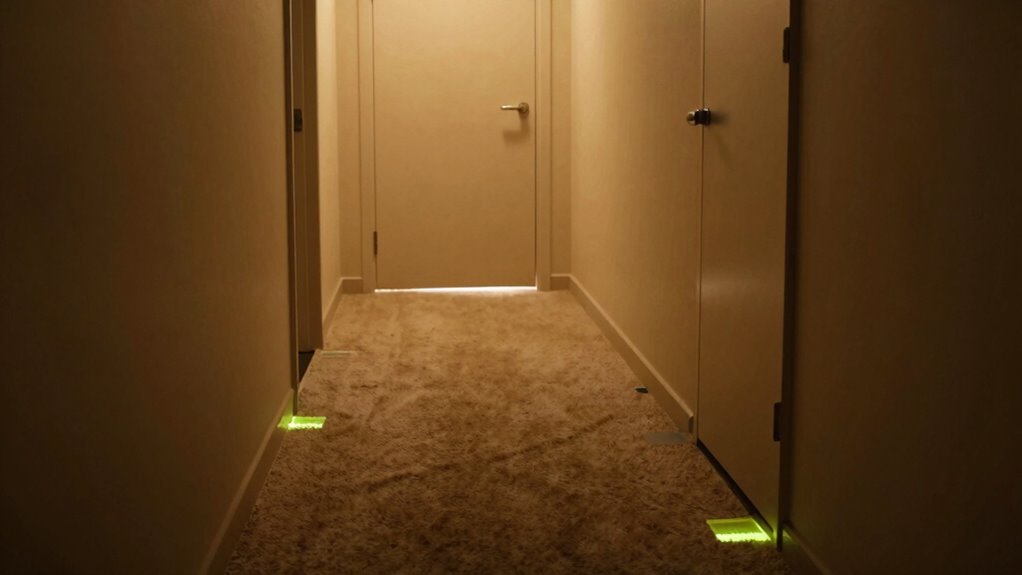

To set up a safe path to your bathroom at night, start by clearing clutter and removing obstacles that could cause trips. Install motion-activated or nightlights along the route, ensuring they are placed at eye level and cover the entire pathway. Use non-slip rugs and add visual cues like glow-in-the-dark tape or markings. Regularly check your setup and adjust lighting as needed. Keep exploring for more tips to enhance your nighttime safety effectively.
Key Takeaways
- Install motion-activated or low-level nightlights along the pathway to ensure continuous, glare-free illumination.
- Remove clutter, loose rugs, and obstacles to create a clear, unobstructed route.
- Use non-slip rugs with secure backing at key transition points like entrances and bathroom thresholds.
- Apply glow-in-the-dark tape or visual cues on door frames and along the path to enhance visibility in darkness.
- Regularly inspect and adjust lighting and safety features to maintain a safe, well-lit route over time.
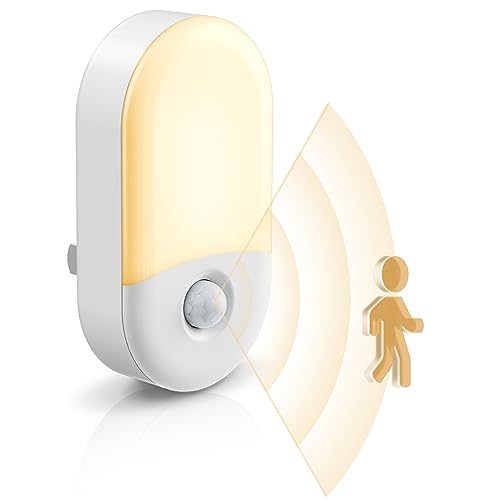
L LOHAS LED Motion Sensor Night Light, 2Pack, Motion Activated Night Light, Night Lights Plug into Wall Motion Sensor, 3000K Warm White, Adjustable Brightness 30/60LM, for Kids Adults Bathroom Bedroom
2 BRIGHTNESS LEVELS: The motion sensor night light comes with 2 different levels(30LM/60LM) of brightness control settings. You…
As an affiliate, we earn on qualifying purchases.
As an affiliate, we earn on qualifying purchases.
Identify Hazards: Why Nighttime Bathroom Safety Matters
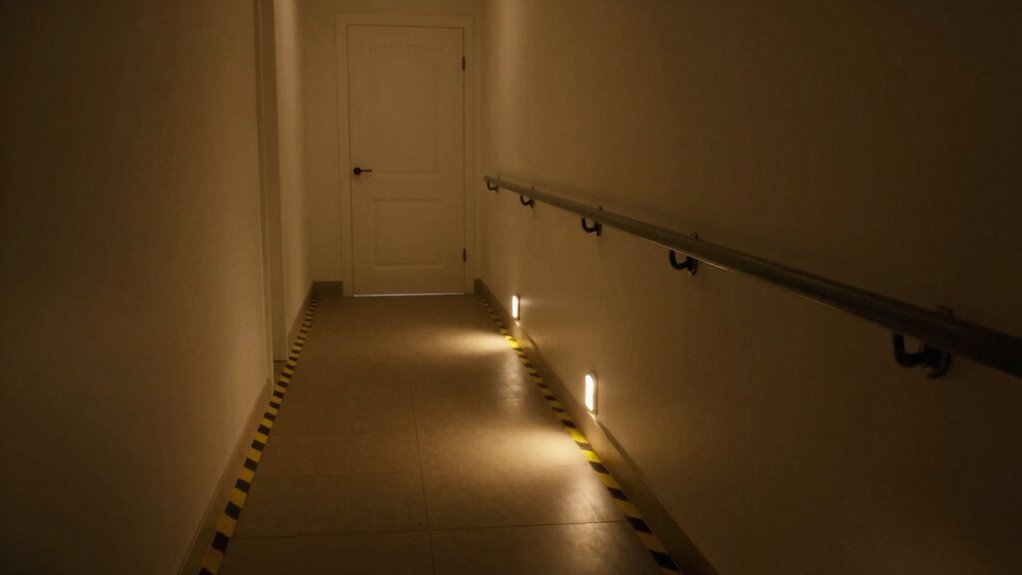
Nighttime trips to the bathroom can be risky because your senses are often less sharp in the dark, increasing the chance of accidents. That’s why hazard awareness is essential. You need to identify potential dangers like loose rugs, clutter, or uneven flooring that could cause falls. Recognizing these hazards helps you take proactive steps to prevent accidents before they happen. Clear pathways and secure loose cords or objects out of the way. Paying attention to lighting, even in small amounts, can make a big difference. Using appropriate lighting such as nightlights can greatly reduce the risk of missteps. Installing smart lighting with motion sensors can provide automatic illumination, enhancing safety. You can also consider lighting placement to ensure the entire pathway is evenly lit and free of shadows. Regularly inspecting your environment for potential hazards helps maintain a safe space. By actively evaluating your environment for hazards, you create a safer space. Proper home safety measures can significantly reduce the risk of falls and injuries during nighttime bathroom trips. This awareness not only minimizes the risk of falls but also promotes confidence during nighttime visits, making your bathroom trips safer and less stressful.

OLANLY Bathroom Rugs 30×20, Extra Soft Absorbent Chenille Bath Rugs, Rubber Backing Quick Dry, Machine Washable Bath Mats for Bathroom Floor, Tub and Shower, Home Decor Accessories, Grey
Soft and Plush Chenille – Wrap your feet in the softest, coziest chenille, creating a warm haven for…
As an affiliate, we earn on qualifying purchases.
As an affiliate, we earn on qualifying purchases.
Assess Your Space for a Safe Nighttime Path
Start by checking your path to the bathroom and remove any obstacles that could trip you up. Make sure your lighting is bright enough and well-placed to guide you safely in the dark. Taking these steps helps create a clear and illuminated route for nighttime visits. Additionally, consider adding nighttime lighting solutions to further improve visibility. Incorporating smart lighting can also help automate and customize your lighting setup for optimal safety during nighttime hours. Using natural pool landscaping techniques can also enhance visibility and safety by ensuring the area is well-maintained and free of hazards. Paying attention to home design principles can further optimize the layout for safe nighttime navigation.
Clear Obstacle Pathways
To guarantee a safe journey to the bathroom, you need to evaluate your space for obstacles that could cause trips or falls. Remove clutter and ensure clear pathways, creating strong visual cues that guide you safely. Think of your space as a simple map: obstacles block the way, making navigation risky. Additionally, consider the color accuracy of your environment, as proper lighting and visual clarity can help you identify potential hazards more easily. Furthermore, consider the nail health of your feet and toes, as strong and healthy nails can improve grip and stability when walking in the dark. Regularly checking your home safety features, such as nightlights and grab bars, can further enhance your nighttime navigation.
Adequate Lighting Placement
Proper lighting is essential for a safe trip to the bathroom, especially when traveling in the dark. Carefully consider your lighting placement to illuminate your pathway effectively. Position nightlights or motion-activated lamps along the route, ensuring they don’t create glare or shadows that could obscure hazards. During your assessment, focus on hazard identification—spot any potential obstacles or uneven surfaces that might cause trips or falls. Use multiple light sources if necessary to cover all areas and eliminate dark spots. Keep lights at a low level to avoid disturbing sleep while providing enough illumination for safe navigation. Regularly check your lighting setup to guarantee it’s functioning properly and adjust placement as needed for ideal safety. Proper lighting placement makes your pathway safer and more reliable at night, especially when considering cultural shifts that influence how we design our living spaces. Additionally, understanding lighting design principles can help optimize your setup for maximum safety and comfort. Incorporating smart lighting technology can further enhance safety by allowing automatic adjustments based on ambient light levels or motion detection. Paying attention to indoor air quality and humidity levels can also contribute to a more comfortable and safe sleeping environment, especially in bedrooms adjacent to bathrooms. Maintaining good ventilation can prevent mold buildup and ensure a healthier atmosphere during nighttime visits.

SWRT Glow in The Dark Tape 33FT x 0.5Inch, Long-Lasting Bright Fluorescent Glow Tape for Easter Decorations Strong Adhesive Waterproof Glow in The Dark Stickers for Night Decorations, Stairs,Exit Sign
【Long-Lasting Illumination】Our 33FT X 0.5Inch Glow in the dark tape can automatically glow after briefly absorbing indoor and…
As an affiliate, we earn on qualifying purchases.
As an affiliate, we earn on qualifying purchases.
Choose the Best Lighting Options for Night Safety
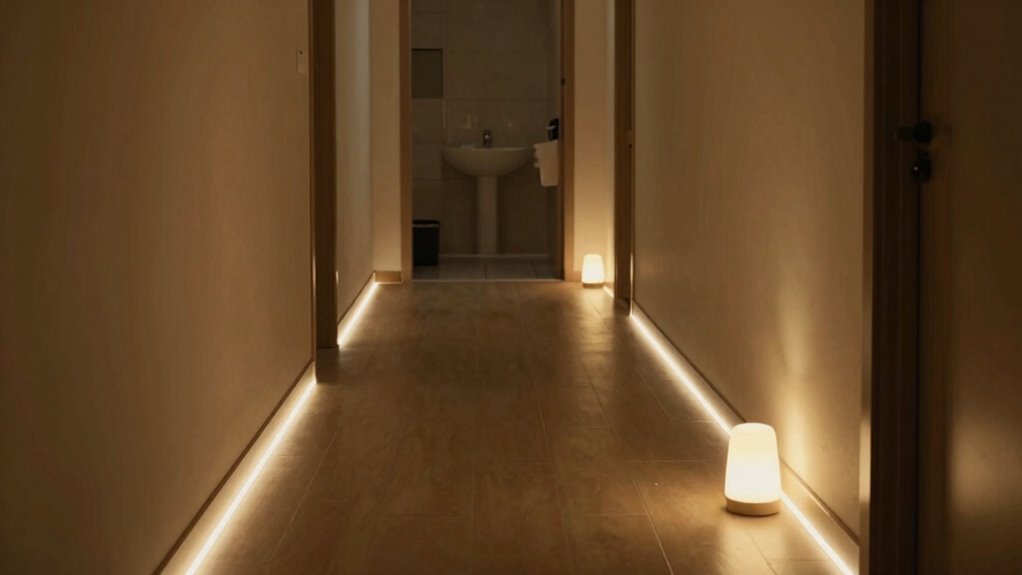
Choosing the right lighting can make a big difference in your safety at night. Soft, warm lights create a calming atmosphere while still helping you see clearly. Motion-activated lights turn on only when needed, preventing sudden glare and conserving energy. Additionally, opting for smart lighting controls allows you to customize brightness levels and schedules for optimal safety. Integrating lighting automation can further enhance convenience and ensure your path remains safely illuminated throughout the night. Incorporating weather-resistant fixtures and appropriate vehicle protection concepts, such as weather-resistant covers, can also help safeguard outdoor lighting fixtures from damage and extend their lifespan. Considering whole-home system efficiency can ensure your lighting setup operates effectively without unnecessary energy waste.
Soft, Warm Lighting
Soft, warm lighting creates a calming atmosphere that helps you navigate your way safely at night. This gentle ambient glow reduces harsh shadows and minimizes glare, making it easier to see your path without startling your eyes. Soft illumination, such as dimmable LED or night lights, provides enough light to avoid obstacles and prevent falls. Opt for fixtures with warm color temperatures—around 2700K to 3000K—that promote relaxation and comfort. Position these lights strategically along your safe path, especially near the bathroom entrance and along hallways. Avoid bright or cold lighting that can be jarring or disorienting. Instead, focus on creating a soothing environment that guides you smoothly and safely during nighttime trips. Understanding lighting options can help you choose the most effective fixtures for enhanced safety. Incorporating appropriate lighting design can further improve visibility and safety during your nighttime routines. Additionally, choosing energy-efficient lighting ensures that your safety measures are sustainable and cost-effective over time. Incorporating proper fixture placement can also prevent shadows that might otherwise cause confusion during nighttime navigation.
Motion-Activated Illumination
Motion-activated lighting automatically turns on when you enter a room or approach your bathroom, guaranteeing you never have to fumble for switches in the dark. Proper sensor placement is key—place sensors at entry points and along your pathway to detect movement effectively. Choose a light color that’s gentle on your eyes, such as soft white or warm amber, to avoid harsh glare and create a calming atmosphere. When setting up, consider these tips:
- Position sensors at an ideal height for detection
- Avoid placing sensors near heat sources or vents
- Select light colors that provide enough illumination without being too bright
- Use adjustable sensors to customize sensitivity and prevent false triggers
- Incorporate smart lighting features to enhance convenience and energy efficiency
This setup guarantees quick, safe lighting when you need it most, reducing the risk of accidents.

Smart Motion Sensor Night Light – 5-in-1 Rechargeable Automatic Nightlights, Plug-in & Portable Emergency Light Flashlight, Power Outage & Hurricane Preparedness for Home, Kids, Hallway, Nursery
Essential for Every Home: Five-in-One Multi-Use Light – Motion-Sensor Night Light, Emergency Power-Outage Light, Reading Light, Portable Flashlight,…
As an affiliate, we earn on qualifying purchases.
As an affiliate, we earn on qualifying purchases.
Clear Clutter and Remove Obstacles
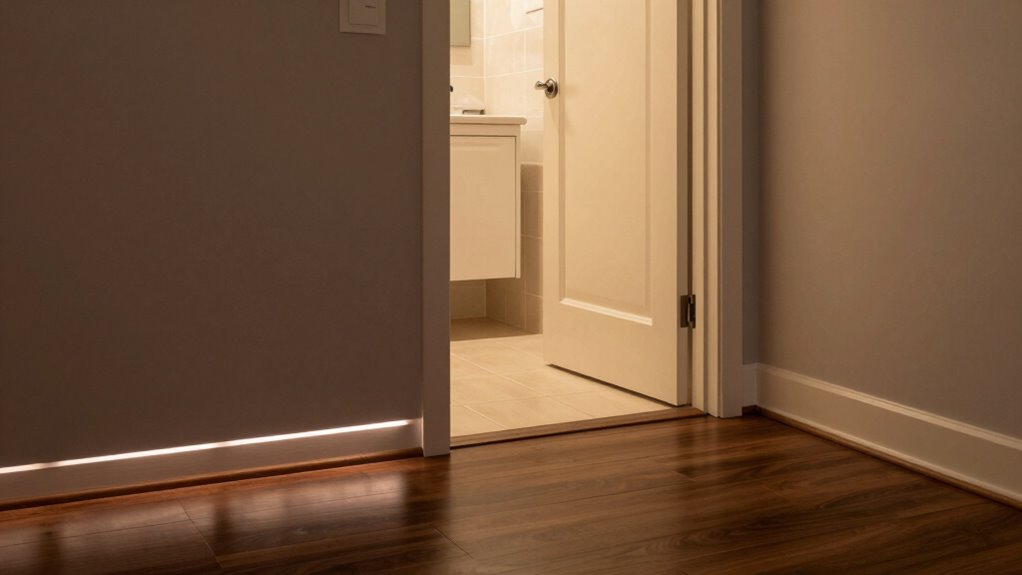
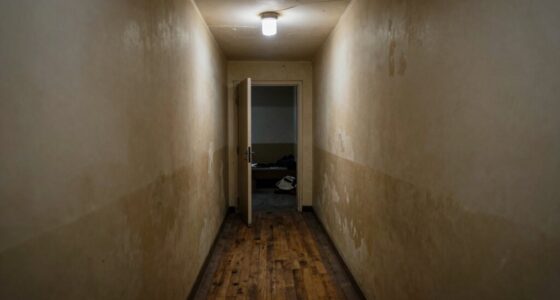
To guarantee a safe path to the bathroom at night, you need to clear clutter and remove obstacles from your route. Medication side effects, like dizziness or balance issues, can increase your fall risk, especially if your pathway is cluttered. Sleep disturbance may cause you to wake suddenly and stumble over objects, so keeping the area tidy helps prevent accidents. Remove loose rugs, cords, and unnecessary furniture that could trip you. Ensure the floor is dry and free of spills. Keep shoes or slippers nearby to avoid searching in the dark. Regularly check your route for new hazards, and organize items so they don’t block your way. A clear, obstacle-free path minimizes risks and makes nighttime bathroom visits safer and less stressful.
Install Motion-Activated Lights for Easy Navigation
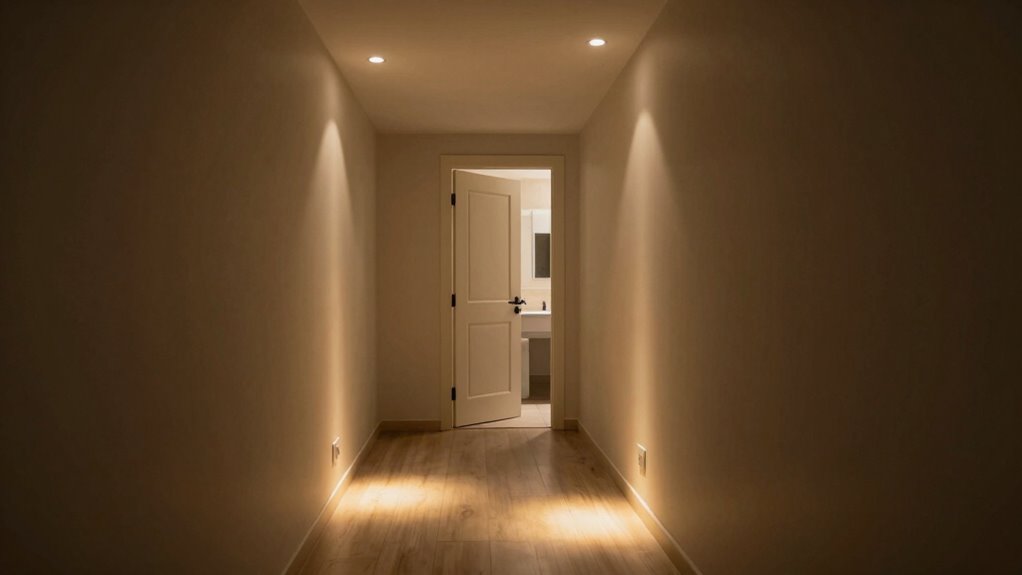
Installing motion-activated lights is an effective way to illuminate your path to the bathroom at night without needing to fumble for switches. Proper light placement guarantees you’re visible without harsh glare. Position the motion sensor so it detects movement from your bed or doorway, avoiding false activations. Consider placing lights along the hallway or near the bathroom entrance for seamless navigation.
Key points to remember:
- Use motion sensors with adjustable sensitivity
- Mount lights at a height that covers the entire path
- Avoid placing lights where they’ll be blocked
- Test placement to prevent false triggers
Use Non-Slip Rugs and Mats to Prevent Slips
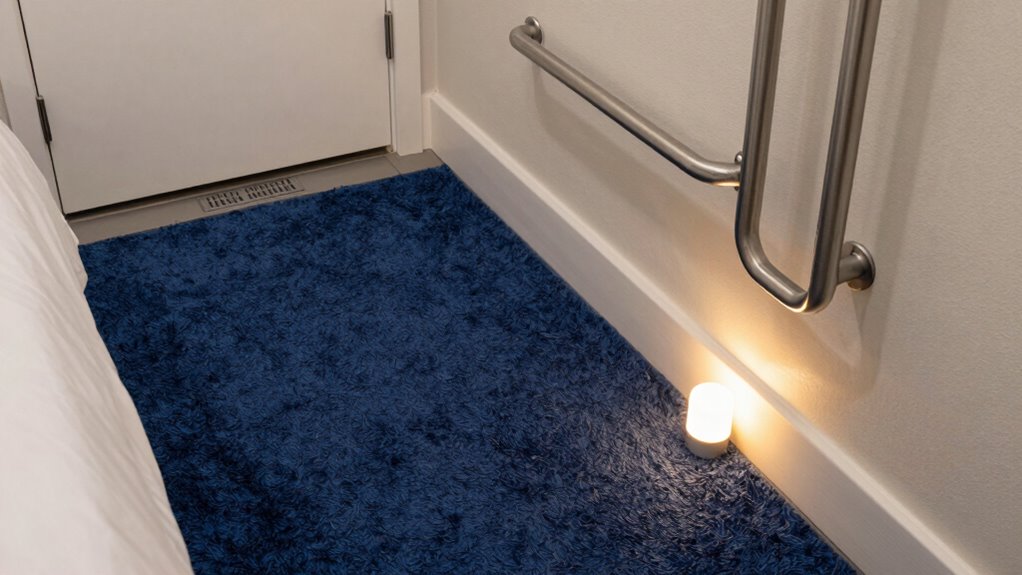
Adding non-slip rugs and mats along your path to the bathroom can considerably reduce the risk of slips and falls during nighttime trips. Proper rug placement is key to slip prevention; position rugs at the bathroom entrance, along the hallway, and just outside the shower or bathtub. Ensure each rug has a non-slip backing to stay securely in place, especially on smooth or wet floors. Avoid overlapping rugs that can cause tripping hazards, and replace any that become worn or frayed. By strategically placing these non-slip mats, you create a safer surface that minimizes sliding. This simple step greatly enhances slip prevention, helping you move confidently and securely through your nighttime routine.
Add Visual Cues to Guide Your Path in the Dark
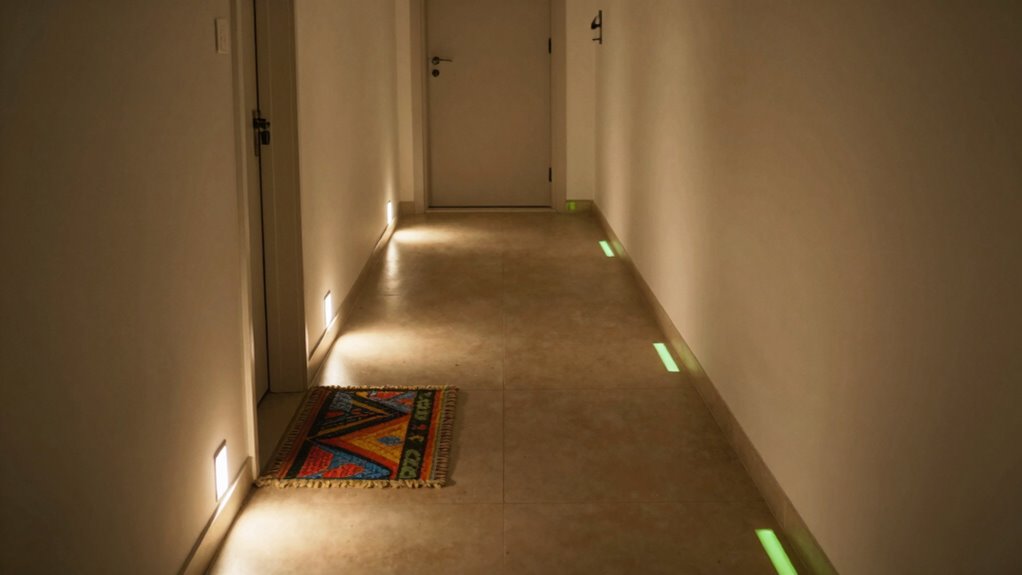
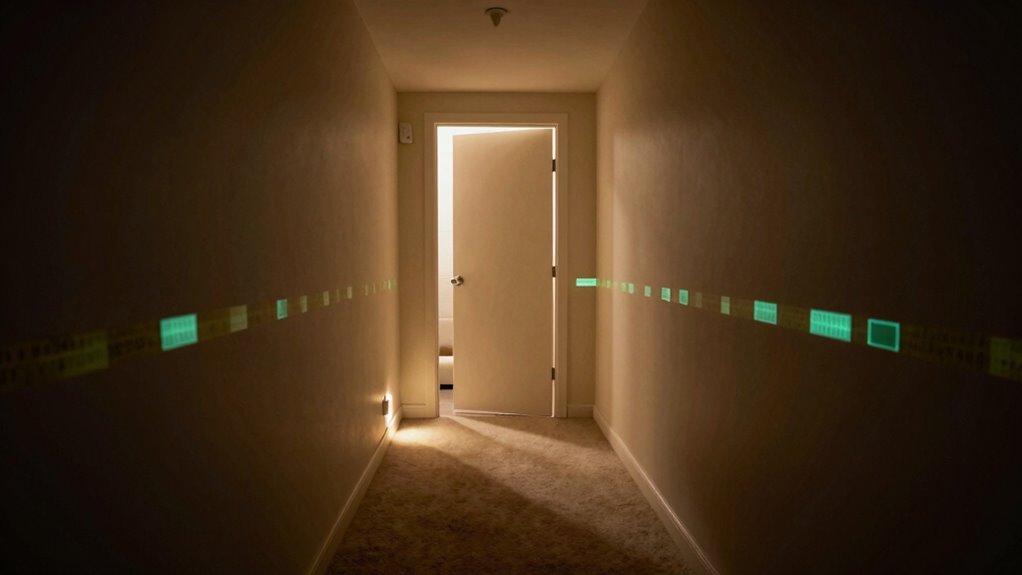
When steering your way to the bathroom in the dark, visual cues can make a significant difference in safety. Use floor markings or glow-in-the-dark tape to create clear guides along your path. These cues help you stay oriented and avoid obstacles, reducing the risk of falls. Consider applying glow-in-the-dark tape to key areas such as door frames, steps, or the edges of hallways. Additionally, floor markings can delineate safe zones or highlight potential hazards. Here are some effective ideas:
- Apply glow-in-the-dark tape along the hallway walls
- Mark the bathroom door frame for quick identification
- Use floor markings to indicate steps or changes in floor level
- Create a visual boundary around cluttered areas
These cues provide immediate, visible guidance, ensuring a safer, more confident journey at night.
Regularly Check and Improve Your Safe Path
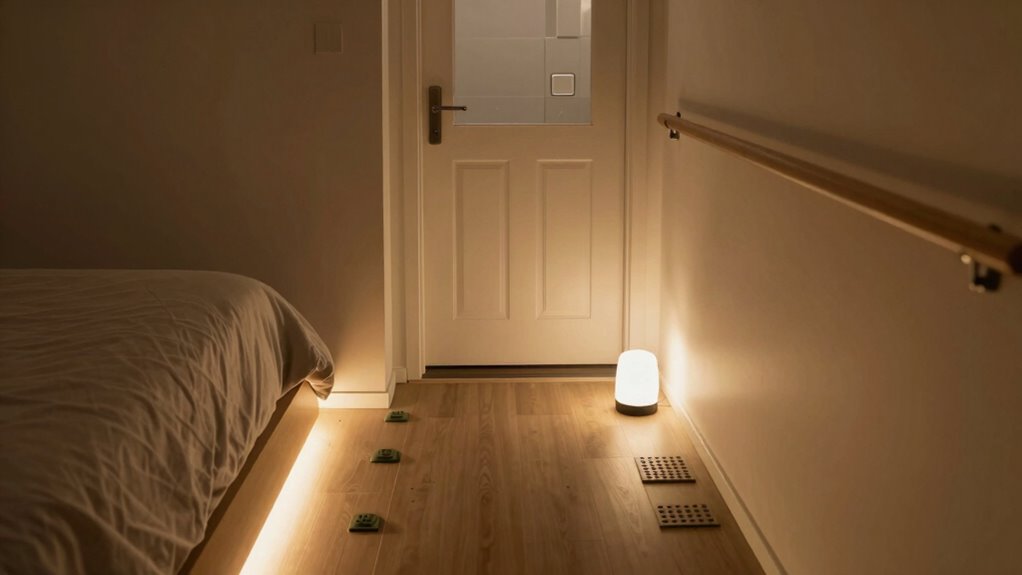
To guarantee your path remains safe over time, you need to regularly check and improve it. Start by inspecting your lighting setup—consider lighting upgrades if certain areas are dim or shadows create hazards. Bright, consistent lighting reduces the chance of missteps. Next, perform hazard identification: look for new obstacles, loose rugs, or clutter that may have appeared. Clear any debris or objects that could cause trips. Regularly testing your path ensures that your safety measures stay effective. Adjust lighting as needed and address potential risks immediately. Staying proactive in maintaining your safe path helps prevent accidents and keeps your nighttime trips secure. Making these small adjustments regularly ensures your route remains clear, well-lit, and safe for every night-time visit.
Tips for Staying Safe During Nighttime Bathroom Trips
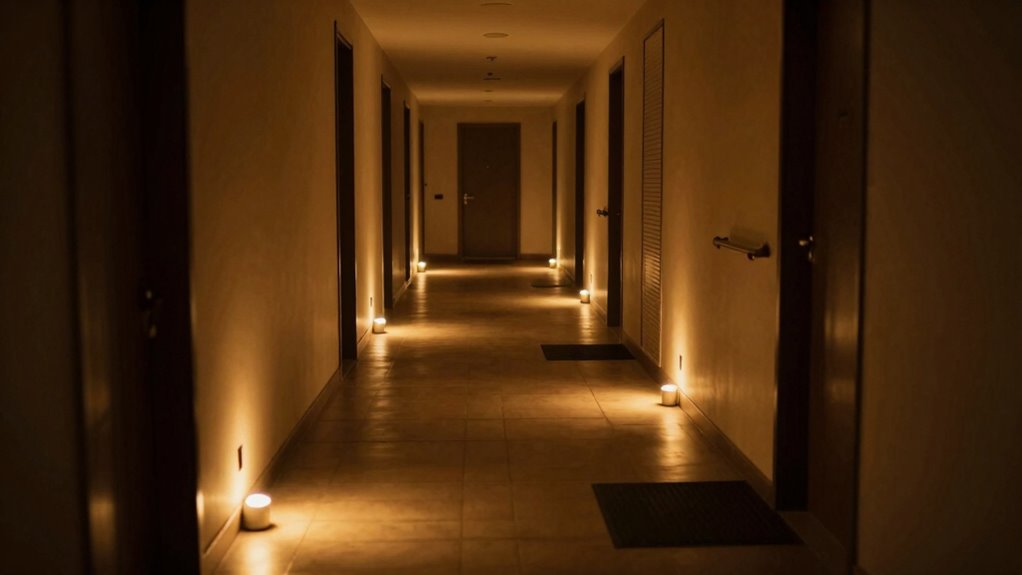
Staying safe during nighttime bathroom trips requires deliberate precautions, especially since visibility is limited. To minimize risks, follow proper bathroom etiquette, like turning on a soft light before entering and avoiding clutter. Managing your nighttime hydration helps reduce the need to wake frequently, but if you do, be mindful of your surroundings. Keep these tips in mind:
- Use motion-activated or low-wattage lighting for gentle illumination
- Keep pathways clear of obstacles and loose rugs
- Wear non-slip slippers to prevent falls
- Stay alert and avoid rushing, especially if you’re groggy
These steps help you navigate safely, reduce dizziness, and avoid accidents. Being cautious and prepared ensures a safer, more comfortable nighttime routine.
Frequently Asked Questions
How Can I Prevent Falls if I Have Limited Mobility?
To prevent falls with limited mobility, you should use assistive devices and mobility aids like grab bars, walkers, or canes. Make sure pathways are clear of obstacles, and install good lighting to improve visibility. Take your time moving, and consider using a bedside commode if walking is difficult. Regularly check and maintain your equipment to keep it safe and reliable. These steps help you stay safe and independent at night.
Are There Specific Lighting Colors Better for Nighttime Visibility?
You should choose lighting colors with a warm color temperature, like soft yellows or amber, which reduce glare and help your eyes adjust at night. Avoid blue or cool white lights, as they can cause discomfort and make it harder to see clearly. Using warm-colored lights creates a gentle glow, improving nighttime visibility and helping you navigate safely without disturbing your sleep or causing disorientation.
What Are Affordable Ways to Improve Bathroom Safety on a Budget?
Think of your bathroom safety as building a sturdy bridge over a river. You can enhance safety on a budget with simple modifications like installing non-slip mats, adding grab bars, and using affordable safety accessories. These small, cost-effective upgrades create a safer space, helping you avoid falls. With a few budget modifications, you guarantee your bathroom becomes a secure and reliable path, especially during those tricky nighttime visits.
How Often Should I Check My Night Safety Setup for Effectiveness?
You should perform nightly checks on your safety setup every few weeks to guarantee it’s still effective. Regular safety reassessment helps identify any hazards or needed adjustments, especially if your environment changes. Keep an eye out for loose rugs, clutter, or faulty lighting. By staying vigilant and conducting these checks consistently, you ensure your path remains safe, reducing the risk of falls or accidents during nighttime bathroom trips.
Can Technology Like Voice-Activated Lights Enhance Safety?
Yes, technology like voice-activated lights can considerably enhance your safety. Smart sensors and motion detection systems automatically turn on lights when you approach, reducing the risk of trips or falls. You can control these devices with your voice, making it easier to navigate in the dark. Regularly check that your smart sensors are functioning properly and that the motion detection is responsive to ensure you stay safe during nighttime visits.
Conclusion
Creating a safe path to your bathroom at night can prevent falls and injuries, giving you peace of mind. By evaluating your space, adding the right lighting, and removing hazards, you make nighttime visits safer and easier. Isn’t your safety worth a few simple improvements? Take these steps today to ensure you can navigate your home confidently even in the dark. After all, preventing accidents is just a few smart changes away.