

The 5-Minute “Doorway Test” is essential for ensuring your wheelchair fits through your home’s entryways without hassle. You’ll want to measure the door width accurately, considering both frame and swing direction. Think about wheelchair types—manual or power—and their width. Key features like safety, comfort, and lightweight design matter too. Don’t rush the decision; testing various models is vital. If you want to avoid common pitfalls and enhance daily mobility, there’s more to explore.
Key Takeaways
- Measure doorway width accurately, ensuring at least 32 inches for comfortable wheelchair passage and maneuverability.
- Consider wheelchair types; manual models are narrower, while power chairs may need more space.
- Always test wheelchair fit in person, focusing on comfort and necessary adjustments for a personalized experience.
- Assess mobility needs and daily environments to choose a wheelchair that meets specific lifestyle requirements.
- Evaluate post-purchase adjustments and home accessibility upgrades to enhance overall mobility and comfort.
Why the Doorway Test Is Essential for Wheelchair Buyers

When you’re shopping for a wheelchair, the doorway test is vital to confirm you can navigate your home comfortably. You’ll want to verify that your new chair can fit through every doorway without hassle. Accessibility considerations play a significant role here; if your wheelchair doesn’t fit, you could face unnecessary mobility challenges. Think about tight spaces or narrow hallways that might restrict your movement. The last thing you need is to feel trapped in your own home. By performing the doorway test, you can confidently assess whether your chosen wheelchair meets your needs. It’s a simple yet vital step that helps prevent frustration and guarantees your mobility remains smooth and efficient in your daily life.
How to Measure Your Doorway Width Accurately?

Measuring your doorway width accurately is essential for finding the right wheelchair. You’ll need a few simple tools, and I’ll guide you through the process step-by-step. Let’s get started so you can guarantee a smooth fit.
Tools You’ll Need
To accurately measure your doorway width, you’ll need a few essential tools. First and foremost, grab a reliable measuring tape. This tool will help you get precise measurements, which is vital when selecting a wheelchair. You’ll also want a notepad to jot down your measurements, ensuring you don’t forget them later. A pencil can come in handy for quick notes or to mark important points. If you have a second person available, their assistance can make the process smoother, especially when holding the measuring tape in place. Finally, a smartphone can be useful for taking photos of the doorway and sharing measurements with suppliers. With these tools, you’ll be well-prepared to measure your doorway width accurately.
Step-By-Step Measuring Guide
Accurate measurements are essential for guaranteeing your wheelchair fits through doorways without any hassle. Start by using a tape measure to determine the width of your doorway. Measure from the inner edge of one door frame to the other. Don’t forget to account for any door trim or molding that could affect accessibility considerations.
Next, check if the door swings inward or outward; this can impact doorway safety. If you’re measuring for a specific wheelchair, consider its width too. Ideally, you want at least a couple of inches of clearance on each side for smooth passage. Additionally, knowing the filtration/suction basics will help you maintain a clean environment for your wheelchair. By following this guide, you’ll guarantee your wheelchair can navigate through your home with ease, avoiding any potential buying disasters.
What Types of Wheelchairs Fit Through Your Doorway?

When choosing a wheelchair, knowing what types can fit through your doorway is essential. Manual wheelchairs typically have a narrower frame, making them easier to maneuver through tight spaces. Power wheelchairs, while more spacious, often require a bit more width. If space is a concern, consider folding options that can be compacted for easier access. Look for adjustable features that can enhance usability without sacrificing doorway fit. Think about outdoor usability too; some designs are better suited for various terrains. Pay attention to weight capacity and custom designs that meet your needs. Finally, aesthetic choices can reflect your personal style while ensuring functionality in your space. Choose wisely, and you’ll avoid any buying disasters!
Key Features to Look for in a Wheelchair
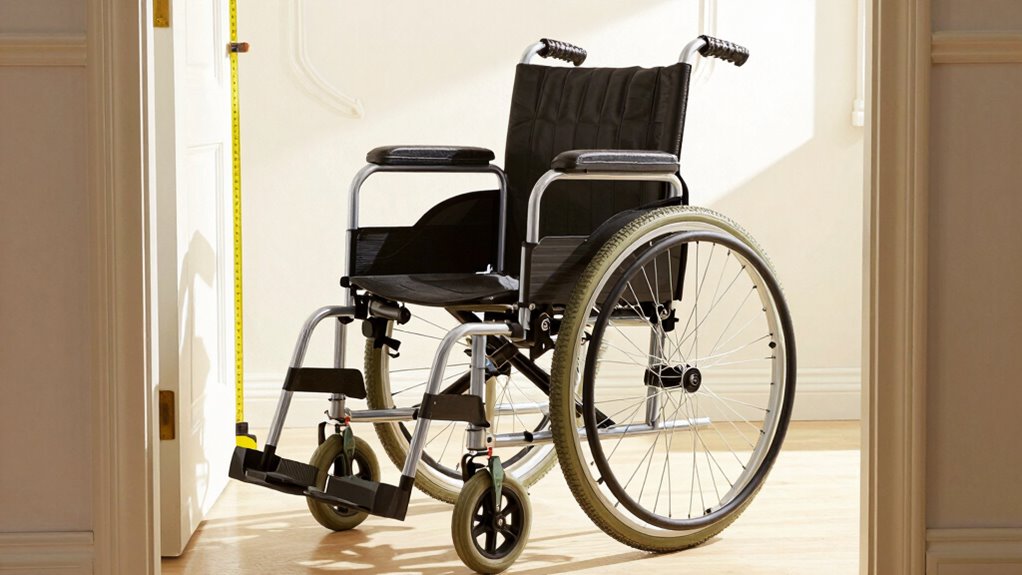
Certainly! Here’s the revised content with the requested addition:
—
After confirming your wheelchair fits through your doorway, it’s time to contemplate the key features that will enhance your mobility and comfort. Different wheelchair types come with various features, so here’s what to prioritize:
- Safety Features: Look for models with secure brakes and anti-tip mechanisms to guarantee stability. Incorporating acoustic drum shields can help create a quieter environment, which is essential for those with sensitivity to noise. Additionally, having essential home safety tips in mind can significantly improve overall safety in your living space. Enhancing your environment with evidence-based insights can further promote comfort and reduce stress. Homes equipped with security systems are less likely to experience burglaries, creating a safer space for mobility.
- Adjustable Components: Consider wheelchairs with adjustable footrests and armrests for personalized comfort.
- Portability: If you’re often on the go, choose a lightweight design that’s easy to transport. Additionally, incorporating smart home safety solutions can further enhance your overall mobility experience.
—
Let me know if you need any further adjustments!
How to Maneuver Your Wheelchair in Narrow Spaces

Maneuvering your wheelchair in narrow spaces can be tricky, but understanding your chair’s dimensions is key. You’ll also want to practice making tight turns to navigate those tight spots smoothly. With a little practice, you’ll feel more confident in any environment.
Understanding Wheelchair Dimensions
Understanding wheelchair dimensions is crucial, especially since maneuvering through narrow spaces can be challenging. To navigate effectively, you’ll need to take into account the following:
- Wheelchair Width: Measure your wheelchair’s width, as this directly affects your ability to pass through tight spots. Ensuring you have a clear understanding of wheelchair specifications can prevent issues before they arise. Additionally, be aware that indoor air quality can influence your overall comfort and health while using your wheelchair indoors.
- Doorway Clearance: Verify doorways are at least 32 inches wide to accommodate most wheelchairs comfortably. Having safe home environments is essential for enhanced mobility and peace of mind. Additionally, consider the importance of power protection standards to ensure that any electrical devices used in these spaces remain safe and functional.
- Turning Radius: Know your wheelchair’s turning radius; a tighter radius allows for better navigation in confined areas. Additionally, understanding accessories we actually use can enhance your maneuverability and overall experience.
Practicing Tight Turns
As you navigate tight spaces, practicing your turning skills can make a significant difference in your wheelchair experience. Start by identifying areas in your home or surroundings where you often face challenges. Use maneuvering techniques like the “T-turn,” where you pivot on one wheel while steering. This allows you to rotate in confined areas without needing extra room.
Also, practice using your arms to help guide your movements; they can provide extra control. Remember to keep an eye on your surroundings to anticipate obstacles. With consistent practice, you’ll find that tackling tight spaces becomes easier, boosting your confidence and independence in daily activities. So grab a bit of time, and start honing those skills today!
Avoid These Common Wheelchair Buying Mistakes

When you’re in the market for a wheelchair, skipping essential considerations can lead to costly mistakes. To guarantee you make the right choice, keep these common pitfalls in mind:
When choosing a wheelchair, consider essential factors to avoid costly mistakes and ensure a comfortable fit.
- Ignoring wheelchair accessories: Don’t forget about options like cushions or trays that enhance functionality and comfort.
- Overlooking seating adjustments: Confirm the wheelchair fits your body. Proper seating adjustments can prevent discomfort and health issues.
- Rushing the decision: Take your time to evaluate different models and features. Testing them in-person can help you find the best fit.
Assess Your Mobility Needs Before Choosing a Wheelchair

Before settling on a wheelchair, it’s essential to assess your mobility needs. Start with a mobility assessment to understand your daily activities and environments. Consider whether you’ll navigate tight spaces at home or require outdoor durability. Think about your physical capabilities and how much assistance you might need. Understanding your budget constraints can also help you make informed choices about the wheelchair options available.
Explore various wheelchair options that align with your lifestyle, whether it’s a lightweight model for easy transport or a more robust option for outdoor use. Don’t forget to factor in comfort, adjustability, and any necessary features, such as leg rests or storage. By carefully evaluating your needs upfront, you can avoid costly mistakes and guarantee you choose a wheelchair that truly enhances your mobility. Additionally, remember that personalized in-home care can provide valuable insights into your specific needs and preferences.
What to Test When Trying Out a Wheelchair

Trying out a wheelchair is vital for guaranteeing it fits your unique needs. Before making a decision, focus on testing these key wheelchair features:
- Maneuverability: Check how easily you can turn and navigate tight spaces.
- Weight and Portability: Assess if the wheelchair is light enough for you to transport and handle.
- Adjustability: Confirm the seat height and armrests can be customized for your comfort.
These mobility aids should enhance your daily activities, so take your time during the trial. Pay attention to how the wheelchair feels while moving and whether you can operate it with ease. A good fit will empower you, making your daily life smoother and more enjoyable. Don’t rush; it’s vital to find the right match!
Ensuring Comfort in Your Wheelchair

Finding the right wheelchair means ensuring it feels comfortable for your daily use. When you’re trying out a wheelchair, focus on wheelchair comfort first. Make sure the seat depth and width suit your body; you shouldn’t feel pinched or overly constrained. Don’t hesitate to make seating adjustments—many wheelchairs offer customizable options like tilt and recline. These features can greatly enhance your comfort, especially during long periods of sitting. Check the cushion material, too; it can impact your overall experience. Remember, a comfortable wheelchair can make a world of difference in your mobility and daily activities. Take the time to test various models and find the one that feels just right for you.
What to Do After the Doorway Test

Sure, here’s the enhanced content following your directions:
—
Once you’ve completed the doorway test, it’s crucial to assess how well the wheelchair fits your lifestyle. Consider what adjustments or upgrades you might need for ideal use.
- Post purchase adjustments: Check if the seat height or armrests need tweaking for your comfort.
- Accessibility upgrades: Think about how the wheelchair interacts with your home environment. Do you need ramps or wider pathways?
- Trial runs: Take the wheelchair for a spin in various settings—your home, work, or favorite spots—to see how it handles. Additionally, ensure that your new wheelchair promotes overall well-being by aligning with ergonomic principles for optimal comfort.
—
Let me know if you need any further adjustments!
Frequently Asked Questions
What Is the Average Width of Standard Doorways?
The average width of standard doorways is typically 32 inches, which meets most accessibility standards. However, if you’re considering wheelchair access, it’s smart to check specific doorway measurements in your home. Wider doorways, around 36 inches, provide better maneuverability. When shopping for a wheelchair, make certain it fits comfortably through your doorways to avoid any hassle. Always double-check your measurements to guarantee a smooth changeover throughout your living space.
Can I Modify My Doorways for Wheelchair Access?
Yes, you can modify your doorways for wheelchair access. Start by measuring your current doorway measurements to guarantee they meet the recommended width for accessibility features. Widening the doorway might involve removing trim or even restructuring the frame. Consider adding ramps or automatic door openers for easier access. It’s crucial to verify your modifications comply with local building codes to create a safe and functional environment for wheelchair users.
How Do I Choose a Wheelchair for Outdoor Use?
When you choose a wheelchair for outdoor use, consider outdoor stability and terrain adaptability. You’ll want a model with wider, durable wheels that can handle gravel, grass, and uneven paths. Check the weight capacity and look for features like adjustable seating and suspension systems for a smoother ride. Don’t forget to test it out on your favorite trails, ensuring it meets your needs and feels comfortable in various conditions.
Are There Specific Brands Known for Narrow Wheelchairs?
Yes, there are specific wheelchair brands known for narrow models. You might want to check out brands like Quickie, Invacare, and Sunrise Medical. They offer various narrow wheelchairs designed for easy maneuverability in tight spaces. When you’re looking, consider the width and features that suit your lifestyle. Testing a few options will help you find the best fit for your needs. Don’t hesitate to ask for recommendations from your healthcare provider, too!
What Assistance Options Are Available for Wheelchair Users?
As a wheelchair user, you’ve got various assistance options available. Mobility aids like ramps, lifts, and grab bars enhance your independence. Many wheelchairs come with accessibility features, such as adjustable seating and power options, making daily tasks easier. You can also explore community programs that offer support or funding for mobility aids. Don’t hesitate to reach out to local organizations; they often provide resources tailored to your needs.
Conclusion
After you’ve aced the doorway test, you’ll feel like a ship steering through a narrow canal. Remember, the right wheelchair isn’t just about fitting through doorways; it’s about enhancing your mobility and comfort. Take your time to explore options, try them out, and confirm they meet your unique needs. With the right fit, you’ll glide through life’s challenges smoothly, making every space feel accessible and welcoming. Don’t rush—this decision shapes your everyday journey!