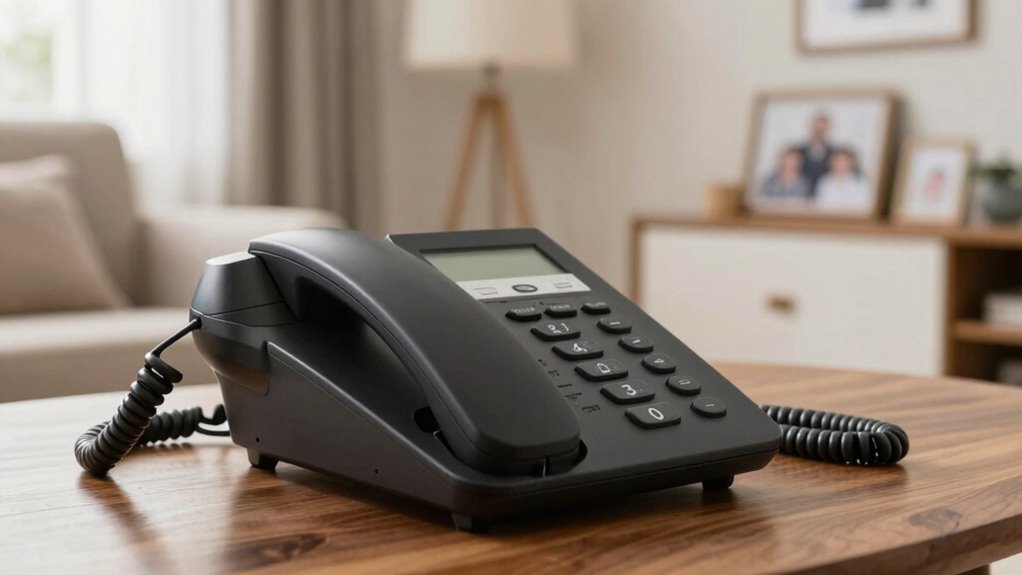

When choosing a caption phone for seniors landline, clarity and simplicity are key. The Hamilton CapTel 2400i stands out as the overall best for its reliable captioning and user-friendly interface. The Big Button Phone for Seniors Landline offers a straightforward design perfect for those with limited dexterity, while the Hamilton CapTel 840i provides advanced navigation for tech-savvy users. A common challenge is balancing advanced features with ease of use, and affordability with durability. Keep reading to explore these options and find the best fit for your needs.

Turn quiet afternoons into listening time
- Thousands of audiobooks, podcasts and originals
- Listen on your phone, tablet or Echo — also offline
- Cancel anytime
Complete the kit


Key Takeaways
- Top-tier caption accuracy is essential, and the Hamilton CapTel models excel in this area over simpler big button phones.
- Ease of use, including large buttons and simple navigation, remains a primary concern for senior users, favoring models like the Big Button Phone.
- Additional features like amplification and Bluetooth connectivity can benefit those with hearing impairments or who want integrated device pairing.
- Price varies significantly, with some premium options offering advanced features, while basic models focus on simplicity and affordability.
- Wall-mountable and long-range cordless options provide flexibility for different home setups and larger residences.
| Hamilton CapTel 2400iSPNBT Large Touch Screen Captioned Telephone |  | Best Overall for Hearing-Impaired Users Needing Visual Assistance | Power Source: Corded Electric | Dialer Type: Single Keypad | Answering System Type: Digital | VIEW ON AMAZON | See Our Full Breakdown |
| Big Button Phone for Seniors Landline Home Phone with Picture, White |  | Best for Visual and Hearing Impairments in Simpler Settings | Button Size: Large | Number of Speed Dial Groups: 3 | Custom Picture Dials: 2 | VIEW ON AMAZON | See Our Full Breakdown |
| Hamilton CapTel 2400iSPNBT Large Touch Screen Captioned Telephone |  | Best for US Residents with Hearing Loss Seeking Advanced Captioning | Display: Large touchscreen | Captioning: Real-time, auto or assisted | Amplified Sound: Up to 40dB gain | VIEW ON AMAZON | See Our Full Breakdown |
| Big Button Phone for Seniors – Corded Landline & VOIP, Amplify for Hearing Loss, Ideal for Elderly, Handicap, Dementia |  | Best for Simplicity and Versatility in Connection Types | Power Source: Corded Electric | Dialer Type: Single Keypad | Answering System Type: Microcassette | VIEW ON AMAZON | See Our Full Breakdown |
| Large Corded Phone for Seniors with Amplification and Speed Dial |  | Best for Simplicity with Modern Features in a Basic Design | Material: ABS | Weight: 1.43 pounds | Package Dimensions: 8.66 x 8.54 x 2.56 inches | VIEW ON AMAZON | See Our Full Breakdown |
| Big Button Phone for Seniors, One-Touch Landline Phones |  | Best for Simplicity and Basic Accessibility | Power Source: Corded Electric | Answering System Type: Digital | Compatible Devices: PSTN | VIEW ON AMAZON | See Our Full Breakdown |
| Hamilton CapTel 840i Large Button Navigated Captioned Telephone |  | Best for Hearing-Impaired Users Who Need Clarity | Connectivity: Ethernet or Wi-Fi | Telephone Service: Analog, digital cable, DSL, VoIP, FIOS | Power: Standard electrical | VIEW ON AMAZON | See Our Full Breakdown |
| VTech IS8151-3 Super Long Range 3 Handset DECT 6.0 Cordless Phone with Answering Machine and Bluetooth | 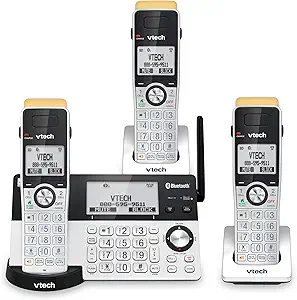 | Best for Large Homes and Multi-Device Use | Range: 2300 ft | Handsets: 3 | Answering Machine: 22 minutes | VIEW ON AMAZON | See Our Full Breakdown |
| Big Button Phone for Elderly – Corded Landline with Picture Care Assist, Amplified for Hearing Impaired, Wall Mountable |  | Best for Low Vision and Hearing Loss with Wall Mount Options | Amplified Volume: Up to 40 dB+ | Button Type: Large buttons and picture buttons | Memory Storage: Stores contacts with data retention | VIEW ON AMAZON | See Our Full Breakdown |
More Details on Our Top Picks
Hamilton CapTel 2400iSPNBT Large Touch Screen Captioned Telephone
This model stands out for its large touchscreen with real-time captions, making it easier for users with hearing loss to read conversations clearly. Compared to the Hamilton CapTel 2400iSPNBT, this version offers a more intuitive interface and supports both auto and assisted captioning, enhancing accessibility. The amplified sound and hearing aid compatibility further improve usability, though it requires a stable high-speed internet connection and landline service, which could be limiting in some areas. Its bulkier design might not suit users seeking a more discreet device. Still, for those prioritizing clear visual communication and easy operation, this phone delivers comprehensive features.
Pros:- Large touchscreen with real-time captions enhances readability
- Amplified sound up to 40dB and hearing aid compatibility
- Supports auto and assisted captioning with live operator support
Cons:- Requires high-speed internet and landline service, limiting flexibility
- Bulkier design may not suit users seeking a compact device
Best for: Seniors with significant hearing loss who need large captions and amplified sound in a landline setup
Not ideal for: Users with limited internet access or those preferring wireless devices, as it relies on high-speed internet and landline connections
- Power Source:Corded Electric
- Dialer Type:Single Keypad
- Answering System Type:Digital
- Compatible Devices:VoIP, analog, digital cable, DSL, FIOS
- Conference Call Capability:3 way
- Item Dimensions:3.64 x 12.56 x 9.54 inches
Our verdict“This pick is ideal for hearing-impaired seniors who want a comprehensive, easy-to-read caption phone with advanced features.”
Big Button Phone for Seniors Landline Home Phone with Picture, White
This phone excels through its large, high-contrast buttons and customizable picture dial options, making it especially suitable for users with visual impairments or cognitive difficulties. Unlike the Hamilton CapTel models, which focus on captioning, this device emphasizes straightforward dialing and visual cues, perfect for environments like homes or medical facilities. Its adjustable volume and flashing LED provide critical alerts for hearing and visually impaired users, but it lacks modern features like caller ID or Bluetooth, which might limit its appeal for tech-savvy seniors. Its corded design also restricts mobility, making it less suitable for users who need more flexibility.
Pros:- Large, high-contrast buttons reduce dialing errors
- Customizable picture dials aid recognition and speed
- Adjustable volume and flashing LED alerts support sensory impairments
Cons:- Limited to landline use only, with no wireless options
- No caller ID or modern smartphone features
Best for: Elderly users or individuals with visual impairments needing a simple, durable phone with visual cues and adjustable volume
Not ideal for: Those seeking advanced features like caller ID, wireless connectivity, or modern smartphone integration
- Button Size:Large
- Number of Speed Dial Groups:3
- Custom Picture Dials:2
- Volume Adjustment:Yes
- LED Indicator:Flashing light for incoming calls
- Application:Home, hotel, medical facility
Our verdict“This phone suits seniors who prefer a straightforward, tactile device with visual and auditory alerts over advanced digital features.”
Hamilton CapTel 2400iSPNBT Large Touch Screen Captioned Telephone
This version emphasizes real-time captioning with a large touchscreen, similar to the B077XZ2VJ3 model, but offers additional customization of caption settings and supports Wi-Fi connectivity. Its primary advantage over the other Hamilton CapTel is the detailed captions and adjustable features, which benefit users who need precise, easy-to-read text. However, it shares the same limitations: reliance on internet service and a potentially complex setup that could be overwhelming for some seniors. Compared to the simpler landline-only options, this provides more advanced communication but may be less user-friendly for those who prefer straightforward devices.
Pros:- Large touchscreen with customizable caption settings
- Amplified sound and hearing aid compatibility
- Supports captioned voicemail and live operator assistance
Cons:- Requires stable high-speed internet and phone service
- Setup may be complex for less tech-savvy users
Best for: US-based seniors with hearing impairments who want customizable captioning and are comfortable with internet-dependent devices
Not ideal for: Users in areas with unreliable internet or who prefer simple phones without digital features
- Display:Large touchscreen
- Captioning:Real-time, auto or assisted
- Amplified Sound:Up to 40dB gain
- Connectivity:Wi-Fi, standard phone service
- Power:Standard electrical
- Hearing Aid Compatibility:Yes
Our verdict“Ideal for hearing-impaired seniors seeking highly customizable captioning with comprehensive communication features, provided internet access is reliable.”
Big Button Phone for Seniors – Corded Landline & VOIP, Amplify for Hearing Loss, Ideal for Elderly, Handicap, Dementia
This device focuses on straightforward usability, with large buttons, amplified sound, and compatibility with both landline and VoIP connections. Unlike the more feature-rich Hamilton models, it emphasizes durability and simplicity, making it suitable for users with cognitive or physical impairments. The inclusion of a single-key dialer and basic answering system keeps operation intuitive. However, the microcassette system may seem outdated to some, and the absence of wireless options limits mobility. It’s a practical choice for those who prioritize basic functionality over digital bells and whistles.
Pros:- Large buttons and amplified sound improve ease of use
- Supports both landline and VoIP connections for flexibility
- Durable plastic enclosure ensures longevity
Cons:- Limited advanced features and modern connectivity options
- Microcassette system may be outdated for some users
Best for: Seniors needing a durable, simple phone that supports both landline and VoIP for a variety of setups
Not ideal for: Tech-savvy users seeking modern wireless features or advanced digital functionalities
- Power Source:Corded Electric
- Dialer Type:Single Keypad
- Answering System Type:Microcassette
- Compatible Devices:Landline, VoIP, Hearing Aid
- Multiline Operation:Single-Line
- Color:White
Our verdict“This is best for seniors who need a simple, durable phone with versatile connection support and minimal complexity.”
Large Corded Phone for Seniors with Amplification and Speed Dial
This model offers large buttons, amplification, caller ID, speakerphone, and quick-dial memory, making it suitable for seniors who want essential features without complex technology. Unlike the Hamilton or VoIP-capable models, this phone prioritizes straightforward operation and familiarity, with a focus on loud, easy-to-press controls. Customer reviews show mixed satisfaction, possibly due to basic design or limited advanced features. Its basic appearance and lack of wireless or smart features might deter users seeking more modern functionality, but for those who value simplicity, it delivers reliable performance.
Pros:- Large buttons and clear display for easy operation
- Amplification and speakerphone support hearing difficulties
- Quick-dial memory simplifies calling frequent contacts
Cons:- Customer rating indicates mixed reviews, possibly due to basic design
- Lacks advanced features like Bluetooth or modern connectivity
Best for: Seniors who need a large-button, amplified landline with quick-dial and caller ID for everyday use
Not ideal for: Tech-oriented users or those wanting wireless connectivity or smartphone-style features
- Material:ABS
- Weight:1.43 pounds
- Package Dimensions:8.66 x 8.54 x 2.56 inches
- Power Source:Corded Electric
- Additional Features:Caller ID, Speakerphone, Amplified sound, Speed dial
- Model Number:Pomyab6gso87pg2
Our verdict“This phone is a solid choice for seniors needing a straightforward, loud, and easy-to-use device for regular calls.”
Big Button Phone for Seniors, One-Touch Landline Phones
This corded landline phone excels in simplicity, with large picture keys and amplified sound that make dialing straightforward for seniors with vision or hearing impairments. Its programmable memory buttons add convenience, especially for frequently called contacts, making it ideal for users who prefer basic, dedicated devices over complex features. Compared to the Hamilton CapTel 840i, it lacks captioning and internet connectivity, but it offers a more straightforward experience without the complexity of advanced tech. The main tradeoff is its limited functionality—no smart features or wireless options—making it less suited for tech-savvy seniors or those who want multi-device integration. This model is perfect for seniors who prioritize ease of use and tactile controls over modern features.
Pros:- Large picture keys and visual aids simplify dialing
- Compatible with hearing aids for clearer sound
- Programmable memory buttons enhance quick calling
Cons:- Limited to corded operation, reducing portability
- Lacks smart features or modern connectivity options
Best for: Elderly users with vision or hearing impairments seeking a straightforward, easy-to-use landline phone
Not ideal for: Tech-savvy seniors or those wanting smart features or wireless connectivity
- Power Source:Corded Electric
- Answering System Type:Digital
- Compatible Devices:PSTN
- Multiline Operation:Single-Line Operation
- Color:White
- Enclosure Material:ABS
- Item Dimensions:8.5 x 6.7 x 2.8 inches
- Item Weight:0.69 kg
Our verdict“This pick is best for seniors needing a simple, tactile phone for basic communication without extra tech bells and whistles.”
Hamilton CapTel 840i Large Button Navigated Captioned Telephone
The Hamilton CapTel 840i stands out for its real-time captioning, which offers large, easy-to-read text that significantly improves clarity for users with hearing loss. Its amplified sound and customizable caption settings make conversations more accessible, especially compared to traditional phones like the Big Button Phone for Seniors, which lacks captioning. However, this device demands a high-speed internet connection and is limited to US residents with hearing impairments, which can be a hurdle for some users. Its complexity might also overwhelm seniors unfamiliar with digital or internet-based devices. This phone best suits those who rely heavily on visual cues and need clear, captioned conversations but are comfortable with advanced setup.
Pros:- Large, real-time captions enhance conversation clarity
- Amplified sound with volume control improves listening
- Captioned voicemail simplifies message review
Cons:- Requires high-speed internet and compatible telephone service
- Potentially complex setup and operation for less tech-savvy users
- Limited to U.S. residents with hearing impairment
Best for: Hearing-impaired seniors who need real-time captioning and amplified audio with internet access
Not ideal for: Seniors without reliable internet or those preferring simple, corded phones without digital features
- Connectivity:Ethernet or Wi-Fi
- Telephone Service:Analog, digital cable, DSL, VoIP, FIOS
- Power:Standard electrical
- Amplified Sound:Up to 40dB gain
- Captioning:Auto or assisted with live operator
- Size:Large buttons, high-contrast display
Our verdict“This is the best choice for hearing-impaired seniors who want clear, captioned conversations but are comfortable with internet-dependent devices.”
VTech IS8151-3 Super Long Range 3 Handset DECT 6.0 Cordless Phone with Answering Machine and Bluetooth
This cordless system offers extensive coverage with a range of up to 2300 feet, making it ideal for larger homes or multi-room setups. Its large screens and lighted keypad cater to visually impaired users, while Bluetooth connectivity allows pairing with cell phones for added convenience. Unlike the basic corded options, the VTech IS8151-3 provides wireless mobility and multiple handsets, but its setup can be complex due to many features. The 22-minute answering machine limits recording time, a potential drawback for heavy callers. This system fits well for users who need long-range coverage and multi-device integration but are comfortable configuring a feature-rich system.
Pros:- Long-range coverage up to 2300 feet for flexible placement
- Bluetooth links to cell phones for integrated calling
- Large, easy-to-read screens and illuminated keypad
Cons:- Setup can be complicated with multiple features and handsets
- Limited 22-minute recording capacity on the answering machine
- Bulky design may be unsuitable for small spaces
Best for: Users with large homes needing extensive coverage and multi-handset flexibility
Not ideal for: Seniors seeking a simple, corded device or minimal tech setup
- Range:2300 ft
- Handsets:3
- Answering Machine:22 minutes
- Bluetooth:Yes
- Caller ID:Yes, with name announce
- Display:2-inch handset, 3.5-inch base
Our verdict“This system is best for tech-savvy seniors or larger households needing long-range cordless communication with multi-device support.”
Big Button Phone for Elderly – Corded Landline with Picture Care Assist, Amplified for Hearing Impaired, Wall Mountable
This corded phone emphasizes accessibility with up to 40dB amplification, large buttons, and picture keys, making it suitable for users with low vision or hearing impairments needing simple dialing. Its ability to be wall-mounted and store favorite contacts even when unplugged adds practical convenience, outperforming basic models lacking memory retention or mounting options. However, its design feels somewhat dated compared to modern-looking phones like the Big Button Phone for Seniors, and it doesn’t include additional features like visual alerts or advanced memory options. This model is ideal for those who require maximum amplification and tactile controls, especially in fixed locations.
Pros:- Amplified volume up to 40dB+ for hearing-impaired users
- Large buttons and picture dialing simplify use
- Stores favorite contacts with data retention when unplugged
Cons:- Limited to corded landline operation, reducing flexibility
- Basic design may not appeal to modern aesthetic preferences
- Lacks advanced features like visual alerts or smart connectivity
Best for: Seniors with severe hearing impairment or low vision needing wall-mountable, amplified phones
Not ideal for: Users seeking wireless options or modern smart features
- Amplified Volume:Up to 40 dB+
- Button Type:Large buttons and picture buttons
- Memory Storage:Stores contacts with data retention
- Mounting Options:Wall mountable and desktop
- Non-slip Features:Four nonskid pieces
Our verdict“This phone is well-suited for seniors needing maximum amplification and easy tactile controls in a fixed location, despite its basic design.”

How We Picked
Products were evaluated based on caption accuracy, ease of use, build quality, and additional accessibility features. We prioritized models with clear, reliable captioning, large buttons, and straightforward interfaces suitable for seniors. Durability, connectivity options, and price were also considered to ensure a balanced selection. The ranking reflects how well each phone meets the core needs of seniors for clarity, simplicity, and value, helping buyers identify options suited to different levels of tech comfort and budget.Factors to Consider When Choosing Caption Phone For Seniors Landline
Choosing the right caption phone for seniors with landline capabilities involves understanding several important factors. While some devices prioritize advanced features like Bluetooth or amplification, others focus solely on simplicity. Consider your specific needs, such as hearing impairments, dexterity limitations, or home layout, to find the best fit. This guide breaks down key factors to keep in mind, helping you avoid common pitfalls and make a confident purchase.Caption Accuracy and Reliability
High caption accuracy is fundamental to ensuring clear communication. Look for models with proven voice-to-text technology, as poor captioning can cause frustration and misunderstandings. Devices that update or improve their captioning over time tend to provide a better long-term experience. Avoid overly complex models that may compromise caption clarity for extra features, as simplicity often yields better results for seniors relying on captions for understanding conversations.
Ease of Use and Interface
Large, tactile buttons and simple navigation are vital for seniors with limited dexterity or vision. Devices with intuitive layouts and minimal steps to answer or adjust settings reduce frustration. Some phones offer dedicated speed dial or one-touch buttons for emergency contacts, which can be lifesaving. Beware of models loaded with features that can overwhelm users—prioritize straightforward, easy-to-understand systems for best usability.
Hearing Assistance and Amplification
Many seniors benefit from built-in amplification or compatibility with hearing aids. If hearing loss is a concern, opt for phones with adjustable volume controls and amplified sound. Some devices include visual alerts for incoming calls or messages, adding another layer of accessibility. However, be cautious about overly complex audio settings that may be difficult for some users to manage without assistance.
Connectivity and Versatility
Long-range cordless options and wall-mountable designs offer flexibility and convenience. Bluetooth capability can allow pairing with hearing aids or other assistive devices, enhancing usability. Consider whether the phone supports VOIP or if it’s strictly landline-only, especially if you plan to integrate with other home communication systems. Connectivity features should match your home environment and personal needs for seamless operation.
Price and Durability
Balance your budget with the expected lifespan and features. Basic models offer affordability but may lack advanced captioning or amplification. Premium devices often provide more precise captioning, better build quality, and additional features, justifying higher prices. Think about long-term value—investing in a durable, well-made device can save money and frustration over time, especially if it’s used daily.
Frequently Asked Questions
How accurate are the captions on these phones?
The caption accuracy varies depending on the technology used, but models like the Hamilton CapTel series are known for their reliable voice-to-text conversion. They use advanced algorithms to transcribe conversations with high precision, which is vital for clear understanding. Keep in mind that background noise, speech clarity, and accents can affect accuracy; choosing a device with adjustable settings can help optimize performance in different environments.
Are these phones easy for seniors with limited dexterity to operate?
Yes, most caption phones for seniors feature large, tactile buttons designed for easy pressing, along with simple interfaces that minimize confusion. Some models include dedicated speed dial or one-touch emergency buttons to make calling quick and straightforward. However, more complex features like multiple menu options or small screens may pose challenges, so selecting a device with a clean, minimal design is advisable for users with dexterity concerns.
Can these phones connect to hearing aids or sound systems?
Many caption phones offer Bluetooth connectivity or amplification features that help users with hearing impairments. Devices like the Hamilton CapTel 840i provide options for pairing with hearing aids or external sound systems, enhancing overall clarity. When selecting a phone, verify compatibility with your specific hearing aids and consider models with adjustable volume and tone controls for personalized listening comfort.
What should I consider regarding the size and placement of the phone?
Size and placement are important for accessibility and convenience. Larger phones with big buttons are easier to operate and see, especially for users with visual impairments. Wall-mountable models save space and keep the phone accessible at eye level, reducing strain. Measure your space beforehand to ensure the device fits comfortably, and consider cordless options if mobility within your home is an issue.
Is it worth paying more for higher-end caption phones?
Investing in a higher-end caption phone can provide more accurate captioning, better build quality, and additional features like amplification or Bluetooth. These benefits are particularly valuable if you rely heavily on captions for communication or have hearing impairments. While budget models may suffice for occasional use, premium options tend to offer more long-term reliability and user satisfaction, especially for daily communication needs.
Conclusion
For those seeking the best overall experience, the Hamilton CapTel 2400i delivers reliable captioning and ease of use. Budget-conscious buyers or those new to assistive phones might prefer the Big Button Phone for Seniors Landline for its straightforward design. For users with hearing impairments, models like the Hamilton CapTel 840i provide superior amplification and navigation. If space or versatility is a concern, cordless or wall-mountable options make sense. Matching your specific needs and budget will help you find the ideal caption landline phone for a clearer, more confident communication experience.
Cold & flu season Picks
humidifiers
As an affiliate, we earn on qualifying purchases.