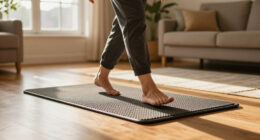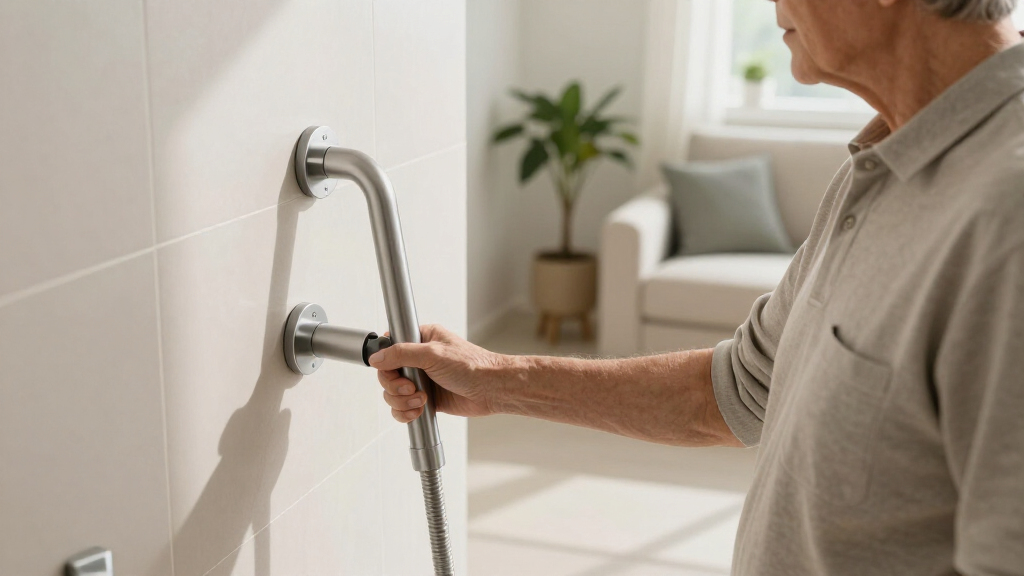

The best elderly fall prevention devices match the place and movement where a person is most likely to lose balance. I rank the Stand Assist Aid for Elderly Seniors and Limited Mobility as the best overall pick because it supports a common high-risk movement: rising from a seated position. The Vive Stand Assist is my premium choice for couch and chair use, while the Lianjindun Toilet Safety Rails provide more targeted bathroom support. Buyers must choose between fixed supports, caregiver-operated belts, and impact-reducing mats, since none covers every fall scenario. Continue reading for the full breakdown of all eight options and the buyer types each one suits best.
Listen free for 30 days with Audible
Thousands of audiobooks and originals — cancel anytime.
Start your free trialAs an affiliate, we earn on qualifying purchases.
Complete the kit


Key Takeaways
- The Stand Assist Aid takes the top spot because seated-to-standing movement occurs throughout the day and does not always require a caregiver.
- The Vive Stand Assist is the stronger premium choice for couch or chair support, but its furniture-specific role makes it less versatile than the top pick.
- The two padded transfer belts offer better caregiver control than standing rails, yet they provide little benefit when the older adult moves without assistance.
- The Lianjindun Toilet Safety Rails are the clear bathroom pick because their adjustable frame targets toilet transfers rather than general walking or bedside risk.
- The Vive Fall Mat is the only option here designed to soften a bedside landing; it reduces impact rather than helping the user regain balance.
| Stand Assist Aid for Elderly Seniors and Limited Mobility |  | Best Overall | Height adjustment: 5 levels | Frame material: Carbon steel | Foot design: Oversized non-slip feet | VIEW LATEST PRICE | See Our Full Breakdown |
| Vive Stand Assist – Mobility Standing Aid Rail for Couch, Chair |  | Best for Living-Room Seating | Support capacity: Up to 300 lbs | Frame material: Aluminum | Adjustment: Adjustable | VIEW LATEST PRICE | See Our Full Breakdown |
| Transfer Belt for Seniors with Adjustable Quick Release Buckle and Padded Handles |  | Best for Caregiver-Assisted Transfers | Adjustable fit: 29-48 inches | Materials: Nylon and polyester | Handle configuration: Multiple handles | VIEW LATEST PRICE | See Our Full Breakdown |
| Lianjindun Toilet Safety Rails, Adjustable Height & Width, 350 lbs Capacity, Foldable Aluminum Frame, Handles for Seniors and Disabled |  | Best for Bathroom Safety | Weight capacity: 350 lbs | Frame material: Corrosion-resistant aluminum | Height range: 24-31 inches | VIEW LATEST PRICE | See Our Full Breakdown |
| Lift Assist for Elderly and Disabled with No-Slip Handles, Support for Standing Transfers |  | Best Compact Pick | Length: 9.6 inches | Width: 10.8 inches | Weight: 0.6 lbs | VIEW LATEST PRICE | See Our Full Breakdown |
| Vive Fall Mat |  | Best for Bedside Injury Reduction | Length: 72 inches | Width: 24 inches | Cushion Material: High-density foam | VIEW LATEST PRICE | See Our Full Breakdown |
| Vive Gait Belt with Handles |  | Best Heavy-Duty Transfer Belt | Primary Material: Nylon | Additional Materials: Plastic and metal | Weight Capacity: 350 lbs | VIEW LATEST PRICE | See Our Full Breakdown |
| Gait Belt for Seniors with Handle |  | Best for Multi-Angle Assistance | Material Blend: 80% polyester, 20% nylon | Belt Width: 4.13 inches | Adjustable Length: 29-50 inches | VIEW LATEST PRICE | See Our Full Breakdown |
More Details on Our Top Picks
Stand Assist Aid for Elderly Seniors and Limited Mobility
I rank the Stand Assist Aid first because it addresses two common fall-risk moments: rising from a seat and moving between rooms. Unlike the Vive Stand Assist, which remains positioned around furniture, this carbon-steel model can serve as an indoor walking aid after the user stands. Its five height settings provide a better chance of achieving an upright, controlled posture, while the oversized feet add stability on suitable flooring. That versatility makes it the broadest option here, though it is also bulkier than the handheld Lift Assist and less specialized than the Lianjindun Toilet Safety Rails. I would choose it for someone who needs recurring support across several rooms, but its indoor-only design and larger footprint reduce its appeal in tight homes or for frequent travel.
Pros:- Five height levels allow the handle position to suit different users
- Carbon-steel frame provides sturdy support during sit-to-stand movements
- Oversized non-slip feet improve stability on suitable indoor floors
- Storage pouch keeps small essentials within reach
Cons:- Frame may be cumbersome in narrow rooms or beside tightly arranged furniture
- Indoor-only use limits its value outside the home
- No stated weight-capacity rating makes suitability harder to judge for heavier users
Best for: Older adults who can walk indoors with support but need extra leverage when rising from several types of seating
Not ideal for: People in compact homes or anyone seeking an outdoor mobility device, since the frame is bulky and intended only for indoor use
- Height adjustment:5 levels
- Frame material:Carbon steel
- Foot design:Oversized non-slip feet
- Handle:Foam-padded comfort grip
- Storage:Integrated pouch
- Supported activities:Standing and indoor walking assistance
- Intended locations:Chairs, couches, and toilets
- Use environment:Indoor only
Our verdict“I recommend this as the strongest all-around pick for seniors who need one aid for both standing and supported indoor movement.”
Vive Stand Assist – Mobility Standing Aid Rail for Couch, Chair
The Vive Stand Assist makes the most sense when a favorite sofa, chair, or recliner is the main trouble spot. I place it behind the broader Stand Assist Aid because it does not double as a walking support, yet its furniture-mounted layout provides two padded gripping points that stay ready for repeated use. The adjustable aluminum frame is lighter than carbon steel and can fit around or beneath compatible cushions, helping the user push upward with more control. Compared with the handheld Lift Assist, it demands less caregiver involvement once installed. Its weakness is compatibility: unusual frames, fixed cushions, or cramped furniture arrangements may prevent a secure fit. I would select it for a consistent seating setup, but not as a flexible solution for beds, bathrooms, cars, or movement around the home.
Pros:- Dual padded handles offer comfortable leverage from a seated position
- Adjustable frame accommodates several compatible furniture layouts
- Aluminum construction is lighter to reposition than a steel aid
- 300-pound rating gives buyers a defined support limit
Cons:- May not fit fixed cushions or furniture with unusual dimensions
- Needs clearance around or beneath the seat for proper placement
- Provides no walking or bathroom support after the user stands
Best for: Seniors who repeatedly struggle to rise from one compatible couch, recliner, or cushioned chair
Not ideal for: Homes with fixed cushions, unusual furniture frames, or little clearance around seating, since installation may be insecure or impractical
- Support capacity:Up to 300 lbs
- Frame material:Aluminum
- Adjustment:Adjustable
- Installation position:Around or beneath cushions
- Handle design:Soft padded handles
- Compatible seating:Couches, chairs, sofas, and recliners
- Portability:Lightweight and portable
- Color:Black
Our verdict“I would choose this for a senior who needs dependable leverage at one compatible living-room seat rather than a roaming mobility aid.”
Transfer Belt for Seniors with Adjustable Quick Release Buckle and Padded Handles
I include this Transfer Belt for Seniors for households where a caregiver actively guides transfers rather than relying on a freestanding rail. Its multiple padded handles provide grip access from several angles, which is more adaptable for bed, chair, or daily transfer routines than the furniture-bound Vive Stand Assist. The 29-to-48-inch adjustment range and quick-release buckle also support faster fitting between uses, while machine washing suits frequent care. It ranks below independent-use aids because the belt does not prevent a fall on its own; safe handling depends on caregiver positioning, judgment, and physical ability. Compared with the Lift Assist, it wraps around the user and gives the helper more grip choices, but it is less discreet and takes longer to fit. I see it as a hands-on care tool, not a substitute for professional transfer training.
Pros:- Multiple padded handles give caregivers access from different positions
- 29-to-48-inch adjustment range accommodates varied waist sizes
- Quick-release buckle supports efficient fitting and removal
- Machine-washable materials simplify hygiene after frequent use
Cons:- Requires a capable caregiver and appropriate transfer technique
- Does not provide independent standing or walking support
- Fit range excludes users outside the stated 29-to-48-inch measurement
Best for: Caregivers assisting seniors with guided daily transfers who need several secure gripping positions
Not ideal for: Older adults living without hands-on help, because the belt requires another person to fit and control it correctly
- Adjustable fit:29-48 inches
- Materials:Nylon and polyester
- Handle configuration:Multiple handles
- Handle padding:Padded
- Buckle type:Adjustable quick-release
- Care:Machine-washable
- Primary purpose:Caregiver-assisted daily transfers
Our verdict“I recommend this for trained or confident caregivers who want controlled multi-angle support during routine transfers.”
Lianjindun Toilet Safety Rails, Adjustable Height & Width, 350 lbs Capacity, Foldable Aluminum Frame, Handles for Seniors and Disabled
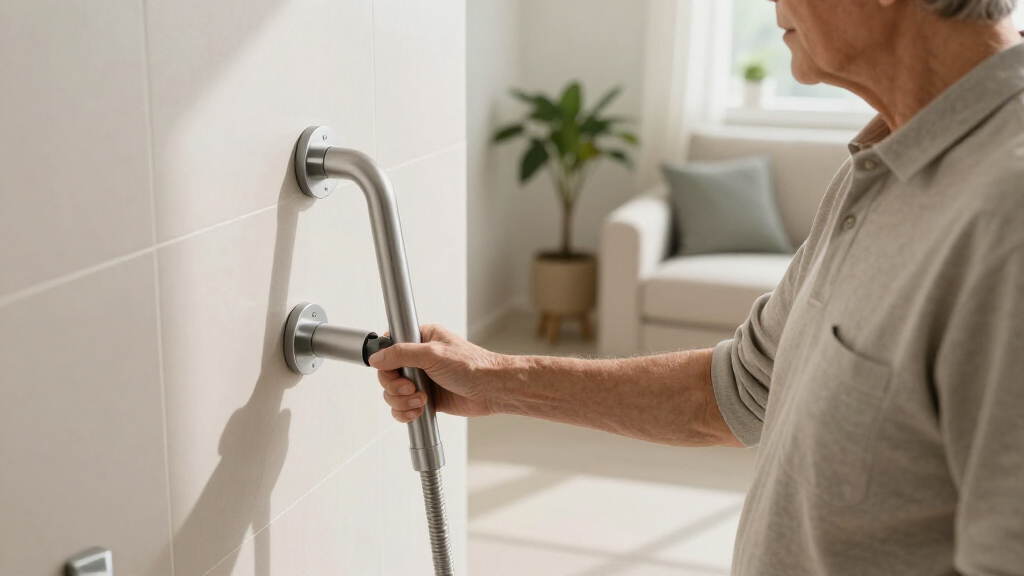
The Lianjindun Toilet Safety Rails earn a dedicated bathroom role because sitting down can be as hazardous as standing up. Both height and width adjust, allowing a closer fit than the general-purpose Stand Assist Aid, while the 350-pound capacity exceeds the Vive Stand Assist’s 300-pound rating. A tool-free, folding aluminum frame also makes storage or travel more manageable than a fixed bathroom installation. I do not rank it as the best all-around device because it solves one specific risk zone and offers no help near beds, sofas, or cars. Surface contact is another concern: suction-cup rubber feet can lose purchase on some smooth floors, and aging foam grips may reduce comfort. For a compatible bathroom, though, the two-sided support can give users better control in both directions of the toilet transfer.
Pros:- 350-pound capacity is higher than the listed capacity of the Vive Stand Assist
- Adjustable height and width allow a closer fit to the user and toilet
- Two-sided handles support both sitting and standing movements
- Foldable tool-free design is practical for storage and travel
Cons:- Suction-cup rubber feet may lose grip on some smooth surfaces
- Foam handle coverings may deteriorate with repeated bathroom use
- Provides no protection during transfers elsewhere in the home
Best for: Seniors who need two-sided support when lowering onto and rising from a standard toilet
Not ideal for: Users with unsuitable smooth flooring or those needing whole-home assistance, since foot grip can vary and the frame serves only the toilet area
- Weight capacity:350 lbs
- Frame material:Corrosion-resistant aluminum
- Height range:24-31 inches
- Width range:20-25 inches
- Maximum size:16.15 x 4.8 x 13.7 inches
- Storage design:Foldable
- Installation:Tool-free
- Feet:Rubber feet with suction cups
- Handles:Foam-covered
Our verdict“I would pick these rails for targeted toilet-transfer support when the bathroom floor provides reliable footing.”
Lift Assist for Elderly and Disabled with No-Slip Handles, Support for Standing Transfers
At just 0.6 pounds, the Lift Assist is the easiest option here to keep in a bag or car. It creates a shared handhold for standing transfers from beds, chairs, vehicles, or wheelchairs, giving it a wider location range than the Vive Stand Assist and Lianjindun Toilet Safety Rails. Its textured handles can reduce hand slippage, and the stated 420-pound support capacity is the highest rating among these five products. Portability comes with a major compromise: this is not a freestanding stabilizer. The user must retain enough arm and grip strength to pull, while the helper needs the balance and judgment to assist without being pulled forward. Compared with the transfer belt, it is faster to deploy but offers fewer grip positions and less control around the torso. I favor it for occasional assisted standing, not complex or heavy transfers.
Pros:- 0.6-pound construction is easy to carry between home, car, and appointments
- Non-slip textured handles improve hand contact during assisted standing
- 420-pound stated support capacity is the highest among these five picks
- Works across beds, chairs, cars, and wheelchairs
Cons:- Requires user arm strength and a physically capable helper
- Not intended to lift or carry a person through a full transfer
- Provides less torso control and fewer caregiver grip positions than a transfer belt
Best for: Mobile families or caregivers who need a lightweight handhold for occasional sit-to-stand assistance across several locations
Not ideal for: Users with weak grip, poor upper-body control, or complex transfer needs, because the device depends on active pulling by both people
- Length:9.6 inches
- Width:10.8 inches
- Weight:0.6 lbs
- Support capacity:420 lbs
- Handle surface:Non-slip textured
- Supported locations:Beds, chairs, cars, and wheelchairs
- Use environment:Indoor and outdoor
- Primary function:Assisted sit-to-stand transfers
Our verdict“I recommend this compact aid for brief, cooperative standing assistance when both the senior and helper can maintain a firm grip.”
Vive Fall Mat
I include the Vive Fall Mat because it addresses a different part of fall safety than the transfer and standing aids in this lineup. Its 72-by-24-inch coverage creates a padded landing area beside a bed, while high-density foam helps reduce the force of a fall. Compared with the Vive Stand Assist, this mat does not help a person rise or regain balance; it acts as injury mitigation when prevention measures fail. Beveled edges and a non-slip rubber backing make it less obstructive than a thick exercise mat, although the cushioned upper surface is not designed to add foot traction. I rank it as the bedside specialist because its waterproof cover suits repeated cleaning in homes and care facilities. Buyers should allow time for the rolled mat to flatten fully before relying on it.
Pros:- Wide bedside coverage reduces exposed hard-floor area
- High-density foam cushions the impact of a fall
- Beveled edges and non-slip backing help limit movement and trip interference
- Waterproof cover supports routine cleaning
Cons:- Cushioned top surface is not designed to improve shoe or sock traction
- Rolled packaging can leave the mat curled until it settles
- Provides impact protection rather than active balance or transfer support
Best for: Families and care facilities protecting an older adult who may roll or step out of bed without assistance
Not ideal for: Seniors who primarily need balance support while walking, standing, or transferring, since the mat provides no physical assistance
- Length:72 inches
- Width:24 inches
- Cushion Material:High-density foam
- Cover:Waterproof
- Backing:Non-slip rubber
- Edge Design:Low-profile beveled edges
- Cleaning:Easy-clean surface
- Shipping Form:Rolled
Our verdict“I recommend this for bedside fall-risk management when cushioning a possible landing matters more than providing standing assistance.”
Vive Gait Belt with Handles
I rank the Vive Gait Belt with Handles as the heavy-duty choice because its stated 350-pound capacity gives caregivers a clearer suitability benchmark than the Gait Belt for Seniors with Handle, which lists no weight rating in the supplied data. Seven padded handles let a trained helper choose a stable grip from different positions, reducing the temptation to pull on clothing or arms during transfers. The reinforced nylon construction also makes this pick better suited to frequent caregiving routines. That capability comes with compromises: its four-inch-wide body may feel bulky on smaller adults, and a gait belt can create new risks when used without proper transfer technique. It also cannot replace the Lianjindun Toilet Safety Rails when a user needs fixed, independent support. I favor it for heavier users and hands-on caregivers, not unsupervised mobility.
Pros:- Stated 350-pound capacity supports many elderly and bariatric users
- Seven padded handles offer grip choices from several caregiver positions
- Reinforced stitching supports frequent transfer assistance
- Quick-release buckle and adjustable fit simplify placement
Cons:- Four-inch width may be uncomfortable or cumbersome on smaller users
- Safe operation depends on caregiver training and suitable transfer technique
- Not a substitute for fixed rails or independent balance support
Best for: Trained family or professional caregivers assisting larger adults during supervised standing, walking, and transfers
Not ideal for: Small-framed seniors or untrained helpers, because the wide belt may feel bulky and incorrect handling can cause injury
- Primary Material:Nylon
- Additional Materials:Plastic and metal
- Weight Capacity:350 lbs
- Maximum Waist Size:51 inches
- Belt Width:4 inches
- Handle Count:7 padded handles
- Buckle:Quick release
- Construction:Reinforced stitching
Our verdict“I would choose this belt for a trained caregiver who needs multiple grip positions and a documented 350-pound capacity.”
Gait Belt for Seniors with Handle
I selected the Gait Belt for Seniors with Handle for caregivers who value grip access from several angles during short walks and transfers. Its ergonomic handles, 29-to-50-inch adjustment range, and quick-release buckle support fast repositioning as the caregiver moves beside or behind the user. Compared with the Vive Gait Belt with Handles, this model offers a slightly wider 4.13-inch body and a clearly stated polyester-nylon blend, but the supplied data does not give a weight capacity or exact handle count. That missing information keeps it below the Vive option for bariatric care or settings with strict equipment limits. The broad belt may distribute pressure better than a narrow strap, yet poor adjustment can still cause discomfort or slippage. I see it as a versatile supervised-assistance belt, provided a trained helper confirms fit and suitability before use.
Pros:- Multiple ergonomic handles support assistance from different angles
- 29-to-50-inch adjustment range fits a broad span of waist sizes
- Reinforced polyester-nylon fabric is designed for repeated handling
- Quick-release buckle allows fast removal
Cons:- No weight-capacity rating is provided in the product data
- Exact number of handles is not specified
- Wide belt can cause discomfort or slip if fitted incorrectly
Best for: Trained home caregivers assisting seniors with varied grip needs during supervised transfers and short supported walks
Not ideal for: Bariatric users or regulated care settings that require a documented load rating, since no weight capacity is supplied
- Material Blend:80% polyester, 20% nylon
- Belt Width:4.13 inches
- Adjustable Length:29-50 inches
- Handle Type:Multiple ergonomic handles
- Buckle:Quick-release polymer plastic buckle
- Construction:Reinforced stitching
- Intended Use:Assisted walking and transfers
Our verdict“I recommend this for trained home caregivers who prioritize flexible hand placement and do not require a published weight rating.”
How We Picked
I ranked these elderly fall prevention devices by where they provide support, how directly they address a high-risk movement, and whether they can be used safely without complicated setup. My main criteria were stability, ease of use, adjustability, grip design, caregiver control, and whether the listed capacity suited the intended user. I also examined how much space each device requires, whether it depends on compatible furniture, and how easily it can be cleaned or stored.
The order gives more weight to products that address frequent daily movements, followed by options built for narrower situations. A standing aid ranks above a gait belt when the buyer needs independent support, while a belt becomes the better choice when a trained caregiver directs the movement. I treated fall avoidance and impact reduction as separate jobs: rails and belts may help stop a loss of balance, whereas the Vive Fall Mat may reduce harm after a bedside fall. No product received a high placement merely for having more features; I favored clear fit, manageable setup, and realistic usefulness.
Factors to Consider When Choosing Elderly Fall Prevention Devices
I would start by identifying the exact movement linked to the greatest risk: getting out of a chair, using the toilet, walking with help, or leaving the bed. That answer matters more than buying the device with the longest feature list. The right choice should also match the older adult’s strength, judgment, body size, living space, and access to caregiver help.
Match the Device to the Fall Scenario
A fall near a toilet has different causes from a fall beside a bed, so I would not treat every support product as interchangeable. Standing rails suit people who can pull or push with their arms but need a stable point while rising. Transfer and gait belts make more sense when another person is present and knows how to guide the movement. A bedside mat addresses landing impact rather than balance, while toilet rails create support within a small bathroom zone. Buying a gait belt for someone who lives alone leaves the main benefit unavailable. I would map the person’s daily routine and target the highest-frequency risky movement before comparing prices.
Separate Independent Support From Caregiver Assistance
The largest dividing line in this roundup is whether the device works independently or depends on a helper. A rail can remain beside a chair or toilet and provide repeatable self-directed support, provided the user has enough arm strength and judgment to use it correctly. A transfer belt gives a caregiver better hand placement, but it is not a handle the wearer should use alone. Buyers sometimes mistake padded handles for lifting points, even though improper lifting can injure both people. I would choose a belt only when the helper has received guidance from a physical therapist, nurse, or other qualified clinician. For solo use, a stable fixed aid is usually the more practical category.
Check Fit, Capacity, and Compatibility
A device can have a generous weight rating and still be a poor fit. Chair rails need compatible seat dimensions and enough clearance around cushions, while toilet frames must fit the fixture and surrounding walls. Belts should close securely without pressing into the ribs, abdomen, tubes, or tender skin. I would verify user measurements, listed capacity, adjustment range, and the dimensions of the intended room or furniture before ordering. The rating should cover the user, but it does not mean every component is designed for forceful lifting. A correct fit reduces shifting, awkward posture, and the temptation to use the device outside its stated purpose.
Account for Strength, Cognition, and Technique
Upper-body strength changes whether a standing aid is helpful or frustrating. A person must understand where to place the hands, remember to move slowly, and have enough control to keep the feet positioned safely. Dementia, impulsive movement, dizziness, or one-sided weakness may make supervised assistance more suitable than an independent rail. Transfer belts also require sound caregiver technique; pulling upward by the arms or belt can cause injury. I would ask a clinician to observe one real transfer when ability varies from day to day. The safest device is the one that matches both physical ability and decision-making ability.
Plan for Space, Cleaning, and Daily Compliance
A support device only helps when it remains accessible and people actually use it. Wide toilet frames and bedside mats can create new obstacles in tight rooms, especially for walkers, wheelchairs, or nighttime caregivers. Foldable designs save space, but repeated setup may lead someone to leave the product stored away. Bathroom equipment should tolerate frequent wiping, while fabric belts need a cleaning routine that follows the maker’s instructions. I would favor simple placement and easy upkeep over extra adjustments that will rarely be used. Before buying, trace the walking path and confirm that the device will not narrow exits or create a new trip point.
Know When Paying More Makes Sense
A higher price is easier to justify when it buys better fit adjustment, stronger attachment, more comfortable contact points, or simpler daily use. Brand recognition alone does not make a device better for a particular room or transfer pattern. For occasional assisted movement, a basic quick-release gait belt may provide enough function at a lower cost. Frequent couch or chair transfers may warrant a more refined rail with secure positioning and comfortable grips. Medical complexity also changes the calculation; professional guidance may be more valuable than upgrading the hardware. I would spend more on the feature that solves the identified risk, not on unused versatility.
Frequently Asked Questions
Should I Choose a Standing Rail or a Transfer Belt?
I would choose a standing rail for someone who can follow directions, bear some weight, and rise using arm support without hands-on help. A transfer belt is better when a caregiver must steady or guide the person during movement. The belt should not be used to hoist someone who cannot support their own weight. If the person’s ability changes often, a physical therapist can identify which method matches weaker days. Some households may need both categories for different rooms and routines.
Can a Gait Belt Be Used by One Older Adult Living Alone?
No, a gait belt is designed to give a helper a safer place to hold during assisted walking or transfers. It does not provide a fixed anchor and offers little protection when no caregiver is present. For an older adult living alone, I would look at properly fitted rails, prescribed mobility aids, and changes to lighting and floor hazards. A belt left around the waist can also become uncomfortable or catch on surrounding objects. The better solo-use solution depends on where balance loss occurs.
Does a Bedside Fall Mat Prevent Falls?
A bedside mat does not stop someone from losing balance or rolling out of bed. Its job is to provide impact reduction if a person lands beside the bed. That makes the Vive Fall Mat a useful layer for nighttime risk, but it should not replace medical review, safe bed positioning, or help with toileting. The mat must sit flat and should not obstruct walkers, wheelchairs, or caregivers. I would also check whether its raised surface creates a trip risk for the person getting out of bed.
How Do I Know Whether Toilet Safety Rails Will Fit?
Measure the toilet’s width, seat height, and clearance from nearby walls, cabinets, and tubs. Compare those figures with the rail’s height and width adjustment ranges, not just its capacity. The user should be able to place both feet firmly and reach the handles without twisting. A foldable frame may help in a shared bathroom, though frequent folding can reduce everyday convenience. If the floor is uneven or the fixture has an unusual shape, I would ask an occupational therapist to review the setup.
When Should I Get Professional Help Before Using a Transfer Aid?
I would seek professional guidance when the older adult cannot reliably bear weight, has recent surgery, experiences dizziness, or has pain during transfers. The same applies after a new fall, sudden weakness, or a major change in walking ability. A clinician can show the caregiver safe hand placement and movement technique while checking whether a mechanical lift or different aid is needed. Product capacity alone does not prove that manual assistance is safe. One observed transfer can reveal problems that measurements and product photos miss.
Conclusion
For the broadest everyday use, my best overall choice is the Stand Assist Aid for Elderly Seniors and Limited Mobility because it targets repeated chair-rise movements without requiring a caregiver each time. The Gait Belt for Seniors with Handle is my best-value pick for households that need simple, supervised transfers, while the Vive Stand Assist is the premium choice for regular couch or chair support. Beginners who assist a relative may prefer the Lift Assist with No-Slip Handles, though they should learn safe transfer technique before relying on it. For specific needs, I would choose the Lianjindun Toilet Safety Rails for bathroom transfers, the Vive Fall Mat for bedside impact reduction, and the padded transfer belt or Vive Gait Belt when caregiver control is the main priority. The final choice should follow the risky movement, the user’s abilities, and whether trained help is present.
NFL season / tailgating Picks
team gear
As an affiliate, we earn on qualifying purchases.