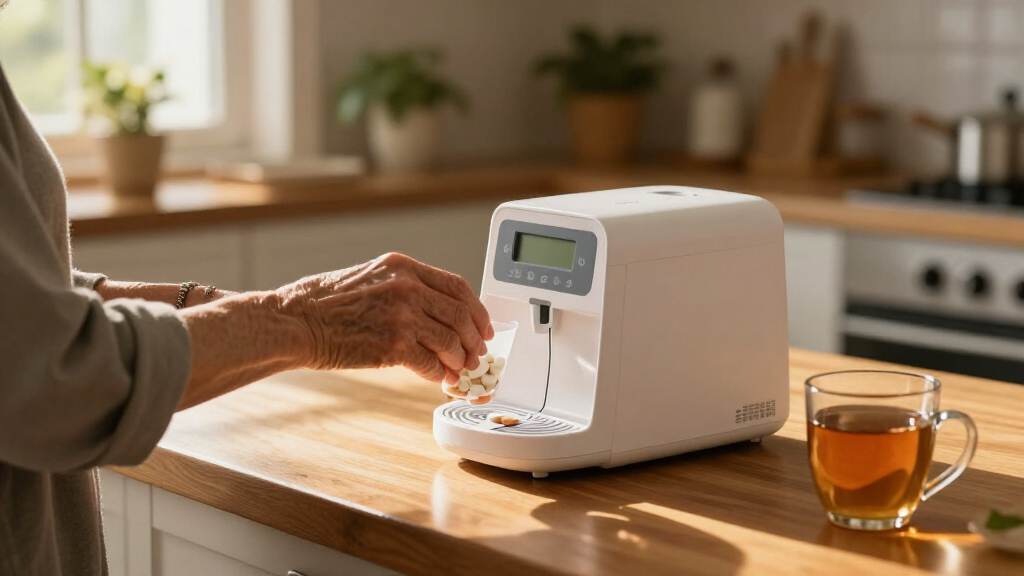

Automatic pill dispensers for seniors solve one specific problem: making sure the right medication gets taken at the right time, without a caregiver standing nearby. After comparing ten popular models, the LiveFine Automatic Pill Dispenser with Locking Lid stands out as the best overall pick thanks to its 28-day capacity, secure lid, and loud alarm cycle. For caregivers who need remote oversight, the 21-Day Wi-Fi Automatic Pill Dispenser with App Monitoring adds phone alerts and individual rising pods that confirm each dose, while the budget-friendly Med-Q Electronic Pill Dispenser is the simplest option for seniors who just need a reliable reminder. The main tradeoff in this category is between simplicity and supervision: basic alarm models are easier to set up but offer no proof a dose was taken, while smart, lockable units prevent missed and double doses but cost more and require app setup. Read on for the full breakdown, including who each model suits and who should skip it.

Turn quiet afternoons into listening time
- Thousands of audiobooks, podcasts and originals
- Listen on your phone, tablet or Echo — also offline
- Cancel anytime
Complete the kit


Key Takeaways
- Locking lids were the single biggest differentiator in this roundup — models like the LiveFine and EziMedPil prevent double-dosing, while open-tray options like the Med-Q rely entirely on the senior’s routine.
- App monitoring only pays off if a caregiver is willing to manage it; three of the ten models offer connectivity, but only the 21-Day Wi-Fi model confirms doses through individual rising pods rather than just sending reminders.
- Capacity claims are misleading without context — a 28-day rating assumes once-daily dosing, so seniors taking medication two or three times a day actually refill weekly or biweekly.
- The Windtrace and Betife occupy the middle ground: loud alarms and simple setup at a lower price, but no lock and no remote alerts, which makes them better for memory nudges than true medication control.
- Desiccant-equipped models like the 28-Day dispenser with alarm matter for seniors in humid climates, since medications sitting in an open tray for weeks can degrade faster than buyers expect.
| Med-Q Electronic Pill Dispenser with Alarm |  | Best Budget Pick for Simple Reminders | Layout: 7-day AM/PM, 14 removable compartments | Compartment capacity: Up to 23 full-size 325 mg aspirin per compartment | Alarm: Grows louder over 5 minutes; repeats every 30 minutes until dose is taken | VIEW LATEST PRICE | See Our Full Breakdown |
| Automatic Pill Dispenser with App Control, Expandable 3-Tray Design, LCD Display, Digital Lock, and Alerts |  | Best for Long-Distance Caregivers | Capacity: 3 trays, 14 slots each — 42 slots total | Dosing capacity: Up to 42 days once daily; up to 14 days on twice- or three-times-daily schedules | Setup: Companion app or voice-guided on-device controls | VIEW LATEST PRICE | See Our Full Breakdown |
| Bluetooth Automatic Pill Dispenser with 21-Day Capacity |  | Best Smart Pick Without Wi-Fi Dependency | Capacity: Up to 21 days | Dose rings / alarms: 8 dose rings, 8 alarms | Pod capacity: Up to 12 capsules or softgels per pod | VIEW LATEST PRICE | See Our Full Breakdown |
| Windtrace Automatic Pill Dispenser with Alarm |  | Best Value for Fully Automatic Dispensing | Compartments: 28 | Daily reminders: 1 to 6 programmable | Alerts: Audio alarm and flashing blue light | VIEW LATEST PRICE | See Our Full Breakdown |
| 21-Day Wi-Fi Automatic Pill Dispenser with App Monitoring and Individual Rising Pods |  | Best Overall for Connected Senior Care | Capacity: Up to 21 days | Dose rings / alarms: 8 dose rings, 8 alarms | Pod capacity: Up to 12 capsules or softgels per pod | VIEW LATEST PRICE | See Our Full Breakdown |
| Colorwing Smart Pill Dispenser for Seniors |  | Best Smart Features | Capacity: 31 slots | Dose rings: 7 reversible rings | Access: Press-release picker box | VIEW LATEST PRICE | See Our Full Breakdown |
| Betife 2nd Gen Automatic Pill Dispenser for Seniors with Alarm |  | Easiest to Set Up and Read | Console: 6 buttons with oversized icons | Display: Extra-large LCD | Tray seal: Less than 2 mm | VIEW LATEST PRICE | See Our Full Breakdown |
| 28-Day Automatic Pill Dispenser with Alarm and Desiccant |  | Best Moisture Protection | Capacity: 28 compartments | Dispensing: One-press, slide-door mechanism | Alerts: Sound, light, or sound and light | VIEW LATEST PRICE | See Our Full Breakdown |
| LiveFine Automatic Pill Dispenser with Locking Lid, 28-Day Capacity |  | Best for Complex Dose Schedules | Capacity: 28 days | Maximum daily doses: 9 | Dosage rings: 9 interchangeable | VIEW LATEST PRICE | See Our Full Breakdown |
| EziMedPil 28-Day Automatic Pill Dispenser with Lockable Frosted Lid |  | Best Stocking-Ready Value | Compartments: 28 | Capacity: Up to 24 aspirin-sized tablets per compartment; 672 total | Daily alarms: Up to 6 | VIEW LATEST PRICE | See Our Full Breakdown |
| automatic pill dispensers for senior | Capacity | Power | Display | Alerts |
|---|---|---|---|---|
| Med-Q Electronic Pill Dispense | — | 2 AA batteries, roughly 14 months of life | — | — |
| Automatic Pill Dispenser with | 3 trays, 14 slots each — 42 slots total | — | LCD | LED light, voice, buzzer, or melody |
| Bluetooth Automatic Pill Dispe | Up to 21 days | Battery (over 2 months) or plug-in; charger and cable included | — | — |
| Windtrace Automatic Pill Dispe | — | 4 AA batteries (included) | LCD | Audio alarm and flashing blue light |
| 21-Day Wi-Fi Automatic Pill Di | Up to 21 days | Plug-in or battery operation | — | — |
| Colorwing Smart Pill Dispenser | 31 slots | — | — | — |
| Betife 2nd Gen Automatic Pill | — | — | Extra-large LCD | — |
| 28-Day Automatic Pill Dispense | 28 compartments | — | — | Sound, light, or sound and light |
| LiveFine Automatic Pill Dispen | 28 days | Battery-operated | Jumbo LCD | Audio and visual, 3 volume levels |
| EziMedPil 28-Day Automatic Pil | Up to 24 aspirin-sized tablets per compartment; 672 total | 4 AA batteries, included | Large, high-brightness LCD | Audible and visual |
More Details on Our Top Picks
Med-Q Electronic Pill Dispenser with Alarm
Most automatic dispensers demand programming, apps, or batteries upon batteries — the Med-Q keeps it deliberately simple. Instead of motorized dispensing, it uses a flashing light on the exact compartment due next, paired with an alarm that escalates in volume and repeats every 30 minutes until the dose is taken. That repetition is the whole point for memory care, though it can grate on caregivers in small homes. Compared with the Windtrace Automatic Pill Dispenser, there’s no programming at all: a family member loads 14 removable compartments once a week and the device handles the rest. The tradeoff is obvious — a determined senior can still open every compartment, since there’s no lock like the Bluetooth Automatic Pill Dispenser with 21-Day Capacity offers.
Pros:- Escalating alarm repeats every 30 minutes until pills are taken
- Flashing light pinpoints the exact next compartment
- Braille markings and oversized tabs for low-vision or dexterity-limited users
- About 14 months of battery life on two AA batteries with early low-battery warnings
Cons:- No lock or access control, so early or duplicate doses are possible
- Repeating alarm every 30 minutes can be disruptive in shared living spaces
Best for: Seniors with mild memory loss whose main need is a persistent, foolproof reminder rather than physical access control
Not ideal for: Families worried about a loved one taking double doses, since there is no locking mechanism to restrict access
- Layout:7-day AM/PM, 14 removable compartments
- Compartment capacity:Up to 23 full-size 325 mg aspirin per compartment
- Alarm:Grows louder over 5 minutes; repeats every 30 minutes until dose is taken
- Visual reminder:Flashing red light on next-due compartment
- Accessibility:Large letters, braille markings, oversized fingertip tabs
- Power:2 AA batteries, roughly 14 months of life
- Dimensions:8.75 x 4.5 x 1 inches, 11 ounces
Our verdict“This pick makes the most sense for seniors who need strong reminders but not restricted access, at the lowest complexity of anything in this roundup.”
Automatic Pill Dispenser with App Control, Expandable 3-Tray Design, LCD Display, Digital Lock, and Alerts
Where the Med-Q relies on the senior to respond to a reminder, this model adds remote scheduling and adherence monitoring through a companion app — the feature that matters most when an adult child manages medication from another city. The expandable three-tray design holds 42 slots, stretching refills to six weeks for once-daily regimens, and a digital lock with remote unlock means the senior can’t raid the wrong compartment between doses. Voice-guided on-device setup is a thoughtful touch for seniors who won’t touch an app. Compared with the 21-Day Wi-Fi Automatic Pill Dispenser, this option wins on capacity and adds a sealed lid with desiccant for humidity-sensitive medications, though it’s home-use only — regulated facilities should look elsewhere.
Pros:- App-based remote dose scheduling and adherence history
- 42 total slots across three trays for long refill intervals
- Digital lock with remote unlock prevents unauthorized access
- Sealed lid with desiccant pack protects moisture-sensitive medications
Cons:- Not suitable for assisted living, nursing homes, or other regulated care settings
- Stated supply duration is identical for twice- and three-times-daily schedules, which makes planning refills confusing
Best for: Long-distance caregivers who want to schedule doses remotely and verify adherence without weekly visits
Not ideal for: Anyone buying for a nursing home or assisted living facility, since the product is explicitly not cleared for institutional use
- Capacity:3 trays, 14 slots each — 42 slots total
- Dosing capacity:Up to 42 days once daily; up to 14 days on twice- or three-times-daily schedules
- Setup:Companion app or voice-guided on-device controls
- Display:LCD
- Alerts:LED light, voice, buzzer, or melody
- Security:Digital lock with remote unlock option
- Storage:Sealed lid with built-in desiccant pack
- Intended use:Home / non-institutional only
Our verdict“This model is better suited to families coordinating care from afar than any simple reminder device in this lineup.”
Bluetooth Automatic Pill Dispenser with 21-Day Capacity
This option stands out for solving a specific household problem: what happens when the senior’s home has unreliable Wi-Fi but the family still wants monitoring. Its Bluetooth 5.0 connection means a nearby phone or a caregiver’s visit syncs the data — no router dependency, unlike the 21-Day Wi-Fi Automatic Pill Dispenser, which drops its app features entirely without a network. The individually rising pods lift medication up automatically at dose time, a genuine accessibility win for arthritic hands compared with the Med-Q’s manually opened compartments. Setup complexity is the honest tradeoff: Bluetooth pairing and app configuration are required for the connected features, so a tech-comfortable family member should handle initialization. Medication history covers only 14 days, enough for a weekly check-in but not a monthly care review.
Pros:- Bluetooth 5.0 connectivity works without a home Wi-Fi network
- Automatically rising cups make doses physically easier to retrieve
- Key lock restricts access between scheduled doses
- Flexible power: over 2 months on battery or continuous plug-in operation
Cons:- Medication history is retained for only 14 days
- Bluetooth pairing and app setup are required for connected features
Best for: Tech-comfortable families in homes with weak or absent Wi-Fi who still want app reminders and dose tracking
Not ideal for: Seniors managing their own medication solo, because Bluetooth and app setup are prerequisites for the monitoring features
- Capacity:Up to 21 days
- Dose rings / alarms:8 dose rings, 8 alarms
- Pod capacity:Up to 12 capsules or softgels per pod
- Connectivity:Bluetooth 5.0 with app
- Medication history:14 days
- Power:Battery (over 2 months) or plug-in; charger and cable included
- Security:Key lock
- Included:8 dosage rings, key, batteries, charger, 3 backup pods, manual
Our verdict“Compared with the Wi-Fi model, this pick makes the most sense when the network can’t be counted on but caregiver insight still can.”
Windtrace Automatic Pill Dispenser with Alarm
The Windtrace delivers the core automatic-dispensing promise — the correct compartment opens at the correct time — without the app, Wi-Fi, or Bluetooth overhead of the three-tray app-controlled model. Its 28 compartments support one to six reminders per day, and the sliding retrieval window means the senior only accesses the dose that’s due, unlike the Med-Q, where every compartment is physically reachable. Setup is the real hurdle: programming must be done on-device with the LCD and buttons, which typically falls to a caregiver, and there’s no remote way to verify doses were taken. For a household that wants mechanical reliability at a lower complexity tier — and doesn’t need adherence reports — this model hits a practical middle ground between reminder-only devices and full smart dispensers.
Pros:- Programmable reminders from one to six times daily with audio and flashing blue light alerts
- 28-compartment removable tray simplifies monthly refills
- Sliding retrieval window limits access to the current dose only
- Four AA batteries and six dosage rings included in the box
Cons:- On-device programming with no app shortcut, which can frustrate non-technical users
- No caregiver notifications or adherence record of any kind
Best for: Budget-conscious families who want locked, scheduled dispensing but don’t need app monitoring or remote alerts
Not ideal for: Long-distance caregivers, since there’s no connectivity or dose history to confirm medication was taken
- Compartments:28
- Daily reminders:1 to 6 programmable
- Alerts:Audio alarm and flashing blue light
- Display:LCD
- Power:4 AA batteries (included)
- Included accessories:6 dosage rings, instruction manual
Our verdict“This is the pick when scheduled, restricted dispensing matters more than remote oversight.”
21-Day Wi-Fi Automatic Pill Dispenser with App Monitoring and Individual Rising Pods
If the roundup has a do-everything option, this is it. Wi-Fi connectivity enables true remote caregiver monitoring — dose reminders, alarms, and flashing lights all visible from the app — which goes a step beyond the Bluetooth Automatic Pill Dispenser, whose data only syncs when someone is physically nearby. The individual rising pods hold up to 12 capsules each and lift automatically at dose time, and food-grade materials plus the sealed pod design keep medication fresher than an open tray like the Windtrace’s. The key lock handles the safety side. Tradeoffs mirror its sibling: setup and scheduling run through the app, and without reliable Wi-Fi the monitoring layer effectively disappears — in that scenario the Bluetooth model is the smarter buy. Fourteen days of dose history suits weekly caregiver check-ins rather than monthly audits.
Pros:- Wi-Fi app monitoring lets caregivers track doses in real time from anywhere
- Individual rising pods deliver doses automatically for easy retrieval
- Key lock prevents access to future doses
- Plug-in or battery operation, with removable easy-clean tray
Cons:- Requires dependable Wi-Fi for app connectivity and remote monitoring
- Setup and medication scheduling may require using the app, adding a learning curve
Best for: Families with reliable home Wi-Fi who want real-time remote monitoring plus easy physical access for the senior
Not ideal for: Homes with spotty or no internet, since the app monitoring — the main reason to pay for this tier — depends on Wi-Fi
- Capacity:Up to 21 days
- Dose rings / alarms:8 dose rings, 8 alarms
- Pod capacity:Up to 12 capsules or softgels per pod
- Connectivity:Wi-Fi with app monitoring
- Medication history:14 days
- Power:Plug-in or battery operation
- Security:Key lock
- Material:Food-grade materials
- Included:Key, batteries, charger with cable, 3 backup pods, manual
Our verdict“This model makes the most sense for connected homes where a caregiver wants maximum visibility with minimal weekly involvement.”
Colorwing Smart Pill Dispenser for Seniors
This option stands out for pairing a fingerprint lock with Bluetooth app control, something none of the simpler alarm-based models in this lineup offer. Compared with the LiveFine 28-Day dispenser, which relies on a manual key and a three-button interface, the Colorwing gives caregivers remote intake tracking and a custom-recorded voice reminder — a genuinely useful touch for seniors who respond better to a familiar voice than a generic tone. The press-release picker box also removes the flip-and-pour motion the EziMedPil requires. The tradeoff is upkeep: unlike battery models that run for months, this one needs periodic recharging, and losing the Bluetooth connection disables app features.
Pros:- Fingerprint scanner plus backup key gives two reliable access methods
- Custom recorded voice reminders feel more personal than standard alarms
- 31-slot capacity with 7 reversible rings handles complex schedules
- Press-release picker box avoids flipping or rotating the unit
Cons:- Requires recharging roughly every 30 days even in energy-saving mode
- App features are limited to Bluetooth range, so remote monitoring from afar isn’t possible
Best for: Tech-comfortable caregivers who want app-based dose tracking and biometric access control for a senior living alone
Not ideal for: Seniors without a smartphone or family member nearby to manage the app — much of its value depends on Bluetooth connectivity
- Capacity:31 slots
- Dose rings:7 reversible rings
- Access:Press-release picker box
- Locks:Fingerprint scanner and physical backup key
- Reminders:Custom recorded voice reminder or 3 alert tones
- Battery:1200 mAh rechargeable, 30+ days in energy-saving mode
- Connectivity:Bluetooth 5.0 with free companion app, no subscription
Our verdict“This pick makes the most sense for families who want smartphone oversight and biometric security rather than a set-and-forget alarm dispenser.”
Betife 2nd Gen Automatic Pill Dispenser for Seniors with Alarm
Where most dispensers in this roundup, like the EziMedPil or LiveFine, expect users to interpret small buttons and dense menus, the Betife leans hard into accessibility. The XL LCD screen and six oversized-icon buttons make dose scheduling legible for seniors with low vision, and the spoken quick-start guide walks first-time users through setup without a manual. The engineering also shows where it counts: a tray seal under 2 mm prevents the pill-mixing problem common in cheaper carousels, and the gearbox is tested past 5,000 rotations. The built-in lock is simpler than the Colorwing’s fingerprint scanner, but that simplicity is the point. The main drawback is that the clock and dose times still require initial manual programming.
Pros:- Extra-large LCD and oversized icons suit low-vision users
- Spoken quick-start guide reduces setup frustration
- Sealed tray prevents pills migrating between slots
- Built-in lock restricts access to medication
Cons:- Clock and dose times must be set manually with no app shortcut
- No customizable voice reminders, only a standard dose-time alarm
Best for: Seniors with vision impairment or those intimidated by electronics who need a dispenser they can program themselves
Not ideal for: Buyers wanting app monitoring or voice reminders — this model keeps everything on-device with no smart features
- Console:6 buttons with oversized icons
- Display:Extra-large LCD
- Tray seal:Less than 2 mm
- Gearbox testing:5,000+ carousel rotations
- Access control:Built-in lock
- Alarm:Dose-time alarm
Our verdict“The Betife is better suited to seniors who prioritize readable controls and guided setup over smart connectivity.”
28-Day Automatic Pill Dispenser with Alarm and Desiccant
This model solves a problem most competitors ignore: humidity. With a water-resistant lid, silicone seal, and dual desiccant chambers, it protects medications in humid climates or steamy bathrooms — a layer of defense the LiveFine and EziMedPil simply don’t have. The one-press slide-door dispensing is also physically easier than the EziMedPil, which must be flipped upside down to release pills. Instead of a strict alarm window, it uses a flexible timing allowance of 15 minutes early to 30 minutes late, which suits seniors whose routines shift a little day to day. The real limitation is scope: this is home-only by design, explicitly not rated for nursing homes or assisted living, and gummy-style capsules can stick.
Pros:- Dual desiccant chambers and silicone seal actively protect pills from moisture
- One-press slide door requires no lifting, rotating, or flipping
- Choice of sound, light, or combined alerts
- 28 large compartments fit most common pills and capsules
Cons:- Not intended for regulated institutions like nursing homes
- Gummy-style capsules may stick in compartments
- No add-on tray support limits expandability
Best for: Seniors in humid climates or bathrooms-adjacent setups who need moisture protection and simple one-press dosing
Not ideal for: Families managing medication for someone in assisted living or a nursing home — the manufacturer restricts it to home use
- Capacity:28 compartments
- Dispensing:One-press, slide-door mechanism
- Alerts:Sound, light, or sound and light
- Dose timing window:15 minutes early to 30 minutes late
- Moisture protection:Water-resistant lid, silicone seal, dual desiccant chambers
- App required:No
- Use:Home/non-institutional use only
Our verdict“This pick makes the most sense for home-based users in damp environments where moisture damage, not smart features, is the main concern.”
LiveFine Automatic Pill Dispenser with Locking Lid, 28-Day Capacity
With alarms schedulable as often as every 30 minutes and support for up to nine daily doses, the LiveFine handles medication regimens that would overwhelm most dispensers here — the EziMedPil caps out at six alarms, and the Colorwing at a standard timed schedule. Nine interchangeable dosage rings and room for 18 pills per slot mean it can carry serious volume. The locking lid with manual key is a straightforward alternative to the Colorwing’s fingerprint scanner for families worried about double-dosing or confused access. Unlike the app-controlled models, it runs entirely on replaceable batteries, so there’s nothing to charge and no pairing to troubleshoot. The catch: the documentation doesn’t state battery life, so buyers should keep spares on hand and watch for missed alarms.
Pros:- Supports up to 9 daily doses with alarms as frequent as every 30 minutes
- Locking lid with manual key prevents unauthorized access
- Sliding retrieval window makes getting the dose simple
- Battery power makes it portable for travel
Cons:- Battery life is not specified, creating uncertainty about maintenance
- Three-button interface is less accessible than the Betife’s oversized-icon console
Best for: Seniors on frequent, multi-pill regimens — up to nine doses a day — who need a no-app, battery-powered solution
Not ideal for: Caregivers who want remote dose confirmation, since there’s no connectivity or intake logging
- Capacity:28 days
- Maximum daily doses:9
- Dosage rings:9 interchangeable
- Pills per slot:Up to 18
- Display:Jumbo LCD
- Alerts:Audio and visual, 3 volume levels
- Access control:Locking cover with manual key
- Power:Battery-operated
Our verdict“The LiveFine is the pragmatic choice for complicated daily schedules where alarm frequency matters more than smart features.”
EziMedPil 28-Day Automatic Pill Dispenser with Lockable Frosted Lid
This is the dispenser to hand over on day one with zero shopping left to do: four AA batteries are included, the tray holds up to 672 aspirin-sized tablets, and thoughtful extras like a built-in magnifying glass, anti-slip grips, and a low-battery indicator show attention to senior-specific needs. The frosted lockable lid offers privacy and access control without the cost of the Colorwing’s biometrics. Compared with the LiveFine, the six-alarm limit means very frequent dosers should look elsewhere, but for typical two-to-four-times-daily regimens it’s ample. The standout annoyance is dispensing: the unit must be flipped to release pills, which is more physical effort than the one-press slide door on the 28-Day model with desiccant.
Pros:- Batteries included, so it works immediately without extra purchases
- Huge 672-tablet total capacity cuts refill frequency
- Built-in magnifying glass and low-battery indicator address common senior pain points
- Adjustable volume, two ringtones, and 12/24-hour formats add flexibility
Cons:- Must be flipped upside down to dispense each dose
- Requires periodic AA battery replacement
- Six-alarm ceiling is limiting for very frequent medication schedules
Best for: Buyers who want a complete out-of-the-box package for a senior with a moderate schedule of up to six daily doses
Not ideal for: Seniors with limited wrist strength or dexterity, since flipping the dispenser is required at every dose
- Compartments:28
- Capacity:Up to 24 aspirin-sized tablets per compartment; 672 total
- Daily alarms:Up to 6
- Alerts:Audible and visual
- Display:Large, high-brightness LCD
- Power:4 AA batteries, included
- Lid:Lockable frosted lid
- Additional features:Detachable tray, built-in magnifying glass, anti-slip grips, low-battery indicator
Our verdict“The EziMedPil suits families wanting a ready-to-run, high-capacity dispenser for straightforward schedules — as long as flipping the unit isn’t a barrier.”

How We Picked
I evaluated each dispenser through the lens that matters most for seniors: safety first, then usability, then convenience. Safety meant asking whether the unit can prevent missed doses (alarm persistence, volume, flashing lights) and double doses (locking lids, one-dose-at-a-time dispensing). Usability covered the setup burden, how easy the tray is to load for aging hands, and whether the interface is readable for someone with vision or dexterity challenges. Convenience factors included refill frequency, battery backup, and whether caregiver alerts genuinely reduce oversight work or just add another app to manage.
Ranking followed from those priorities. Models that combine locking mechanisms with strong alarm behavior placed highest because they address both failure modes. Smart models ranked based on whether their connectivity added real supervision value — dose confirmation beats a simple notification. Simple alarm-only dispensers were not penalized for lacking features, but they had to justify their place through ease of use and reliability, since their entire job is replacing a caregiver’s reminder rather than their oversight.
| automatic pill dispensers for senior | Display | Alerts |
|---|---|---|
| Med-Q Electronic Pill Dispense | — | — |
| Automatic Pill Dispenser with | LCD | LED light, voice, buzzer, or melody |
| Bluetooth Automatic Pill Dispe | — | — |
| Windtrace Automatic Pill Dispe | LCD | Audio alarm and flashing blue light |
| 21-Day Wi-Fi Automatic Pill Di | — | — |
| Colorwing Smart Pill Dispenser | — | — |
| Betife 2nd Gen Automatic Pill | Extra-large LCD | — |
| 28-Day Automatic Pill Dispense | — | Sound, light, or sound and light |
| LiveFine Automatic Pill Dispen | Jumbo LCD | Audio and visual, 3 volume levels |
| EziMedPil 28-Day Automatic Pil | Large, high-brightness LCD | Audible and visual |
Factors to Consider When Choosing Automatic Pill Dispensers For Seniors
Before choosing a dispenser, it helps to understand where these devices succeed and where they fall short. The right model depends less on features and more on the specific senior, their medication routine, and who is available to support them.Locking Lids Versus Open Trays
The most common mistake buyers make is assuming any dispenser with an alarm will control medication habits. An open-tray dispenser reminds a senior to take a pill, but nothing stops an confused moment from becoming a double dose — a real risk with blood thinners, diabetes medication, or pain management drugs. A locking lid only releases the current dose, which turns the device from a reminder into a safeguard. The tradeoff is dignity and independence: some seniors resent a locked box and may fight it or refuse to use it. If the senior has a diagnosed memory condition or takes high-risk medication, the lock is worth the friction. If the issue is simple forgetfulness, an open tray is usually sufficient and far less expensive.
Dose Frequency Changes Everything About Capacity
Manufacturers advertise capacity in days assuming once-daily dosing, which most seniors do not follow. A 28-day dispenser becomes a 14-day unit for twice-daily medication and a 9-day unit for three-times-daily schedules, and refills become the caregiver’s recurring chore. Multiple daily doses also demand a dispenser that can be programmed for several alarm times — not every model supports this, and some budget units cap out at one or two daily alerts. Before buying, count the actual daily dose events and divide the advertised capacity accordingly. A smaller tray that gets refilled correctly beats a large tray someone rushes through and misloads.
App Monitoring: Who Actually Benefits
Connected dispensers are marketed as the premium option, but they only deliver value when a caregiver actively monitors the app. If nobody checks notifications, the Wi-Fi capability is dead weight that adds setup complexity and another point of failure. App monitoring shines for long-distance caregivers who want proof doses were taken, and the best implementations confirm the physical dose rather than just logging that an alarm fired. It also matters for seniors in early cognitive decline, where a pattern of missed doses can prompt a care conversation before a health event. For seniors with a spouse or family member physically present each day, a simpler locked dispenser often accomplishes the same thing without the monthly interaction with an app.
Alarm Audibility and Visibility
An alarm that goes unheard is the same as no alarm at all. Many seniors have age-related high-frequency hearing loss, so a high-pitched beep that sounds loud to a caregiver may be inaudible to the person it is meant for. Look for models with combined audio and visual cues — flashing lights, blinking displays — and alarms that repeat or persist until the dose is removed. Volume alone is not the answer either; an alarm loud enough to hear across the house can be distressing and embarrassing. Placement matters too: a dispenser in the kitchen is useless if the senior spends afternoons in a bedroom or garden. Match the alarm style and dispenser location to where the senior actually is at dose time.
Power Reliability and Medication Storage
A dispenser that forgets its schedule during a power outage or battery swap creates immediate risk, so battery backup and schedule retention are non-negotiable for medication devices. Check whether the unit keeps its programmed alarm times when batteries are replaced — some budget models reset entirely. Storage conditions are the quieter issue: pills sitting in an exposed rotating tray for weeks are exposed to humidity and light, which degrades certain medications faster than a closed bottle. Dispensers with enclosed compartments or desiccant compartments are worth considering in humid climates or for moisture-sensitive drugs. When in doubt, ask the pharmacist which medications in the regimen tolerate tray storage.
Pill Size and Physical Accessibility
Not every dispenser fits every regimen. Compartment sizes vary meaningfully between models, and large tablets, capsules, or supplements can jam mechanisms designed for standard pills — a failure that shows up as a missed dose, not an obvious malfunction. Seniors with arthritis or tremors also need a dispensing action they can physically manage: a tiny pod that requires pinching fingers to retrieve defeats the purpose. Some seniors do better with a model that tips the dose into an accessible cup or tray opening. If the regimen includes half-pills, oddly shaped tablets, or more than a few pills per dose, verify compartment dimensions before committing to any model.
Frequently Asked Questions
Can an automatic dispenser replace a caregiver’s medication oversight?
Partially, and knowing the limit matters. A locking dispenser reliably controls when pills are available, which prevents double-dosing and most missed-dose errors. What it cannot do is confirm the pills were actually swallowed — a senior can retrieve the dose and set it aside. App-connected models with dose confirmation narrow this gap by logging when each compartment was accessed, giving caregivers near-real-time oversight from a distance. For seniors with moderate cognitive decline, a dispenser should supplement rather than replace check-ins, since device errors like jams or dead batteries still need a human to catch them. Think of these devices as removing the most common failure points, not the caregiver entirely.
What happens if a dose is missed — does the dispenser just dump pills together?
This depends on the model, and it is one of the most important questions to ask before buying. Basic rotating-tray models advance to the next compartment whether or not the previous dose was taken, so missed pills simply sit in the tray until someone empties it. Models with alarm cycling will keep sounding for a set period before giving up, and app-connected units send a caregiver notification at that point. The risk scenario is a senior manually poking around the tray later and finding two doses’ worth of pills, which is exactly why locking lids matter for anyone prone to confusion. Caregivers should build a habit of checking the tray during weekly refills to catch accumulated missed doses.
Are app-controlled dispensers too complicated for an elderly parent to use?
In most cases, the senior does not need to touch the app at all — the setup, schedule programming, and notifications are designed to be managed remotely by a caregiver. The senior’s interaction is usually limited to retrieving the dose when the alarm sounds, which is no harder than a non-connected model. The real question is whether someone in the care circle is willing to own the app, because an unmonitored smart dispenser performs worse than a simple alarm model once its connectivity causes setup friction or a forgotten password. If the senior lives alone and the nearest caregiver is comfortable with smartphones, app control is a genuine advantage. If the caregiver prefers zero technology, a standalone locked dispenser with a loud alarm is the safer choice.
How often does someone need to refill these dispensers?
Refill frequency depends on the advertised capacity divided by the number of daily dose events. A 28-day once-daily rating becomes a 14-day refill cycle for twice-daily medication, and roughly 9 days for three-times-daily schedules. Refilling is the most error-prone part of the whole system, because each pill must go into the correct compartment in the correct rotation — one mistake creates days of wrong dosing. The 21-day and 28-day models in this lineup reduce refill frequency, which lowers both caregiver labor and the chance of loading errors. Some families solve this by having a pharmacist pre-fill trays, which is worth asking about for complex regimens.
Do automatic dispensers work for seniors with hearing loss or vision problems?
They can, but the model choice needs to account for it. For hearing loss, prioritize dispensers with flashing lights or bright displays that pair with audio alarms, since high-pitched beeps are often the first sounds seniors stop hearing. For low vision, look for large buttons, high-contrast displays, and a dispensing opening that is easy to locate by touch rather than sight. Some models also support extra-loud alarm settings or vibration accessories that can be placed near a chair or bed. Placement is the simplest fix of all: keeping the dispenser where the senior spends dose-time hours means even a modest alarm gets noticed. No dispenser compensates for severe sensory impairment on its own, so pair the device with a caregiver alert whenever possible.
Conclusion
Matching the dispenser to the buyer type matters more than any single feature list. For most families, the LiveFine Automatic Pill Dispenser with Locking Lid is the best overall choice: its 28-day capacity, secure lid, and dependable alarm behavior cover the two biggest risks — missed doses and double doses — at a mid-range commitment level. On a budget, the Med-Q Electronic Pill Dispenser is the best value and the best starting point for beginners, offering a straightforward reminder for seniors whose main issue is forgetfulness rather than safety. The EziMedPil with its lockable frosted lid is a close alternative worth choosing if privacy around medications matters to the senior.
For the premium, supervision-focused buyer, the 21-Day Wi-Fi Dispenser with App Monitoring is the standout, since its rising pods confirm doses rather than just sounding alarms — the closest thing in this lineup to remote medication control. Seniors with high-volume or multi-pill regimens benefit from the expandable 3-tray app-controlled model, while the desiccant-equipped 28-day dispenser suits humid climates and moisture-sensitive medications. Whatever the choice, the deciding question is the same: does this senior need a reminder, or a safeguard? Answer that, and the right pick from this list becomes obvious.
Halloween Picks
halloween
As an affiliate, we earn on qualifying purchases.