

The Easy Plate Method helps you easily include enough protein in your meals without complicated math. Simply fill half your plate with vegetables, a quarter with lean proteins like chicken, fish, or beans, and the remaining quarter with whole grains. This visual guide makes it simple to create balanced, protein-rich meals tailored to your needs. Keep going, and you’ll discover even more ways to boost your protein intake effortlessly.
Key Takeaways
- The Easy Plate Method visually guides older adults to include sufficient protein by filling a quarter of their plate with lean sources like chicken, fish, beans, or tofu.
- Incorporating protein-rich foods at every meal—such as Greek yogurt, eggs, nuts, or seafood—supports muscle maintenance and overall health without complex calculations.
- Customizing protein choices based on dietary restrictions, preferences, and activity levels ensures nutritional needs are met easily and effectively.
- The method emphasizes quick, pre-portioned protein options and simple additions like protein shakes or snacks for convenience.
- Using the Easy Plate approach simplifies balanced meal planning, promoting consistent protein intake for older adults without requiring detailed diet math.
What Is the Easy Plate Method and How Does It Help You Get Enough Protein?

The Easy Plate Method simplifies how you get enough protein by helping you plan balanced meals. It’s a straightforward approach that makes meal planning easier, especially for older adults focusing on proper nutrition. This method encourages you to fill half your plate with fruits and vegetables, a quarter with lean protein, and the remaining quarter with whole grains. By doing so, you naturally include good sources of protein without complex calculations. Plus, it serves as a helpful tool for nutrition education, making it clear which foods contribute to your protein intake. This visual guide reduces guesswork and promotes healthier eating habits, ensuring you meet your nutritional needs. The Easy Plate Method is an easy, effective way to stay on track with balanced, protein-rich meals.
How to Build Balanced, Protein-Rich Meals With the Easy Plate

Building balanced, protein-rich meals with the Easy Plate Method is simple when you focus on dividing your plate correctly. To support meal prep and portion control, start by filling half of your plate with vegetables, which are naturally low in calories but high in nutrients. Allocate about a quarter of the plate for lean protein sources like chicken, fish, beans, or tofu. The remaining quarter can be reserved for whole grains or starchy vegetables. When planning meals, think about pre-portioning your protein and grains ahead of time to make quick, nutritious meals easier. This approach helps you stay on track with your protein intake without overdoing it, making it effortless to build balanced, protein-rich meals every day.
Simple Tips to Add Protein Without Doing the Math

Adding more protein to your meals doesn’t require complex calculations or counting calories. Simple meal prep strategies can help you boost your protein intake effortlessly. For example, prepare ahead by adding a hard-boiled egg or a handful of nuts to your breakfast or snack. Incorporate readily available ingredients like Greek yogurt, cottage cheese, or sliced lean meats into your lunch or dinner. Snack ideas such as cheese sticks, trail mix, or hummus with veggie sticks are easy ways to increase protein without extra effort. Focus on including a small protein source with each meal or snack, making it natural and manageable. Being aware of Free Floating concepts can help you identify simple ways to enhance your diet without the need for detailed math or complicated tracking. For instance, you might consider keeping a compact beverage fridge to store protein-rich drinks or snacks conveniently at home. Additionally, choosing lean meats and plant-based proteins can diversify your sources and make it easier to meet your goals. Recognizing hormesis as a beneficial stressor can also inspire you to explore nutrient-dense foods that support overall wellness. Incorporating simple, mindful eating habits can further help you naturally increase your protein intake without feeling overwhelmed.
Customizing Your Meal Plan for Different Dietary Needs
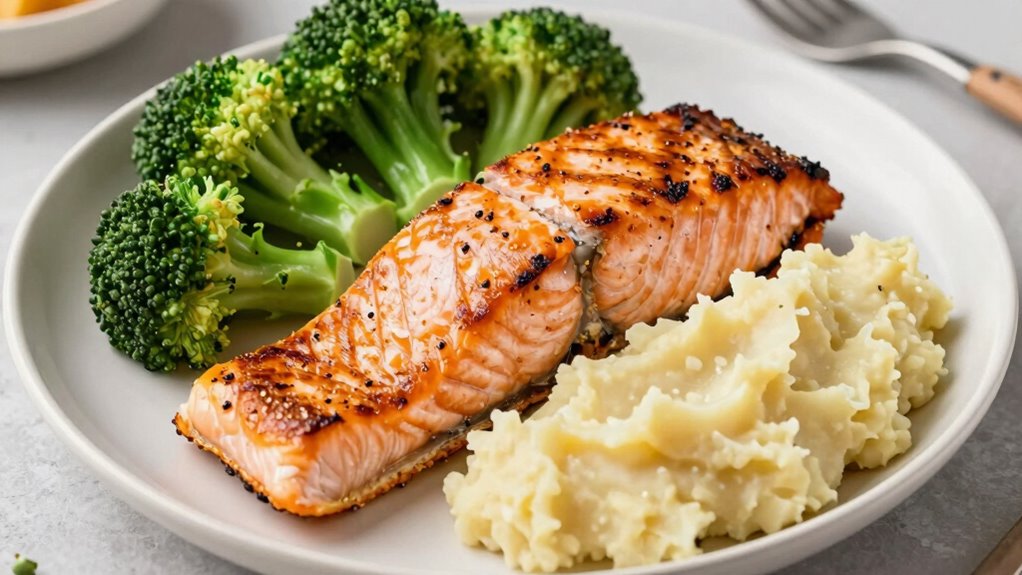
To make sure your protein intake aligns with your specific health goals and dietary restrictions, you need to tailor your meal plan accordingly. Personalized nutrition plays a key role in meeting your unique needs. Consider these steps:
- Identify your dietary restrictions, such as gluten intolerance or vegetarian preferences.
- Select protein sources that fit your restrictions while ensuring adequate intake.
- Adjust portion sizes based on your activity level and health objectives.
- Incorporate protein-rich foods that support your dietary goals and provide essential nutrients, taking into account how different astrological signs may influence your dietary choices and preferences. Additionally, understanding your nutritional needs based on age and health status can help optimize your meal plan for better health outcomes.
- Recognize the importance of evidence-based dietary guidelines to ensure your meal plan is both effective and safe, supporting overall topical authority in your nutrition choices.
Quick Guide: Top Protein Sources for Older Adults

Choosing the right protein sources is essential for maintaining muscle mass and overall health as you age. Top options include lean meats like chicken and turkey, eggs, and dairy products such as Greek yogurt and cheese. For quick, convenient options, protein shakes are excellent, especially if you struggle to eat enough solid food. Don’t overlook plant-based options like beans, lentils, tofu, tempeh, and nuts, which provide essential nutrients and fiber. Seafood like salmon and tuna also offer high-quality protein and healthy fats. Incorporating a variety of these sources assures you get a broad spectrum of amino acids and nutrients. Diverse food choices play a crucial role in ensuring clear, detailed images, which can enhance visual experiences when using protein-rich meals as part of a balanced diet. Including protein variety in your meals helps optimize nutrient intake and support overall health as you age. Selecting a nutrient-rich and diverse protein intake can significantly contribute to maintaining strength and vitality. Whether you prefer animal or plant-based options, choosing diverse protein sources supports your strength, energy, and overall well-being as you age.
Frequently Asked Questions
How Does the Easy Plate Method Support Overall Health in Older Adults?
The Easy Plate Method supports your overall health by promoting nutritional balance and meal simplicity. It helps you easily include enough protein, fruits, vegetables, and grains in each meal, ensuring your body gets essential nutrients. By simplifying meal planning, it encourages consistent healthy eating habits, which can improve energy levels, maintain muscle mass, and support overall well-being as you age.
Can the Easy Plate Method Be Adapted for Specific Medical Conditions?
Yes, you can adapt the Easy Plate Method for specific medical conditions. By balancing dietary restrictions and medical adaptations, you tailor portions to meet unique health needs. For example, if you have kidney issues, you reduce protein intake; for diabetes, you control carbohydrate portions. You adjust the plate’s proportions, ensuring nutritional needs are met without compromising health, making the method flexible and functional for various medical conditions.
Are There Vegetarian or Vegan Options Within the Easy Plate Framework?
Yes, you can find vegetarian and vegan options within the Easy Plate Method. Focus on plant-based sources like beans, lentils, tofu, tempeh, nuts, and seeds to boost protein intake. Incorporate these foods into your meal portions, ensuring you balance your plate with vegetables and grains. These vegan options help you meet your protein needs while maintaining a plant-based diet, making the Easy Plate Method adaptable to your preferences.
How Often Should Older Adults Reassess Their Protein Intake Needs?
You should reevaluate your protein intake at least once a year, or more frequently if your health changes or activity levels shift. Regular protein monitoring helps you identify when dietary adjustments are needed to meet your evolving nutritional needs. Staying proactive ensures you maintain muscle mass and overall health as you age, making it easier to adapt your diet to support your well-being effectively.
What Are Common Mistakes to Avoid When Using the Easy Plate Method?
Don’t let your plate become a chaotic canvas; avoid common mistakes like neglecting portion control and poor meal timing. Overloading your plate skews nutrient balance, while irregular eating can leave you starved for essential proteins. Stay mindful, plan your portions carefully, and time your meals evenly. This way, you nourish your body consistently, turning each meal into a symphony of health rather than a missed beat.
Conclusion
You might think you need complex calculations to get enough protein, but the easy plate method simplifies everything. By focusing on balanced portions and smart choices, you can effortlessly meet your needs. Remember, even small tweaks—like adding a bit of yogurt or nuts—make a big difference. It turns out, keeping your diet simple and enjoyable isn’t just a theory; it’s a proven way to stay strong and healthy as you age.