TL;DR

Turn quiet afternoons into listening time
- Thousands of audiobooks, podcasts and originals
- Listen on your phone, tablet or Echo — also offline
- Cancel anytime
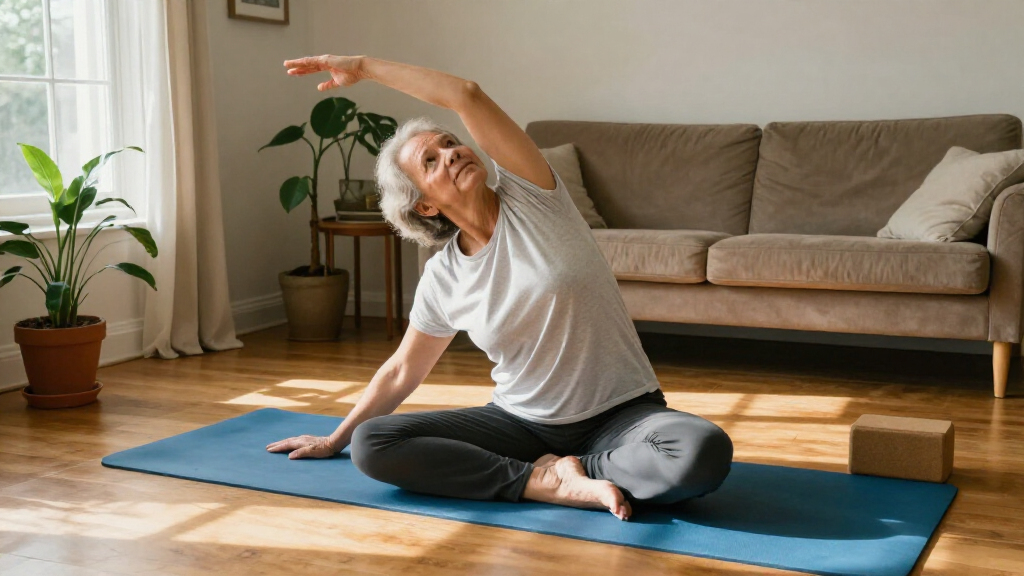
Fit&Well published a beginner-friendly, four-pose recovery yoga flow created by Yogalina Studios founder Alina Boyett. The home routine uses gentle stretches and breathing, with Boyett advising people to stay within a comfortable range and seek professional guidance if they have an injury or relevant medical condition.
Fit&Well has published a beginner-friendly, four-pose yoga flow created by Alina Boyett, founder of UK-based Yogalina Studios, for people looking to slow down and stretch at home after exercise or a day of sitting. The sequence requires no equipment or previous yoga experience, and Boyett says it should be done gently, without forcing stretches or pushing through pain.
The routine includes Waterfall pose, Child’s pose, a Ragdoll forward fold and a seated spinal twist. Boyett says the movements were selected to target areas that commonly feel tense after exercise, including the legs, hips, spine and shoulders. Yogalina teacher Misha Clarke demonstrates the sequence in a video accompanying the Fit&Well report.
The suggested holds are short: Waterfall and Child’s pose are held for three to five breaths; the Ragdoll fold is done for two rounds of three to five breaths; and the seated twist is repeated on both sides for two to three breaths each. The instructions emphasize slow movement and comfortable ranges rather than advanced flexibility.
Boyett describes the sequence as a recovery option after a challenging workout or long run, as well as after prolonged desk work. She recommends paying attention to how the body feels, and advises people with an injury or relevant medical condition to seek appropriate professional guidance before trying it.
A Short Routine for Recovery Days
The report offers readers a brief, accessible way to add gentle movement to time set aside for recovery. Its no-equipment format and basic postures may make the sequence easier to try at home for people new to yoga, though individual comfort and ability will vary.
Boyett’s framing also puts recovery alongside exercise rather than treating it as simply stopping activity. She says mindful movement and breathing can help people slow down and reconnect with their bodies. These are her recommendations and descriptions; the source does not report clinical evidence that this particular flow treats pain, injuries or other health conditions.
Products Worth Considering

Hyperice Hypervolt Go 3 Percussion Massage Gun with Carry Case

Hyperice Hypervolt 3 Percussion Massage Gun with Heated Head and Premium Carry Case

Therabody Theragun Mini 3rd Generation Massage Gun
As an affiliate, we earn on qualifying purchases.
Why Boyett Selected These Poses
Boyett told Fit&Well that the flow combines restorative postures, gentle twists and forward folds. In her explanation, the poses address areas she says commonly experience tension after exercise, while keeping the routine approachable for people without yoga experience or equipment.
The four movements offer different positions rather than a strenuous workout: Waterfall is performed lying near a wall with the legs raised; Child’s pose begins on hands and knees; Ragdoll is a standing forward fold with softened knees; and the seated twist rotates the upper body gently to each side. The source presents this as a recovery sequence, not a prescribed treatment or a substitute for professional care.
Limits of the Routine’s Evidence
The Fit&Well report does not describe a clinical study testing this specific sequence, nor does it quantify effects on flexibility, muscle soreness or recovery. Boyett’s descriptions of how the poses may feel or what they may help with are attributed guidance, not proof of a medical benefit.
The source also does not specify a publication date or explain how the flow should be adapted for different injuries, health conditions or mobility limitations. People who are unsure whether a pose is appropriate for them are advised by Boyett to seek professional guidance.
How to Try the Sequence Safely
Readers who choose to try the flow can follow the demonstrations and hold times provided in the Fit&Well report, moving slowly and stopping if a stretch causes pain. Boyett recommends keeping the movements within a comfortable range rather than trying to match a particular depth or shape.
The source does not announce a follow-up study, event or new program. Its practical next step is the demonstrated sequence itself; any future assessment of its effects would require evidence beyond the guidance in the report.
Key Questions
What poses are included in the yoga flow?
The sequence includes Waterfall pose, Child’s pose, a Ragdoll forward fold and a seated spinal twist, according to Fit&Well.
Does the routine require equipment or yoga experience?
Boyett describes it as a routine that can be done at home without equipment or previous yoga experience. Waterfall pose is performed near a wall.
How long should each pose be held?
The report suggests three to five breaths for Waterfall and Child’s pose, two rounds of three to five breaths for Ragdoll, and two to three breaths per side for the seated twist.
What safety guidance did Boyett give?
Boyett advises moving slowly, staying within a comfortable range and not forcing a stretch or pushing through pain. She recommends that anyone with an injury or relevant medical condition seek appropriate professional guidance before trying the sequence.
Source: fitandwell.com