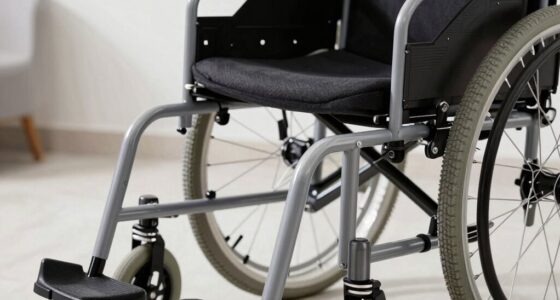
To find out if a cane, walker, or rollator suits you best, assess your balance and strength with simple tests like standing steadily or taking a few steps. Consider your environment—indoor or outdoor—and how much support you need. Stability, weight, and safety features also matter. If you want clearer guidance, exploring these steps further will help you choose the right device to boost your safety and confidence.
Key Takeaways
- Perform a simple balance test: stand with feet together for 10 seconds to assess stability needs.
- Walk a few steps to identify wobbling or hesitation, indicating support level required.
- Check your environment for hazards or uneven surfaces that influence device choice.
- Evaluate your muscle strength with basic exercises like sit-to-stand or single-leg stance.
- Match your stability, strength, and environment findings to choose between cane, walker, or rollator.
Which Mobility Aid Is Right for You? A Quick Decision Guide
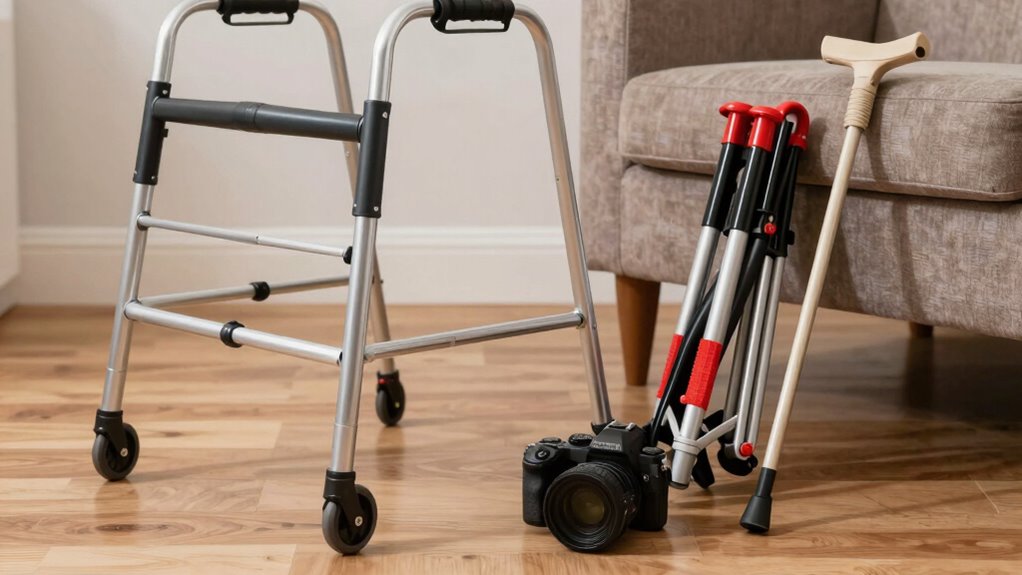
Are you unsure which mobility aid best suits your needs? With so many mobility device options, choosing the right assistive walking tools can feel overwhelming. First, assess your mobility level and stability. Do you need support for short distances or throughout the day? If you require minimal support, a cane might suffice. For more stability and weight distribution, a walker offers greater support. Rollators combine the benefits of walkers with added features like seats and storage, ideal for longer outings. Consider your strength, balance, and comfort when making a decision. Think about where you’ll use the device most—indoors or outdoors—and how much assistance you need. Choosing the right assistive walking tool ensures safety and confidence, helping you stay active and independent. Additionally, understanding content formats can help you find resources tailored to your mobility needs, including detailed comparisons of mobility aids and tips for selecting the best option. Recognizing security solutions can also provide added safety for those needing extra reassurance while maintaining their independence. Evaluating stability and support options can further assist in making a confident choice. Knowing about ergonomic design can also enhance comfort during use.
Understanding the Differences: Walkers, Rollators, and Canes
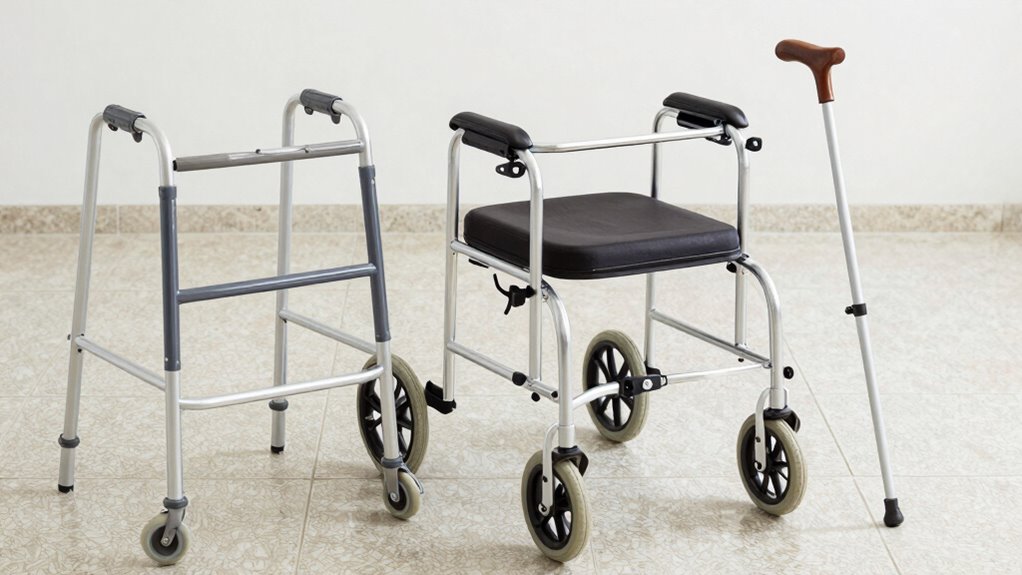
Understanding the differences between walkers, rollators, and canes is vital to choosing the right mobility device. Each provides different levels of walking assistance suited to your needs. A cane offers lightweight support and improves balance for steady walkers, making it ideal for minor stability issues. Walkers provide more stability with a frame you grip and often have four legs, perfect for those needing moderate support. Rollators are similar but include wheels and a seat, allowing you to rest when tired and navigate uneven terrain more easily. Knowing these distinctions helps you select the best device for your lifestyle and mobility challenges. Additionally, understanding the cost factors of somatic therapy can help in making informed decisions about your emotional health support options. Recognizing the different support levels offered by each device ensures you choose the right aid to maintain your independence and safety. Considering the individual mobility needs of users can further refine your choice, ensuring optimal comfort and functionality. For example, some environments may be better suited to certain devices based on their terrain adaptability, which influences ease of use and safety. Picking the right aid ensures confidence and safety while walking, so understanding these differences is an important first step.
How to Evaluate Your Balance, Strength, and Environment
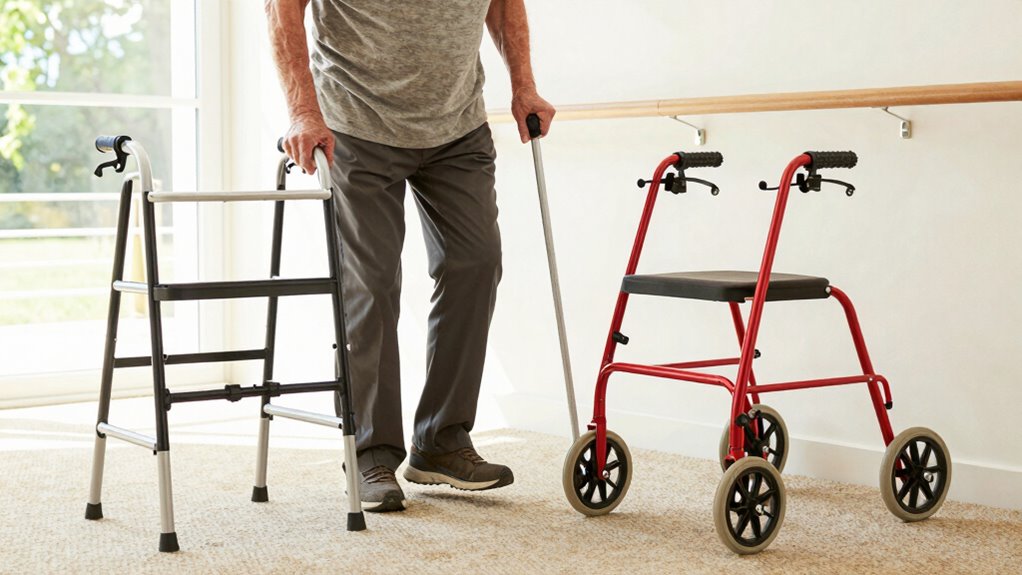
To choose the right mobility aid, you need to assess your balance and stability by noticing how steady you feel when standing or walking. Next, evaluate your muscle strength to determine if you can support yourself safely or if additional support is needed. Finally, consider your living environment to identify any obstacles or features that could influence your choice. Paying attention to home design and architecture details can help you better understand how your space might impact mobility aid use. Additionally, understanding child development and play-based strategies can inform adaptations in your environment that support safe and confident mobility. Recognizing how environmental modifications can improve safety and ease of movement is also crucial in making an informed decision. Being aware of mobility aid features can help you select the most suitable device for your needs and environment, especially when considering how different aids accommodate various user needs and preferences.
Assess Your Balance and Stability
Evaluating your balance and stability is an essential step before choosing the right mobility aid. To start, perform a simple balance assessment by standing with your feet together and holding your position for 10 seconds. Notice if you feel steady or if you wobble or need support. During your mobility evaluation, try walking a few steps in a safe environment, paying attention to any hesitation or loss of balance. Assess the stability of your environment—are there loose rugs, clutter, or uneven surfaces that could affect your safety? This helps you understand your current capabilities and limitations. Additionally, inspecting your surroundings for potential hazards and safety risks is crucial for preventing falls and ensuring your environment supports your mobility needs. Being aware of balance and stability can also help you identify when it’s time to seek professional advice or assistance. By carefully observing your balance and stability, you can better determine whether you need a cane, walker, or rollator to support your mobility safely.
Evaluate Your Muscle Strength
How can you effectively gauge your muscle strength to guarantee safe mobility? Start with simple tests like standing on one leg, then progress to sit-to-stand exercises. These actions help assess your muscle strength and inform your gait assessment. To make it clearer, consider this table:
| Test | What to Watch For | Indicator of Strength |
|---|---|---|
| Sit-to-stand | Smoothness and speed | Strong leg muscles |
| Single-leg stance | Balance and duration | Good stability and strength |
| Wall push-ups | Arm and shoulder strength | Upper body muscle health |
If you struggle with these, it may signal weaker muscles, suggesting the need for a mobility aid like a walker, rollator, or cane. Additionally, understanding the qualities of effective speakers bureaus can help you find guidance and support in improving your mobility and confidence. Incorporating muscle strength evaluation techniques into your routine can also help you monitor progress and adjust your activity levels accordingly.
Consider Your Living Environment
Your living environment plays a crucial role in maintaining safe mobility. Assess your home safety by checking for hazards like loose rugs, clutter, or uneven floors that could cause falls. Confirm railings are secure and pathways are clear. Think about outdoor mobility—are sidewalks even and well-maintained? Do you have enough lighting to see clearly? Consider how your space supports your balance and strength. If your home has stairs or narrow doorways, you might need a mobility aid that offers more stability. Outdoor areas should be accessible and safe, with smooth surfaces and handrails if needed. By evaluating both your indoor and outdoor environment, you can better determine which mobility aid will keep you safe, confident, and independent in your daily activities.
Performing the Quick Test to Find Your Best Fit

To quickly determine the best fit for your mobility aid, start by performing a simple test. Begin with balance exercises to see how well you can stand and stabilize yourself without support. Notice if you feel steady or if you tend to wobble. Next, do a quick mobility assessment by walking a short distance, paying attention to your stride, comfort, and confidence. If you feel unsteady or fatigued, a cane might be sufficient. If you need more support and stability, a walker or rollator could be better. Keep your posture upright and pay attention to how each movement feels. This quick test helps identify which device offers the best support, ensuring safety and comfort as you move around. Additionally, understanding your specific needs can be influenced by Youngster Choice and other factors that affect mobility options, including proper assessment techniques. Recognizing personal mobility requirements is essential for choosing the right aid. Properly assessing your balance and stability can make a significant difference in selecting the most suitable device, especially when considering individual mobility needs and how they impact device selection.
What Safety Features and Comfort Should You Look For?
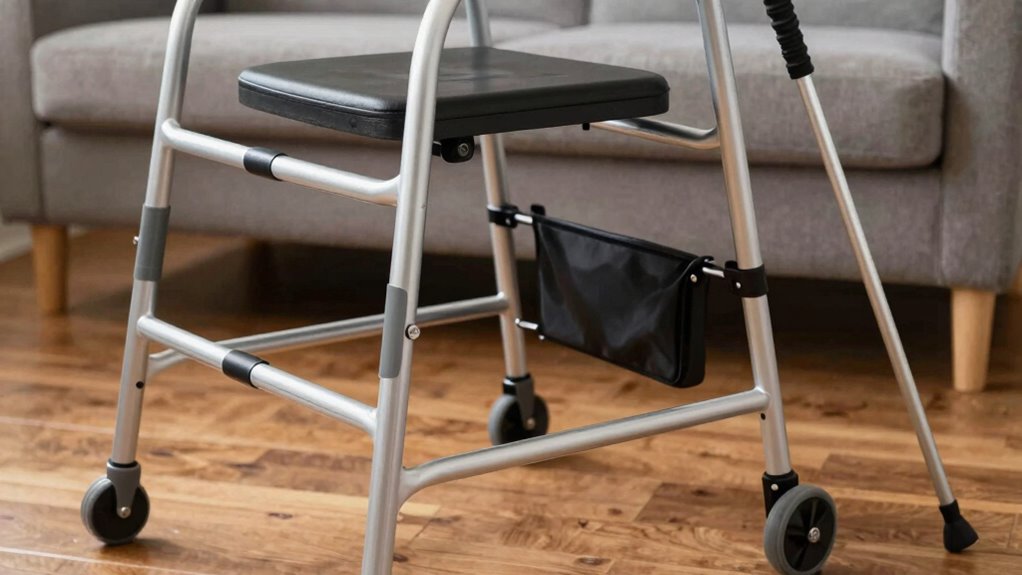
When choosing a mobility aid, safety features like anti-tip mechanisms can prevent falls, while padded handles and seats boost comfort during use. You should look for these features to feel secure and supported throughout your day. Incorporating regional flavor influences into the design can also enhance user satisfaction by providing familiarity and comfort. Additionally, considering the type of mobility device that best suits your lifestyle can improve overall independence. For example, selecting a device with ergonomic design principles can reduce strain and increase ease of use, further promoting safety and comfort. Regular device maintenance checks are essential to ensure that your aid remains reliable and safe over time. Paying attention to safety features and comfort helps you find the right device for your needs.
Anti-Tip Features
Anti-tip features are essential safety components to guarantee falls and make certain stability while using a walker, rollator, or cane. These safety features include anti tip mechanisms designed to prevent tipping forward or backward, especially on stairs or uneven surfaces. Look for walkers and rollators with anti-tip bars or rear stabilization devices that reduce the risk of accidents. Some models have locking wheels or brakes that enhance safety during transfers or when stationary. Proper placement of anti-tip mechanisms ensures your device remains balanced and secure. When choosing your mobility aid, prioritize those with effective anti-tip features, as they considerably improve safety and confidence during use. These safety features are vital for preventing falls and ensuring a stable, comfortable experience.
Padded Handles and Seats
Padded handles and seats considerably enhance both safety and comfort when using mobility devices like walkers, rollators, or canes. Padded handles provide a softer grip, reducing hand fatigue and preventing blisters during extended use. Look for handles with sufficient padding that doesn’t slip or cause discomfort. Padded seats add convenience, allowing you to rest comfortably without pain or pressure points. Choose a device with cushioned seating that’s sturdy and supportive, especially if you plan to sit frequently. These features help you feel more secure and relaxed, making mobility easier and less tiring. Prioritizing padded handles and seats ensures a safer, more comfortable experience, encouraging you to stay active and independent longer.
Factors Like Stability, Weight, and Cost to Consider

Choosing the right mobility aid involves weighing factors like stability, weight, and cost, which can substantially impact daily use. Stability ensures confidence and safety, while weight affects ease of handling. Cost varies widely and influences long-term affordability. For example, a rollator offers excellent stability but may be heavier and more expensive, while a cane is lightweight but less stable. Look for features like an ergonomic grip for comfort and a lightweight design for effortless mobility. Consider the table below to compare options:
| Factor | Walker | Rollator | Cane |
|---|---|---|---|
| Stability | High, with support | Very high, with brakes | Low, offers basic support |
| Weight | Heavier, often with ergonomic grip | Moderate, adjustable, lightweight | Very lightweight |
| Cost | Moderate to high | Usually more expensive | Least expensive |
When to Talk to a Healthcare Professional for Advice

You should talk to a healthcare professional whenever you’re unsure about which mobility aid best suits your needs or if you experience ongoing discomfort or difficulty using your current device. A professional consultation can provide valuable guidance tailored to your specific condition. They may recommend a thorough mobility assessment to evaluate your balance, strength, and mobility limitations. This assessment helps determine whether a walker, rollator, or cane is most appropriate, guaranteeing your safety and comfort. Don’t ignore persistent pain or instability, as these issues might signal the need for a different device or additional support. Seeking professional advice guarantees you’re using the right aid correctly and helps prevent falls or injuries. Remember, a healthcare professional’s expertise is vital for making informed, safe choices.
Tips for Trying Out Your New Mobility Aid and Making the Transition
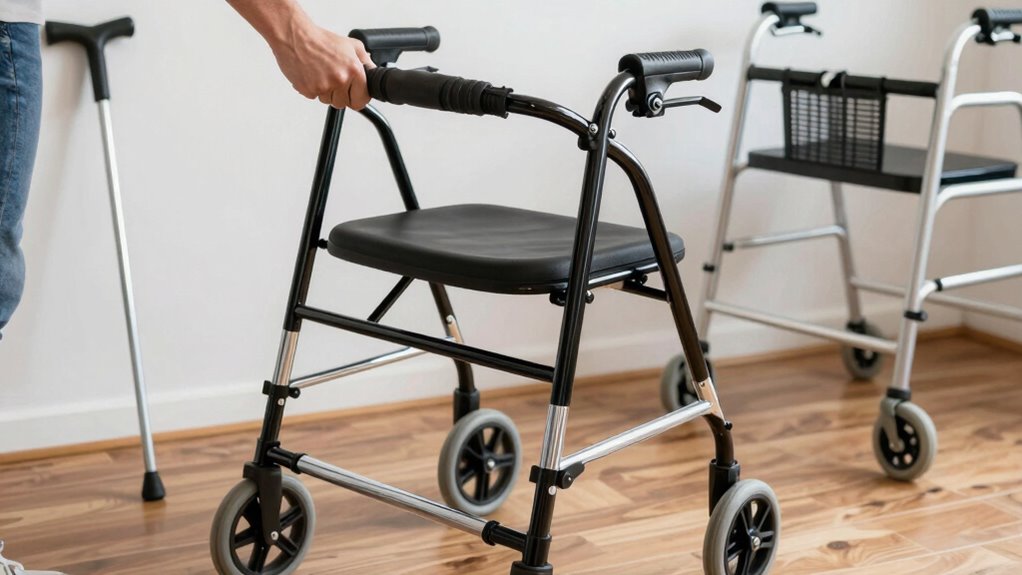
Getting comfortable with your new mobility aid requires patience and a few practical steps. Start by adjusting the height so that your elbows bend slightly when you hold the handles or grips. Proper height ensures stability and comfort. Once adjusted, try walking with it in a safe area, paying attention to how it feels under your hands and feet. Choosing accessories like a basket or cane holder can enhance convenience and safety. Don’t rush the progression—use your aid regularly to build confidence and assess how well it supports your needs. If something feels uncomfortable or unstable, tweak the adjustments or consider adding accessories for better support. Remember, making small adjustments helps you find the perfect fit and makes your transition smoother.
Frequently Asked Questions
Can I Use a Mobility Aid Temporarily or Long-Term?
You can absolutely use a mobility aid temporarily if you’re recovering from an injury or surgery. If your mobility issues persist or worsen, it might become a long-term necessity. It’s best to consult your healthcare provider to determine the appropriate duration of use. Whether temporary or long-term, using the right aid can enhance your safety and independence, so don’t hesitate to seek professional advice to make the best choice.
How Often Should I Replace or Upgrade My Mobility Device?
Think of your mobility device as a trusted partner—regular check-ins keep it strong. You should replace or upgrade it when device maintenance becomes frequent or repairs are costly, typically every 3-5 years. Upgrading ensures safety and comfort, so stay attentive to signs like worn grips or unstable wheels. Regularly evaluating your device guarantees it continues to support your independence effectively, just like a good partner always has your back.
Are There Specific Brands Known for Durability and Comfort?
You should look for brands that prioritize durability testing and comfort features. Trusted names like Drive Medical, Nova, and Medline are known for their sturdy construction and user-friendly designs. These brands often incorporate comfort features such as padded handles, ergonomic grips, and lightweight frames. When choosing, check reviews for durability and comfort, and verify that the device meets safety standards to guarantee long-lasting support and comfort during use.
Can I Customize My Walker, Rollator, or Cane for Better Fit?
Yes, you can customize your walker, rollator, or cane for a better fit. Many models offer personalized fittings to guarantee comfort and safety. You can also choose from a variety of accessory options like baskets, lights, or seats to suit your needs. Customization helps improve stability and convenience, making it easier to use your mobility aid confidently throughout your day.
What Insurance Options or Assistance Programs Are Available for Mobility Aids?
You can often get mobility aids covered through insurance plans like Medicare, Medicaid, or private insurance, which may include coverage for walkers, rollators, or canes. Additionally, assistance programs such as state grants, non-profit organizations, and local health departments can help reduce costs. Check your insurance policy’s coverage details and explore community resources to find financial support, making it easier to access the mobility aid that best fits your needs.
Conclusion
Choosing the right mobility aid is like finding your hero’s tool—it needs to suit your needs and boost your confidence. By understanding the differences and performing the quick test, you can confidently step into your new chapter. Remember, even Hercules relied on his strength and support; don’t hesitate to consult a pro. With the right fit, you’ll navigate your world with newfound ease, ready to face whatever adventures come next.