To adjust your walker so it doesn’t pull you forward, start by measuring your height without shoes and set the handle height so your elbows bend slightly at 15-30 degrees when gripping the handles. Make sure the frame is stable, level, and fits comfortably without leaning or stretching. Check for misalignments and secure everything properly. For more detailed steps on fine-tuning and safety, keep exploring how to achieve the perfect fit.
Key Takeaways
- Adjust the handle height so your elbows are slightly bent at 15-30 degrees when gripping the handles.
- Ensure the walker’s frame sits evenly on the ground, with legs adjusted for stability and proper alignment.
- Verify the seat height and stability regularly to prevent wobbling or unevenness that can cause pulling.
- Check that hand grips are comfortable and allow your wrists to remain neutral without stretching.
- Seek professional assistance if adjustments do not improve pulling or if the walker feels unstable.
Why Properly Adjusting Your Walker Prevents Pulling You Forward
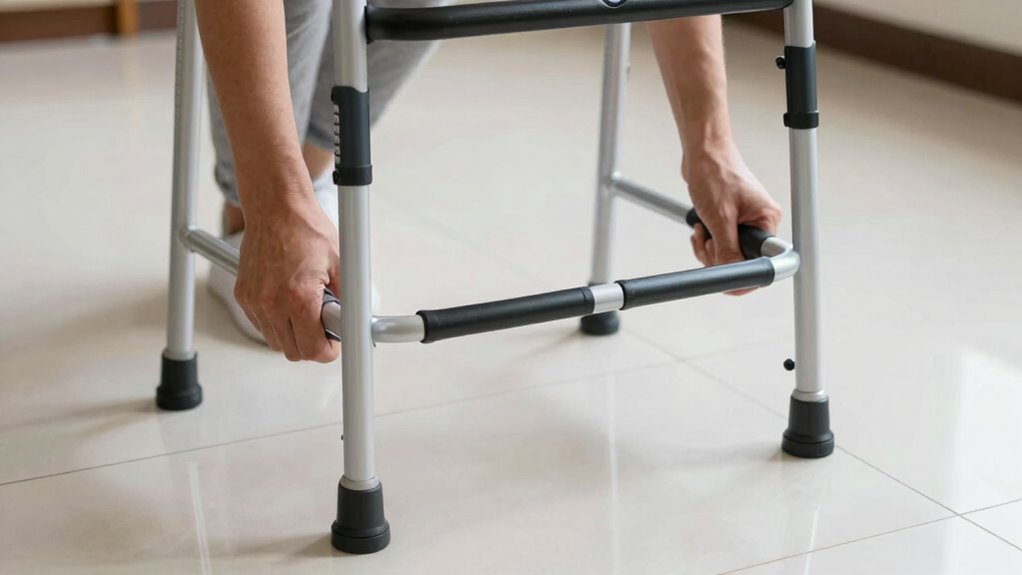
When your walker is properly adjusted, it helps keep your balance steady and prevents you from leaning forward too much. Using the right walker accessories, like adjustable hand grips and anti-slip tips, enhances stability and comfort. Proper adjustment makes certain that your walking speed remains natural and controlled, reducing the tendency to pull forward. If your walker is too high or low, you’ll find yourself leaning or stretching to reach, which can cause imbalance and pulling. Correct height settings promote a comfortable posture, allowing your arms and shoulders to work naturally. This minimizes strain and keeps your movements smooth. When your walker fits well, you’ll walk with more confidence, maintain better control, and avoid pulling forward unexpectedly. Proper adjustments are essential for safe, effective mobility. Additionally, understanding the importance of walker height adjustments helps ensure you’re using your walker safely and effectively. Properly adjusted walkers also reduce wear and tear on the equipment, prolonging its lifespan and maintaining safety standards. Ensuring that your walker has the right ergonomic design can further improve comfort and prevent fatigue during use. Regularly checking your walker setup can help maintain optimal adjustment and safety over time.
Check Your Walker’s Fit and Watch for Misalignment Signs

Make certain your walker fits correctly by checking the seat height and stability regularly. Look for signs of misalignment, like uneven legs or wobbling frames, which can affect safety. Inspect the frame carefully to ensure everything is aligned and secure before each use. Being aware of ethical considerations in medical devices can help you make informed decisions about proper maintenance and safety standards. Additionally, regularly reviewing product safety standards can help identify potential issues before they cause problems. Monitoring adjustment techniques ensures your walker remains comfortable and safe to use over time. Regularly observing for wear and tear can prevent sudden failures and prolong the lifespan of your equipment. Paying attention to manufacturing defects can also help you catch issues early that might compromise safety.
Check Seat Height and Stability
Ensuring your walker fits properly is essential for safe and comfortable use. Start by checking the seat height; it should allow your elbows to bend slightly when you hold the handles. Sit on the seat to assess seat comfort, making sure it’s at a height that supports your posture without causing strain. Examine the material durability—look for tears, cracks, or signs of wear that could compromise stability. A stable seat prevents wobbling or tipping, which can lead to falls. Test the stability by gently shifting your weight side to side and forward. If the seat wobbles or feels loose, tighten any loose bolts or consider replacing worn components. Proper seat height and stability are vital for safe, confident movement with your walker. Additionally, reviewing Gold IRA Markets can offer insights into secure and stable investment options, paralleling the importance of stability in mobility devices. To maintain optimal performance, regularly inspect the mount leveling kits and ensure all components are properly aligned and secure. Regular maintenance and alignment checks help prevent unexpected issues and prolong the lifespan of your walker. Remember that wear patterns can indicate when parts need replacement, helping you maintain safety and functionality over time.
Inspect Frame for Misalignment
Inspecting your walker for misalignment is a crucial step to guarantee it fits properly and functions safely. During frame inspection, carefully examine all parts of the walker’s frame for signs of misalignment. Look for uneven gaps between joints, bent tubing, or warped sections that indicate the frame isn’t aligned correctly. Misalignment signs may include wobbling, uneven height on different sides, or difficulty folding and unfolding the walker smoothly. If you notice any of these issues, avoid using the walker until it’s properly adjusted or repaired. Ensuring the frame is straight and properly aligned helps prevent pulling or instability when you walk. Regularly inspecting the frame keeps your walker in top shape, promoting safe and comfortable mobility.
How to Measure Your Height and Adjust Your Walker Correctly
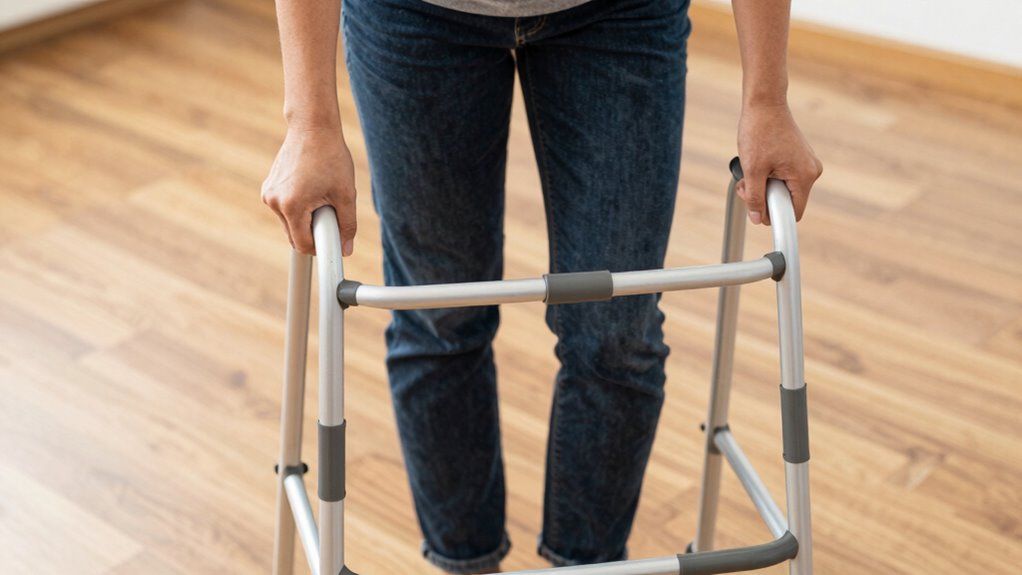
To properly adjust your walker, start by measuring your height accurately. Stand straight without shoes and use a measuring tape to find your full height. This guarantees you select the right height for your mobility aids. Once you know your height, adjust the walker’s frame so that the hand grips are level with your wrists when your arms are relaxed at your sides. Many walkers come with adjustable legs or frames, and some feature compatible walker accessories that help customize the fit. Proper height adjustment prevents strain and helps avoid pulling forward or feeling unstable. Additionally, understanding content formats can help you find the most useful and accessible information about mobility devices. Ensuring the correct adjustment procedures can also improve your safety and comfort during use. Remember, a well-measured walker provides better support and safety, making your mobility aids more effective and comfortable during daily use. Properly adjusting your walker not only enhances your stability but also reduces the risk of injury. Taking the time to consult professional guidance can further ensure your walker is set up correctly for your specific needs. Being aware of common adjustment mistakes can help you avoid potential hazards and ensure optimal support.
Adjust Your Walker’s Hand Grips for a Secure and Comfortable Grip

Adjusting your walker’s hand grips for a secure and comfortable hold is essential for safe mobility. Proper hand positioning ensures grip comfort and reduces fatigue. To achieve this, consider these steps:
- Check that your hands rest naturally on the grips without stretching or bending your wrists.
- Ensure your thumbs wrap comfortably around the handles, avoiding tight grips that cause discomfort.
- Adjust the height of the grips if possible, so your elbows stay slightly bent at about a 15-30 degree angle.
- Ensure your hand positioning supports safe mobility and prevents pulling or shifting during use.
Make Sure Your Walker Is Stable to Avoid Pulling Forward
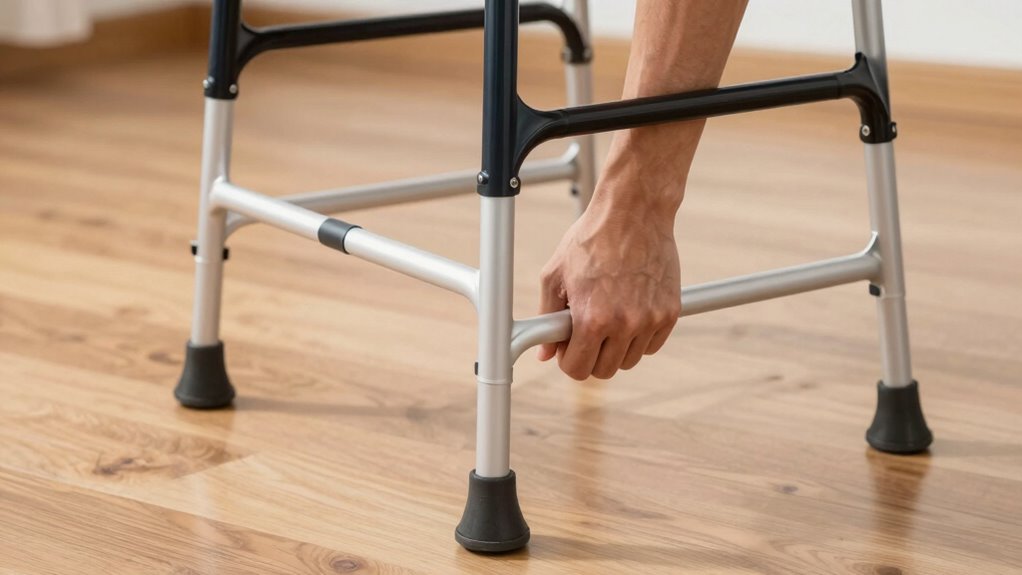
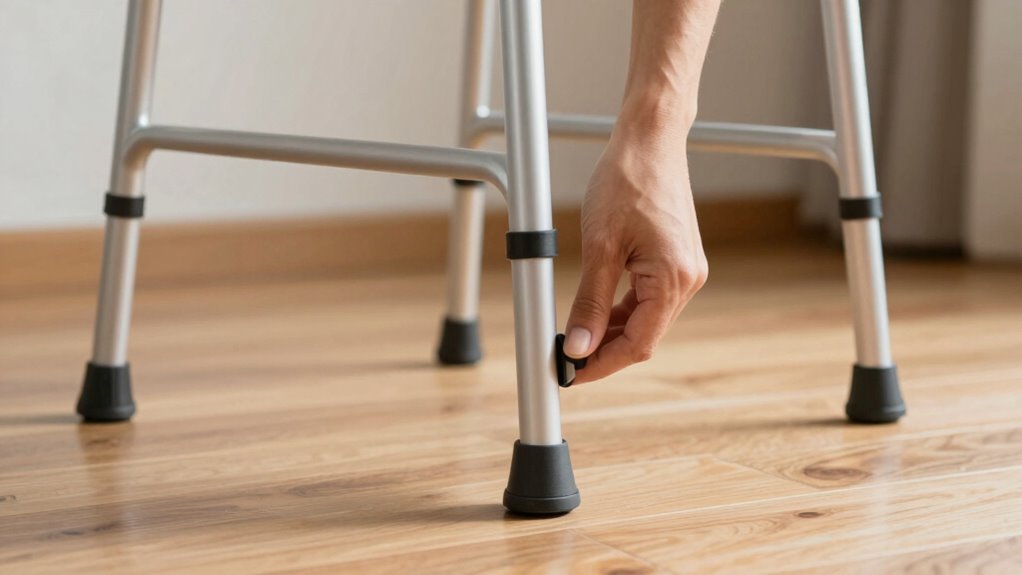
Ensuring your walker is stable is essential to prevent it from pulling forward unexpectedly. Start by inspecting your walker type—whether it’s a standard, rollator, or one with additional features—and verify all components are secure. Check that all walker accessories, such as anti-slip tips or brakes, are properly installed and functioning. Loose or worn-out parts can compromise stability, causing the walker to shift unexpectedly. Adjust the height of the legs if necessary, and make sure the frame sits evenly on the ground. For added stability, consider adding accessories like rubber tips or stabilizers designed for your specific walker type. Regular maintenance and proper setup help keep your walker steady, reducing the risk of pulling forward and ensuring safer use. Proper setup and maintenance practices are vital for maintaining overall stability. Incorporating walker stability principles and routine checks into your routine can further prevent accidents and ensure the walker remains secure during use. Additionally, understanding stability can help you identify potential issues before they lead to problems. Performing routine inspections regularly can catch issues early and maintain optimal stability.
How to Test and Fine-Tune Your Walker’s Fit at Home

Before using your walker regularly, it’s important to test and fine-tune its fit to guarantee maximum comfort and safety. First, stand upright with your arms relaxed at your sides and hold the walker handles comfortably. Next, check that the height feels right—your elbows should be slightly bent. Finally, ensure your walker accessories, like storage compartments, are secure and accessible. To fine-tune, adjust the handle height if necessary, using the adjustment points. Confirm the walker feels stable and doesn’t pull forward or wobble. Remember, a proper fit prevents strain and improves balance. Regularly inspect your walker’s accessories and storage options to keep everything within easy reach. Testing and adjusting at home ensures your walker remains safe and comfortable for daily use.
Common Mistakes to Avoid When Adjusting Your Walker

Make certain your handle height is set correctly; an improper height can cause discomfort or instability. Avoid tightening the walker’s parts too much, as it can damage the frame or make adjustments difficult. Paying attention to these details helps ensure your walker is safe and comfortable to use.
Proper Handle Height Setting
When adjusting the handle height on your walker, it’s crucial to set it at the right level to guarantee safety and comfort. Proper handle ergonomics help prevent strain and improve stability. Avoid common mistakes that compromise walker maintenance and safety.
- Setting the handles too high or low causes awkward posture and discomfort.
- Failing to double-check the handle height after adjustments can lead to unsafe use.
- Ignoring the user’s arm and shoulder alignment results in poor handle ergonomics, increasing fatigue.
Adjusting the handle height correctly ensures the best walker maintenance and reduces the risk of pulling or instability. Always measure from the ground to your wrist when standing naturally, and recheck the height regularly for continued comfort and safety.
Avoiding Excessive Tightening
Excessively tightening the adjustment screws or bolts on your walker can seem like a way to guarantee stability, but it often causes more harm than good. Over-tightening can damage the frame, reduce flexibility, or make future adjustments difficult. When using walker accessories or other mobility aids, avoid cranking bolts too tight, as this can compromise the device’s function and comfort. Proper adjustment relies on secure but not overly tight fittings. If your walker feels rigid or unstable, check for uneven tightening rather than excessive force. Remember, the goal is a snug fit that allows smooth movement without pulling or wobbling. Maintaining the right tension ensures safety and longevity, preventing unnecessary wear or damage to your mobility aids.
When Should You Get Professional Help With Your Walker?
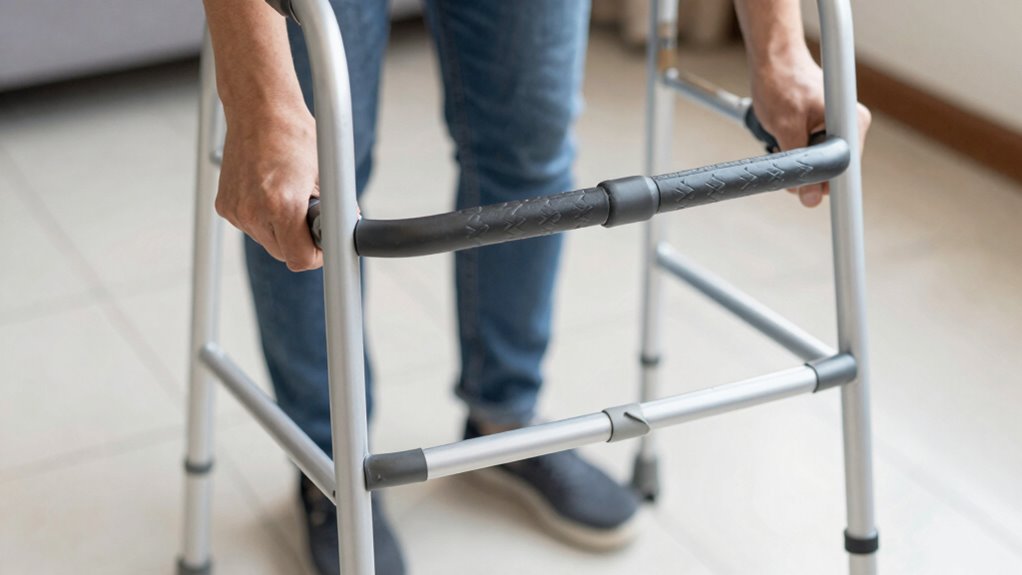
Are you unsure if your walker is properly adjusted or if it’s time to seek professional guidance? You should consider professional help when:
- You notice persistent discomfort or pain despite adjusting your walker accessories.
- Your walker feels unstable or wobbly, risking falls.
- You’re unsure if your mobility aids are correctly fitted or if adjustments are not improving your safety.
A professional can ensure your walker is fitted correctly and help you optimize its setup. They can also recommend the right accessories for your needs, ensuring your safety and comfort. If you’re experiencing issues with your mobility aids or feel unsure about the adjustments, don’t hesitate to seek expert assistance. Proper adjustment is essential for safe, effective use.
Keep Your Walker Properly Adjusted for Safe, Comfortable Mobility
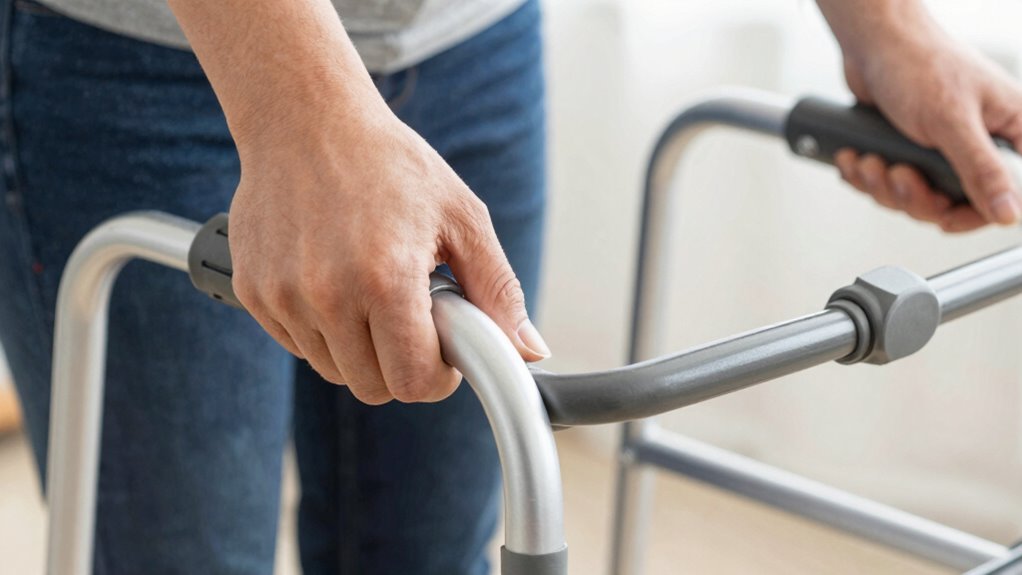
Maintaining your walker’s proper adjustment is key to ensuring safe and comfortable mobility. To achieve this, focus on walker customization to fit your height and stride. Adjust the height of the handles so they align with your wrists when your arms are relaxed at your sides. Properly adjusted height reduces strain on your shoulders and improves stability. Incorporate mobility accessories, like rubber tips or baskets, to enhance safety and convenience. Regularly check the adjustments and replace worn-out parts to keep your walker functioning *preferably*. When your walker is properly customized, you’ll experience smoother, safer movement. Keeping it well-maintained and tailored to your needs helps prevent discomfort and accidents, allowing you to move confidently and comfortably every day.
Frequently Asked Questions
How Often Should I Check My Walker’s Adjustments?
You should check your walker’s adjustments weekly to guarantee safe and proper walker maintenance. Use adjustment tools to tighten or loosen components as needed, especially if you notice any wobbling or difficulty moving. Regular inspections help prevent accidents and keep your walker functioning smoothly. Additionally, always recheck after any bumps or if you’ve stored it for a while. Staying proactive with maintenance ensures your safety and prolongs your walker’s lifespan.
Can an Improperly Adjusted Walker Cause Pain or Injury?
Ever wondered if an improperly adjusted walker could harm you? It definitely can, impacting your Walker safety and proper mobility. If your walker is too high or low, it may cause strain, pain, or even falls. Ensuring your walker fits correctly helps prevent injuries and promotes secure movement. Regularly check and adjust your walker to stay comfortable, safe, and maintain ideal mobility, reducing the risk of pain or accidents.
What Signs Indicate My Walker Needs Adjustment?
You’ll notice signs like your walker pulling to one side, difficulty in moving it smoothly, or if it feels unstable or wobbly. These common issues often indicate your walker needs maintenance or adjustment. If you feel discomfort or experience instability, it’s a clear sign to check for loose parts or uneven height settings. Regularly inspecting and adjusting your walker helps prevent pain and guarantees safe, effective support.
How Do I Know if My Walker Height Is Correct?
Your walker height is perfect if, when you stand upright, your elbows bend at about 15-30 degrees, like a relaxed bird’s wing. To check, use your adjustment tools to set the height, ensuring the handgrips are level with your wrists. If it feels cumbersome or causes strain, it’s time for walker maintenance and a quick readjustment. Proper height prevents fatigue and keeps you steady on your feet.
Is It Safe to Adjust My Walker Myself or Seek Professional Help?
It’s generally safe to adjust your walker yourself if you have the right adjustment tools and follow proper safety guidelines. However, if you’re unsure about the process or feel uncomfortable, it’s best to seek professional help to guarantee walker safety. Proper adjustments prevent pulling forward and reduce fall risks. Always double-check your adjustments and consult a healthcare provider if you’re uncertain, for peace of mind and ideal safety.
Conclusion
By taking the time to properly adjust your walker, you guarantee it feels like an extension of your body—steady and reliable. When your walker fits just right, you’ll move with confidence, not like a boat caught in a storm. Regular checks and adjustments keep you safe and comfortable, so don’t wait for problems to arise. Think of your walker as a trusted partner on your journey—guide it well, and it’ll support you every step of the way.