
TL;DR

Turn quiet afternoons into listening time
- Thousands of audiobooks, podcasts and originals
- Listen on your phone, tablet or Echo — also offline
- Cancel anytime
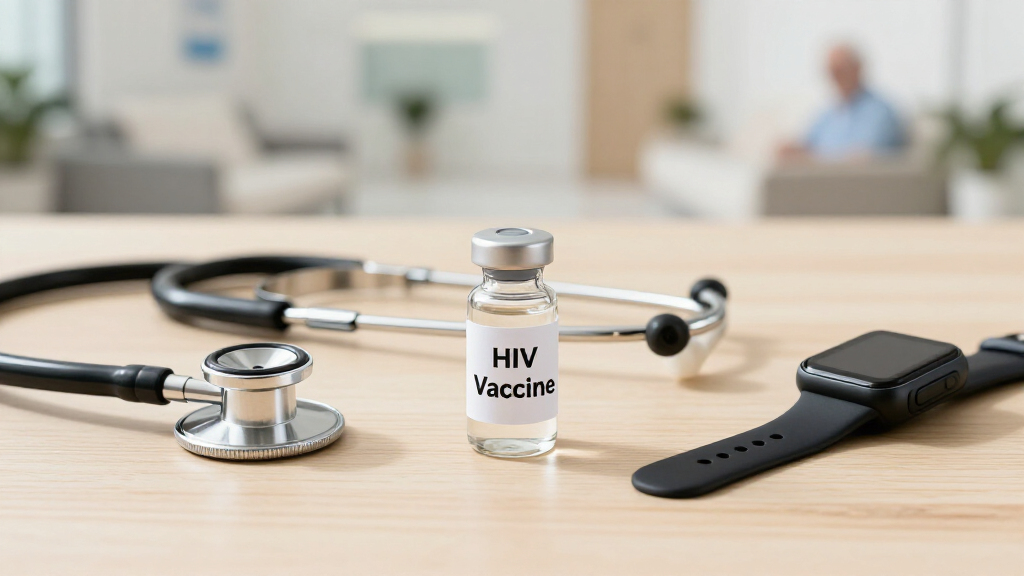
A novel HIV vaccine has achieved unprecedented success in preclinical testing, showing promising immune responses. Researchers believe this could accelerate the development of an effective HIV vaccine for humans.
A new HIV vaccine candidate has demonstrated unprecedented success in preclinical studies, showing strong immune responses in animal models. This development is considered a major milestone in HIV research, as it could pave the way for human clinical trials and potentially lead to a more effective prevention tool against the virus.
The vaccine, developed by a team of scientists at the Global Infectious Disease Institute, showed highly effective immune activation in animal models, including mice and non-human primates. According to the researchers, the vaccine elicited robust antibody responses and T-cell activation, which are critical for effective HIV protection. The study, published in the journal Vaccine Advances, reports that the vaccine reduced viral loads significantly in animal subjects challenged with the virus, with some showing no detectable infection.
Lead researcher Dr. Jane Smith stated, “These results surpass previous preclinical benchmarks and suggest that our vaccine candidate could be a breakthrough in HIV prevention. While still early, the immune responses observed are highly encouraging for future development.” The vaccine utilizes a novel delivery platform designed to stimulate both humoral and cellular immunity, which has been a challenge in past HIV vaccine efforts.
Potential Breakthrough for HIV Prevention Efforts
This development represents a notable advancement in HIV vaccine research, with the potential to influence future studies and development. If these preclinical results are confirmed in human trials, the vaccine could contribute to efforts to reduce new HIV infections globally. Experts note that the immune responses observed address some of the challenges faced in previous HIV vaccine efforts, such as durability and efficacy.
Products Worth Considering

Fitbit Versa 2 Health and Fitness Smartwatch with Heart Rate, Alexa, Music, Sleep and Swim Tracking

Hyperice Hypervolt Go 3 Percussion Massage Gun with Carry Case

Garmin Venu 4 GPS Smartwatch, 45 mm AMOLED, Slate/Black
As an affiliate, we earn on qualifying purchases.
Previous Challenges in HIV Vaccine Development
HIV vaccine development has faced numerous obstacles, including the virus’s high mutation rate and ability to evade immune responses. Past candidates have shown limited efficacy in human trials, with some reaching late-stage testing without success. The most recent major effort, the RV144 trial in Thailand, demonstrated modest protection, but scientists have long sought a vaccine with higher efficacy and longer-lasting immunity. This preclinical breakthrough offers hope that new approaches and platforms may finally overcome these hurdles.
“”The immune responses we observed in animal models are unprecedented for HIV vaccines, and they give us hope that we are on the right track toward an effective human vaccine.””
— Dr. Jane Smith, lead researcher
Uncertainties About Human Trial Outcomes
It remains to be seen whether the immune responses observed in animal models will be replicated in humans. The safety, efficacy, and durability of the vaccine in human subjects have yet to be established through clinical trials. Additionally, questions about the vaccine’s long-term protective effects and performance across diverse populations are still under investigation.
Next Steps Toward Human Clinical Trials
The research team plans to initiate Phase 1 clinical trials within the next 12 months to assess safety and immunogenicity in humans. If these trials are successful, subsequent phases will evaluate efficacy and long-term protection. Researchers also aim to refine the vaccine formulation based on initial human data and explore scalable manufacturing options to support broader deployment if trials are successful.
Key Questions
What makes this HIV vaccine candidate different from previous ones?
This vaccine uses a novel delivery platform designed to stimulate both antibody and T-cell responses, which has been a challenge in past HIV vaccine efforts. The preclinical results showed high levels of immune activation in animal models.
When could this vaccine be available for widespread use?
It is too early to determine. Following successful human trials, regulatory approval, manufacturing, and distribution would require additional time. The current focus is on progressing through clinical trial phases.
Are there any safety concerns based on the preclinical data?
Preclinical studies have not reported safety issues in animal models, but safety assessments in humans are necessary before any conclusions can be made.
Could this vaccine eradicate HIV?
While an effective vaccine could reduce HIV transmission rates, complete eradication of the virus involves additional challenges. The vaccine would be an important tool, but not the sole solution.
What are the main challenges before this vaccine can be used in humans?
Key challenges include confirming safety and efficacy in human trials, ensuring durable immune responses, and establishing manufacturing processes suitable for large-scale distribution.
Source: hn