TL;DR

Turn quiet afternoons into listening time
- Thousands of audiobooks, podcasts and originals
- Listen on your phone, tablet or Echo — also offline
- Cancel anytime
A study published online in Gut reports that the AI model REDMOD identified subtle patterns in CT scans from patients later diagnosed with pancreatic cancer, an average of 475 days before diagnosis. It performed better than radiologists in the study, but the findings do not establish that it can screen the general population or improve patient outcomes; further testing is needed.
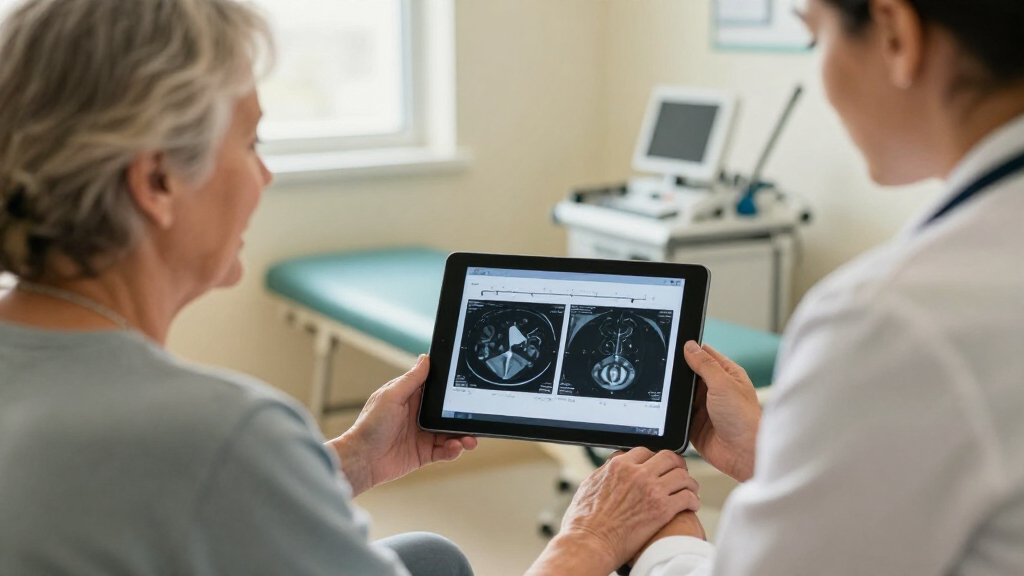
Researchers report that an artificial intelligence model called REDMOD detected subtle patterns in pancreatic CT scans an average of 475 days before patients received a clinical diagnosis of pancreatic cancer. The study, published online in the journal Gut, found the model performed better than experienced radiologists at identifying signals in scans that had been read as showing no cancer, but the results require further testing before the system can be used in routine care.
The researchers analyzed abdominal CT scans from 219 patients who were later diagnosed with pancreatic ductal adenocarcinoma, the most common form of pancreatic cancer. At the time the scans were taken, radiologists had not identified evidence of the disease. The scans ranged from less than a year to around three years before diagnosis: 87 were taken three to 12 months beforehand, 76 between 12 and 24 months, and 56 more than 24 months beforehand.
The team compared those scans with imaging from 1,243 people who remained cancer-free for up to three years after their scans. REDMOD examines fine patterns in pancreatic tissue, known as radiomics, and automatically outlines the pancreas on the scan. The researchers say the automated outlining avoids the need for specialists to trace the organ manually, a process that can vary between readers.
In the study, REDMOD’s sensitivity was 73%, compared with 39% for experienced radiologists. Sensitivity measures how often a test identifies people who have the disease. For scans taken more than two years before diagnosis, the model’s detection rate was 68%, compared with 23% for radiologists. These figures describe performance in the study groups; they do not show how REDMOD would perform as a general screening test.
A Longer Window to Investigate Risk
Pancreatic cancer is often diagnosed after it has advanced, while early disease may produce few noticeable symptoms and subtle tissue changes can be difficult to see on standard imaging. A method that flags changes earlier could, if validated and linked to effective follow-up, give clinicians more time to investigate people at elevated risk. The study offers evidence that existing CT scans may contain patterns not readily recognized through routine review.
The potential benefit remains a possibility, not a demonstrated patient outcome. The study did not establish that using REDMOD leads to earlier treatment, higher survival, or fewer deaths. The authors point to modeling research suggesting that increasing the proportion of localized pancreatic cancers at diagnosis could improve survival, but that projection is not evidence that this AI system achieves such a change.
Products Worth Considering

Withings Body Scan Smart Scale with Segmental Body Composition and ECG, Black

Therabody SmartGoggles 2nd Gen Heated Eye and Temple Massager

Levoit Vital 100S-P Air Purifier with Washable Pre-Filter
As an affiliate, we earn on qualifying purchases.
How the CT Scan Study Worked
REDMOD stands for Radiomics-based Early Detection Model. Rather than identifying a visible tumor alone, it analyzes subtle image-texture patterns in the pancreas. The researchers tested the approach on scans from people who were later diagnosed, then compared the results with scans from people who did not develop pancreatic cancer during the stated follow-up period.
The study also assessed the model in separate patient data. It correctly classified just over 81% of scans as cancer-free in an independent group of 539 patients from several hospitals, and classified 87.5% as cancer-free in a public dataset of 80 scans. Repeated scans from the same patients produced matching results in 90% to 92% of cases, according to the report. These results address particular test groups and do not by themselves establish performance in a screening program.
“This temporal window holds profound significance, as attaining such early detection would substantially augment the probability of cure and improved survival.”
— The study researchers, as quoted in the report
Limits Before Clinical Use
The findings do not show whether REDMOD would work reliably across a broader, more diverse population. The researchers identified limited ethnic diversity in the study population as a limitation, which could affect how well results carry over to other groups. The report says further work is needed, including testing in people at high risk, such as those with unexplained weight loss or a recent diabetes diagnosis.
Other practical questions remain: how often the model would flag people who do not have cancer, what follow-up tests would be appropriate, and whether using it would improve health outcomes. Although the study reports results from comparison datasets, these figures do not establish how the model would perform in routine clinical practice or among people being screened before symptoms arise.
Testing in Higher-Risk Patients
The next step identified by the researchers is to evaluate REDMOD in higher-risk patient groups and in more diverse populations. Further validation would need to establish how consistently the model works across hospitals and patient groups, and how its findings should guide clinical decisions. The report does not give a timeline for those studies or for any possible regulatory review.
Until that evidence is available, REDMOD remains a research tool rather than an established screening method. The study supports continued investigation of subtle CT scan signals, but clinicians and patients should not treat a model result as a diagnosis or a substitute for medical assessment.
Key Questions
What is REDMOD?
REDMOD is an AI model that analyzes subtle patterns in pancreatic tissue on CT scans and automatically outlines the pancreas. Researchers studied whether those patterns could be associated with pancreatic cancer before it was diagnosed clinically.
How far ahead of diagnosis did the model detect signals?
The study reports that REDMOD identified associated imaging signatures an average of 475 days before diagnosis among patients who later developed pancreatic cancer. That result comes from the study sample and does not predict how early the model would detect disease in other settings.
Did REDMOD outperform radiologists?
In the study, its reported sensitivity was 73%, compared with 39% for experienced radiologists. Sensitivity measures the share of people with the disease whom a method identifies; it does not describe every aspect of test accuracy or prove benefit in routine care.
Can REDMOD be used to screen people now?
The report says more research is needed before the system can be introduced into routine medical care. Its performance and clinical value require further evaluation, including testing in higher-risk and more diverse groups.
Source: sciencedaily.com