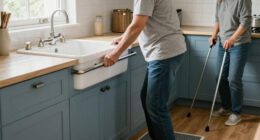
When choosing senior-friendly kitchen gadgets, the real decision is not whether electric or manual tools are universally better. It is whether reducing hand effort and repetitive motion is worth adding cost, charging, storage, and cleaning—or whether a well-designed manual tool provides enough help. Electric jar openers, can openers, choppers, and grinders can make specific tasks easier, but they do not automatically solve every kitchen difficulty. Manual tools with wide, textured handles, stable bases, and simple mechanisms can be a better fit when grip is still dependable or counter space is limited.

Turn quiet afternoons into listening time
- Thousands of audiobooks, podcasts and originals
- Listen on your phone, tablet or Echo — also offline
- Cancel anytime

Otstar 6-in-1 Jar and Bottle Opener for Seniors
- ✔ Brand: Otstar
- ✔ Type: 6-in-1 jar and bottle opener
- ✔ Lid opening sizes: Eight circular openings for lids 1–3 inches in diameter
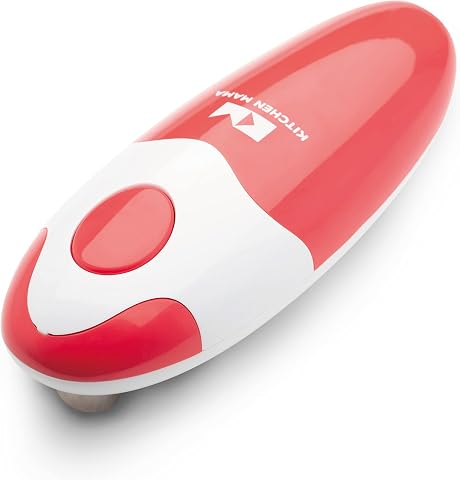
Kitchen Mama Automatic Battery-Operated Can Opener, Red
- ✔ Brand: Kitchen Mama
- ✔ Model: CO1100-R
- ✔ Operation: Automatic, one-touch

Jokari Ring Pull Can Opener with Non-Slip Grip, Black
- ✔ Brand: Jokari
- ✔ Model: 0206040P3
- ✔ Operation: Manual
This comparison focuses on electric kitchen gadgets and easy-grip manual kitchen gadgets as two practical approaches to the same problem. Electric tools generally suit people with arthritis, reduced grip strength, or fatigue during repeated tasks. Manual tools suit people who want dependable, affordable equipment and can still apply some controlled force. The best choice depends on which tasks are hardest, how often they come up, and whether the user can operate the gadget safely and independently.
At a Glance
| Criteria | Electric kitchen gadgets | Easy-grip manual kitchen gadgets | Winner |
|---|---|---|---|
| Hand effort | Low effort for tasks the device is designed to perform; still requires positioning ingredients or containers. | Requires some hand strength and motion, though leverage and broad handles can reduce strain. | A |
| Control and safety | Can reduce force, but requires correct placement and attention to moving or sharp parts. | Offers direct control and has fewer powered parts, but blades and forceful movements still pose risks. | Depends |
| Cost and value | Higher initial cost; worthwhile when the gadget addresses a frequent, painful task. | Usually lower-cost and can offer strong value for occasional use. | B |
| Setup and learning | May involve switches, charging, cords, or fitting parts; simplicity varies by model. | Often straightforward to use, with no power setup. | B |
| Cleaning and upkeep | More parts and electrical components can make cleaning and maintenance less simple. | Usually fewer components and simpler upkeep, though blades and joints still need careful cleaning. | B |
| Space and portability | Usually bulkier and may need an outlet or charging space. | Generally compact, lightweight, and easy to store. | B |
| Task range | Often specialized; one appliance may handle only one or a few tasks. | Can be versatile, but performance depends on the user’s strength and dexterity. | Depends |
Otstar 6-in-1 Jar and Bottle Opener for Seniors
The Otstar 6-in-1 earns our top position because it addresses several everyday opening jobs rather than specializing in just one. Eight circular openings are specified for lids measuring 1–3 inches, while additional hooks are intended for larger lids and ring-pull cans. That range makes it the most adaptable choice in this group if the kitchen has a mix of jars and pull-tab containers.Its long handle is designed to provide leverage, and the rubber lining and textured surface support grip and control. Those details matter when a lid is difficult to hold securely, though they do not guarantee that every container will open without effort. Compared with the Kitchen Mama, Otstar is more useful across container types but remains a manual tool. Compared with the Jokari, it offers more functions, at the cost of a less immediately obvious selection process: the instructions recommend choosing a particular opening for larger lids, so some adjustment may be needed.This is our most practical all-round pick for someone who wants one drawer-friendly aid for several tasks. Its polypropylene and thermoplastic elastomer construction is compact and described as easy to clean. We would skip it if the user needs an automatic can opener or finds it difficult to position a manual tool around a lid; for pull-tab cans alone, the simpler Jokari is more focused.
Pros:
- Multiple circular openings and hooks cover several lid and ring-pull tasks.
- Long handle is designed to provide leverage.
- Rubber lining and textured surface support grip and control.
- Compact design is described as easy to clean and store.
Cons:
- The circular openings are specified for lids measuring 1–3 inches, so larger lids rely on the hooks and technique.
- Finding the recommended opening for larger lids may take some adjustment.
Best for: People who regularly open a variety of small and medium lids, larger lids, and ring-pull cans and prefer one compact manual tool.
Not ideal for: Anyone who needs one-touch powered opening, or who wants a dedicated tool with no opening-size selection to learn.
Bottom line: We recommend the Otstar as the most versatile choice here, provided the user is comfortable positioning a manual opener and learning which feature suits each lid.
“We recommend the Otstar as the most versatile choice here, provided the user is comfortable positioning a manual opener and learning which feature suits each lid.”
Kitchen Mama Automatic Battery-Operated Can Opener, Red
When turning a manual can opener is the main difficulty, the Kitchen Mama Automatic Can Opener offers a different approach from both of the hand-operated picks. Its one-touch operation is intended to open standard cans without the user turning a crank, and the side-cutting action is designed to leave smooth edges. This makes it the most targeted choice for readers who want to reduce the physical steps involved in opening a can.At 7 inches tall and 8.48 ounces, it is described as lightweight and compact, with an ergonomic shape intended to be easy to hold. The cutting blade is stainless steel, while the body is ABS plastic. Compared with Otstar, it is less versatile: it is a can opener, not a jar or ring-pull tool. Compared with the Jokari, it tackles cans that require cutting rather than lifting a tab. That distinction matters more than the “automatic” label: buyers should match the tool to the containers they actually struggle with.The key compromise is power. This opener is battery-operated, so it depends on batteries being available and functional; its compactness does not remove that ongoing requirement. It is also a larger commitment than the simple Jokari for someone who only needs help lifting tabs. We place it second overall because its hands-off operation can address a meaningful barrier, but its use is narrower and it requires a power source. Choose it for standard cans, not as an all-purpose opening gadget.
Pros:
- One-touch automatic operation avoids manually turning a conventional opener.
- Side-cutting design is intended to leave smooth edges.
- Lightweight, compact body is described as portable.
- Ergonomic design is intended to be comfortable to hold.
Cons:
- Requires batteries and may need replacement batteries during use.
- Designed for cans, so it does not replace the Otstar for lids or the Jokari for pull tabs.
Best for: People who want to avoid turning a manual opener when opening standard cans and are comfortable keeping batteries available.
Not ideal for: Anyone looking for help with jars or pull-tab cans, or who prefers a tool that works without a battery supply.
Bottom line: We would choose the Kitchen Mama when reducing manual can-opening motions matters more than battery-free operation or multi-container versatility.
“We would choose the Kitchen Mama when reducing manual can-opening motions matters more than battery-free operation or multi-container versatility.”
Jokari Ring Pull Can Opener with Non-Slip Grip, Black
The Jokari Ring Pull Can Opener is the most focused option in our lineup. Its job is to lift pull tabs on cans such as soup, tuna, soda, and pet food, helping reduce the need to pinch and pull a small metal tab directly. For someone whose main problem is finger or nail strain on ring-pull containers, that narrow purpose can be an advantage: there is less to learn than with the multi-opening Otstar.The long, compact handle has a non-slip ergonomic grip and is designed to support comfort and control. It weighs 2.1 ounces and is dishwasher safe, making it straightforward to store or bring along. Compared with the Kitchen Mama, the Jokari does not cut open standard cans; it only assists with tabs already built into a can. Compared with Otstar, it is simpler but substantially less versatile, since its stated use is specifically pull-tab cans rather than jars and a wider variety of lids.We rank it third overall because it solves a real but narrower problem. That does not make it the wrong choice: if pull tabs are the recurring obstacle, a dedicated lifter may be more relevant than an automatic can opener. But buyers seeking a single tool for several types of containers should look first at Otstar, and anyone who needs help cutting a can open should consider Kitchen Mama instead. The Jokari’s key limitation is also its clearest boundary: it is not for cans that require cutting.
Pros:
- Designed to lift pull tabs with less force and strain.
- Non-slip ergonomic handle supports grip and control.
- Can help protect fingernails and fingertips from direct tab pulling.
- Compact, lightweight, and dishwasher safe.
Cons:
- Only designed for pull-tab cans, not cans that require cutting.
- Less versatile than the Otstar and does not provide the Kitchen Mama’s automatic cutting action.
Best for: People who frequently struggle to lift ring-pull tabs and want a lightweight, compact manual tool focused on that task.
Not ideal for: Anyone who needs to open cans without pull tabs or wants a single gadget for jars and multiple lid types.
Bottom line: We recommend the Jokari when pull-tab cans are the specific challenge and a simple, portable aid is more useful than broader coverage.
“We recommend the Jokari when pull-tab cans are the specific challenge and a simple, portable aid is more useful than broader coverage.”
As an Amazon Associate we earn from qualifying purchases.
Key Differences
The clearest difference is how much work the user’s hands must do. An electric jar opener or can opener can take over much of the turning or cutting effort, making it a more meaningful upgrade for someone whose grip is painful or unreliable. The benefit is task-specific: a powered opener will not necessarily make chopping, lifting a heavy pot, or handling a slippery container easier. Easy-grip manual gadgets address effort through handle shape, leverage, and stability rather than a motor. They reduce strain, but do not remove the need to push, turn, or guide the tool.
That difference affects value as much as comfort. Electric tools cost more and occupy more space, so their strongest case is a repeated task that the user struggles with and wants to do independently. A manual gadget is often the better first purchase when the challenge is mild, occasional, or manageable with a wider handle and good leverage. Neither category is automatically safer: a motorized blade may reduce cutting force while introducing moving parts, and a manual knife or slicer still demands control. Match the gadget to the actual difficulty, then check whether the user can position it, operate its controls, and clean it without help.
Detailed Comparison
Hand effort (Electric kitchen gadgets wins — major)
Electric gadgets win by a major margin when the task involves sustained gripping, twisting, or repeated cutting. A powered opener can do much of the work after the container is correctly positioned; an easy-grip manual tool can improve leverage but still relies on the user’s hands. For someone with painful joints or weak grip, that distinction can determine whether the task is manageable at all. For mild stiffness, a broad-handled manual tool may be enough.
Control and safety (moderate difference)
This is a close, user-dependent comparison. Manual gadgets have fewer moving parts and let the user feel how much force is being applied. Electric models may reduce strain and prevent some forceful movements, but a user must place food or containers correctly and keep hands clear of moving components. The safer choice is the one the person can operate steadily, understand, and clean without reaching near a blade. A stable base, nonslip grip, clear controls, and automatic shutoff where relevant matter more than the category label.
Cost and value (Easy-grip manual kitchen gadgets wins — moderate)
Easy-grip manual gadgets win for most occasional tasks, by a moderate margin. They generally require less upfront spending and can provide practical improvements through leverage and handle design. Paying extra for an electric device makes sense when it solves a frequent barrier—such as being unable to open jars without assistance—not simply because it is marketed for older adults. A gadget that sits unused is poor value at any price.
Setup and learning (Easy-grip manual kitchen gadgets wins — moderate)
Manual gadgets usually win by a minor-to-moderate margin. Many need only to be picked up and used, while electric devices may require charging, plugging in, fitting parts, or learning controls. Some powered models are simple, but extra steps can discourage use, especially if controls are small or confusing. Before buying, consider whether the user can set up the tool independently, not just press its main button.
Cleaning and upkeep (Easy-grip manual kitchen gadgets wins — moderate)
Manual tools generally win by a moderate margin. A simple opener or gripper often has fewer parts to wash and no motor housing to protect. Electric gadgets can add removable components, seams that collect food, cords, and charging needs. Some powered parts are dishwasher-safe and others are not, so check instructions before purchase. If cleaning is already tiring or difficult, a simpler design can matter more than extra features.
Space and portability (Easy-grip manual kitchen gadgets wins — moderate)
Manual gadgets win by a moderate margin. They are commonly compact, easy to keep in a drawer, and usable without an outlet. Electric gadgets can take up counter or cabinet space and may need a charging spot. That tradeoff is minor for a device used every day and left within reach, but more serious in a small kitchen or for someone who cannot safely lift a bulky appliance.
Task range (moderate difference)
Neither category wins across all tasks. Electric gadgets are effective when their specific function matches the difficulty, but many are single-purpose. Manual tools can cover a wider range of basic kitchen jobs at lower cost, though the user’s strength limits what they can comfortably do. Buy for the task that causes trouble most often rather than expecting one gadget to solve general kitchen fatigue.
Electric kitchen gadgets: Pros and Cons
Pros:
- Reduces gripping, twisting, or repeated hand effort for the task it is designed to handle.
- Can support more independent preparation when pain or weak grip is the main obstacle.
- Useful for frequent tasks where manual effort causes fatigue or discomfort.
Cons:
- Usually costs more than a comparable manual tool.
- May require charging, counter space, setup, or attention to cords and controls.
- Can have more parts to clean and may not help with tasks outside its intended use.
Easy-grip manual kitchen gadgets: Pros and Cons
Pros:
- Usually less expensive and often offers strong value for occasional use.
- Compact, portable, and ready to use without charging or an outlet.
- Often simpler to operate, clean, and store.
Cons:
- Still requires some grip, force, and controlled movement.
- May not make painful or difficult tasks manageable for someone with substantial weakness.
- Manual blades and forceful movements can remain challenging for users with limited dexterity.
Who Should Choose What
Choose Electric kitchen gadgets if:
- Choose electric gadgets if jar opening, can opening, or another specific repeated task causes pain or requires another person’s help.
- Choose electric gadgets if reducing hand effort is more important than keeping costs and storage needs low.
- Choose electric gadgets if the user can position the item, operate the controls, and follow cleaning instructions safely.
Choose Easy-grip manual kitchen gadgets if:
- Choose easy-grip manual gadgets if the user has mild stiffness but can still apply controlled force.
- Choose easy-grip manual gadgets if affordability, compact storage, and no charging are priorities.
- Choose easy-grip manual gadgets if the user wants a simple tool for occasional use and prefers direct control.
Skip both if: If the user cannot safely grip, position, or operate either kind of tool, or has difficulty with hot cookware and sharp blades, seek advice from an occupational therapist or clinician and consider safer food-preparation options rather than relying on a gadget alone.
Value for Money
Manual tools are the better general value for users who can still complete kitchen tasks with some assistance from leverage, a nonslip base, or a larger handle. They cost less, store easily, and avoid charging or motor upkeep. Paying more for an electric gadget is worth it when it removes a recurring obstacle that affects independence or causes pain. The value comes from solving that particular task—not from having a powered kitchen generally. A sensible approach is to identify the most troublesome job, try a simple manual aid if the difficulty is mild, and spend more only when that tool does not provide enough relief.
Final Verdict
For most older adults who want a few easier-to-use kitchen tools, start with easy-grip manual gadgets: they are affordable, compact, and simple, and they may be all that mild stiffness requires. Choose an electric gadget instead when a specific repeated task demands more grip or force than the user can comfortably provide; in that situation, the added cost and space can be justified by reduced effort and greater independence. The deciding factor is not age but the user’s ability to perform the task comfortably and safely. If the gadget cannot be operated or cleaned with confidence, neither option is the right fix without further guidance.
Frequently Asked Questions
Are electric kitchen gadgets safer for older adults?
Not automatically. They can reduce force and repetitive motion, but powered parts still need careful handling and correct setup. Choose a stable design with clear controls, and check that the user can keep hands away from blades or moving parts.
Which gadgets are most useful for someone with arthritis?
Start with the task that causes the most discomfort. An electric jar or can opener may help with repeated gripping and twisting, while a manual tool with a wide, nonslip handle may be enough for lighter tasks. Fit matters more than a general label.
Should I buy an electric gadget as a gift?
Only if you know the recipient has difficulty with the task it addresses and can manage its setup and cleaning. A compact manual aid may be a more useful gift when kitchen space, charging, or unfamiliar controls could become a burden.
Is one electric gadget enough to make a kitchen senior-friendly?
No. A gadget addresses a specific task, not every barrier. Clear counter space, stable work surfaces, good lighting, reachable storage, and safe handling of hot cookware can matter just as much.