
Toileting at night can be risky due to anxiety and darkness, increasing fall chances. To enhance your safety, create a simple routine that includes installing grab bars, using night lights, and keeping pathways clear. Hydration is important, but balance it with safety. Consider mobility aids and guarantee communication with caregivers about your needs. By establishing a consistent routine, you can empower your independence while reducing risks. There’s much more to discover about enhancing nighttime safety.
Listen free for 30 days with Audible
Thousands of audiobooks and originals — cancel anytime.
As an affiliate, we earn on qualifying purchases.
Key Takeaways
- Establish a consistent nighttime routine to enhance comfort and reduce anxiety related to bathroom trips.
- Use grab bars and mobility aids to improve stability and safety in the bathroom.
- Install night lights and motion-activated lighting to illuminate pathways and reduce fall risks.
- Maintain clear pathways by removing obstacles and ensuring easy access to bathroom essentials.
- Implement a bed alarm system to alert caregivers for timely assistance during nighttime needs.
As an affiliate, we earn on qualifying purchases.
Understanding the Risks of Nighttime Toileting
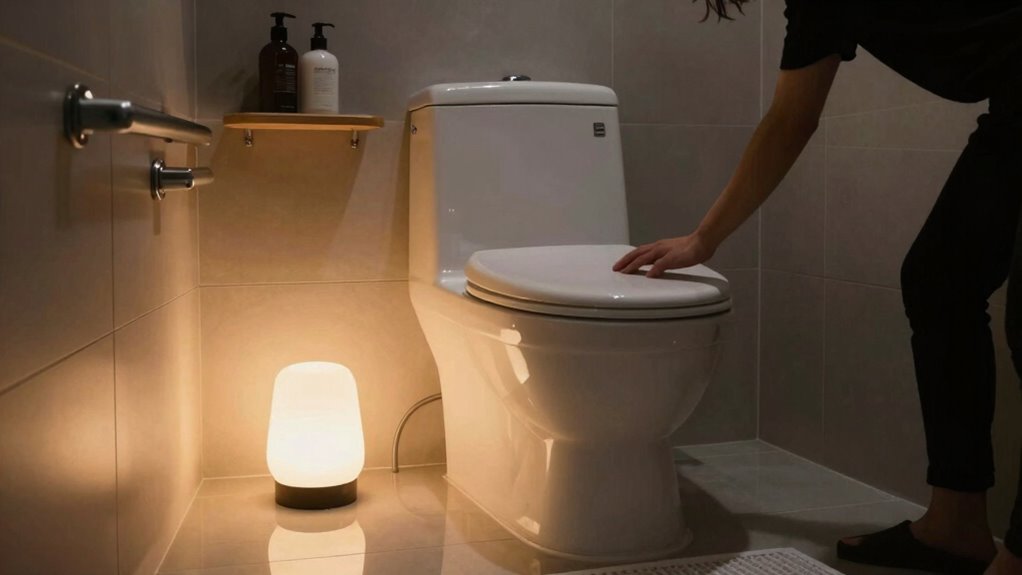
Understanding the risks of nighttime toileting is essential, especially if you’re caring for someone who may be vulnerable. Nighttime anxiety can heighten the chances of accidents, as fear and confusion often accompany trips to the bathroom in the dark. It’s vital to recognize how hydration management plays a role, too. While staying hydrated is important during the day, excessive intake right before bed can lead to frequent nighttime trips, increasing fall risk. You’ll want to balance hydration needs with the risks involved. By being aware of these factors, you can help create a safer environment, reducing anxiety and minimizing the likelihood of falls. Always consider these elements in your nighttime routine for a smoother experience. Additionally, implementing a consistent nighttime routine can further enhance safety and comfort during these trips.
As an affiliate, we earn on qualifying purchases.
Essential Tools for Safe Toileting
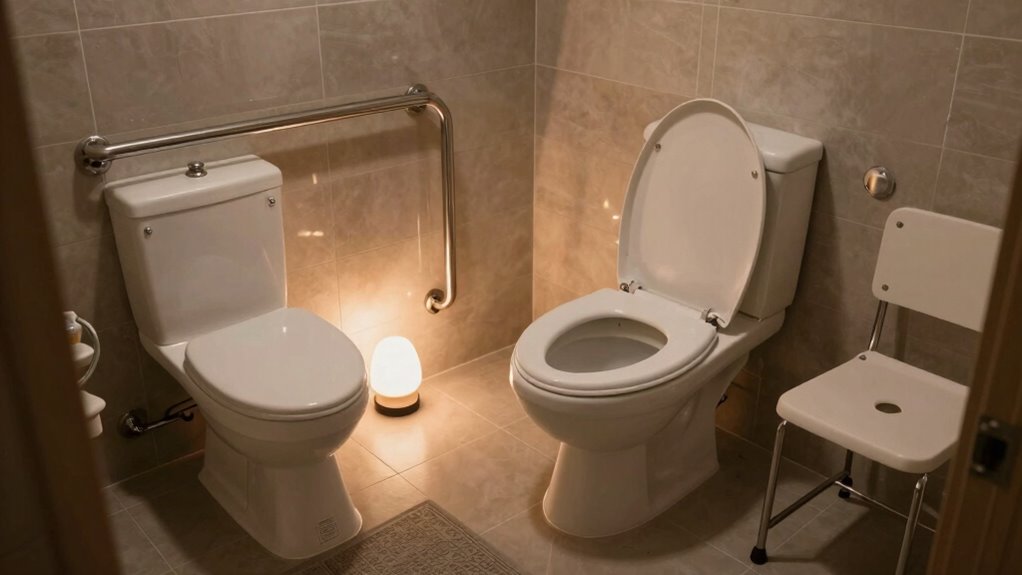
Creating a safe nighttime toileting routine involves having the right tools at your disposal. A raised toilet seat can make sitting down and standing up easier, while grab bars provide essential support. Make sure your bathroom layout is clear and free of obstacles. Use non-slip shower mats to prevent falls when entering or exiting the shower. Consider safety devices like nightlights to illuminate the path to the bathroom. It’s also wise to have an emergency call button within reach. Remember, nighttime hydration is important, but balance it with personal hygiene needs. Finally, engaging in mobility training and caregiver education can further enhance safety and confidence during nighttime trips to the restroom. Additionally, incorporating safety products designed specifically for seniors can significantly improve comfort and reduce fall risk. Implementing home safety tips can help caregivers create a more secure environment for their loved ones. Using tools like HEPA filter vacuums can also improve air quality, which is essential for overall health and safety. A well-designed toxin-free space can contribute to a healthier living environment, enhancing both comfort and safety. Furthermore, having the right pet gear can further minimize distractions and hazards, ensuring a more secure toileting experience.
As an affiliate, we earn on qualifying purchases.
Creating a Safe Nighttime Routine
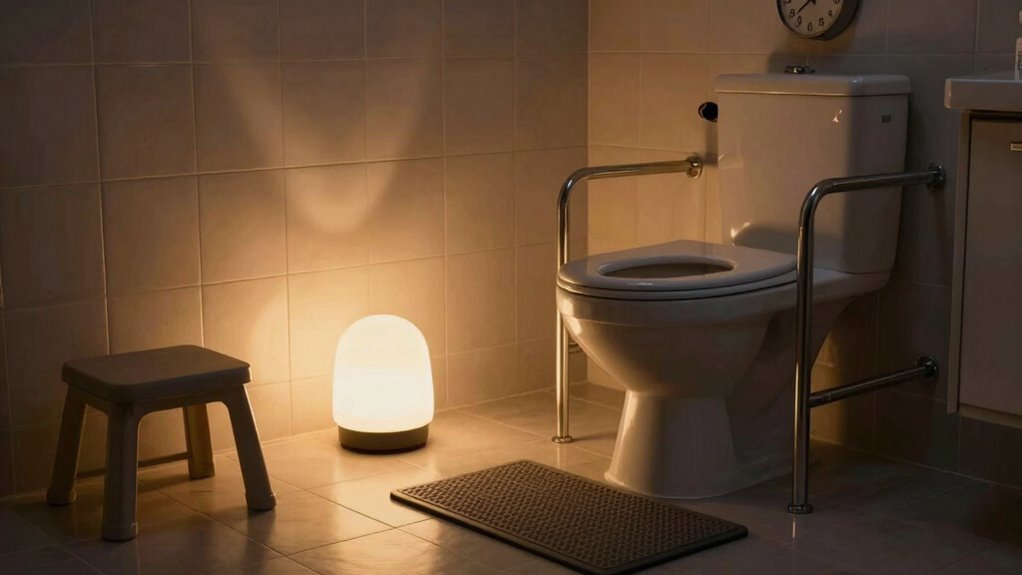
To create a safe nighttime routine, start by ensuring clear pathways to the bathroom. Installing night lights can guide your way without disrupting your sleep. Consider non-slip flooring options to prevent any accidents during those late-night trips. Additionally, maintaining good indoor air quality can enhance your overall safety and comfort during nighttime visits. Regularly cleaning filtration systems can help improve the air quality in your home, making nighttime trips safer and more comfortable. Incorporating air purifiers into your routine can further reduce allergens and odors, contributing to a healthier environment. Moreover, improving your sleep habits can lead to better rest, making you more alert and reducing the risk of falls during nighttime visits. Additionally, monitoring filter indicators can ensure your air purifier is functioning effectively, providing cleaner air during those nighttime visits.
Clear Pathways To Bathroom
A clear pathway to the bathroom is essential for a safe nighttime routine, especially for those who may be unsteady on their feet. Start by evaluating your bathroom organization. Remove any items that could create obstacles, such as rugs, laundry, or toiletries left on the floor. Make a list for obstacle identification, checking for anything that might trip you up. Consider using storage solutions that keep essentials within reach but out of the way. If you have furniture near the pathway, guarantee there’s enough space to navigate easily. By keeping the path clear, you minimize fall risks and promote confidence during those late-night trips. A well-organized bathroom can make all the difference in your safety and comfort. Additionally, consider installing HEPA filters to improve air quality, which can enhance overall well-being during the night. Implementing evidence-backed guidance can further support the creation of a safer nighttime environment. Furthermore, home organization techniques can streamline your bathroom setup, making nighttime visits more efficient. Remember, understanding financial considerations for home modifications can help alleviate any concerns about making necessary changes for safety. It’s also important to ensure that nighttime visibility is adequate, as proper lighting can greatly reduce the risk of accidents.
Night Lights Installation
While you may feel comfortable maneuvering your home during the day, nighttime can pose different challenges. Installing night lights can greatly enhance your safety by illuminating pathways, reducing the risk of falls. Start by placing lights in strategic areas like hallways and the bathroom. Opt for motion-activated models to conserve energy and make certain they only activate when needed. Consider using soft, warm light to minimize glare and create a calming atmosphere. For installation, follow manufacturer guidelines carefully, guaranteeing secure placements at appropriate heights. Utilizing proper lighting techniques can further optimize safety in your home, and acoustic drum shields can also help reduce noise distractions from outside, creating a more peaceful environment. Additionally, incorporating smart home automation can provide real-time alerts for potential hazards. Smart home technology can also enable you to control lighting remotely, enhancing your safety further. Test the lights periodically to confirm they’re functioning properly. With these night lights benefits, you’ll feel more secure traversing your home after dark, making your nighttime routine safer and more manageable. Additionally, implementing home improvement strategies can further enhance safety and comfort in your living space.
Non-Slip Flooring Options
Choosing the right flooring can greatly enhance your safety during nighttime trips to the bathroom. Opting for slip-resistant materials and textured surfaces can help prevent falls when you’re groggy and maneuvering in low light. Additionally, maintaining indoor air quality is essential, as poor air can lead to discomfort and disorientation, increasing the risk of falls. Incorporating best home security systems can also provide peace of mind, ensuring that your home remains safe during nighttime hours. It’s also crucial to ensure that your extension cord standards are met to avoid tripping hazards from any electrical cords that may be on the floor. Using essential DIY tools for proper installation can further enhance the stability and safety of your flooring.
Here’s a quick comparison of popular non-slip flooring options:
| Flooring Type | Features | Best Use |
|---|---|---|
| Vinyl | Water-resistant, textured | Moisture-prone areas |
| Cork | Soft underfoot, slip-resistant | Bedrooms and hallways |
| Rubber | Durable, easy to clean | Bathrooms and kitchens |
| Tile (Textured) | Sturdy, slip-resistant | Any high-traffic areas |
As an affiliate, we earn on qualifying purchases.
Lighting Solutions for Better Visibility
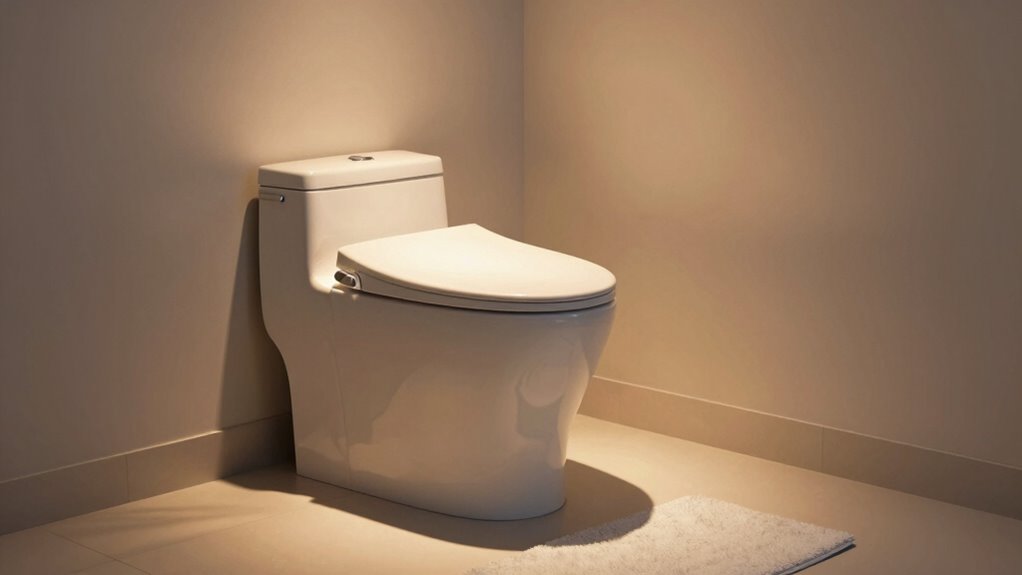
When you’re making your way to the bathroom at night, proper lighting can make all the difference. Consider using motion-sensor night lights, dimmable overhead fixtures, or illuminated pathways to enhance visibility. These solutions help you stay safe and avoid accidents in the dark.
Motion-Sensor Night Lights
Motion-sensor night lights can transform your nighttime toileting routine by providing instant illumination without the need to fumble for a switch. With motion activation, these lights turn on automatically as you approach, guiding you safely through your space. This feature not only enhances visibility but also reduces the risk of falls, making it easier to navigate in the dark.
Additionally, many options are designed for energy efficiency, ensuring they use minimal power while still delivering adequate light. You won’t have to worry about high electricity bills, and you’ll enjoy peace of mind knowing your path is well-lit. Installing motion-sensor night lights is a simple yet effective solution for enhancing safety during those late-night trips.
Dimmable Overhead Fixtures
Dimmable overhead fixtures can greatly enhance your nighttime toileting experience by allowing you to control the brightness to suit your needs. With adjustable settings, you can easily find the perfect level of dimmable brightness that guarantees visibility without being overwhelming. This not only helps with safety features but also promotes energy efficiency, saving you money on your utility bills. When considering installation tips, think about light placement to maximize visibility in critical areas. Tailoring the lighting to your user preferences can create a calming ambiance control, reducing anxiety during nighttime visits. By incorporating these fixtures, you’ll considerably lower the risk of falls, making your nighttime routine safer and more comfortable.
Illuminated Pathway Solutions
To guarantee safe navigation during nighttime toileting, consider installing illuminated pathway solutions that guide you effortlessly. Use pathway markings and glow strips to highlight the route, enhancing visibility even in the dark. Incorporating illuminated signs can provide clear directions, while outdoor lighting guarantees safety from the moment you step outside. Smart bulbs allow for ambiance control, adjusting brightness based on your needs. Employing color contrast in your lighting design helps differentiate surfaces, reducing the risk of tripping. Additionally, set up safety alerts that notify you of any interruptions in lighting, guaranteeing a secure environment at all times. These small adjustments can greatly enhance your confidence and safety during nighttime toileting.
How Mobility Aids Can Help Prevent Falls
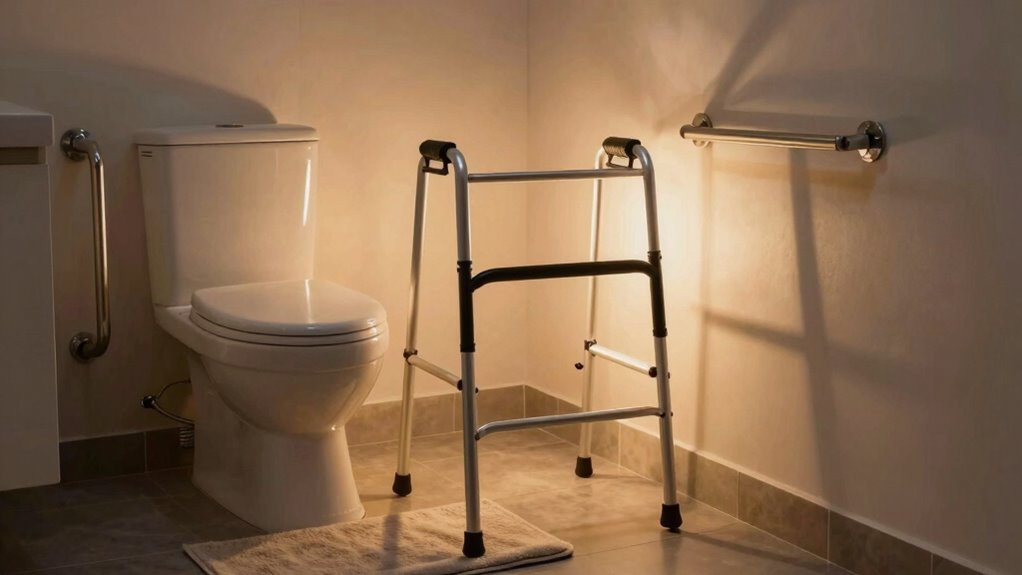
While maneuvering the bathroom at night can be tricky, mobility aids are vital for preventing falls during these vulnerable moments. Utilizing adaptive equipment, such as grab bars and shower chairs, can greatly enhance your stability. User testimonials often highlight how ergonomic designs make these aids easier to use. Engaging in mobility training with a professional can further boost your confidence and balance. Caregiver support plays an important role, ensuring you have assistance when necessary. Regular safety assessments help identify potential hazards, allowing for personalized strategies that fit your needs. Don’t hesitate to ask for practical demonstrations to understand how to use these tools effectively. By integrating these aids, you can navigate your nighttime routine more safely and confidently.
Making Your Bathroom Safer and More Accessible
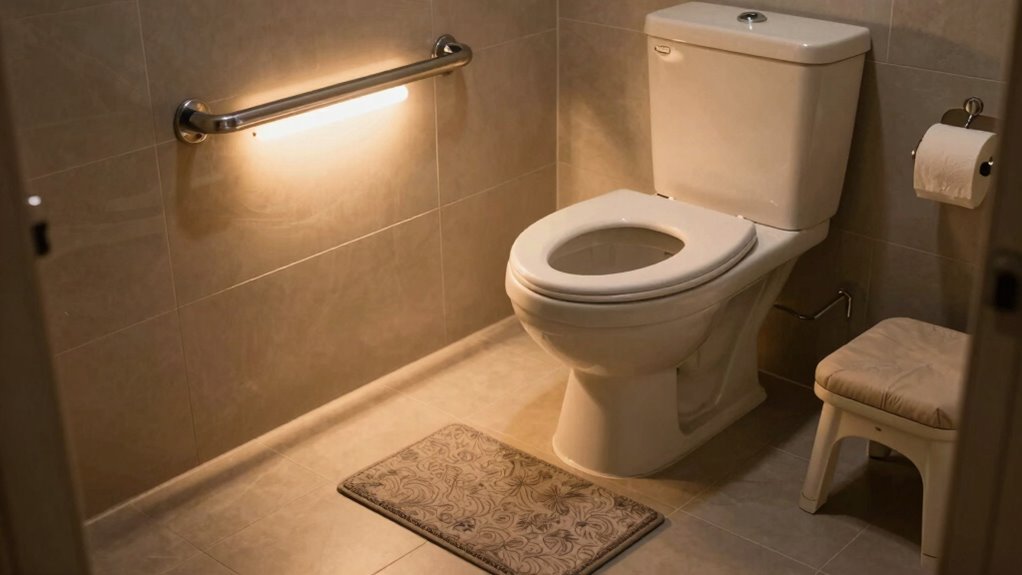
Creating a safer and more accessible bathroom isn’t just a luxury; it’s essential for your well-being. Start by improving bathroom organization—keep frequently used items within easy reach to avoid unnecessary bending or stretching. Consider installing accessibility features like grab bars near the toilet and shower, and a shower chair if needed. Non-slip mats can reduce the risk of slipping, while good lighting guarantees you can see clearly at night. A raised toilet seat can also make sitting and standing easier. Finally, make certain pathways to and from the bathroom are clear of obstacles. These small adjustments can greatly enhance your safety and confidence, allowing you to navigate your bathroom with ease during those nighttime visits.
Communicating Safety Needs With Caregivers
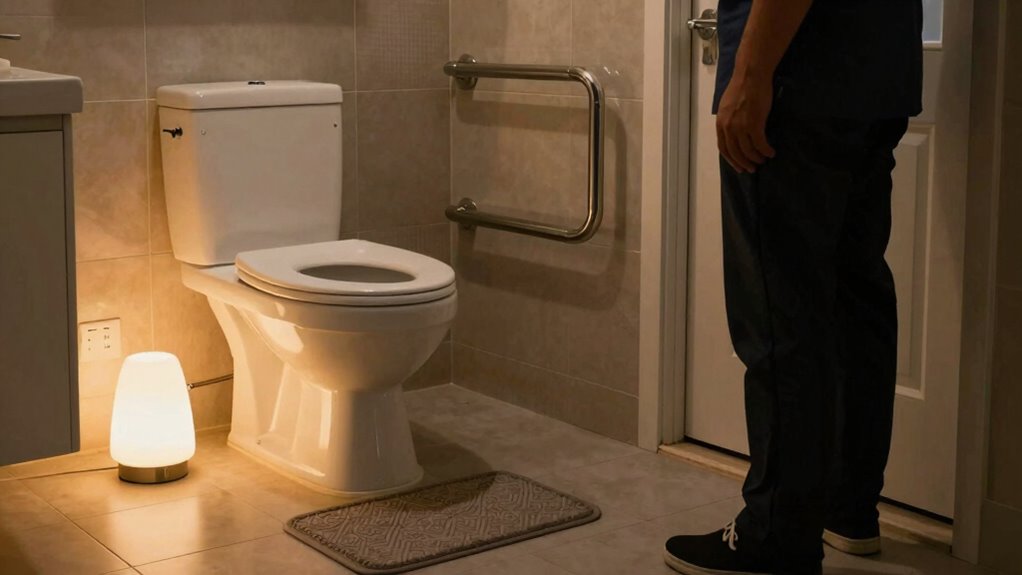
It’s crucial to establish open dialogue with your caregivers about your safety needs. By sharing your personal preferences, you can help them understand what works best for you during nighttime routines. Clear communication guarantees everyone feels comfortable and confident in maintaining your safety.
Establishing Open Dialogue
Establishing open dialogue with caregivers is essential for addressing your safety needs during nighttime toileting. This process starts with open communication, where you share your concerns and feelings about nighttime routines. Don’t hesitate to express any fears related to falls or discomfort. Your caregivers need to understand your perspective to provide the best support.
Encourage active listening by asking them to repeat what you’ve said or clarify any misunderstandings. This not only reassures you but also helps caregivers adjust their approach. When both parties feel heard, it fosters trust and cooperation. Remember, discussing your safety needs openly guarantees that your caregivers can create a more secure environment for you during those critical nighttime moments.
Sharing Personal Preferences
Once you’ve opened the lines of communication with your caregivers, sharing your personal preferences becomes essential. Your caregivers need to understand your nighttime habits to guarantee your safety and comfort. Discuss the specifics of your routine, like how often you need assistance or any particular items you prefer nearby. If you have specific times when you wake up or if you feel more secure with certain lighting, let them know. This way, caregivers can tailor their support to fit your needs, reducing the risk of falls. Remember, the goal is to create a safe environment that respects your independence while addressing your unique preferences. Clear communication helps everyone feel confident and secure during those nighttime hours.
Managing Nighttime Urgency?
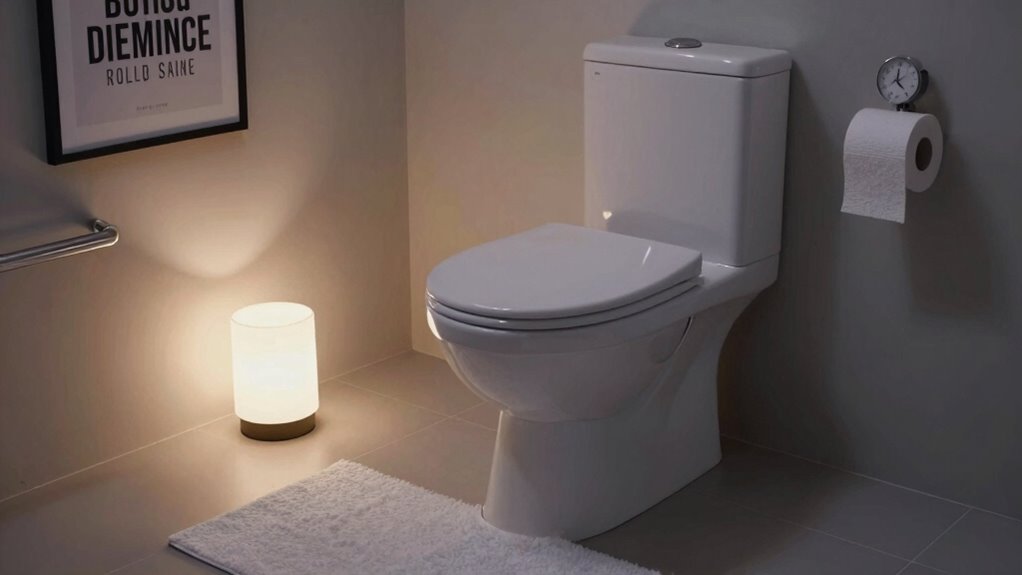
When nighttime urgency strikes, it can disrupt your sleep and leave you feeling exhausted. To manage this, consider your bedtime hydration. Drinking too much right before bed can lead to those pesky urgency triggers, so try to limit fluids in the hour before you sleep. Identify common triggers, like caffeine or alcohol, and cut back on those in the evening. If you find you still wake up needing to go, establish a quick, calming routine for nighttime trips to the bathroom. Keep a nightlight handy to guide your way and reduce fall risk. By being mindful of your hydration and triggers, you can minimize disruptions and enjoy more restful nights.
Empower Independence: Balancing Safety and Freedom

Managing nighttime urgency can be a challenge, but it also opens the door to fostering independence in your nighttime routine. By implementing effective independence strategies, you can enhance your safety priorities while maintaining freedom.
- Create a clear path to the bathroom, free of obstacles.
- Utilize nightlights to illuminate your way safely.
- Keep essential items within reach to minimize movement.
Balancing safety and independence isn’t just about preventing falls; it’s about empowering you to handle nighttime needs confidently. With the right strategies, you can enjoy a sense of freedom while prioritizing safety. By proactively addressing these concerns, you’ll find a routine that supports both your independence and well-being, ensuring you feel secure during those nighttime trips.
Resources for Enhancing Safety and Support
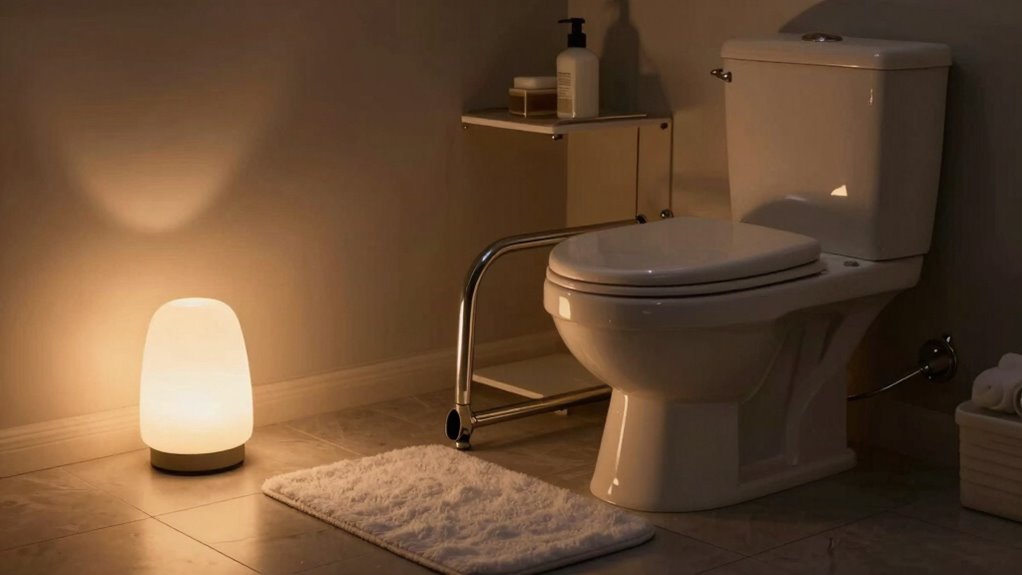
While traversing nighttime routines, having the right resources can considerably enhance your safety and support. Start by ensuring easy toilet access; consider installing grab bars near the toilet for stability. Night lights can illuminate the path, reducing the risk of trips and falls.
Don’t underestimate the value of caregiver support—having someone available during the night can make a significant difference. They can assist with mobility and provide reassurance, helping you feel more secure.
Additionally, using a bed alarm can alert caregivers if you need help. Remember, exploring adaptive equipment like raised toilet seats can also improve comfort and accessibility. Prioritizing these resources helps create a safe environment, allowing you to navigate nighttime routines with confidence.
Frequently Asked Questions
What Are the Common Causes of Nighttime Bathroom Trips?
Common causes of nighttime bathroom trips include nocturnal polyuria, where your body produces excess urine at night, and various sleep disturbances, like insomnia or sleep apnea. Medications, fluid intake before bed, or underlying health issues can also contribute. If you’re waking up frequently, it’s worth considering these factors. Understanding what’s causing these trips can help you find solutions, leading to better sleep and fewer interruptions during the night.
How Can Diet Affect Nighttime Toileting Needs?
Your diet can be a double-edged sword when it comes to nighttime toileting needs. If you’re not mindful of your hydration habits, that extra glass of water may lead you to make frequent trips at night. Similarly, food sensitivities can upset your stomach, prompting those urgent bathroom runs. By balancing your fluid intake and being aware of what you eat, you can reduce those inconvenient nighttime interruptions.
Are There Specific Exercises to Improve Nighttime Balance?
Yes, you can improve nighttime balance with specific exercises. Incorporate balance training exercises like single-leg stands and heel-to-toe walks into your routine. Pair these with nighttime stretching, focusing on your legs and hips to enhance flexibility. This combination not only strengthens your core but also helps you feel steadier on your feet. Remember to practice these exercises regularly, so you build confidence and reduce the risk of falls at night.
What Are the Signs of a Urinary Tract Infection?
If you’re noticing signs of a urinary tract infection (UTI), pay attention to symptoms like a burning sensation while urinating, frequent urges to go, or cloudy urine. You might also experience lower abdominal pain or a strong, persistent urge to urinate. Staying aware of these symptoms is essential for infection prevention. Early detection and prompt treatment can help prevent complications, so don’t hesitate to consult a healthcare provider if you suspect a UTI.
How to Discuss Toileting Concerns With Family Members?
To discuss toileting concerns with family members, start by sharing your thoughts openly. Use specific toileting tips to illustrate your points, like suggesting regular schedules or safety measures. Encourage a two-way conversation, allowing everyone to express their feelings. Emphasize the importance of family communication; it helps everyone feel supported and understood. By addressing these concerns together, you’ll create a more comfortable environment for everyone involved. Keep the dialogue ongoing and respectful.
Conclusion
In the night’s quiet, making your way to the bathroom can feel like walking a tightrope. Just like a seasoned acrobat, you need the right tools and support to stay balanced. By adopting a simple routine and using proper lighting and mobility aids, you can reduce your risk of falls and regain your confidence. Remember, with careful planning, you can turn those nighttime trips into a safe stroll rather than a precarious balancing act. Your safety matters!
Fall yard work Picks
leaf blowers
As an affiliate, we earn on qualifying purchases.