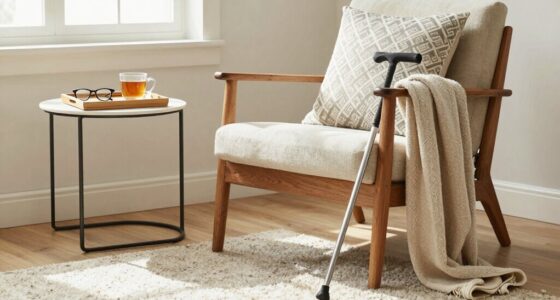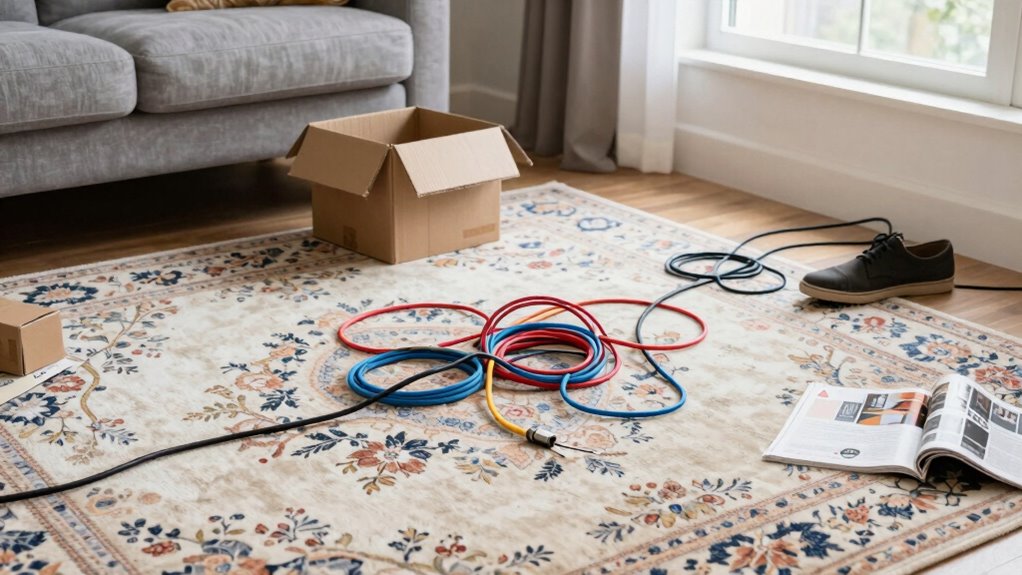

To fix trip hazards in just 15 minutes, start by securing loose rugs with non-slip pads or double-sided tape to prevent slips. Manage cords by organizing and securing them along walls using clips or covers, keeping walkways clear. Tackle clutter by rearranging furniture and storing small items out of walkways. With simple tools like tape, clips, and safety gear, you can make your home safer quickly. Keep going to discover more effective tips and tricks.
Key Takeaways
- Secure loose rugs with non-slip pads or double-sided tape to prevent curling and slipping.
- Organize and secure electrical cords using clips, covers, or adhesive hooks to keep walkways clear.
- Declutter walkways and rearrange furniture to create unobstructed, safe pathways within 15 minutes.
- Use heavy furniture or tape to stabilize rugs and prevent tripping hazards quickly.
- Regularly inspect and replace frayed cords and loose rugs to maintain ongoing safety.
Why Trip Hazards Are a Safety Concern in Your Home
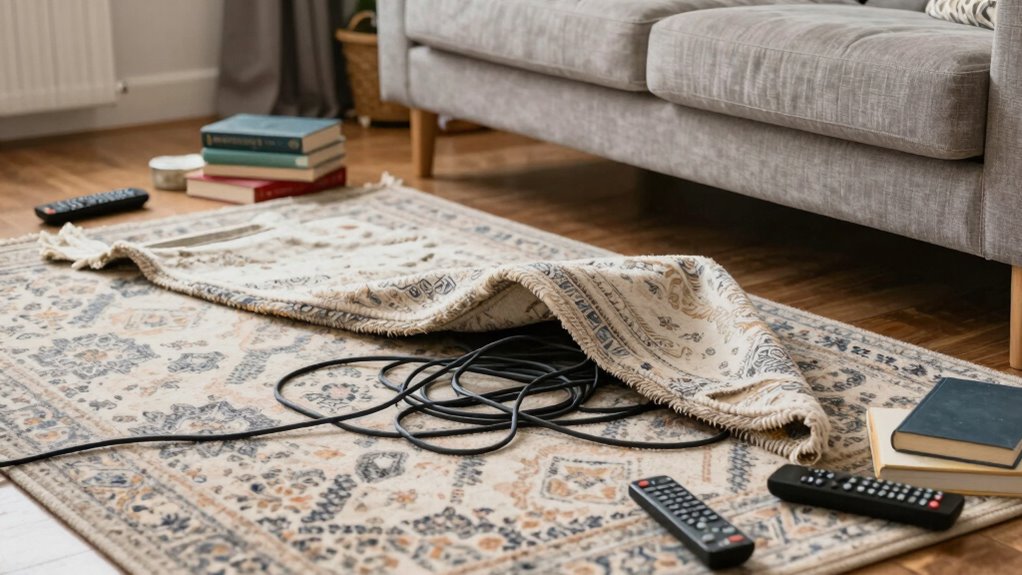
Trip hazards in your home pose a serious safety risk because they can cause falls that lead to injuries. Increasing your trip hazard awareness helps you recognize potential dangers before accidents happen. Items like loose rugs, tangled cords, or cluttered walkways can easily trip someone, especially in busy or dimly lit areas. Falling can result in bruises, fractures, or worse, impacting your mobility and overall well-being. Being proactive about identifying and addressing trip hazards keeps your home safer for everyone, especially children and elderly family members. Recognizing and eliminating common hazards can significantly decrease the likelihood of accidents. Additionally, maintaining a clutter-free environment can improve overall home safety awareness, making it easier to spot potential dangers. Regularly inspecting your home for potential risks and promptly addressing them contributes to a safer living space. Incorporating proper lighting in dark areas further minimizes the risk of trips and falls. Developing home safety routines can help you stay vigilant about hazards and prevent injuries before they happen. Remember, a little attention to detail now can prevent a major injury later.
How to Spot Common Household Trip Hazards
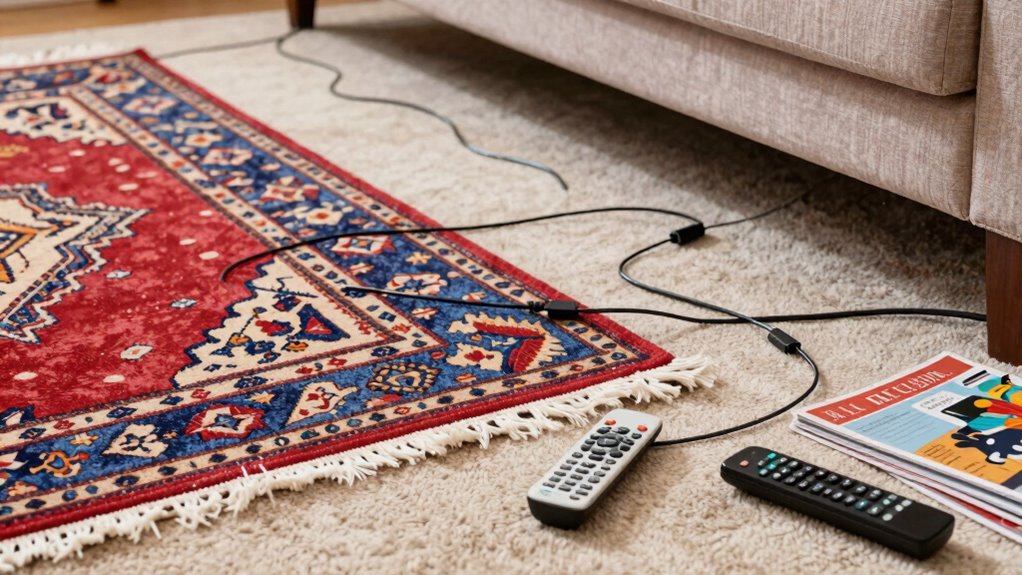
To keep your home safe, it’s important to know how to identify common household trip hazards. Look out for loose or wrinkled area rugs that can cause falls. Check if electrical cords run across walkways, creating unexpected obstacles. Furniture legs that stick out or clutter blocking pathways also pose risks. Being aware of common household hazards can significantly reduce the risk of falls and injuries. Staying vigilant helps you prevent accidents before they happen. Additionally, understanding how projector placement affects visibility can help you avoid obstructed walkways and improve overall safety. Incorporating child-proofing tips can further enhance your home safety measures for all ages. Utilizing accessibility features such as guided access can also help create a safer environment for children around potential hazards.
Quick Fixes for Loose Rugs That Prevent Slips and Trips
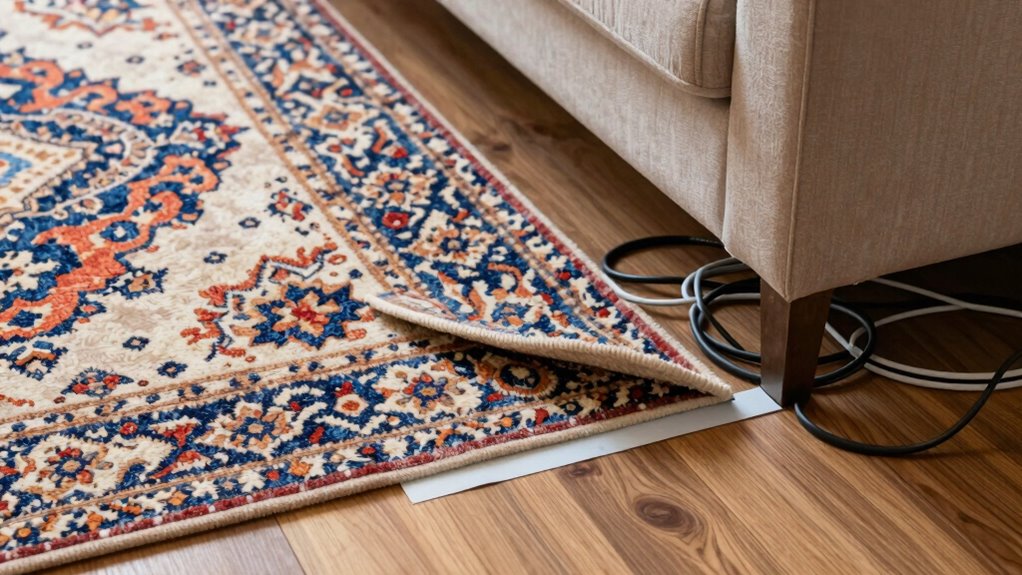
To keep your rugs from slipping and causing accidents, start by securing the edges with double-sided tape or adhesive strips. You can also add non-slip rug pads underneath to keep everything firmly in place. These quick fixes are simple ways to make your home safer instantly. Additionally, choosing eco-friendly non-slip materials for pads can promote a healthier environment while maintaining safety.
Secure Edges With Tape
When your rug’s edges start to lift or curl, securing them with tape offers a quick and effective solution. Use edge tape or safety strips to hold the edges firmly in place, preventing tripping hazards. These products are easy to apply and provide a strong hold without damaging your flooring. To guarantee the best results, consider:
- Cleaning the area thoroughly before applying tape
- Using double-sided tape for added grip
- Replacing worn or loose tape regularly
Choose high-quality edge tape or safety strips designed for rugs to maximize durability. Properly secured edges reduce the risk of trips and falls, making your space safer. This simple fix is perfect for quick, effective safety improvements without the need for tools or professional help. Additionally, inspecting your rugs regularly for microplastics in dust can help improve overall indoor air quality and health. Regular rug maintenance and awareness of regional flavors and styles can also enhance your interior safety and aesthetic appeal. Ensuring your rugs are properly anchored can also prevent slips and trips, creating a safer environment for everyone. Incorporating rug padding can provide extra grip and prevent edges from curling over time.
Use Non-Slip Rug Pads
If your rugs tend to shift or bunch up, using non-slip rug pads is an easy and effective solution. Non-slip padding keeps your area rugs securely in place, reducing the risk of slips and trips. Simply cut the pad to fit your rug’s size, place it underneath, and enjoy a safer space. These pads work on various surfaces, including hardwood, tile, and carpet. They also help extend your rug’s lifespan by preventing unnecessary wear. For optimal performance, choosing the right performance part can further improve your home safety and comfort. Incorporating slip prevention practices can further enhance overall home safety and prevent accidents. Additionally, regularly inspecting and replacing worn-out pads ensures continued traction and safety.
Managing Cords to Keep Walkways Clear and Safe
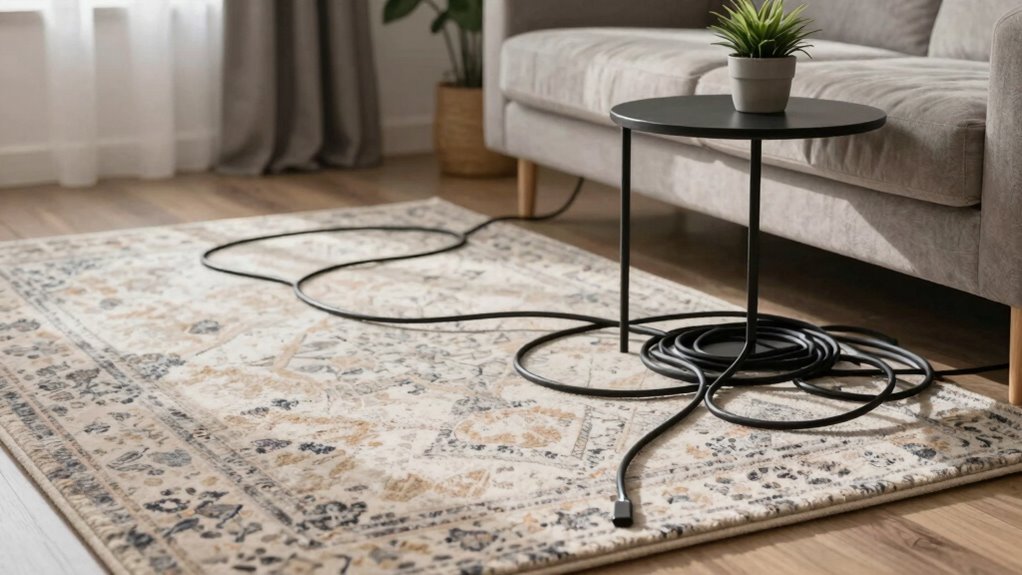
Managing cords is essential for keeping walkways safe and clutter-free. Proper cord management reduces trip hazards and improves walkway safety. To achieve this, consider:
Managing cords keeps walkways safe and clutter-free, reducing trip hazards and enhancing overall safety.
- Using cord covers or ramps to secure cords along floors
- Securing cords against walls or baseboards with clips or adhesive hooks
- Avoiding crossing cords through high-traffic areas or doorways
These steps help prevent accidental trips and falls. Keeping cords tidy not only enhances safety but also maintains a clean, organized space. Regularly inspect cords for damage or loose connections, replacing or repairing as needed. When done correctly, cord management transforms a potentially hazardous area into a safe, accessible walkway, giving you peace of mind and protecting everyone who passes through. Additionally, using appropriate storage solutions can help keep cords organized when not in use. Proper cord safety practices are crucial for preventing electrical hazards. Maintaining cord condition by checking for frays or exposed wires further reduces risk. Implementing regulatory compliance ensures that your cord management adheres to safety standards, minimizing liability. Incorporating proper labeling can also assist in quick identification and troubleshooting of electrical issues. Prioritize these simple measures to create a safer environment today.
Organize Cluttered Spaces for Safer Navigation
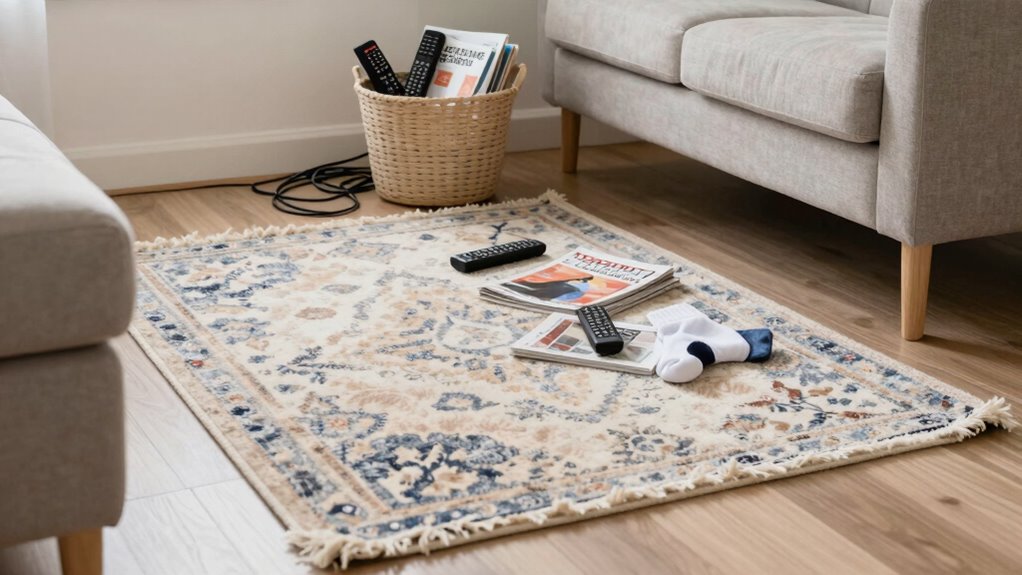
Clear walkways depend on more than just cord management; cluttered spaces can still pose safety risks. To improve navigation, start by organizing decorative accents and small items, reducing visual and physical obstacles. Rearrange furniture to create clear pathways, avoiding tight corners or awkward turns that could cause trips. Keep frequently used items within easy reach, so you don’t have to stretch or step over clutter. Use storage solutions like baskets or bins to group loose objects, making the room feel orderly. Removing unnecessary furniture or bulky pieces can also open up space. Focus on simplicity—less clutter means fewer hazards. Additionally, incorporating child-friendly organization that emphasizes both style and safety can enhance your space. Implementing safe storage practices can prevent accidental trips or injuries. Incorporating cord management solutions can further reduce tripping hazards caused by loose cords and wires. With strategic furniture arrangements and thoughtful placement of decorative accents, you’ll make your space safer and more inviting for everyone.
Essential Tools for a 15-Minute Home Safety Makeover
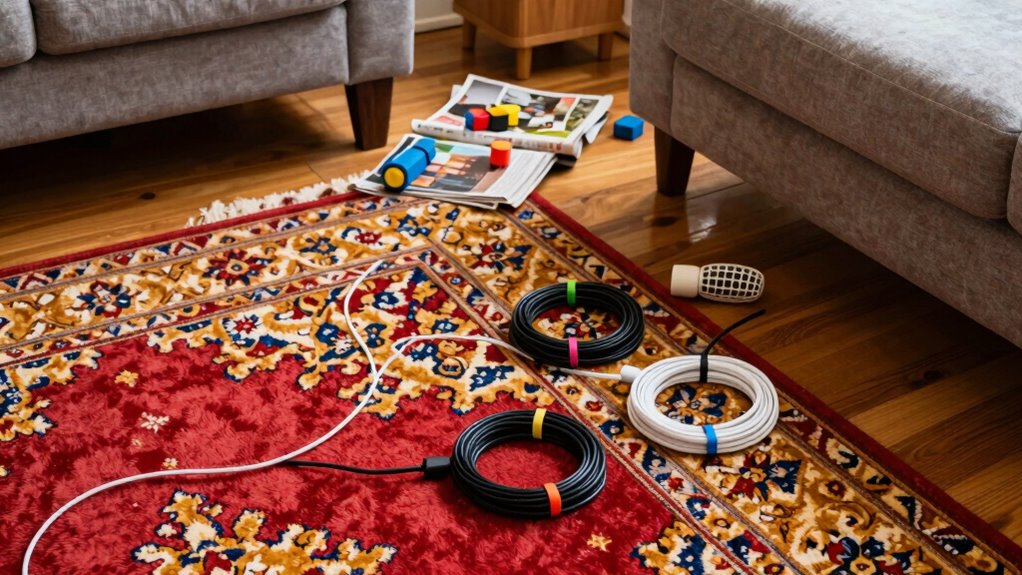
To quickly improve your home’s safety, you’ll need a few essential tools on hand. Having the right hand tools, safety gear, and organization supplies makes the process efficient and effective. With these in place, you can tackle hazards in just 15 minutes and create a safer space.
Essential Hand Tools
What simple tools can make your home safer in just 15 minutes? A few key hand tools can help you quickly address hazards and improve diy safety. With the right tools, you can tighten loose fixtures, secure rugs, or remove clutter that creates trip risks. Essential hand tools include:
- A sturdy screwdriver for tightening loose screws on furniture or fixtures
- Pliers to grip and remove protruding nails or staples
- A utility knife for trimming or removing damaged cords or frayed edges
Using these tools, you can perform hazard prevention tasks efficiently, reducing trip hazards and making your space safer. Keep them accessible so you’re ready for quick fixes that protect your family and prevent accidents. A small investment in these tools pays off by making your home safer in just minutes.
Safety Gear Essentials
Having the right hand tools is a great start, but ensuring your home is safe also means being prepared with the proper safety gear. A sturdy flashlight helps you spot hazards during lighting improvements or furniture rearrangement, especially in dim areas. Keep a pair of work gloves nearby to protect your hands when moving heavy furniture or securing loose cords. Safety goggles can shield your eyes from dust or unexpected debris. A step stool or small ladder ensures safe access to high spots for lighting updates. Additionally, a first aid kit is essential in case of minor injuries. By having these safety gear essentials ready, you’ll make your 15-minute home safety makeover quicker, safer, and more effective.
Organization Supplies
Are your home’s safety hazards easily accessible and well-organized? Having the right organization supplies makes a quick safety fix possible. Keep these essentials on hand:
- Adjustable cable ties for effective cord management
- Non-slip rug pads to secure area rugs and prevent tripping
- Clear storage bins for cords, small tools, and safety gear
These supplies help you quickly tame loose cords and stabilize area rugs. Proper cord management reduces tripping risks, while secure area rugs stay in place, preventing falls. With everything organized and within reach, you can execute a swift, effective safety upgrade. Investing in these simple tools streamlines your home safety routine, making it easier to address hazards in just 15 minutes. Keep your supplies accessible, and safety becomes an effortless part of your home maintenance.
Step-by-Step: How to Fix Hazards Fast
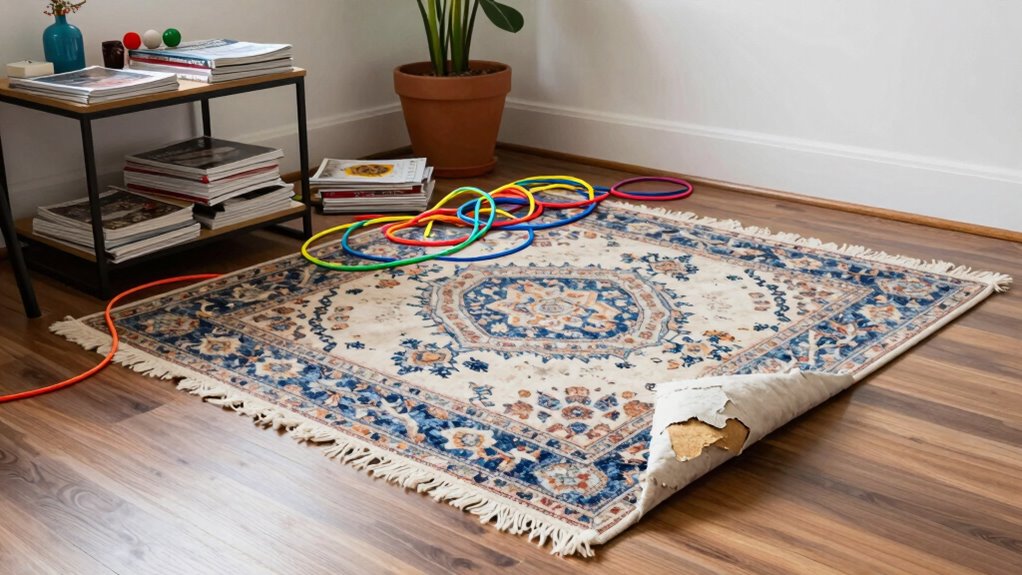
When you spot a hazard like a loose rug or tangled cords, quick action can prevent accidents. First, secure any area rugs by tacking down edges or using non-slip pads to keep them flat. For electrical cords, unplug devices if possible, then straighten and organize cords along walls or furniture to reduce tripping risks. Use cord clips or tape to keep cords close to the floor and out of walkways. If a rug is slipping, place heavy furniture on its corners or use double-sided tape. Always check for frayed or damaged cords and replace them immediately. These simple steps can be done in minutes, creating a safer space and preventing trip hazards before they cause injury.
Tips to Maintain a Safer Home and Prevent Hazards
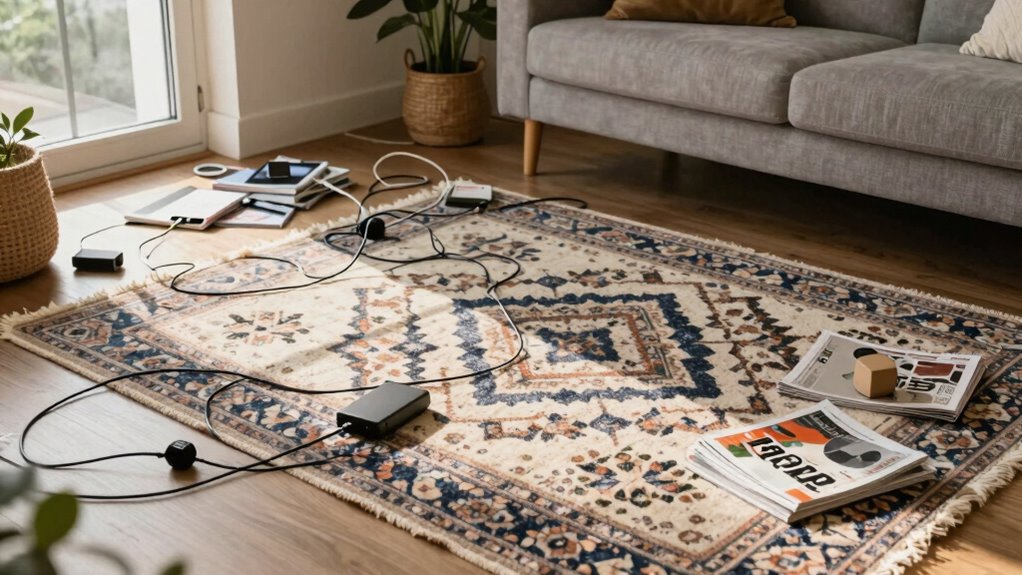
Maintaining a safer home requires regular vigilance and proactive measures to spot potential hazards before they become problems. Keep your area rugs secured with non-slip pads to prevent tripping. Regularly check electrical cords for fraying or damage, replacing or repairing them immediately. Avoid running cords under rugs or furniture, which can cause overheating or hidden trip risks. Additionally, establish a routine to tidy clutter, especially near walkways and doorways.
- Use cord organizers or covers to keep electrical cords neat and out of foot traffic.
- Replace worn or damaged area rugs to prevent slipping and tripping.
- Keep walkways clear of clutter and loose cords to reduce trip hazards.
Implementing these simple tips helps create a safer environment and minimizes the risk of accidents.
When to Call a Professional for Persistent Safety Issues
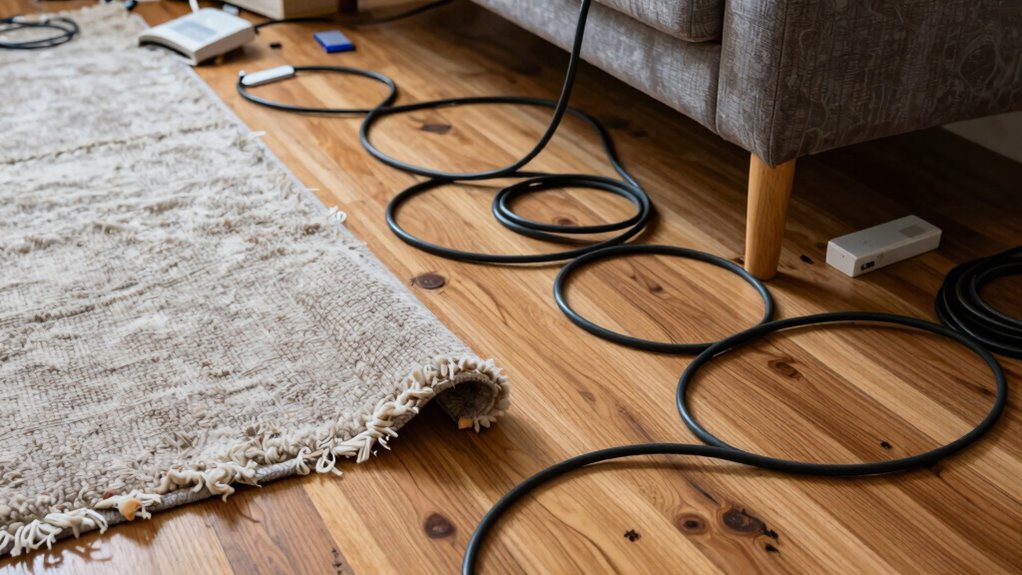
Persistent safety issues in your home often require professional intervention when simple fixes no longer resolve the problem or the hazard continues despite your efforts. If you notice recurring tripping hazards, loose rugs, or exposed cords that seem impossible to fix on your own, it’s time to seek a professional inspection. A trained expert can perform a thorough hazard assessment, identifying underlying issues you might overlook. Professionals can recommend targeted solutions to eliminate risks effectively and ensure your home is safe. Ignoring persistent hazards can lead to accidents or injuries, so don’t hesitate to call in a specialist when DIY efforts fall short. Their expertise provides peace of mind, knowing your home has been properly evaluated and hazards addressed.
Frequently Asked Questions
How Often Should I Check for New Trip Hazards at Home?
You should check for new trip hazards during regular hazard prevention routines, ideally once a month. Regular trip hazard inspections help you spot potential dangers early and prevent accidents. Make it a habit to walk through your home, paying attention to rugs, cords, and clutter. Consistent inspections guarantee your living space remains safe, and you can address issues promptly before they cause injuries.
Are There Specific Rugs or Cords Safer for High-Traffic Areas?
Did you know that non-slip rugs reduce trip hazards by 50%? For high-traffic areas, opt for non-slip rugs with a low pile to prevent tripping. Use cord management tools like clips and covers to keep cords organized and out of walkways. These choices make your space safer, especially where people frequently move, ensuring you minimize trip risks effectively with simple, quick upgrades.
What Are the Best Storage Solutions for Clutter-Prone Spaces?
You should use storage baskets and wall-mounted hooks to keep clutter-prone spaces organized. Place baskets on shelves or the floor to corral loose items, making them easy to grab and put away. Install wall-mounted hooks for keys, bags, or tools, freeing up surface space and reducing hazards. This quick setup keeps everything orderly, minimizes trip risks, and creates a tidy, safer environment in just minutes.
Can I Use Household Items to Temporarily Fix a Hazard?
You can definitely use household items for a quick fix—think of it as a DIY hack to save the day. I once used a sturdy book to hold down a loose rug, preventing trips. Household hacks like taping cords to the floor or placing a heavy object on a rug can temporarily fix hazards. These simple tricks are effective until you find a permanent solution, making your space safer in minutes.
How Do I Involve Children or Elderly Family Members in Safety Routines?
You involve children and elderly family members in safety routines by making it engaging and simple. Use child engagement techniques like games or colorful charts to teach them about hazards. For senior participation, encourage their input and show respect for their experience. Walk through safety steps together, making it a shared activity. This approach helps everyone stay aware and committed to keeping your home safe.
Conclusion
Think of your home like a well-tuned machine — every part needs to work smoothly to keep you safe. By taking just 15 minutes to fix rugs, cords, and clutter, you’re preventing accidents like trips and falls. Stay vigilant and proactive, and your home will be as safe as a fortress. Remember, a quick fix today can save you from a costly fall tomorrow. Keep safety simple and stay protected!