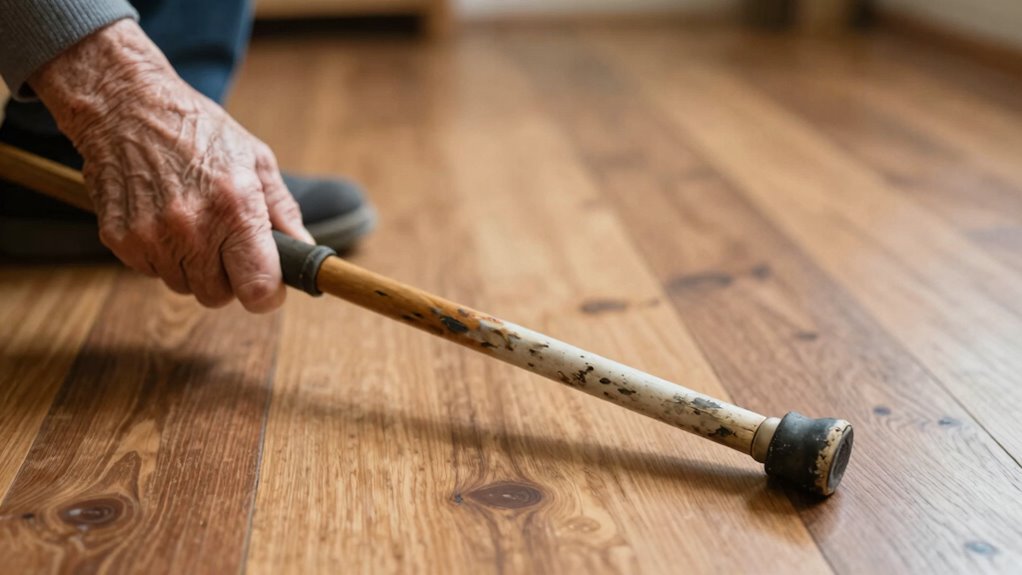

If your cane slips, feels unstable, or doesn’t fit properly, it’s raising your fall risk. Signs include a slipping handle, a bent or damaged shaft, or feeling wobbly when using it. If you notice these issues, it’s time to check your cane’s fit, inspect for wear, and consider replacing or adjusting it. Keep these warning signs in mind, as they’ll help you stay safe and avoid accidents. Learn more to keep your support secure.
Key Takeaways
- Handle slipping or uneven indicates poor grip or worn material, increasing fall risk.
- Damaged or bent cane shaft compromises stability, leading to unsafe use.
- Cane feels unstable or awkward, causing balance issues during walking.
- Frequent grip adjustments suggest improper fit or worn handle, risking falls.
- Overreliance on leaning or overcompensating signals the cane isn’t providing proper support.
How Do You Know If Your Cane Supports You Properly?
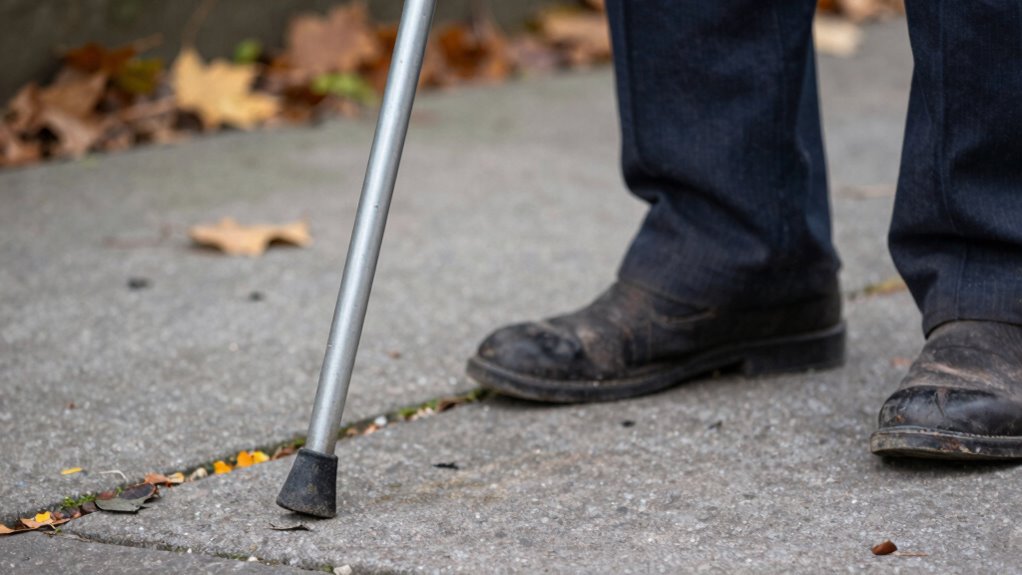
To determine if your cane supports you properly, pay attention to how it feels when you use it. Proper cane fitting is essential for stability and comfort. When you grip the cane, your arm should be relaxed, with your elbow slightly bent—this helps maintain proper posture. The cane’s handle should fit comfortably in your hand without causing strain or slipping. If your cane is too short or too long, it can lead to poor posture and imbalance. Stand upright with your shoulders relaxed, and check if the cane aligns with the height of your wrist when your arm hangs naturally. A well-fitting cane encourages proper posture and provides the support you need without causing discomfort or risking falls. Additionally, ensuring your cane is made from durable materials can help maintain its support over time. Proper cane maintenance also plays a role in ensuring continued stability and safety. Regularly inspecting your cane for wear and tear can prevent unexpected failures and ensure ongoing support. Checking the adjustability features of your cane can further help tailor it to your specific needs.
Warning Signs Your Cane Might Be Increasing Your Fall Risk
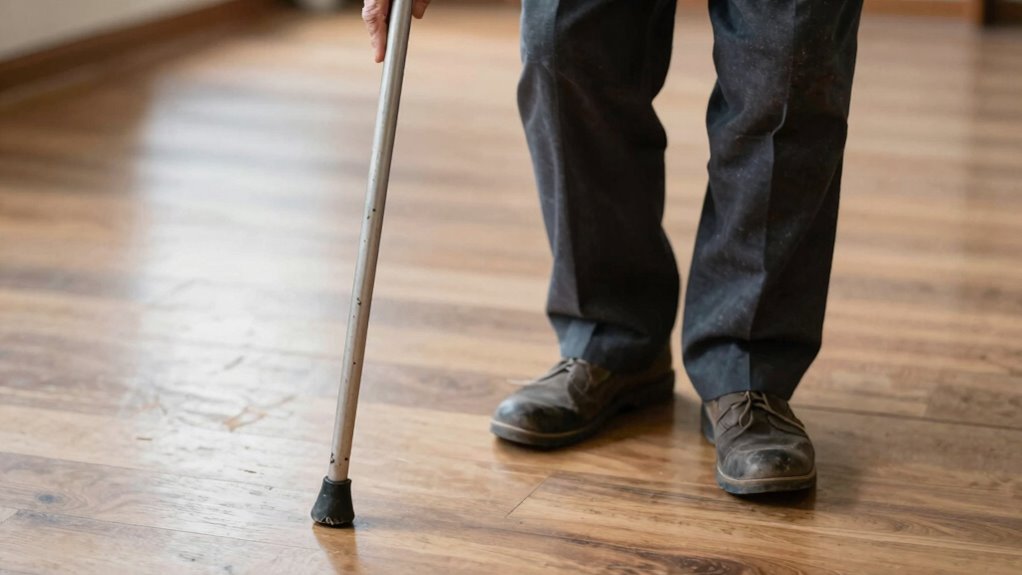
If your cane doesn’t fit properly or is damaged, it can actually increase your risk of falling. Poor cane ergonomics, like an uneven handle or incorrect height, can throw off your balance. Look out for signs such as slipping grips, bent or cracked shafts, or if the cane feels unstable when you use it. If you’re constantly readjusting your grip or your cane feels awkward, it’s a warning sign that it’s not working effectively. Additionally, if you notice yourself leaning or overcompensating when walking, your cane might be contributing to your fall risk. Incorporating fall prevention tips, like ensuring your cane is properly fitted and in good condition, helps reduce hazards. Remember, a well-fitting and safe cane is essential for supporting your mobility and safety. Ensuring proper cane ergonomics can significantly improve your stability and reduce the likelihood of falls. Regularly inspecting your cane and replacing it when necessary is an important part of fall risk reduction, especially when it involves body alignment and support. Maintaining a high-quality cane with the right specifications can further enhance your safety. Properly adjusted and maintained canes also contribute to improved posture and balance during movement.
What Steps Should You Take If Your Cane Isn’t Safe?

When you notice signs that your cane isn’t safe, taking prompt action is essential to prevent falls and injuries. First, check your cane’s proper grip; it should feel secure and comfortable in your hand. If your grip slips or feels loose, consider replacing the handle or adding a grip enhancer. Next, examine your cane’s adjustment; it should be at the correct height—your elbow should bend slightly when you hold it. If it’s too long or short, adjust it accordingly or get a new cane that fits your needs. Regularly inspecting and adjusting your cane ensures it provides stable support. If issues persist, consult a healthcare professional or physical therapist for personalized recommendations or a proper fitting. Don’t ignore these signs—your safety depends on it.
Frequently Asked Questions
How Often Should I Replace My Cane for Safety?
You should replace your cane every 6 to 12 months to guarantee safety, depending on its condition. Regular cane maintenance, like checking for cracks, loose parts, or worn tips, is essential. Follow replacement guidelines by inspecting it frequently; if you notice damage or it no longer provides proper support, get a new one. Timely replacement helps prevent falls and keeps you safe during daily activities.
Can Wrong Cane Height Cause Falls?
Yes, wrong cane height can cause falls. If your cane misuse results in an improper fit, you may experience instability or discomfort. When your cane is too short or too tall, it shifts your balance and weakens your support. Always verify your cane matches your height and fits properly. Regularly check for signs of wear and adjust or replace it to avoid risking a fall due to improper fit.
Are There Alternative Assistive Devices Better Than a Cane?
You might worry that switching devices could be complicated, but alternative mobility aids like walkers or rollators often provide better stability and support. These options, with ergonomic handle options, reduce fall risks and make walking safer. If a cane isn’t enough or causes discomfort, exploring these alternatives can boost your confidence and independence, helping you stay active without fearing falls. Your safety deserves the best support possible.
How Do I Choose the Right Type of Cane?
To choose the right cane, consider an ergonomic grip that feels comfortable and secure in your hand. Guarantee the cane matches your height for proper support. Check the weight capacity to make sure it can handle your weight safely. Try different styles to find one that provides stability and ease of use. Consulting with a healthcare professional can help you select the best cane tailored to your needs.
What Exercises Can Improve Balance Without a Cane?
You can improve your balance with gait training and specific balance exercises like standing on one foot, heel-to-toe walks, and leg lifts. These activities strengthen your core and leg muscles, enhancing stability. Regular practice helps build confidence and reduces fall risk. Focus on slow, controlled movements, and consider consulting a physical therapist to customize exercises that match your ability level and guarantee safety during training.
Conclusion
If your cane isn’t helping, it’s like walking on uneven ground—you might trip when you least expect it. Pay attention to warning signs and take action to make certain your safety. Don’t wait until a fall happens; consult your healthcare provider and get the right support. Your independence depends on staying steady—think of your cane as a trusted map guiding you safely through each step. Stay vigilant and keep each step confident.