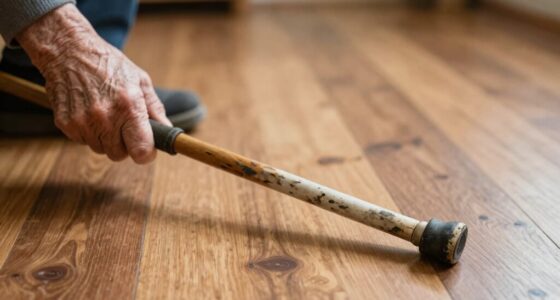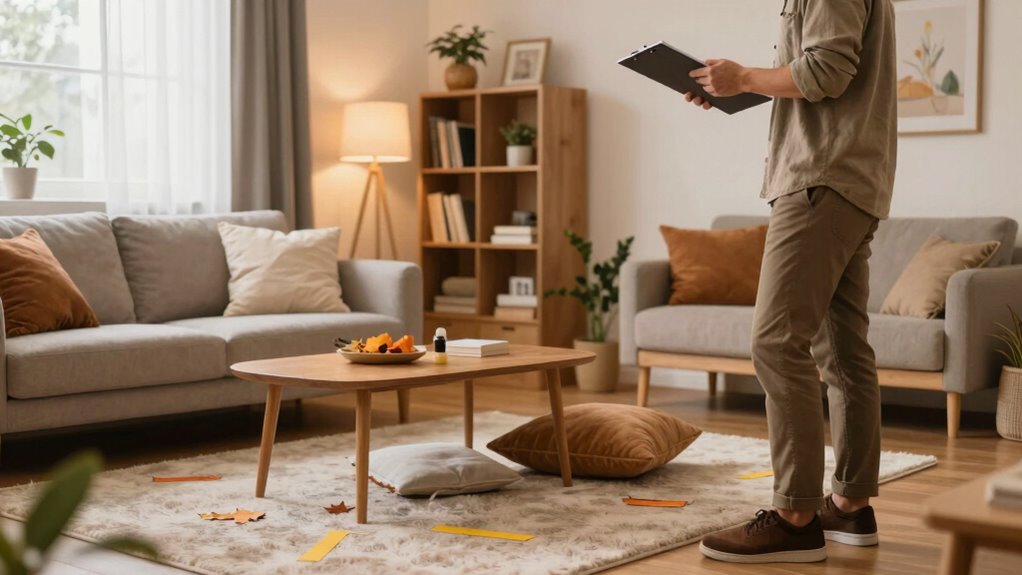

Tonight, walk through each room and look for trip hazards like loose rugs, clutter, or uneven floors. Secure rugs with non-slip pads or anchors, keep walkways clear of obstacles and cords, and guarantee good lighting to spot hazards easily. Check stairs for loose steps or handrails, and remove anything that might cause you to trip. Staying vigilant now can make your home safer; keep going to discover more tips for a fall-proof space.
Key Takeaways
- Inspect floors and rugs for loose, uneven, or slick surfaces; secure or replace as needed.
- Clear walkways of clutter, cords, and obstacles to prevent trips and falls.
- Check stairs for loose steps, secure handrails, and ensure proper lighting.
- Test and improve lighting in all rooms, especially stairways and dark corners.
- Conduct a quick overall hazard scan, addressing any new or hidden risks immediately.
Why Fall Prevention Matters in Your Home

Falling at home can lead to serious injuries, especially for older adults or those with mobility issues. That’s why fall prevention is essential for maintaining your home safety. By taking simple steps to identify and remove hazards, you reduce the risk of falls and protect yourself or loved ones. Falls are a leading cause of injury among seniors, and many accidents happen because of clutter, slippery surfaces, or poor lighting. Prioritizing injury prevention helps you stay independent longer and avoids costly medical treatments. Making your home safer isn’t just about avoiding accidents; it’s about creating a space where everyone feels secure. A proactive approach to fall prevention empowers you to enjoy your home confidently and comfortably. Implementing home safety measures can significantly reduce potential hazards and foster a safer environment for everyone. Additionally, understanding home safety assessments can help you systematically identify areas for improvement and implement effective solutions. Regularly reviewing hazard identification strategies ensures that your safety measures stay up-to-date with your home’s changing needs. Conducting a comprehensive safety check can further enhance your efforts in creating a fall-proof environment. Performing routine safety evaluations can help you catch new hazards as your home evolves over time.
How to Spot Fall Hazards in Every Room
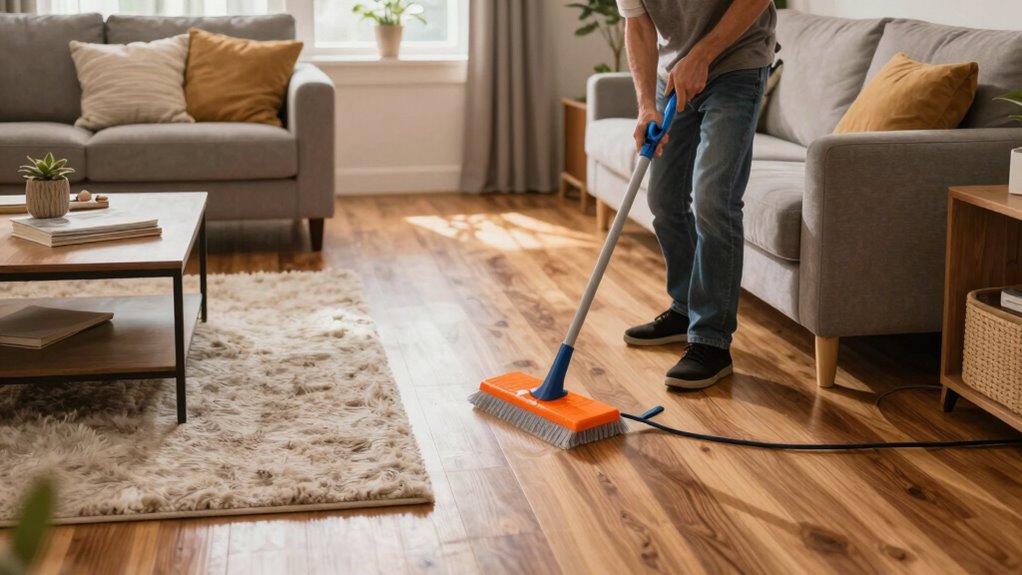
To effectively prevent falls, you need to recognize hazards in each room of your home. Look out for slip hazards like wet floors, loose rugs, or clutter that could cause you to slip. Check for uneven surfaces or slick spots on tile, wood, or vinyl flooring. In areas with stairs, prioritize stair safety by inspecting handrails, ensuring they’re secure, and looking for loose or damaged steps. Keep stairways well-lit and free of objects that could cause tripping. Be cautious of clutter or cords near stairways that could create additional risks. Regularly cleaning spills and securing rugs help reduce slip hazards, and maintaining stair safety prevents falls on staircases. Spotting these hazards now keeps your home safer and reduces fall risks. Incorporating floor care troubleshooting routines can also help identify and fix common hazards before they become accidents. Performing home safety assessments periodically can further uncover potential dangers that may be overlooked. Additionally, reviewing home safety guidelines helps ensure comprehensive fall prevention measures are in place. Conducting hazard inspections regularly can reveal hidden dangers that might otherwise be missed. Implementing preventive maintenance practices is crucial for addressing hazards proactively.
Are Your Floors Free of Trip Hazards?
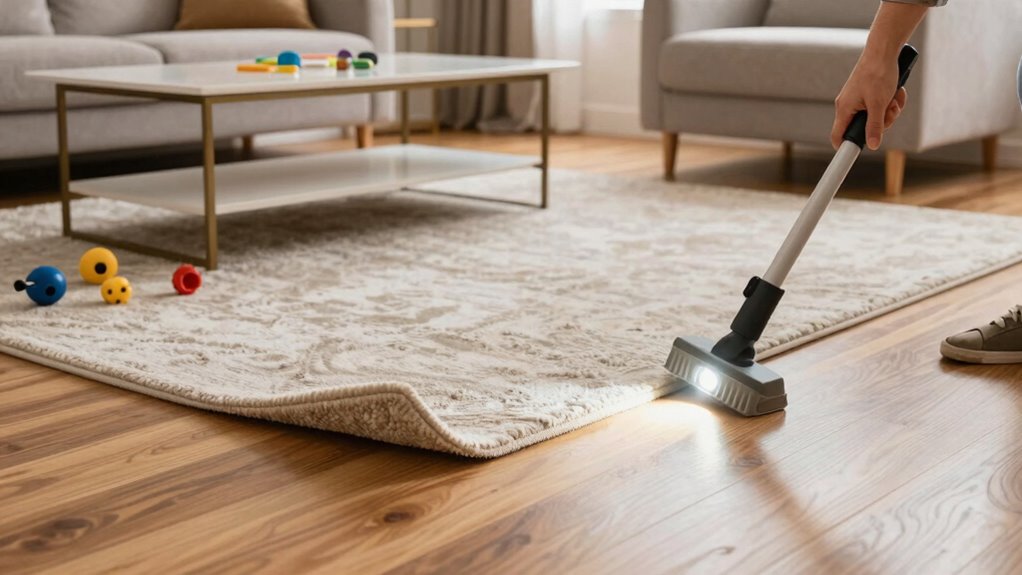
Are your floors truly free of trip hazards? Check for hidden slip hazards like loose rugs, clutter, or uneven flooring that could cause falls. Make sure all walkways are clear and surfaces are even. Pay special attention to stairs—ensure they are well-lit, with sturdy handrails and secure treads. Loose carpeting or damaged steps can compromise stair safety, increasing the risk of slipping or tripping. Remove or fix any objects that may cause you to stumble, and consider adding non-slip pads or tape where needed. Regularly inspecting and maintaining your floors helps prevent accidents before they happen. Floor safety is an essential aspect of home safety that can prevent many common falls. Keeping your floors free of trip hazards is a simple step toward a safer home for everyone. Also, consider flooring safety tips to further reduce risks and enhance home safety. Incorporating non-slip surfaces can provide additional protection in high-traffic areas. Conducting routine safety checks can help identify potential hazards early and ensure ongoing home safety. Additionally, understanding proper kitchen gear care and eco-friendly disposal practices can help prevent accidents related to damaged or improperly maintained equipment.
How Can You Secure Rugs and Cords?
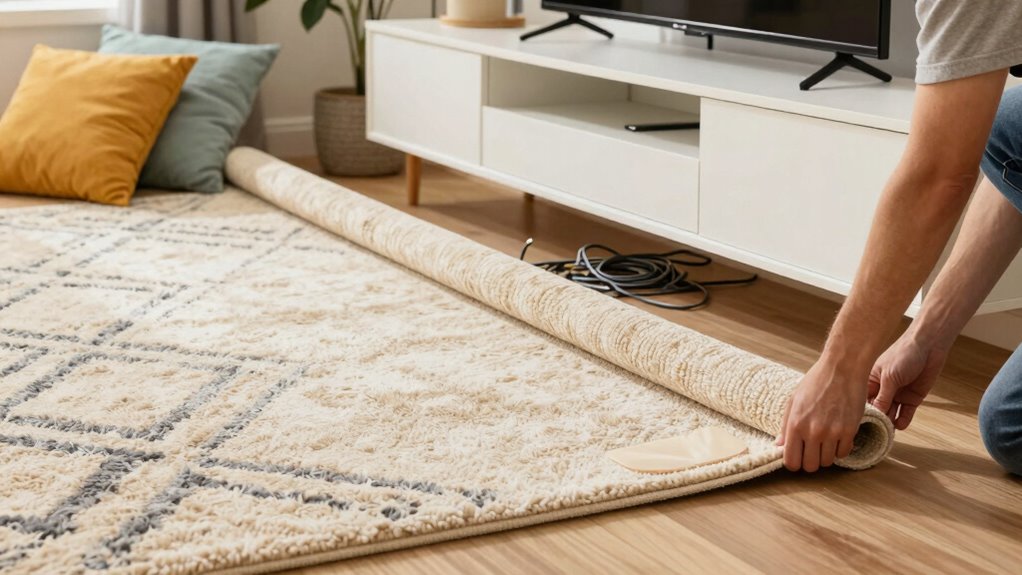
Securing rugs and cords is essential to prevent slips and trips in your home. Start by rug securing with non-slip pads or rug anchors to keep mats in place, especially in high-traffic areas. This helps prevent accidental slipping that can cause falls. For cord management, gather cords together using cable ties or cord organizers, and route them along walls or baseboards to keep walkways clear. Avoid running cords across walkways or under rugs, as they can become hidden hazards. Use cord covers to protect and conceal exposed cords, reducing the risk of tripping. Regularly check that rug securing devices and cord management solutions stay intact. Incorporating proper studio setup techniques can also improve overall safety in your craft or work area. Taking these simple steps helps create a safer environment and minimizes fall risks throughout your home.
Is Your Lighting Bright Enough to Prevent Falls?
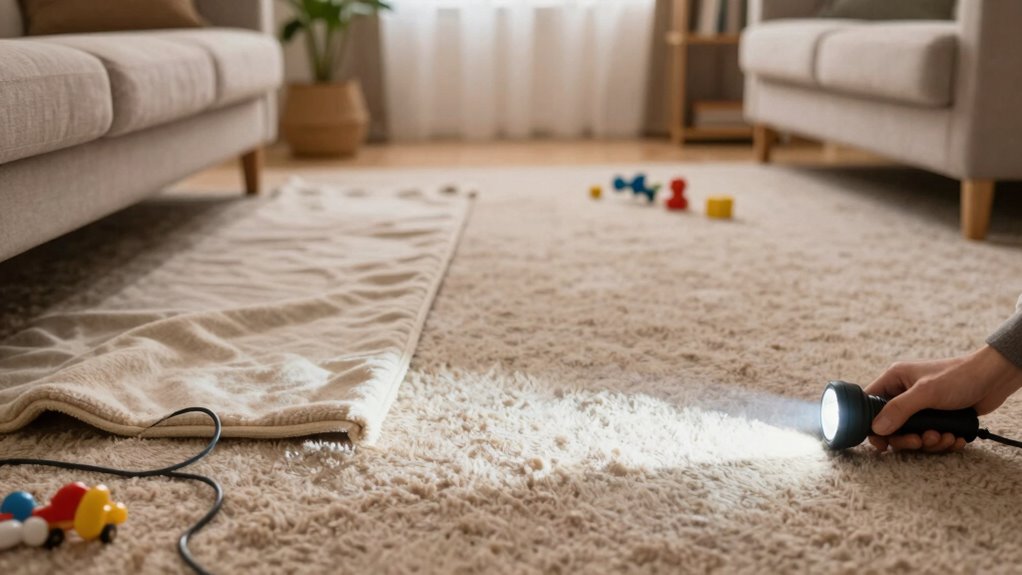
Good lighting is essential for preventing falls, especially in areas like stairways, hallways, and bathrooms. Check your lighting levels to verify they’re bright enough, so you can see hazards clearly. If some rooms feel dim, consider replacing bulbs with higher wattage or energy-efficient LED bulbs that provide better illumination. Make sure all fixtures are working properly and no bulbs are burnt out. Proper lighting can reveal loose rugs, clutter, or other obstacles, reducing your risk of tripping. Regular bulb replacements keep your home well-lit and safe. Bright, consistent lighting makes it easier to navigate safely and spot potential hazards before an accident happens. Ensuring your lighting is adequate can also support mental health by creating a more welcoming and secure environment. Adequate lighting is especially important in areas prone to clutter and hazards, helping you identify and address potential risks. Taking these simple steps tonight can substantially improve your home’s safety and prevent falls. Additionally, lighting quality plays a vital role in overall home safety and should be periodically assessed to maintain optimal conditions. Proper lighting levels are also essential for supporting indoor air quality by reducing the need for additional clutter that can obstruct pathways and cause hazards. Improving your lighting design can further enhance visibility and safety throughout your home.
Are Clutter and Obstructions Blocking Your Path?
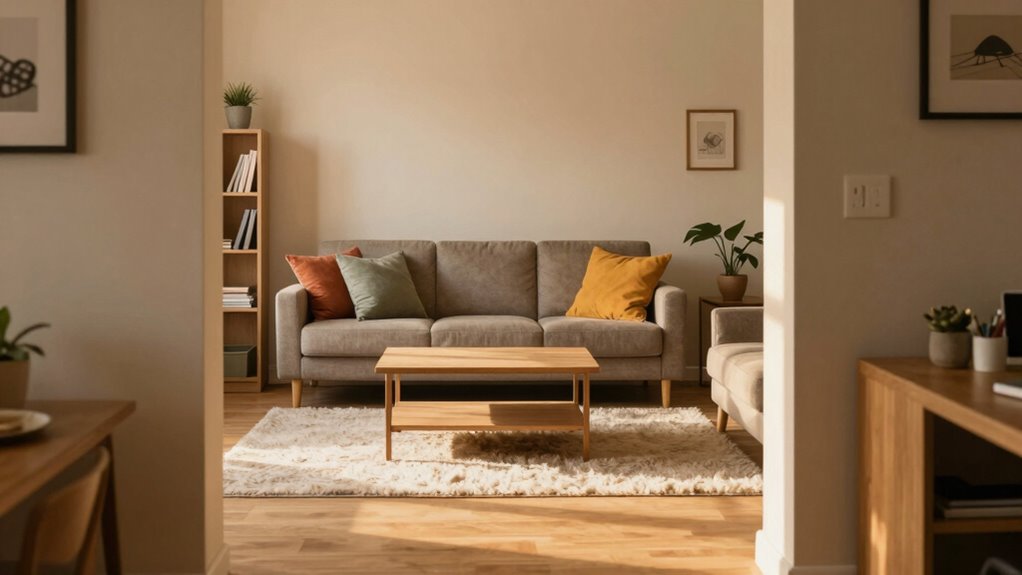
Clutter and obstructions can turn your home into a fall risk zone. Make sure your pathways are clear to prevent accidents. Take a moment to spot hidden hazards that could cause a stumble. Regularly removing hazardous clutter can promote safer, healthier living spaces. Additionally, paying attention to outdoor obstacles like uneven surfaces or garden tools can further reduce the risk of falls. Ensuring proper lighting in all areas can also help you identify and address potential hazards before they cause harm. Conducting regular safety checks can help maintain a fall-proof environment over time. Being aware of home hazards and addressing them proactively can significantly lower the chances of falls happening unexpectedly.
Clear Pathways Now
If you want to prevent falls, start by clearing your pathways today. Proper furniture placement is essential—make sure furniture isn’t blocking walkways or creating tripping hazards. Keep clutter off floors and store items in designated places. Pay close attention to stair safety; ensure stairs are free of toys, shoes, or cords that could cause slips or trips. Remove obstructions near stairways to provide a clear, stable path. Use rugs with non-slip backing or remove them altogether if they’re loose. Clear, unobstructed pathways help you move safely through your home, reducing the risk of falls. Regularly check for new clutter or hazards, especially in high-traffic areas. Staying vigilant now can make a big difference in preventing accidents later, especially by understanding home safety principles that support fall prevention and incorporating proper storage solutions to keep hazards out of walkways.
Identify Hidden Hazards
Have you ever glanced around your home only to realize that hidden hazards might be lurking just out of sight? Clutter and obstructions can hide hazardous surfaces that cause slips and trips. Look closely at your floors, rugs, and furniture edges for unseen dangers that could trip you up. Sometimes, clutter masks uneven flooring or loose cords that create hazardous surfaces. Check under furniture and in corners for hidden hazards you might miss at first glance. Clear pathways of toys, boxes, or other obstructions that could cause falls. Remember, clutter and obstructions are often out of sight but pose serious risks. Identifying these hidden hazards now can prevent accidents and keep your home safer for everyone.
Frequently Asked Questions
What Tools Do I Need for a Fall Hazard Sweep?
To conduct a fall hazard sweep, you’ll need a sturdy flashlight, a safety checklist, and a pair of gloves for protection. Use the flashlight to inspect dim or hard-to-see areas, and follow your safety checklist to identify potential hazards like loose rugs or clutter. A ladder may be necessary for high spots. These tools help you focus on fall prevention, ensuring your home is safe and hazard-free.
How Often Should I Perform a Room-By-Room Safety Check?
You should perform a room-by-room safety check at least once every three to six months as part of your regular home maintenance. Use a safety checklist to identify potential fall hazards like loose rugs, clutter, or poor lighting. Regular checks help you catch issues early, ensuring your home remains safe. Incorporate these inspections into your routine to protect everyone in your household from preventable accidents.
Can Pets Be a Fall Hazard in the Home?
Yes, pets can be a fall hazard in your home. They might trip you or knock over objects, creating unsafe situations. To guarantee pet safety, follow pet proofing tips like securing loose rugs, keeping cords out of reach, and providing designated play areas. Regularly check your space for potential hazards that could cause your pets or you to fall, making your home safer for everyone.
Are There Specific Flooring Types That Reduce Fall Risk?
While no flooring can eliminate all risks, choosing slip-resistant flooring or non-slip surfaces markedly reduces fall hazards. These materials, like textured vinyl or rubber, provide better grip underfoot, especially in high-traffic or moisture-prone areas. By prioritizing slip-resistant options, you create a safer environment, helping prevent slips and falls, and giving you greater peace of mind in your home.
How Do I Involve Family Members in Fall Prevention Efforts?
To involve your family in fall prevention, encourage open conversations about safety and shared responsibility. You can assign specific tasks, like securing rugs or fixing loose handrails, making everyone feel involved. Share safety tips and educate everyone about hazards. By working together, you create a culture of family safety where each person understands their role, reducing fall risks and fostering a safer home environment for all.
Conclusion
By doing this quick sweep tonight, you’re like a lighthouse guiding loved ones safely home. Imagine spotting a loose rug or cluttered hallway before someone trips — it’s like catching a falling star before it hits the ground. Fall prevention is about shining that light in every room, making your home a safe harbor. Take these simple steps now, and you’ll turn your space into a fortress of safety — because prevention is the key to peace of mind.