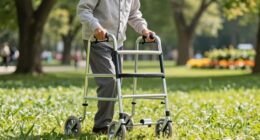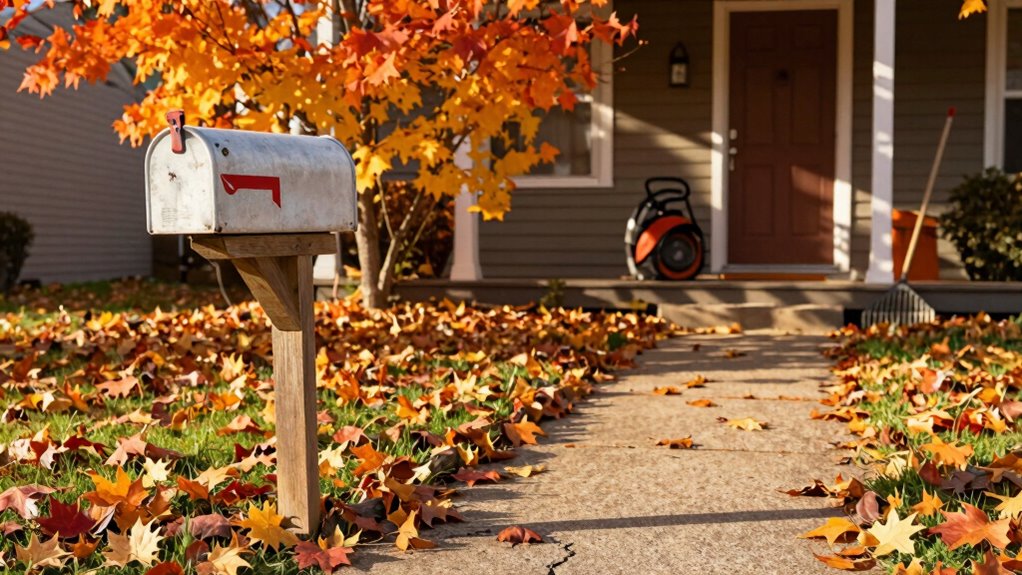

To stay safe from fall risks from your mailbox to your front door, regularly clear leaves, ice, and debris from walkways. Guarantee steps and ramps have sturdy handrails and non-slip surfaces. Improve outdoor lighting to boost visibility during evenings and in overgrown areas. Trim shrubs and branches blocking your path and secure outdoor cords or decorations to prevent tripping. Preparing for snow and ice removal keeps your pathway safe—keep exploring for more safety tips.
Key Takeaways
- Inspect and maintain walkways, stairs, and entry areas for cracks, clutter, and uneven surfaces to prevent trips and slips.
- Regularly clear leaves, ice, and snow from pathways, applying salt or sand, especially during winter months.
- Trim overgrown vegetation obstructing walkways and enhance outdoor lighting for better visibility and safety.
- Install sturdy handrails, proper lighting, and slip-resistant surfaces on stairs and ramps to support safe navigation.
- Keep the mailbox pathway clear and ensure ground surfaces are even and well-lit to prevent falls when approaching outdoors.
Identify Fall Hazards Near Your Mailbox and Front Door
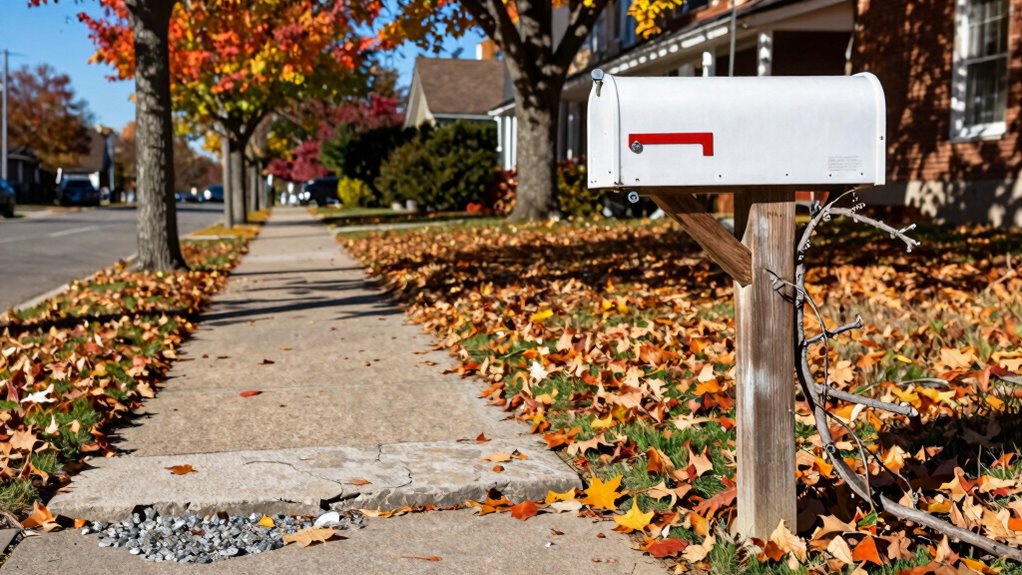
Because your mailbox and front door are frequently used entry points, they can quickly become fall hazards if not properly maintained. Start by checking if your handrail installation is secure; a sturdy handrail offers essential support on steps or uneven surfaces. Consider your footwear choices—wear shoes with good traction and closed toes to prevent slipping. Look for loose or cracked pavement, uneven surfaces, or clutter near your entryway that could cause trips. Keep pathways clear of debris, and make sure steps are well-lit and in good condition. Addressing these hazards reduces your risk of falling when entering or leaving your home. Additionally, understanding stair proportions can help ensure your steps are safe and comfortable to use. Regularly inspecting your steps and entryway surfaces for wear and tear can further prevent accidents. Being aware of entryway design principles can also help in creating a safer approach to your home. For example, incorporating proper lighting can significantly improve visibility and reduce fall risks during nighttime. Paying attention to natural lighting can further enhance safety and visibility during daylight hours.
Check and Clear Walkways of Leaves, Ice, and Debris
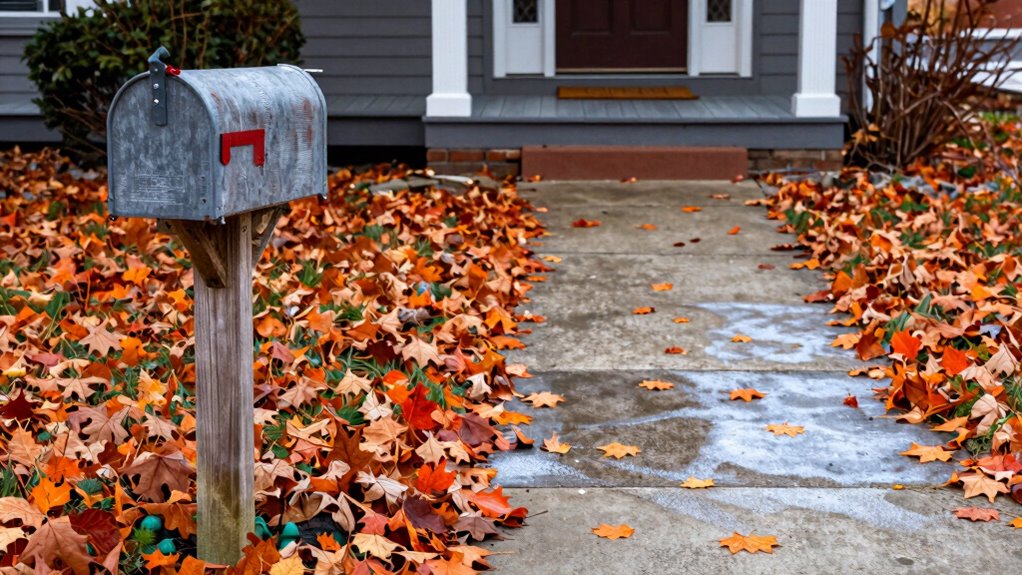
Regularly check your walkways for leaves, ice, and debris, especially during fall and winter. Leaf accumulation can hide uneven pavement, increasing the risk of slips and falls. Ice can form quickly on shaded areas, making surfaces treacherous. Debris like twigs or trash can cause tripping hazards if left unchecked. Being aware of accessibility features can help you better navigate and maintain safe outdoor pathways. Clearing debris promptly helps you avoid accidents during those essential outdoor moments. Take time to sweep away leaves, remove ice with salt or sand, and inspect for uneven pavement that could trip you up. Staying proactive keeps your path safe, especially when conditions are unpredictable, and understanding cabling solutions can ensure your outdoor lighting or security systems function properly in winter weather. Additionally, familiarizing yourself with weather-related safety tips can further enhance your preparedness for outdoor hazards.
Trim Overgrown Shrubs and Branches Blocking Your Path
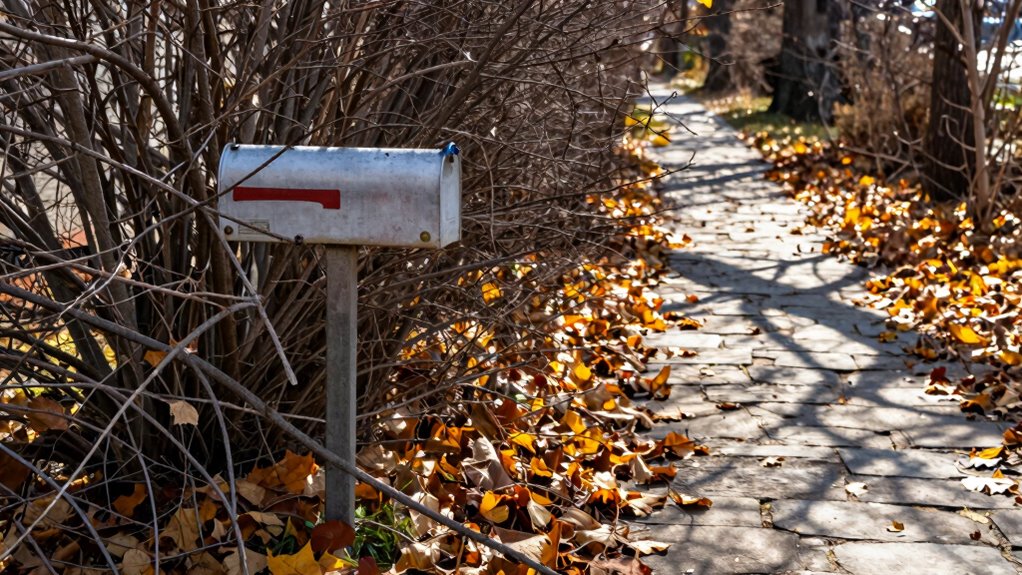
Overgrown shrubs and branches can create hidden hazards along your walkways. Regularly inspecting and trimming these plants keeps your paths clear and safe. Taking these simple steps helps prevent trips and falls during the fall season. Using proper pruning techniques can also promote healthy plant growth and prevent overgrowth in the future outdoor safety tips. Additionally, understanding fire safety can help you identify potential hazards that might be overlooked during routine maintenance. Proper environmental considerations ensure your efforts to keep the area safe do not harm the surrounding ecosystem. Being aware of precious metals and their role in financial security can also influence how you prioritize your safety and maintenance routines. Recognizing the importance of Gold IRA markets can inspire you to make informed decisions about your investments while maintaining a safe outdoor environment.
Clear Pathways for Safety
To make certain safe outdoor fall walks, it’s vital to keep your pathways clear by trimming back overgrown shrubs and branches that may block your way. Proper shrub trimming not only prevents accidents but also improves lighting by allowing more sunlight to reach the path. When your shrubs are overgrown, they create dark, hidden spots that can cause trips or falls, especially in low light. Confirming a tidy, unobstructed walkway boosts confidence and safety. Additionally, consider installing lighting improvements to illuminate dark areas and make your path more visible at night. Regular maintenance keeps your outdoor space inviting and safe for everyone. Paying attention to outdoor safety and risk factors can help prevent accidents during the fall season. Being aware of home safety practices can further enhance your outdoor fall safety measures. Taking these steps now confirms your fall walks are pleasant, safe, and free of hazards. Incorporating seasonal maintenance routines ensures ongoing safety and reduces the likelihood of unexpected hazards. Moreover, understanding grocery savings strategies can help you allocate resources toward necessary safety improvements.
Inspect and Trim Regularly
Maintaining clear pathways requires ongoing attention to the condition of your shrubs and branches. Regular inspection helps identify overgrown areas that could trip you or damage outdoor furniture. Trim back overgrown shrubs and branches that block your walkway or mailbox, ensuring safe passage. Proper garden maintenance keeps your outdoor space tidy and reduces fall hazards. Use tools like pruning shears and saws to shape plants and clear debris. Keep pathways free of fallen leaves and twigs. Consider the table below to guide your trimming priorities:
| Area | Action Needed | Tools Needed |
|---|---|---|
| Sidewalk edges | Trim overgrown shrubs | Pruning shears |
| Low branches | Cut back branches | Loppers |
| Garden beds | Remove dead or unruly growth | Hand pruners |
| Around outdoor furniture | Clear obstructive foliage | Hedge trimmers |
| Mailbox area | Keep clear of overgrowth | Garden shears |
Secure Outdoor Cords, Lights, and Decorations to Prevent Trips
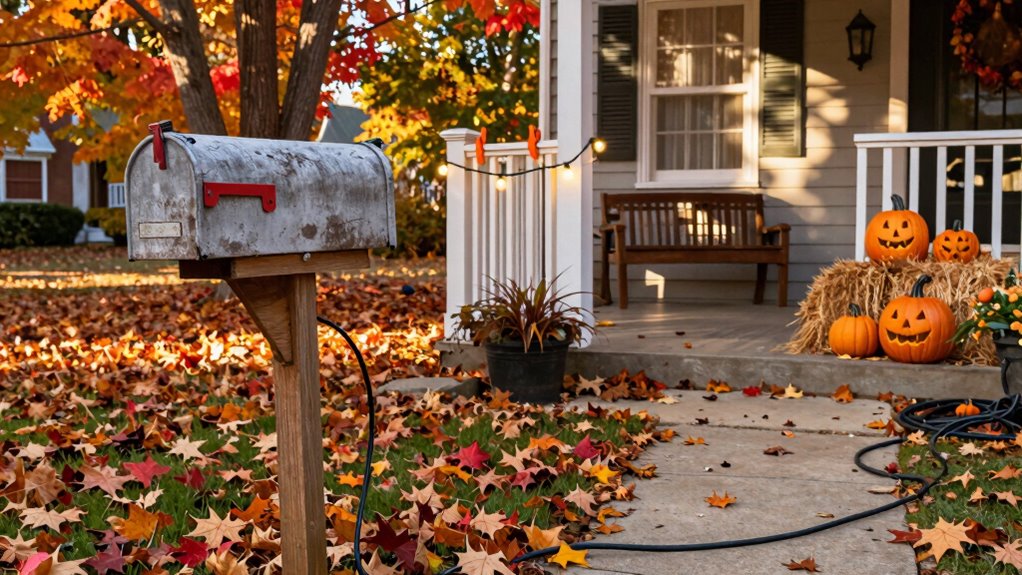
Outdoor cords, lights, and decorations can create tripping hazards if not secured properly. You might not realize how easily a loose outdoor cord or holiday light strand can cause a fall. To keep your walkway safe, take the time to secure these items firmly. Use weather-resistant clips or stakes to hold cords flat against the ground, preventing slips. Wrap holiday lights securely around fixtures and avoid loose hanging wires. Keep decorations away from walkways to prevent accidental trips. Ensuring proper visual awareness can also help in being more aware of your surroundings and potential hazards during outdoor activities. Additionally, maintaining clear walkways, good lighting, and regularly inspecting outdoor items for wear and tear can further reduce the risk of accidents. Regularly checking outdoor items for outdoor safety hazards is essential to prevent unforeseen issues. Being mindful of seasonal hazards can also help you prepare for specific risks associated with fall decorations and weather conditions.
Install Better Lighting for Safer Fall Evenings
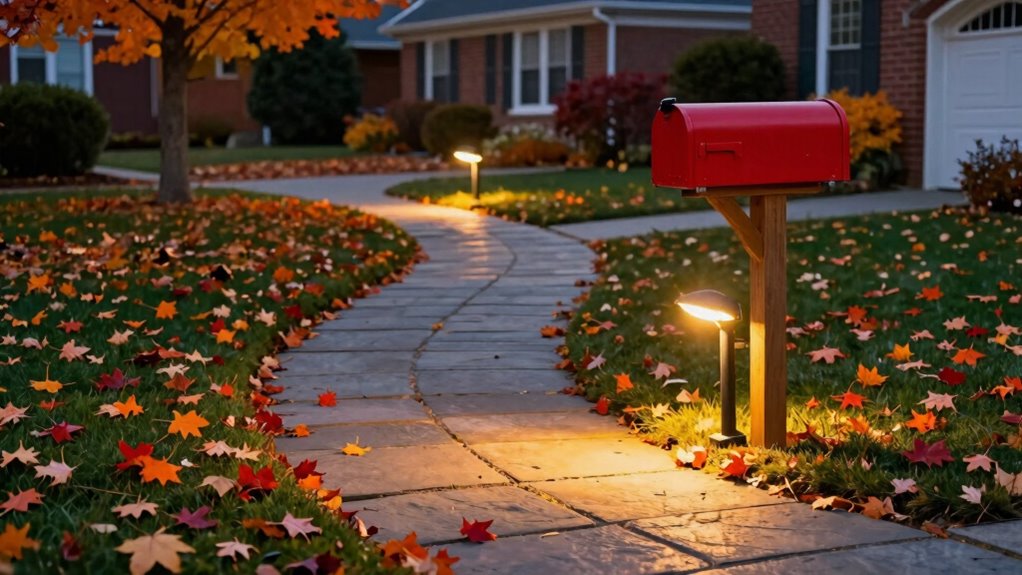
Installing better lighting in your outdoor space can markedly reduce fall risks during the darker evenings of fall. Consider adding solar powered lighting along walkways and near your steps to improve visibility without increasing energy costs. Motion activated fixtures are especially effective; they turn on only when needed, deterring intruders and illuminating potential hazards instantly. Proper lighting helps you see uneven surfaces, obstacles, or debris that could cause falls. An additional option is commercial kitchen equipment, which can provide durable and reliable outdoor lighting solutions suited for various weather conditions. Proper lighting design can further enhance safety and aesthetic appeal in your outdoor area. Additionally, choosing weather-resistant fixtures ensures long-lasting safety in the face of fall weather changes. Here’s a quick comparison:
| Feature | Benefits |
|---|---|
| Solar powered lighting | Eco-friendly, no wiring, easy to install |
| Motion activated fixtures | Convenient, energy-efficient, enhanced safety |
Add Handrails and Non-Slip Surfaces on Stairs and Ramps
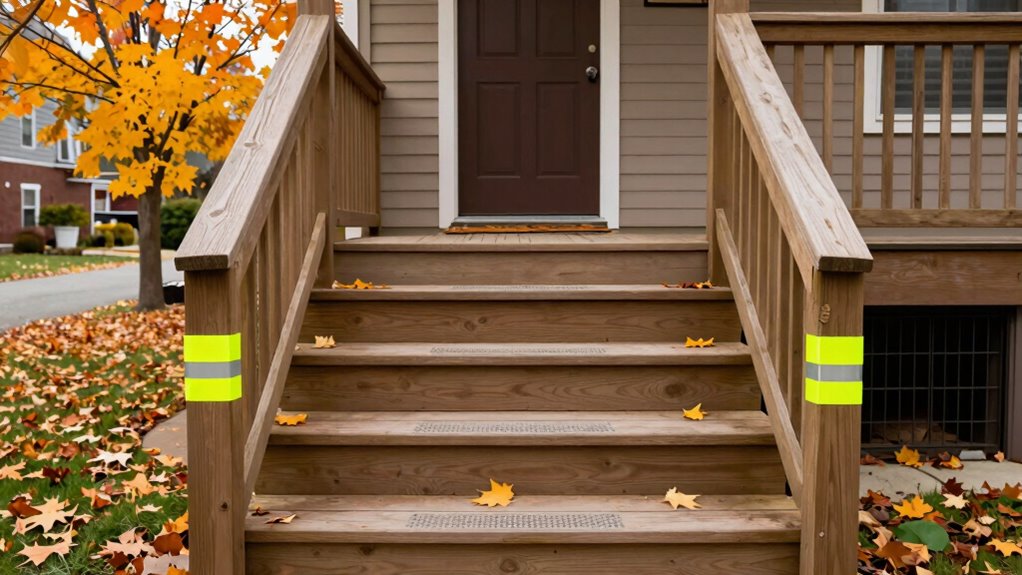
Adding sturdy handrails and non-slip surfaces to your stairs and ramps can substantially reduce fall risks during fall months. Proper handrail installation provides essential support, especially when surfaces are wet or icy. Slip resistant surfaces help prevent dangerous slips and falls, giving you peace of mind as you navigate outdoor steps. Incorporating pet tracking gear such as GPS or Bluetooth trackers can also help quickly locate pets who may be startled or disoriented outdoors. Consider these steps to enhance safety: – Feel confident with secure handrail installation that offers steady support. – Reduce slipping hazards with slip resistant surfaces on all stairs and ramps. – Protect loved ones from falls by making every step safer and more reliable.
Prepare for Snow and Ice Removal Before Cold Weather
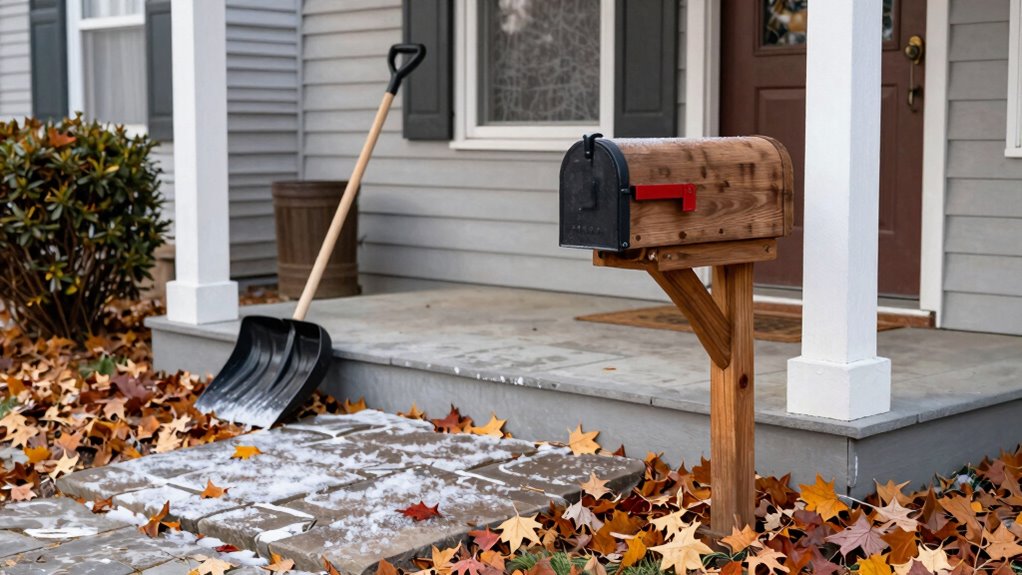
Start by inspecting your walkways regularly to catch any hazards early. Make sure to clear snow promptly to keep paths safe and accessible. Applying ice-resistant treatments can prevent slips and help you stay ahead of winter risks.
Inspect Walkways Regularly
As cold weather approaches, it’s essential to regularly inspect your walkways to identify and address potential hazards. Cracks, uneven surfaces, or loose stones can cause falls, especially when snow and ice hide the risks. Ensure your garden lighting is functioning properly to illuminate dark areas, reducing trip hazards. Move or secure outdoor furniture that could obstruct pathways or become slippery. Check for debris, leaves, or moss that might make surfaces slick. By proactively maintaining your walkways, you create a safer environment for everyone, preventing accidents before winter’s worst weather hits. Remember, a well-lit, clear, and stable path isn’t just convenient — it’s vital for safety during the chilly months ahead. Stay vigilant and keep your walkways safe for all visitors.
Clear Snow Promptly
Regularly clearing snow from walkways helps prevent accidents once winter arrives. As soon as snowfall begins, stay ahead by snow shoveling promptly to keep paths clear. Remove snow regularly to avoid it becoming heavy and difficult to move. After shoveling, apply ice melting products to prevent ice formation and improve traction. This proactive approach minimizes the risk of slips and falls, especially near your mailbox and front door. Keep a supply of ice melt on hand and use it before ice bonds tightly to surfaces. Prompt snow removal not only makes your outdoor space safer but also saves time and effort later on. Staying vigilant and acting early ensures your walkways stay safe throughout the winter months.
Apply Ice-Resistant Treatments
Applying ice-resistant treatments before cold weather arrives is a proactive step to protect your walkways. These treatments, like sidewalk de-icing solutions, create a barrier that prevents ice from bonding to surfaces, making removal easier and safer. By applying ice resistant treatments early, you reduce the risk of slips and falls during icy conditions. Imagine walking confidently without fear of slipping on hidden ice patches. Taking this simple step can save you time, effort, and potential injuries. Plus, it ensures your family and visitors stay safe as they approach your home. Don’t wait for snow or ice to accumulate—prepare now to avoid dangerous surprises later.
- Feel confident knowing your walkways are safer for everyone.
- Save time and energy during winter storms.
- Protect loved ones from painful falls and injuries.
How Can I Practice Fall Safety When Approaching My Mailbox?
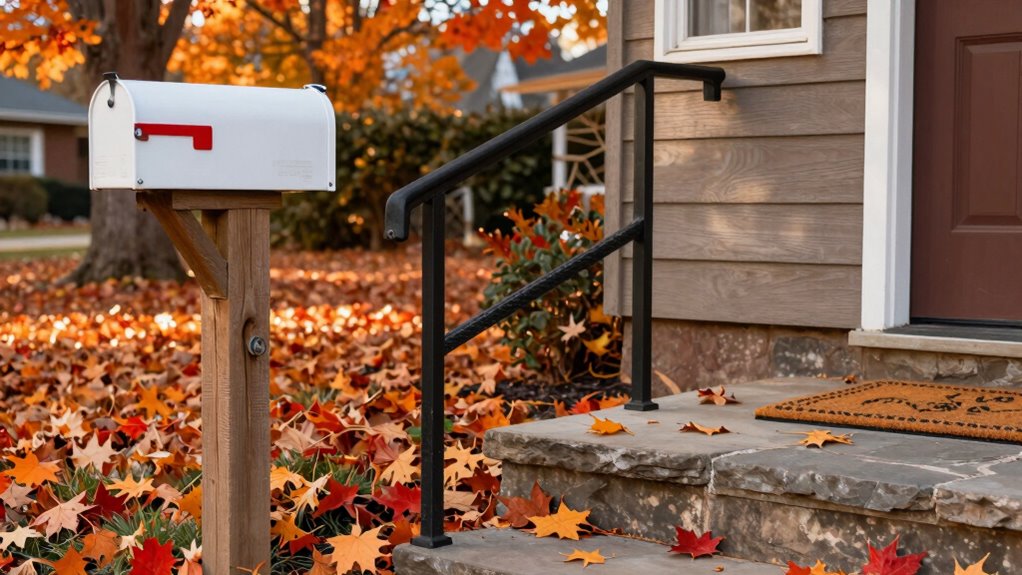
When approaching your mailbox, taking simple precautions can substantially reduce your risk of falling. Ensure your path is clear of debris, ice, or snow, and regularly perform mailbox maintenance to prevent slippery buildup. Dress in seasonal clothing with sturdy, non-slip shoes to improve traction. Be mindful of uneven surfaces or cracks that could trip you up. To stay safe, consider this quick checklist:
| Clear Path | Proper Footwear | Weather Awareness |
|---|---|---|
| Remove leaves or ice | Use shoes with grip | Check weather forecast |
| Repair uneven ground | Avoid loose soles | Wear layered clothing |
| Keep walkway well-lit | Use traction aids if needed | Be cautious in low visibility |
Practicing these habits helps keep your approach safe and fall-free.
Frequently Asked Questions
How Often Should I Inspect My Outdoor Safety Features?
You should inspect your outdoor safety features at least once a month to guarantee they’re in good condition. Regular safety feature reviews help identify potential hazards, like loose handrails or uneven steps, before they cause accidents. After severe weather or winter storms, do a quick check to spot any damage. Keeping up with inspection frequency helps maintain a safe pathway, reducing fall risks and ensuring your outdoor area remains secure year-round.
What Materials Are Best for Non-Slip Stair Surfaces?
You might think all materials are equal, but textured materials like rubber, concrete with non-slip coatings, or asphalt are your best choices for stair safety. These options provide excellent traction, especially when combined with non-slip coatings that enhance grip. Don’t underestimate the importance of choosing the right textured surface—it’s your best defense against slips and falls, especially in wet or icy conditions. Prioritize these materials for a safer outdoor staircase.
How Can I Make My Mailbox Area More Visible at Night?
To make your mailbox area more visible at night, you should add lighting improvements, like solar-powered or LED lights, to brighten the pathway. Install reflective signage or tape around your mailbox and along the path to increase visibility in low light. These steps help you see clearly and alert others, reducing fall risks and ensuring safe access at night. Regularly check lights and reflective materials for effectiveness.
Are There Specific Weather Conditions That Increase Fall Risks?
Certain weather conditions, like rain, ice, and snow, markedly increase fall risks. Temperature fluctuations can cause surfaces like walkways and stairs to become icy or slippery, making falls more likely. Wet leaves and frost also create hazards. You should stay alert during adverse weather, wear appropriate footwear with good traction, and clear pathways of snow or ice to prevent slips. Always exercise caution when weather hazards are present.
What Seasonal Maintenance Tips Can Prevent Winter Falls?
Winter’s chill can hide hazards, but you can stay safe by maintaining your walkway. Use seasonal lighting to illuminate paths and prevent falls, and consistently remove leaves that can create slippery surfaces. Clearing snow promptly and applying salt or sand guarantees traction. These simple seasonal maintenance tips reduce winter fall risks, keeping your outdoor areas safe and accessible, so you can enjoy the season’s beauty without worry.
Conclusion
By checking your mailbox-to-front-door route regularly, you create a safe pathway through a winter wonderland that could turn treacherous. Picture your steps as a sturdy bridge over icy waters, each precaution a sturdy plank. Stay vigilant, clear the hazards, and install safety features—these small actions transform your outdoor space into a fortress of fall safety. With mindful steps, you’ll navigate the season’s icy embrace with confidence and peace of mind.