

To make standing up safer, your bed should be about waist height or slightly below your hips when seated, so your feet are flat on the floor. This height helps reduce strain on your joints and makes shifting from sitting to standing easier and more stable. Ensuring proper bed height is essential for safety, stability, and independence. Keep these guidelines in mind, and you’ll discover simple steps to optimize your bed setup for safer standing sessions.
Key Takeaways
- Ensure bed height allows your feet to touch the floor when seated, providing stability for standing up.
- Adjust bed height to match your knee or waist level for easier, safer transitions from sitting to standing.
- Use risers or adjustable frames to customize bed height based on your height and mobility needs.
- Regularly measure and maintain a level bed to prevent imbalance and fall risk.
- Incorporate safety features like grab bars and clutter-free surroundings to enhance standing safety.
Why Bed Height Matters for Safe Standing

When your bed is too high, it can make getting in and out unsafe, especially if you don’t have proper support. Bed height considerations are essential for safe standing, as a higher bed increases the risk of falls. Falling from an elevated surface can cause injuries, particularly for those with limited mobility or balance issues. To reduce this risk, implement fall prevention strategies like using sturdy grab bars or bed rails. Ensuring your bed height aligns with your height and physical ability helps you maintain stability when getting up or lying down. Proper bed height minimizes strain and provides a safer way to navigate your space, reducing the chances of accidents and promoting confidence in your daily routines. Additionally, understanding comparative advantage principles can help inform decisions about optimizing your environment for safety and efficiency, especially when considering ergonomic design to support safe movement. Recognizing individual mobility needs can further tailor your setup to prevent falls and enhance safety, and considering environmental factors such as lighting and clutter can also improve overall safety. Incorporating home safety assessments can further identify potential hazards related to bed height and accessibility.
How to Find the Right Bed Height for You

Finding the right bed height starts with understanding your own needs and capabilities. To achieve an ergonomic bed setup, consider your height, mobility, and any physical limitations. Bed height customization is key to making sure you can sit up and stand with ease, reducing strain or risk of injury. Measure the distance from your floor to your hip or knee to determine a comfortable height. When selecting a bed, look for options that allow adjustments or choose a frame that matches your ideal height. Keep in mind that the right bed height supports safe, independent movement and helps prevent falls. Proper bed height can significantly enhance your safety and comfort during daily activities. Additionally, being aware of Rhythm Failure can inform your understanding of how rhythm and movement impact physical safety, especially during transitions like standing up. Recognizing the importance of biomechanical alignment can further support safe transitions and reduce strain. Incorporating principles of creative storytelling into your approach can also increase awareness and adherence to safe practices. Understanding technological integration in adjustable beds can provide additional options for personalized comfort and safety. Take the time to assess your body’s requirements and adjust accordingly for a safer, more comfortable sleeping environment.
Risks of Incorrect Bed Height and How to Avoid Them

Setting your bed at the wrong height can lead to discomfort and increased risk of falls. If your bed is too high, it becomes harder to get in and out safely, especially for those with mobility issues. To avoid these risks, make certain your bed height is properly adjusted for your needs and setup. Additionally, considering bed height guidelines can help optimize safety and comfort in your sleeping environment. Ensuring the correct bed height can also promote better sleep posture and reduce strain on your body.
Proper Bed Height Setup
Proper bed height setup is essential because an incorrectly adjusted bed can lead to injuries and discomfort. Focusing on bed height ergonomics helps you maintain proper sleep positioning, reducing strain on your back, hips, and knees. When your bed is too high or too low, it forces your body into awkward postures that can cause pain over time. To avoid this, measure your waist height when seated on the edge of your bed—your feet should rest flat on the floor, and your knees should be at a 90-degree angle. Ensuring the bed height aligns with your body’s natural posture supports better sleep quality and minimizes the risk of falls or strain injuries. Proper setup makes standing up and sitting down safer and more comfortable every day. Additionally, considering the contrast ratio of your bedding and environment can enhance your overall comfort and safety during rest. Maintaining an appropriate bed height can also help prevent unnecessary strain during daily activities involving your bed, especially when combined with ergonomic principles. Adjusting your bed height to match body ergonomics can significantly improve your overall safety and comfort. Being mindful of bed height adjustments can further optimize your sleep environment and prevent potential discomfort.
Risks of Too High Beds
When your bed is too high, it can pose serious safety risks and cause physical discomfort. An elevated bed increases the likelihood of falls, especially when getting in or out of bed, jeopardizing fall prevention efforts. Additionally, a high bed can strain your joints and back, leading to discomfort or injury over time. To understand the risks better, consider this table:
| Risk | Impact |
|---|---|
| Increased fall likelihood | More injuries during transfers or falls |
| Joint strain | Discomfort and injury over time |
| Difficulty in mobility | Challenges for seniors or those with limited flexibility |
Adjusting your bed to an appropriate height reduces these hazards, making standing up safer and supporting fall prevention. Proper cabling and mounting techniques can also help ensure the bed remains stable and safe. Ensuring your bed is set at the correct height is essential for fall prevention and overall safety. Moreover, ensuring the bed’s height is appropriate can prevent unnecessary strain on your body during transfers. A proper bed height can also help maintain correct posture and reduce muscle fatigue. Being aware of bed height standards can further improve safety and comfort in your environment.
How to Adjust Your Bed to the Correct Height
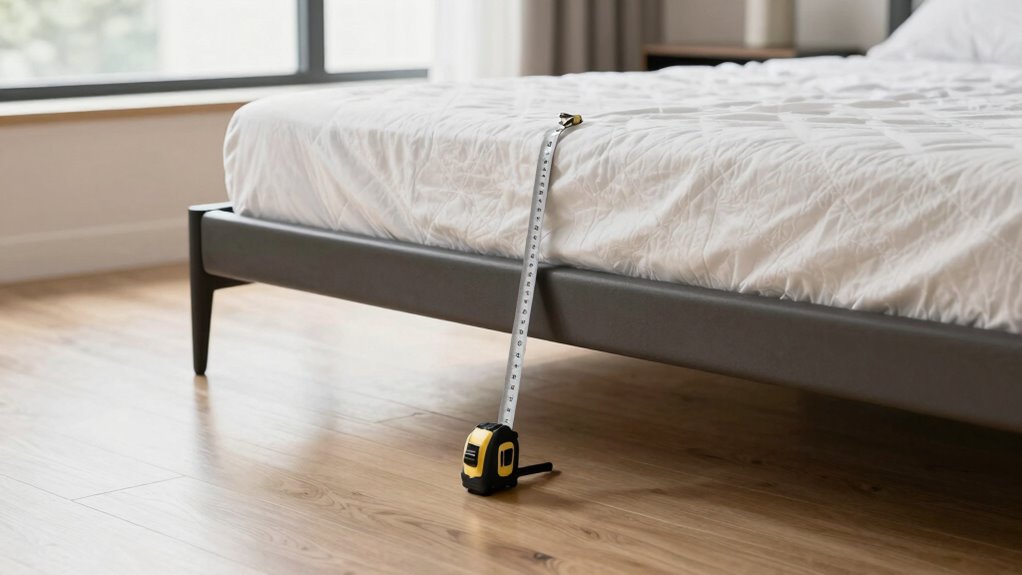
Adjusting your bed to the correct height is essential for comfort and safety. To do a proper bed height adjustment, first measure your ideal height—generally, your feet should touch the floor comfortably when sitting on the edge. Check your mattress compatibility; some mattresses, like memory foam or hybrid types, may require different support options to achieve the right height. Use risers, adjustable bed frames, or platform bases if needed. Make sure the frame is stable and level before finalizing the height. If your bed is adjustable, simply follow the manufacturer’s instructions to set it at your preferred level. Proper bed height ensures safer standing and sitting, reducing the risk of falls or strain. Incorporating ergonomic considerations can further enhance safety and comfort. Additionally, understanding angel numbers and their guidance can help you create a safer and more balanced sleep environment.
Tips for Maintaining Proper Bed Height Over Time

Ever wonder how to keep your bed at the right height over time? Regular bed height adjustments are key to safety and comfort. Check your bed periodically to verify it remains at the ideal height, especially after moving or replacing the mattress. Mattress height considerations are important because a thicker mattress can raise the overall bed height, making adjustments necessary. Use a level or measuring tape to confirm the height and make any needed bed height adjustments promptly. Keep the bed frame and support system in good condition, tightening screws and replacing worn parts. Proper bed height also helps reduce discomfort and supports better sleep posture. Additionally, understanding the importance of Free Floating design principles can influence how you set up your sleeping area for optimal safety and flexibility. Regular maintenance can also prevent structural issues that may compromise safety over time. Being aware of bed stability and how it affects overall safety can help you identify potential problems early. Consistent maintenance helps ensure your bed stays at a safe, functional height for years to come.
What Elderly and Mobility-Impaired People Need to Know

For elderly and mobility-impaired individuals, maintaining a safe and accessible bed height is essential for independence and safety. Proper bed height helps reduce the risk of falls and makes standing up easier. Here are four key things to know:
- Adjust your bed height so your feet are flat on the floor when sitting on the edge.
- A higher bed reduces strain when getting in or out, but shouldn’t be so high that you lose balance.
- Use bed risers or adjustable frames to customize height for your needs.
- Always test your bed height to verify it supports fall prevention and makes standing safer.
How to Use Bed Height to Prevent Nighttime Falls

Ensuring your bed height is correct can considerably lower the risk of nighttime falls. Start by evaluating your current bed height and making necessary bed height adjustments to match your comfort and safety needs. The ideal height allows your feet to touch the floor firmly when sitting on the edge, providing stability during transfers. Use tools like bed risers or adjustable frames to fine-tune the height if needed. Incorporate fall prevention strategies by ensuring the area around your bed is clear of clutter and installing sturdy grab bars if necessary. Regularly reassess your bed height as your mobility changes, and always prioritize ease of getting in and out of bed. Proper bed height is a simple yet effective way to enhance safety during nighttime movements.
Choosing the Best Bed Frame and Mattress for Safety and Height

When selecting a bed frame and mattress, focus on achieving the ideal height for safety and ease of getting in and out. Make sure your mattress is compatible with your chosen frame to guarantee stability and support. By paying attention to these factors, you can create a safe, comfortable sleep setup tailored to your needs.
Optimal Bed Height
Choosing the right bed height is essential for safety and ease of getting in and out of bed. The ideal height helps maintain good sleep posture and keeps your bed linens neat. To find your ideal height, consider these factors:
- Your knee height when seated—aim for a height where your feet touch the floor comfortably.
- The ease of sitting and standing without strain.
- How well the bed supports your sleep posture, reducing back or neck pain.
- The accessibility of bed linens for changing or making the bed without difficulty.
A well-chosen bed height minimizes risk and promotes better sleep habits. Remember, a slightly higher or lower bed can make a significant difference in safety and comfort, especially for those with mobility concerns.
Mattress Compatibility Tips
Selecting the right bed frame and mattress is essential for achieving ideal height and guaranteeing safety. When choosing a bed frame, consider its height and how it complements your mattress. A lower profile frame can make standing up easier, especially if you prefer a higher mattress. For mattress compatibility, focus on mattress firmness; a firmer mattress provides better support and stability, reducing the risk of slipping or falling. Ensure your mattress fits well within the bed frame to prevent gaps that could cause accidents. Also, check that the frame’s design offers sturdy support and easy access. Proper bed frame selection combined with the right mattress firmness helps create a safe, comfortable sleeping environment, making standing up easier and reducing injury risks.
Creating a Safer Bedroom Environment Beyond Bed Height

Ensuring a safer bedroom environment goes beyond just setting the bed at an appropriate height. You can reduce fall risks and improve overall safety by focusing on other areas. Here are some tips:
- Keep walkways clear of clutter to prevent tripping.
- Use nightlights to improve visibility during nighttime visits.
- Secure loose rugs or carpets to avoid slipping.
- Install grab bars near the bed or in the bathroom for extra support.
When to Talk to a Healthcare Professional About Bed Safety

If you notice persistent difficulty getting in or out of bed safely, it’s time to consult a healthcare professional. They can assess your mobility support needs and recommend fall prevention strategies. Signs include frequent near-falls, pain, dizziness, or fatigue during transfers. Addressing these issues early reduces injury risk and improves safety.
| Situation | Action Needed |
|---|---|
| Ongoing trouble with transfers | Seek professional evaluation for mobility support |
| Recurrent falls or near-misses | Discuss fall prevention strategies with a pro |
| New or worsening symptoms | Get medical advice to identify underlying causes |
Frequently Asked Questions
How Does Bed Height Affect Overall Bedroom Safety?
You should consider bed height ergonomics because it directly impacts your safety and comfort in the bedroom. A bed that’s too high or low can strain your sleep posture factors, leading to discomfort or falls when getting in or out. By choosing a bed height suited to your height and mobility, you reduce injury risks, promote better sleep posture, and make your bedroom safer overall.
Can Adjustable Beds Improve Safety for All Ages?
Adjustable beds can definitely improve safety for all ages by enhancing bed height ergonomics. With adjustable bed features, you can set the height to make standing up easier and reduce fall risks, especially for seniors or those with mobility issues. You get personalized comfort and added safety, making daily routines safer and more accessible. So, investing in an adjustable bed helps you maintain independence and prevents accidents.
What Are Common Mistakes When Measuring Bed Height?
Many fall for bed height misconceptions, thinking measuring is straightforward. But you might make measurement errors by not using a level or measuring from the floor to the top of the mattress, not the frame. Ironically, the easiest mistake is assuming your eye level is accurate. To avoid this, use a tape measure and double-check your measurements. Properly measuring ensures safe, effective bed height adjustments for everyone.
How Often Should I Reassess My Bed’s Height?
You should reassess your bed’s height whenever your comfort or mobility needs change, ideally every few months. Regular evaluation ensures ideal bed height customization and ergonomic bed positioning, reducing strain and risk of falls. If you notice difficulty standing or sitting, adjust the height promptly. Maintaining proper alignment supports your safety and comfort, so stay attentive to how your bed supports your daily movements and make adjustments accordingly.
Are There Specific Bed Height Guidelines for Children?
Like Goldilocks finding the perfect bed, you should aim for a height that’s just right for your child. For child safety, furniture standards recommend a bed height no higher than 16-18 inches from the floor. This minimizes fall risk and makes it easier for kids to get in and out safely. Always choose beds that meet current safety standards and consider your child’s size and mobility.
Conclusion
Remember, the right bed height isn’t just about comfort—it’s about safety. While a lower bed might seem easier to get out of, it can also pose a fall risk if too low. Conversely, a higher bed offers security but can make standing up tricky. Striking the perfect balance ensures you’re safe and confident each morning. Prioritize your well-being by adjusting your bed height thoughtfully—because safety and comfort should always go hand in hand.