

Before setting up a Power of Attorney, ask yourself who you trust to handle your finances and healthcare if you’re unable to do so. Clarify what specific powers you want to grant and whether those powers are broad or limited. Consider how you will communicate your wishes and how often you’ll review and update the document. Understanding these key questions helps make sure your POA reflects your intentions—keep going to learn more about making it effective.
Key Takeaways
- Determine what specific powers you want to grant your agent and whether they should be broad or limited.
- Ask if the POA includes restrictions or conditions, and if it can be modified or revoked later.
- Clarify if the POA covers financial, healthcare, or both types of decisions to ensure comprehensive coverage.
- Ensure the document complies with state laws and legal requirements to remain valid and enforceable.
- Discuss your wishes openly with your chosen agent to prevent misunderstandings and ensure they understand their responsibilities.
What Is a Power of Attorney: and Why Should You Care?

Have you ever wondered what a power of attorney really is and why it matters? A power of attorney is a legal document that lets you appoint someone to handle your affairs if you’re unable to do so. This person, called an agent or attorney-in-fact, can make critical medical decisions on your behalf and manage your financial matters. Whether you’re planning for the future or facing an unexpected situation, having a POA guarantees your wishes are respected. It provides peace of mind, knowing someone you trust will act in your best interest when it counts most. Without a POA, your loved ones might face delays or legal hurdles in making important decisions for you. That’s why understanding this document is essential for your overall planning, especially considering the legal authority it grants. Additionally, choosing the right agent involves considering their trustworthiness and ability to handle complex decisions, which is crucial for effective power of attorney management. Knowing the different types of POA can help you select the most appropriate one for your needs. Moreover, understanding the role of an agent can help ensure your wishes are effectively carried out when necessary.
Why Does a POA Matter for Your Future Planning?

Why does a POA matter for your future planning? A Power of Attorney is a crucial part of estate planning because it guarantees your wishes are respected if you become unable to handle your affairs. It allows you to designate someone you trust to make financial decisions on your behalf, which can prevent delays or legal complications. Healthcare decisions are equally important, as a POA can specify who makes medical choices if you’re incapacitated. Without a POA, your loved ones might face court proceedings or disagreements during difficult times. Having a POA in place gives you peace of mind knowing that your financial and healthcare needs are managed according to your preferences, protecting your interests and reducing stress for your family in the future. Additionally, understanding digital content formats can help you communicate your wishes more effectively in today’s evolving digital landscape. Recognizing the importance of quality assurance in the preparation of legal documents can ensure your POA is comprehensive and binding. Proper document organization can also streamline the process and reduce potential challenges to your directives. Incorporating electronic signatures may also facilitate faster execution of your legal documents, especially in urgent situations. Being aware of potential microplastics in dust is also relevant, as maintaining a clean environment can contribute to overall well-being and peace of mind for your loved ones.
How Do You Pick the Right Person as Your POA?

Choosing the right person to serve as your Power of Attorney is a vital step in ensuring your wishes are carried out effectively. To do this, focus on trustworthiness selection and emotional readiness. Ask yourself:
- Is this person honest and reliable, someone who consistently acts in your best interest?
- Are they emotionally prepared to handle stressful situations and difficult decisions?
- Do they understand your values and priorities, and can they respect your wishes?
- Have you considered their ability to manage responsibilities and adhere to legal requirements?
Selecting someone with proven integrity and stability helps ensure your power of attorney is exercised responsibly. Equally important is their emotional readiness to navigate complex or sensitive matters without hesitation. Taking these factors into account will give you confidence that your chosen individual can uphold your intentions when it matters most.
What Powers Can You Grant in a POA?
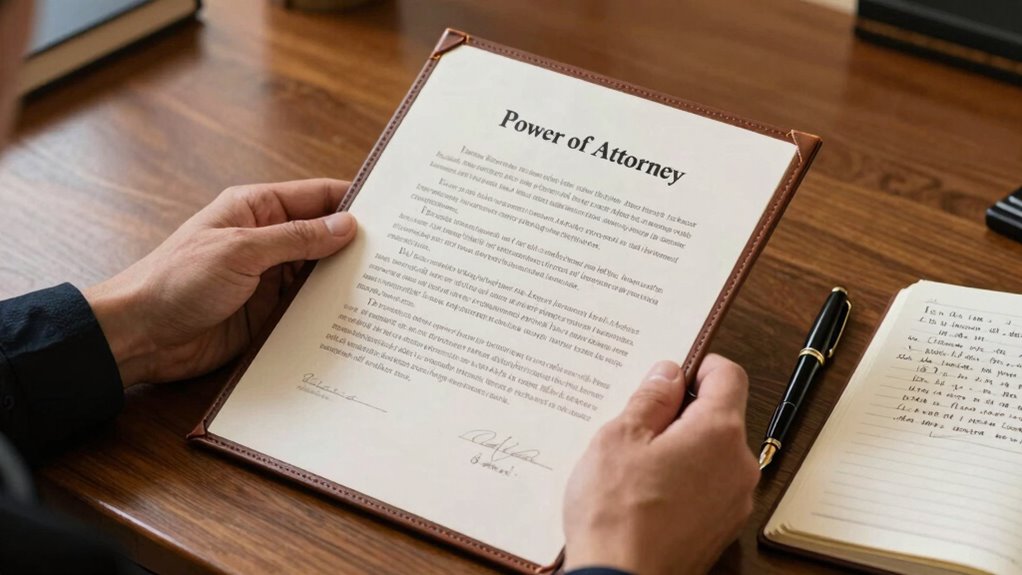
You can grant your Power of Attorney a wide range of powers, depending on your needs and preferences. These powers include financial authority, allowing your agent to manage bank accounts, pay bills, and handle investments on your behalf. You can also give legal permissions for signing documents, filing taxes, or buying and selling property. Some POAs grant broad authority, while others are limited to specific tasks or timeframes. It’s important to clearly specify the powers you want your agent to have, so there’s no confusion or overreach. Being aware of power scope is essential to ensure your wishes are accurately reflected. The scope of these powers determines how much control your agent has, so choose carefully based on what you’re comfortable with and what’s needed for your situation. Understanding durations and limitations can help prevent unintended consequences if your circumstances change. Properly defining these parameters ensures your estate planning aligns with your intentions and reduces potential disputes. Clearly setting limitations and safeguards can further protect your interests and ensure your wishes are followed. Additionally, understanding legal boundaries helps you delineate what your agent can and cannot do under the law, safeguarding your assets and decisions.
How Do You Make Sure Your POA Reflects Your Wishes?

Once you’ve determined the powers to grant in your POA, it’s important to make certain that the document truly reflects your intentions. To do this, review your estate planning goals carefully. Consider these steps:
Ensure your POA accurately reflects your wishes by reviewing your estate goals and communicating clearly with your agent.
- Write clear, specific instructions about healthcare decisions, detailing your preferences for medical treatments and end-of-life care.
- Use precise language in your POA to avoid ambiguity, ensuring your agent understands exactly what you want.
- Discuss your plans with your chosen agent to confirm they understand and respect your wishes.
- Incorporate pet tracking gear considerations into your planning to ensure comprehensive decision-making. Being aware of airless paint spraying tips and gear considerations can also boost your confidence when discussing your wishes with your agent, ensuring your preferences are communicated effectively.
- Additionally, understanding the best vacuums for dust removal can help you keep your environment healthy, which might be an important aspect of your overall estate and health planning. Considering digital tools for estate management can also streamline the process and ensure your wishes are clearly documented and accessible when needed.
When and How Should You Create or Update Your POA?

Creating or updating your Power of Attorney is a proactive step that should be done whenever your circumstances change considerably or at key life stages. It’s important to review your legal documentation regularly to make certain it still aligns with your wishes. You should also update your POA if there are significant family considerations, such as new family members or changes in relationships. When creating or revising your POA, consult a legal professional to ensure it complies with current laws and clearly reflects your intentions. Making these updates early prevents confusion or disputes later. Keep in mind that a well-maintained POA provides peace of mind, knowing your financial and health decisions will be handled according to your wishes when you need it most. Regularly reviewing your POA can also help ensure it is vetted and remains the best option for your needs. Additionally, understanding legal requirements for POA documents in your jurisdiction can help you avoid potential issues down the line. Staying informed about state-specific regulations is crucial for ensuring your POA remains valid and enforceable. Being aware of wave and wind considerations can further help you tailor your POA to address specific environmental factors that might impact your estate planning. Regular check-ins with your legal advisor can also help you stay current on changing laws that could affect your POA.
What Questions Should You Ask About Your POA’s Limits and Scope?

Understanding the limits and scope of your Power of Attorney is essential to make certain it aligns with your needs and expectations. Asking the right questions ensures clarity on agency limitations and scope clarification. Consider these key questions:
- What specific actions is my agent authorized to perform, and are there any restrictions?
- Are there any agency limitations I should be aware of to prevent overreach?
- How broad or narrow is the scope of authority granted, and can I modify it later?
- Knowing the authority boundaries helps prevent misunderstandings and ensures your wishes are honored.
Common Mistakes to Avoid When Setting Up a POA

Setting up a Power of Attorney requires careful attention to detail to avoid common pitfalls that can undermine its effectiveness. One major mistake is overlooking the importance of clear instructions, which can lead to legal pitfalls during estate planning. Make certain you choose a trustworthy agent and specify their powers precisely to prevent misuse. Failing to update your POA after significant life changes, like marriage or divorce, can cause complications later. Additionally, avoid assuming a generic form is sufficient; tailored legal documents are essential. Not discussing your wishes with your agent can lead to misunderstandings. Double-check that your POA complies with state laws to prevent it from being challenged. Being thorough now helps secure your estate and ensures your wishes are honored when you need it most.
Frequently Asked Questions
Can a POA Be Revoked Once Established?
Yes, a power of attorney can be revoked once established. You need to follow specific revocation procedures, which typically involve creating a written notice and informing your agent and relevant institutions. Legal considerations include ensuring the revocation is clear and properly documented to prevent confusion or misuse. Always check your state’s laws to confirm the correct process, and consider consulting a legal professional to ensure your revocation is valid.
How Does a POA Differ From Guardianship?
A power of attorney gives you legal authority to handle someone’s affairs, while guardianship involves court appointment to make decisions for someone unable to do so. With POA, you act based on family decision making and the scope outlined in the document. Guardianship is more restrictive and court-controlled, typically used when a person can’t make decisions themselves. You can revoke a POA, but guardianship requires court approval.
Are There Different Types of Power of Attorney?
Yes, there are different types of power of attorney, and they’re as varied as your Netflix choices. You might choose a medical decision power of attorney when health crises hit or a financial authority one to keep your money safe. Some are durable, lasting through incapacity, while others end when you’re back to full health. Picking the right type depends on your needs, so choose wisely before life throws a curveball.
What Are the Costs Associated With Creating a POA?
Creating a power of attorney costs vary, but you should expect legal fees and notary costs. Legal fees depend on the complexity of your situation and whether you hire an attorney, possibly ranging from a few hundred to over a thousand dollars. Notary costs are usually minimal, often around $10 to $20 per signature, but additional expenses may apply if you need witnesses or specific documentation. Planning ahead helps manage these costs effectively.
How Does a POA Interact With Other Estate Planning Documents?
Imagine your estate plan as a well-organized toolbox. A POA acts like a dedicated wrench, providing legal authority to handle financial planning when you’re unable. It works alongside other documents like wills and trusts, each serving a unique purpose. Together, they guarantee your wishes are clear, coordinated, and ready to be used seamlessly—giving you peace of mind knowing your legal authority supports your estate plan effectively.
Conclusion
Understanding the basics of a power of attorney puts you in the driver’s seat of your future. Asking the right questions now helps make certain your wishes are honored and you avoid surprises down the road. Remember, it’s better to be safe than sorry—don’t leave things to chance. Take the time to assess your needs and choices carefully; after all, you don’t want to be caught with your pants down when it matters most.