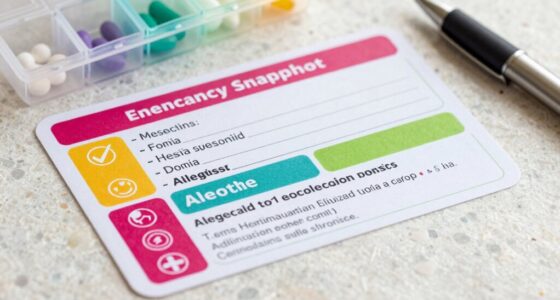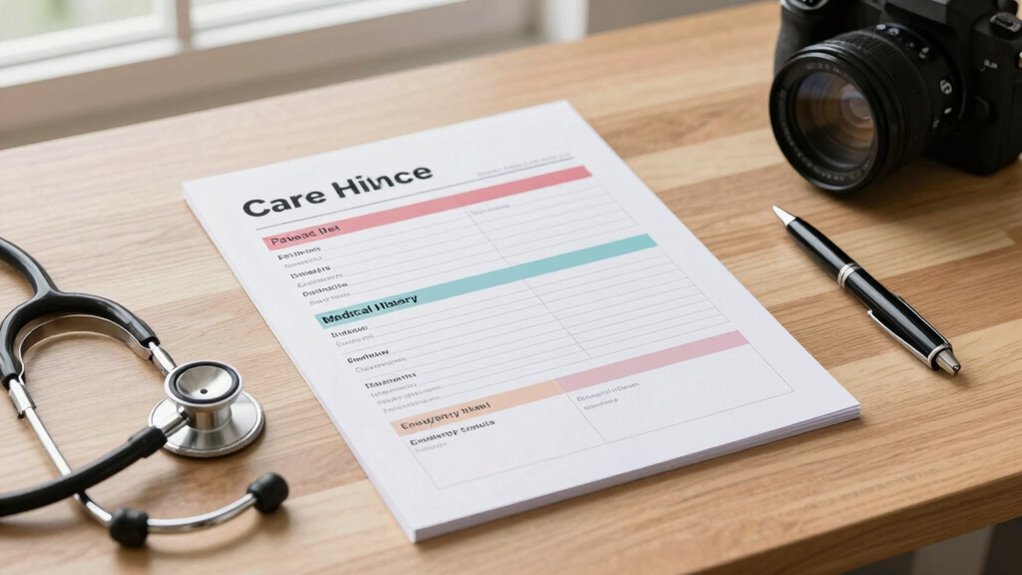

To build a one-page care summary for doctors and helpers, start by collecting current medical information like medications, allergies, medical history, and emergency contacts, verifying accuracy with healthcare providers. Organize the details into clear sections with labels, using visual cues to enhance readability. Include patient preferences, routines, and support systems for personalized care. Keep the summary updated regularly and store it securely for quick access, ensuring everyone stays informed. Continue exploring for detailed tips to create an effective, accessible summary.
Key Takeaways
- Organize information into clear sections with headers for personal details, medical history, medications, allergies, and emergency plans.
- Use visual cues like icons, color-coding, and bullet points to enhance readability and quick scanning.
- Verify and update data regularly by consulting healthcare providers and reviewing recent medical records.
- Incorporate patient preferences, routines, and cultural considerations to create a personalized, patient-centered summary.
- Store the summary securely in accessible formats and review periodically to ensure accuracy and readiness for emergencies.
Why a One-Page Care Summary Is Essential for Patient Safety

A one-page care summary is essential for patient safety because it provides a clear, up-to-date snapshot of your health information in one accessible location. This summary helps streamline medication management, guaranteeing that all caregivers know your current medications, dosages, and allergies, reducing the risk of errors. It also plays a critical role in emergency planning by offering quick access to important health details, such as medical conditions, recent treatments, and emergency contacts. When every caregiver has immediate access to this information, it minimizes delays and mistakes in urgent situations. A well-organized care summary ensures everyone involved in your care can act confidently and efficiently, ultimately safeguarding your health and well-being in both routine and emergency scenarios. Incorporating comprehensive health data into your care summary can further enhance care coordination among healthcare providers. Additionally, maintaining this document regularly ensures that your information remains current, which is vital for effective patient safety. Regular updates are especially important for capturing changes in health status, such as recent screening results or new diagnoses, which are critical for informed decision-making. Keeping your care summary detailed and accurate also helps prevent medical errors that may arise from outdated or incomplete information.
What to Include in Your One-Page Care Summary
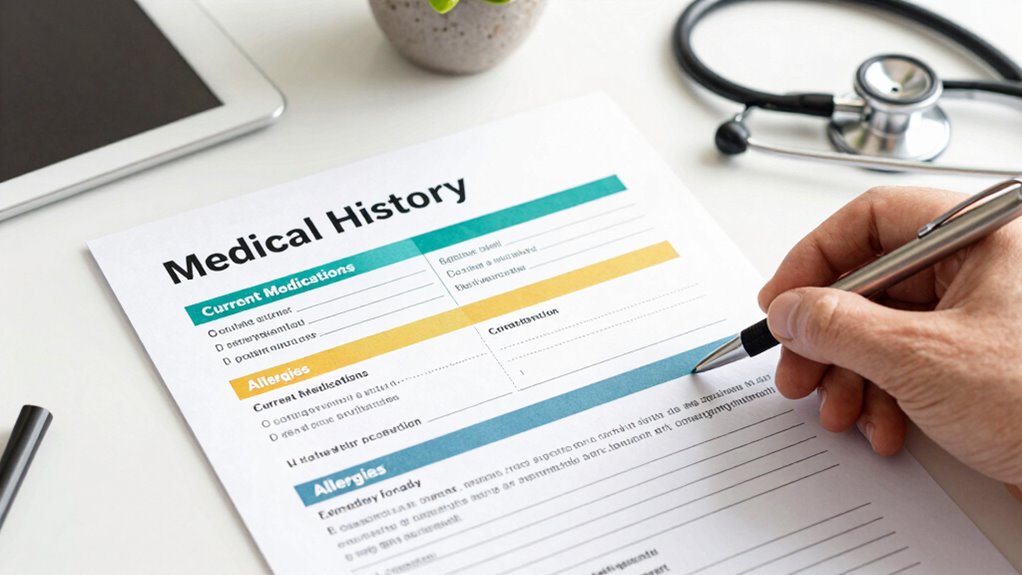
Your one-page care summary should include all key health information that caregivers and doctors need at a glance. First, detail current medications, dosages, and schedules to guarantee medication management is accurate. Second, outline any allergies or adverse reactions to prevent emergencies. Third, include an emergency plan with contact info, preferred hospital, and step-by-step instructions for urgent situations. Be clear about medical conditions, recent surgeries, and ongoing treatments. Also, highlight critical health alerts or restrictions. Incorporating smart home safety features, such as emergency alerts or monitoring systems, can further enhance response times during crises. Understanding nail biology and its relevance to overall health can help identify issues like infections or deficiencies early. Recognizing early symptoms of health deterioration allows for prompt intervention and improved outcomes. Being aware of early warning signs can facilitate faster medical responses and better management. Additionally, educating caregivers on preventive measures can reduce the risk of complications. This concise overview helps everyone respond quickly and appropriately, especially during emergencies. Keep it up-to-date, so new information is always reflected. A well-organized, thorough summary ensures safe, effective care without confusion or delays.
How to Format and Organize Your Care Summary for Clarity
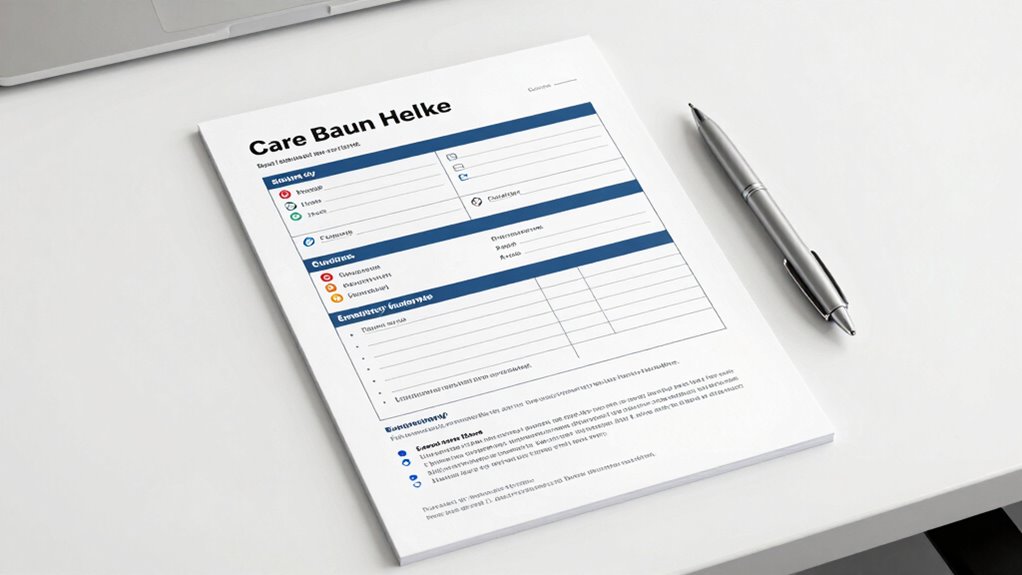
To make your care summary easy to navigate, prioritize clear sections for each aspect of care. Use consistent formatting—like headings, bullet points, and bold text—to guide the reader smoothly through the information. Organizing your details this way helps make certain doctors and helpers find what they need quickly and confidently. Incorporating Free Floating concepts can also help ensure the summary remains adaptable to different care situations, which aligns with the flexible AI and Society approaches to evolving needs and future planning.
Prioritize Clear Sections
Organizing your care summary into clearly defined sections makes it easier for doctors and helpers to find essential information quickly. To achieve this, focus on creating a strong visual hierarchy with distinct section headers. Use bold or larger fonts to differentiate sections clearly. Consider these steps:
- Start with a concise Personal Information section at the top.
- Follow with Medical History and current treatments.
- End with Emergency Contacts and specific instructions.
- Incorporate household organization tips to maintain a tidy and accessible layout that minimizes clutter and enhances readability. Additionally, using consistent formatting guidelines helps improve clarity and reduces errors. Clear sectioning is especially important when including vetted information about various home safety devices and medical equipment, ensuring that critical details are easily distinguishable. These clear sections help guide the reader’s eye and reduce confusion. Incorporating visual cues, such as icons or color-coded headers, can further improve navigation through the document. Using standardized formatting practices ensures that each section is immediately recognizable and easy to scan, which is vital in emergency situations. This structure ensures that crucial details are easy to locate at a glance, making your care summary both effective and user-friendly.
Use Consistent Formatting
Using consistent formatting throughout your care summary guarantees that information is easy to read and quickly understood. Use the same font, headings, and bullet styles to create a clean, organized look. Clearly separate sections for emotional support, medication management, and daily routines, so helpers and doctors can find details fast. Consistent formatting helps highlight key information, ensuring everyone stays on the same page. When listing medications, keep the format uniform—name, dosage, frequency—to avoid confusion. This clarity is essential for effective medication management and providing emotional support. A well-organized, consistently formatted summary minimizes misunderstandings, saves time, and ensures your care team can deliver the best support possible. Incorporating standardized formatting practices can also improve overall communication and reduce errors. Additionally, AI-powered virtual reality in e-learning techniques can help train caregivers and medical staff more effectively, further improving care quality and safety. Employing visual aids and templates can further enhance clarity and consistency across documents, making information even easier to interpret.
Gathering and Verifying Medical Details Efficiently
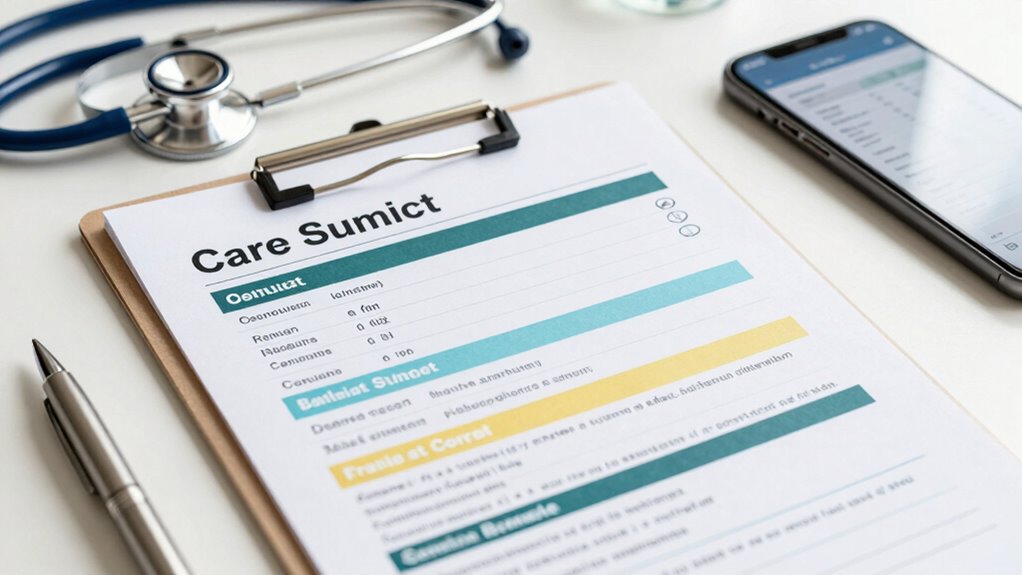
Efficiently gathering and verifying medical details is crucial for creating an accurate care summary. Start by collecting complete medical records from all relevant sources, guaranteeing you have recent and extensive information. Next, verify the accuracy of this data by cross-checking with healthcare providers or official records. This step reduces errors and ensures reliability. Additionally, pay attention to vetted information to prevent the inclusion of outdated or incorrect data. Incorporating precise measurement tools from reliable sources can further enhance data accuracy. Employing standardized data collection methods helps maintain consistency and reduces the risk of omissions. Implementing medical data standards ensures uniformity across records, facilitating better verification. Moreover, understanding regional healthcare practices can aid in contextualizing the data and identifying discrepancies. Organize the verified details clearly, highlighting key information like diagnoses, medications, and allergies. Using a systematic approach helps you avoid omissions and mistakes. Remember, thorough data verification is essential to prevent misunderstandings and ensure the care summary genuinely reflects the patient’s current health status. Staying organized and meticulous ensures your care summary is both accurate and useful for doctors and helpers.
How to Incorporate Patient Preferences and Contexts

To effectively incorporate patient preferences and contexts, you need to actively listen and ask targeted questions during consultations. This helps you understand their values, beliefs, and cultural considerations that influence health decisions. Be attentive to verbal and non-verbal cues, encouraging patients to share what matters most to them. Ask about their daily routines, support systems, and any cultural or religious practices affecting treatment choices. Respecting patient values ensures care aligns with their worldview, increasing engagement and adherence. Remember, understanding the broader context helps tailor your approach, making interventions more relevant and acceptable. Incorporating these insights into your care summary provides a thorough picture that guides helpers and doctors in delivering truly patient-centered care.
Designing a Clear, Concise Care Summary

Creating a clear and concise care summary is essential for ensuring that doctors and helpers quickly grasp the patient’s needs and preferences. Use a strong visual hierarchy to organize information, making key details stand out. Incorporate color coding to categorize sections like medications, allergies, and goals, which helps users find information swiftly. To design effectively:
A well-organized care summary with visual hierarchy and color coding ensures quick understanding of patient needs.
- Prioritize critical info at the top with bold headers and consistent formatting.
- Use color coding strategically to differentiate sections and highlight urgent details.
- Keep the layout simple with plenty of white space, avoiding clutter that hampers quick scanning.
How to Keep Your Care Summary Up-to-Date and Accessible

Keeping your care summary current is essential to guarantee that doctors and helpers have accurate information when they need it most. Regular digital updates ensure your summary reflects recent health changes, medications, or treatments. Use accessible formats and accessibility options, like large fonts or screen reader compatibility, so it’s easy for everyone to read and understand. Store your care summary in secure cloud services or health apps that sync across devices, making updates simple and quick from anywhere. Review and revise your summary at least every few months or after any health change. This keeps your information reliable and ready to share whenever necessary. Staying proactive with digital updates and accessibility options guarantees your care summary remains a helpful, accurate resource for your health team.
How to Use Your Care Summary to Improve Communication and Outcomes

Your care summary becomes a powerful tool for improving communication when you actively share and discuss it with your healthcare team and helpers. Doing so makes certain everyone stays on the same page, especially in critical moments. To maximize its impact:
- Review it regularly to update medication management details, preventing errors.
- Use it during emergency preparedness planning to quickly inform responders of your needs.
- Share it during appointments and emergencies to clarify your health status and goals.
Frequently Asked Questions
How Often Should a Care Summary Be Reviewed and Updated?
You should review your care summary at least every three to six months, or sooner if there’s a significant change in health or treatments. Keep the update process straightforward by noting new medications, diagnoses, or care plans promptly. Regular reviews ensure all information remains accurate and relevant, helping your doctors and helpers provide the best care possible. Staying proactive with your review frequency and update process makes a real difference.
Can Digital Tools or Apps Improve Care Summary Management?
Digital tools and apps can greatly improve care summary management through electronic integration and mobile accessibility. You can easily update and share information with doctors and helpers in real time, guaranteeing everyone stays informed. These tools streamline communication, reduce errors, and make it simple to access essential details on the go. By leveraging these technologies, you enhance coordination and ensure consistent, up-to-date care for your loved ones.
How Do I Ensure Patient Privacy When Sharing the Summary?
Imagine locking your patient’s essential details behind an invisible shield. You guarantee privacy by following strict confidentiality protocols and using data encryption, which acts like a digital vault for sensitive information. Always verify that sharing platforms are secure, and limit access to authorized personnel. Regularly update security measures to stay ahead of potential breaches, so your patient’s care summary remains protected like a treasured secret.
What Common Mistakes Should I Avoid When Creating a Care Summary?
Avoid common mistakes like including too much information, which causes overload and makes the summary hard to read. Make certain all details are current; outdated information can mislead healthcare providers. Keep the layout simple and focused, and double-check facts for accuracy. Don’t forget to update the summary regularly, as stale data can compromise care. Clear, concise, and up-to-date content helps professionals quickly grasp essential info without confusion.
How Can Care Summaries Be Tailored for Different Healthcare Settings?
You can tailor care summaries for different healthcare settings by utilizing customization options and setting-specific templates. Adjust the content to match the unique needs of each environment, whether it’s a primary care clinic or a specialist’s office. Incorporate relevant information, use appropriate terminology, and format it for clarity. This approach guarantees the summary is practical, focused, and easily understood by all healthcare providers involved.
Conclusion
Think of your one-page care summary as a essential bridge connecting you, your doctors, and helpers. When it’s clear and up-to-date, it’s like a well-lit path guiding everyone safely through complex medical terrain. Trust that organizing accurate details and patient preferences creates a seamless flow—preventing missteps and ensuring better care. Keep it concise and current, and you’ll turn a simple document into a powerful tool that safeguards your health and peace of mind.