

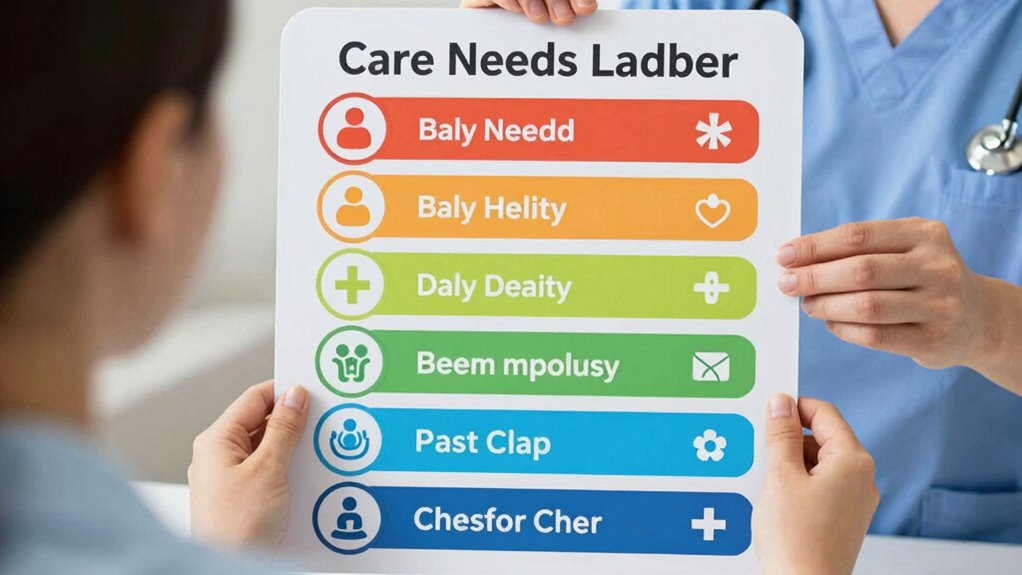
The ‘Care Needs Ladder’ helps you recognize when a loved one’s support needs are changing, so you can step in early. Look for signs like increased confusion, missed routines, safety hazards, or emotional shifts. Regularly assess their ability to perform daily tasks and monitor health and safety concerns. When you spot these signs, it’s time to review and adjust care plans. Keep an eye on evolving needs—more detailed guidance awaits if you continue exploring.
Key Takeaways
- Regularly observe and assess changes in daily functioning, mood, and safety hazards to identify escalating care needs.
- Use assessment tools like checklists and questionnaires to detect subtle signs of increased support requirements.
- Monitor emotional well-being and social engagement to recognize emotional or psychological shifts indicating the need for help.
- Stay alert to safety concerns, such as clutter or unsafe appliances, that signal a need for environmental adjustments or assistance.
- Reevaluate care plans frequently, adjusting support levels proactively to match evolving needs and prevent crises.
What Is the Care Needs Ladder and Why Is It Useful?

Have you ever wondered how healthcare providers determine the level of care someone needs? The care needs ladder is a useful tool that helps visualize the progression of support. It guides caregivers and families in understanding when more assistance is necessary. Effective caregiver communication is essential, ensuring everyone stays informed about changing needs. The ladder also connects you to community resources, which can offer additional support at each stage. As needs increase, the ladder helps identify appropriate services, from basic daily assistance to full-time care. This structured approach makes planning easier and prevents unnecessary stress. By recognizing where someone is on the ladder, you can act proactively, ensuring the right level of help is provided promptly and efficiently. Incorporating care planning strategies and appropriate accessories can also enhance daily routines and improve overall well-being. Additionally, understanding support progression can help tailor interventions more effectively to changing circumstances. Recognizing the stages of care is crucial for timely intervention and resource allocation, making the entire process more manageable for all involved. Moreover, utilizing a structured assessment can improve accuracy in identifying care needs and ensure resources are allocated appropriately.
Understanding the Levels of Care Needed

You need to recognize when basic needs like food and safety are no longer enough. As support requirements increase, you’ll see the need for more assistance and specialized care. Managing complex care involves understanding these shifts so you can provide the right level of support at the right time. Proper knife handling techniques are essential for ensuring safety and efficiency as needs evolve. Being aware of care needs levels can help families anticipate and adapt to changing circumstances effectively, especially when considering floating on water activities that may be suitable for different levels of mobility and care. Additionally, understanding baking techniques such as heat buffering and avoiding scorch can serve as helpful metaphors for managing escalating care needs, emphasizing the importance of gradual adaptation. Recognizing water damage signs early can prevent further deterioration and guide appropriate intervention steps.
Recognizing Basic Needs
Understanding basic needs is the foundation for determining the appropriate level of care. You’ll want to look for signs that someone is struggling with personal hygiene, such as unwashed hair or clothes, or persistent body odor. These indicate they may need assistance maintaining cleanliness. Basic safety is also vital; if you notice hazards like cluttered walkways or unsafe appliances, it suggests the need for support to prevent accidents. Recognizing these signs early helps you assess whether someone can manage daily activities or if they require help. Addressing these fundamental needs ensures their well-being and safety. Being familiar with assessment tools can help in assessing environmental safety and health conditions more accurately. Additionally, understanding physical health indicators can provide deeper insights into their overall well-being. By focusing on personal hygiene and basic safety, you can better understand when someone’s needs are still basic or if they’re starting to require more support.
Identifying Increasing Support
As needs become more complex, recognizing when someone requires increased support is essential for ensuring they receive appropriate care. Changes in family dynamics and emotional resilience often signal the need to step up support levels. Look for signs like increased confusion, withdrawal, or difficulty managing daily tasks. These cues suggest a shift from basic assistance to more structured care. To visualize, consider this progression:
| Level of Support | Indicators | Emotional Impact |
|---|---|---|
| Basic needs | Forgetfulness, minor trouble | Low resilience, frustration |
| Moderate support | Safety concerns, repeated reminders | Stress, emotional strain |
| Intensive care | Wandering, severe confusion | Anxiety, emotional exhaustion |
| Full-time help | 24/7 supervision | Overwhelm, family strain |
| Specialized care | Chronic health issues | Emotional resilience challenged |
Recognizing these signs helps you adapt support appropriately. Additionally, understanding care needs levels can guide timely intervention and prevent escalation. Being aware of the psychological factors involved can further enhance support strategies and ensure ongoing recovery progress. Furthermore, staying informed about emotional resilience can help caregivers provide compassionate and effective care during each stage. Early identification of support thresholds can also prevent caregiver burnout and promote better outcomes for everyone involved. Developing an understanding of support escalation can help caregivers respond more effectively as needs change.
Managing Complex Care
How do you determine the appropriate level of care when managing complex needs? First, assess the individual’s daily routines, health conditions, and safety risks. Recognize signs of caregiver stress, which can affect judgment and decision-making. Use community resources like support groups, home health services, and medical professionals to gather insights and assistance. It’s essential to balance providing enough support without overwhelming the caregiver, ensuring the person’s needs are met effectively. Regularly reviewing and adjusting the care plan helps respond to changing circumstances. Keep communication open with healthcare providers and leverage available community resources to ease caregiver stress. Managing complex care requires ongoing evaluation to ensure the right support is in place, promoting safety, independence, and well-being for everyone involved. Incorporating safety tips from DIY projects can also help create a more secure environment at home, especially considering cable safety practices such as managing heat buildup and avoiding toxic fumes. Being aware of home safety considerations, like water system maintenance, can further reduce risks and support overall well-being. Additionally, understanding home safety measures can be crucial in preventing accidents and ensuring a secure living environment.
How Can You Assess Your Support Needs Effectively?

To assess your support needs effectively, start by taking an honest inventory of the tasks you find challenging and the areas where you feel most vulnerable. Reflect on your daily routines and identify where you struggle or feel overwhelmed. Good caregiver communication is essential—talk openly with those around you about your needs and concerns. Developing emotional awareness helps you recognize when stress or fatigue are affecting your judgment. Pay attention to signs of burnout or frustration, both in yourself and others. Keep track of specific situations that cause difficulty, whether physical, emotional, or logistical. Recognizing individual needs and how they evolve over time can help tailor your support more effectively. Additionally, understanding how living spaces are designed for well-being can guide you in creating environments that support your care needs. Being aware of noise levels and disruptions in your environment can also impact your overall well-being. Creating a supportive environment involves considering environmental factors that influence comfort and safety. This honest evaluation provides a clear picture of where support is needed most, guiding you to seek the appropriate help without feeling overwhelmed.
How Do You Know When Care Needs Are Increasing or Changing?

You’ll notice new difficulties or challenges that weren’t there before, which can signal a change in care needs. Paying attention to daily shifts in mood, mobility, or independence helps you catch early signs of increasing support requirements. Monitoring how much assistance you need over time guarantees you stay ahead of evolving care needs.
Recognize New Difficulties
Changes in a person’s routine, behavior, or physical condition often signal that their care needs are evolving. If you notice new difficulties, it’s important to consider dementia awareness and how it impacts their emotional resilience. For example, increased confusion, agitation, or withdrawal might indicate they’re struggling more than before. Changes in mobility or hygiene can also be signs they need extra support. Recognizing these difficulties early helps you respond promptly and adjust their care plan. Stay attentive to subtle shifts, and remember that emotional resilience can fluctuate, making some days harder than others. By staying aware of these signs, you can better understand what help is needed next, ensuring their safety, comfort, and well-being.
Observe Daily Changes
How can you tell when someone’s care needs are shifting from day to day? Pay close attention to changes in their daily routines. If they start missing meals, forget appointments, or struggle with tasks they previously handled easily, it signals a shift. Emotional cues are just as important—look for increased frustration, withdrawal, or signs of confusion. These subtle shifts often indicate their needs are increasing or changing. Keep a daily log of routines and emotional states to spot patterns. Noticing these small but consistent changes helps you determine when someone might need more support. Staying alert to these daily cues allows you to respond promptly, ensuring their care evolves with their needs.
Monitor Increasing Assistance
When someone’s care needs are increasing or shifting, subtle signs often become more noticeable, signaling that more support may be necessary. You might observe them struggling with daily tasks, requiring assistive technology like grab bars or mobility aids. Changes in their emotional support needs can also indicate a shift, such as increased anxiety or withdrawal. Monitor how they respond to familiar routines and whether they’re seeking more reassurance or comfort. Keep track of new difficulties with communication or independence, as these often signal escalation. Recognizing these signs early allows you to adjust care plans accordingly, ensuring they receive appropriate assistance. Staying attentive helps you respond promptly, providing the right level of support to maintain their safety and well-being.
What Are the Next Steps When Support Needs Grow?

As support needs increase, it’s crucial to reevaluate your current care plan and explore new options that guarantee safety and well-being. You should focus on maintaining emotional well-being by providing reassurance, companionship, and mental stimulation. At the same time, prioritize social engagement to prevent isolation and promote a sense of belonging. Consider expanding support services, such as hiring additional caregivers or exploring specialized care programs. Adjust the environment to guarantee safety while encouraging independence where possible. Open communication is essential—regularly check in to assess changing needs and preferences. By proactively adapting your approach, you help ensure that both emotional health and social connections remain strong, even as support requirements grow.
Tools and Questions for Evaluating Care Needs

Evaluating care needs effectively requires the right tools and thoughtful questions to guide your assessment. Start by observing emotional resilience—notice how your loved one copes with daily stresses and setbacks. Ask questions like, “What activities do they find most challenging?” and “How do they handle emotional ups and downs?” Using assessment tools such as questionnaires or checklists can help identify specific needs. Don’t forget to explore available community resources, which may offer additional support or services. Engaging with professionals, like social workers or care coordinators, can also provide valuable insights. By combining these tools and questions, you can create a clearer picture of what help is needed next, ensuring your loved one receives appropriate and timely support.
Common Challenges in Using the Care Needs Ladder and How to Overcome Them

Using the Care Needs Ladder can be highly effective, but many people encounter common obstacles that hinder their progress. One major challenge is caregiver burnout, which reduces your ability to assess needs accurately and respond effectively. When exhaustion sets in, it’s harder to stay attentive and make clear decisions. Communication barriers also pose significant issues; if you or the person needing care struggle to express needs or understand each other, progress stalls. To overcome these hurdles, prioritize self-care and seek support when overwhelmed. Use clear, simple language and confirm understanding regularly. Establishing open, honest conversations with caregivers and loved ones helps break down communication barriers. Addressing burnout early and improving communication guarantees the Care Needs Ladder remains a useful tool rather than a source of frustration.
How to Adjust Care Plans as Needs Evolve
Have you ever found that a care plan no longer fits your loved one’s changing needs? When their condition evolves, it’s vital to reassess and adjust the plan to support their elderly independence. Regular check-ins help you identify new challenges and determine if additional support or modifications are needed. Proper caregiver training is essential so you can implement these changes confidently and effectively. As needs shift, focus on balancing safety with independence, gradually introducing assistive devices or adjusting routines. Keep communication open with healthcare professionals to ensure your loved one’s care remains appropriate. Flexibility is key—adapting the plan as needed ensures they continue to receive the right level of help while maintaining dignity and autonomy.
Tips for Staying Proactive in Care Support Planning

Staying ahead of your loved one’s changing needs requires a proactive approach to care planning. Regular caregiver communication helps you spot early signs that adjustments are needed, preventing crises. To stay proactive, consider these tips:
- Keep open, honest conversations with your loved one to understand their feelings and concerns.
- Build emotional resilience by seeking support and practicing self-care, so you can stay calm and focused.
- Review and update the care plan frequently, ensuring it reflects current needs and future risks.
Frequently Asked Questions
How Often Should Care Needs Be Reassessed Using the Ladder?
You should reexamine care needs regularly, at least every six months, or sooner if there’s a change in circumstances. This keeps your care plan current and ensures support strategies match evolving needs. By routinely using the care ladder, you can identify when someone requires more or less help, preventing issues from escalating. Regular reviews help you stay proactive, adjusting support strategies to ensure care remains effective and responsive to their changing situation.
Can the Care Needs Ladder Be Customized for Individual Situations?
Yes, you can customize the care needs ladder for individual situations. Using personalized assessments, you adapt the framework to reflect unique circumstances, preferences, and strengths. This adaptable framework guarantees that care planning is tailored, making it more effective and user-centered. By modifying the ladder, you can better identify specific support requirements, ensuring that each person receives appropriate, timely help aligned with their evolving needs.
What Signs Indicate Urgent or Immediate Care Requirements?
If you notice emergency symptoms like chest pain, difficulty breathing, or sudden weakness, seek urgent care immediately. A sudden decline in mobility, confusion, or severe pain also indicates that immediate help is necessary. Trust your instincts—if the situation feels critical or worsens quickly, don’t delay contacting emergency services. Recognizing these signs ensures prompt intervention, which can be life-saving in urgent or immediate care situations.
How Do Emotional or Mental Health Needs Fit Into the Ladder?
Think of emotional well-being and mental health as the roots of a tree; if they’re unhealthy, the whole tree struggles. You spot when someone’s emotional or mental health needs are rising up the ladder through signs like withdrawal, mood swings, or confusion. Addressing these early helps prevent more serious issues, ensuring mental health stays strong and balanced, supporting overall well-being. You’re the one to notice and act.
Are There Any Tools or Apps to Help Track Care Level Changes?
Yes, there are digital tools and tracking apps available to help you monitor care level changes. These apps enable you to log symptoms, emotional states, and daily activities, giving you a clear overview of evolving needs. By using tracking apps, you can identify patterns and communicate more effectively with care providers. Look for user-friendly options that suit your specific needs to stay proactive in managing and adjusting your care.
Conclusion
Understanding the care needs ladder helps you stay proactive and ensure you get the right support at the right time. Did you know that nearly 60% of older adults experience changes in their care needs annually? By regularly evaluating and adjusting your support plan, you can maintain independence and well-being. Keep using the ladder as a guide, stay vigilant, and don’t hesitate to seek help — your future self will thank you.