
When packing your hospital bag, focus on essentials like important health documents, medications, and medical devices you need. Include comfort items such as a soft blanket, personal toiletries, and familiar belongings to feel more at ease. Don’t forget clothing that’s easy to put on and remove, plus any assistive aids. Organize everything in labeled sections to stay stress-free. To make sure you’re fully prepared, discover what details and extras are most valuable along the way.
Key Takeaways
- Pack essential medical documents, medications, and assistive devices in organized, easy-to-access compartments.
- Include comfort items like blankets, personal keepsakes, and calming accessories to support emotional well-being.
- Prepare post-discharge supplies and medications, ensuring proper storage and management for home recovery.
- Confirm transportation, device functionality, and finalize last-minute details to reduce hospital stay stress.
- Prioritize items that promote safety, hygiene, and familiarity to enhance comfort and recovery during hospitalization.
Why Seniors Should Pack a Hospital Bag Early
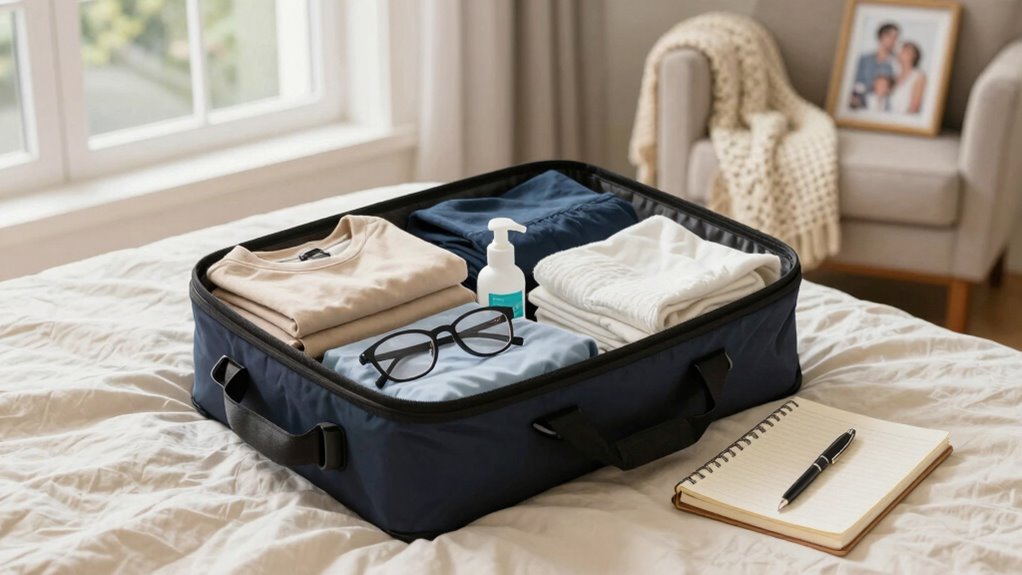
Packing a hospital bag early is essential for seniors because it guarantees you’re prepared for unexpected situations. It won’t be long before you realize the importance of readiness in emergency scenarios, and being prepared can make a significant difference. Having your travel essentials ready means you can focus on your health and comfort rather than searching for items last minute. It also provides a sense of control and peace of mind, knowing you’re ready for whatever comes. Additionally, packing early allows you to include items that offer emotional support, like photographs or a favorite blanket, which can help soothe anxiety during hospital stays. Planning your recovery environment in advance can also help minimize exposure to toxins and create a safer, more comforting space during recovery. Considering environmental safety in your packing decisions can contribute to a healthier recovery environment. Being proactive ensures you won’t forget important belongings, making your hospital experience smoother and less overwhelming. Moreover, organizing your items ahead of time can help you adhere to any specific hospital guidelines and streamline the admission process. Preparation truly makes a difference for your peace of mind and well-being.
Essential Health Documents and Medications to Pack

Making sure you bring all essential health documents and medications is vital for a smooth hospital stay. You’ll want to have everything organized to avoid delays or confusion. Here’s what to pack:
- A list of current medications, including dosages and schedules.
- Copies of your health insurance, Medicare, or Medicaid cards.
- Your primary care physician’s contact information and recent test results.
- Any necessary travel gadgets, like a tablet or e-reader, to access entertainment options during downtime.
- Remember that understanding the significance of time and life can help you stay calm and centered during stressful situations. Being aware of security measures like smart locks can also provide peace of mind when managing access to your belongings or home. Additionally, staying informed about patient rights can empower you to advocate effectively during your hospital stay. Familiarizing yourself with medical records procedures can ensure your information is accessible when needed. Knowing how to manage personal health data can further streamline your care process.
Having these documents ready helps hospital staff provide better care. Don’t forget to include your medications in their original containers. Travel gadgets can keep you entertained, making your stay less stressful. Staying organized ensures you’re prepared for whatever comes.
Contacts and Emergency Info to Include in Your Bag

Having your health documents and medications organized sets a strong foundation, but it’s equally important to include key contacts and emergency information in your hospital bag. This ensures quick access if needed. Include a Medical Alert bracelet or card that details your allergies, chronic conditions, and medications. Make a list of emergency contacts—family, friends, your healthcare provider—and keep it visible. Write down their names, phone numbers, and relationships. To visualize, think of a simple chart:
| Contact Type | Details |
|---|---|
| Emergency Contact | Jane Doe, 555-1234, Daughter |
| Primary Physician | Dr. Smith, 555-5678 |
| Pharmacist | Local Pharmacy, 555-9012 |
| Hospital Contact | City Hospital, 555-3456 |
| Medical Alert | Allergic to penicillin |
Having this info ready streamlines communication and guarantees your loved ones and medical team are well-informed. Additionally, solar-powered security cameras can provide peace of mind by monitoring your home remotely and ensuring safety even when you’re away.
Key Comfort Items to Bring for Your Hospital Stay

Bringing along your favorite comfort clothing, personal hygiene essentials, and soothing items can make your hospital stay much more manageable. These items help you feel more relaxed and maintain your normal routine. Consider packing what helps you stay calm and comfortable throughout your time in the hospital. For highlighted hair, using a sulfate-free shampoo can help preserve your color and keep your hair shiny during your stay. Additionally, including traditional folklore crafts or small decorative items can provide a comforting connection to your cultural roots and bring a sense of familiarity during your recovery. Remember to pack hospital safety tips, such as packing non-slip slippers and ensuring your valuables are secure, which can significantly contribute to a smoother experience. Being aware of infection prevention strategies can also help protect your health during your hospital stay. Incorporating proper hygiene practices into your routine further reduces the risk of infection and promotes healing.
Favorite Comfort Clothing
Comfortable clothing can make a big difference during your hospital stay, helping you feel more relaxed and at ease. Choose soft, loose-fitting items that are easy to put on and take off. To keep yourself comfortable and entertained, consider these favorites:
- Loose pajamas or nightgowns for restful sleep
- Cardigans or robes for warmth and layering
- Non-slip slippers for safety and comfort
- Lightweight scarves or travel accessories to add a personal touch
These clothing choices can double as entertainment options, making your stay more pleasant. Pack items that are easy to move in and help you feel more like yourself. Remember, comfort clothing isn’t just about physical ease—it also boosts your mood during recovery. Incorporating removable accessories can also enhance your comfort and make it easier to adjust your outfit throughout your stay. Additionally, selecting fabrics suited for sensitive skin can improve your overall comfort during your hospital stay. Choosing breathable fabrics can help regulate your body temperature and prevent irritation. Being aware of skin-friendly materials can further optimize your comfort and skin health during recovery.
Personal Hygiene Essentials
Ensuring you have your essential personal hygiene items can make your hospital stay more comfortable and help you feel refreshed throughout your recovery. Pack grooming essentials like a toothbrush, toothpaste, facial wipes, and deodorant to maintain your personal hygiene easily. Consider bringing a gentle body wash and moisturizer to keep your skin comfortable, especially in a dry hospital environment. Don’t forget a comb or hairbrush to keep your hair tidy, and include lip balm to prevent chapping. These personal hygiene items not only support cleanliness but also boost your confidence during recovery. Keeping your grooming essentials accessible allows you to feel more in control and comfortable, helping you focus on healing rather than discomfort.
Soothing Items for Relaxation
After taking care of your personal hygiene items, adding some soothing comforts can help create a more relaxing hospital environment. Incorporate calming accessories and relaxation techniques to ease stress. Consider bringing:
- A soft, lightweight blanket for comfort and warmth
- Aromatherapy sprays or lavender sachets to promote calmness
- Noise-canceling headphones or earplugs to block out hospital sounds
- A favorite music playlist or calming sounds to help you relax
Using relaxation techniques like deep breathing with calming accessories can appreciably improve your comfort. Being aware of accessibility features can help you customize your environment for better comfort and ease of use. These simple, effective items can make your stay more peaceful, helping you manage anxiety and discomfort. Keep these in your hospital bag to create a soothing atmosphere and support your well-being.
Clothing and Personal Items to Pack in Your Hospital Bag
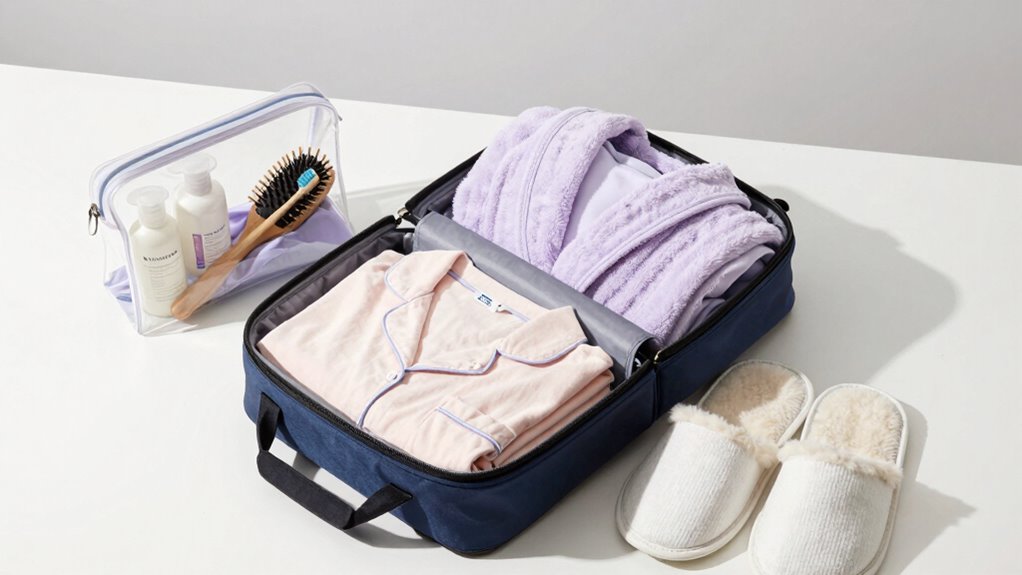
When packing your hospital bag, focus on comfortable clothing options that are easy to put on and take off. Don’t forget essential personal items like your toiletries, medications, and any important documents. Having these items ready guarantees you stay comfortable and prepared throughout your stay. Additionally, consider bringing some comfortable footwear suitable for walking or standing for extended periods. It’s also helpful to include items that support recovery and comfort, such as loose-fitting clothes or supportive slippers.
Comfortable Clothing Choices
Choosing comfortable clothing for your hospital stay is essential to help you feel relaxed and supported. Prioritize clothing that promotes sleep comfort and clothing comfort overall. Consider packing these items:
- Loose, breathable pajamas or nightgowns for restful sleep
- Soft, stretchy robes for easy movement and extra warmth
- Non-restrictive slippers or slip-on shoes for safety and convenience
- Comfortable underwear that provides support without discomfort
Opt for fabrics like cotton or bamboo that feel gentle against your skin. Avoid tight clothing that can hinder circulation or cause irritation. Prioritizing sleep comfort and clothing comfort will help you feel more at ease during your stay, aiding recovery and reducing stress.
Essential Personal Items
Packing the right personal items guarantees you stay comfortable and prepared during your hospital stay. Include essential clothing like loose pajamas, slippers, and a robe for easy movement. Don’t forget reminder notes with important details, such as medications or allergies, to keep your care on track. If you have a pet, make certain you’ve arranged pet care in advance—your hospital stay shouldn’t add stress. Pack personal items like toiletries, lip balm, and any hearing aids or glasses you use daily. Bring a small pillow for extra comfort and a charger for your devices. These items help you feel more at home and less anxious. Being organized with your essentials ensures you’re ready for whatever your hospital stay brings.
Medical Devices and Assistive Tools to Bring Along

Bringing your essential medical devices and assistive tools guarantees you can manage your health and mobility comfortably during your hospital stay. Make certain to pack any adaptive equipment or medical devices that help you function daily. These might include:
- Portable oxygen concentrator or supplies
- Hearing aids with batteries and cleaning tools
- Mobility aids like walkers, canes, or braces
- Blood sugar monitors or other specialized medical devices
Having these items ensures you stay safe, comfortable, and independent. Double-check that all devices are in working order and include necessary accessories such as chargers, batteries, or cleaning supplies. Preparing these tools in advance helps you avoid unnecessary discomfort or delays during your hospital stay.
Packing Tips for Organizing Your Hospital Bag
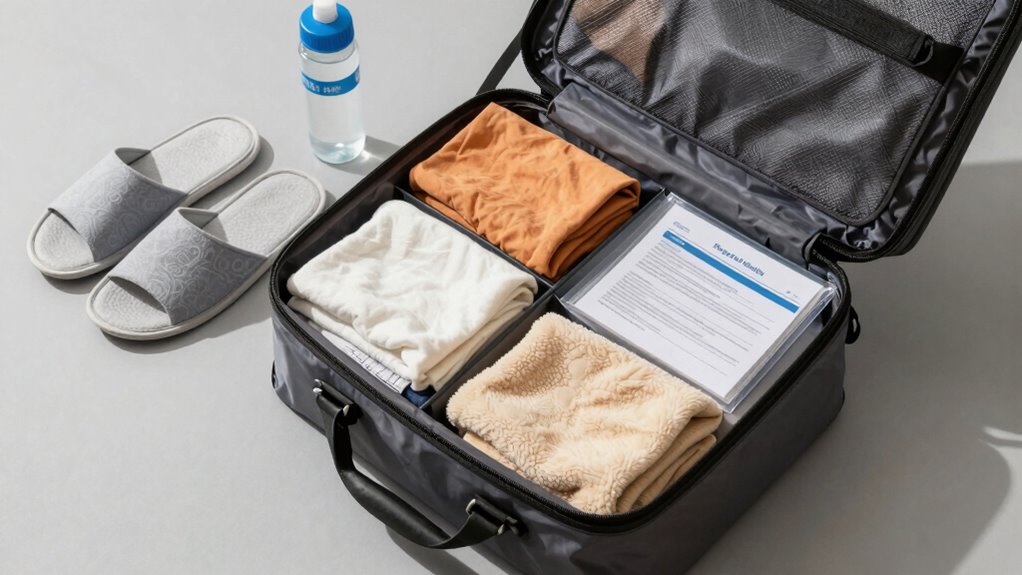
To stay organized and make certain nothing important gets forgotten, it’s helpful to plan your hospital bag with clear categories and designated compartments. Use separate sections for essentials like clothing, toiletries, and medications. Designate a specific pocket for dietary considerations, such as snacks or special supplements, to easily access them when needed. If you’re traveling with a companion, pack a separate bag for them or assign a compartment for their items, ensuring both of you stay organized. Consider using packing cubes or small pouches to keep items neat and visible. Prioritize items you’ll need quick access to, like your ID, insurance info, and comfort items. Staying organized reduces stress and helps you focus on your recovery and travel companionship during your hospital stay.
Post-Discharge Items to Prepare Before Leaving
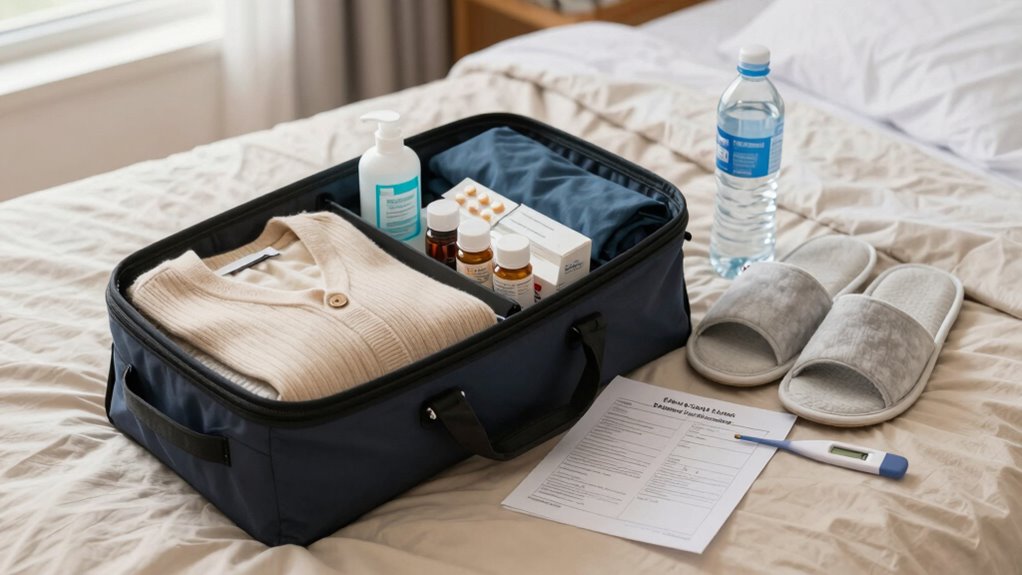
Before you leave the hospital, make sure you have a clear medication management plan in place to avoid confusion. Gather all necessary post-discharge care supplies, such as wound dressings or mobility aids, so you’re prepared at home. Preparing these items beforehand helps guarantee a smooth handover and proper recovery.
Medication Management Plan
Handling your medications carefully after leaving the hospital is essential to guarantee a smooth recovery. A solid medication management plan ensures you take the right doses at the right times and avoid complications. Before discharge, organize your prescriptions clearly and create a schedule. Make sure you have a list of emergency contacts, including your healthcare provider and pharmacy. Here are key steps:
- Confirm all prescriptions and clarify dosage instructions.
- Store medications in a designated, easily accessible container.
- Use a medication organizer to track doses daily.
- Keep an updated list of emergency contacts and pharmacy info for quick access.
This preparation supports safe medication management, minimizes errors, and ensures help is available if needed. Proper planning helps you stay on top of your medications during recovery.
Post-Discharge Care Supplies
Having your post-discharge care supplies ready in advance helps guarantee a smooth recovery process. Prepare your post-discharge supplies by gathering home recovery essentials such as wound dressings, incontinence products, and mobility aids. These supplies assure you can manage daily activities comfortably and safely without delays. Confirm that you have any prescribed medications, pain relievers, or topical treatments needed during recovery. Also, include items like easy-to-eat snacks, hydration options, and any assistive devices your healthcare provider recommended. Organize everything in an accessible space so you’re prepared when you arrive home. Being proactive with your post-discharge supplies minimizes stress and helps you focus on healing. Stocking up on these home recovery essentials is a crucial step toward a successful and comfortable recovery period.
How to Customize Your Hospital Bag for Your Needs
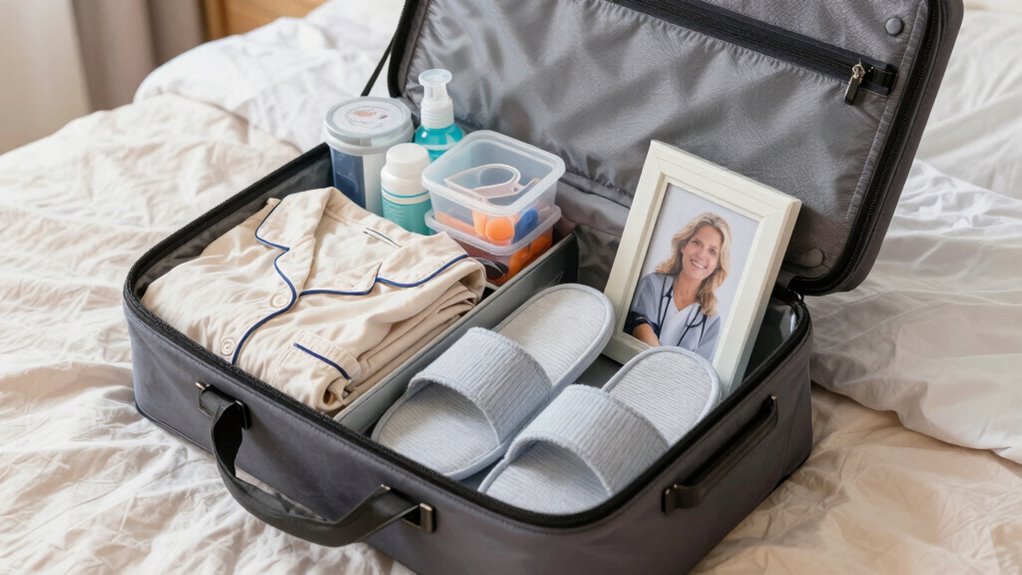
To make sure your hospital bag truly meets your needs, it’s important to customize its contents based on your personal preferences, health considerations, and lifestyle. Here are some customization tips to help you tailor your bag:
- Choose comfortable clothing that suits your climate and mobility needs.
- Pack favorite toiletries or skincare items that make you feel refreshed.
- Include any necessary medical devices or medications specific to your health.
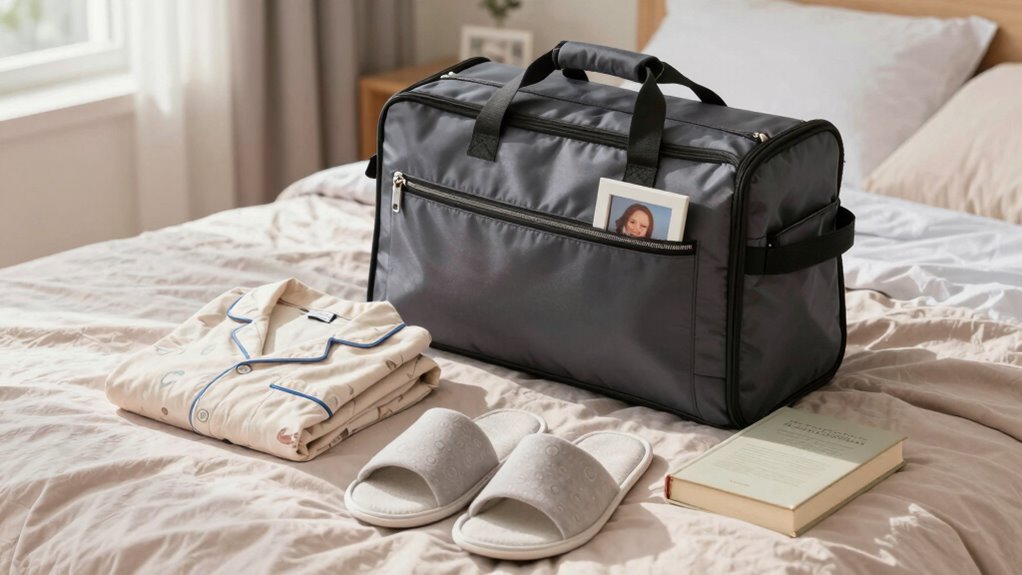
- Add personal items like photos or a book to bring comfort and familiarity.
Final Checklist: What Not to Forget Before You Go
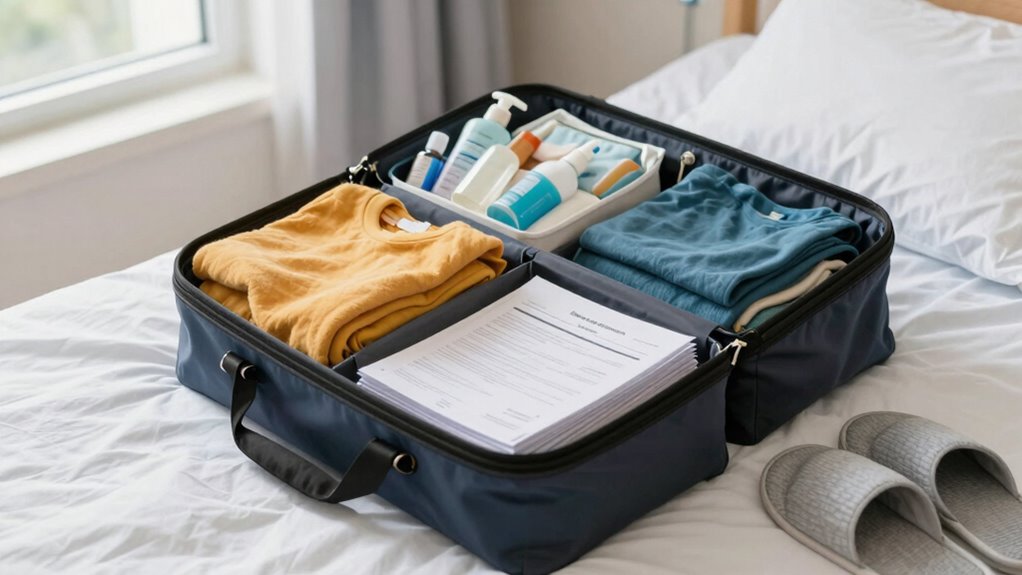
Before heading to the hospital, double-check that you’ve packed all essential items to avoid last-minute surprises. Use travel tips to organize your bag efficiently—create a checklist to ensure nothing gets overlooked. Packing hacks like packing items in clear, labeled bags can save time and reduce stress. Don’t forget your medications, medical documents, and any comfort items like your favorite pillow or blanket. Remember chargers for your devices and a list of important contacts. Double-check your insurance information and any necessary referrals. Pack snacks and water for the waiting times, and wear comfortable, easy-to-remove clothing. Final checks help you stay calm and prepared, so you’re ready for the journey ahead without scrambling at the last moment.
Frequently Asked Questions
How Do I Determine Which Medications Are Essential to Pack?
To determine which medications are essential to pack, review your medication management plan with your healthcare provider. Use a pill organizer to keep track of your daily doses and guarantee nothing’s missed. Pack all prescribed medications, including any over-the-counter ones you regularly take. Check expiration dates and keep medications in their original containers for safety. This way, you’ll have everything you need without unnecessary extras, making your hospital stay smoother.
What Specific Clothing Options Are Best for Seniors in the Hospital?
Ever wondered what clothing keeps you comfortable during a hospital stay? Pack adaptive clothing with easy closures, like front-fastening tops and elastic waist pants, for convenience. Choose comfortable footwear, such as slip-on shoes or slippers with non-slip soles, to guarantee safety and ease of movement. Prioritize loose, breathable fabrics to prevent discomfort and skin irritation. These options help you stay comfortable and mobile throughout your hospital visit.
How Can I Ensure My Medical Devices Are Compatible With Hospital Equipment?
To guarantee your medical device compatibility, check that your devices meet hospital equipment standards before your stay. Contact your healthcare provider or device manufacturer to confirm compatibility with hospital systems. Carry all necessary adapters, cords, and manuals. Inform hospital staff about your devices upon admission so they can assist with proper connections. Verifying these details helps prevent complications and ensures your safety during your hospital stay.
What Are Some Tips for Managing Anxiety During Hospital Stays?
Imagine your anxiety as a storm—calm it with mindfulness techniques and relaxation exercises, just like finding shelter. Focus on deep breathing, visualization, or gentle stretches to stay grounded. I once helped a friend use these methods during a hospital stay, and they felt more in control. These tools help you stay present, reduce stress, and manage anxiety, making your hospital experience more manageable and less overwhelming.
How Far in Advance Should I Prepare My Hospital Bag Before My Appointment?
You should start preparing your hospital bag about two weeks before your appointment to make sure enough time for packing essentials and avoiding last-minute stress. This travel timing allows you to gather everything you need comfortably. Focus on packing essentials like medications, comfortable clothing, and important documents early on. By planning ahead, you’ll feel more relaxed and ready, knowing that your hospital bag is complete and waiting for when you need it.
Conclusion
Think of your hospital bag as your trusted suitcase on a journey—you’ll want to pack what matters most. By preparing early and including essential documents, comfort items, and personal touches, you’ll navigate your stay smoothly. Remember, a well-packed bag is your steady compass, guiding you through uncertainty with confidence. Stay organized, stay prepared, and you’ll find your way through this chapter with calm and clarity.