TL;DR

Turn quiet afternoons into listening time
- Thousands of audiobooks, podcasts and originals
- Listen on your phone, tablet or Echo — also offline
- Cancel anytime
A 2024 study by researchers at Houston’s Michael E. DeBakey VA Medical Center examined why care transitions for hospitalized people with dementia can be difficult for families. Its findings, as described by Being Patient, point to a gap between discharge plans and the support caregivers need to carry them out at home.
A 2024 study by researchers at the Michael E. DeBakey VA Medical Center in Houston examined where care transitions for people with dementia can fail, identifying a gap between discharge plans and the support families need to manage care at home. A report published Oct. 19, 2026, by Being Patient describes the findings and recommendations, including involving caregivers in planning, providing dementia-specific guidance and following up after discharge.
The study team interviewed family caregivers and health professionals, including social workers and geriatrics providers, about transitions from hospital to rehabilitation, hospital to home, and rehabilitation to home. Researchers interviewed caregivers an average of 18 days after discharge. The source report says the conversations were guided but open-ended, intended to surface practical experiences during these transitions.
The report says the study found that these transitions often need more support than families receive. It cites an estimate that about a third of U.S. adults with dementia are hospitalized each year and notes that hospitalization can raise risks of falls, delirium and functional decline. The source does not provide the study’s sample size or detailed numerical results.
Being Patient quotes Faris Flournoy, CEO of Atlanta-based Flournoy Health Systems, describing the shift in responsibility after discharge: hospital staff handle multiple parts of care, while family caregivers may suddenly take on medications, meals, mobility, bathing, appointments and safety. The researchers’ recommendations include treating caregivers as partners, offering dementia-specific information and training, connecting families with community services and providing support after the patient returns home.
The Work Shifts to Family Caregivers
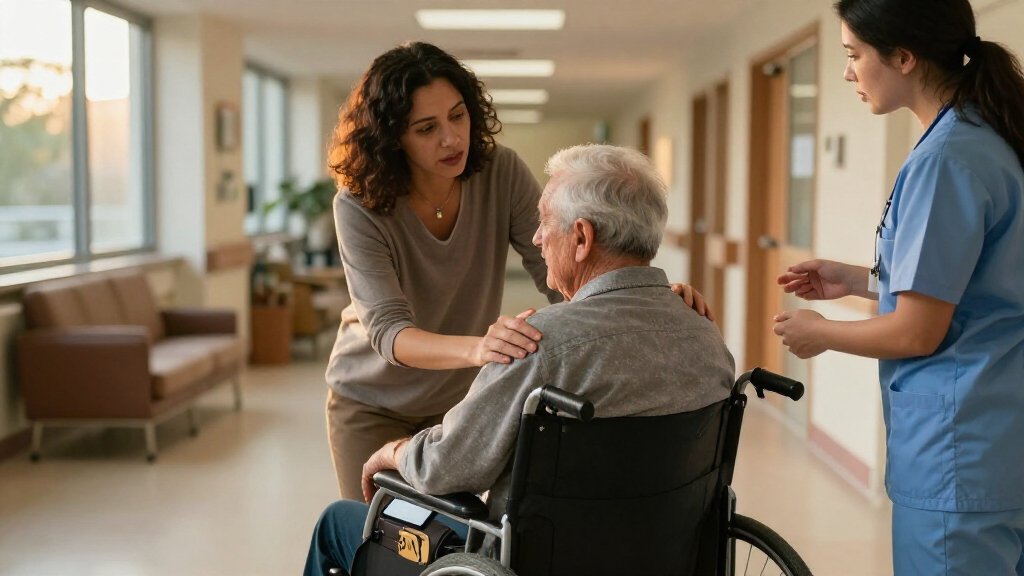
A discharge plan may include care tasks that family members are expected to manage at home, such as medication schedules, mobility and fall precautions, follow-up visits, and responses to changes in behavior or cognition. The report says caregivers may need guidance on signs to monitor and whom to contact, particularly when a person with dementia has difficulty describing pain or other changes.
The study recommendations address whether caregivers understand discharge instructions and have the time and resources to follow them, as well as whether they know how to access help. The report does not establish that any particular transition caused harm; it describes support needs identified through interviews.
dementia medication management kit
As an affiliate, we earn on qualifying purchases.
As an affiliate, we earn on qualifying purchases.
How the Transition Study Was Conducted
The report concerns transitions among hospital, rehabilitation and home settings, rather than dementia care in general. The research team spoke with caregivers and health professionals and conducted caregiver interviews about 18 days after discharge, allowing participants to reflect on how plans worked once they were outside the hospital.
Being Patient’s account frames the findings around the difference between being medically ready to leave and a family being ready to take over care. It also includes practical suggestions attributed to Flournoy and Debora A. Nixon, executive director at Houston-based Nixon Home Care. Those suggestions are practitioner guidance in the report; they should not be mistaken for additional study findings or individualized medical instructions.
“We have to look beyond whether a discharge plan is medically appropriate and ask whether it is executable at home.”
— Faris Flournoy, CEO of Flournoy Health Systems, as quoted by Being Patient
fall prevention grab bars for seniors
As an affiliate, we earn on qualifying purchases.
As an affiliate, we earn on qualifying purchases.
Study Details Not Included in the Report
Being Patient’s account does not state how many people were interviewed, give detailed participant characteristics, or report numerical outcomes showing how often particular problems occurred. It also does not establish whether the recommendations have been tested as an intervention or whether they reduce hospital readmissions, complications or caregiver strain.
The report discusses possible home health or hospice support, but does not specify eligibility rules or confirm that a particular service will be available to every family. Caregivers should ask the patient’s clinical team or insurer about their situation. Medication questions or conflicting instructions should be directed to an appropriate clinician or pharmacist, rather than resolved by guessing.
As an affiliate, we earn on qualifying purchases.
Clarify Plans Before Returning Home
The report recommends asking hospital staff to explain what changed, what needs to happen next, and which changes require help. Caregivers can review every medication’s name, dose, timing and purpose against the list at home, and ask clinicians or a pharmacist to resolve any mismatch. They can also confirm follow-up appointments, fall precautions and whether recommended home health or therapy has been arranged.
The article does not announce a new program or a future study milestone. Its guidance is to discuss the discharge plan with the care team, including possible behavioral or cognitive changes, whom to contact if a change occurs and what support services may be available. The source does not specify whether the study’s recommendations will lead to broader changes in discharge practice.
hospital discharge support for dementia
As an affiliate, we earn on qualifying purchases.
As an affiliate, we earn on qualifying purchases.
Key Questions
What did the 2024 study examine?
Researchers at the Michael E. DeBakey VA Medical Center interviewed family caregivers and health professionals about transitions involving hospital, rehabilitation and home care for people with dementia.
What problem did the report identify?
The report describes a gap between a patient being medically ready for discharge and a caregiver having the information, capacity and support needed to manage care at home.
What should caregivers ask about medications?
Ask staff to explain each medication’s name, dose, timing and purpose, and clarify anything that differs from the list at home. Contact an appropriate clinician or pharmacist if instructions conflict or are unclear.
Does the report say every family qualifies for home health or hospice?
No. It discusses these services as possible sources of support but does not set out eligibility rules or say that every patient qualifies. Families can ask the care team or insurer what services may be available.
Source: rss
Cold & flu season Picks
humidifiers
As an affiliate, we earn on qualifying purchases.