

Choosing between an agency or independent caregiver involves understanding their safety and legal risks. Agency caregivers usually meet strict standards, undergo background checks, and have insurance, but they can be costly. Independent caregivers may cost less upfront but pose risks like unverified credentials, lack of insurance, and safety concerns. Your decision should weigh these risks carefully. Continue to explore the key factors to make a well-informed choice that best protects your loved one’s well-being.
Key Takeaways
- Agencies typically provide vetted, trained caregivers with proper licensing and insurance, reducing safety and liability risks.
- Independent caregivers may lack verified background checks, insurance, and formal training, increasing safety and legal exposure.
- Agencies follow regulatory standards and emergency protocols, enhancing safety compared to independently hired caregivers.
- Hiring independently often involves hidden costs like uninsured liabilities and unverified credentials, risking unforeseen expenses.
- Evaluating specific needs and verifying qualifications helps determine whether an agency or independent caregiver offers a safer, more reliable option.
Understanding the Differences Between Agency and Independent Caregivers

When choosing between an agency and an independent caregiver, understanding their key differences is vital. Agency caregivers often undergo formal caregiver training, guaranteeing they have the skills needed for various care tasks. They are also screened and vetted by the agency, which can provide peace of mind. Independent caregivers, on the other hand, typically set their own training standards and may lack formal certification, so you need to verify their skills directly. Caregiver compatibility is essential in both options; with agencies, you may have limited influence over matching, while hiring privately allows for more personalized selection. Knowing these distinctions helps you make an informed decision that best suits your loved one’s needs and guarantees quality, reliable care. Additionally, considering the training standards can help ensure the caregiver’s competence and safety. To further assess a caregiver’s qualifications, it’s beneficial to request references and proof of any certifications. Being aware of the screening process used by agencies can also provide reassurance about the caregiver’s background and reliability. Furthermore, understanding the background checks conducted by agencies can help you feel more confident in their vetting procedures. In addition, reviewing the market reputation of caregiving providers can offer insights into their reliability and quality of service.
What Are the Risks of Hiring an Agency Caregiver?

Hiring an agency caregiver can sometimes come with risks that you should carefully consider. One key concern is whether the agency provides proper caregiver training, ensuring their staff is qualified to meet your loved one’s needs. Insufficient training can lead to safety issues or inadequate care. Additionally, legal compliance is essential; some agencies may not follow state or federal regulations, risking legal complications or liability. It’s imperative to verify that the agency adheres to licensing requirements, background checks, and insurance standards. Without proper oversight, you might face challenges related to accountability or quality of care. While agencies often handle staffing and compliance, neglecting these aspects can expose you to unexpected risks, making it crucial to research and choose a reputable provider. Furthermore, embracing diverse staffing options can help ensure that cultural competence and inclusive care are prioritized, enhancing overall well-being. Also, understanding regulatory adherence is vital to ensure the agency consistently meets industry standards and legal requirements. To mitigate these risks, thoroughly reviewing the agency’s caregiver training programs can provide peace of mind regarding the quality of care your loved one will receive. Additionally, assessing the agency’s ongoing staff supervision practices can help ensure that standards are maintained over time, and considering compliance with industry standards can further safeguard against potential issues.
What Are the Risks of Choosing an Independent Caregiver?

Choosing an independent caregiver can seem convenient, but it comes with risks you should consider. Background verification can be difficult, leaving you uncertain about their history. Additionally, liability issues and limited emergency response support can put your loved ones at risk. Properly assessing regional caregiver training and understanding cultural differences can help mitigate some of these concerns. Ensuring that the caregiver has proper licensing and certifications can further reduce potential issues and improve safety. Being aware of regional safety standards can also guide you in selecting a more qualified caregiver. Incorporating background screening practices is essential for verifying credentials and safeguarding your loved ones from potential harm. Moreover, understanding trauma management techniques can be beneficial in ensuring the caregiver is equipped to handle emotional and physical crises effectively.
Background Verification Challenges
Without the backing of a reputable agency, verifying an independent caregiver’s background becomes a significant challenge. You must rely on your ability to conduct thorough background checks and navigate verification processes on your own. Unlike agencies that often handle screening, criminal record checks, and reference verification, independent caregivers require you to seek out and confirm this information yourself. This increases the risk of overlooking critical red flags or incomplete records. Without proper verification, you might hire someone with a questionable history or undisclosed issues. The lack of a standardized process increases the chance of oversight, making it difficult to ensure safety and trustworthiness. Additionally, low-light office plants like the Snake Plant or ZZ Plant can help create a healthier environment for caregivers working in less illuminated spaces. Managing background checks independently demands effort, diligence, and skepticism to protect your loved ones. Moreover, understanding the importance of background verification can help you identify the potential pitfalls and take steps to mitigate them. Conducting proper screening procedures is essential to mitigate these risks and safeguard your loved ones.
Liability and Insurance Gaps
When you bring an independent caregiver into your home, you often take on the risk of liability if something goes wrong. Without proper insurance, you could be held responsible for injuries or damages they cause. Liability gaps occur when there’s no coverage to protect you financially, leaving you exposed. Insurance concerns are a major issue because independent caregivers typically don’t carry workers’ compensation or liability insurance. This means you might pay out-of-pocket for medical bills, legal fees, or property damage. To visualize this:
| Risk Type | Explanation |
|---|---|
| Liability Gaps | No coverage for injuries or damages caused by the caregiver |
| Insurance Concerns | Lack of workers’ comp or liability insurance |
| Financial Risks | Potential out-of-pocket expenses |
| Legal Exposure | Being sued for accidents or negligence |
| Insurer Limitations | Limited or no coverage for certain incidents |
These gaps highlight the importance of evaluating insurance before hiring independently. Additionally, understanding insurance coverage options can help mitigate these risks and protect your financial well-being. For example, requiring the caregiver to carry their own liability insurance can help close some of these liability gaps. It’s also essential to review how insurance policies define coverage limits for personal liability in such situations. Moreover, proper documentation of agreements and coverage requirements can further safeguard your interests. Furthermore, consulting with an insurance professional can provide clarity on specific policy exclusions that might affect your coverage.
Emergency Response Limitations
Independent caregivers often lack formal emergency response training, which can compromise your loved one’s safety during urgent situations. Without proper emergency preparedness and clear response protocols, they might not react effectively in medical crises, falls, or fires. This gap increases the risk of delays in administering first aid or calling for help, potentially worsening outcomes. Unlike agency staff, independent caregivers may not be familiar with local emergency procedures or equipped with specialized safety training. As a result, your loved one could be left vulnerable during critical moments. Choosing an independent caregiver means relying on their ability to respond swiftly and appropriately, which isn’t always guaranteed. Ensuring proper emergency response protocols are in place is essential for safeguarding your loved one’s well-being. Additionally, professional training standards provided by agencies often include certifications in CPR and first aid, further reducing these risks. It’s also important to consider the training and certification of the caregiver beforehand to ensure they are prepared for emergencies.
How Can You Evaluate Legal and Safety Risks for Both Options?
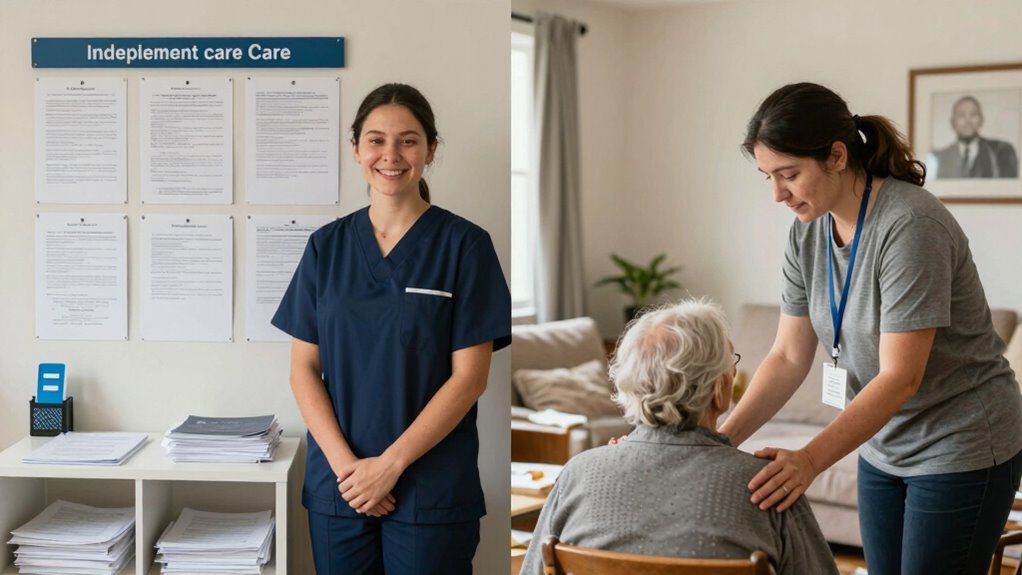
Evaluating legal and safety risks for both agency and independent caregivers requires careful research and consideration. Start by checking each option’s adherence to legal compliance, such as licensing, background checks, and insurance requirements. An agency typically follows strict safety protocols and maintains a regulated workforce, reducing risks. With independent caregivers, you need to verify their qualifications, background, and adherence to safety standards yourself. Ask for references and proof of certification or training. Ascertain they follow safety protocols like proper medication handling and emergency procedures. Comparing these aspects helps you identify potential legal liabilities and safety concerns. Additionally, understanding the regulatory environment surrounding caregiving options can help you better assess compliance and safety standards. Conducting a comprehensive risk assessment can also help clarify specific safety and legal vulnerabilities, ensuring you make an informed decision. This thorough evaluation ensures you select a caregiver option that aligns with your safety expectations while minimizing legal risks.
Cost and Hidden Risks in Caregiver Selection

Cost is a major factor in choosing between agency and independent caregivers, but it’s important to look beyond the initial price tag. Lower rates with independent caregivers might seem appealing, yet hidden risks can increase overall expenses. Agencies often include background checks, insurance, and training, reducing your exposure to potential liabilities. However, they may charge higher fees. Independents may seem cost-effective but can pose risks like unverified credentials or inconsistent quality. Be aware of these hidden risks, which can lead to unexpected costs down the line. To help clarify, here’s a comparison:
| Consideration | Agency Caregiver | Independent Caregiver | Hidden Risks |
|---|---|---|---|
| Cost considerations | Higher upfront fees | Lower initial rates | Lack of insurance or background checks |
| Background checks | Included | May be absent | Unverified credentials |
| Insurance | Provided | Usually not included | Liability issues |
| Consistency | Usually reliable | Variable quality | Inconsistent care |
| Overall risk | Lower | Higher | Unexpected expenses |
Adding to this, the regulatory oversight of agency caregivers often provides an extra layer of protection that independent caregivers may lack.
How to Weigh Risks and Make the Best Choice for Your Loved One

Choosing between an agency caregiver and an independent one involves carefully balancing potential risks with your loved one’s needs. Start by examining caregiver licensing—agency caregivers are typically licensed and insured, providing a safety net, while independent caregivers may lack formal credentials. Consider family involvement; staying involved helps monitor care quality and ensures your loved one’s preferences are respected. Evaluate each option’s risks, such as background checks, training, and accountability. Think about your loved one’s specific needs and how well each caregiver can meet them. Ultimately, weigh these factors carefully to make an informed decision that prioritizes safety, quality, and personal connection. Being thorough now ensures you choose the best caregiver setup for your loved one’s well-being.
Frequently Asked Questions
How Do Background Checks Differ Between Agency and Independent Caregivers?
You’ll find that background screening for agency caregivers is often more thorough, including thorough criminal records checks and regular updates. Independent caregivers may only provide criminal record information you request, which can vary in depth. Agencies usually handle the entire process, giving you peace of mind, while with independent caregivers, you need to be proactive in verifying criminal records and conducting your own background screening to guarantee safety.
What Insurance Coverage Is Typically Provided With Agency Caregivers?
Ironically, when you hire an agency caregiver, you usually get insurance coverage that includes liability protection, safeguarding you from potential lawsuits or damages. This means the agency handles insurance claims, worker’s comp, and liability issues, giving you peace of mind. Independent caregivers often lack this safety net, leaving you potentially exposed. So, with an agency, you’re typically covered, making liability protection a clear advantage.
Can Independent Caregivers Be Bonded or Insured?
Yes, independent caregivers can be bonded or insured, but bonding options and insurance coverage vary widely. You’ll want to check their credentials carefully, as insurance limitations might mean they aren’t fully covered for certain damages or liabilities. It’s essential to ask about their bonding options and verify what protections are in place, so you can feel confident in your choice and reduce potential risks.
How Do Licensing Requirements Impact Caregiver Safety and Legality?
Licensing requirements directly impact caregiver safety and legality by setting strict standards for training, background checks, and liability considerations. When a caregiver meets licensing standards, you gain assurance of their qualifications and adherence to safety protocols, reducing risks. Without proper licensing, you face increased liability and uncertain care quality. Ensuring your caregiver complies with licensing standards helps protect both your loved ones and your legal interests.
What Are the Long-Term Legal Liabilities for Each Caregiver Option?
You face different long-term legal liabilities depending on your choice. With an agency caregiver, the agency handles legal responsibilities and liability concerns, reducing your direct risk. However, if you hire an independent caregiver, you’re responsible for their legal responsibilities, including background checks, licensing, and insurance. This increases your liability concerns over time, especially if issues arise. Consider these factors carefully to protect yourself legally in the long run.
Conclusion
So, whether you’re signing up for the agency’s polished smile or trusting the lone wolf caregiver, remember—you’re betting on a risk roulette wheel. Will your choice be the knight in shining armor or the wolf in disguise? In this game, a missed detail could turn your loved one’s care into a circus act—juggling safety, legality, and costs. Choose wisely, or prepare for the unexpected—because in caregiving, surprises are just part of the show.