

Implementing a consistent weekly routine is essential for long-distance caregiving, helping you stay in control of your loved one’s health, safety, and emotional well-being. By creating a personalized schedule that includes medication reminders, social activities, and regular check-ins, you can reduce stress and respond swiftly to emergencies. Using the right tech tools and communication strategies guarantees seamless support. Keep improving your system for better care—discover more ways to stay connected and proactive.
Key Takeaways
- Establish a personalized weekly routine that includes medication, meals, social activities, and health monitoring to create consistency and oversight.
- Utilize technology like video calls, medication reminders, and smart home devices to facilitate communication and ensure safety.
- Maintain flexibility to adapt routines based on changing needs and emergencies, ensuring proactive and responsive care.
- Communicate with empathy using clear, respectful language, and regular check-ins to build trust and emotional support.
- Regularly review and improve the care system, addressing gaps, celebrating successes, and adjusting routines for continuous effectiveness.
Understanding the Challenges of Long-Distance Caregiving and How a Weekly Routine Helps

Long-distance caregiving presents unique challenges because you’re often balancing your own responsibilities with the needs of a loved one who’s far away. It tests your emotional resilience, as you navigate worry and uncertainty from afar. Maintaining caregiver self-care becomes essential to avoid burnout and stay effective. Without face-to-face contact, it’s easy to feel disconnected or overwhelmed, making it harder to respond promptly to your loved one’s needs. Establishing a consistent weekly routine helps create structure, giving you a clearer picture of your loved one’s well-being and reducing anxiety. This routine allows you to allocate specific times for updates, check-ins, and coordinating support, which supports your emotional resilience and guarantees you’re caring for yourself while managing your loved one’s care. Incorporating telehealth options into your routine can also enhance communication and access to medical professionals, further supporting your caregiving efforts. Additionally, utilizing care coordination tools can streamline communication and ensure all caregivers are on the same page, making your routine even more effective. Research shows that structured routines significantly improve the quality of long-distance care, providing predictability and peace of mind. Engaging in regular virtual visits can help bridge the distance and foster a sense of connection and reassurance. Implementing caregiving checklists can also ensure that all necessary tasks are addressed systematically, reducing stress and oversight.
How to Create a Personalized Weekly Care Schedule for Your Loved One

Creating a personalized weekly care schedule begins with understanding your loved one’s specific needs and routines. Start by evaluating their daily habits, including meal planning and social activities. Incorporate regular meal times to ensure proper nutrition and consider their preferences and dietary restrictions. Schedule engaging social activities to promote mental health and prevent isolation. Coordination with any in-home caregivers or family members to align on responsibilities and times is essential for seamless care. Use this information to create a balanced plan that includes medication reminders, appointments, and leisure activities. Keep the schedule flexible enough to accommodate changes, but structured enough to provide consistency. Paying attention to home design and architecture details such as the layout of their living space can also support their daily routines. Additionally, utilizing essential DIY tools and safety tips can help you make minor adjustments or improvements to their environment safely and effectively. Incorporating elder care ethical considerations ensures that your approach respects your loved one’s dignity and preferences. Being aware of caregiving best practices can further enhance the effectiveness and compassion of your weekly routine. This personalized approach helps your loved one feel supported while giving you peace of mind knowing their routine is thoughtfully managed.
Best Tech Tools and Apps for Managing Care Remotely

Managing your loved one’s care remotely is now easier than ever thanks to a variety of innovative tech tools and apps. These help you stay connected, provide virtual companionship, and troubleshoot tech issues quickly. These tools also support simple recovery routines, making it easier to incorporate health-promoting activities into their daily schedule. With the right apps, you can check in on their daily routine, share a friendly video chat, and solve tech problems before they become frustrating. Incorporating Free Floating features into your care approach allows for flexible and unobtrusive assistance, making remote caregiving more seamless. Using Home Soundproofing techniques can also reduce background noise during virtual visits, ensuring clearer communication and a more comfortable environment for your loved one. Additionally, leveraging smart lock technology can provide secure access to their home without the need for physical keys. These tools put control in your hands, giving you peace of mind and strengthening your bond across the miles.
Monitoring Health, Medications, and Appointments Weekly
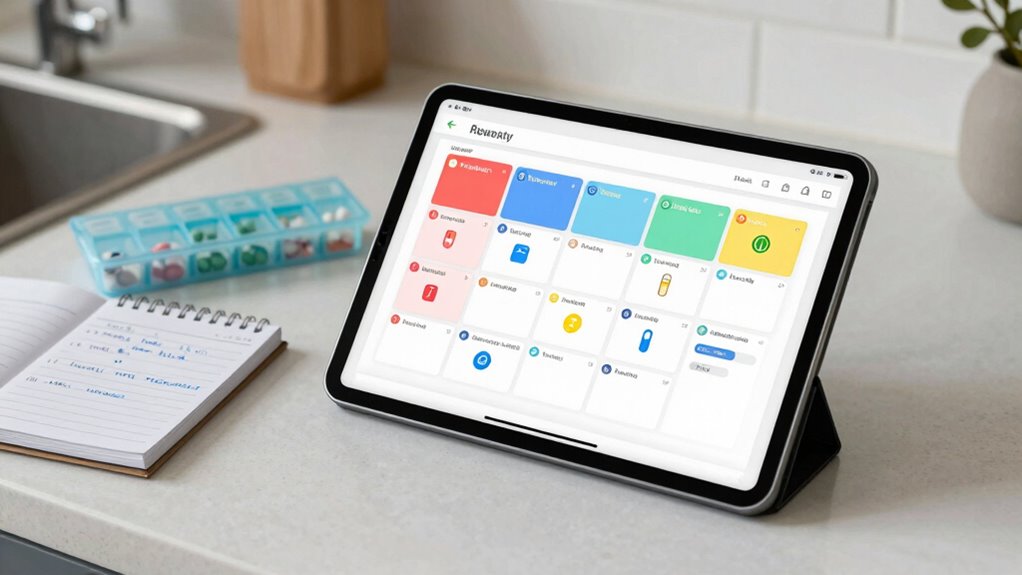
To guarantee your loved one’s health stays on track, establishing a weekly routine for monitoring their medications, health status, and appointments is essential. Use medication reminders to ensure they take the right doses on time, reducing the risk of missed or duplicate doses. Regularly review their medication list and adjust as needed, communicating with their healthcare provider. Keep a detailed schedule for appointment scheduling, confirming upcoming visits and follow-ups to avoid missed care. Check in on their health status, noting any changes or concerns that may require medical attention. Creating a consistent weekly review helps you stay informed and proactive, ensuring your loved one’s well-being stays a top priority without last-minute surprises. Establishing a home safety plan as part of your routine can further prevent accidents and promote a safer environment. Incorporating medical history management into your weekly check-ins can also help identify patterns or recurring issues that may need professional attention. Regularly updating your knowledge about health monitoring devices can improve how you utilize wellness technology to support your loved one’s care. Engaging with emerging health technology trends can provide innovative tools that enhance health monitoring and safety. Additionally, staying updated on crypto market trends can assist in making informed decisions if you’re involved in digital asset management or investments.
Communicating Effectively With Your Loved One and Care Team

To communicate effectively with your loved one and care team, using clear and compassionate language is vital. Establish regular check-in routines to stay updated and address any concerns promptly. These strategies help build trust and guarantee everyone stays on the same page. Additionally, maintaining transparency about disclosure policies ensures that all parties are aware of how information is shared and used, fostering a trustworthy environment. Understanding the horsepower of electric dirt bikes can also inspire confidence in discussing mobility options or activity planning, ensuring safety and enjoyment. Embracing positive thoughts and intentions can also improve interactions and promote a supportive atmosphere among caregivers and loved ones. Incorporating impact investing principles into your planning can further promote sustainable and regenerative approaches to caregiving decisions, aligning with long-term well-being.
Clear and Compassionate Language
Effective communication is essential when caring for a loved one from a distance, especially when conversations can be sensitive or complex. Using clear and compassionate language helps build trust and reduces misunderstandings. When discussing meal planning or social engagement, choose words that show respect and empathy. Avoid sounding bossy or dismissive; instead, focus on collaboration. Remember, your tone influences how your loved one receives your message and whether they feel supported. Be patient, listen carefully, and acknowledge their feelings. This approach encourages open dialogue, making it easier to navigate tough topics. Your words can comfort and reassure, fostering a sense of safety and connection despite the physical distance. Clear, kind communication keeps everyone on the same page and strengthens your relationship.
Regular Check-In Strategies
Maintaining regular contact with your loved one and care team helps guarantee everyone stays informed and connected. Schedule weekly check-ins via phone or video calls to discuss daily routines and address concerns. During these conversations, focus on meal planning to ensure your loved one’s nutritional needs are met, and encourage social engagement to prevent loneliness. Ask about their participation in activities or community events, and suggest new ways to stay connected. Use these check-ins to coordinate care tasks, share updates from healthcare providers, and clarify responsibilities. Consistent communication builds trust, reduces misunderstandings, and guarantees everyone’s on the same page. By staying proactive and attentive, you create a supportive environment that promotes your loved one’s well-being, even from afar.
Handling Emergencies and Adapting Your Routine When Unexpected Challenges Arise

When emergencies happen, having clear communication protocols guarantees you can respond quickly and effectively. Flexibility in your routine allows you to adapt as unexpected challenges arise, minimizing stress. By preparing in advance, you can handle crises confidently while maintaining your loved one’s safety.
Emergency Communication Protocols
Have you ever wondered what to do when an emergency unexpectedly disrupts your caregiving routine from afar? Establishing clear emergency communication protocols is crucial. Know who to contact immediately, including family members, healthcare providers, and legal representatives. Keep a list of emergency contacts accessible at all times. Recognize how family dynamics may influence decision-making and ensure everyone knows their role. Be prepared to adapt your routine swiftly, respecting legal considerations like power of attorney or healthcare directives. Regularly update contact information and emergency plans to reflect changing circumstances. Clear communication reduces panic and confusion, allowing you to respond effectively. When emergencies strike, your proactive approach keeps your loved one safe and ensures you remain in control despite the distance.
Flexible Routine Adjustments
Emergencies often disrupt routines unexpectedly, requiring you to adapt quickly and effectively. When unexpected challenges arise, flexibility becomes essential. You might need to adjust your meal planning to guarantee your loved one has nutritious options, even if it means ordering in or modifying schedules. Stay in close contact with caregivers or local contacts to coordinate immediate support. Providing emotional support during stressful times is vital; reassure your loved one that help is on the way and that you’re managing the situation. Keep your weekly system flexible enough to handle sudden changes, such as rescheduling appointments or reallocating tasks. By maintaining adaptable routines, you confirm your loved one’s needs are met, even amidst chaos, and you reinforce your ongoing commitment to their well-being.
Reviewing and Improving Your Weekly Care System for Better Support

Regularly reviewing your weekly care system is essential to guarantee it remains effective and responsive to your loved one’s changing needs. This process helps you identify gaps in care coordination and ensure emotional support is consistent. By evaluating what’s working and what’s not, you can make targeted improvements that bring peace of mind. Consider these emotional aspects:
Regularly reviewing your care system ensures it adapts to your loved one’s evolving needs with compassion and confidence.
- Remembering the little victories that lighten your loved one’s day
- Recognizing when emotional support needs a boost
- Celebrating your ongoing dedication despite challenges
- Appreciating the strength in adapting your routine
This review keeps your system flexible and compassionate, ensuring your loved one feels truly cared for while maintaining your own well-being. Staying proactive in refining your approach strengthens your connection and provides better support for both of you.
Frequently Asked Questions
How Can I Motivate My Loved One to Follow the Weekly Routine?
To motivate your loved one to follow the weekly routine, use motivational strategies that emphasize positive reinforcement and gentle encouragement. Show appreciation for their efforts and set achievable goals to boost their confidence. Keep routines consistent and engaging, making adherence feel rewarding rather than burdensome. Regular check-ins and celebrating small successes help reinforce routine adherence, making it easier for them to stay committed and feel supported in maintaining their independence.
What Legal Considerations Should I Be Aware of in Long-Distance Caregiving?
You should prioritize legal documents like a durable power of attorney and living wills to guarantee your loved one’s wishes are respected. Make sure these documents are up-to-date and legally valid in their state. Regularly review and discuss these arrangements with your loved one and a legal professional to prevent misunderstandings. Staying informed helps you manage care effectively and avoid future legal complications.
How Do I Handle Disagreements With Other Family Members About Care Decisions?
Like a skilled diplomat, you can navigate family disagreements by fostering open family communication and focusing on shared goals. Stay calm, listen actively, and acknowledge different perspectives to resolve conflicts effectively. Use conflict resolution techniques, such as mediating with empathy and seeking common ground. Remember, prioritizing your loved one’s best interests helps unify the family and keeps care decisions on track, even amidst disagreements.
What Are Signs That My Loved One’s Condition Is Worsening Unexpectedly?
You should watch for sudden changes in health monitoring, like increased confusion, difficulty breathing, or severe pain. Emergency signs include chest pain, weakness on one side, or sudden vision changes. If you notice these, act quickly by contacting emergency services. Regular check-ins and tracking symptoms help you catch worsening conditions early, ensuring your loved one gets prompt care and your concerns are addressed before situations escalate.
How Can I Balance My Own Needs With Caregiving Responsibilities Effectively?
Balancing your needs with caregiving responsibilities is like walking a tightrope—you need focus and boundaries. Prioritize self-care strategies like scheduled breaks, exercise, and hobbies. Set clear boundaries to protect your time and energy, communicating them kindly but firmly. Remember, you can’t pour from an empty cup; taking care of yourself enables you to provide better support for your loved one. Stay proactive and compassionate with yourself.
Conclusion
By embracing a gentle rhythm and staying connected, you create a steady dance of support that feels natural and reassuring. Your weekly routine becomes a comforting breeze, guiding your loved one through life’s twists and turns. With patience and a few helpful tools, you’ll find yourself gracefully steering the ups and downs, ensuring they feel cherished and cared for—even from afar. Remember, your consistent presence is the heart of their well-being.