
To successfully transfer someone to a wheelchair, start by positioning the wheelchair close to the bed and locking the brakes. Clear the area of any obstacles and gather essential tools like transfer belts. Use the pivot method for a smooth shift, keeping your back straight and legs engaged. Communicate throughout to reassure the individual. Prioritize safety by confirming the wheelchair is secure. By following these steps, you’ll guarantee a safer and more comfortable experience—more tips await you!
Key Takeaways
- Position the wheelchair close to the bed with brakes locked and clear any obstacles in the transfer area for safety.
- Use the pivot method for smooth transfers, maintaining a straight back and engaging the patient throughout the process.
- Ensure the wheelchair and bed are stable, and utilize a transfer belt for secure assistance during the transfer.
- Foster a calm atmosphere, providing reassurance and open communication to ease anxiety for both the patient and caregiver.
- Regularly review safety protocols and gather feedback to enhance transfer techniques and overall care quality.

Vive Gait Belt (300lbs) Transfer Belt with Handles – Medical Nursing Safety Patient Assist – Bariatric, Elderly, Handicap, Physical Therapy – PT Gate Strap Quick Release Metal Buckle, Grabbing Teeth
EASY MOVEMENT & TRANSFERS FROM A TRUSTED BRAND: Safely assist patients or loved ones with ease using our…
As an affiliate, we earn on qualifying purchases.
As an affiliate, we earn on qualifying purchases.
How to Transfer Someone to a Wheelchair

Transferring someone to a wheelchair requires careful planning and gentle movements to guarantee safety and comfort. First, make certain the wheelchair is positioned close to the bed, with the brakes locked. Use effective transfer techniques, like the pivot method, to help the person shift smoothly. Stand facing them, placing your arms around their back and under their knees for support. As you lift, keep your back straight and use your legs to bear the weight. It’s essential to undergo caregiver training to master these techniques and ensure both you and the person you’re assisting feel secure during the transfer. Always communicate clearly with the person, asking for their input and adjusting your approach based on their needs. Providing personalized in-home care can significantly enhance the transfer experience by addressing individual preferences and comfort levels. Additionally, understanding caregiving decisions can help you choose the best support options for both you and the person you’re assisting.

Transfer Board and Slide Board for transferring, Sliding Board Transfer to Wheelchair ,Patient Transfer ,Transfer Boards from Wheelchair to Car, Toilet, Tub, Slide Sheet, (Patented Product)
【Package includes】: 1 x Transfer Board(31.5"x8") + 1 x Slide Sheet (Green, 28"x28"(73x73cm) .
As an affiliate, we earn on qualifying purchases.
As an affiliate, we earn on qualifying purchases.
Essential Equipment for Bed-to-Wheelchair Transfers
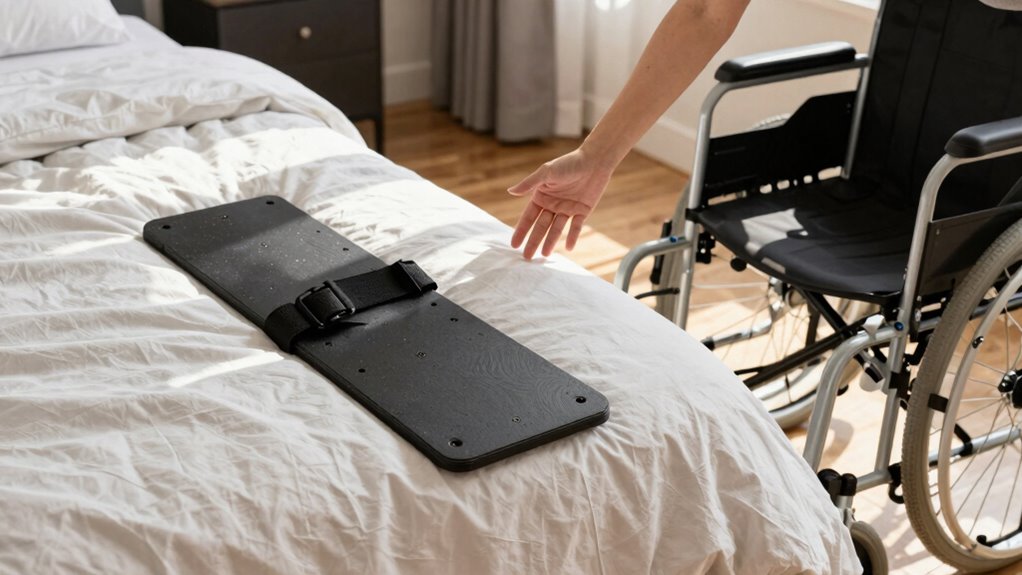
When it comes to bed-to-wheelchair transfers, having the right equipment makes all the difference. You’ll want to explore various transfer board options, understand different wheelchair types, and know the essential safety gear to keep everyone secure. Let’s break down what you’ll need to guarantee smooth and safe transfers.
Transfer Board Options
Choosing the right transfer board can make all the difference in facilitating smooth and safe bed-to-wheelchair transfers. Start by considering the transfer board materials—options like wood, plastic, or foam each offer unique benefits. For instance, wooden boards are sturdy but can be heavier, while plastic options are lightweight and easy to clean. Next, think about transfer board sizes. A longer board can provide a more gradual slope, making transfers easier, while a shorter one may be more portable. Make sure the board’s width suits both your bed and wheelchair for effective use. By selecting the right combination of materials and sizes, you’ll enhance safety and efficiency during every transfer.
Wheelchair Types Explained
Understanding the different types of wheelchairs is essential for ensuring safe and efficient bed-to-wheelchair transfers. Each type has unique features and benefits that can make your transfers easier.
- Manual Wheelchairs: Operated by the user or a caregiver, ideal for active individuals. Financial considerations for purchasing a manual wheelchair can help you make an informed decision. Additionally, regular exercise can enhance the strength needed for better mobility in manual wheelchairs. Imaginative approaches to transformative possibilities can also inspire users to maximize their wheelchair experience.
- Power Wheelchairs: Battery-operated for those needing assistance with mobility.
- Transport Wheelchairs: Lightweight and easy to maneuver, perfect for short distances.
- Folding Wheelchairs: Convenient for storage and travel, allowing for easy transport.
- Wheelchair Accessories: Items like cushions and trays enhance comfort and functionality.
Choosing the right wheelchair type and features can greatly improve the transfer experience, providing the support and ease you need for daily activities. Additionally, understanding proper diet for wheelchair users can aid in maintaining overall health and mobility.
Safety Gear Essentials
To guarantee safe bed-to-wheelchair transfers, having the right safety gear is essential. Start with a transfer belt; it provides you with a secure grip while aiding in patient positioning. Non-slip shoes are vital for both you and the patient to prevent slips during the transfer. A sturdy wheelchair with appropriate footrests also enhances stability. If you’re using a slide sheet, it can ease the transfer process and reduce strain on both parties. Finally, consider wearing gloves to maintain hygiene and grip. By combining these safety essentials with effective transfer techniques, you’ll guarantee a smoother changeover, minimizing the risk of injury for both you and the patient. Always prioritize safety to create a comfortable experience.

Drive Medical Lightweight Expedition Folding Transport Wheelchair with Hand Brakes – Portable Support – Large Rear Wheels – Compact Folding – Comfortable Design – Blue
Lightweight Mobility Support: The Drive Medical Expedition Transport Wheelchair provides easy travel assistance with a lightweight design, padded…
As an affiliate, we earn on qualifying purchases.
As an affiliate, we earn on qualifying purchases.
Preparing the Environment for a Smooth Transfer

Certainly! Here’s the revised content with your specified adjustments:
—
Creating an environment conducive to a smooth transfer is essential for safety and comfort. To guarantee a successful bed-to-wheelchair transfer, consider these environmental factors:
Creating a safe and comfortable transfer environment is vital for a successful bed-to-wheelchair transition.
- Clear the transfer space: Remove obstacles that could hinder movement.
- Adjust lighting: Confirm the area is well-lit for visibility.
- Stabilize surfaces: Make certain the bed and wheelchair are stable to prevent slips.
- Gather necessary tools: Have any assistive devices, like transfer belts, within reach.
- Create a calm atmosphere: Minimize noise and distractions to reduce anxiety. Furthermore, ensuring a toxin-free environment can contribute to the overall well-being of both the caregiver and the individual being transferred. Incorporating pet-friendly gear can also enhance comfort during the transfer process. Additionally, maintaining a low-stress environment can help in promoting smoother interactions during the transfer.
Additionally, consider integrating smart home safety features to enhance your overall environment and ensure a smoother, safer transfer process. Utilizing acoustic drum shields or similar equipment can also help in creating a quieter, more focused environment.
—
Let me know if you need any further adjustments!

Able Life Universal Standing Handle, Portable Standing-Aid Equipment for Easy and Safe Transfers, Ergonomic Lift Assist Grab Bar for Adults, Seniors, and Elderly, Sit-to-Stand Lifting Aid, Blue
Prevent Falls: The Universal Standing Handle provides maximum leverage to assist loved ones while standing, reducing the risk…
As an affiliate, we earn on qualifying purchases.
As an affiliate, we earn on qualifying purchases.
Step-by-Step Guide to Bed-to-Wheelchair Transfers

Successfully transferring from a bed to a wheelchair involves a series of careful steps that guarantee safety and comfort. First, confirm the wheelchair is positioned close to the bed, with the brakes engaged. If you’re the caregiver, use proper transfer techniques by standing beside the bed and helping the individual sit up. Encourage them to swing their legs over the edge while you support their back. Once they’re stable, assist them in standing while pivoting towards the wheelchair. Make sure they’re seated comfortably, adjusting their position as needed. Finally, secure any seatbelt and verify their feet are on the footrests. Throughout this process, maintain open communication and provide reassurance, as caregiver support is essential for a smooth transfer.
Common Mistakes to Avoid During Transfers
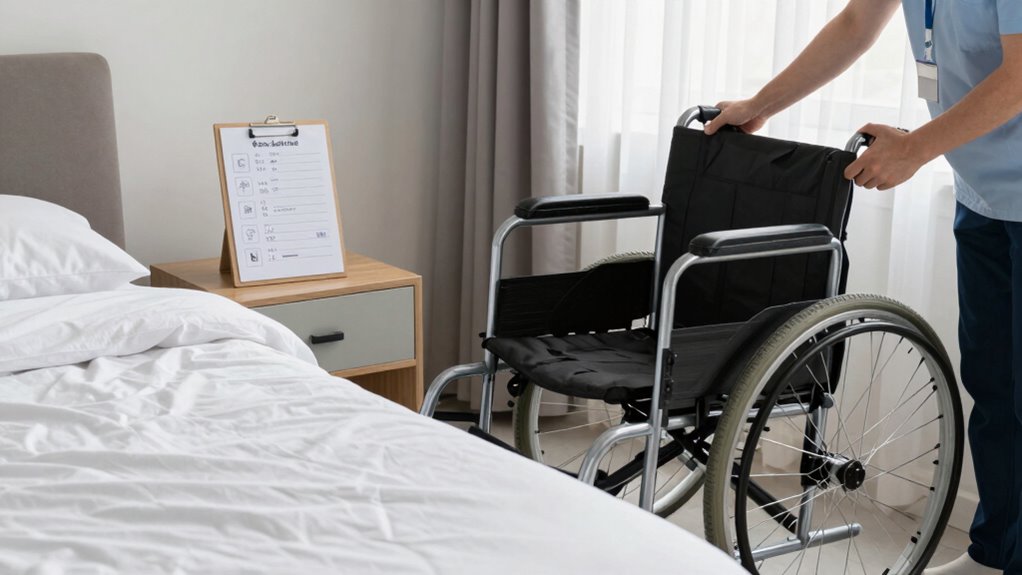
While transferring someone from a bed to a wheelchair may seem straightforward, there are several common mistakes that can compromise safety and comfort. Avoiding these pitfalls can make a significant difference in the transfer process.
- Ignoring proper transfer timing, which can lead to instability.
- Not using the right assistance techniques, risking injury for both you and the individual.
- Failing to secure the wheelchair properly before starting.
- Neglecting to communicate clearly with the person you’re assisting, making them anxious.
- Overlooking the importance of positioning both the bed and wheelchair at appropriate heights.
Additionally, ensuring that the environment is free from obstacles can greatly enhance home safety, making the transfer smoother and more secure. Proper filtration/suction basics can also help maintain a clean and safe environment, reducing the risk of slips or falls during the transfer.
How to Ensure Comfort and Safety During Transfers

To guarantee comfort and safety during transfers, it’s important to implement effective strategies that address potential issues. Use proper transfer techniques and maintain open lines of patient communication. Before starting, assess the environment and gather necessary tools like a transfer belt. Additionally, maintaining ergonomic principles can significantly enhance the overall transfer experience. Incorporating safe mobility products can further assist in making the transfer smoother and safer. Light therapy devices, for example, may be used to promote relaxation before transfers. A positive mindset can also contribute to children’s resilience during challenging situations. Supporting caregivers’ emotional health is essential, as it can lead to better overall care and improved experiences for both caregivers and patients.
Frequently Asked Questions
What Should I Do if the Person Resists the Transfer?
If the person resists the transfer, stay calm and patient. Use resistance strategies like offering choices or breaking the task into smaller steps. Provide emotional support by reassuring them and acknowledging their feelings. You might say, “I understand this feels tough, but I’m here to help.” Engaging them in conversation can distract from their anxiety. Always prioritize their comfort and encourage them to express any concerns they have during the process.
How Can I Ensure My Own Safety During Transfers?
To guarantee your safety during transfers, think of yourself as a sturdy bridge, supporting both yourself and the person you’re assisting. Use transfer equipment like slings or transfer boards to maintain control and reduce strain. Keep an eye on personal boundaries, guaranteeing both you and the person feel comfortable. Position yourself correctly, maintain a firm grip, and communicate clearly to make the process smoother and safer for both of you.
Are There Specific Transfer Techniques for Different Medical Conditions?
Yes, there are specific transfer techniques tailored for different medical conditions. For instance, if you have limited upper body strength, using a sliding board can help make transfers smoother. If you’re recovering from surgery, pivoting transfers might be safer. Always consider your unique needs and abilities, and consult with a healthcare professional for personalized guidance. They can show you the best transfer techniques to guarantee your safety and comfort during each change.
How Often Should Transfers Be Practiced for Skill Improvement?
Oh sure, just practice transfers whenever you feel like it—because who needs consistency, right? In reality, you should practice regularly, ideally a few times a week, to boost skill retention. It’s not a magic trick; transfer frequency matters. The more you practice, the more confident and skilled you’ll become. So, grab that wheelchair and bed and make it a habit—your future self will thank you for it!
What Signs Indicate Successful Transfer Completion?
You’ll know a transfer’s successful by recognizing key transfer indicators. Look for cues like the person feeling stable and secure in the wheelchair, their feet flat on the ground, and their weight evenly distributed. If they can maintain balance and control without assistance, that’s a strong sign. Additionally, smooth shifts without sudden movements indicate a successful transfer. Keep these cues in mind to guarantee each transfer is effective and safe.
Conclusion
In summary, mastering bed-to-wheelchair transfers is like learning a dance—each step matters for a smooth performance. By following the checklist and being mindful of comfort and safety, you not only ease the change but also enhance the experience for both of you. Remember, practice makes perfect, so don’t hesitate to refine your technique. With patience and care, you can turn a challenging moment into a seamless journey toward greater independence.