
To keep bathrooms safe during care tasks, focus on keeping floors dry and clear of hazards. Use clear, visible signage and barriers to warn others about wet areas. Clean up spills immediately with absorbent mats or towels, and work in small sections while mopping to prevent puddles. Regularly inspect for leaks, clutter, or uneven surfaces, and guarantee proper lighting and ventilation. Following these steps will help prevent slips and falls—discover more safety tips to maintain a hazard-free bathroom.
Key Takeaways
- Place highly visible “Wet Floor” signs at eye level and near entrances to warn of slippery surfaces.
- Conduct regular visual inspections for wet spots, spills, or debris, and clean spills immediately.
- Use absorbent mats, towels, and effective mopping techniques to quickly dry floors and prevent puddles.
- Maintain proper lighting and ventilation to identify hazards and reduce moisture buildup.
- Train staff to respond promptly to wet surfaces, communicate hazards, and utilize barriers or signage effectively.
Why Keeping Bathroom Floors Dry Prevents Falls During Care
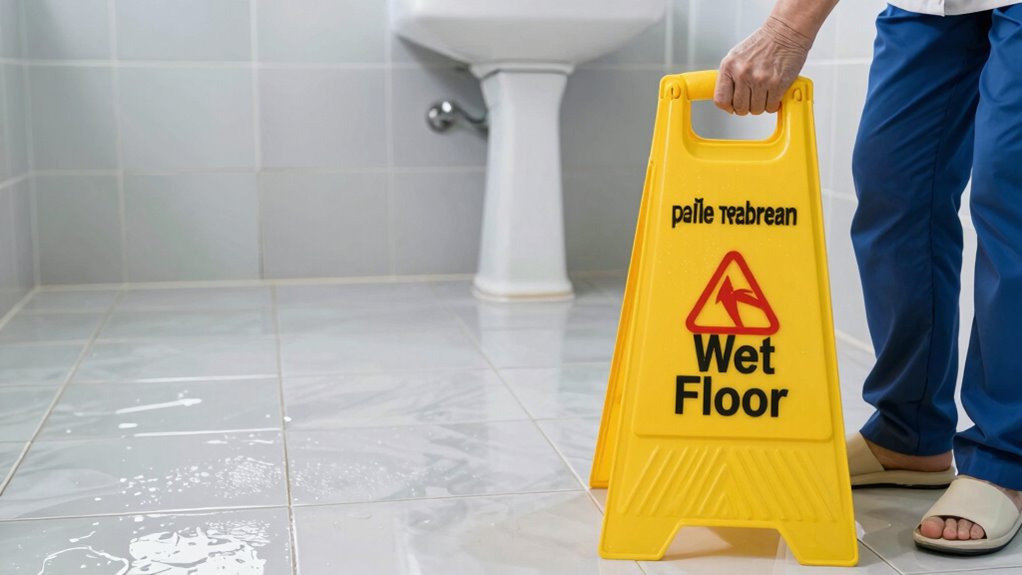
Keeping bathroom floors dry is essential because wet surfaces substantially increase the risk of falls during care. When floors are damp, there’s a higher chance you or others might slip, especially when moving or handling fragile individuals. Maintaining good bathroom hygiene helps prevent excess moisture buildup, reducing slippery spots. Regular plumbing maintenance ensures leaks or drips are promptly fixed, preventing unexpected wet patches. These measures keep the environment safer and more secure. A dry floor not only minimizes fall hazards but also promotes overall cleanliness, reducing bacteria and mold growth. Additionally, using proper cleaning tools can help effectively remove moisture and spills from bathroom surfaces. Implementing proper ventilation systems can also help decrease humidity levels that contribute to dampness. Choosing slip-resistant flooring materials can further enhance safety during care. By staying vigilant about bathroom hygiene and keeping plumbing in top condition, you create a safer space for everyone during care tasks, helping prevent accidents before they happen.
Recognize Common Bathroom Slip Hazards and Risks
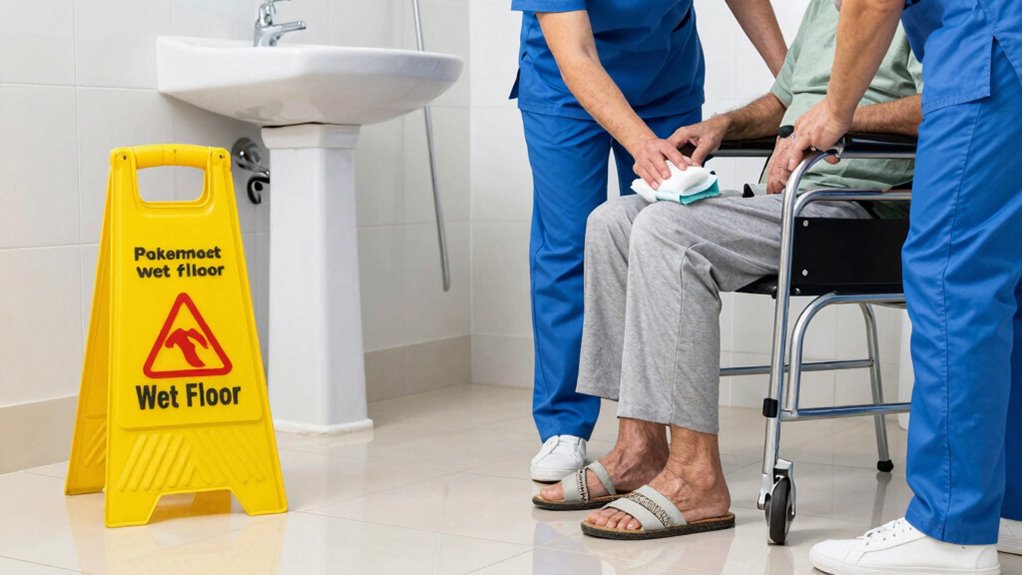
Bathroom slip hazards are common and can catch you off guard if you’re not paying attention. Recognizing bathroom hazards is key to preventing slips and falls. Wet surfaces, such as shower floors, sinks, and around toilets, pose high slip risks. Spilled water, soap, or cleaning agents increase the danger, especially if left unattended. Loose rugs or mats without non-slip backing can also be hazards. Cluttered spaces or uneven flooring further elevate slip risks, making it easier to trip or lose footing. Keep an eye out for these common hazards, and always address wet or uneven areas promptly. Being aware of these risks allows you to take proactive steps, reducing the chance of accidents during care tasks. Regularly inspecting for indoor air quality issues, such as dust or mold, can also help maintain a healthier bathroom environment and prevent slipping caused by slippery residues. Additionally, ensuring proper ventilation helps reduce moisture buildup, which can contribute to slippery surfaces and bacterial growth. Monitoring moisture levels in the bathroom can further help prevent excessive dampness that leads to slips and mold development. Incorporating proper cleaning techniques can also minimize residues that make surfaces slick and unsafe.
Practical Steps to Implement the Wet Floor Rule Effectively
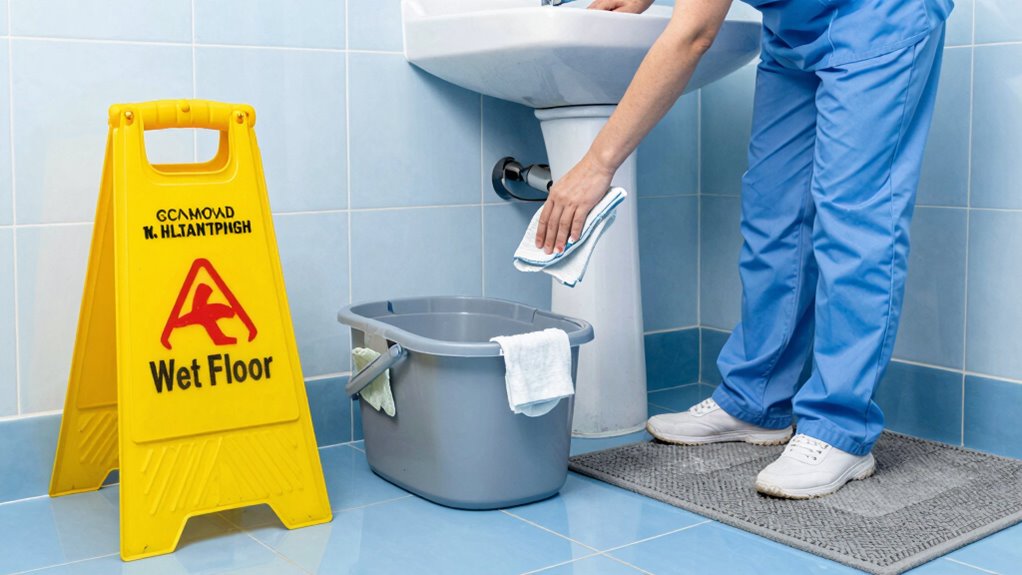
To effectively implement the Wet Floor Rule, you should focus on clear signage placement so everyone notices the warning. You also need to perform regular floor checks to catch hazards early and make certain safety. Promptly cleaning up spills prevents accidents and keeps the area safe for everyone. Incorporating Free Floating elements into the space can also reduce clutter and potential tripping hazards, further enhancing safety. Additionally, training staff on occupational safety practices ensures consistent enforcement of safety protocols. Understanding robot mower safety features and proper setup can help prevent accidental injuries during yard maintenance. Developing a methodical testing process for safety procedures can identify vulnerabilities before incidents occur.
Clear Signage Placement
Placing clear signage in strategic locations is essential for effectively implementing the wet floor rule. Use signs with high color contrast to guarantee they stand out, catching attention quickly. Position signs at eye level and near entrances to bathrooms and care areas, where they’re most visible. Good lighting improvements make signs easier to read, especially in dim or shadowed spots. Ensure signs are legible even from a distance, using bold fonts and simple wording. Consistent placement reinforces safety awareness and reminds staff and visitors to proceed with caution. Regularly check that signs remain visible and unobstructed, replacing them if they become damaged or faded. Proper signage placement reduces slips and falls by alerting everyone to potential hazards promptly and clearly. Additionally, incorporating signage maintenance practices ensures that safety messages remain effective over time. Using visual cues can further enhance awareness and support the wet floor rule’s effectiveness. Incorporating hazard awareness strategies can also help reinforce safety protocols consistently.
Regular Floor Checks
Regular floor checks are essential for maintaining a safe environment and ensuring the wet floor rule is effective. You should conduct consistent floor inspections to spot hazards early. During these checks, look for spills, wet spots, or any debris that could cause slips. Use the following table to guide your hazard identification process:
| Step | Action |
|---|---|
| Visual Inspection | Scan for wet spots or debris |
| Confirmed Hazards | Mark areas needing immediate attention |
| Follow-Up | Ensure hazards are addressed promptly |
Additionally, incorporating household safety protocols during these inspections can further reduce risks and ensure a safer environment during care tasks. Regularly reviewing elderly safety guidelines can help caregivers stay vigilant and prepared for potential hazards. Implementing hazard prevention strategies can significantly enhance overall safety in the bathroom area. Moreover, training caregivers on proper hazard recognition can improve response times and reduce accidents. Staying informed about air quality considerations and environmental factors can also support safer caregiving practices.
Prompt Spill Cleanup
When a spill occurs, addressing it immediately is crucial to prevent slips and accidents. Quickly containing the spill minimizes hazards and maintains a safe environment. Use appropriate spill containment tools like absorbent mats or disposable towels to soak up liquids effectively. Clearly mark the area with warning signs until the floor is dry. Always wear gloves to protect yourself from contamination. Prompt cleanup reduces the risk of accidents and demonstrates a proactive approach to safety. Guarantee all staff know the correct procedures for spill containment, emphasizing swift action. Regularly train staff on spill response and keep cleanup supplies accessible. Recognizing the importance of emergency preparedness ensures a swift and effective response to unexpected spills. Incorporating environmentally friendly cleanup materials can further reduce the environmental impact of spill management. Additionally, understanding regional safety standards helps ensure compliance and best practices during spill cleanup. By acting immediately, you help prevent accidents, protect individuals, and uphold safety standards during care tasks.
Best Mopping and Wet Surface Management Techniques
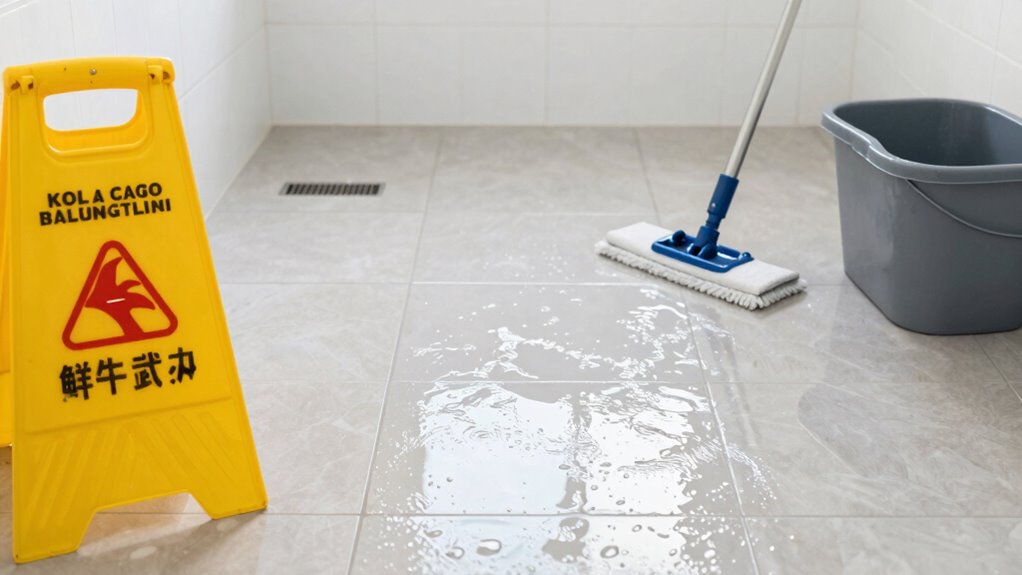
Effective mopping and wet surface management are essential for maintaining safety and minimizing slip hazards. To do this effectively, use proper mopping techniques that guarantee thorough coverage without leaving excess water. Start by using a well-wrung mop to avoid puddles and reduce excess moisture on the floor. Work in small sections, rinsing and wringing the mop frequently to prevent spreading dirt and creating slippery spots. Always direct water toward drains or designated dry areas to avoid pooling. After mopping, allow the surface to dry completely or use fans to speed up the process. Consistently applying these wet surface management techniques helps keep floors safe, reduces slip risks, and promotes a safe environment during care tasks.
Using Signage and Barriers to Warn About Wet Floors
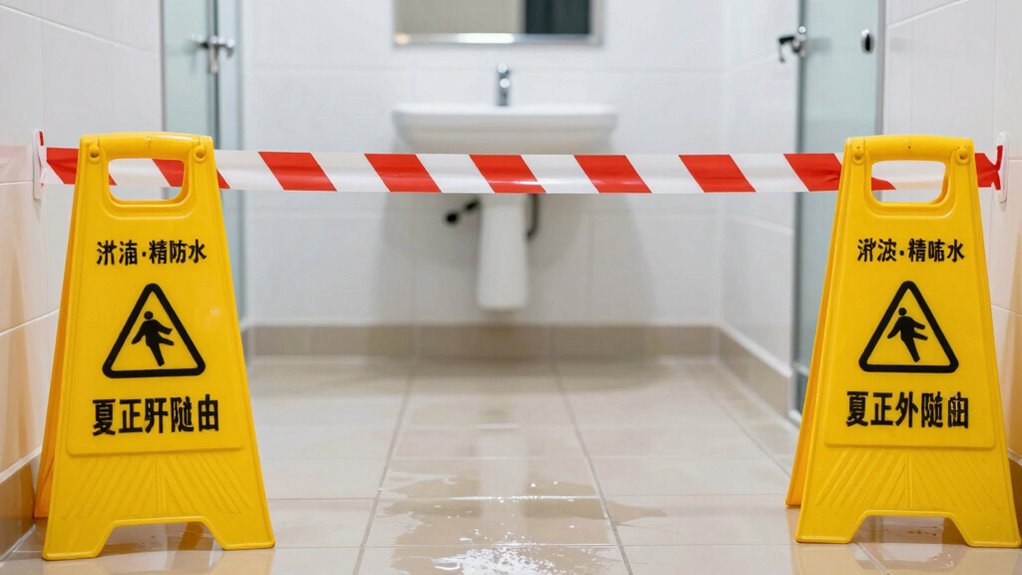
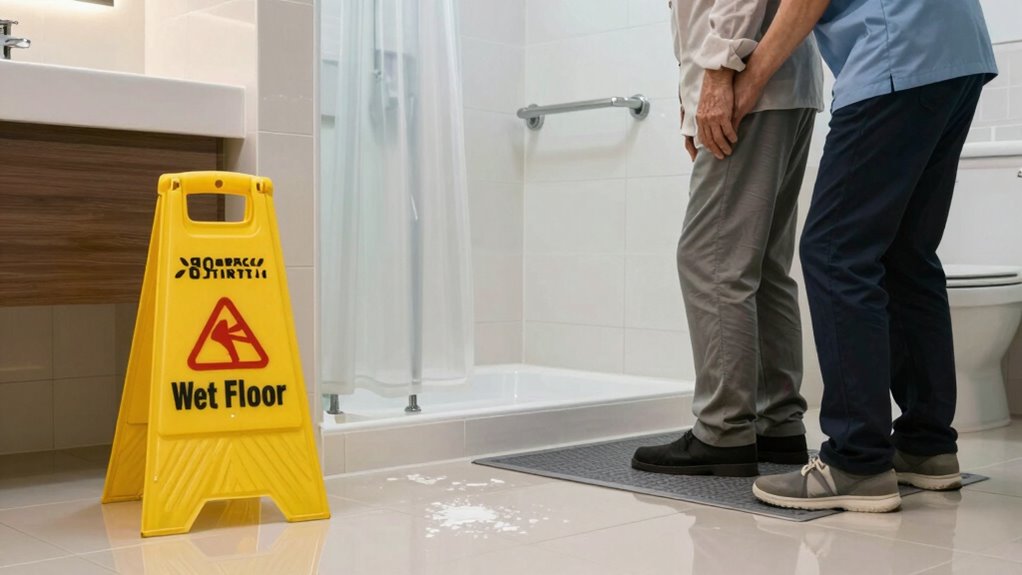
To prevent slips and falls on wet floors, you need to clearly warn others about the hazard. Proper signage design is essential; signs should be highly visible, easy to read, and placed at eye level so everyone notices them. Use bright colors and clear wording like “Wet Floor” or “Caution” to grab attention quickly. Barrier placement is equally important—position barriers strategically around the wet area to block access and guide foot traffic away from the hazard. Ensure barriers are stable and clearly marked, possibly with reflective tape or bright colors. Combining effective signage design with thoughtful barrier placement creates a clear, strong visual cue that alerts everyone to the wet surface, reducing the risk of slips and ensuring bathroom safety during care tasks.
Training Caregivers on Bathroom Safety and Wet Floor Protocols
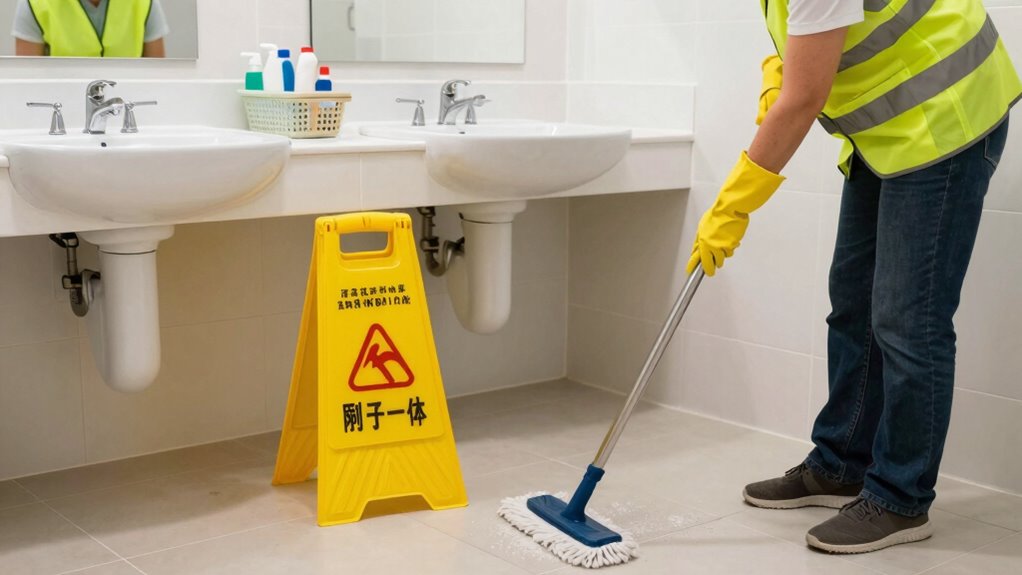
Proper training is essential to guarantee caregivers understand bathroom safety and wet floor protocols. You need to emphasize how bathroom design influences safety and ensure clear caregiver communication about hazards. Train caregivers to recognize wet surfaces, proper cleaning techniques, and how to use signage effectively. Use role-playing scenarios to reinforce protocols and improve response times.
| Training Focus | Key Actions |
|---|---|
| Bathroom Design Awareness | Recognize safety features and hazards in bathroom layout |
| Wet Floor Protocols | Respond promptly and alert others about wet surfaces |
| Caregiver Communication | Clearly communicate risks and safety procedures |
Essential Equipment and Tools for Dry Bathroom Floors

Maintaining dry bathroom floors requires the right equipment and tools to quickly address wet surfaces and prevent slips. You should have absorbent mats or towels nearby to soak up spills immediately. A mop and bucket with effective cleaning supplies, such as disinfectants and floor cleaners, are essential for thorough drying. Use quick-drying bathroom fixtures, like touchless faucets and automatic flush toilets, to reduce water accumulation. A floor squeegee can help move water toward drains efficiently. Keep a supply of non-slip mats or rugs to add traction in high-risk areas. These tools help you respond promptly to moisture, minimizing hazards. Regularly inspect bathroom fixtures and maintain cleaning supplies to make certain your safety measures are always ready to use.
Building a Safety Culture to Keep Bathrooms Slip-Free
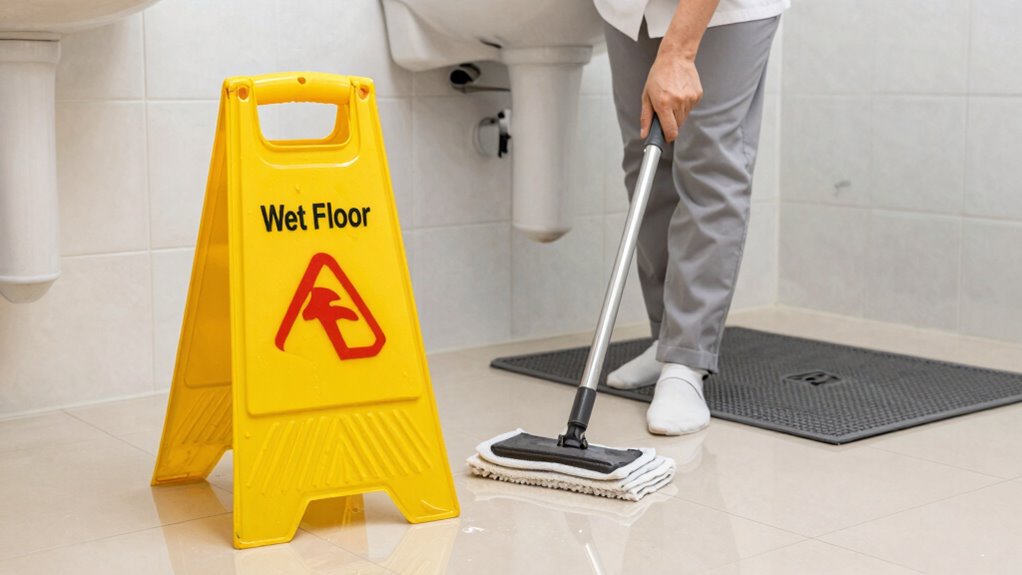
Creating a safety culture in your bathroom starts with fostering awareness and responsibility among everyone who uses the space. Good bathroom lighting ensures that hazards are clearly visible, reducing the risk of slips and falls. Regularly checking and maintaining ventilation systems prevents moisture buildup, which can lead to wet floors and slippery surfaces. Encourage everyone to report hazards immediately and to clean up spills promptly. Training staff and users on the importance of proper lighting and ventilation reinforces a collective commitment to safety. When people understand how proper lighting and effective ventilation contribute to a slip-free environment, they’re more likely to follow safety protocols. Building this culture helps guarantee that safety practices become a routine part of bathroom use, keeping floors dry and everyone safe.
Troubleshooting Challenges in Maintaining Dry Bathroom Floors
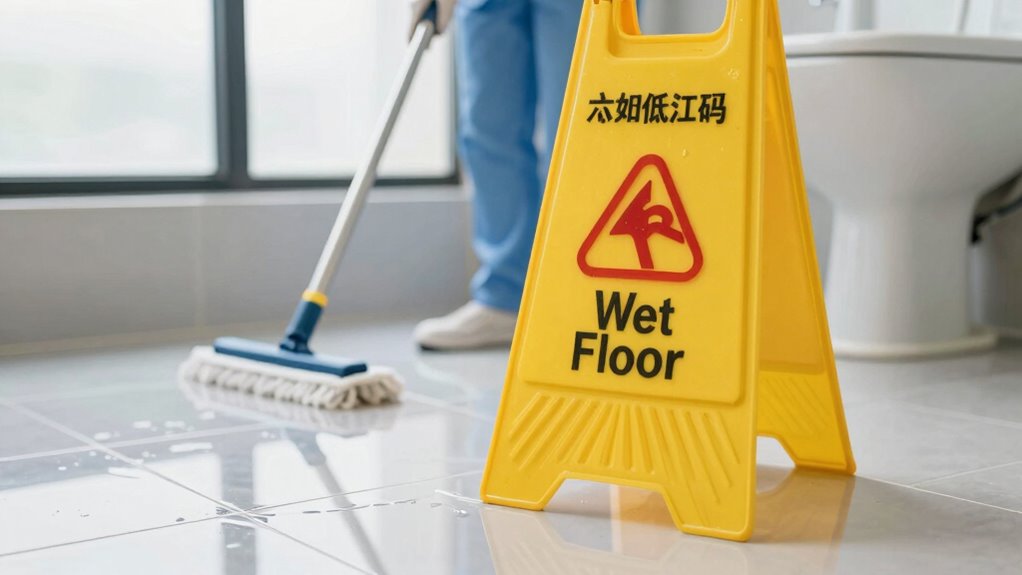
Despite your best efforts, keeping bathroom floors dry can still present challenges, especially when unexpected spills or high humidity occur. Excess moisture creates ideal conditions for mold growth, making mold prevention essential. To combat this, you need effective humidity control, such as using exhaust fans or dehumidifiers, to reduce moisture levels. Promptly cleaning up spills and drying wet surfaces prevent water from seeping into cracks or flooring materials. Regular ventilation helps maintain maximum humidity, reducing condensation and dampness. Additionally, inspecting and maintaining seals around sinks and toilets prevents leaks that could lead to persistent dampness. By actively managing humidity and addressing spills quickly, you minimize mold risks and uphold a safe, dry environment, even during unforeseen moisture challenges.
Frequently Asked Questions
How Often Should Bathroom Floors Be Checked for Moisture During Care Tasks?
You should check bathroom floors for moisture frequently during care tasks, ideally every 15-20 minutes. Regular moisture monitoring helps you identify wet spots early, reducing slip risks. Adjust your mop frequency based on how much water is present; if you notice increased spills or dampness, mop more often. Consistent checks make certain the floor stays dry, keeping everyone safe and preventing accidents during care routines.
What Are the Most Common Causes of Wet Floors in Bathrooms?
You often encounter wet floors in bathrooms due to water spills from mopping accidents or accidental splashes during care tasks. These common causes happen when caregivers forget to dry surfaces promptly or overlook small leaks, creating hazards. To reduce risks, stay vigilant, clean spills immediately, and use absorbent materials. Being proactive helps prevent slips and falls, ensuring a safer environment for everyone during bathroom activities.
Are There Specific Cleaning Products Recommended for Maintaining Dry Floors?
You should use mild cleaning products that are gentle on surfaces but effective at removing residue and preventing slipperiness. Non-slip solutions, such as slip-resistant coatings or mats, are also essential to keep floors dry and safe. Avoid harsh chemicals that can leave slippery residues. Regularly clean with these products and guarantee floors are thoroughly dried to maintain a safe environment and prevent accidents during care tasks.
How Can Caregivers Prevent Slips When Floors Are Inevitably Wet?
You can prevent slips when floors are wet by using non-slip footwear and placing floor mats in high-risk areas. Always make sure these mats are non-slip, and encourage caregivers to wear shoes with good grip. Quickly clean up spills and wet surfaces, and use warning signs to alert others. Think of it as creating a slip-proof barrier—keeping everyone safe and the bathroom accident-free.
What Legal Considerations Are There for Bathroom Safety Regulations?
You must follow regulatory standards to minimize liability concerns and guarantee bathroom safety. This includes implementing proper signage, maintaining dry floors, and using slip-resistant mats. Regularly inspecting and addressing hazards helps you stay compliant with legal requirements. By proactively managing these risks, you reduce potential legal liabilities and create a safer environment for everyone. Staying informed about changing regulations is essential to meet safety standards and protect yourself and your clients.
Conclusion
By embracing the ‘wet floor rule,’ you create a shield against slips and falls, turning each cautious step into a steady beat of safety. When you prioritize dryness and awareness, you build a rhythm of care that echoes resilience and vigilance. Together, these small, mindful actions form a steady drum—pumping confidence into every bathroom visit. Keep the flow steady, and safety will follow, creating a harmony where everyone moves confidently and securely.