

After a stroke, you might notice speech changes like difficulty forming words, slurred speech, or trouble understanding. To communicate without frustration, use simple gestures, visual aids, and speech therapy tools, including AI apps. Practice patience, celebrate small successes, and involve assistive devices or nonverbal cues to support your efforts. Caregivers can foster understanding by creating a calm environment. Keep exploring strategies designed to enhance connection and reduce stress—you’ll find more helpful tips ahead.
Key Takeaways
- Use simple language, gestures, and visual aids to support understanding and reduce frustration.
- Incorporate AI-powered communication tools and speech therapy exercises to enhance clarity and confidence.
- Practice patience, active listening, and stress-reduction techniques to foster a calm, supportive environment.
- Celebrate small progress and maintain a growth mindset to motivate ongoing communication efforts.
- Tailor communication methods to individual needs, combining verbal, nonverbal, and assistive devices for effectiveness.
speech therapy tools for stroke recovery
As an affiliate, we earn on qualifying purchases.
As an affiliate, we earn on qualifying purchases.
What Speech Changes Happen After a Stroke?

After a stroke, you may notice sudden changes in your speech, which can range from mild to severe. These changes often involve difficulty forming words, slurred speech, or trouble understanding others. Speech therapy plays a vital role in helping you regain effective communication. You might also experience challenges with cognitive communication, making it hard to organize your thoughts or follow conversations. These issues occur because stroke can damage areas of your brain responsible for language and thinking skills. Understanding recovery factors can help set realistic expectations and guide your rehabilitation process. Early intervention with speech therapy can improve your ability to speak clearly and process information better. Additionally, brain damage can affect multiple aspects of communication, emphasizing the importance of comprehensive therapy approaches. Remember, recovery varies for each person, but with consistent support and targeted exercises, you can work toward regaining your communication skills and reducing frustration.
As an affiliate, we earn on qualifying purchases.
How Can You Communicate Clearly When Speech Is Impaired?

When your speech is impaired, clear communication becomes more challenging, but there are effective strategies to help you express yourself. First, consider using speech therapy tools that incorporate artificial intelligence; these can assist you in finding the right words and improving pronunciation. Second, try using simple gestures or visual aids to support your spoken words, making your message clearer. Third, be patient and give yourself time to communicate; don’t rush or get frustrated. Practicing with speech therapy techniques and utilizing AI-powered apps can boost your confidence. Remember, these tools are designed to support your recovery and help you connect with others more easily, reducing frustration and making communication smoother.
communication aids for stroke patients
As an affiliate, we earn on qualifying purchases.
As an affiliate, we earn on qualifying purchases.
How to Support Speech Recovery and Improve Communication

Supporting speech recovery involves consistent practice and engaging with targeted therapies. You can help by encouraging daily exercises, such as speech therapy techniques that focus on repeating sounds or words. Emotional support plays a crucial role; your patience and understanding boost confidence and motivation. Remember, progress may be slow, but persistence matters. Celebrate small victories to foster hope and resilience. Here’s a reminder of how emotional support can help:
| Patience | Encouragement | Hope |
|---|---|---|
| Stay calm | Celebrate progress | Believe in recovery |
| Listen carefully | Offer positive feedback | Trust the process |
| Be present | Show empathy | Keep trying |
Research shows that growth mindset can significantly enhance motivation during recovery. Your support makes a difference—each step brings your loved one closer to improved communication, especially when you incorporate consistent effort to maintain momentum. Furthermore, understanding how visual aids and communication tools work can greatly improve therapy outcomes by making information more accessible. Utilizing speech exercises tailored to individual needs can also accelerate progress and build confidence.
visual aids for speech impairment
As an affiliate, we earn on qualifying purchases.
As an affiliate, we earn on qualifying purchases.
Using Nonverbal Cues and Assistive Tools to Help
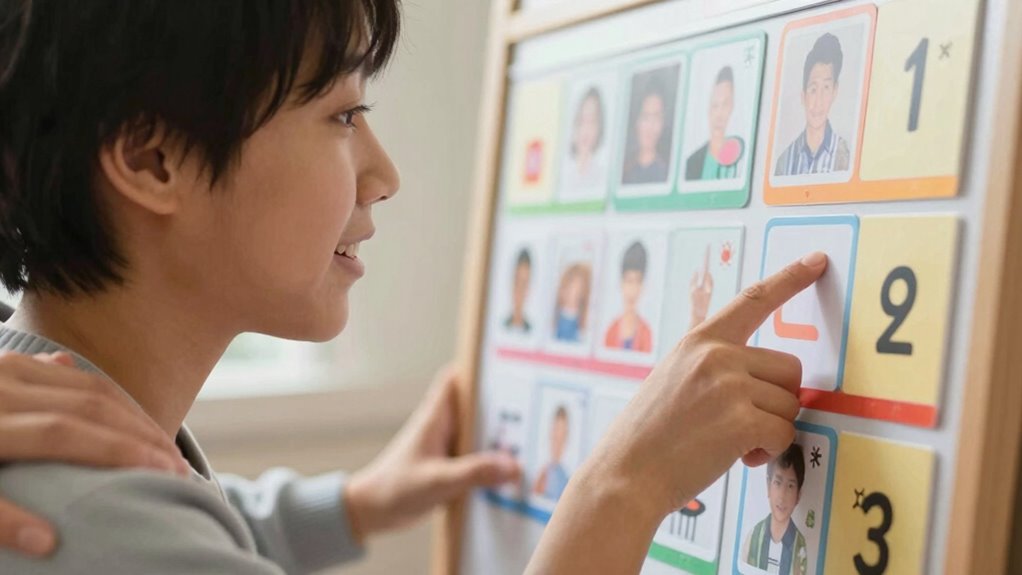
Using nonverbal cues and assistive tools can substantially enhance communication for stroke survivors. Gesture cues are simple, effective ways to express needs or feelings when speech is limited. Communication devices, such as speech-generating tools, provide additional support. To maximize their impact, consider these tips:
Nonverbal cues and assistive tools greatly improve communication for stroke survivors.
- Use clear, deliberate gesture cues like pointing or nodding to convey messages.
- Introduce and familiarize yourself with communication devices, practicing regularly.
- Combine gesture cues with tools to reinforce understanding and reduce frustration.
- Choosing the right communication method tailored to individual needs can significantly improve interactions. Understanding augmentative and alternative communication (AAC) options can further expand effective communication strategies and improve quality of life. Incorporating digital communication tools can also enhance the versatility and effectiveness of communication efforts. Exploring various communication strategies can help individuals find the most effective methods for their unique situations, fostering better engagement and connection. When selecting tools, consider personalized communication approaches to ensure the methods align with individual preferences and abilities.
How Family and Caregivers Can Foster Patience and Reduce Frustration?

Family and caregivers play an essential role in creating a supportive environment that encourages patience and understanding. Your emotional support helps your loved one feel safe and valued, reducing frustration during communication. To foster patience, practice patience strategies like taking deep breaths, listening actively, and avoiding interruptions. Remember, recovery takes time, and setbacks are normal. Use gentle encouragement and celebrate small progress to boost confidence. Showing empathy and maintaining a calm tone can help reduce stress for both of you. By staying patient and offering consistent emotional support, you create a space where your loved one feels comfortable expressing themselves. Incorporating mindful recovery techniques such as controlled breathing and HRV monitoring can further enhance your loved one’s ability to manage stress and frustration. Understanding the importance of neuroplasticity can motivate both you and your loved one to stay committed to the recovery process. Practicing stress reduction methods can significantly improve communication and emotional well-being during recovery. Engaging in mind-body healing approaches can also support emotional resilience and facilitate a smoother recovery journey. This supportive approach not only reduces frustration but also strengthens your bond during the recovery journey.
Frequently Asked Questions
What Are the Early Signs of Speech Recovery Post-Stroke?
Early signs of speech recovery after a stroke include improved ability to form words and sentences, and increased clarity. You might notice better comprehension and more engagement during speech therapy and language exercises. As you practice consistently, your speech may become more fluid and understandable. These signs indicate progress, so keep working with your therapist, stay patient, and celebrate small improvements along the way.
Are There Specific Therapies to Improve Speech More Quickly?
Did you know that early intervention can boost speech recovery by up to 30%? You should consider targeted speech therapy, which focuses on your specific needs, and use communication aids like picture boards or apps to enhance progress. Consistent practice with professionals accelerates improvement, helping you regain confidence faster. Combining therapy with aids makes communication easier and reduces frustration, giving you a better chance at recovering your voice more quickly.
How Can Technology Assist in Long-Term Communication Support?
Technology plays a crucial role in long-term communication support by offering augmentative communication tools and assistive devices. You can use speech-generating devices or picture boards to express yourself more easily. These tools help reduce frustration and keep conversations flowing, even as your speech changes. Regular use and guidance from a speech therapist ensure you maximize these technologies, empowering you to communicate confidently over time.
What Emotional Challenges Do Stroke Survivors Face With Speech Changes?
Imagine a fragile glass trembling in your hand—that’s how emotional resilience can feel when dealing with speech changes after a stroke. You might face self-esteem challenges, feeling isolated or misunderstood. These emotional hurdles can drain your confidence and spark frustration. Yet, with patience and support, you rebuild your resilience, gradually restoring your sense of self and finding new ways to connect, express, and regain control over your voice and emotions.
How Can Friends and Colleagues Effectively Communicate With Stroke Survivors?
To effectively communicate with stroke survivors, you should offer social support and practice patience strategies. Use simple language, speak slowly, and give them plenty of time to respond. Maintain eye contact and use positive body language to show you’re engaged. Avoid finishing their sentences or rushing them, which can cause frustration. Your calm, supportive approach helps them feel understood and encourages open communication.
Conclusion
Remember, communication is a bridge that connects hearts. Even when words stumble, patience and understanding can turn frustration into connection. By embracing nonverbal cues and support, you can help your loved one find their voice again. Think of each conversation as a garden you nurture—over time, patience blooms into renewed communication, restoring trust and closeness. Your unwavering support transforms challenges into opportunities for love and growth.